Surgery · Facial Contour

Cheek Liposuction

Side cheek and front cheek, quoted as two areas

Gangnam, Seoul | Board-certified plastic surgeon, Dr. Jonghwan Choi
Subcutaneous facial fat, area by area · KHIDI-registered for international patients

Cheek Liposuction Face Liposuction Cheek Liposuction Face Liposuction 
Define

Cheek liposuction

What is cheek liposuction, and which layer does the cannula work in?

The short answer

Cheek liposuction draws off the fat lying between skin and muscle in the face, using a cannula passed through a small access point. Rewind's surgical page opens its facial liposuction sequence with exactly that step: a minimal incision, then suction of the subcutaneous fat layer. The clinic's price list treats the face as two separate areas, the side cheek and the front cheek, so a plan is written in areas and priced that way.

Source: Rewind's Korean page for facial liposuction with double-chin muscle tightening, and the clinic's own surgical price list, which itemises side cheek and front cheek. Anaesthetic type and time in theatre are not published by the clinic and are therefore not stated here.

What the cannula reaches is one layer and one layer only. The fat pocket sitting deeper in the cheek is taken out through the mouth as a separate operation, the fat clinging to the neck muscle cannot be suctioned at all, and slack skin is a question of support, which no cannula supplies. Everything below the jaw line belongs to a different part of the same surgical sequence, and it is priced that way too.

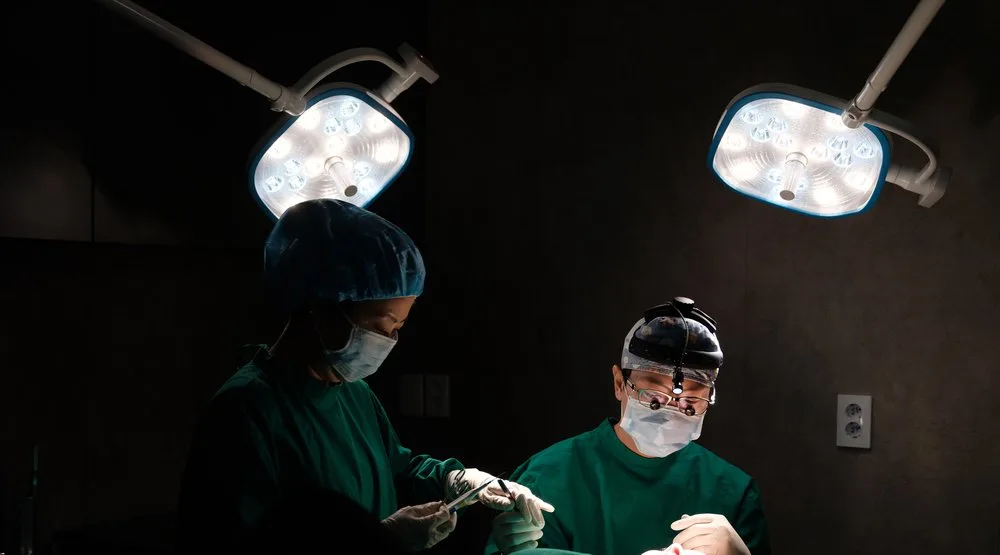
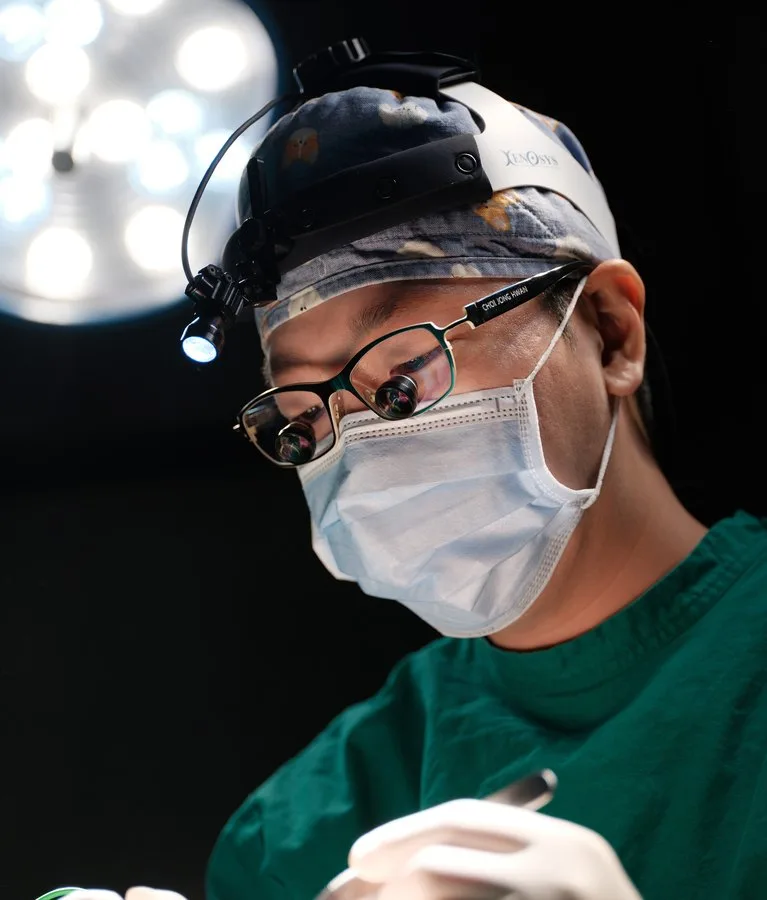
Dr. Jonghwan Choi operating under loupe magnification at Rewind Plastic Surgery
Fig. 01 — Suction of a facial layer is done in millimetres, under magnification
Result

Case photographs

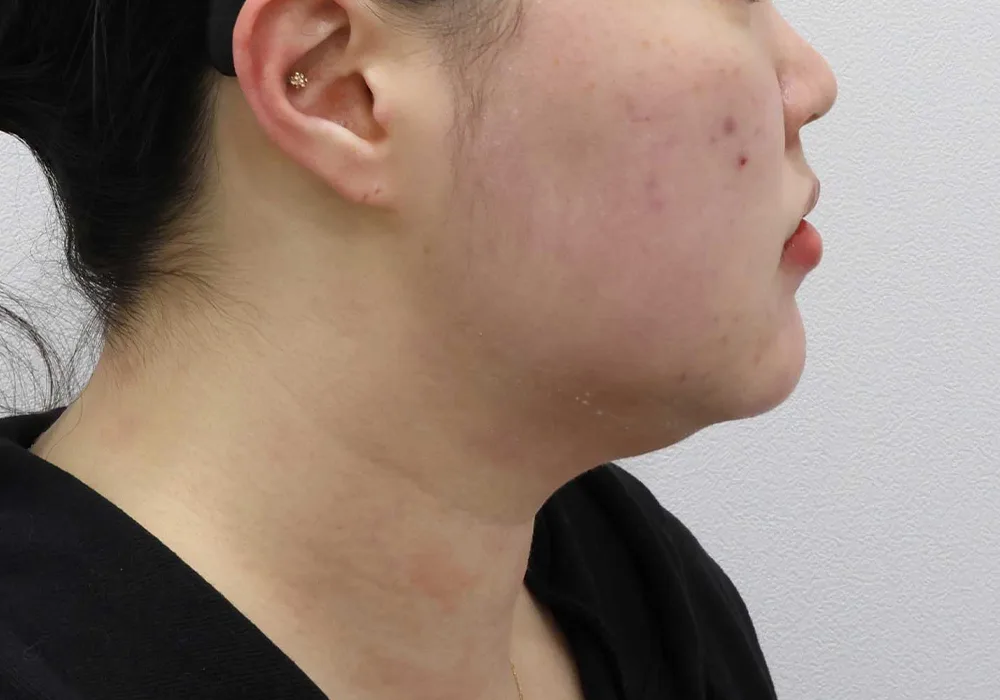
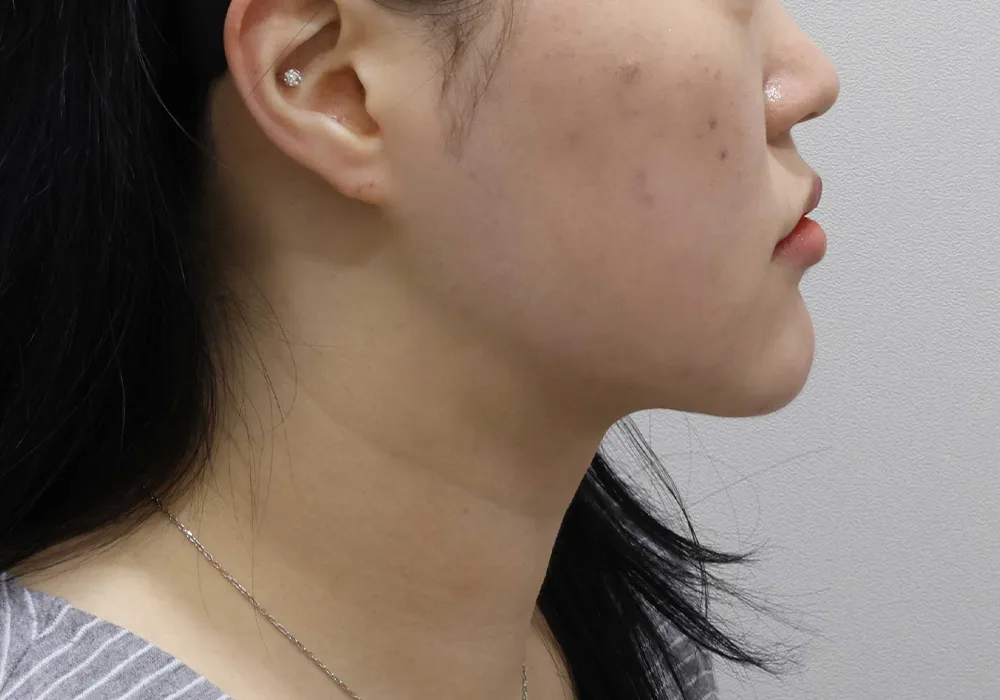
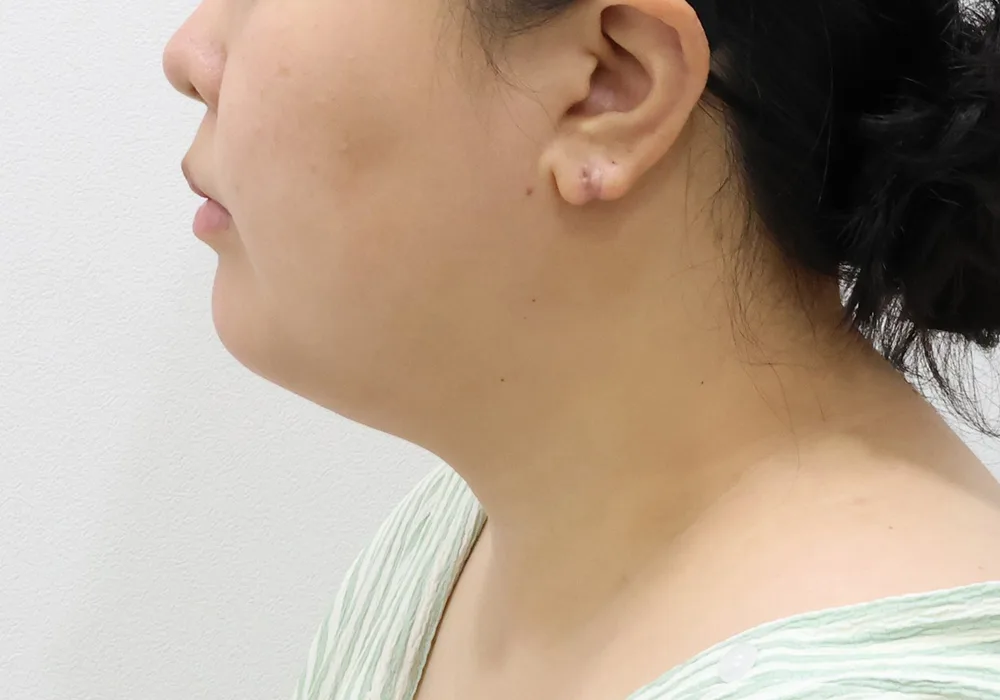
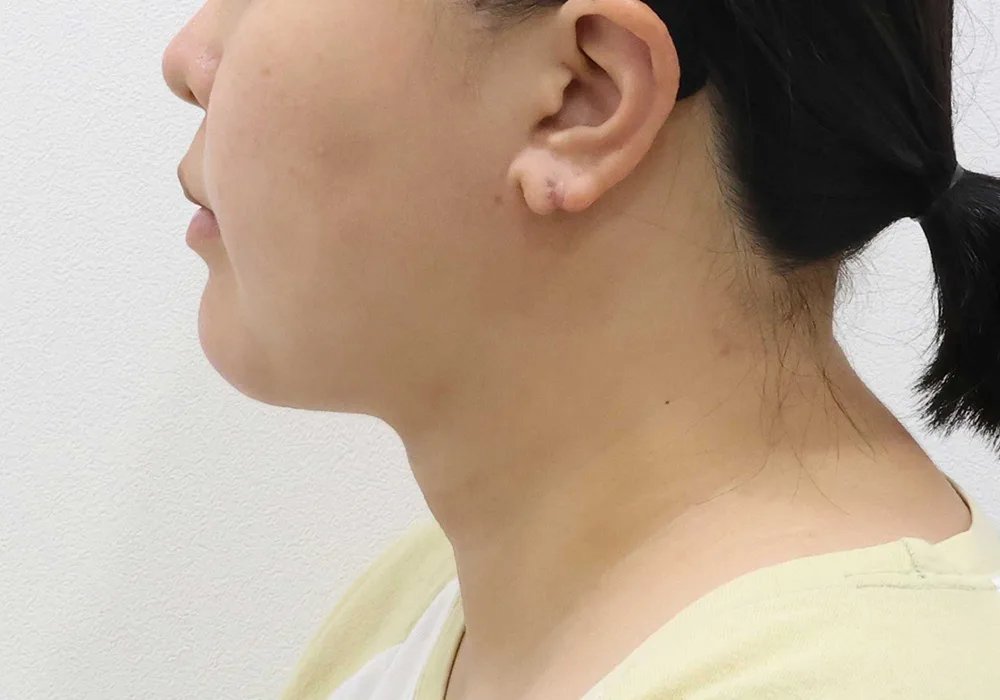
Cheek and jaw line cases, with every procedure in the session named

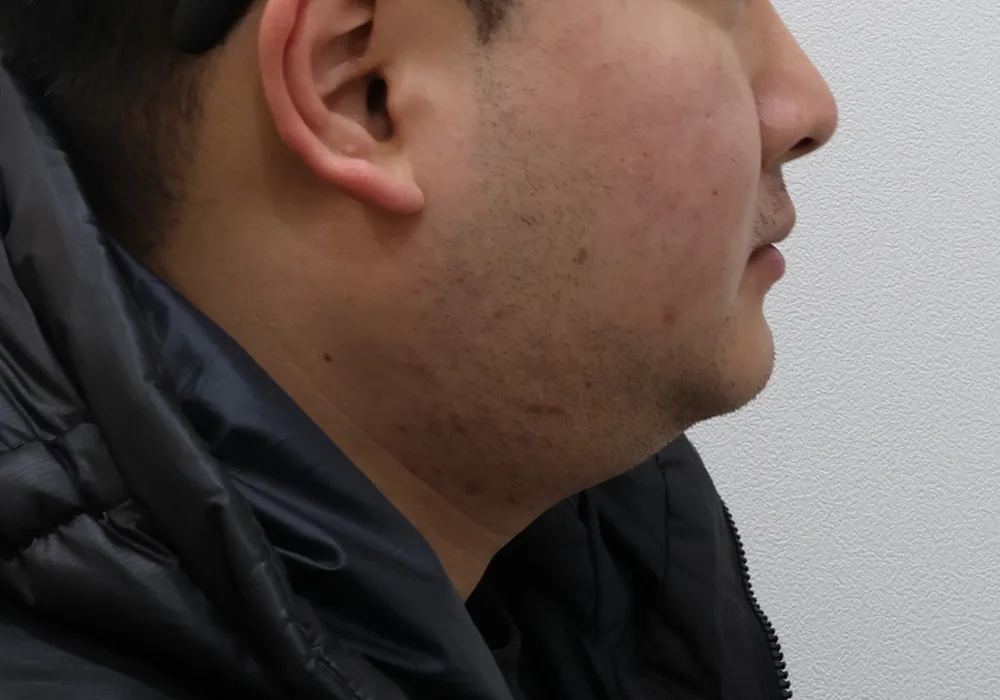
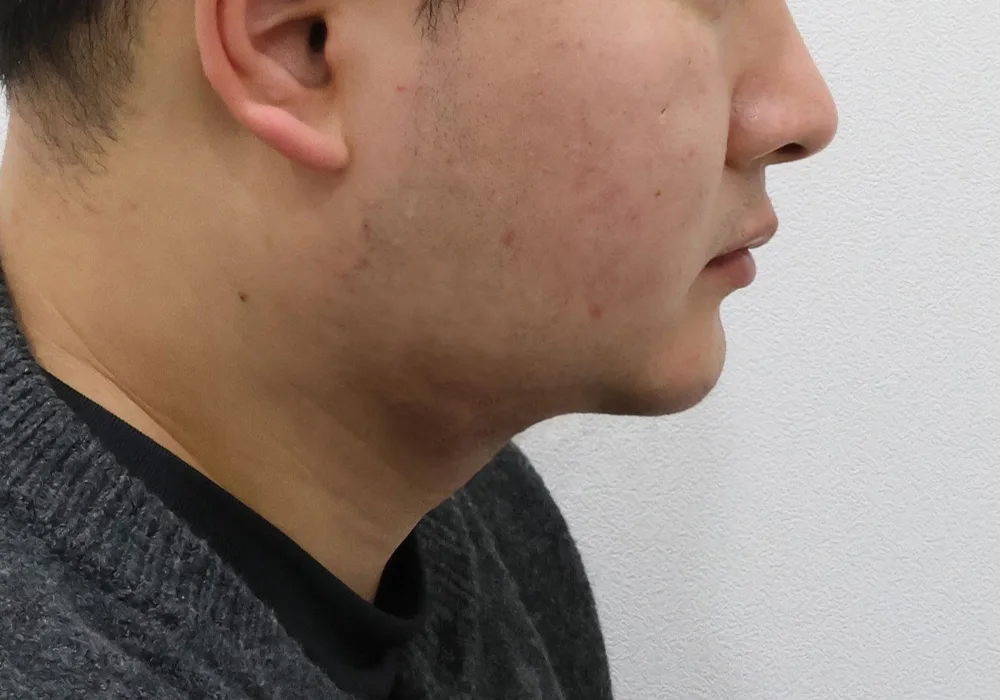
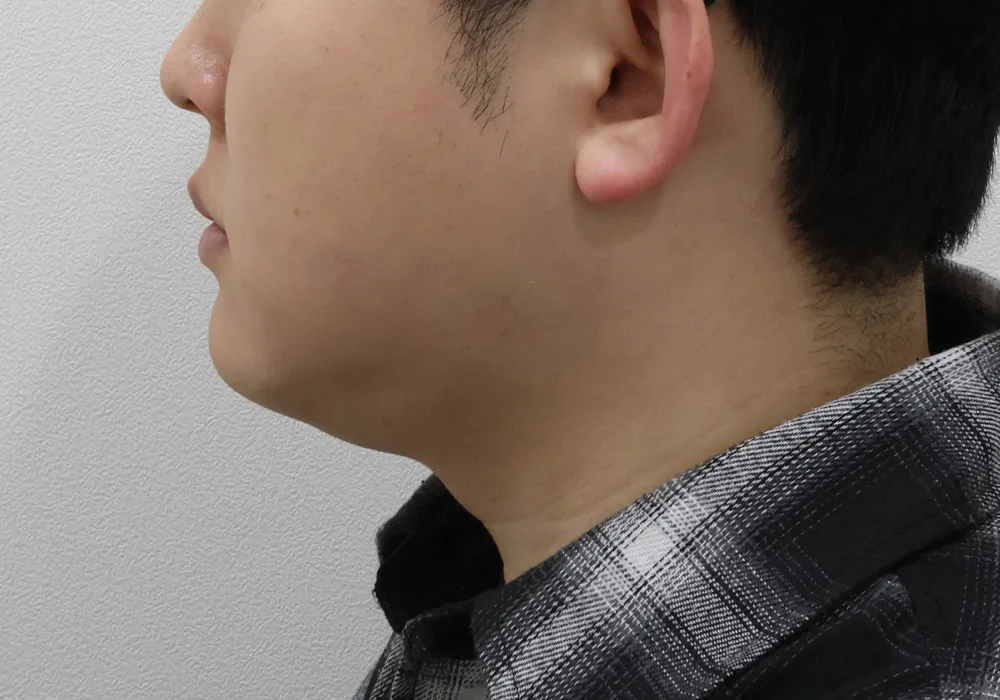
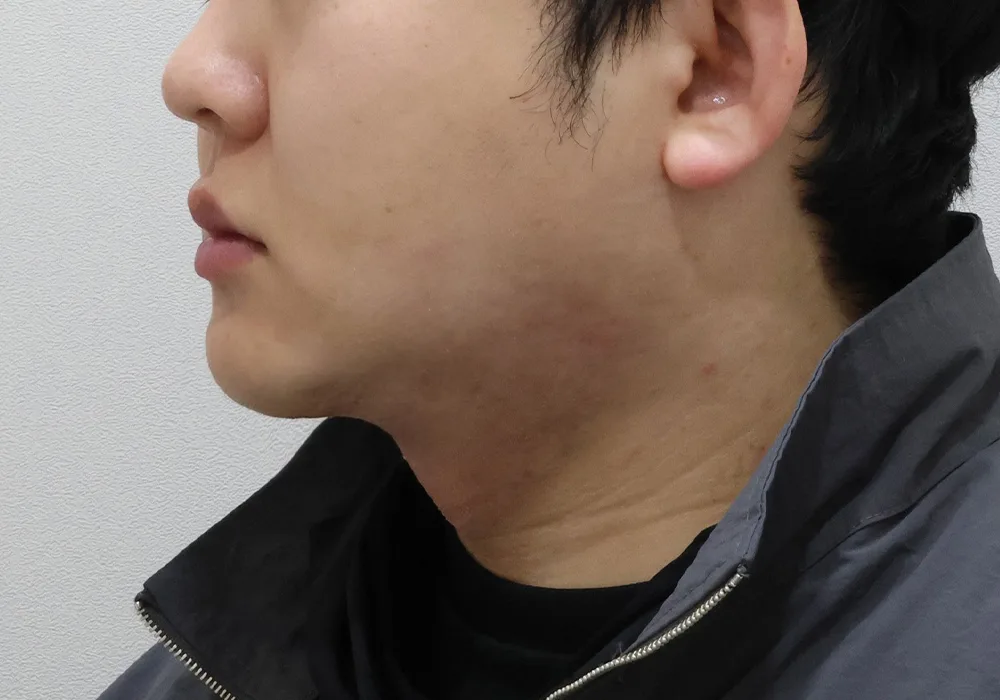
Facial liposuction is rarely the whole of an operation at Rewind, and these four records show why. In each case suction of the cheek travelled with work under the jaw: the neck muscle, the fat beneath it, a salivary gland, or the deep cheek pocket. The caption under each pair lists the full session, so that nothing in the change you can see is credited to the cannula alone.

Rewind patients — cheek and jaw line

Profile view before cheek, jaw line and double-chin liposuction with platysma and salivary gland work Profile view after cheek, jaw line and double-chin liposuction with platysma and salivary gland work BEFOREAFTER
case 01
Cheek, jaw line and double-chin liposuction + platysma tightening + salivary gland reduction
Individual results may vary.
Profile view before cheek and double-chin liposuction with deep platysma work and buccal fat removal Profile view after cheek and double-chin liposuction with deep platysma work and buccal fat removal BEFOREAFTER
case 02
Cheek and double-chin liposuction + deep platysma work + buccal fat removal + subplatysmal fat removal
Individual results may vary.
Side view before cheek liposuction with double-chin liposuction and platysma tightening Side view after cheek liposuction with double-chin liposuction and platysma tightening BEFOREAFTER
case 03
Cheek liposuction + double-chin liposuction + platysma tightening
Individual results may vary.
Profile view before facial and double-chin liposuction with platysma tightening and buccal fat removal Profile view after facial and double-chin liposuction with platysma tightening and buccal fat removal BEFOREAFTER
case 04
Facial and double-chin liposuction + platysma tightening + buccal fat removal
Individual results may vary.

All four pairs are Rewind patients, photographed at the clinic from the same angle and under the same light on both visits, and published without retouching. Because each session combined several procedures, no single line item explains the difference between the frames. Bleeding, swelling, bruising, altered sensation, contour irregularity and scarring are possible after any operation, and results vary between individuals.

Areas

How the face is divided

Side cheek, front cheek, jaw line: which areas are quoted separately?

Rewind's price list does not sell a face. It sells areas, and the areas exist because the fat in each behaves differently and the access point for each is placed differently. Reading which of them is carrying the volume is the first thing that happens at the examination.

area 01
Side cheek
The fullness that widens the face when you look at it from the front, sitting over and behind the line of the jaw. It is listed and priced on its own in the clinic's surgical tariff.
area 02
Front cheek
The softer volume nearer the mouth, which blunts the transition from cheek to jaw. Also priced on its own, and frequently the area patients did not realise was the one they were reacting to.
area 03
Jaw line and under the chin
Suction here is quoted together as one submental item, because the two sit on the same plane. Where the neck muscle has slackened beneath it, the operation continues into double-chin liposuction with platysma tightening.
area 04
The deep compartments
Fat inside the cheek pocket and fat gripping the neck muscle are outside the reach of any cannula. They are removed by hand through separate operations, and they are the usual reason a suction-only plan is declined.
Steps

In sequence

How is cheek liposuction carried out, and where does the sequence continue?

Rewind publishes facial liposuction as the opening move of a six-step contour operation. Steps one and two are the suction itself; everything after that exists because suction has a boundary. How far down the list your own plan travels is decided before the operation, not during it.

01Access

A minimal incision, placed to keep the mark small

The clinic's published first step is a minimal incision made to limit scarring, through which the subcutaneous fat layer is suctioned. Where the access points sit for a cheek-only plan is not printed on the clinic's pages, and the surgeon marks them on your face at the examination.

02Suction

The layer between skin and muscle is thinned, not emptied

A cannula passes through that layer and removes fat evenly across the area being treated. Leaving a consistent thickness behind is what keeps the surface smooth, and it is the reason a treated area is thinned to a judgement, never stripped down to the muscle.

03Boundary

Where the cannula stops, hand work begins

Fat clinging to the neck muscle in beads and fat lying inside the muscle will not travel through a cannula. Rewind's third and fourth published steps take them out piece by piece and then tighten the slackened muscle, which is a separate operation with its own listing.

04Close

Sutures, then a week of compression

The access points are closed and a compression dressing goes on. For the combined chin and neck operation the clinic records a scar of about 2 cm under the chin and about 0.5 cm behind each ear, and describes both as hard to see once healed.

Operating room at Rewind Plastic Surgery prepared for facial contour surgery
Fig. 02 — One theatre, one operator, for every step in the sequence
Rewind

Why here

Why suction alone rarely settles a blurred jaw-to-neck border

Rewind states its own position on this bluntly on its Korean page: improving a heavy lower face is not completed by suction, because the muscle, the fat gripping it and the gland beneath the jaw all have to be considered before a smooth line results. That is an argument against overselling the cannula, made by the clinic that owns the cannula.

01Scope

Each area is a separate line, so nothing is bundled in

Side cheek, front cheek, chin and jaw line, muscle tightening and gland reduction all carry their own prices. A quotation is assembled from the areas your examination called for, and an area you did not need cannot arrive inside a package.

02Limits

The finding that suction cannot answer is named before booking

Where the fullness is skin that has descended, or a deep compartment, or a gland pushing below the jaw, Dr. Choi says so at the chair. A patient who books cheek suction for a problem living under the muscle has bought the wrong operation, and it is cheaper to discover that before the date.

03Continuity

Surface and depth belong to the same surgeon

Because one operator handles the suction, the muscle and the deeper compartments, the plan does not have to be split between people with different instruments. International patients are supported in their own language from the first message onward, and Rewind holds KHIDI registration for foreign patients.

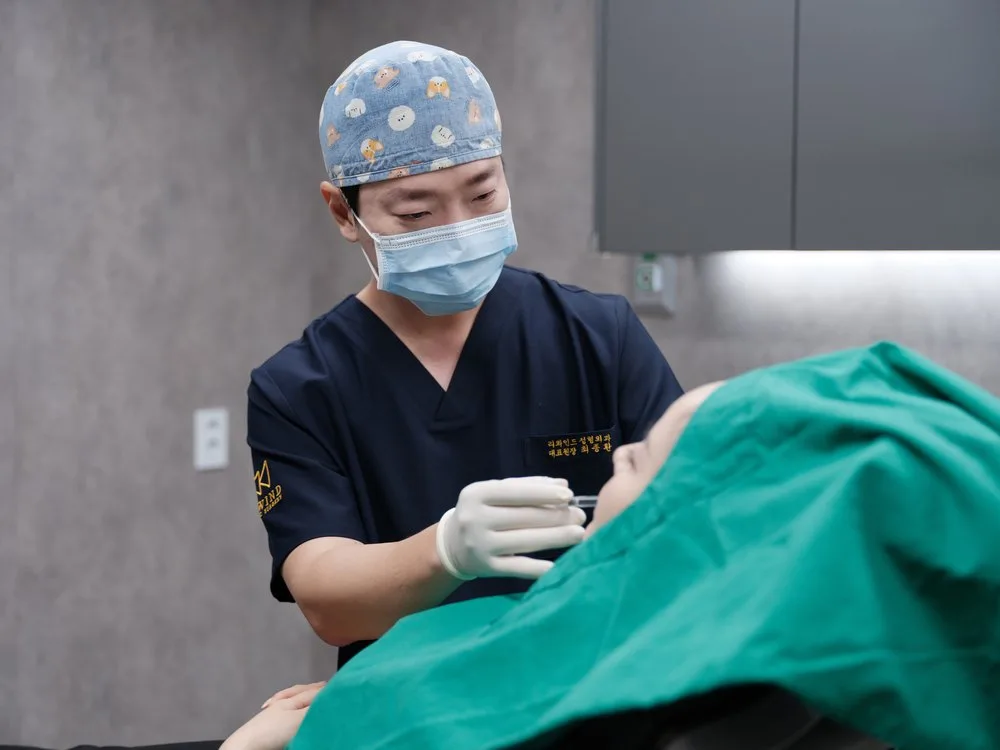
Dr. Jonghwan Choi assessing a patient's cheek and jaw line at consultation
Fig. 03 — Surface fat and deep fat feel different under the hand
Theatre

In the operating room

Fourth and fifth floors: where facial liposuction is performed

Patient prepared and draped before facial contour surgery at Rewind

Fig. 04 — Marking and draping, with the treated areas agreed in advance

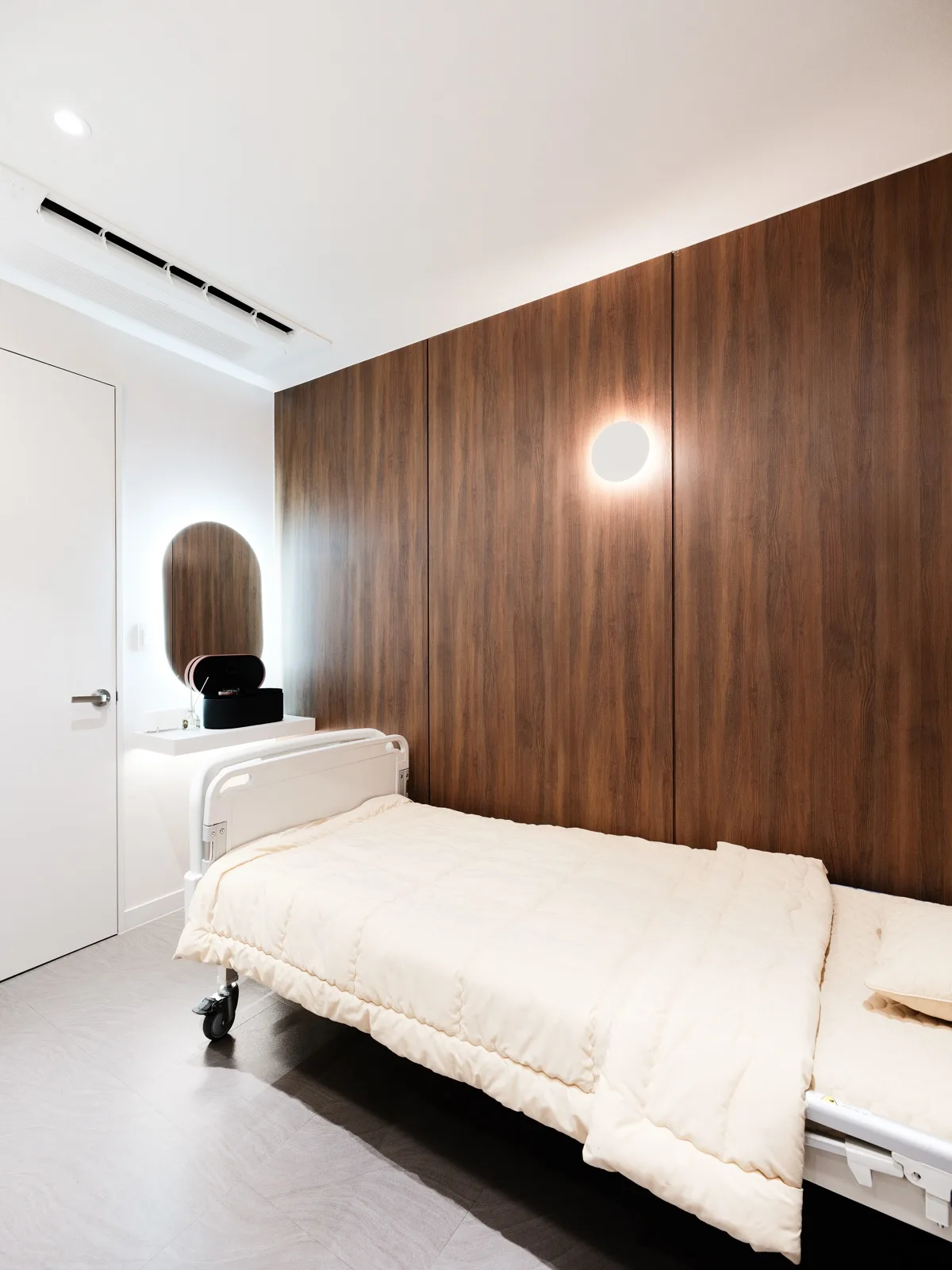
Recovery room at Rewind Plastic Surgery, Apgujeong

Fig. 05 — The room where the compression dressing is fitted

The clinic occupies two floors of the Richro Building in Apgujeong, with consultation, theatre and recovery inside the same practice. Dr. Choi marks the areas himself, operates himself and fits the dressing before you leave. A case booked as cheek suction stays cheek suction; nothing is added in theatre that was not agreed in the consultation room.

Side cheek and front cheek treated as separate areas
Minimal incision, subcutaneous layer only
Deep compartments handled as separate listed procedures
Compression dressing worn for one week
Operated by Dr. Jonghwan Choi
Durability recorded by the clinic at more than five years
Dr. Jonghwan Choi, board-certified plastic surgeon at Rewind

Board-certified plastic surgeon

Dr. Jonghwan Choi holds Korean board certification in Plastic Surgery and is the only operating surgeon at the practice. Rewind is registered with KHIDI as an institution caring for international patients — Reg. M-2025-01-08-09288.

Cost

Pricing

How is facial liposuction quoted, area by area, in Seoul?

The two cheek areas carry the same figure and are quoted independently, so treating one costs half of treating both. Below them sit the items that most often join a cheek plan once the jaw and neck have been examined, which is how a quotation is assembled at the examination, line by line.

Side-cheek liposuctionThe area that widens the face when seen from the front
₩940,000
Front-cheek liposuctionThe volume nearer the mouth, softening the cheek-to-jaw transition
₩940,000
Double-chin and jaw line liposuctionQuoted as one submental item covering both
₩1,760,000
Platysma tightening with chin and jaw line suctionThe combined operation, where slack neck muscle is part of the finding
₩5,390,000
Buccal fat removal, added to the sessionThe deep cheek pocket, taken from inside the mouth
₩1,500,000

List prices, VAT excluded, with the anaesthetic fee contained in each figure. Areas are added or removed at the examination, and the final sum is read back to you line by line before a date is held.

Suitability

Who it suits

Which faces gain from cheek suction, and which are advised against it?

Findings Rewind lists for this operation

  • Cheek fullness and a double chin that stay put while the rest of the body loses weight
  • A wish to soften the facial outline without altering the shape of the features
  • A border between chin and neck that has blurred, leaving the jaw line looking blunt
  • A jaw line that suction alone did not finish, where the plan needs to reach deeper
  • Good skin quality, so the surface can settle onto a thinner layer underneath

Reasons the plan is changed or declined

  • Skin laxity as the leading finding, where thinning the layer beneath can leave more slack behind
  • Fullness produced by the deep cheek pocket or by fat under the neck muscle, neither of which a cannula reaches
  • A salivary gland pushing below the jaw, which is a working organ and a separate decision
  • A short or receding chin, where the profile is partly skeletal and suction changes little
  • Bleeding, clotting or wound-healing conditions, regular medication affecting them, pregnancy, breastfeeding or active infection in the area
After

Recovery

Compression, bruising and the month after facial liposuction

Rewind writes separate post-operative sheets for facial liposuction and for the muscle work, and a combined case is governed by both. Where the two differ, the longer restriction applies. The clinic records bruising and swelling as expected, an early return to ordinary daily life, and durability of more than five years with individual variation.

Week one
The compression dressing stays on
Compression is worn for seven days and does much of the shaping. Keep the access points clean, and contact the clinic promptly about severe pain or a fever; do not wait for the next appointment.
Early weeks
Swelling, bruising and an uneven feel
Both are expected and settle gradually. Firmness and small irregularities under the skin are common while the layer heals; do not press or massage a treated area unless the clinic has told you to.
2–4 weeks
Alcohol, smoking, sauna, hard exercise
The muscle sheet asks for at least two weeks; the facial liposuction sheet extends alcohol, sauna and strenuous exercise to a month. Follow the longer figure when the session included both.
One month
Careful with the neck, patient with the shape
For a month, avoid dropping the chin sharply or turning the head hard to either side. The final contour is judged only once swelling has gone, which is later than most people expect.

Every operation carries risk. For facial liposuction that includes bleeding, infection, prolonged swelling, altered sensation in the treated skin, contour irregularity or asymmetry between the two sides, and scarring at the access points. Rewind records the scars of its combined chin and neck operation as roughly 2 cm under the chin and 0.5 cm behind each ear. Weight change after surgery still alters the result, so tell the surgeon about any planned weight loss as well as about your medication.

Doctor

Professional

At Rewind, one board-certified plastic surgeon carries every case — from the first consultation to the final follow-up. Because a face is a story, and a story deserves a single author.

Dr. Jonghwan Choi, board-certified plastic surgeonRewind,
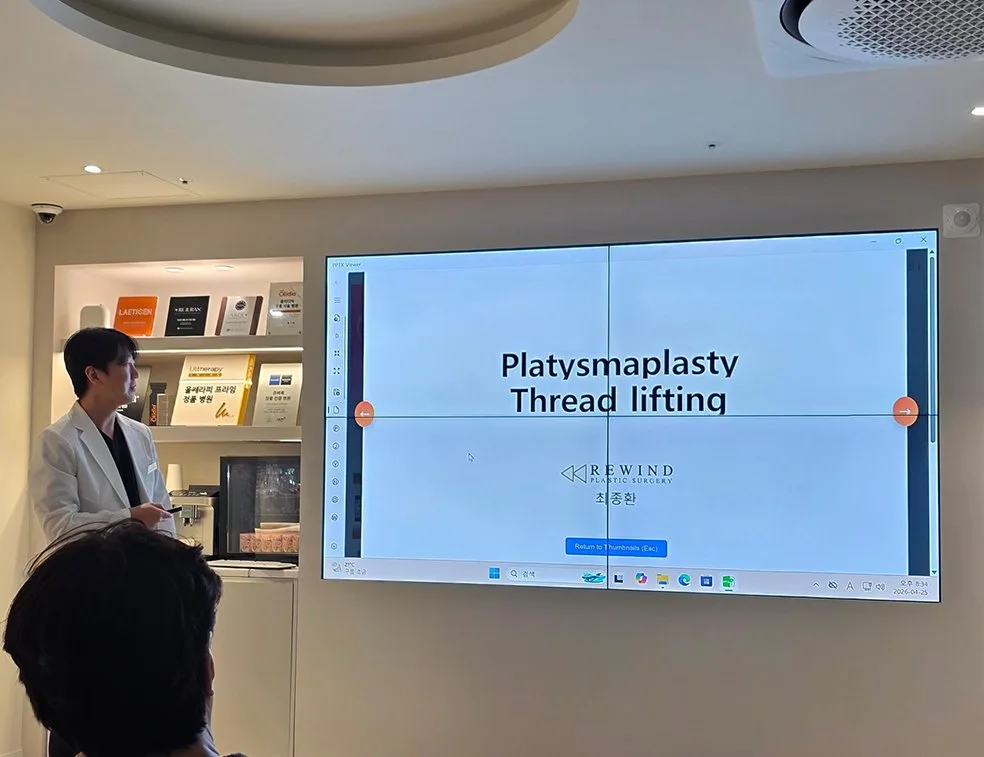
Dr. Jonghwan Choi presenting at an academic session
Fig. 06 — Academic session, presented by the medical director

Rewind's Doctor

Dr. Jonghwan Choi Medical Director

One surgeon, from the first
consultation to the last follow-up.

A board-certified plastic surgeon devoted to anti-aging lifting — with the precision and restraint built through years of craniofacial practice.

Board-certified plastic surgeon (Plastic Surgery)
10 peer-reviewed publications
Medical Director, Rewind Plastic Surgery
Korean Society of Plastic & Reconstructive Surgeons
Former chief director, Apgujeong Y&T Plastic Surgery
Korean Society for Aesthetic Plastic Surgery
J Craniofac Surg · JKMS · Arch Craniofac Surg
Korean Cleft Palate-Craniofacial Association
Voices

Google Reviews

What our patients say.

G 5.0 ★★★★★ 12 Google reviews · Rewind Plastic Surgery, Apgujeong — live-synced from Google Business Profile

"Sample review card — at launch this section pulls the clinic's real Google reviews automatically, shown verbatim with the reviewer's initial and posting date."

AReviewer namePOSTED ON GOOGLE

"Sample review card — reviews are never written or edited by the clinic; only what patients posted on Google appears here."

BReviewer namePOSTED ON GOOGLE

"Sample review card — a 'See all reviews on Google' link takes visitors to the clinic's Business Profile."

CReviewer namePOSTED ON GOOGLE
Ask

Questions

Cheek liposuction in Seoul — questions asked at the examination

Which layer of the face does the cannula actually work in?
The subcutaneous layer, between skin and muscle. Rewind's published sequence opens with a minimal incision and suction of that layer. Fat inside the cheek pocket and fat gripping the neck muscle sit outside it and are removed by hand in separate operations.
Side cheek and front cheek are quoted separately. Why?
They are different areas with different access and different amounts of fat, so the clinic lists them individually at ₩940,000 and ₩940,000. Treating one area only is a normal plan, and it costs what one area costs.
Will suction alone give me a defined jaw line?
Sometimes, and Rewind is clear that often it does not. The clinic's own page states that a heavy lower face is not resolved by suction by itself, because the neck muscle, the fat holding to it and the gland below the jaw all contribute to the line you see in profile.
Is this the same as taking out the deep cheek pad?
No. That operation is performed through an incision inside the mouth and removes a pocket of fat sitting deeper in the cheek. Cheek liposuction is done from the outside and thins the layer just under the skin. The two are listed separately and can be combined in one session.
How long is the compression dressing worn?
Seven days. The clinic asks for a week of compression after this surgery and pairs it with cold compresses early on. Much of the smoothing happens under that dressing, so wearing it as instructed matters more than most patients expect.
Does the fat taken from the cheek come back?
The fat removed from a treated area does not return. Rewind records durability of more than five years for its facial liposuction and muscle operation, with variation between individuals. Fat left behind still responds to weight gain, so a stable weight protects the result.
I lost weight everywhere except my lower face. Does that change the plan?
It is one of the findings Rewind lists for this operation. Cheek and submental fat that survive general weight loss are the pattern the clinic describes, and they tend to be the areas that respond to removal once dieting has stopped helping.
What scars does facial liposuction leave?
Access points are small and placed to keep marks discreet. Rewind publishes specific figures only for its combined chin and neck operation, about 2 cm under the chin and 0.5 cm behind each ear, describing both as hard to see once healed. For a cheek-only plan the surgeon shows you where the access points will sit.
My cheeks sag more than they bulge. Is that the same problem?
It is a different one. Sagging is a question of support, and taking fat out from under loose skin can leave more slack behind instead of less. Where descent leads the examination, the conversation moves to the lifting operations before anything is suctioned.
What is restricted during the month after surgery?
Alcohol, smoking, sauna and strenuous exercise, with the muscle sheet asking for at least two weeks and the facial liposuction sheet up to a month. For a month, also avoid dropping the chin sharply or turning the head forcefully to either side.
Can facial liposuction be repeated if the result falls short?
Rewind keeps a separate listing for revision of the combined liposuction and muscle operation, including cases operated elsewhere. Whether a second procedure is appropriate depends on what the examination finds the first one left behind, and the answer is sometimes a different operation.
How does the surgeon choose between suction, the deep pocket and a lift?
By examining the face rather than a photograph. Surface fat, deep fat and descended tissue feel different under the hand, and each points to a different listing. Dr. Choi names which of the three is driving your profile before any date is offered.
Booking

Reservation

REWIND,booking

Tell us what you are considering — we reply within one business day, in your language.

Scientific evidence

Published research on facial and neck liposuction technique

Facial suction has a thinner literature than the neck does, and the papers below reflect that: a chapter on contouring the neck and face, a technical description of suctioning the jowl region, and two studies of local-anaesthetic dosing from the wider liposuction field. They describe the class of operation, and none of them describes a protocol used at this clinic.

These references cover liposuction of the face and neck as a published surgical class. They are not studies of Rewind Plastic Surgery, they do not forecast an individual result, and the anaesthetic doses, devices and settings reported in each belong to the authors of that paper alone.