Non-Surgical · Radiofrequency

Thermage FLX

Monopolar radiofrequency, quoted by the shot

Gangnam, Seoul | Board-certified plastic surgeon, Dr. Jonghwan Choi
KHIDI-registered for international patients · Apgujeong Rewind

Thermage FLX Thermage FLX Thermage FLX Thermage FLX Thermage FLX Thermage FLX 
Define

Thermage FLX

What is Thermage FLX?

The short answer

Thermage FLX is a monopolar radiofrequency treatment. A single-use tip sends a high-frequency current through the skin; the tissue's own resistance turns that current into heat in the dermis, which contracts the collagen already there and prompts fibroblasts to build more over the following months. The surface is cooled during every pulse, so the skin stays closed and nothing is left behind in it.

Source: Rewind device documentation (Korean original), which records firmer skin, lifting, improvement in fine lines, in skin texture and in hydration as the effects of this device.

Rewind holds the FLX generation of the system. What you are quoted here is a number of shots, and that number is set by the tip the clinic opens for your session.

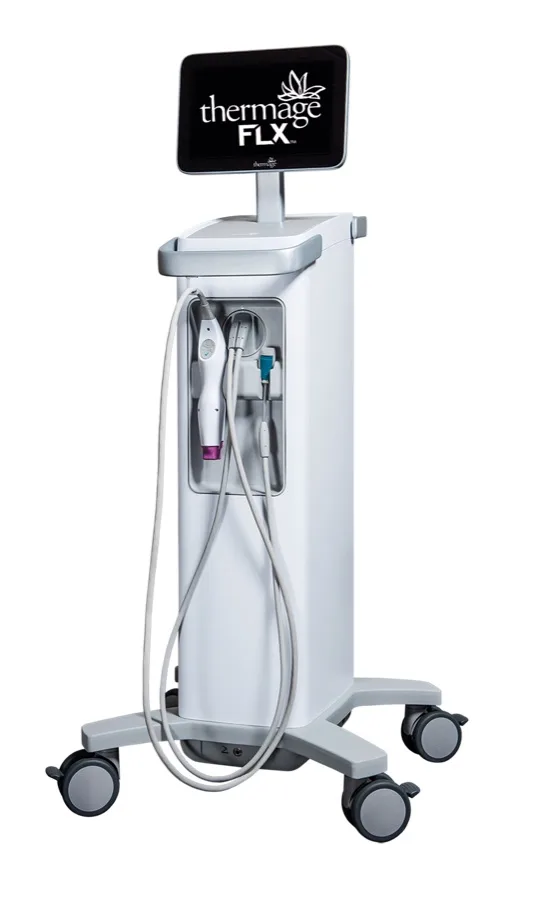
Thermage FLX radiofrequency system at Rewind Plastic Surgery, Apgujeong
Fig. 01 — Thermage FLX · Solta Medical
Cover

Coverage

How far does one radiofrequency plan reach?

Coverage here is counted in shots, not in zones, so the question at consultation is how much face a given count can treat properly. The four groupings below are how Rewind's published plans are organised.

plan 01
Full face
The plan most patients ask for, quoted as one shot count rather than area by area. Where the count is concentrated is decided after the examination.
plan 02
Lower face & jaw line
Where a softening jaw line takes most of the count. Published radiofrequency work on the lower face used a low-energy, multiple-pass technique for exactly this region.
plan 03
Neck
Planned as its own area with lower settings, because the skin below the jaw is thinner. Whether it belongs in your plan is decided after the doctor has looked at it.
plan 04
Eye area
Treated with a dedicated tip and listed separately as Eye Thermage, with its own shot counts and its own page on this site.
Current

Mechanism

Why radiofrequency reaches a different layer than ultrasound

Both treatments work by heating tissue, and the similarity ends there. Ultrasound is focused to a point deep in the tissue; radiofrequency is a current spreading through a volume of it. That one difference decides the depth reached, the sensation on the table and the kind of face each device suits.

01Current

Heat made by resistance

Monopolar radiofrequency passes current from the tip through the skin toward a return pad. Tissue resists that current, and the resistance is what produces the heat, spread through a volume of dermis instead of concentrated at a single point.

02Cooling

Cold at the surface, heat underneath

Each pulse is paired with cooling of the skin surface, which is what lets the dermis reach a working temperature while the epidermis stays intact. The low-energy, multiple-pass technique published for this device was built around that pairing.

03Response

Contract now, rebuild later

Collagen contracts during the session and new collagen is laid down over the months after it. Histometric work comparing radiofrequency with focused ultrasound describes different patterns of thermal change in the two, and that is the reason a clinic keeps both.

04Tip

The tip counts your shots

A tip is a single-use consumable coded for a set number of pulses. When a plan is described as 600 shots, that figure is the tip itself, and it cannot be stretched to cover more face than it was bought for.

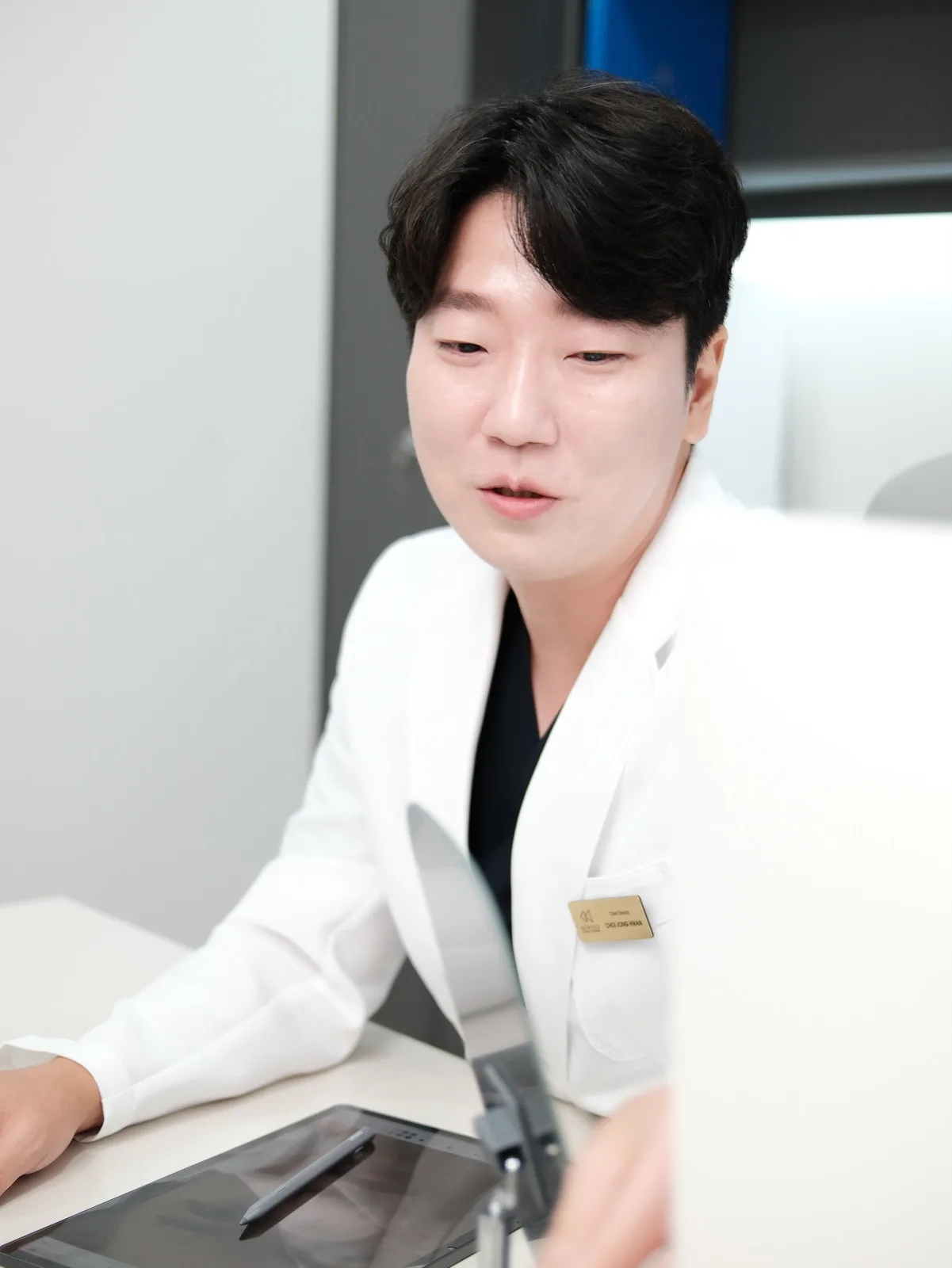
Dr. Jonghwan Choi reviewing a treatment plan at Rewind Plastic Surgery
Fig. 02 — The plan and the shot count are settled before the session begins
Rewind

Why here

Why plan radiofrequency where surgery is also performed?

Energy devices are sold everywhere in this district. What changes in a surgical practice is the range of answers available when the honest one is that heat will not be enough.

01Diagnosis

Skin that can still tighten, and skin that cannot

Dr. Choi examines the face before any device is named. Heat works on tissue that still has elasticity to give; where tissue has descended, he says what an operation would do and lets you decide with that on the table.

02Alternatives

The device is chosen against the others in the room

Focused ultrasound, microwave, microneedling radiofrequency and three thread programmes sit in the same clinic. A recommendation for this system means the alternatives were weighed and set aside for a reason you are free to ask about.

03Pricing

One published rate, counted in shots

The shot counts further down come from Rewind's own list, VAT excluded, and the same figure is quoted at the desk. Nothing is folded into a package price you cannot take apart afterwards.

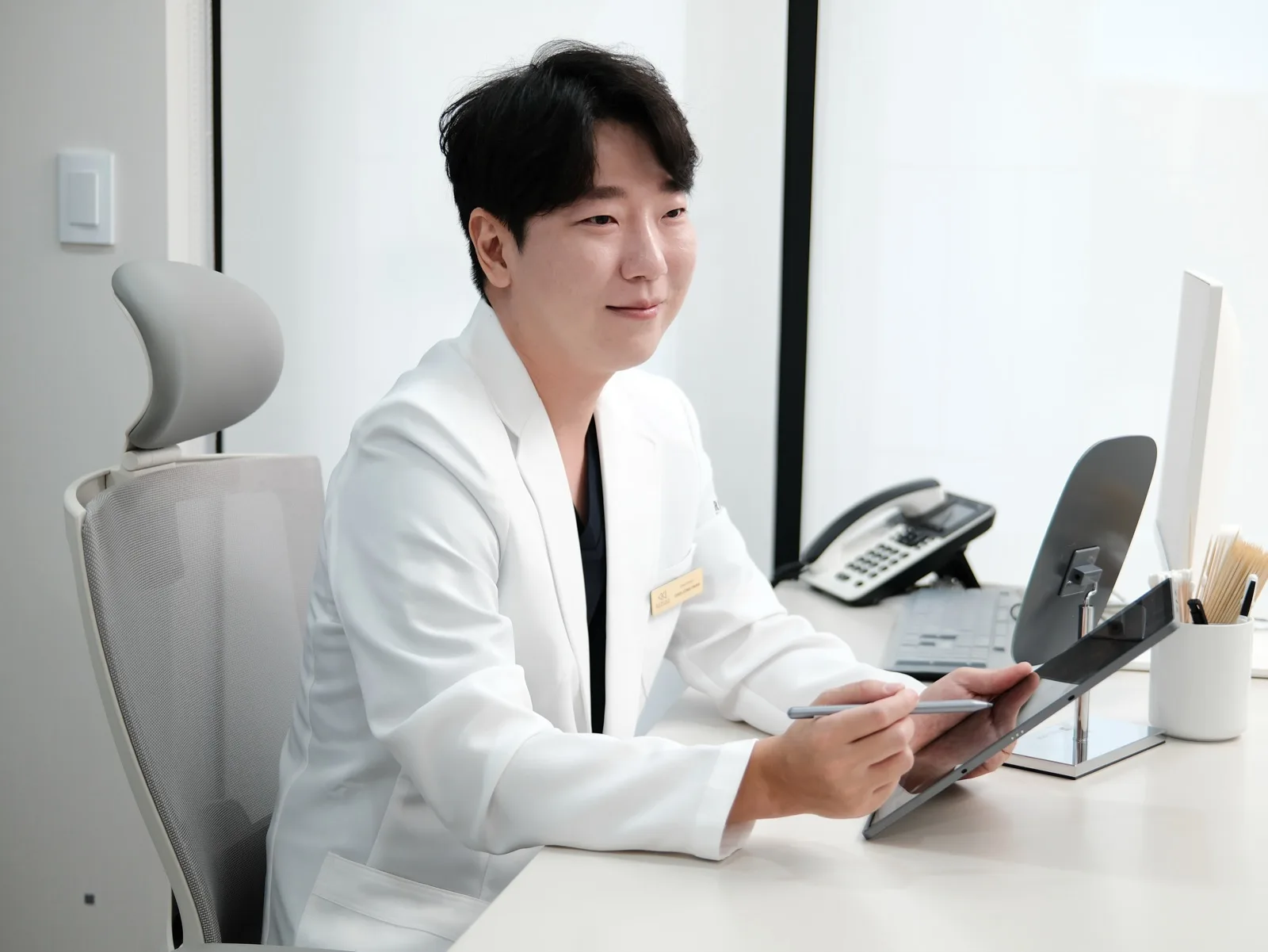
Consultation with Dr. Jonghwan Choi at Rewind Plastic Surgery
Fig. 03 — The examination comes before the device is chosen
Session

In the treatment room

What a Thermage FLX session looks like here

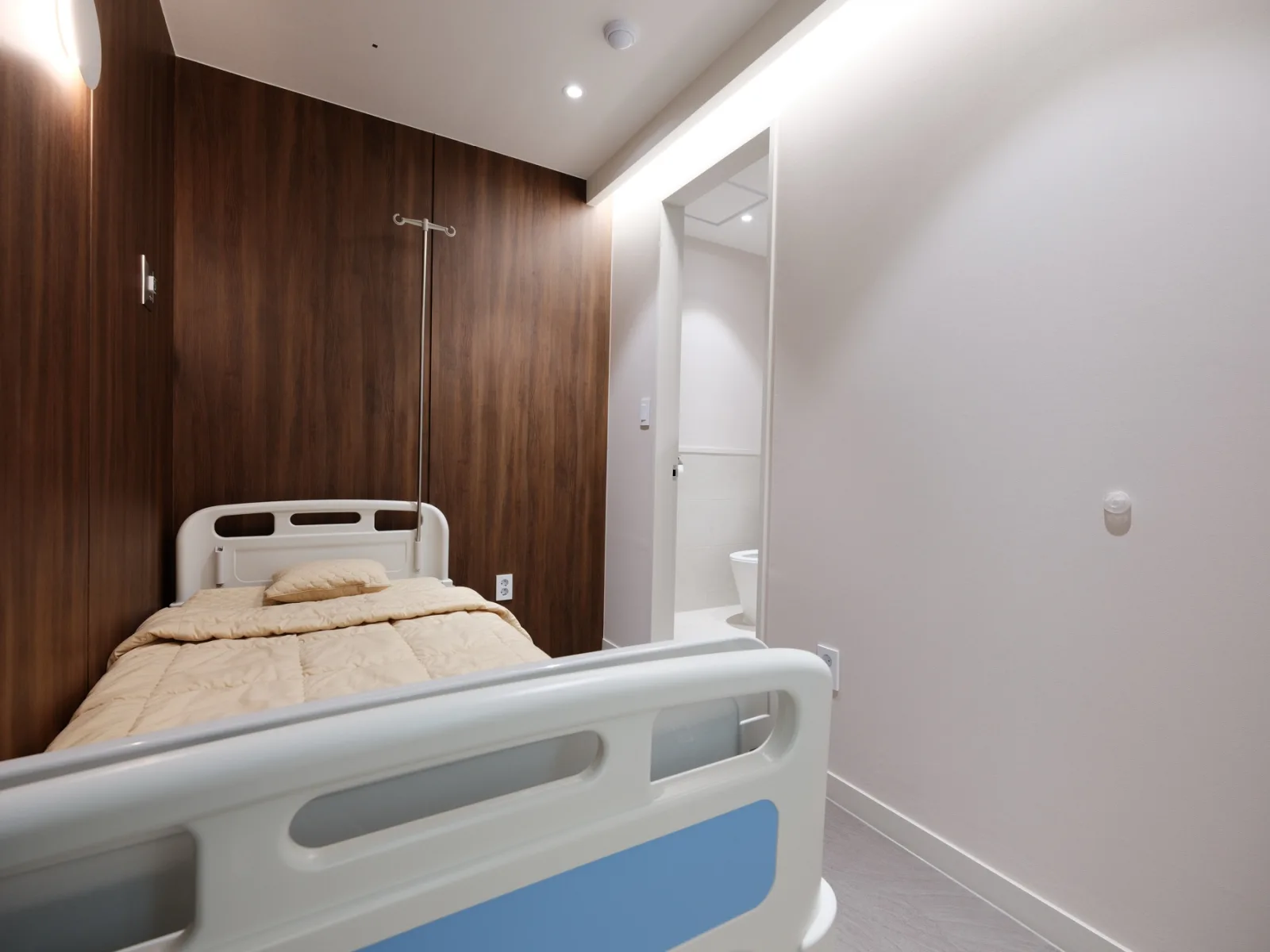
Private room on the treatment floor at Rewind Plastic Surgery

Fig. 04 — A private room on the treatment floor

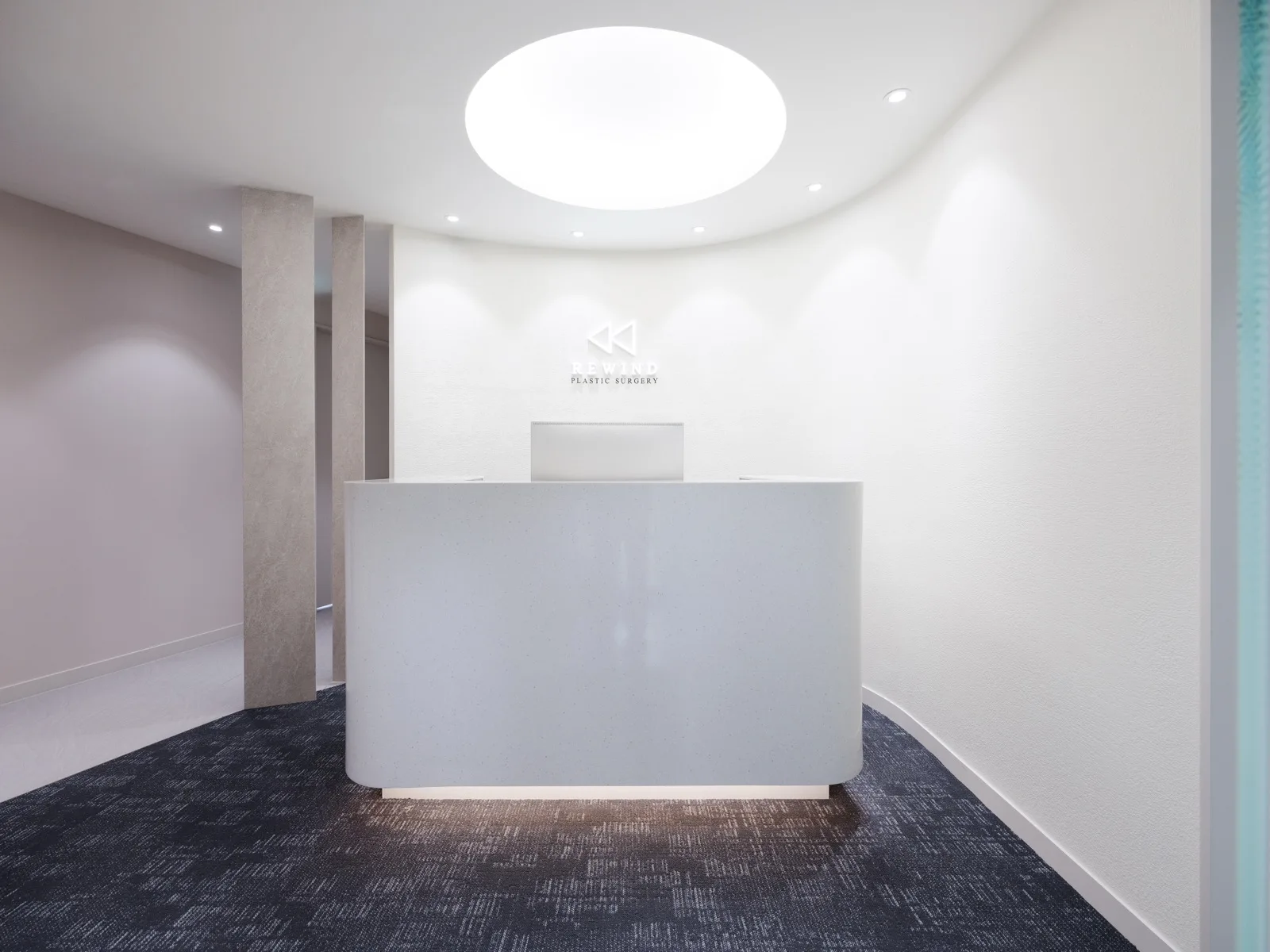
Reception at Rewind Plastic Surgery, Richro Building, Apgujeong

Fig. 05 — Reception, Richro Building

This system is one of seven lifting devices held at Rewind, beside focused ultrasound, a second monopolar radiofrequency platform, microneedling radiofrequency, microwave and InMode. The plan is set by the medical director and the session runs in the clinic on the fourth and fifth floors of the Richro Building. Radiofrequency lifting is among the treatments Rewind runs Monday, Tuesday, Wednesday and Friday until 19:00 and Saturday until 16:00, by appointment.

Monopolar radiofrequency, FLX generation
Target: the dermis, with surface cooling
Single-use tip, coded by shot count
Face plan listed at 600 shots
Eye area treated with a separate tip
Makeup and routine possible the same day

A fair thing to ask anywhere: request that the tip packaging be opened in front of you. The box carries the shot count, and that count is what your quote is built on. No anaesthesia protocol and no session length are published for this device, so ask for both when you book and have the answer written into the plan.

Result

Before & After

Photographs for this device, and why they are missing

Rewind photographs its own patients under fixed lighting and releases the sets treatment by treatment. Nothing has been released for radiofrequency lifting yet, so these frames stay empty until it is. Case photographs taken from a device maker's brochure would tell you nothing about the work done in this clinic.

Radiofrequency lifting — case pairs pending release

BEFORE PHOTO
AFTER PHOTO
BEFOREAFTER
case — radiofrequency
Thermage FLX
Individual results may vary.
BEFORE PHOTO
AFTER PHOTO
BEFOREAFTER
case — radiofrequency
Thermage FLX
Individual results may vary.
BEFORE PHOTO
AFTER PHOTO
BEFOREAFTER
case — radiofrequency
Thermage FLX
Individual results may vary.
BEFORE PHOTO
AFTER PHOTO
BEFOREAFTER
case — radiofrequency
Thermage FLX
Individual results may vary.

When a set is released it will be shown the way every other set on this site is shown: Rewind's own patients, identical lighting, uncropped frames, and a caption naming every treatment carried out in that case. Individual results may vary. Redness, swelling and temporary tenderness can follow a radiofrequency session, and an examination comes before any decision.

Cost

Pricing

Thermage FLX cost in Seoul, counted by shots

One rate per plan, published before you walk in. The face plan and the two eye plans are listed apart from each other because they run on different tips.

Thermage FLX 600 shotsFace plan; where the shots are concentrated is set at consultation
₩2,900,000
Eye Thermage 225 shotsDedicated eye tip, listed as its own treatment
₩1,200,000
Eye Thermage 450 shotsExtended eye plan on the same tip type
₩1,650,000

List prices, VAT excluded; anaesthetic fees are included in the listed price where anaesthesia is used. Rewind also runs a firming package built around a 900-shot radiofrequency plan combined with other treatments, and packages are quoted at consultation. Ask which tip and which count your quote assumes before you agree to it.

Fit

Suitability

Who does radiofrequency tightening suit?

Where heat earns its place

  • Skin that has lost firmness but still recoils when you press it and let go
  • Fine lines, rough texture and dullness sitting alongside mild laxity
  • A schedule with no room for downtime, since makeup and work are possible the same day
  • Maintaining a result from an earlier treatment or from surgery done years ago

Raised at consultation first

  • Sagging that has already descended. Heat tightens and cannot reposition tissue, and the doctor will say when an operation is the better use of your money
  • Very thin skin or lost facial volume, where tightening alone can read as hollow
  • An implanted electronic device such as a pacemaker, or metal within the treatment area
  • Pregnancy, breastfeeding, an active skin infection or inflamed acne where the tip would pass
After

Recovery

The week after a radiofrequency session

Rewind's written instructions for this device run to four lines. They matter most in the first seven days, while the skin is still settling.

Same day
Cool water only
Wash with cool or lukewarm water and a low-irritant cleanser. Makeup and ordinary activity are possible straight away.
Day 1–3
Redness that fades
Temporary redness, swelling and mild tenderness are listed by the clinic as expected, and they settle on their own.
First week
What to leave out
Alcohol, heavy exercise, sauna and the hot room are set aside for a week. Sun protection goes on every morning without exception.
Months on
The slower half
The clinic's own figure for how long its device lifting holds is six months to over a year, and it moves with skin condition and with the plan.

Published safety data for monopolar radiofrequency describe blistering and burns, prolonged redness, altered sensation and, uncommonly, loss of fat beneath the treated skin. Tell the doctor about fillers, threads and other energy treatments carried out in the same area, and about any implanted electronic device, before the plan is drawn.

Doctor

Professional

At Rewind, one board-certified plastic surgeon carries every case — from the first consultation to the final follow-up. Because a face is a story, and a story deserves a single author.

Dr. Jonghwan Choi, board-certified plastic surgeonRewind,
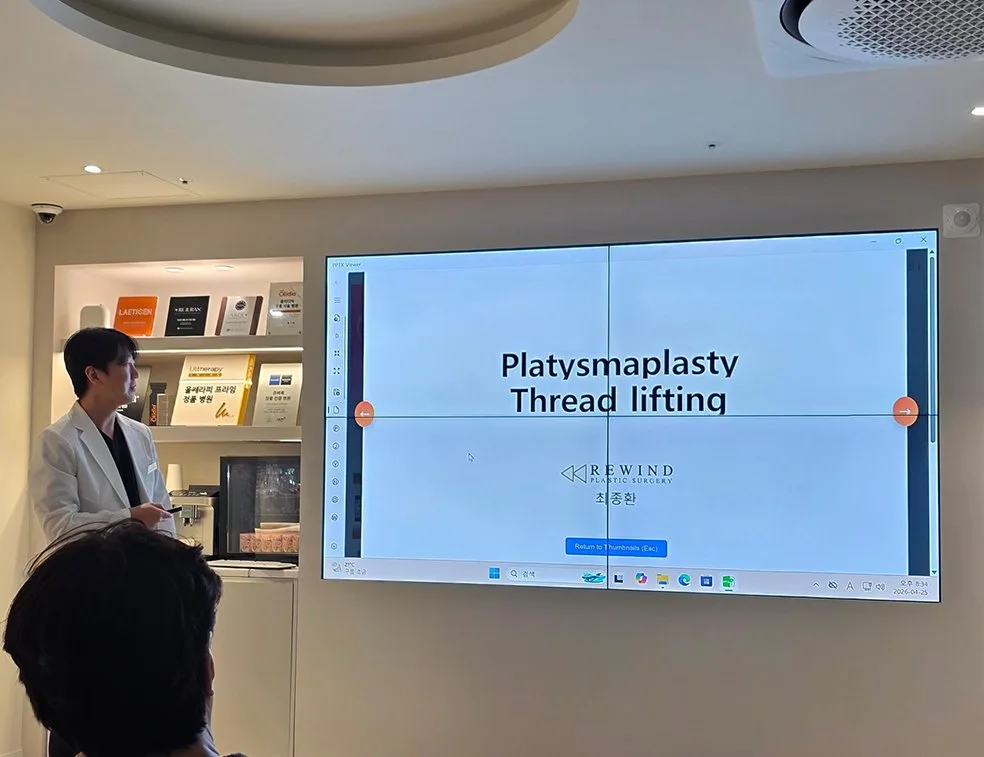
Dr. Jonghwan Choi presenting at an academic session
Fig. 06 — Academic presentation, thread-lifting session

Rewind's Doctor

Dr. Jonghwan Choi Medical Director

One surgeon, from the first
consultation to the last follow-up.

A board-certified plastic surgeon devoted to anti-aging lifting — with the precision and restraint built through years of craniofacial practice.

Board-certified plastic surgeon (Plastic Surgery)
10 peer-reviewed publications
Medical Director, Rewind Plastic Surgery
Korean Society of Plastic & Reconstructive Surgeons
Former chief director, Apgujeong Y&T Plastic Surgery
Korean Society for Aesthetic Plastic Surgery
J Craniofac Surg · JKMS · Arch Craniofac Surg
Korean Cleft Palate-Craniofacial Association
Voices

Google Reviews

What our patients say.

G 5.0 ★★★★★ 12 Google reviews · Rewind Plastic Surgery, Apgujeong — live-synced from Google Business Profile

"Sample review card — at launch this section pulls the clinic's real Google reviews automatically, shown verbatim with the reviewer's initial and posting date."

AReviewer namePOSTED ON GOOGLE

"Sample review card — reviews are never written or edited by the clinic; only what patients posted on Google appears here."

BReviewer namePOSTED ON GOOGLE

"Sample review card — a 'See all reviews on Google' link takes visitors to the clinic's Business Profile."

CReviewer namePOSTED ON GOOGLE
Ask

Questions

Thermage FLX — what patients ask before booking

What is Thermage FLX?
A monopolar radiofrequency treatment for skin laxity. A single-use tip sends current through the skin, the tissue's resistance turns it into heat in the dermis, and that heat contracts collagen and prompts more to form over the months afterwards. The surface is cooled during each pulse.
Is radiofrequency the same thing as ultrasound lifting?
No. Ultrasound is focused to a point deep in the tissue; radiofrequency spreads through a volume of dermis. Histometric work comparing the two describes different patterns of thermal change, and that is the reason Rewind keeps both systems and chooses between them at the examination.
How many shots will I need?
The face plan Rewind publishes is 600 shots, and the eye plans are 225 or 450 on a separate tip. A higher count covers more area at the same energy; it is no way to buy a stronger result. The doctor sets the figure after examining the skin.
How do I know the tip has not been used before?
The tip is a single-use consumable, sealed in a box printed with its shot count. Ask for it to be opened in front of you at the start of the session. That printed count is the count your quote was built on, and a tip cannot be recharged for a second patient.
When do the results show, and how long do they hold?
Part of the tightening is immediate and part arrives as new collagen forms over the months after the session. The clinic's own figure for how long its device lifting holds is six months to over a year, moving with skin condition and with the plan chosen.
What does the treatment feel like?
Each pulse is a short wave of heat against a cooled surface, and how strong that reads depends on the area and the energy chosen. Settings are adjusted as the session runs. Comfort measures are agreed when you book, since no fixed protocol is published for this device.
Is there any downtime?
Very little. The clinic lists temporary redness, swelling and mild tenderness, all of which settle on their own, and normal activity including makeup is possible the same day. Alcohol, heavy exercise and the sauna are left out for a week.
Can radiofrequency tighten the neck?
The neck is planned as its own area, with lower settings because the skin there is thinner. Published radiofrequency trials cover the face and the neck, and whether both go into your plan is decided once the doctor has examined the skin below the jaw.
Can I have radiofrequency and ultrasound in the same plan?
Both systems are held here, and a split-face trial has compared monopolar radiofrequency directly with microfocused ultrasound. Whether to combine them, and in which order, is a judgement made at consultation and depends on which layer of your face needs the work.
What age does this treatment make sense at?
It is a question of elasticity more than of age. Skin that still recoils responds to heat; tissue that has descended needs repositioning, which heat cannot do. Patients in their thirties and in their sixties both come for it, and the examination decides which group a face belongs to.
What can go wrong?
Published safety data for monopolar radiofrequency report blistering and burns, prolonged redness, altered sensation and, uncommonly, loss of fat beneath the treated skin. Tell the doctor about fillers, threads or other energy treatments in the area, and about any implanted electronic device.
Who plans the session, and can it be handled in English?
Dr. Jonghwan Choi, the medical director and a board-certified plastic surgeon, examines the face and sets the shot count before the session is carried out in the clinic. Interpreter-assisted consultation is arranged for international patients, and Rewind holds KHIDI registration for treating foreign patients.
Booking

Reservation

REWIND,booking

Tell us what you are considering — we reply within one business day, in your language.

Scientific evidence

Published research on monopolar radiofrequency tightening

These papers describe monopolar radiofrequency tightening as a treatment class, in patients treated elsewhere and with the settings each study used. They are not studies of Rewind Plastic Surgery, and no specific outcome follows from them for any individual face.