Surgery · Contour & Fat

Facial Fat Grafting

Your own tissue, moved one region at a time

Apgujeong, Seoul | Board-certified plastic surgeon, Dr. Jonghwan Choi
Autologous fat transfer, priced by region · KHIDI-registered for international patients

Facial Fat Grafting Facial Fat Grafting Facial Fat Grafting Facial Fat Grafting 
Define

Facial fat grafting

What does facial fat grafting move, and which parts of it does Rewind put in writing?

The operation, in one paragraph

Facial fat grafting takes a patient's own fat from a donor site on the body and places it into a hollow region of the face in small deposits, so that the tissue around each deposit can supply it with blood. Rewind publishes the operation as five priced listings arranged by region: the upper eyelid, one area with the forehead and temple written out of it, the forehead and temple together, the whole face, and a plan that carries a second session inside a single price. That structure is the clinic's own record. Donor site, preparation method, graft volume, anaesthesia and time in theatre appear nowhere in its material, so none of those figures is stated on this page.

Sources used here: Rewind's fee schedule for fat grafting, and the fat-grafting entry on the clinic's post-operative instruction sheet. Its Korean page for this operation is built from images and carries no descriptive text, so any general statement below is attributed to the surgical literature listed at the foot of the page and is never presented as this clinic's protocol.

Two kinds of statement run through this page, and they are kept apart deliberately. What Rewind publishes, meaning the five regional listings and the instructions it gives after a graft, is attributed to the clinic. What the surgical literature describes, meaning how harvested fat is prepared, where it is laid down and what happens to it over the following months, is attributed to the papers cited at the end. A question that belongs to neither group gets the same answer throughout: the examination settles it, and the surgeon who examines you is the surgeon who operates.

Volume loss and tissue descent are separate findings with separate operations. Grafting adds tissue where a face has gone hollow; it does not reposition anything that has fallen. Where the complaint is a jaw line or cheek that has dropped, the facelift and apple-cheek midface lift pages describe operations that move tissue, and a face can present with both problems at once.
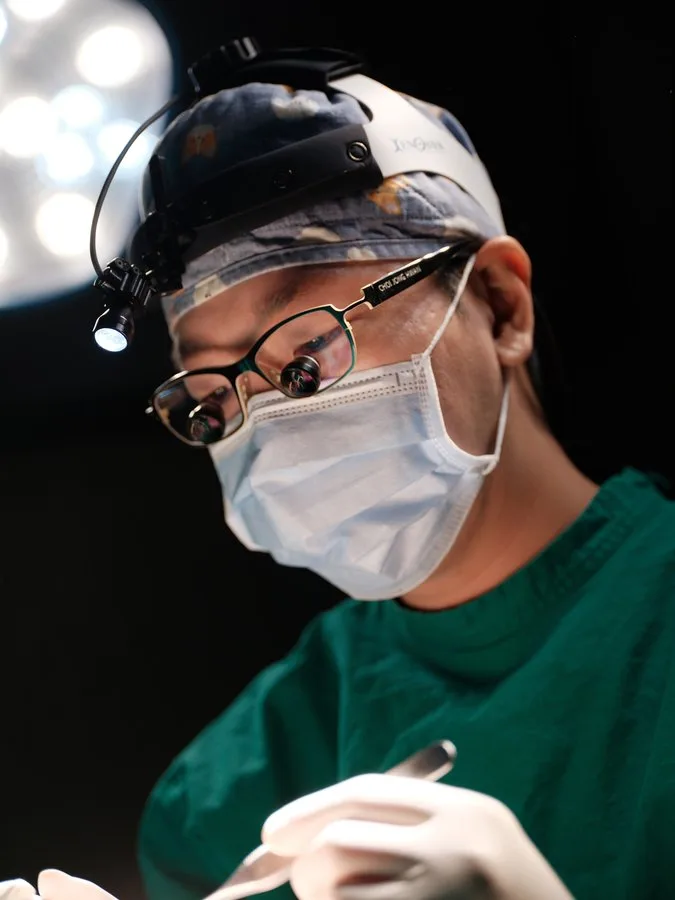
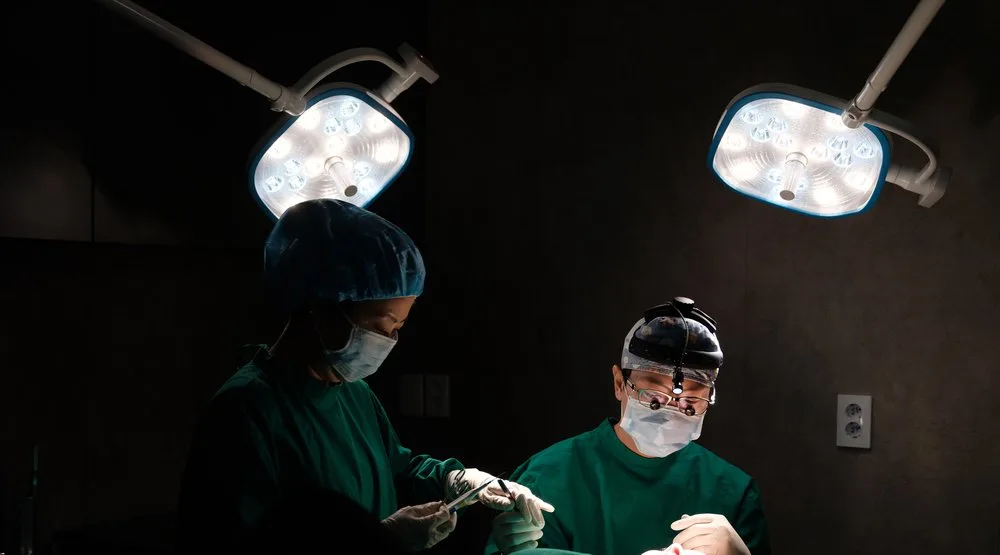
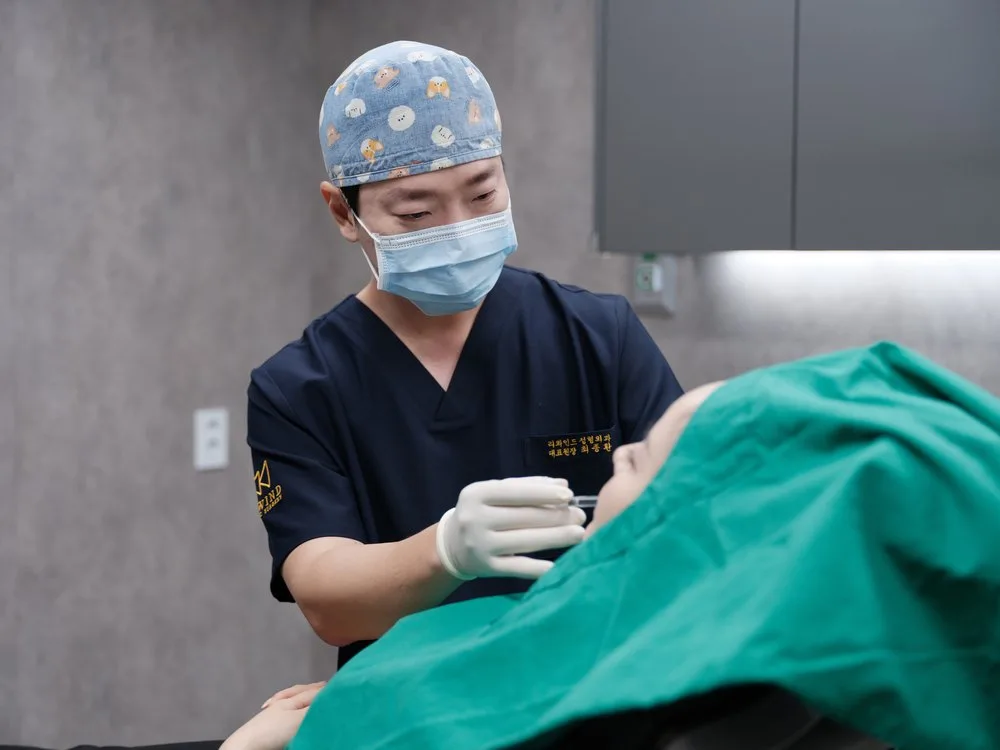
Surgeon at work in theatre at Rewind Plastic Surgery, Apgujeong
Fig. 01 — The operating surgeon at the Apgujeong practice
Result

Case photographs

Where the fat grafting case photographs stand, and why none has been borrowed

Rewind photographs its own patients at the clinic under one lighting set-up and one framing. No fat grafting pair has been released for this page. Volume changes photograph badly when the angle or the light shifts even slightly, so a pair goes up only once the clinic has confirmed written consent, the interval between the two frames and every procedure carried out in that session. Until then the four frames below stay marked as pending, and no case from a lifting or fat-removal operation is dressed up as a graft to fill them.

Rewind patients — grafted regions

BEFORE PHOTO
AFTER PHOTO
BEFOREAFTER
case awaiting release
Temple and forehead, three-quarter view
Individual results may vary. The clinic's own photographs of this region are awaited.
BEFORE PHOTO
AFTER PHOTO
BEFOREAFTER
case awaiting release
Upper eyelid, eyes open
Individual results may vary. The caption will name every procedure carried out in that session.
BEFORE PHOTO
AFTER PHOTO
BEFOREAFTER
case awaiting release
Whole-face plan, frontal view
Individual results may vary. Photographs are published only with the patient's written consent.
BEFORE PHOTO
AFTER PHOTO
BEFOREAFTER
case awaiting release
Settled appearance at a later review
Individual results may vary. The interval between the two frames will be printed with the pair.

No frame on this page is retouched, and none is published without written consent. Individual results may vary, and how much grafted fat settles differs from one person to the next. Grafting can be followed by bruising, prolonged swelling, asymmetry between the two sides, over-correction or under-correction, palpable lumps, oil cysts, fat necrosis, infection and irregularity at the donor site. A consultation with the surgeon comes before any decision.

Scope

Regions on the fee schedule

Which regions does Rewind price separately for a fat graft, and what does the split tell you?

A fee schedule that divides one operation into five lines is describing how the clinic thinks about the face. Read across the four regional entries and the shape of the planning becomes visible before anyone sits down at the consultation desk.

region 01
Upper eyelid
The hollow upper lid carries a line of its own, apart from every other facial region. Published Korean work on grafting into a sunken upper sulcus sorts these cases by whether the lid skin has stretched or the lid itself sits low, which is the kind of distinction an examination has to make first.
region 02
One area, forehead and temple excluded
The per-area listing covers a single region, with the forehead and temple deliberately written out of it. Whether your own hollowing counts as one area or several is a finding at the examination, and a price list cannot answer that question in advance.
region 03
Forehead and temple together
These two share a line of their own, set above the figure for a single area elsewhere on the face. Objective measurement of eyebrow position after grafting to the temple and forehead has been published, and the literature treats the pairing as one region for that reason.
region 04
The whole face
One listing covers the full-face plan, and a fifth entry beside it folds a second session into a single price set below two separate sessions taken one after the other. That entry is the clearest thing the clinic publishes about how grafted volume behaves over time.
Steps

In sequence

How a fat graft is carried out, and which steps this page takes from the literature

Rewind publishes no step list for this operation. What follows is the published sequence for autologous facial fat grafting as a class of surgery, with the papers named at the foot of the page. Each step also marks where the clinic's own record stops, because that boundary is what a patient needs before a consultation.

01Harvest

Fat is taken from a donor site before any facial work begins

Grafted fat has to come from somewhere on the same body, drawn through a cannula from a site with enough supply. Which site Rewind uses, and how much it takes for a given plan, is absent from the clinic's material. The donor area is therefore part of what the surgeon sets out at the examination, along with the bruising to expect there.

02Prepare

Parcel size decides what grafted fat can do for the face

The literature separates the preparations cleanly. Microfat carries volume into a hollow region. Nanofat, described by the surgical group that introduced it, is processed down until it adds no bulk at all and is used for skin quality. A page that blurred those two would be promising volume from a preparation that cannot deliver it. Rewind does not publish which preparation it uses.

03Place

Small deposits, spread through the layers of the region

Fat arrives with no blood supply of its own. The published principle is to lay it down in small parcels distributed through the tissue layers, so each parcel sits against something that can feed it. Single large deposits are what the complication literature links to oil cysts and to fat necrosis, and volume is therefore built up in passes.

04Settle

Part of what is placed is reabsorbed over the months that follow

Retention is the uncertain quantity in this operation, and published series disagree on the proportion that stays. No percentage appears anywhere on this page: no retention figure specific to this clinic's technique has been published, and a number borrowed from another surgeon's series would describe another surgeon's operation. Swelling in the early weeks also makes any early judgement of volume unreliable.

05Review

A second session is a judgement at review, not a fixed schedule

Follow-up stays with the operating surgeon. Rewind's fifth listing shows that a further session is anticipated within some plans and priced accordingly. Whether a given patient needs one, and when, is decided once the graft has settled. The clinic publishes no interval, so none is printed here.

Operating room in use at Rewind Plastic Surgery
Fig. 02 — The theatre where surgical cases are carried out
Rewind

Why here

Why a graft plan is drawn at the examination and not chosen from a menu

Three things decide a fat graft: which regions have gone hollow, how much donor supply the body has to give, and whether the face also needs tissue repositioned. None of the three can be settled from a photograph or a price list, and at Rewind the person answering them is the person who will carry out the operation.

01Regions

The face is quoted by region, and regions are a finding

Four regional listings and a whole-face plan sit on the fee schedule, with the forehead and temple held apart from the per-area line. What that means in practice is that your quote follows the regions the surgeon identifies at the examination. A plan built at the desk from a price list alone tends to miss a hollow that only shows up under proper light and in profile.

02Sequence

A second session written into the price list, in advance

One listing includes a further session and is priced below two separate sessions taken one after the other. Saying so out loud on a fee schedule sets the expectation before surgery, at the point where it changes a decision: grafted fat partly reabsorbs, the amount varies between people, and some plans are built around that from the start. Whether your own plan needs it is a review decision.

03Continuity

One surgeon, and a stated limit on what is published

A single board-certified plastic surgeon examines, operates and holds every follow-up, so no part of a case changes hands between the plan and the theatre. Where the clinic has published nothing, this page says so and leaves the answer to the consultation. The clinic takes surgical consultations Monday, Tuesday, Wednesday and Friday from 10:00 to 19:00 and on Saturday from 10:00 to 16:00, on an appointment-only basis, with interpreter support arranged for patients travelling in, and it holds KHIDI registration as an institution treating international patients.

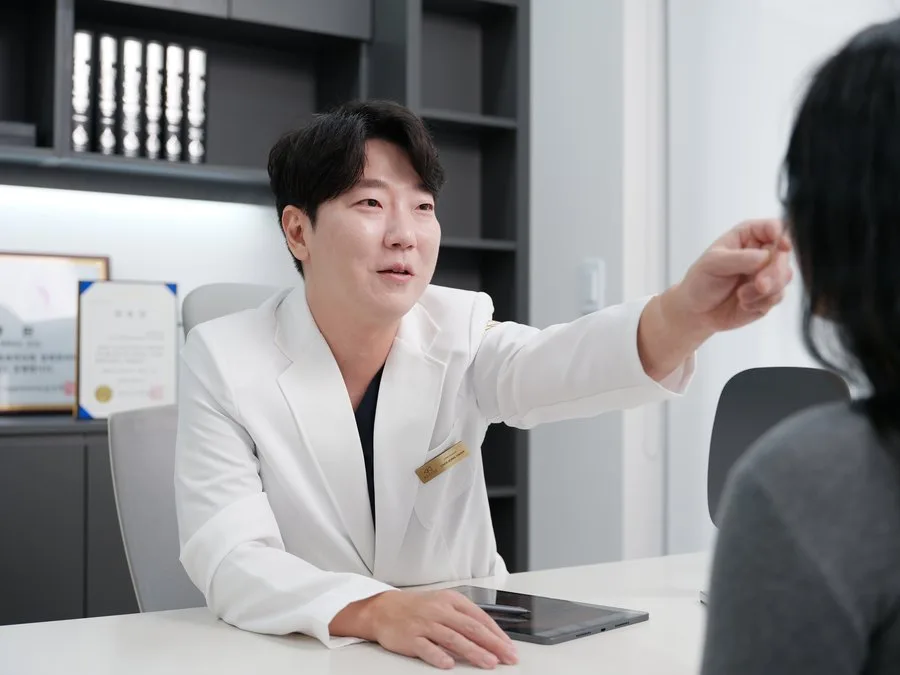
Assessment of the face at the consultation desk at Rewind Plastic Surgery
Fig. 03 — Which regions have gone hollow is decided by hand, at the consultation
Theatre

In the operating room

A fat graft at the Richro Building: one practice, one operator, and the blanks left open

Procedure room prepared at Rewind Plastic Surgery, Apgujeong

Fig. 04 — A room prepared before a surgical case

Recovery room at Rewind Plastic Surgery

Fig. 05 — Where patients rest before going home

Examination, theatre, dressing and every review afterwards sit inside one practice on the fourth and fifth floors in Apgujeong, Gangnam. Because one surgeon carries the list, the hand that judged which regions were hollow is the hand that harvests and places the graft. Harvest and placement belong to the same session in the same theatre, so nothing about a graft is handed between rooms or between operators. The specification below is deliberately short, and every line the clinic has not published is marked as such rather than filled in with a plausible number.

Tissue used: the patient's own fat, no implanted material
Donor site: not published by the clinic, set at the examination
Preparation of the graft: not published, confirmed before surgery
Volume placed per region: a finding, never a list price
Anaesthesia: not published in the clinic's material
Time in theatre: not published in the clinic's material
Second session: priced as its own listing when planned
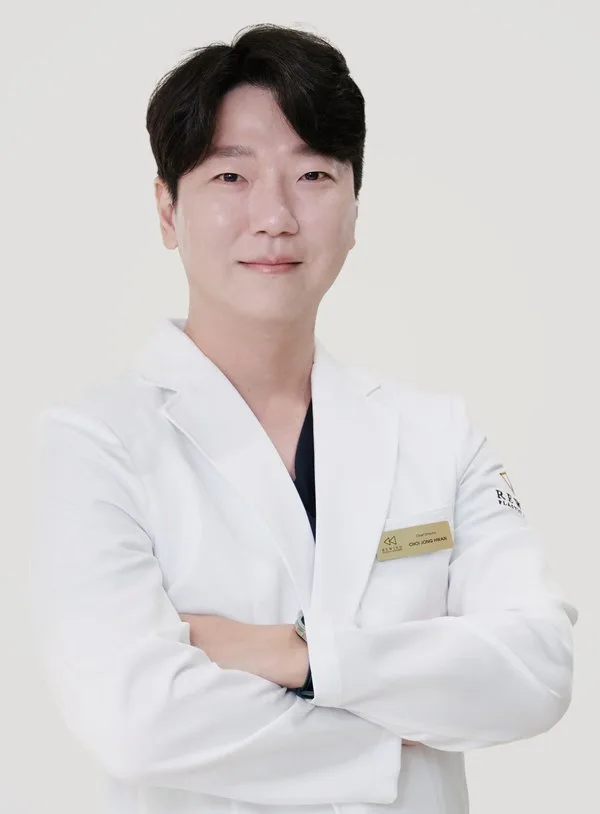
Operated by Dr. Jonghwan Choi, board-certified plastic surgeon
Dr. Jonghwan Choi, board-certified plastic surgeon

Board-certified plastic surgeon

Korean specialist qualification in plastic surgery, ten peer-reviewed papers, and the only operating surgeon here. Registered with KHIDI to treat international patients under Reg. M-2025-01-08-09288.

Cost

Pricing

What facial fat grafting costs at Rewind, and what each of the five listings covers

These are the only figures the clinic publishes for this operation, and they are the backbone of this page. Read them as a map of regions: one lid, one area, one pairing, the whole face, and a plan that carries a further session inside it.

Upper-eyelid fat graftingThe hollow upper lid, listed apart from every other facial region
₩650,000
One area, forehead and temple excludedA single region identified at the examination; how many regions you need is a finding
₩650,000
Forehead and templeThe pairing the fee schedule and the published literature both treat as one region
₩1,510,000
Whole faceThe full-face plan as a single listing
₩1,970,000
Plan including a second sessionPriced below two separate sessions taken one after the other; the figure depends on the plan it is attached to
Quoted at consultation

List prices with VAT excluded, and the anaesthetic fee sits inside each figure. Because the number of regions is a clinical finding, the quote you are given is the combination of listings that matches what the surgeon identifies, and a graft taken alongside another operation is quoted as a combination. The listing that carries a second session is priced against the plan it belongs to, so it is named at the consultation, where the plan it attaches to is already on the table.

Fit

Suitability

Who is a facial fat graft planned for, and who is pointed toward another operation?

Findings that make grafting the operation under discussion

  • Hollowing that reads as loss of volume: a flat temple, a forehead that has lost its curve, an upper lid that has sunk in, a cheek that has gone concave
  • Skin and tissue that still sit where they belong, so the face needs filling and not repositioning
  • A preference for the body's own tissue over implanted material, accepting that part of a graft reabsorbs
  • Willingness to plan for a possible second session, which the fee schedule already anticipates in one of its listings
  • A month available for the restrictions on the clinic's post-operative sheet, including exercise, alcohol and heat

When the surgeon will steer you elsewhere

  • Descent as the main finding, where tissue has fallen and the volume is intact: the facelift and midface operations answer that complaint
  • Fullness in the lower cheek that a patient wants reduced, which belongs with buccal fat removal or cheek liposuction and is the opposite operation
  • An expectation of exact symmetry, or of a volume that stays fixed at the level seen in the first fortnight
  • Too little donor supply to harvest safely, which is a finding at the examination and not something to judge from a photograph
  • A history of poor wound healing, a clotting disorder, or medicines affecting bleeding, all disclosed before a date is agreed
  • Pregnancy or breastfeeding, and any active infection at a donor or recipient site
After

Recovery

The month after a graft: what Rewind's own instruction sheet asks of you

The clinic's post-operative sheet carries an entry written specifically for grafted fat, and it is one of the few pieces of text Rewind publishes about this operation. Four instructions make it up. They are short, they run for a month, and the reason behind each one is the survival of tissue that has just been moved.

One to two weeks
Bruising and swelling at the grafted regions
The sheet records bruising and swelling in the treated areas easing within one to two weeks. Both are expected after a graft, and their scale differs by region and by person. Volume seen during this period is swelling as much as graft, so it says little about the result.
Daily care
No friction on the grafted area
Rubbing and strong stimulation of the treated area are to be avoided, and the skin is kept moisturised. Newly placed fat depends on contact with the tissue around it, so pressure and massage over those regions are out while it settles.
Every day outdoors
Sun protection against pigmentation
Sunscreen is named in the sheet to prevent pigment changes after surgery. Entry points and any bruised skin take colour easily in the weeks after an operation, and the donor area deserves the same attention as the face.
At least one month
Exercise, alcohol and heat stay out
Strenuous exercise, alcohol, saunas and steam rooms are set aside for a minimum of one month after fat grafting on the clinic's sheet. That window is longer than several of the clinic's other post-surgical entries, and it applies to the donor site as well.

Grafting carries risk, and the published complication literature for facial fat transfer names it plainly: bruising, prolonged swelling, asymmetry between the two sides, over-correction or under-correction of a region, palpable lumps, oil cysts, fat necrosis, contour irregularity, infection, changes at the donor site, and the rare vascular events that follow injected material entering a vessel. How much of a graft settles cannot be promised in advance, and no specific outcome is implied anywhere on this page. Tell the surgeon about every previous facial procedure and every medication before a date is agreed. The anaesthetic used and the time spent in theatre are not published by the clinic, so neither figure appears here.

Doctor

Professional

At Rewind, one board-certified plastic surgeon carries every case — from the first consultation to the final follow-up. Because a face is a story, and a story deserves a single author.

Dr. Jonghwan Choi, board-certified plastic surgeonRewind,
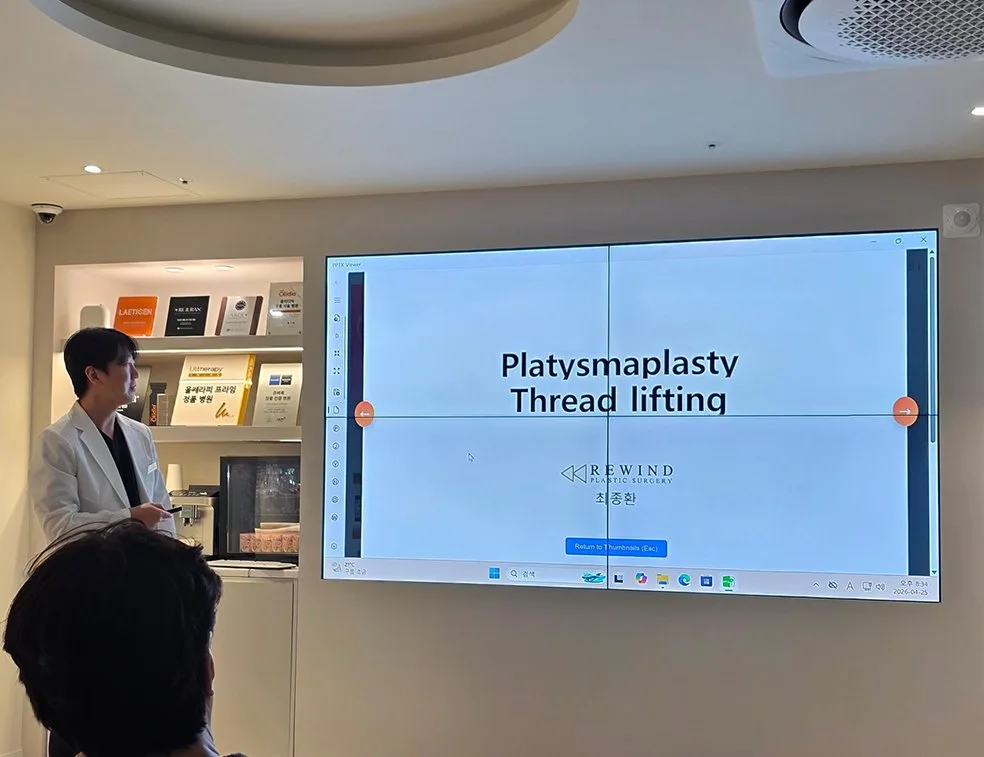
Dr. Jonghwan Choi presenting at an academic session
Fig. 06 — Academic presentation, surgical session

Rewind's Doctor

Dr. Jonghwan Choi Medical Director

One surgeon, from the first
consultation to the last follow-up.

A board-certified plastic surgeon devoted to anti-aging surgery, with the precision and restraint built through years of craniofacial practice.

Board-certified plastic surgeon (Plastic Surgery)
10 peer-reviewed publications
Medical Director, Rewind Plastic Surgery
Korean Society of Plastic & Reconstructive Surgeons
Former chief director, Apgujeong Y&T Plastic Surgery
Korean Society for Aesthetic Plastic Surgery
J Craniofac Surg · JKMS · Arch Craniofac Surg
Korean Cleft Palate-Craniofacial Association
Voices

Google Reviews

What our patients say.

G 5.0 ★★★★★ 12 Google reviews · Rewind Plastic Surgery, Apgujeong — live-synced from Google Business Profile

"Sample review card — at launch this section pulls the clinic's real Google reviews automatically, shown verbatim with the reviewer's initial and posting date."

AReviewer namePOSTED ON GOOGLE

"Sample review card — reviews are never written or edited by the clinic; only what patients posted on Google appears here."

BReviewer namePOSTED ON GOOGLE

"Sample review card — a 'See all reviews on Google' link takes visitors to the clinic's Business Profile."

CReviewer namePOSTED ON GOOGLE
Ask

Questions

Fat grafting in Seoul: what patients ask once they have read the price list

Does Rewind publish how much fat it grafts into a region?
No volume figures appear in the clinic's material. What it publishes is the region: upper eyelid, one area with forehead and temple excluded, forehead and temple together, or the whole face. How much a given region takes is judged during surgery, so a number printed here would be an invention.
Which regions are listed separately on the fee schedule?
Four regional entries plus a whole-face plan. The upper eyelid stands alone, a single area elsewhere has its own line, and the forehead and temple share a line set above the per-area figure. A fifth listing folds a second session into one price.
Why are the forehead and temple priced apart from other areas?
The clinic writes the two onto a single line, and published work measuring eyebrow position after grafting to the temple and forehead treats the pairing the same way. The practical answer for a patient is that the upper face is quoted as a unit.
What does the listing that includes a second session mean?
It is a plan with a further grafting session priced inside it, set below two separate sessions taken one after the other. It signals that a second session is anticipated for some plans. Whether yours needs one is decided at review, once the first graft has settled.
Does this page give a survival or retention percentage?
It does not. Published series report different proportions of graft retention, and no figure specific to this clinic's technique has been published. Quoting someone else's number would describe someone else's operation, so the question is left to the surgeon at the consultation.
Where does the fat come from, and does that leave a mark?
It comes from a donor site on the patient's own body, drawn through a cannula. Rewind does not publish which site it uses, so the donor area is discussed at the examination. Bruising and contour irregularity at that site are among the described risks of harvesting.
What is the difference between microfat and nanofat?
Parcel size and purpose. Microfat carries volume into a hollow region. Nanofat is processed until it adds no bulk and is used in the literature for skin quality instead. A plan aimed at volume is a microfat plan, and the distinction matters when reading any clinic's material.
How does a graft of your own fat differ from an injectable volume product?
A graft is surgery: tissue is harvested, prepared and placed, and part of it reabsorbs while the rest becomes living tissue. Injectable products are a separate non-surgical decision with their own consultation. Rewind prices and plans grafting as an operation.
What does the clinic's sheet ask for after a fat graft?
Four instructions. Bruising and swelling ease within one to two weeks; the treated area is kept free of friction and moisturised; sunscreen guards against pigment change; and strenuous exercise, alcohol, saunas and steam rooms are avoided for at least a month.
Which complications does the published literature describe?
The facial fat grafting complication literature names asymmetry, over-correction and under-correction, palpable lumps, oil cysts, fat necrosis, contour irregularity, infection, donor-site changes, and the rare vascular events that follow material entering a vessel. All of them are discussed before consent.
Can a fat graft be carried out alongside another operation?
Each operation at Rewind carries its own listing, and a combination is quoted as a combination. Whether adding volume at the same session as a lifting operation suits your face is a surgical judgement made at the examination, and the clinic publishes no fixed pairing.
Who performs the surgery, and when can a consultation be booked?
Dr. Jonghwan Choi, the medical director and a board-certified plastic surgeon, is the only operating surgeon: he examines, harvests, places the graft and holds every review. Surgical consultations are arranged Monday, Tuesday, Wednesday and Friday until 19:00 and Saturday until 16:00, by appointment only, with interpreter support for overseas patients.
Booking

Reservation

REWIND,booking

Tell us which regions concern you — we reply within one business day, in your language.

Scientific evidence

Published research on graft preparation, regional grafting and graft complications

These five papers cover the parts of this operation that are described in the surgical literature instead of in the clinic's own material: how harvested fat is prepared and what each preparation is used for, what has been measured after grafting to the upper eyelid and to the temple and forehead, and which complications follow facial fat transfer. None of them describes Rewind's technique, names this clinic, or predicts what will happen to an individual patient's graft.