Non-Surgical · RF Handpieces
FX for the fat, Forma for the skin
Gangnam, Seoul | Board-certified plastic surgeon, Dr. Jonghwan Choi
KHIDI-registered for international patients · Apgujeong Rewind
InMode
The short answer
InMode is a radiofrequency platform, and at Rewind it is used through two handpieces that do different work. The clinic's own device record describes FX as directed at fat cells beneath the chin and in the cheeks, reducing the fat that sits there, and Forma as directed at the skin, where heat promotes collagen and elastin and the surface firms. Nothing is injected and the skin is never broken: the current travels between electrodes held against the face, an arrangement known as bipolar.
Source: Rewind's Korean device documentation, which records fat reduction and collagen renewal as effects induced together. Anaesthesia, how long an appointment runs and how many sessions make up a course are not published for this treatment, and nothing has been estimated in their place.
Because the two handpieces do different things, Rewind prices them as separate items. FX carries its own rate, Forma carries its own rate, the combined face session is a third line on the sheet, and a body area treated with FX is a fourth.
That structure is the most useful thing to understand before a consultation, because what gets decided there is which handpiece your face actually calls for, and whether it calls for both. A patient who books the pair for a complaint that turns out to be one of the two is paying for work that was never going to change anything.
Where it is pointed
Rewind's record names two places for the fat handpiece, while the skin handpiece is described by what it does to the dermis. The four entries below follow that record and the way the clinic's own price sheet is laid out.
Mechanism
Fat and dermis sit at different depths and respond to heat at different temperatures. A handpiece built to reach one of them makes a poor instrument for the other, and that is the reason this platform arrives with two of them and a decision to make between them.
In a bipolar arrangement the current travels between two electrodes on the handpiece itself, through the tissue lying directly beneath them. There is no return pad elsewhere on the body, and the depth that ends up heated is bounded by how far apart those electrodes sit.
Rewind's record describes FX as breaking down fat cells beneath the chin and in the cheeks so that the volume of fat in those areas falls. Those two places are the only ones it names. Whether the fullness you dislike is fat at all is the first thing the examination has to settle.
Forma is described as promoting collagen and elastin, and the firming effect is built on that. Published work on bipolar fractional radiofrequency has reported both new collagen and new elastin forming in treated skin, and the response develops over weeks.
Reducing fat and firming skin answer different halves of one complaint, so the two handpieces are commonly run in the same appointment. Rewind lists that combination as its own item, so a combined session is quoted as one figure agreed in advance.

Why here
A handpiece that treats fat is only as good as the judgement about whether fat is the problem. In a practice that also operates, that judgement carries consequences in both directions, and the examination is where it gets made.
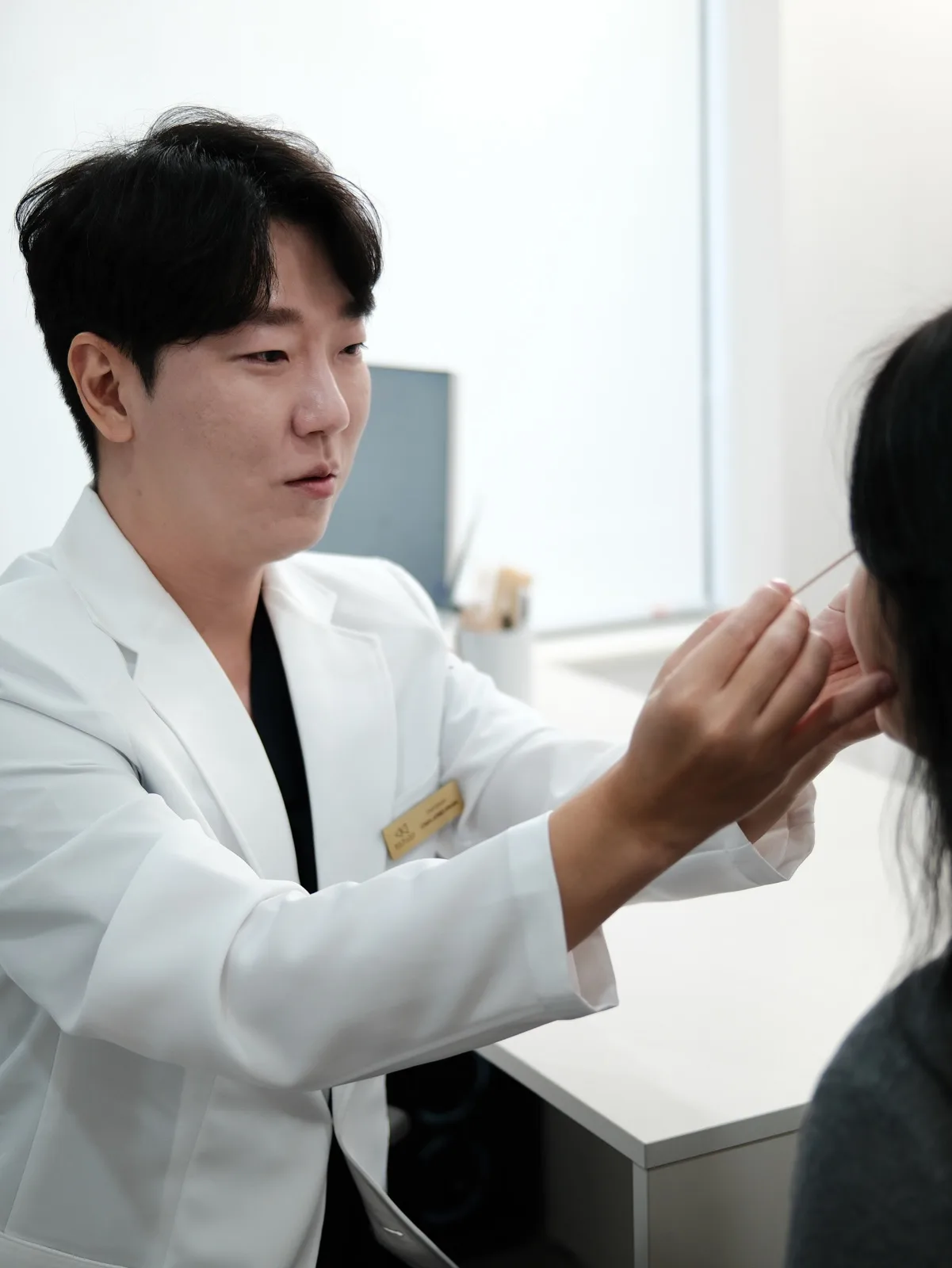
A full-looking jaw line can be surface fat, slackened skin, a heavy muscle band or the shape of the bone underneath. Dr. Choi examines before naming a handpiece, because FX and Forma answer two of those four possibilities and leave the other two untouched.
Where fat sits deep beneath the muscle, or where tissue has descended, heat delivered through the skin will not reach the problem. You are told that, told what a surgical route would involve, and left to decide. Some patients are told that the sensible thing for now is nothing.
The two handpieces, the combined face session and the body session are listed apart from one another on Rewind's own sheet. You can see what each element costs before agreeing to any of them, and nothing is bundled out of view.
In the treatment room

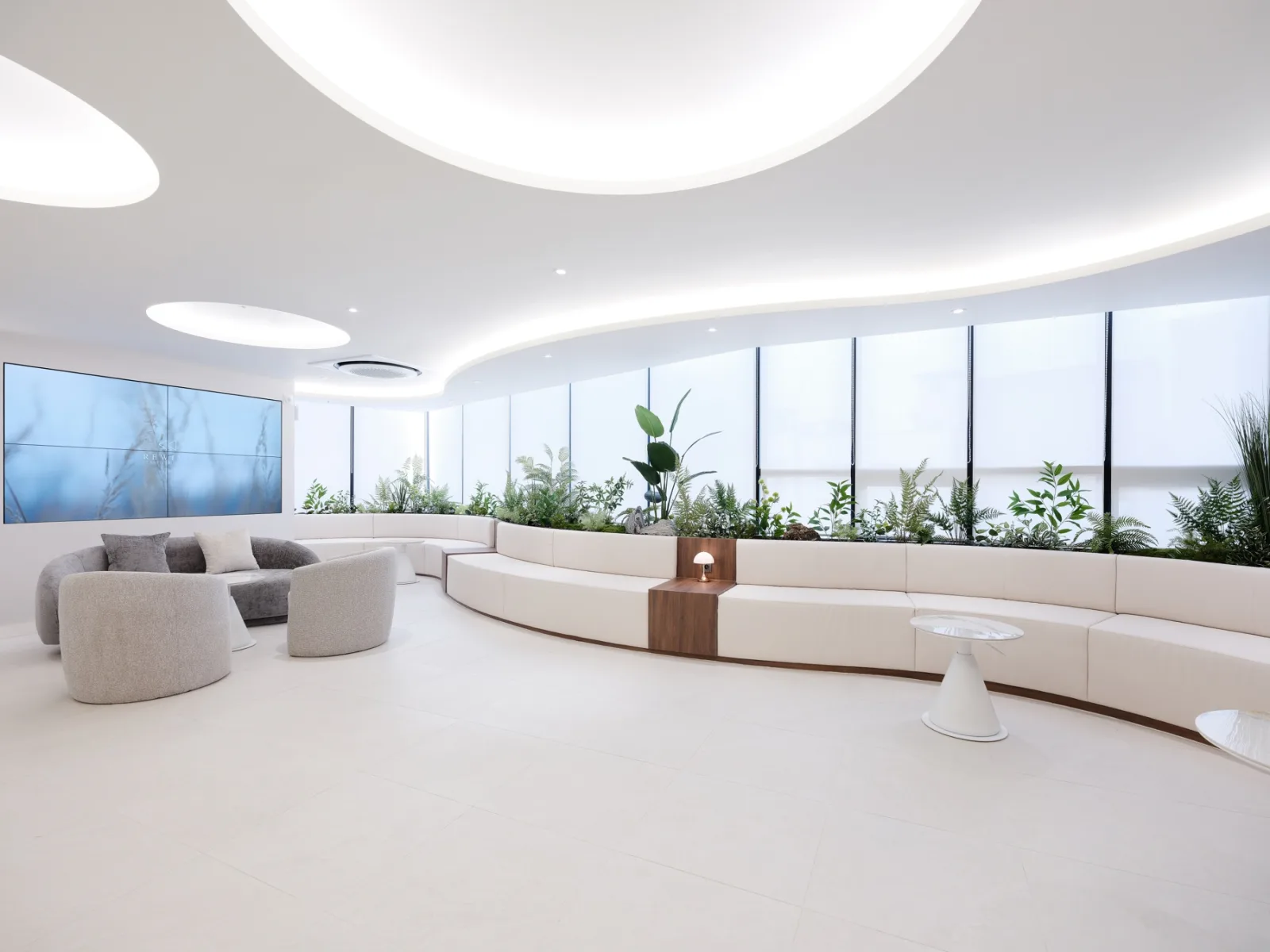
Fig. 04 — The treatment floor

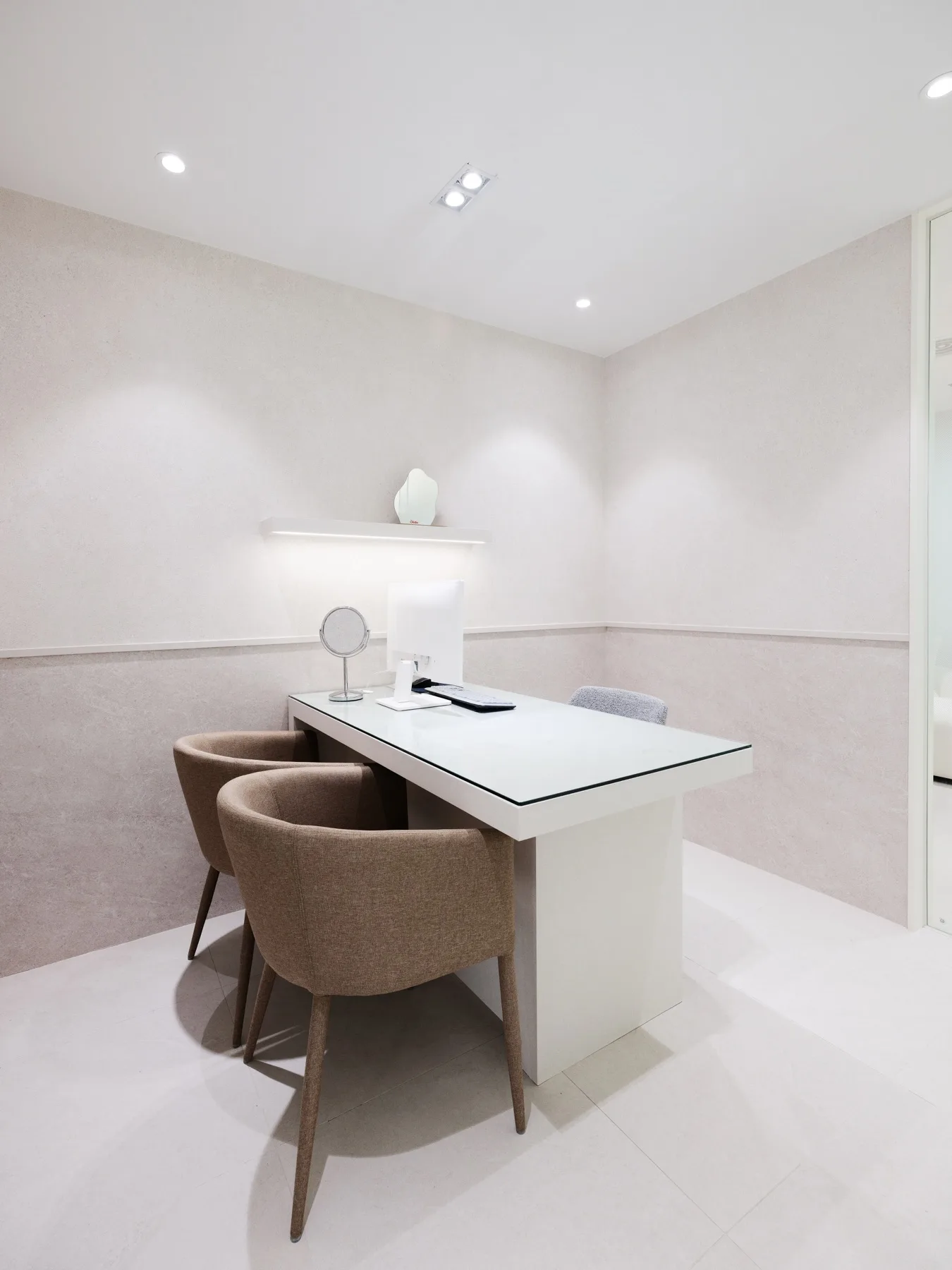
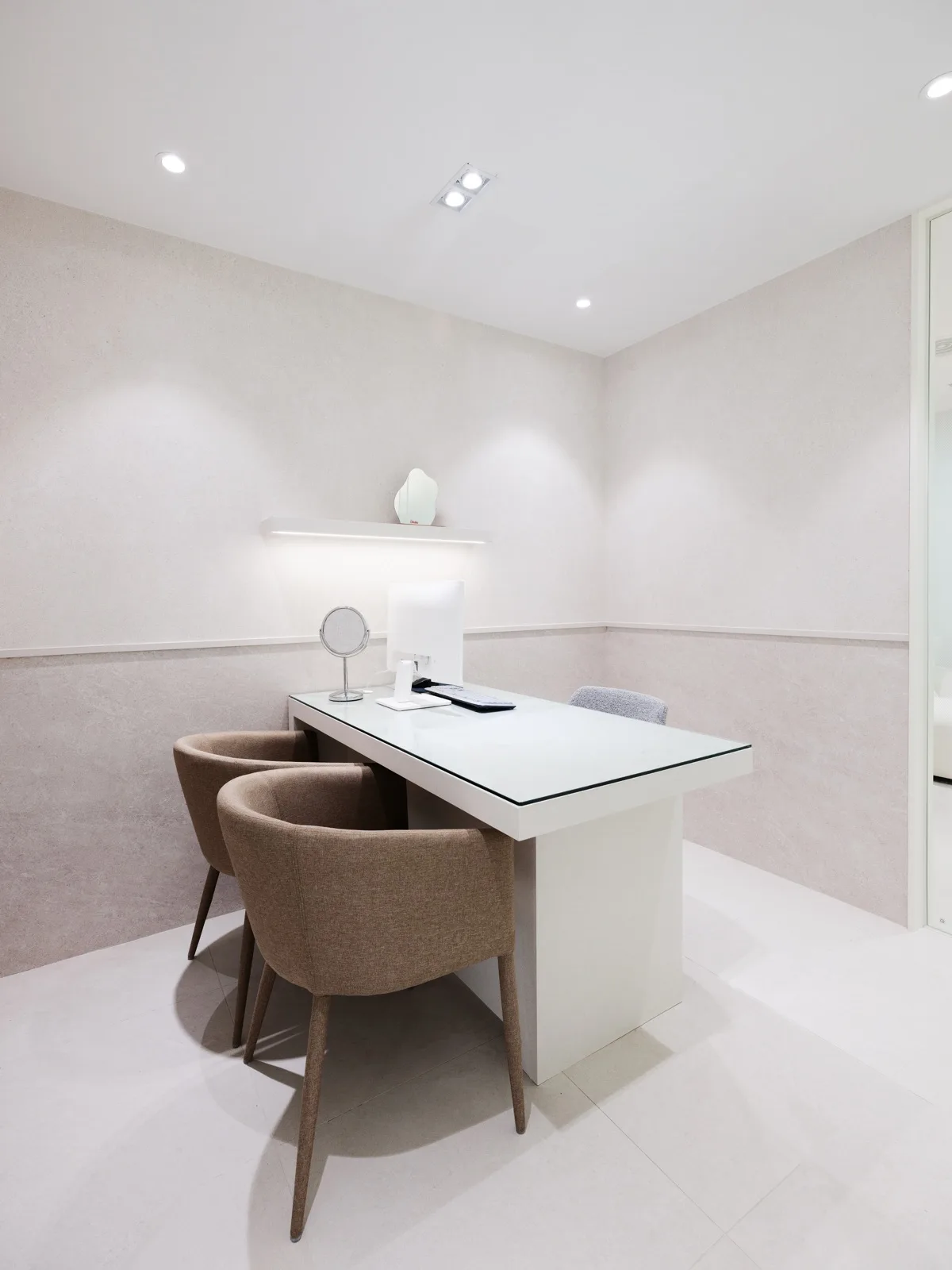
Fig. 05 — The consultation room
The medical director sets the plan, and the appointment runs at the clinic's premises on the fourth and fifth levels of the Richro Building, Apgujeong, Gangnam. Non-surgical treatment runs Monday, Tuesday, Wednesday and Friday from 10:00 to 19:00 and on Saturday from 10:00 to 16:00, and nothing is taken without a booking. Makeup and the rest of your evening are possible the same day.
Two figures are not published for this treatment and will not be guessed at here: what is used for comfort, and how long to set aside for the appointment. Ask for both when you book, along with how many areas the quoted session covers, and have the answers written into the plan.
Before & After
Rewind photographs its patients itself, under one lighting setup, and publishes the sets treatment by treatment. No set exists yet for this treatment, so the frames stay empty until one does. Manufacturer brochure photographs would tell you about a different clinic's patients and a different camera.
When a set is released it will be shown as every set on this site is shown: the clinic's own patients, identical lighting, uncropped frames, and a caption listing every treatment carried out in that case. Individual results may vary. Redness and warmth in the treated area are ordinary in the hours afterwards, and an examination comes first.
Pricing
Four items and four published rates. Which of them lands on your quote depends on what the examination finds, and the figure at the desk is the figure on this list.
Listed rates, value-added tax excluded; anaesthetic fees, where anaesthesia is used, already sit inside the listed figure. A course of several appointments is quoted at the consultation, since how many of them you need is a clinical decision taken after the examination. Ask how many areas your quoted session covers before you agree to it.
Suitability
Recovery
The written aftercare Rewind gives for its device treatments is brief, and nearly all of it applies to the first two days.
Adverse events described in the radiofrequency literature include burns, blistering, redness that lingers, altered sensation and, uncommonly, unwanted loss of fat below the treated area. A published analysis of injury and legal action in cutaneous energy-device practice is part of why the plan here is written by the doctor who examined you. Declare fillers, threads and earlier energy sessions in the area, and any implanted electronic device, before anything is booked.
At Rewind, one board-certified plastic surgeon carries every case — from the first consultation to the final follow-up. Because a face is a story, and a story deserves a single author.
Rewind,
Rewind's Doctor
Dr. Jonghwan Choi Medical Director
One surgeon, from the first
consultation to the last follow-up.
A board-certified plastic surgeon devoted to anti-aging lifting — with the precision and restraint built through years of craniofacial practice.
Google Reviews
"Sample review card — at launch this section pulls the clinic's real Google reviews automatically, shown verbatim with the reviewer's initial and posting date."
"Sample review card — reviews are never written or edited by the clinic; only what patients posted on Google appears here."
"Sample review card — a 'See all reviews on Google' link takes visitors to the clinic's Business Profile."
Questions
Reservation
Tell us what you are considering — we reply within one business day, in your language.
Scientific evidence
These papers concern radiofrequency treatment as a class, and the practice of energy-device work generally, in patients treated at other centres with the devices and settings each study used. None is a study of Rewind Plastic Surgery or of the handpieces described on this page, and no individual result follows from any of them.