Surgery · Eye Rejuvenation

Epicanthoplasty

The inner corner, opened by millimetres

Apgujeong, Seoul | Board-certified plastic surgeon, Dr. Jonghwan Choi
Medial fold release, listed and priced on its own · KHIDI-registered for international patients

Epicanthoplasty Epicanthoplasty Epicanthoplasty Epicanthoplasty Epicanthoplasty 
Define

Epicanthoplasty

What does an epicanthoplasty change at the inner corner?

The operation in one paragraph

A medial epicanthoplasty releases the epicanthal fold, the small web of skin that runs across the inner corner of the eye, so that the corner itself is uncovered and the eye reads longer from side to side. Rewind designs the release against the position of the medial canthus, incises the fold inward along that design, and closes the line inward on itself. The clinic presents it as a correction of the size and shape of the eye opening, something a crease operation on its own does not reach.

Facts on this page come from Rewind's Korean surgical page for eye-opening procedures, which sets out the design against the medial canthus, the inward incision of the fold, the inward closure, and the clinic's own list of eyes it declines to operate on. Anaesthesia type, operating time and the day sutures come out are not published there, so they are not stated here.

The fold is ordinary anatomy; most East Asian eyes have one, and plenty of them look better with it untouched. What decides this operation is how much of the corner the fold hides, and how close the two corners already sit to each other. Both are read at the chair, in millimetres, before any date is discussed.

Consultation desk where the inner corner is measured at Rewind Plastic Surgery
Fig. 01 — The measurement happens here, before the design
Result

Before & After

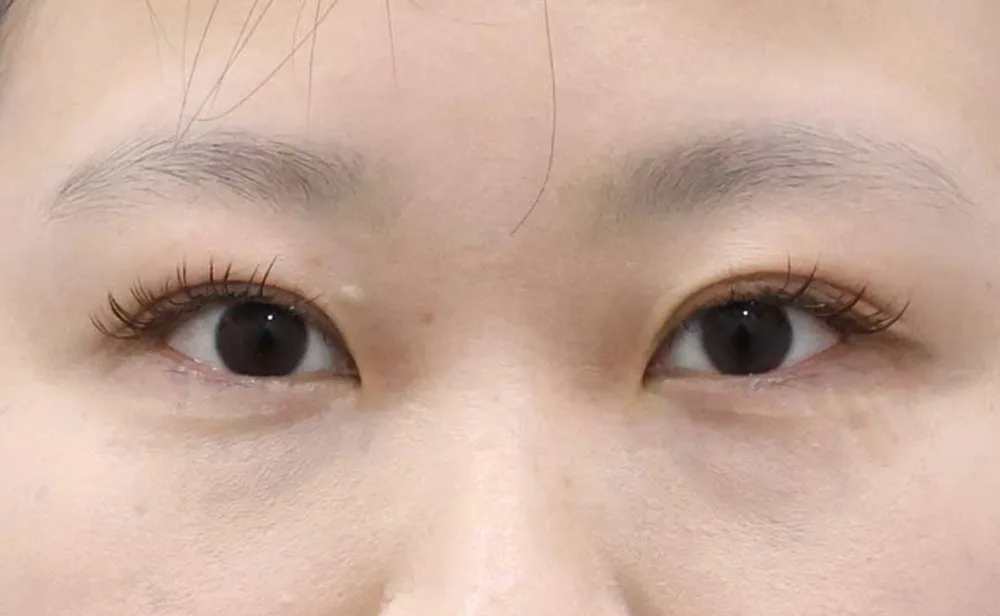
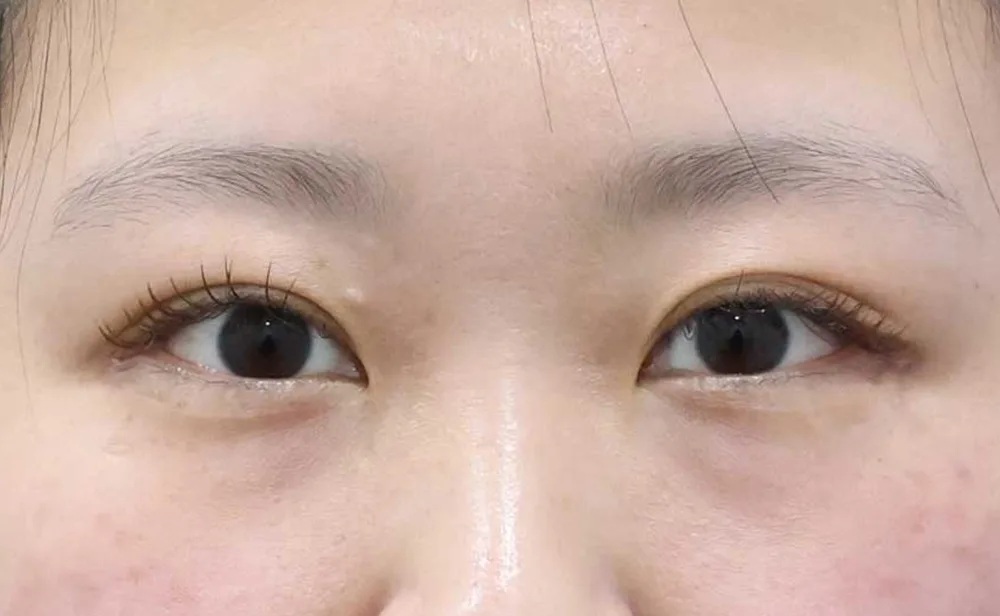
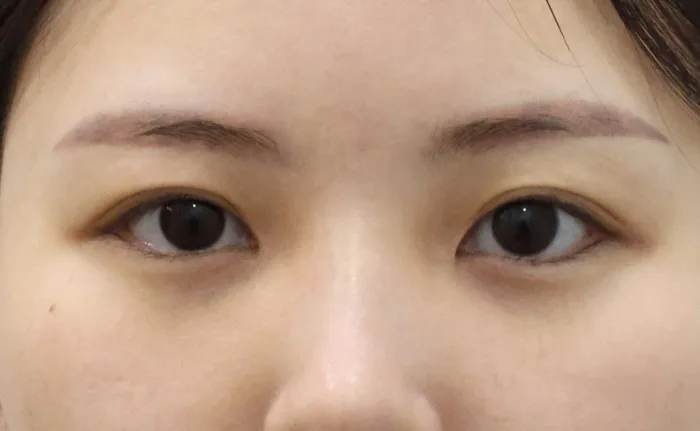
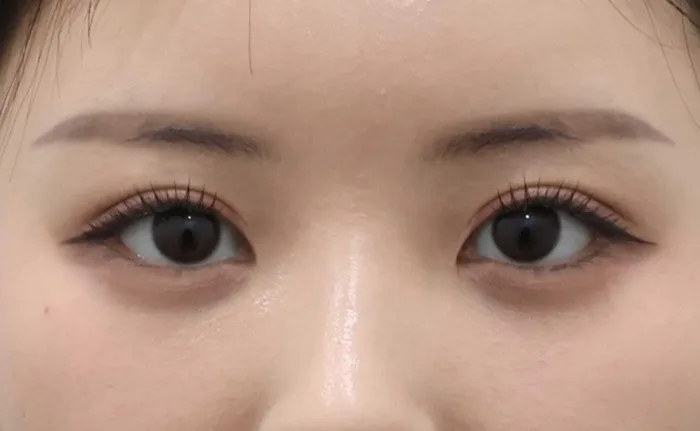
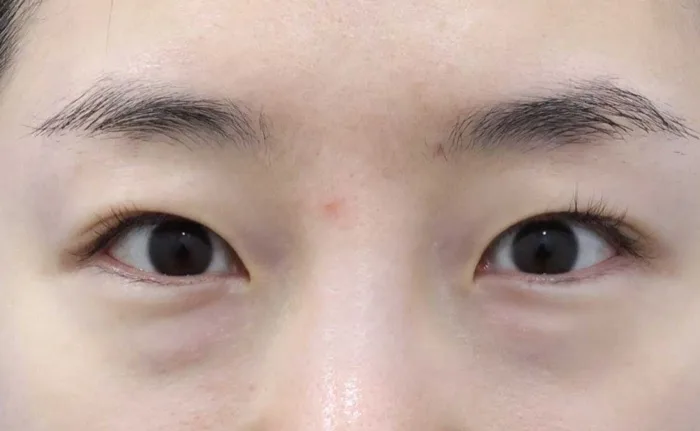
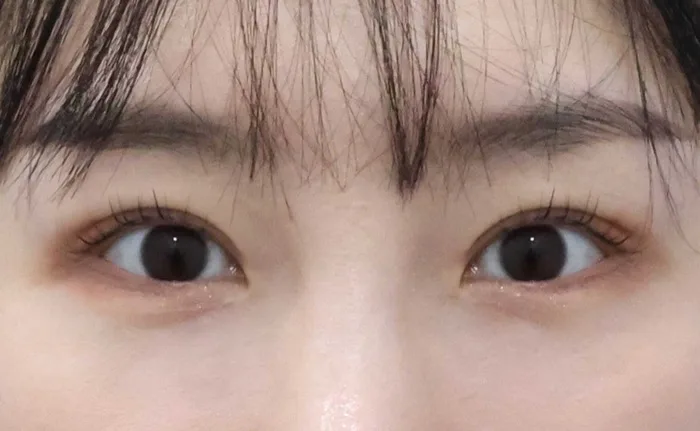
Inner corners operated at Rewind, with the whole session listed

The inner corner is operated on its own less often than it appears: in most sessions the crease or the lower lid was worked on the same day. That is why the caption under each case names everything that was done in that visit, and not only the part this page sells. The first of the three is the clinic's only case of medial epicanthoplasty carried out alone.

Rewind patients — inner corner, close crop

Before a medial epicanthoplasty performed on its own at Rewind Plastic Surgery After a medial epicanthoplasty performed on its own at Rewind Plastic Surgery BEFOREAFTER
case 01
Medial epicanthoplasty, performed alone with no additional procedure
Individual results may vary.
Before a medial epicanthoplasty with non-incisional double-eyelid surgery in the same session After a medial epicanthoplasty with non-incisional double-eyelid surgery in the same session BEFOREAFTER
case 02
Medial epicanthoplasty + non-incisional double-eyelid surgery, same session
Individual results may vary.
Before a medial epicanthoplasty with non-incisional double-eyelid surgery and under-eye fat repositioning After a medial epicanthoplasty with non-incisional double-eyelid surgery and under-eye fat repositioning BEFOREAFTER
case 03
Medial epicanthoplasty + non-incisional double-eyelid surgery + under-eye fat repositioning
Individual results may vary.

All three pairs are Rewind patients, photographed by the clinic unretouched and published with written consent. No case on this page forecasts your own, and results vary between individuals; a particular outcome cannot be promised. Bleeding, infection, swelling, asymmetry between the two eyes, a visible or thickened line at the inner corner and a corner opened further than intended are all possible after this operation. An examination with the surgeon comes before any decision.

Corners

Anatomy map

Which part of the eye opening does each trim actually act on?

Rewind lists the trims of the eye opening as separate operations, because they work on different corners and anchor to different tissue. Reading them apart is what keeps a consultation accurate about what an inner-corner release can and cannot lengthen.

target 01
The epicanthal fold
The web of skin crossing the inner corner. Rewind incises it inward along the design and closes the line inward. Where this fold is what hides the corner, releasing it is the whole operation.
target 02
The medial canthus
The corner itself, and the reference point for the design. Rewind draws the release according to where the canthus sits, so two eyes with a similar-looking fold can be given quite different lines.
target 03
The lower lid margin
A separate listing. Rewind designs it against the pupil, incises the conjunctiva of the lower lid and fixes the tissue firmly to the fascia. It changes the lower curve, not the inner corner.
target 04
The outer corner
Also its own listing. Mucosa at the back of the eye is removed, the inner conjunctiva is incised and the tissue is fixed to the periosteum. The fixation point is how Rewind distinguishes it from the lower trim.
Steps

In sequence

How is the fold released, step by step?

Rewind publishes three surgical steps for the inner corner. Placed beside the stabilisation period the clinic asks for afterwards, they describe a small operation with a long tail: careful design, a few millimetres of incision, and months before the shape can be judged.

01Read

The structure of the eye and its muscle are checked, then the release is drawn

Rewind's first step is examination and design: the structure of the eye and the muscle around it are read, and the extent of the epicanthoplasty is marked on the skin. Nothing here transfers between patients, since the fold and the corner sit differently in every eye.

02Release

The fold is incised inward, following the medial canthus

The incision goes inward into the fold, along the line the position of the canthus dictates. How far inward it travels is the entire decision of the operation: too little leaves the corner covered, too much moves the corners closer together than the face wants them.

03Close

The line is sutured inward along the incision

Closure follows the incision inward. The inner corner is the part of the eye where a line is most readily noticed, so the direction of that closure carries much of the aesthetic result, and the literature on this operation is largely literature about its scar.

04Settle

Six months to a year before the corner is final

Rewind states that a natural, settled result takes at least six months and can take up to a year. The clinic also asks that the operated corner is not touched or rubbed during the early part of that period. No day-level figures for swelling or sutures are published.

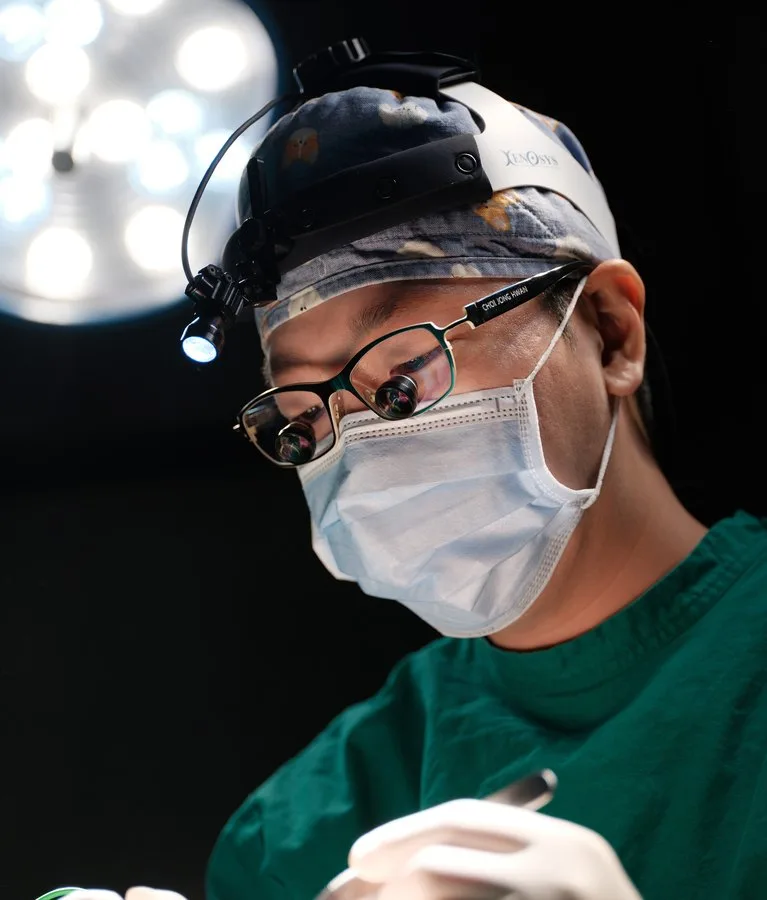
Dr. Jonghwan Choi operating under loupe magnification
Fig. 02 — Loupe magnification, where millimetres are the unit
Rewind

Why here

Why measurement decides an epicanthoplasty at Rewind

An inner corner is a small, inexpensive add-on, which is exactly why it gets performed on eyes that did not need it. At Rewind the request is held against two readings first: how much of the corner the fold covers, and how far apart the corners already sit. The operation is listed and quoted on its own, so it can be dropped from a plan without disturbing the rest of it.

01Cause

The fold has to be the thing shortening the eye

Rewind describes the operation for eyes where the distance between the brows is wide and the epicanthal fold covers much of the inner corner, leaving the eye looking short and closed. When the horizontal length is limited by something else, releasing the fold spends a scar on the wrong problem, and that is a conversation for the examination.

02Refusal

Corners already close together are a reason to stop

The clinic's own guidance declines the procedure where the eyes sit too close to one another, or where the pink tissue at the inner corner is already prominent and sharply exposed. Releasing the fold in those eyes tends to make the feature it exposes more conspicuous, and the clinic raises that at the examination, while the plan is still open.

03Continuity

One surgeon designs the corner, opens it and follows it through the year

A board-certified plastic surgeon examines, operates and holds every review; no case moves to a second operator halfway through. Because the shape is only final six to twelve months later, the follow-up matters as much as the design. International patients are supported in their own language, and the clinic holds KHIDI registration for treating patients from overseas.

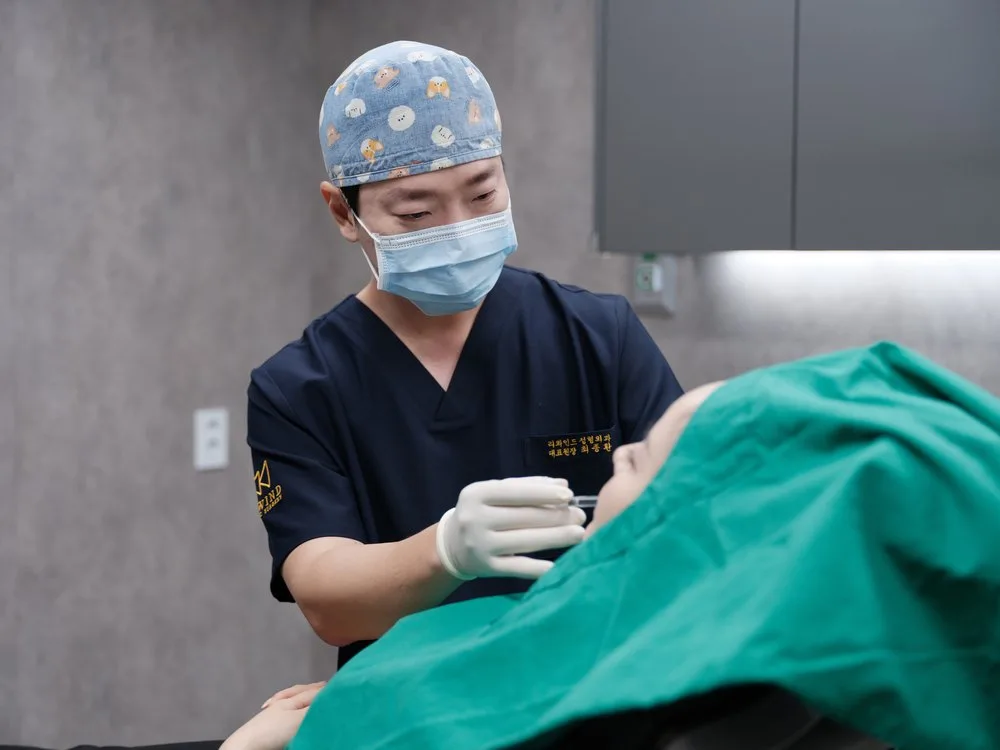
Surgical team in position in the operating room at Rewind Plastic Surgery
Fig. 03 — The same operator from design to closure
Theatre

In the operating room

The room where the inner corner is opened

Prepared procedure room at Rewind Plastic Surgery, Apgujeong

Fig. 04 — Prepared before the design is drawn

Patient lounge at Rewind Plastic Surgery

Fig. 05 — Where you wait, and where you come back for reviews

The clinic occupies the fourth and fifth floors of the Richro Building in Apgujeong, Gangnam. Examination, surgery and every review afterwards are held by the medical director, and surgical consultations are taken Monday, Tuesday, Wednesday and Friday until 19:00 and Saturday until 16:00, by appointment only. Eye operations are the ones patients most often combine, so the plan is written out in full at the chair: each listing named, each one separately priced.

Design: read against the position of the medial canthus
Incision: inward into the epicanthal fold
Closure: sutured inward along the incision line
Separate listings: lower and outer corner trims
Stabilisation: at least six months, up to a year
Operated by Dr. Jonghwan Choi
Dr. Jonghwan Choi, board-certified plastic surgeon

Board-certified plastic surgeon

Korean specialist certification in Plastic Surgery, and the clinic's only operating surgeon: the hands that design the corner are the hands that close it. Rewind is registered with KHIDI to treat international patients, Reg. M-2025-01-08-09288.

Cost

Pricing

What does an epicanthoplasty cost in Seoul, alone or with a crease?

The inner corner has its own listing, and so does every operation it tends to be booked with. An eye plan at Rewind is therefore an addition of named lines, and the quote you are given is whichever lines the examination agreed on.

Medial epicanthoplasty — inner cornerFold released inward along the design, closed inward along the incision
₩1,200,000
Outer, lower or upper corner trimA separate operation on a different corner, fixed to fascia or periosteum
₩1,200,000
Non-incisional creaseThe companion operation most inner corners are booked with
₩1,200,000
Open-incision creaseWhere the lid also needs tissue removed; listed and planned on its own page
₩2,900,000

List prices, VAT excluded; anaesthetic fees are included in each figure. Because the corner is quoted separately from the crease, a combined eye plan cannot hide an item inside a package. Anything added to the plan is named and priced in front of you before a date is offered.

Fit

Suitability

Who suits an epicanthoplasty, and who is turned down?

Where releasing the fold fits

  • An epicanthal fold covering much of the inner corner, with the brows set wide apart, so the eye reads short and closed
  • Horizontal length and eye size that you want increased from what you were born with
  • A crease operation already done, with the shape of the eye still unsatisfying afterwards
  • Willingness to wait six months to a year for the corner to settle before judging it
  • An understanding that the inner corner is where a line shows most readily, and that scar care belongs to the plan

Where Rewind declines, or asks to wait

  • Eyes already sitting close together: releasing the fold shortens the visible distance further, and the clinic advises against it
  • Pink tissue at the inner corner that is already prominent and sharply exposed, which the release makes more conspicuous
  • A history of lines that thicken or redden for months, since this corner is a known site for exactly that
  • An eye whose shortness comes from something other than the fold, where the examination moves to a different operation
  • Pregnancy, breastfeeding, an active infection near the corner, or medication and conditions affecting bleeding and wound healing
After

Recovery

Healing after an epicanthoplasty, and the year it asks for

The recovery from this operation is short in daily terms and long in visual ones. Rewind publishes one instruction and one period: hands off the operated corner, and at least six months, up to a year, for a natural and stable result. Day-level figures for swelling and sutures are not published by the clinic, so this page does not supply them.

Early days
Hands away from the corner
Rewind asks that the operated area is not touched or rubbed for a period after surgery. That is the clinic's own instruction and the one most often broken, usually while removing eye makeup.
First weeks
The line looks worse before better
A fresh line at the inner corner reads pinker and more obvious than the line it becomes. The clinic asks for it to be protected from friction and sun while it matures, and for reviews to be kept.
Six months
The earliest point worth judging
This is the floor the clinic gives for a natural, settled result. Photographs taken before it show a corner still changing, so comparisons made this early tend to mislead.
Twelve months
Final shape, and any revision talk
Rewind puts the outer limit of stabilisation at a year. Any conversation about adjusting the corner belongs after that, not during the months when the tissue is still settling.

Any surgical procedure carries risk. For this one the named risks are bleeding, infection, swelling, asymmetry between the two corners, a line that thickens or stays visible, and a corner released further than intended. Reversing an inner-corner release is difficult, which is the main reason Rewind measures before it operates. Tell the surgeon about every previous eye operation and about any medication you take before a date is set.

Doctor

Professional

At Rewind, one board-certified plastic surgeon carries every case — from the first consultation to the final follow-up. Because a face is a story, and a story deserves a single author.

Dr. Jonghwan Choi, board-certified plastic surgeonRewind,
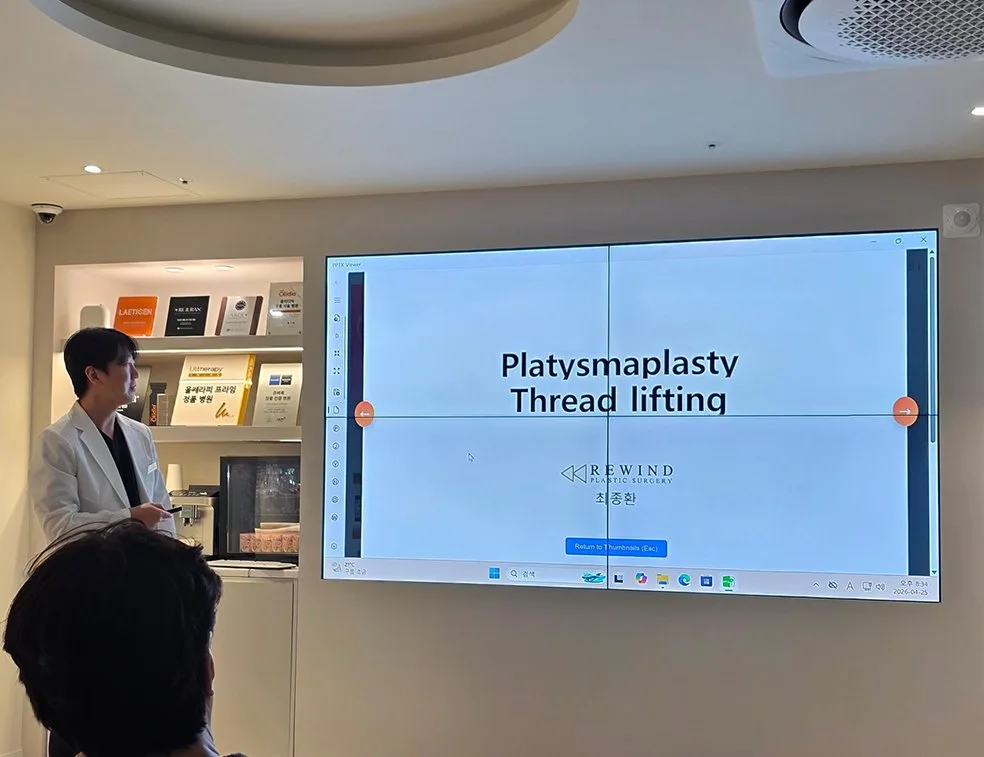
Dr. Jonghwan Choi presenting at an academic session
Fig. 06 — Academic presentation, thread-lifting session

Rewind's Doctor

Dr. Jonghwan Choi Medical Director

One surgeon, from the first
consultation to the last follow-up.

A board-certified plastic surgeon devoted to anti-aging lifting — with the precision and restraint built through years of craniofacial practice.

Board-certified plastic surgeon (Plastic Surgery)
10 peer-reviewed publications
Medical Director, Rewind Plastic Surgery
Korean Society of Plastic & Reconstructive Surgeons
Former chief director, Apgujeong Y&T Plastic Surgery
Korean Society for Aesthetic Plastic Surgery
J Craniofac Surg · JKMS · Arch Craniofac Surg
Korean Cleft Palate-Craniofacial Association
Voices

Google Reviews

What our patients say.

G 5.0 ★★★★★ 12 Google reviews · Rewind Plastic Surgery, Apgujeong — live-synced from Google Business Profile

"Sample review card — at launch this section pulls the clinic's real Google reviews automatically, shown verbatim with the reviewer's initial and posting date."

AReviewer namePOSTED ON GOOGLE

"Sample review card — reviews are never written or edited by the clinic; only what patients posted on Google appears here."

BReviewer namePOSTED ON GOOGLE

"Sample review card — a 'See all reviews on Google' link takes visitors to the clinic's Business Profile."

CReviewer namePOSTED ON GOOGLE
Ask

Questions

Epicanthoplasty in Seoul — what patients ask at the chair

Does an epicanthoplasty make the eye longer, or only more open?
It lengthens the eye horizontally. Rewind describes an eye left looking short and closed by a fold that covers the inner corner, and the release uncovers that corner so the opening reads wider from side to side. The height of the crease is a separate operation with its own listing.
Which eyes does Rewind advise against?
Two situations appear in the clinic's own guidance: eyes already sitting close together, and an inner corner where the pink tissue is prominent and sharply exposed. Releasing the fold emphasises what is already there in both cases. Rewind states this at the examination instead of booking the procedure.
Is the epicanthal fold removed completely?
No. Rewind incises inward into the fold and closes the line inward, releasing the part of it that covers the corner. How far inward that goes is decided on your own anatomy during the design step. A fold is not lifted out as a unit, and total removal is never the aim.
Is the inner corner ever the only operation performed?
Yes. It is a separate listing with its own price, and it is sometimes the only operation carried out, including for patients who already have a crease and remain unhappy with the shape of the eye. The examination decides whether the corner alone answers the complaint.
I am having rhinoplasty. Does that replace the need for an inner-corner release?
No, and the clinic answers this one directly. Raising the bridge makes the eyes look less widely spaced, so patients believe they have gained the effect of a release. The fold is unchanged by nose surgery, so the two operations are unrelated as far as the corner is concerned.
Does the inner-corner line stay noticeable?
It sits in the most noticeable part of the eye, and scar design accordingly dominates the published literature on this operation. Rewind closes inward along the incision line and asks for the corner to be left alone in the early weeks. How an individual line matures cannot be promised.
Is the outer corner the same operation as the inner one?
Different corner, different anchor. The medial procedure releases the fold at the inner corner. The outer one removes mucosa behind the eye, incises the inner conjunctiva and fixes tissue to the periosteum. Rewind lists and quotes them separately, and treats neither as a version of the other.
What does the lower-lid trim do, and which eyes should avoid it?
Rewind designs it against the pupil, incises the conjunctiva of the lower lid and fixes the tissue to the fascia, softening a sharp impression. The clinic warns that a sunken eye with a thick lower lid can look puffier afterwards, and that visible white beneath the iris can increase.
How long before the corner stops changing?
At least six months, and as long as a year, for a natural and settled result. That period comes from the clinic and it explains why early photographs mislead. Comparing the two corners for symmetry before six months have passed usually produces anxiety about a shape that is still moving.
Does an inner-corner release need sedation?
Rewind does not publish the anaesthesia it uses for this procedure, and publishes no figure for how long it takes, so neither appears here. Both are confirmed by the surgeon once the design is agreed. A number invented for a web page is worth less to you than the one you are given at the chair.
Can an inner-corner release be undone or adjusted later?
Adjustment is discussed after the year of stabilisation has passed, and reversing a release is harder than performing one. Rewind's answer is to avoid that conversation by measuring corner distance and exposed tissue first, then declining the operation when those readings argue against it.
If I book a crease, a corner and muscle correction together, how is it charged?
As separate lines. Every operation has its own listing at Rewind, so a combined eye plan is the sum of the items agreed at the chair. Nothing is absorbed into a package figure, and anything added later is named and quoted before a surgical date is offered.

Booking

Reservation

REWIND,booking

Tell us what you are considering — we reply within one business day, in your language.

Scientific evidence

Published research on medial epicanthoplasty scarring and Asian eyelid technique

Two of these papers exist because of the one thing patients ask about this operation: how the inner-corner line behaves as it heals, and how the design is drawn to keep it quiet. The other two cover Asian eyelid technique and the complication profile of the crease surgery this corner is usually booked with. None of the four concerns this clinic, none describes Rewind's own case series, and none forecasts an individual outcome.