Surgery · Facial Contour
One pocket of fat, taken from inside the mouth
Apgujeong, Seoul | Board-certified plastic surgeon, Dr. Jonghwan Choi
Selective excision of the deep cheek pad · KHIDI-registered for international patients
Buccal fat removal
The short answer
Buccal fat removal takes out the buccal fat pad, a discrete parcel of fat held inside a pocket deep in the cheek, through an incision of roughly 1 cm made on the inside of the mouth. Rewind's surgical page describes the operation as a selective one: only the pad is drawn out of its pocket, the surrounding tissue is left alone, and the opening is closed with dissolving sutures. Nothing is cut on the outer surface of the face.
Source: Rewind's Korean page for deep-cheek fat removal, which records the incision length, the selective excision and the closure material. The same page states no anaesthetic type and no time in theatre, so this page states neither.
A full-looking cheek can be produced by several different things at once, and this operation reaches exactly one of them. Fat lying in the subcutaneous layer, a heavy chewing muscle, skeletal width and skin that has travelled downward with age each read as fullness in a photograph, and none of the four is treated through the mouth. Sorting them apart is the work of the examination, and it is what decides whether the pad is worth touching at all.
Case photographs
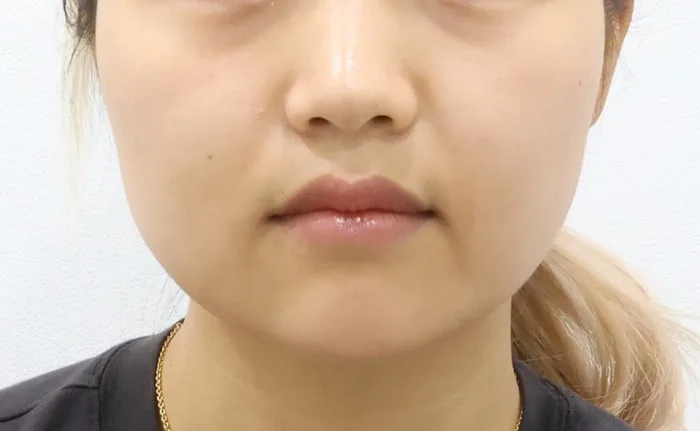
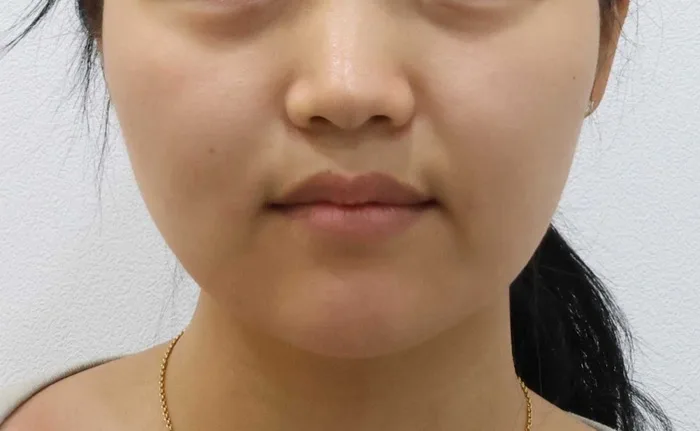
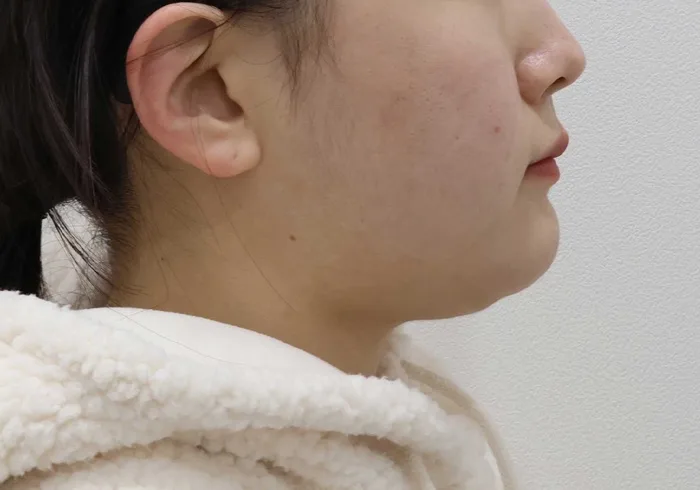
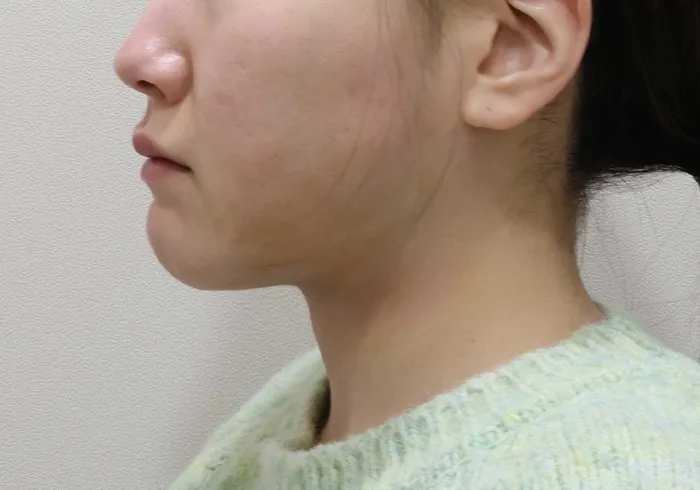
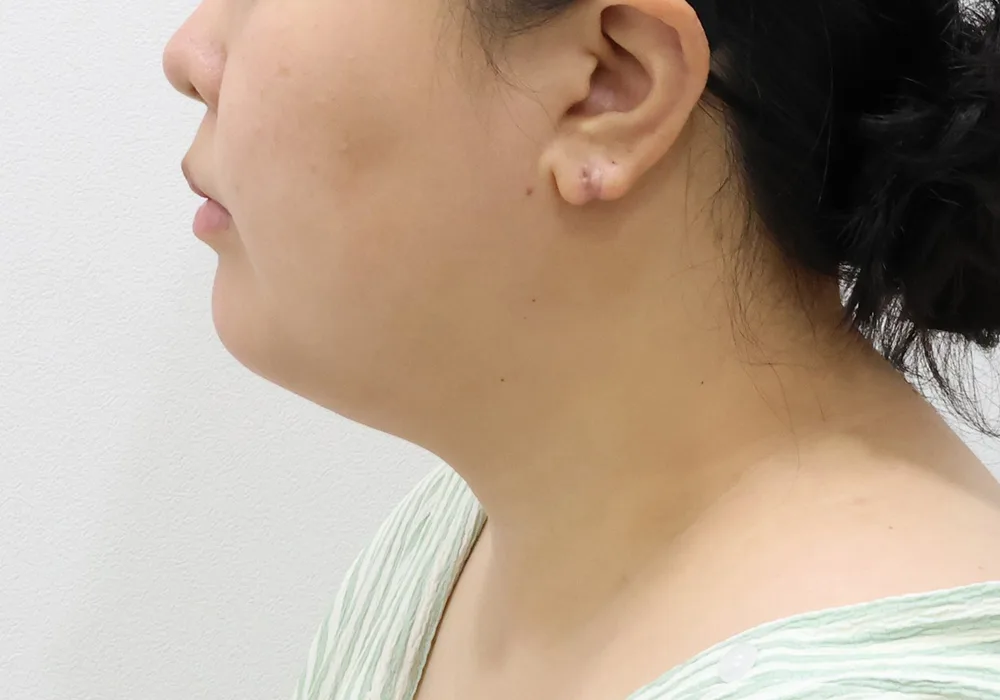
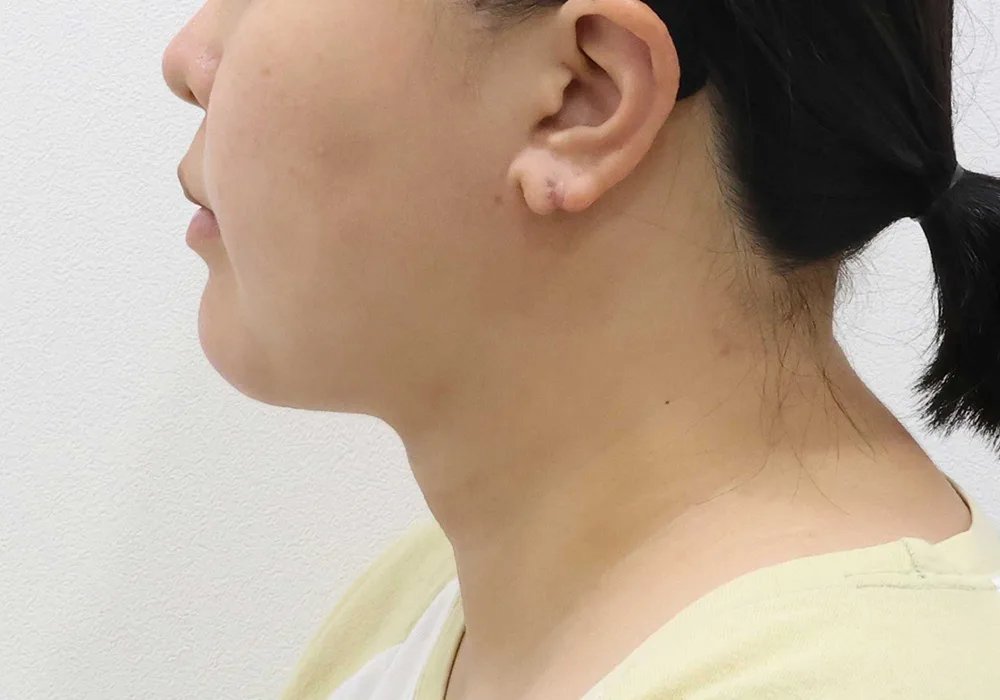
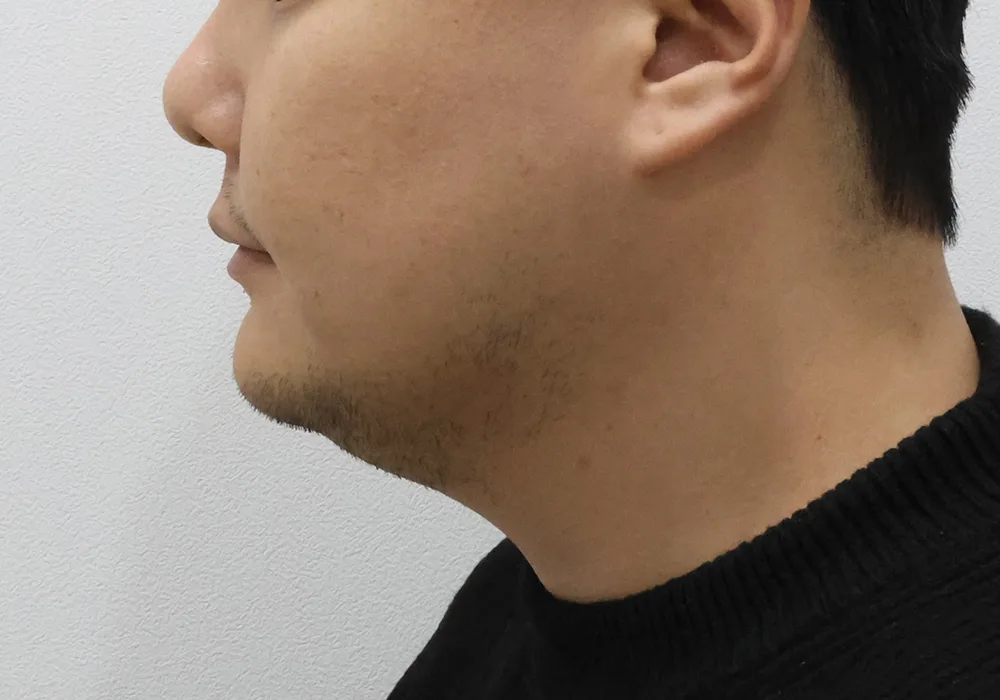
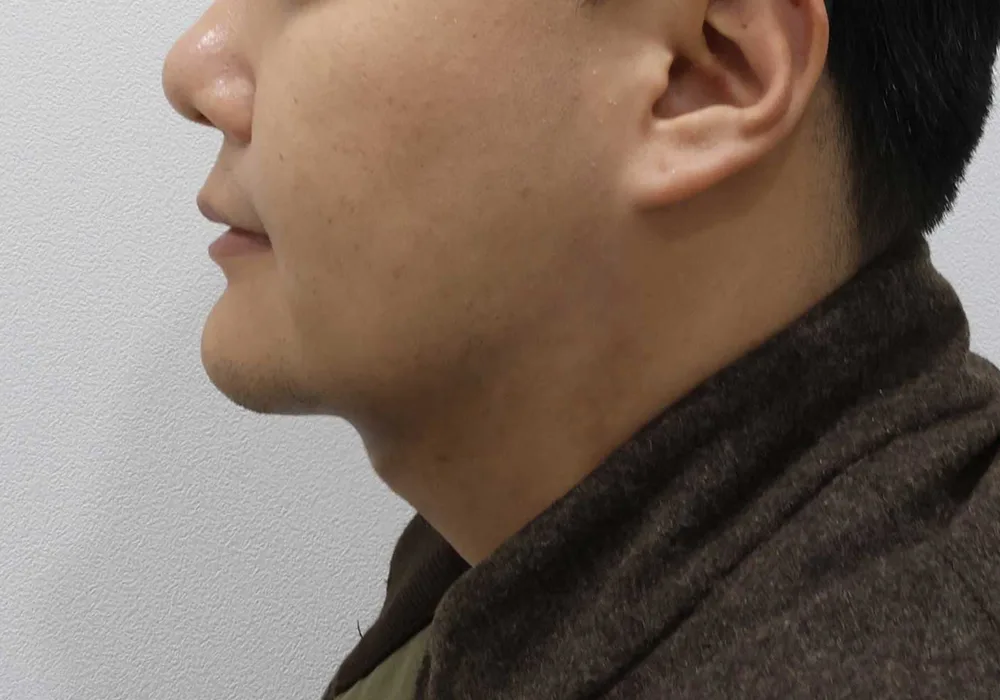
Four cases from the clinic's own records appear here. Only the first was a buccal fat excision on its own. In the other three the pad came out during an operation that also suctioned fat elsewhere in the face or tightened the neck muscle, and the caption under each pair names every procedure in that session. The contour you are looking at is the sum of all of them, which is the main reason two cheeks with the same complaint can be quoted two different ways.
BEFOREAFTER
BEFOREAFTER
BEFOREAFTER
BEFOREAFTEREvery frame is a Rewind patient, photographed at the clinic in the same position and the same light on both visits, and published unretouched. Results vary between individuals, and the combinations listed above are part of the reason. Swelling, bruising, altered sensation, asymmetry and scarring can follow any surgical procedure. None of these pairs forecasts a personal outcome; an examination has to come first.
Cheek anatomy
The cheek is not one mass. Four separate findings make a face read full, and a buccal fat excision addresses the second of them while leaving the other three untouched. Reading which one dominates is the reason the consultation happens before the price does.
In sequence
Rewind publishes this operation as three steps. It is short in description because the surgical decision sits before it, in how much of the pad leaves the pocket, and because nothing is opened on the outside of the face at any point.
The opening is made on the inner lining of the mouth, at a point the surgeon chooses over the pocket. Because the mucosa heals quickly and the wound faces inward, the face carries no external mark from the approach.
The pad is eased out of its pocket and the portion judged surplus is removed. Rewind's own wording is that only unnecessary fat is taken, selectively, which is a restraint on volume as much as an instruction on method.
The mucosal opening is closed with sutures that dissolve on their own, so there is no separate visit to have stitches taken out. What remains is the aftercare inside the mouth for the following days.

Why here
The pocket does not refill once it has been emptied, and that is the part of this operation that deserves the most thought. A cheek judged full at twenty-five is often the same cheek that will thin on its own by forty-five, and published surgical commentary treats over-resection of this pad as a recognised source of a hollowed midface later. At Rewind the amount taken is argued against that timeline by the surgeon who will be looking at your face again in ten years.
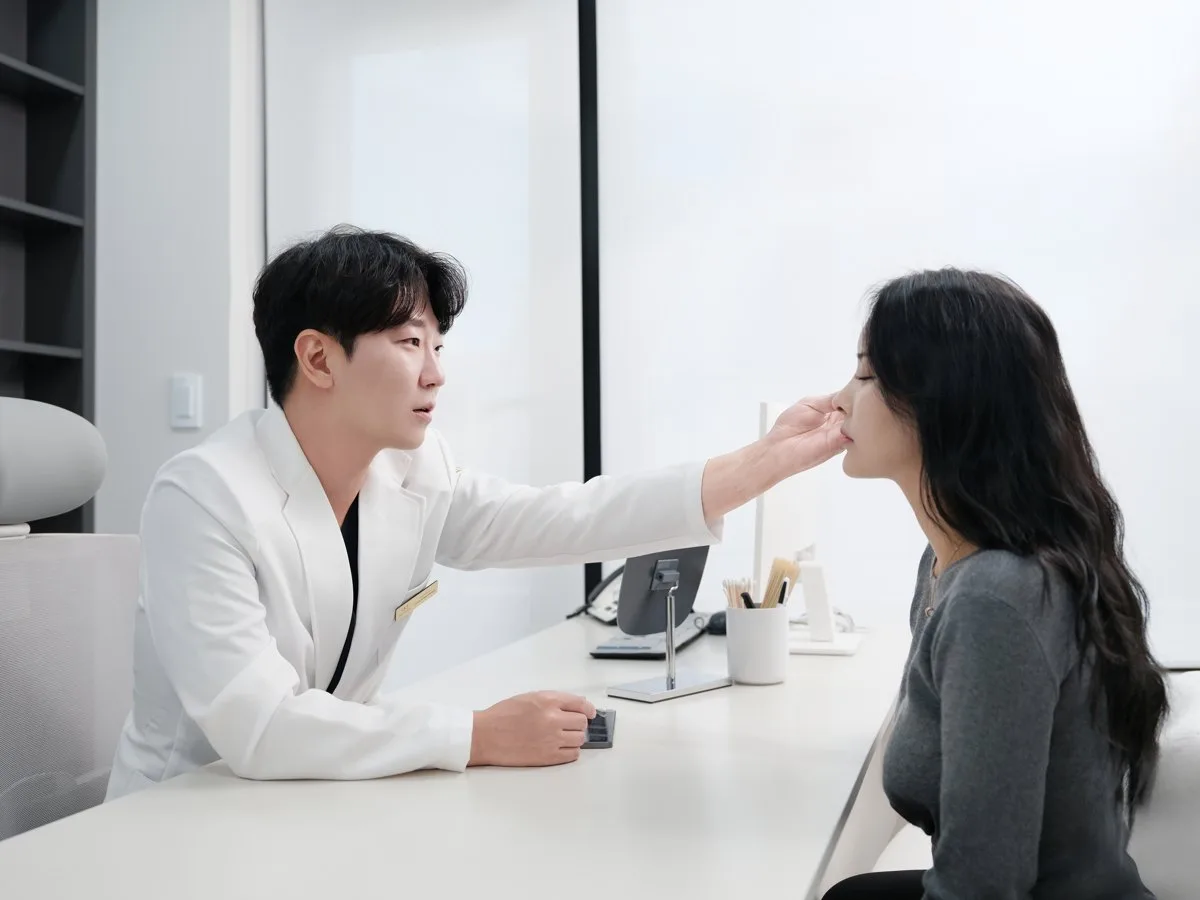
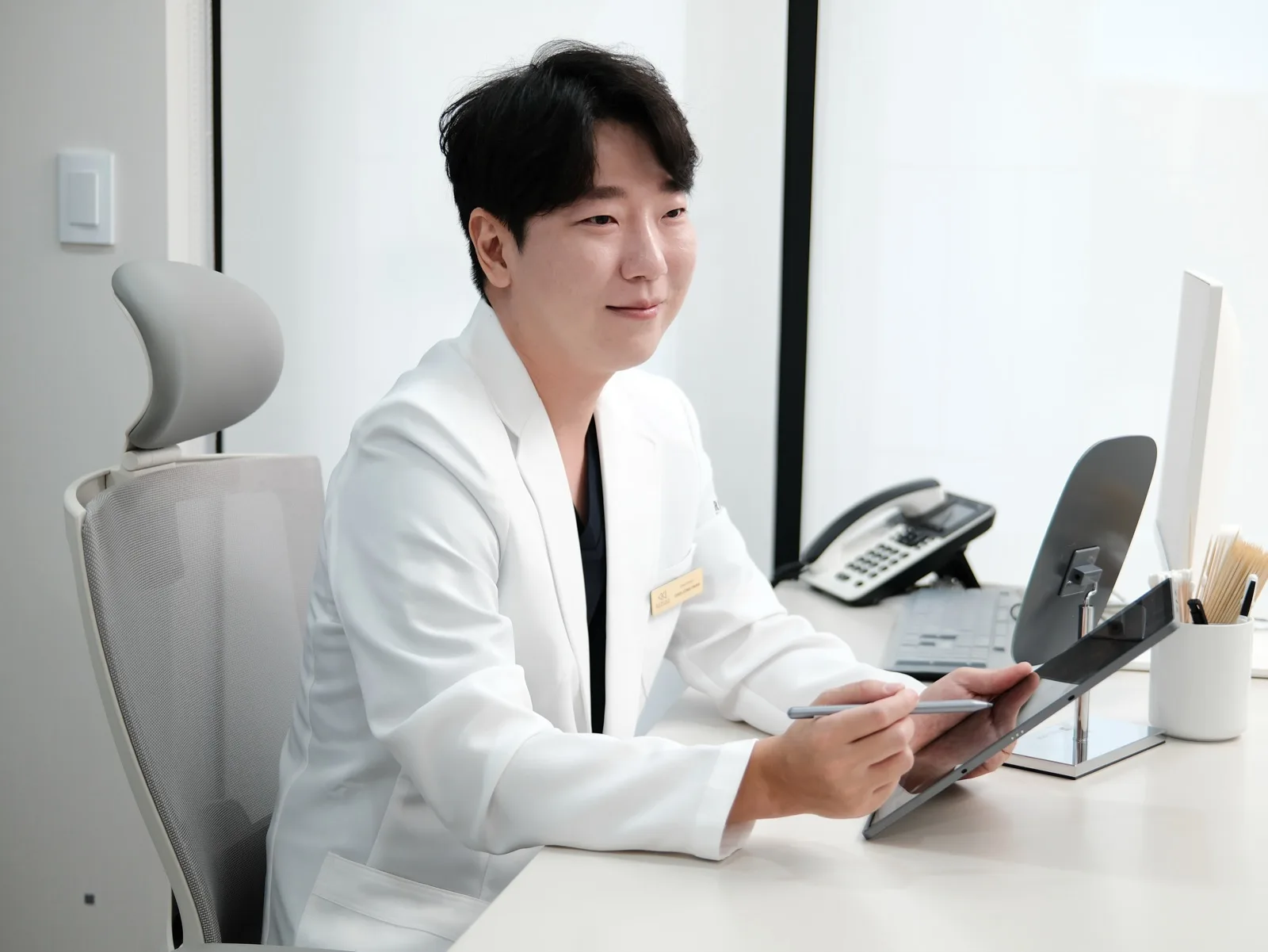
Dr. Choi palpates the cheek himself and separates deep fat from the subcutaneous layer, from muscle bulk and from tissue that has descended. Where the pad is a minor part of what you see, he says so before a date exists, and the conversation moves to a different operation or to none.
The operation is sized so that the cheek reads lighter now without reading empty later. Restraint is easier to defend than a second operation to replace what was taken, and it is why an excision here is deliberately conservative in a face that already shows early volume loss.
Rewind is a single-surgeon practice, so the person who judged the volume is the person who removed it and the person you see at follow-up. International patients are supported in their own language throughout, and the clinic is registered with KHIDI as an institution for foreign patients.
In the operating room

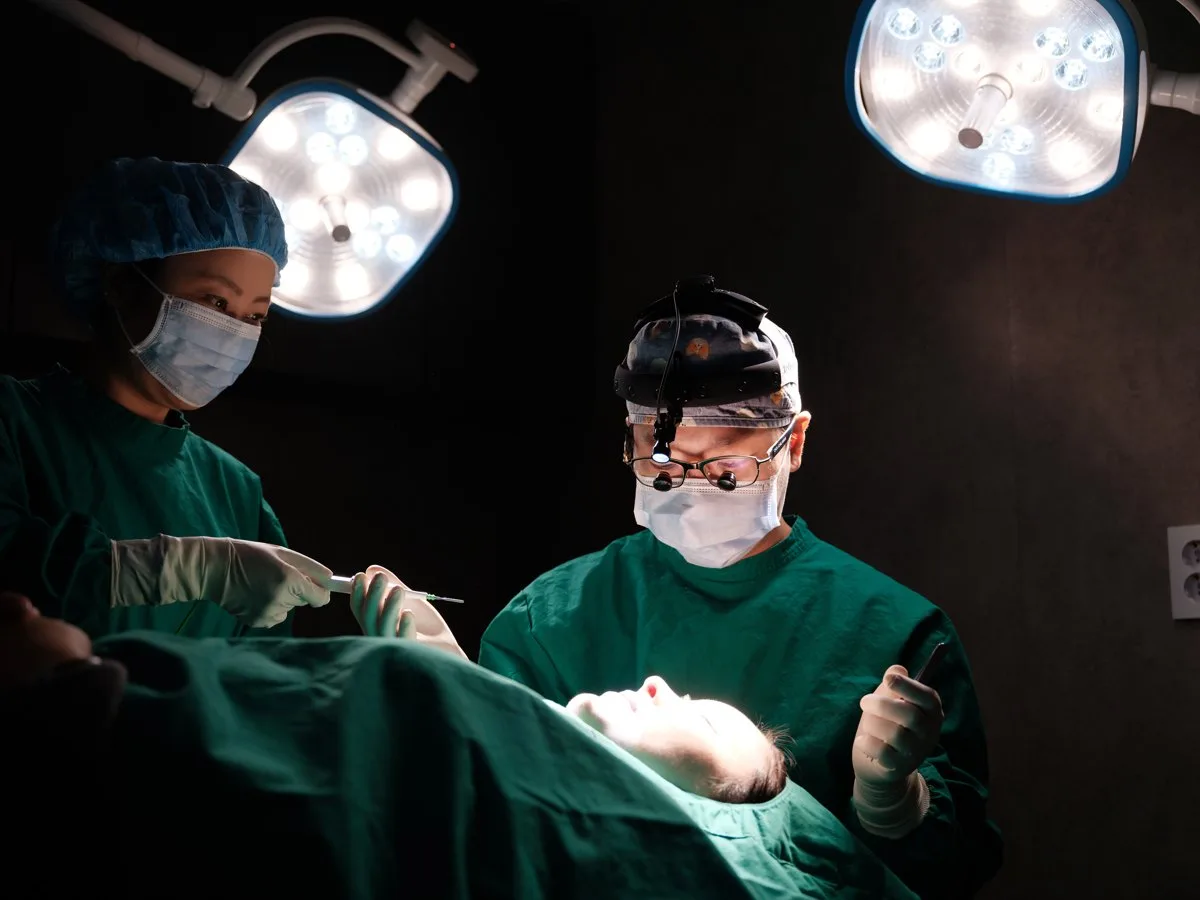
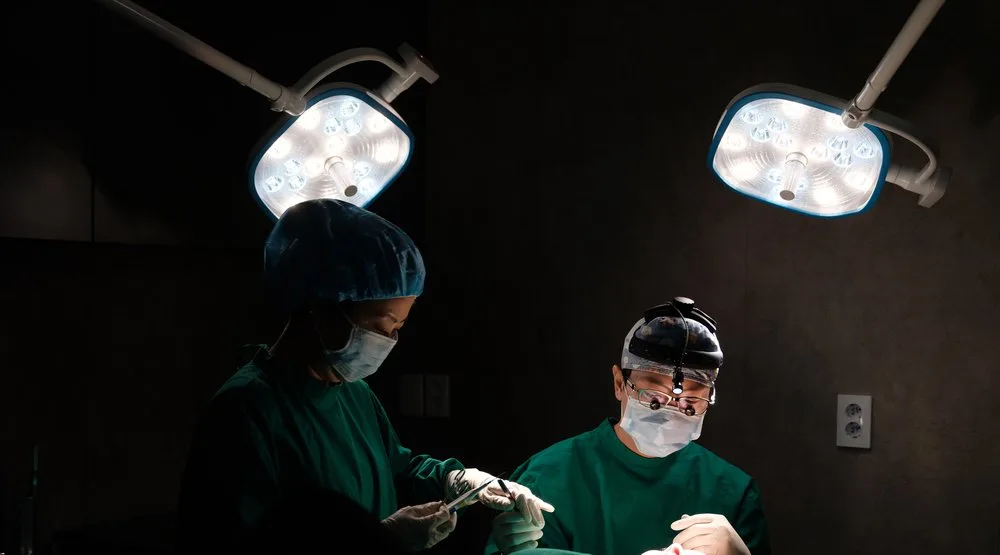
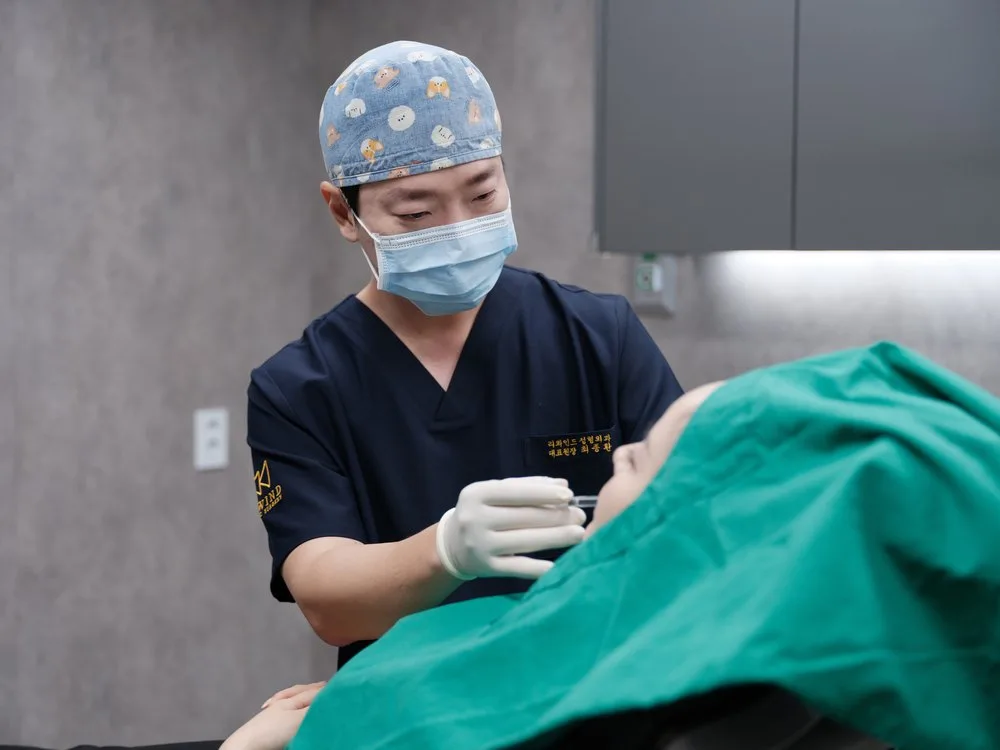
Fig. 04 — The theatre on the fifth floor, prepared for a contour case

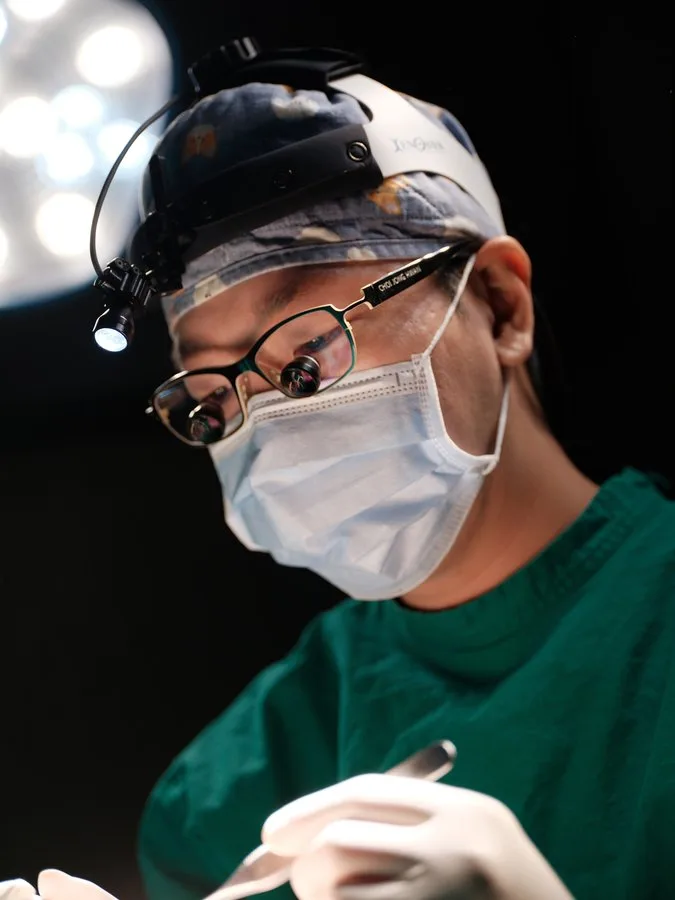
Fig. 05 — Draping and preparation, before the mouth is opened
Rewind occupies the fourth and fifth floors of the Richro Building in Apgujeong, and the operating room sits inside the same practice as the consultation room. One surgeon plans the case and performs it; no part of a booked operation is passed to a second operator. Because the whole procedure happens inside the mouth, there is no shaved area, no external dressing on the cheek and no drain.
Board-certified plastic surgeon
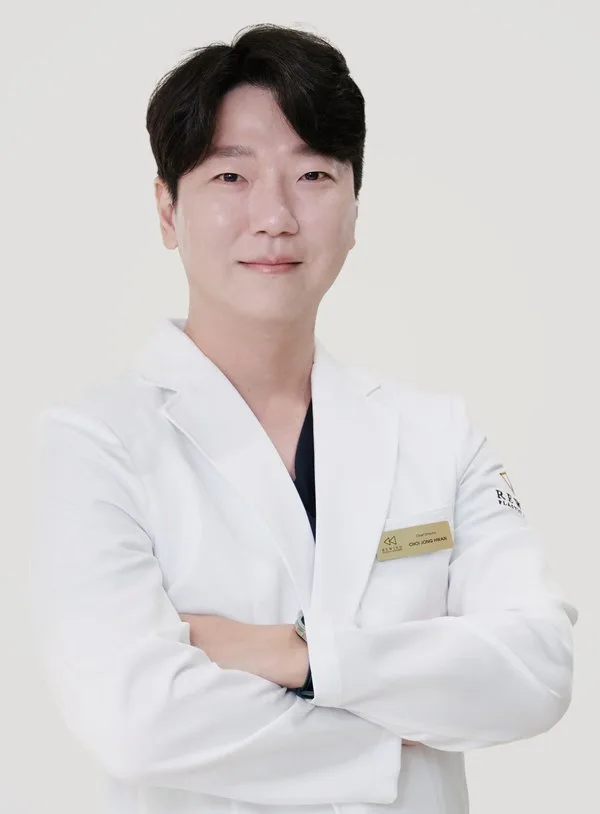
Every case at Rewind is examined, operated and followed up by Dr. Jonghwan Choi, who holds Korean board certification in Plastic Surgery. The clinic is registered with KHIDI for the care of international patients — Reg. M-2025-01-08-09288.
Pricing
Rewind prices this operation two ways. Performed on its own it carries one figure; performed inside a larger contour session it carries a lower one, because the preparation and the theatre time are already committed. The items most often quoted beside it are listed here as well, since three of the four cases above were combined sessions.
List prices, VAT excluded, with anaesthetic fees already inside the listed figure. Which line applies to you is settled at the examination, and a combined figure is written out item by item before anything is booked.
Suitability
Recovery
The aftercare for this operation is unusual in that almost all of it happens inside the mouth. Rewind's post-operative instructions permit tooth brushing from the day of surgery and ask for soft food until the following day, and the clinic records that swelling is limited because the incision is small. How presentable you feel in that first week is individual, and the clinic's own page is more confident about it than this one will be.
Any surgical procedure carries risk, including bleeding, infection, prolonged swelling, altered sensation, asymmetry between the two sides and scarring at the closure. Injury to structures neighbouring the pocket is a recognised risk of cheek surgery and is one of the reasons the dissection is kept selective. Tell the surgeon about every previous facial procedure and every medication you take before a date is agreed.
At Rewind, one board-certified plastic surgeon carries every case — from the first consultation to the final follow-up. Because a face is a story, and a story deserves a single author.
Rewind,
Rewind's Doctor
Dr. Jonghwan Choi Medical Director
One surgeon, from the first
consultation to the last follow-up.
A board-certified plastic surgeon devoted to anti-aging lifting — with the precision and restraint built through years of craniofacial practice.
Google Reviews
"Sample review card — at launch this section pulls the clinic's real Google reviews automatically, shown verbatim with the reviewer's initial and posting date."
"Sample review card — reviews are never written or edited by the clinic; only what patients posted on Google appears here."
"Sample review card — a 'See all reviews on Google' link takes visitors to the clinic's Business Profile."
Questions
Reservation
Tell us what you are considering — we reply within one business day, in your language.
Scientific evidence
Two of the papers below are about this pad specifically: one is a caution on taking too much, the other a description of measured technique. The remaining two come from the liposuction literature and are included because most Rewind buccal cases are performed inside a wider contour operation, and because skin behaviour after fat removal is age-dependent.
These papers describe buccal fat excision and fat removal as a surgical class. They are not studies of Rewind Plastic Surgery, they do not predict what will happen to an individual cheek, and the techniques, anaesthesia and settings reported in each are those of the authors concerned.