Surgery · Mouth corner
The corner raised, then fixed above the muscle
Gangnam, Seoul | Board-certified plastic surgeon, Dr. Jonghwan Choi
KHIDI-registered for international patients · Apgujeong Rewind
Corner lip lift
The short answer
A corner lip lift raises the outer end of the mouth, the point where the upper and lower lip meet and turn down. Rewind lists it as Smile Lip and publishes the operation in three steps: the shape is designed against the proportions of your own face and the form of your own mouth; a minimal incision is made along the crease line beside the corner of the mouth; the slackened muscle and skin are excised and the corner is then re-fixed above the muscle that sits under it. What changes is the direction the corner points at rest. The volume of the lip body is a separate question and belongs to a separate operation.
Source: Rewind's Korean surgical page for Smile Lip. That page publishes the incision line, the excision, the fixation point, the stitch-removal window and the eating and mouth-opening limits. It does not state which anaesthesia is used, how long the operation runs, or how many years the corner holds its new position, so none of those figures appear here. List prices come from the clinic's own price sheet.
One measurement is printed on that Korean page and it is worth reading before anything else: the lip proportion the clinic designs toward, an upper-to-lower relationship of 1:1.615. A corner lift does not create that proportion on its own. It is the reference the corner is raised against, and the amount of skin and muscle taken from each corner is then decided on your own face at the examination. No standard figure for that amount is published in advance, because there is not one.
Photographic record
A mouth corner is the one feature on the face that changes with mood, so a single relaxed portrait proves very little. The pairing that would mean something here is a resting face photographed at the same angle and the same distance on both days, with a second frame taken while the patient smiles, since the corner has to look unforced in both. Rewind has not released a Smile Lip case for this page. The four frames below stay empty until it does, and nothing is borrowed from elsewhere to fill them.
None of these four frames holds a photograph today. When the clinic releases mouth-corner cases, each caption will name every operation that patient had in the same session, because a corner is often raised while other work is done around the mouth and the photograph then belongs to all of it. Individual results may vary. Swelling, bruising, a visible line at the corner, asymmetry between the two sides, altered sensation near the corner, tightness on wide opening and wound problems are all possible after this operation, and the surgeon's examination comes before any plan.
Four presentations
The Korean page names four groups of patients for this operation. They are grouped by what the mouth is doing, and the fourth one is the group most likely to leave with a plan that contains something other than a corner lift.
Three published steps
Rewind publishes this operation as three steps. Two of them are about where the cut goes, and one is about what happens after the tissue is gone, which is the step that decides whether the corner stays where it was put.
The clinic's first step is design: the ratio of the face and the form of the mouth are assessed together, with the published lip proportion of 1:1.615 as the reference the drawing is checked against. Both corners are marked before anything is opened, and the two marks are rarely identical.
Step two is a small cut placed along the wrinkle line running beside the corner of the mouth. The clinic's stated reason for that position is that a line drawn along the natural lip border is difficult to pick out afterwards. It is still a surgical line, and how any line matures differs between individuals.
The third step excises the loosened muscle together with the redundant skin at the corner. Removing skin alone would leave the soft tissue underneath doing the same downward work it did before, which is the reason the muscle is included in what comes out.
After the excision the corner is secured at a level above the muscle beneath it. That fixation is what holds the new direction while the tissue heals around it, and it is also why the mouth is asked to stay quiet for weeks afterwards.
Lifting one corner by the amount the other one needs is how a mouth ends up looking uneven in movement. The two sides are planned against each other in the same sitting, and where the difference between them is large the surgeon says so before a date is held.

Why here
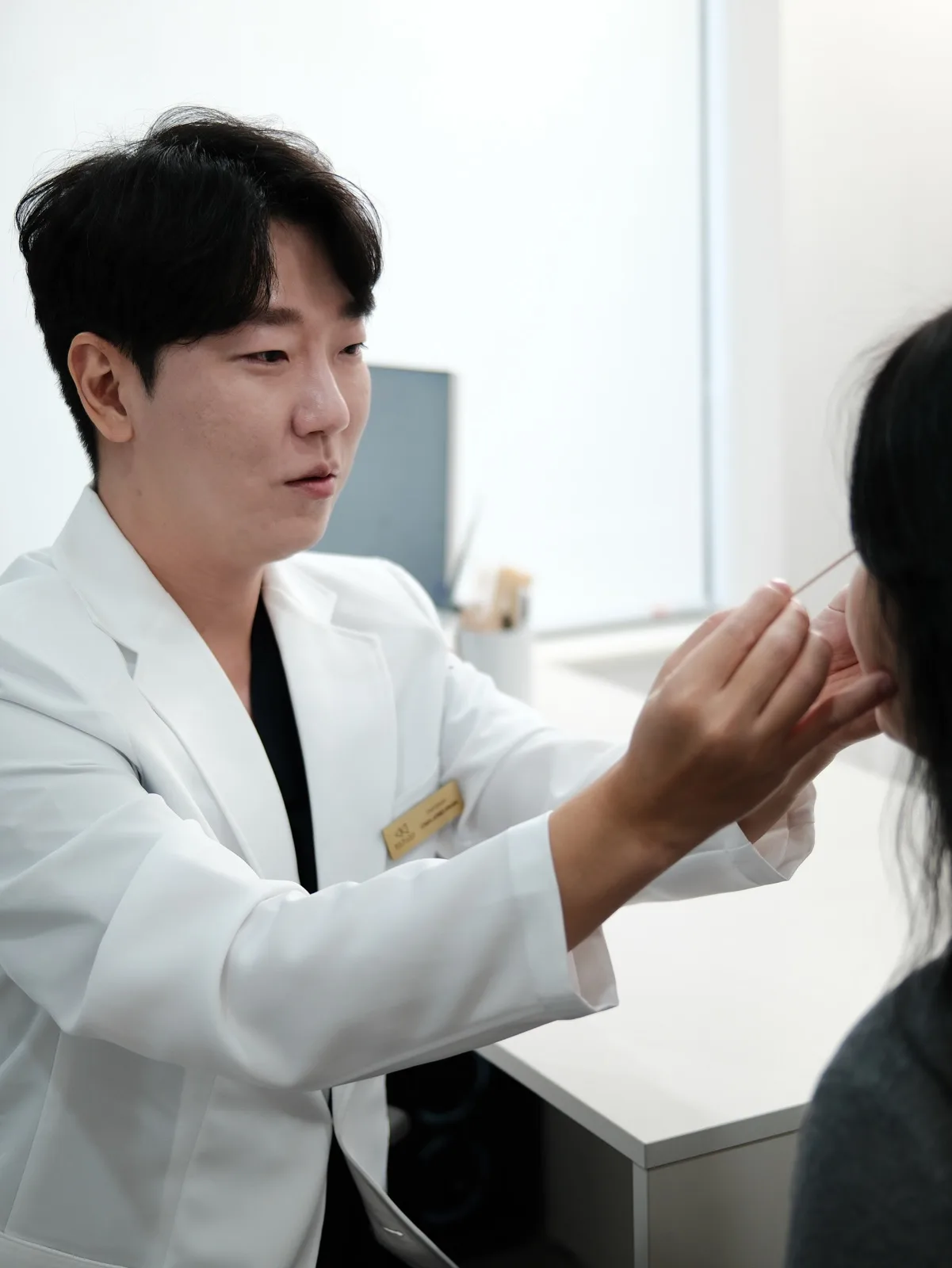
The corner of the mouth is the busiest square centimetre on the face. It moves when you speak, eat, laugh and hold your expression still for a photograph, and a design that only looks correct in repose will announce itself the moment the face is used. Rewind operates as a single-surgeon clinic, so the person who watched your mouth move is the person holding the instrument.
Dr. Choi works from the clinic's published proportion and from the mouth in front of him. If the corner is already sitting where it should and what troubles you in photographs is the fullness of the lip itself, that is said at the desk and this listing comes off the plan.
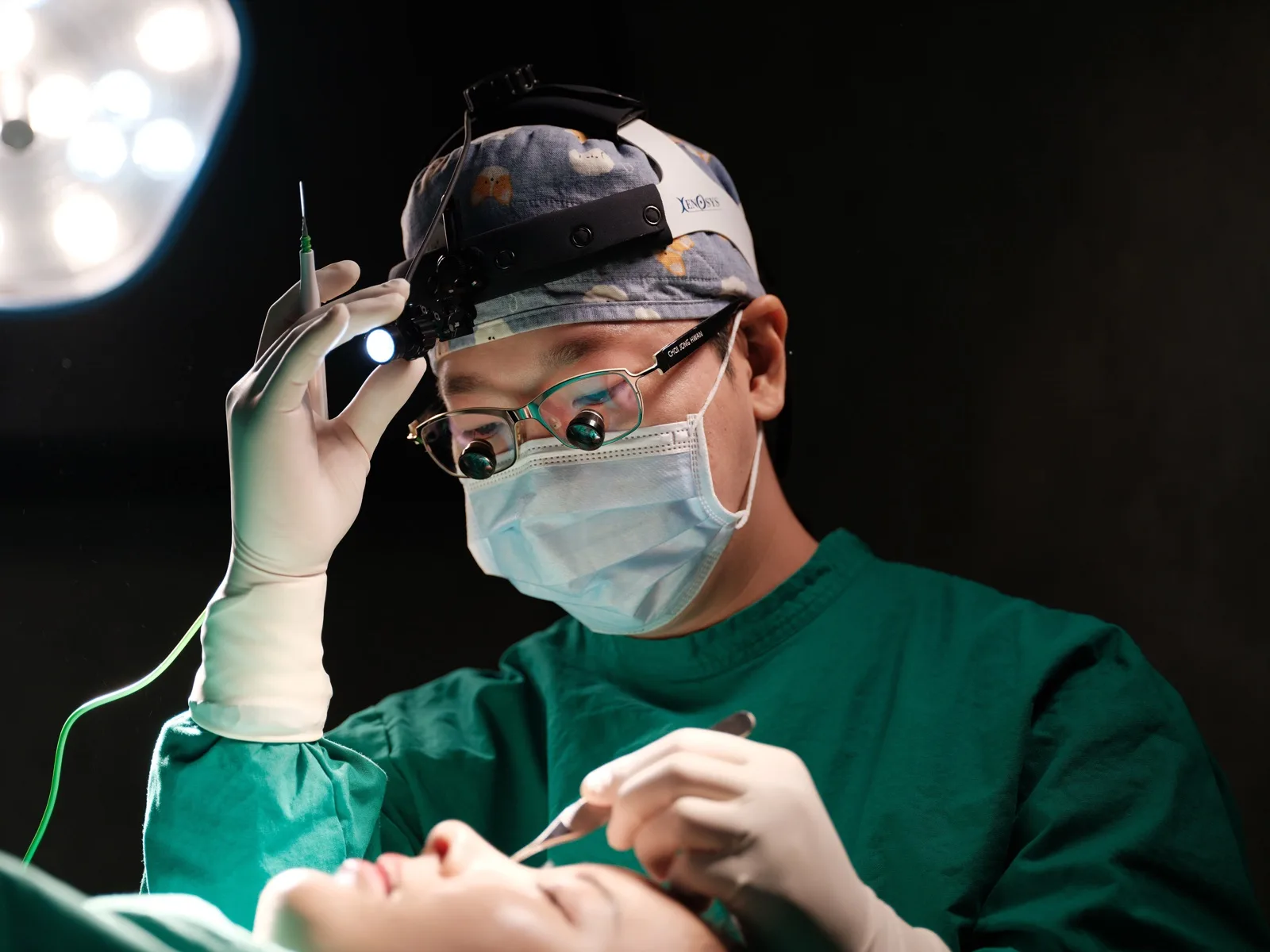
This operation removes muscle as well as skin and then re-fixes the corner above the muscle underneath. Handling all three in one plan is surgical work, and a plastic surgery practice is where the layers in a lower face are read as a single structure instead of separate complaints.
Soft food for a week or two and no wide mouth opening for one to two months after the stitches come out are instructions that only work if someone checks. Follow-up sits with the operating surgeon, correspondence with international patients runs in their own language from the first message, and the clinic holds KHIDI registration for foreign patients under Reg. M-2025-01-08-09288.
In the operating room

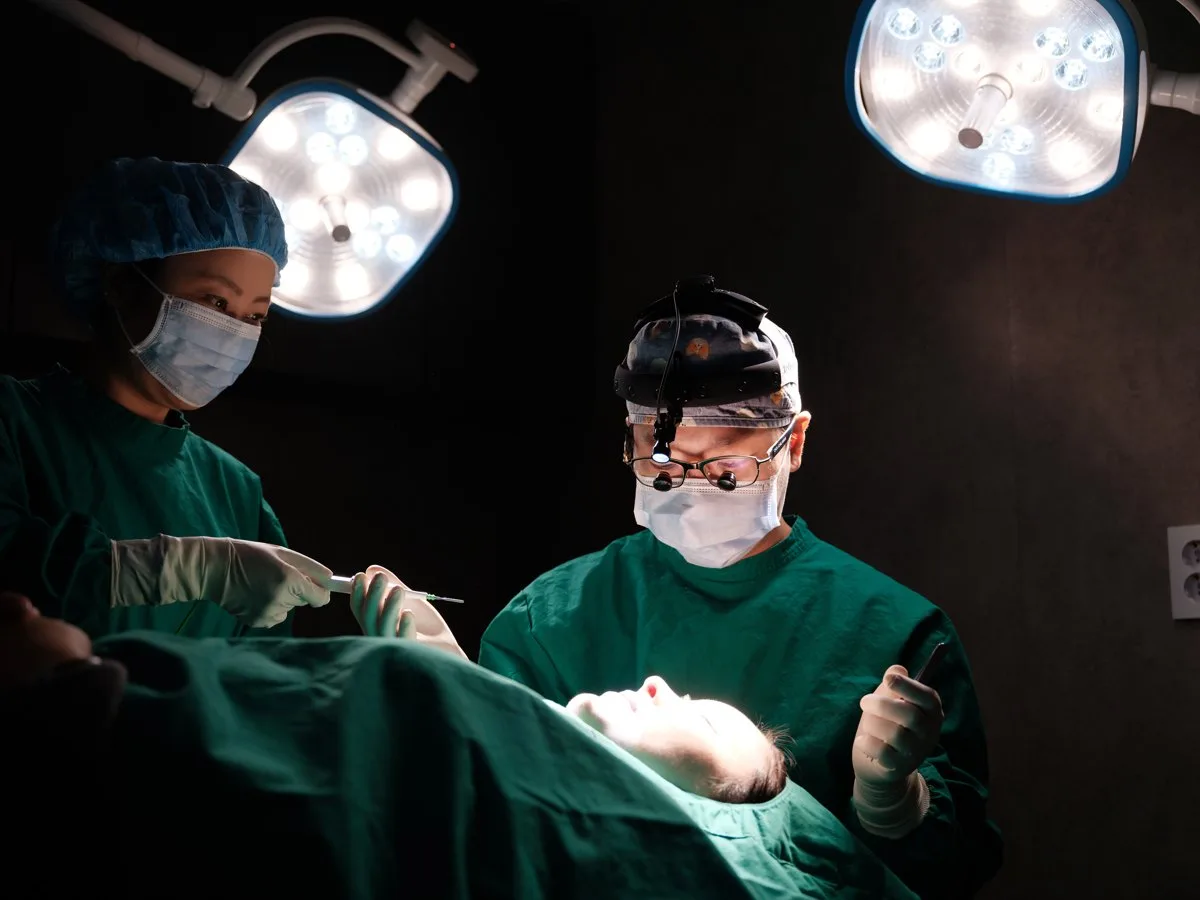
Fig. 04 — The operating room, two floors of the Richro Building in Apgujeong

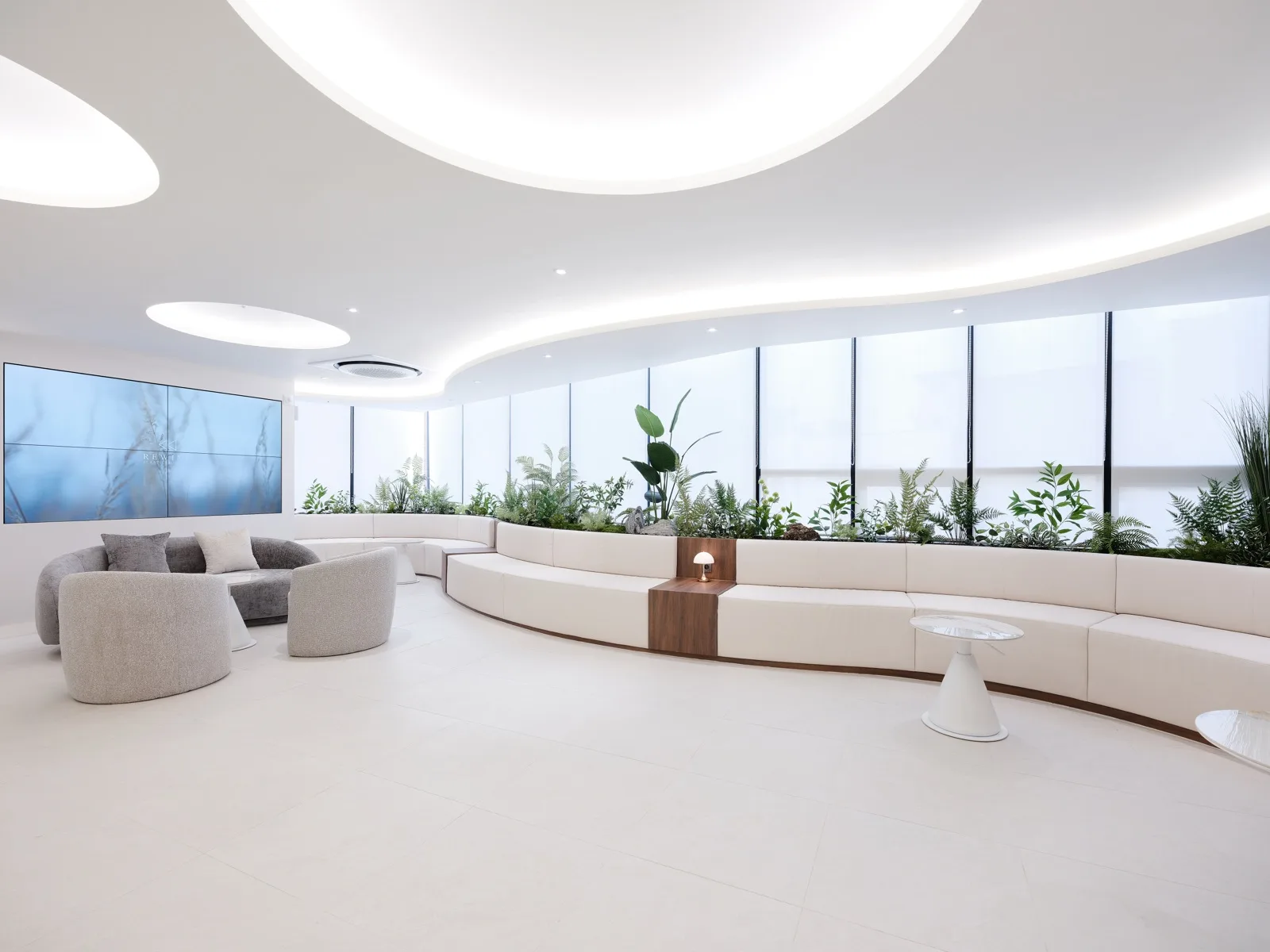
Fig. 05 — The lounge, where patients wait before a consultation and settle afterwards
Rewind occupies two floors in Apgujeong and runs on a single-surgeon model: examination, design, operation and every follow-up visit belong to the medical director. Appointments are held individually, with consultation hours Monday, Tuesday, Wednesday and Friday from 10:00 to 19:00 and on Saturday from 10:00 to 16:00.
Board-certified plastic surgeon
Dr. Jonghwan Choi performs every mouth-corner operation in this clinic. He is certified by the Korean board in plastic surgery, works without a second operating doctor here, and treats international patients under the clinic's KHIDI registration, Reg. M-2025-01-08-09288.
Pricing
Lip operations are listed separately at this clinic, so a quote is built from the lines your examination actually calls for. The figures below are the published list prices for a first operation.
These are list prices with VAT excluded. A mouth corner raised at the same sitting as another lip operation appears as two lines and the total is written out in full before a surgical date is held. Where a corner has been operated on before, the clinic quotes from its revision rates, which sit above the first-operation figures shown here. Nothing on this page is a promotional price, and no figure is quoted by message before the surgeon has seen the mouth.
Suitability
Recovery
Recovery from this operation is unusual in one respect: almost all of it is about how you use your mouth, and very little about dressings. Rewind publishes four points, and they carry enough detail to plan travel and meetings around.
Any surgical procedure carries risk. For a mouth-corner lift the named ones are bleeding, infection, prolonged swelling, a line at the corner that stays visible, asymmetry between the two sides once the swelling settles, altered sensation around the corner, tightness or discomfort on wide opening, and a corner raised further or less far than intended, which may call for a further procedure. Results differ between individuals and no specific outcome can be promised. Rewind does not publish how many years the raised corner holds, so no figure for that is stated here. Every earlier operation around your mouth or jaw, and every medicine you take daily, belongs in the consultation record before a surgical date is agreed.
A mouth corner is measured, cut, excised and fixed by one board-certified plastic surgeon here, and reviewed by the same person through every follow-up. Two millimetres of difference between the corners is not a decision that survives being handed to someone else.
Rewind,
Rewind's Doctor
Dr. Jonghwan Choi Medical Director
A mouth tells the truth
at the corners first.
A board-certified plastic surgeon in plastic surgery, with ten peer-reviewed papers indexed under his name and published work in craniofacial and facial reconstruction.
Google Reviews
"Sample review card — at launch this section pulls the clinic's real Google reviews automatically, shown verbatim with the reviewer's initial and posting date."
"Sample review card — reviews are never written or edited by the clinic; only what patients posted on Google appears here."
"Sample review card — a 'See all reviews on Google' link takes visitors to the clinic's Business Profile."
Questions
Reservation
Send us a resting photograph and a smiling one, tell us what the corners do in each, and we reply within one business day, in your language.
Scientific evidence
The first two papers describe the operation this page is about: a surgical elevation of the oral commissure and the management of the grooves that run down from it. The third and fourth deal with lifting the upper lip from beneath the nose, a different operation on the same feature, and they are listed here because that literature is where scar placement and patient-reported outcomes around the lip have been studied in the most detail. None of them studies Rewind Plastic Surgery, none predicts an individual outcome, and the techniques and measurements described belong to each study.