Surgery · Eye Rejuvenation

Double Eyelid Surgery

Buried, partial or open — chosen by what the lid can hold

Gangnam, Seoul | Board-certified plastic surgeon, Dr. Jonghwan Choi
KHIDI-registered for international patients · Apgujeong Rewind

Double Eyelid Surgery Double Eyelid Surgery Double Eyelid Surgery Double Eyelid Surgery 
Define

Double eyelid surgery

What is double eyelid surgery, and how many versions of it exist?

The short answer

Double eyelid surgery builds a crease in the upper lid. Rewind performs it in three forms: a non-incisional method that ties the crease down with fine sutures and no cut, a partial-incision method that opens roughly five to seven millimetres of skin so surplus fat and muscle tissue can be taken out before the crease is set, and a full-incision method in which the designed line is opened, tissue is removed and the layers are closed again. Eyelid muscle correction for a low-sitting lid margin is listed on top of all three as an additional item.

Facts on this page come from Rewind's own Korean surgical pages for the buried, partial-incision and full-incision methods, and from the clinic's post-operative sheets. Anaesthesia type, operating time and the day sutures come out are not published there and are therefore not stated here.

Most people arrive having already picked a method, usually the one a friend had. The eyelid rarely agrees. Skin thickness, the volume of fat sitting above the eye, how much of the iris the lid already covers and whether a previous buried crease has loosened are what narrow the three down to one, and that reading happens at the chair before a line is drawn.

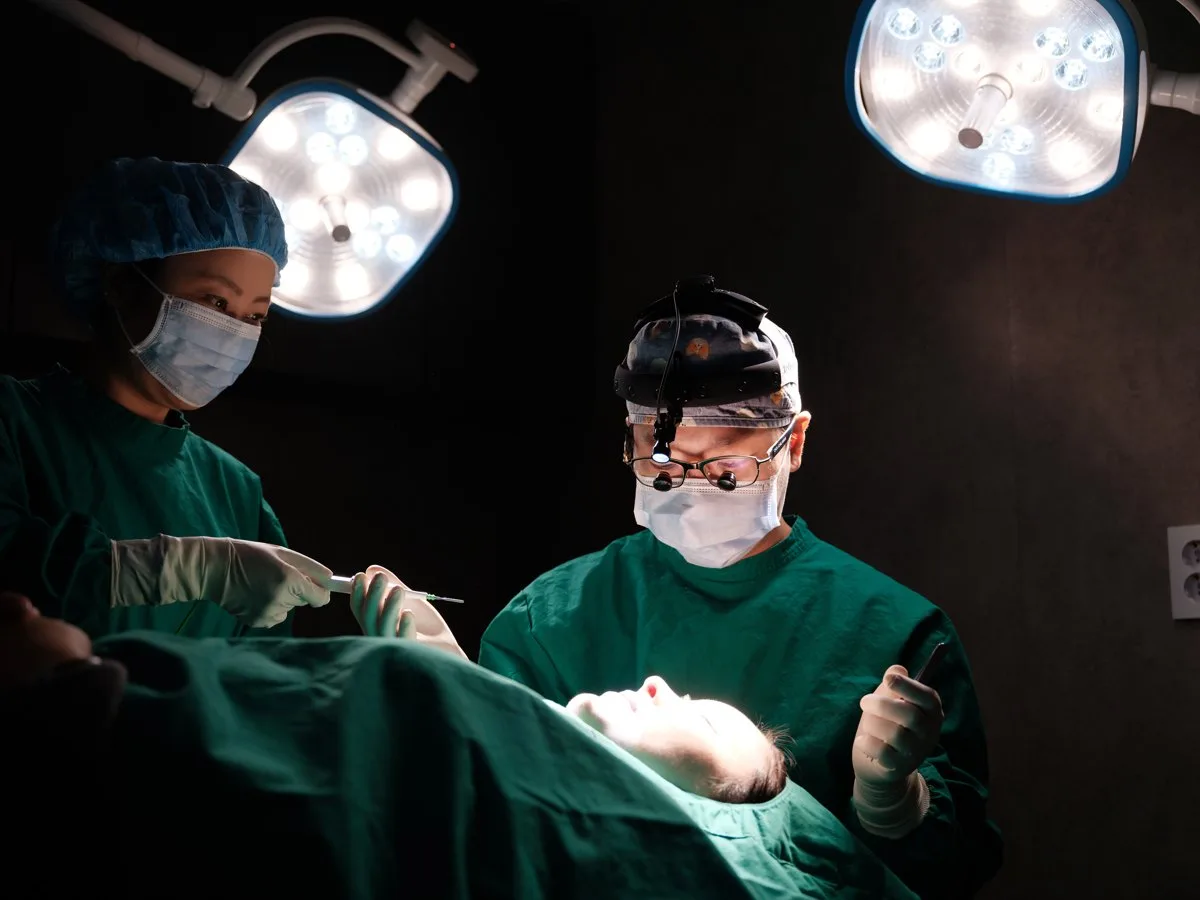
Dr. Jonghwan Choi working under surgical loupes and headlight
Fig. 01 — Loupe magnification, Rewind operating room
Result

Before & After

Rewind's own eyelid cases, with every procedure named

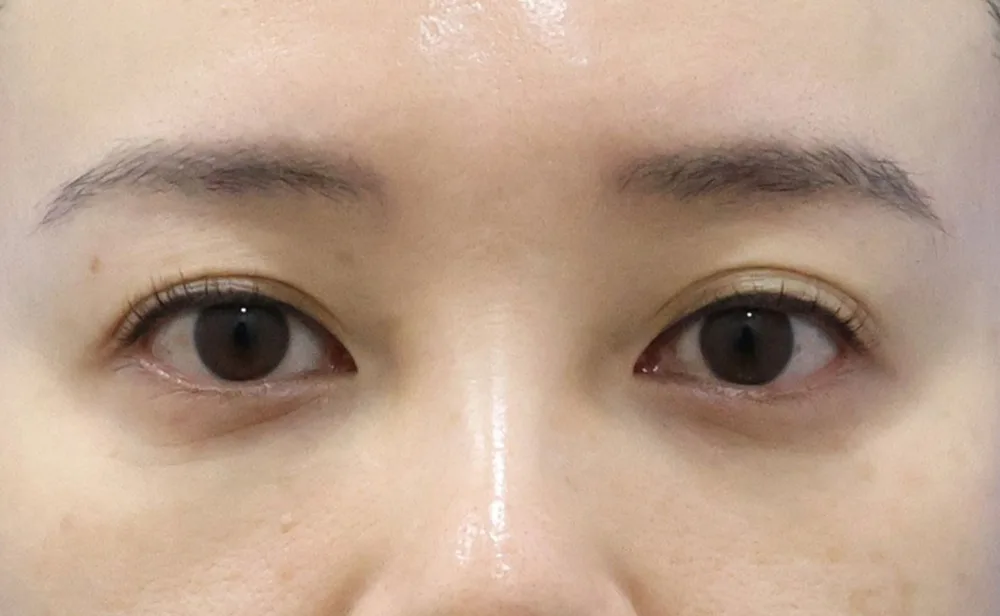
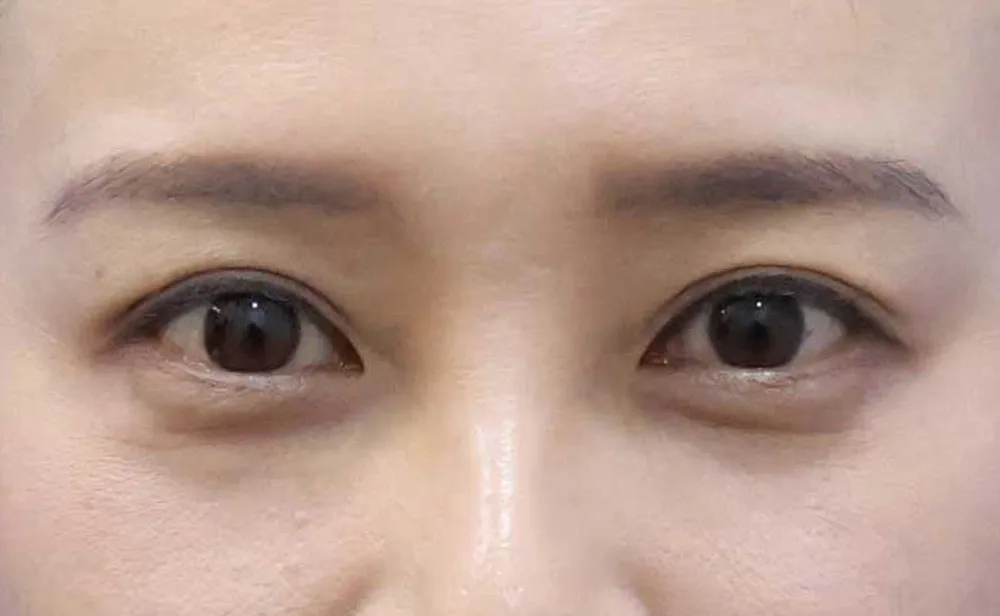
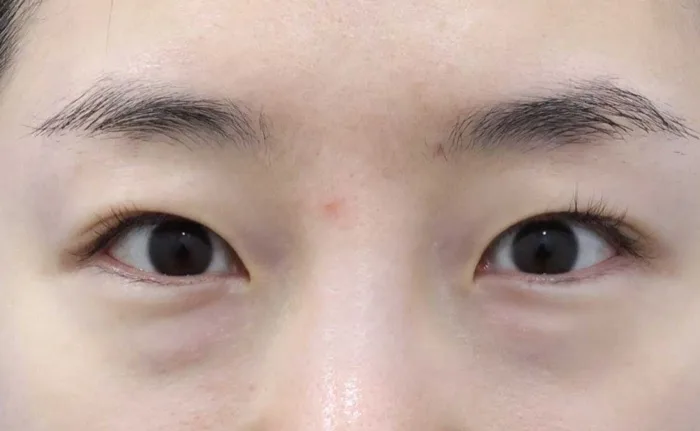
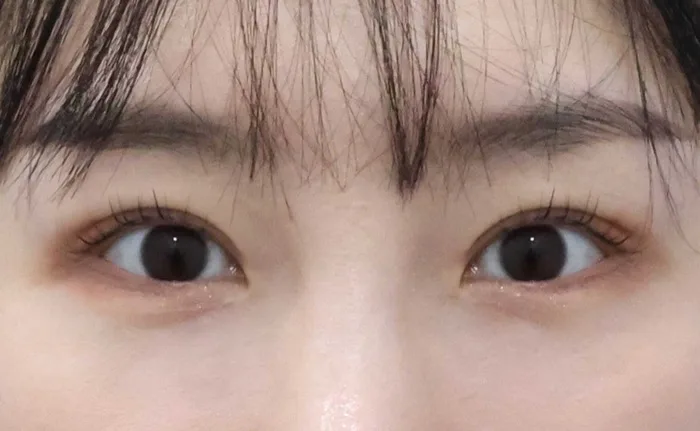
Each case below was photographed at Rewind under the same lighting and framing, and the captions list everything that was done in that operation. Eyelid cases are frequently combined ones: an inner-corner procedure, an upper-lid procedure or under-eye work may be carried out in the same session, and the eye you are looking at is the sum of those, not of the crease alone.

Rewind patients — upper eyelid crease

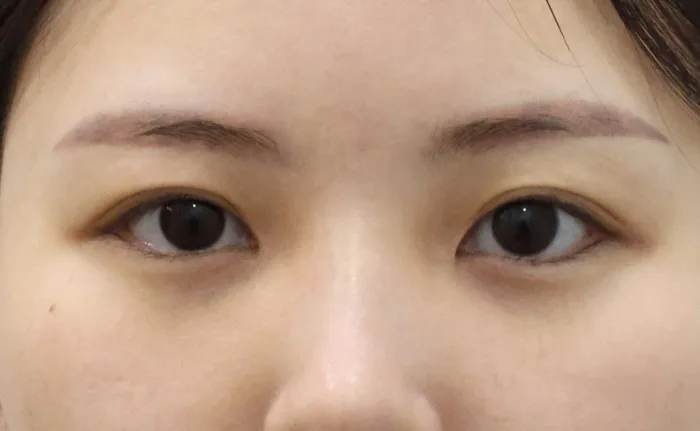
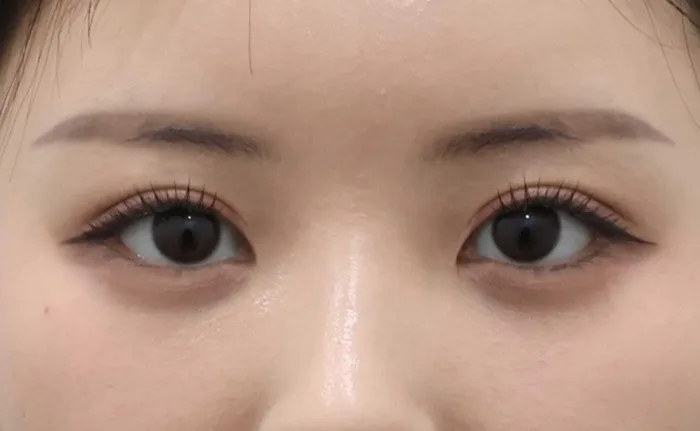
Before — non-incisional double eyelid surgery with medial epicanthoplasty After — non-incisional double eyelid surgery with medial epicanthoplasty BEFOREAFTER
case 01
Non-incisional double eyelid + medial epicanthoplasty
Individual results may vary.
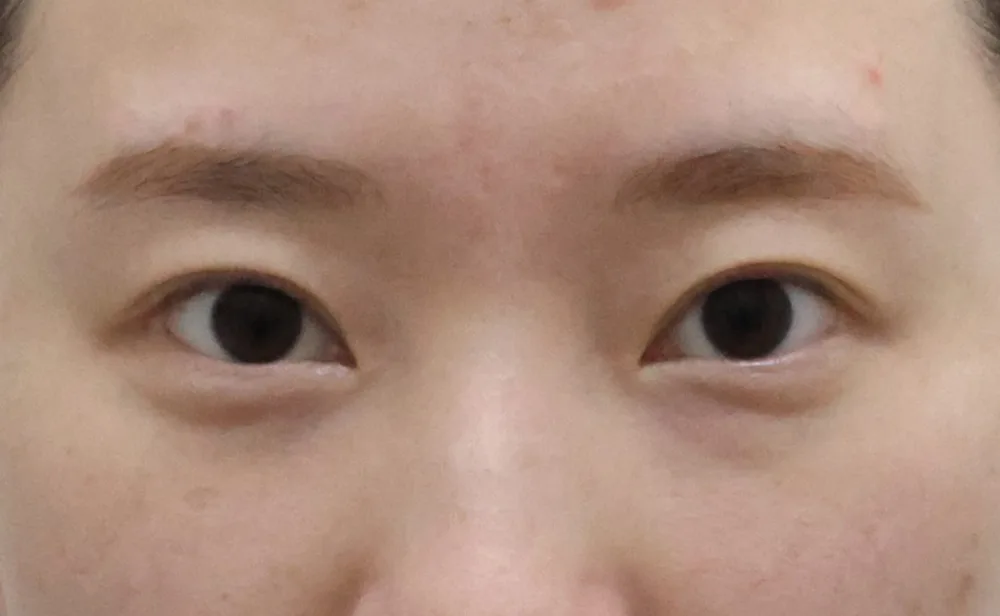
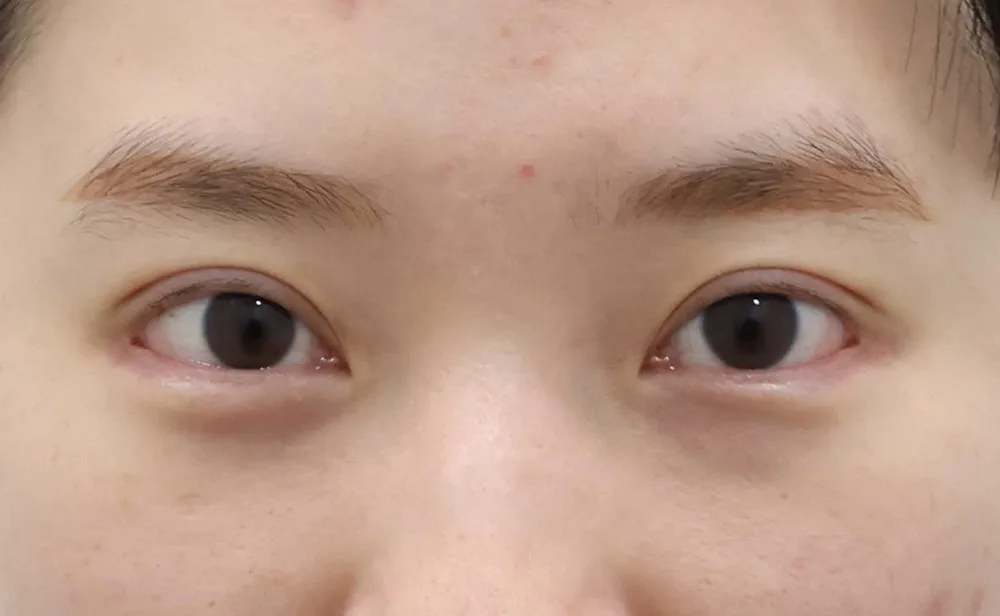
Before — full-incision double eyelid surgery After — full-incision double eyelid surgery BEFOREAFTER
case 02
Full-incision double eyelid, no additional procedure
Individual results may vary.
Before — non-incisional double eyelid surgery with thread lifting in the same session After — non-incisional double eyelid surgery with thread lifting in the same session BEFOREAFTER
case 03
Non-incisional double eyelid + thread lifting with SMAS anchoring, same session
Individual results may vary.
Before — non-incisional double eyelid surgery with epicanthoplasty and under-eye fat repositioning After — non-incisional double eyelid surgery with epicanthoplasty and under-eye fat repositioning BEFOREAFTER
case 04
Non-incisional double eyelid + epicanthoplasty + under-eye fat repositioning
Individual results may vary.

Photographs are of Rewind's own patients, taken by the clinic under identical lighting and framing and shown uncropped. Individual results may vary; none of these cases predicts your own. Swelling, bruising, asymmetry between the two lids, altered sensation and scarring can follow eyelid surgery. A consultation and examination with the doctor come before any decision.

Method

Method map

Which double eyelid method can a given lid actually hold?

Rewind publishes a separate candidacy list for each method, and the lists are what the decision runs on. All three build the same four line designs — in-line, semi-outline, in-out-line and outline — so the choice below is about how the crease is held, and about what has to come out of the lid first.

method 01
Non-incisional (buried)
No cut. The crease is formed by inducing adhesion between skin and muscle, tied at seven micro-anchor points with double fixation. Rewind lists it for eyes that read sleepy, for lids that block the line of sight, for eyes showing under about 80% of the iris, and for people who raise the brow and forehead to open the eyes.
method 02
Partial incision
About five to seven millimetres of skin is opened, surplus fat and muscle tissue is removed, then the crease is fixed. Listed for lids carrying a lot of fat, for thick lid skin, for a buried crease that has already come undone, and for people who want the hold of an incisional method without a full-length line.
method 03
Full incision
The designed line is opened along its length, fat and muscle tissue is removed and skin and muscle are sutured back together. Listed for thick lids with a lot of fat, for lids that droop heavily over the iris, and for eyes that feel weighed down because the opening muscle is weak.
add-on
Eyelid muscle correction
Correction for a lid margin that sits low over the iris is priced as an addition to the crease operation, never as a package of its own. Rewind's Korean site publishes no separate technique page for it, so no technique is described here: whether it belongs in your plan is an examination finding, explained and quoted before you book.

Two of those lines are shared with neighbouring operations. When the inner corner is the limiting factor the discussion moves to epicanthoplasty; when the weight over the eye is skin that has descended with age, the answer lies closer to upper blepharoplasty than to a new crease.

Steps

In sequence

How is double eyelid surgery performed at Rewind?

The three methods share a first step and a last step. What sits between them is the part that changes, and nobody receives all of it — the middle rungs below are alternatives to each other, chosen at examination.

01Design

The crease line is drawn against your own lid

Height and shape are set from the eye's own proportions, and the four line designs Rewind offers sit on a spectrum from a crease tucked inside the inner corner to one carried out past it. Height is the variable that a thick lid punishes hardest, which is where a design conversation can end in a refusal.

02Buried

Seven micro-anchor points, tied twice

In the non-incisional method the lid is never opened. Adhesion between skin and muscle is induced along the drawn line and secured at seven micro-anchor points, each knotted with double fixation. The clinic's stated reason for the doubled knot is a lower risk of the crease loosening, and it states plainly that a hard rub or a blow to the eye can still undo it.

03Partial

A five-to-seven-millimetre opening, and what leaves through it

Where fat volume is the obstacle, a short opening is made and the surplus fat and muscle tissue are taken out before the crease is fixed. Rewind describes this method as combining the natural look of its buried technique with the holding power of an incisional one, which is also why it is the usual answer after a buried crease has come undone.

04Open

The full line, then a layered closure

In the full-incision method the line is opened along its length, fat and muscle tissue are removed, and muscle and skin are closed in layers. This is the version that can change the shape of the eye most, and it is also the only one that leaves a line to heal on the surface.

05Add-on

Where the opening muscle, and not the crease, is the problem

A lid that is lifted by the forehead, or that covers a large share of the iris, is describing the eye-opening muscle. A crease built over that changes the fold without changing how wide the eye opens. Rewind carries eyelid muscle correction as a separately listed addition for exactly this finding, and the literature on Asian eyelids reports it being planned together with the crease in one sitting.

06Match

Both lids are finished against each other

The operation ends with the two sides compared for line and symmetry. Eyelids are rarely identical to begin with, and the clinic's own wording is that the crease should suit the face it sits in; a small difference between left and right can persist and is discussed before surgery, not after.

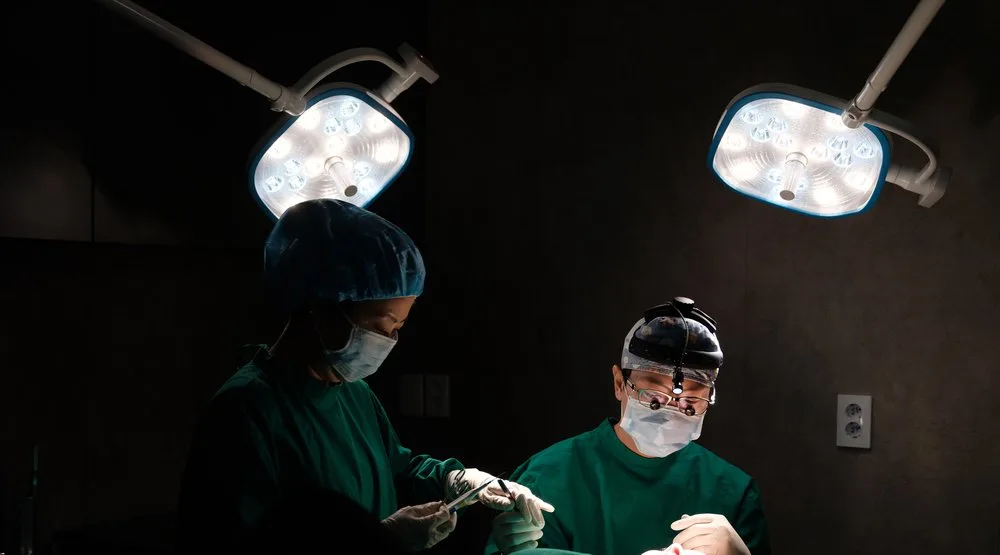
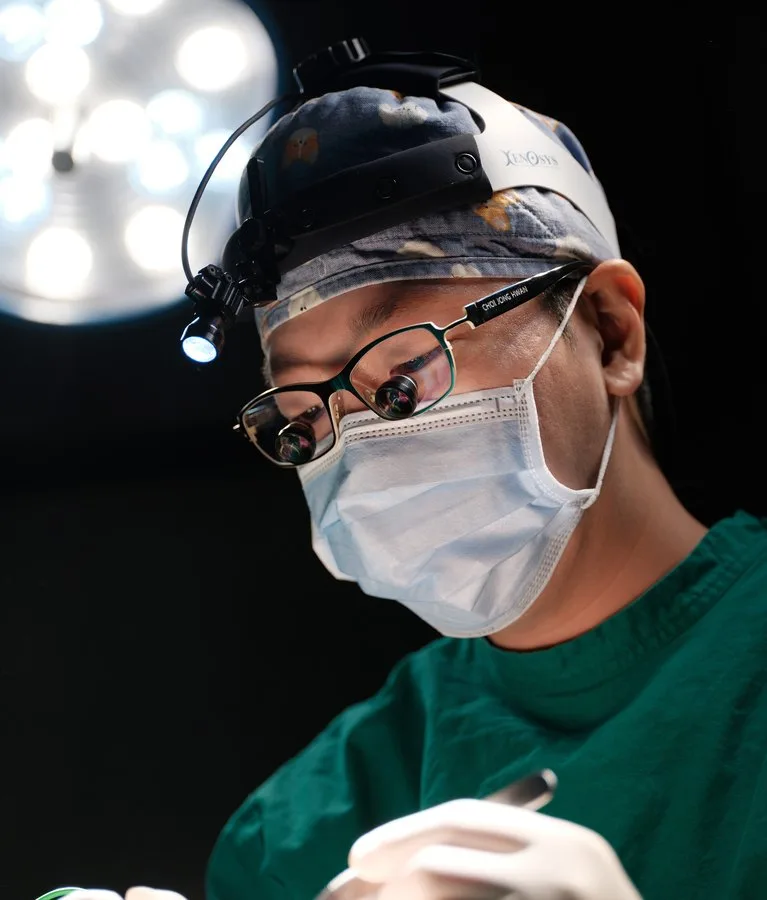
Rewind's medical director operating under the surgical light
Fig. 02 — Every step above is carried out by the medical director himself
Rewind

Why here

Why one surgeon should read the lid and then operate on it

Creases that have to be redone usually failed at the reading stage, not at the knot. A buried crease placed on a thick, fatty lid, or a line drawn higher than the skin can carry, is a planning decision made before anyone touched the eye. At Rewind the person who makes that decision is the person who then performs the operation and sees you at every follow-up.

01Reading

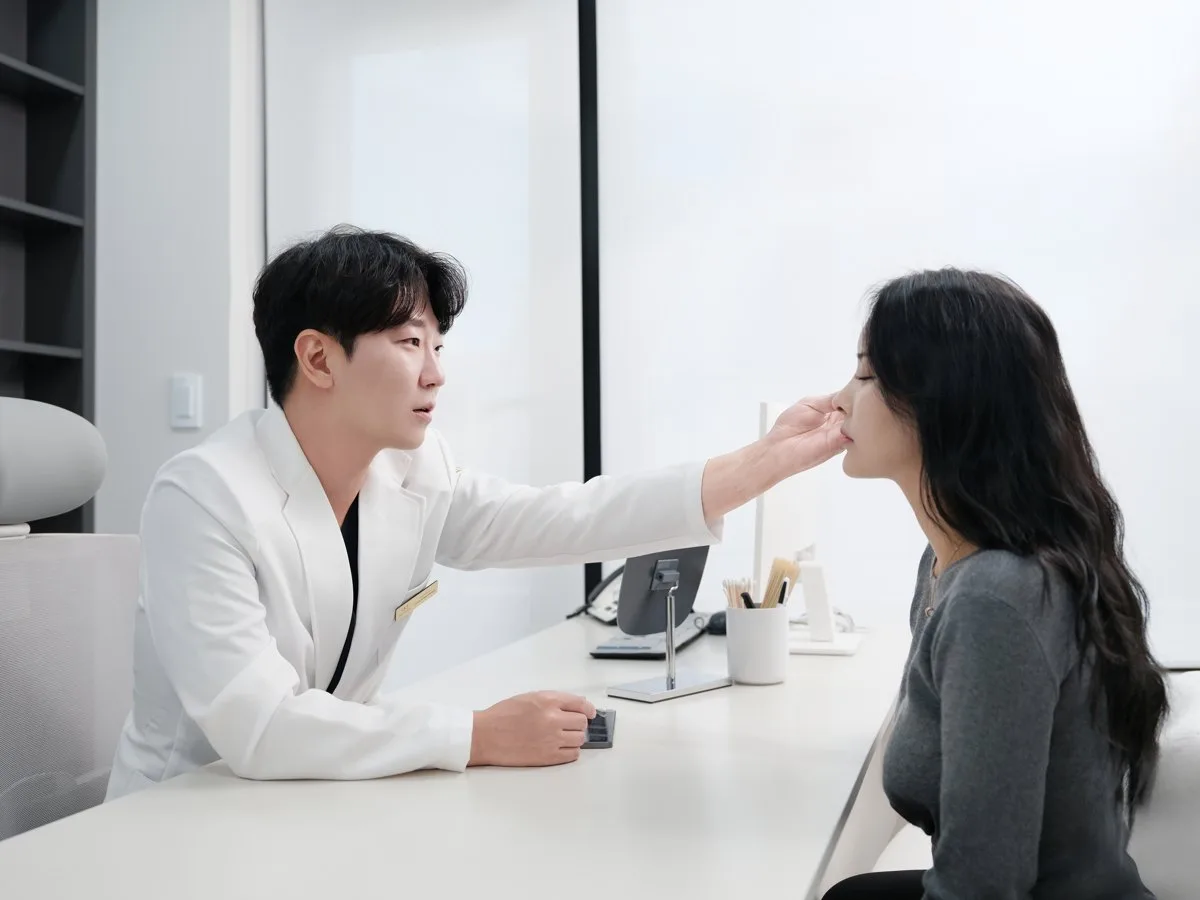
Lid thickness, fat volume and iris coverage are examined by hand

Dr. Choi checks how much of the iris shows when the eyes are open, how much fat sits above them and how the brow behaves as they open. Where a buried crease would not hold on your lid, you are told that at the consultation, with the alternative and its price named at the same time.

02Itemisation

Crease, inner corner and muscle correction are separate lines on the list

Each method is priced on its own, and eyelid muscle correction is an addition rather than an inclusion. Nothing is folded into a package by default, so a plan grows only when the examination gave a reason for it.

03Continuity

The same surgeon through swelling, sutures and the months after

Eyelid results move for weeks while swelling settles and a line matures, so the follow-ups matter as much as the day itself. International patients are supported in their own language from the first message onwards, and Rewind is a KHIDI-registered institution for foreign patients.

Dr. Jonghwan Choi examining a patient's eye area at the consultation desk
Fig. 03 — The lid is examined by hand before any line is drawn
Theatre

In the operating room

Where eyelid surgery happens, and who is holding the instruments

Operating room at Rewind Plastic Surgery, Apgujeong

Fig. 04 — Rewind's operating room, Richro Building

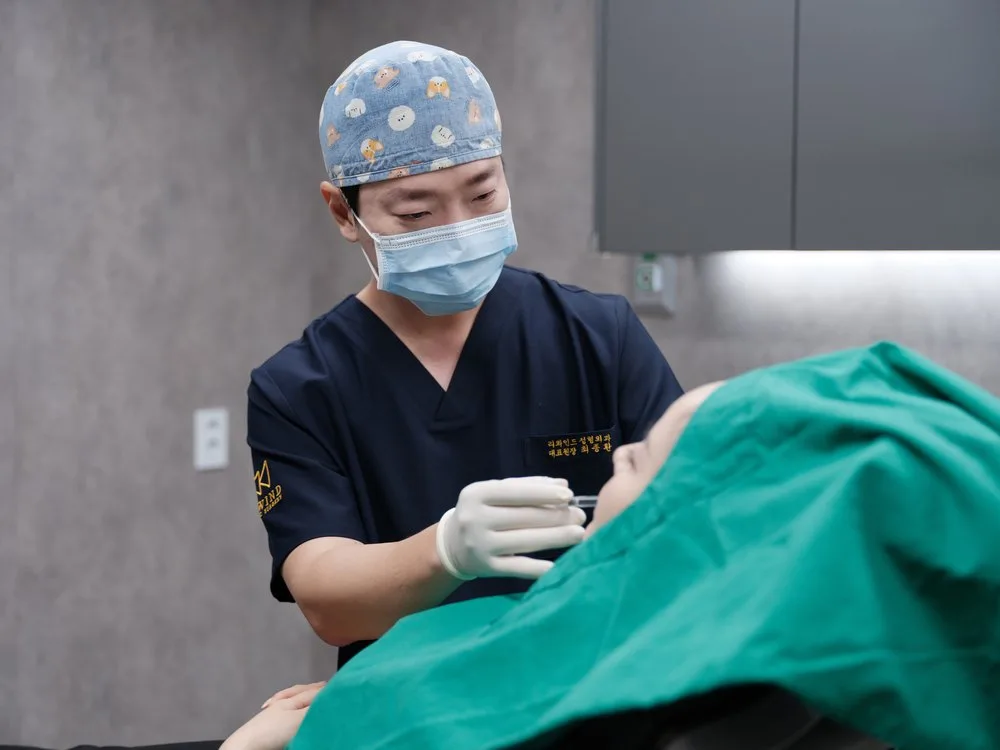
Preparation of a draped patient in the procedure room at Rewind

Fig. 05 — Preparation, before the first suture

Rewind occupies the fourth and fifth floors of the Richro Building in Apgujeong and works as a single-surgeon practice. The medical director plans the eyelid at consultation and performs the operation himself; there is no second operator a case can be passed to, and the loupes in the photograph above are his.

Crease designed to eye shape and height
Four line designs: in-line, semi-outline, in-out-line, outline
Buried method: seven micro-anchor points, double fixation
Partial incision: about 5–7 mm of skin opened
Full incision: tissue removed, layered closure
Eyelid muscle correction listed as an add-on
Operated by Dr. Jonghwan Choi
Suture care and follow-ups with the operating surgeon
Dr. Jonghwan Choi, board-certified plastic surgeon

Board-certified plastic surgeon

Korean board certification in Plastic Surgery; member of the Korean Society of Plastic and Reconstructive Surgeons and of the Korean Cleft Palate-Craniofacial Association. Rewind holds KHIDI registration as an institution for international patients, Reg. M-2025-01-08-09288.

Cost

Pricing

What does each double eyelid method cost in Seoul?

Rewind prices the three methods separately and adds eyelid muscle correction as its own line. A quotation is therefore the sum of the items your examination called for, and the method that suits your lid is not always the cheaper one on this list.

Non-incisional double eyelidBuried method, seven micro-anchor points with double fixation
₩1,200,000
Partial-incision double eyelidShort opening, removal of surplus fat and muscle tissue
₩1,800,000
Full-incision double eyelidLine opened along its length, tissue removed, layered closure
₩2,900,000
Eyelid muscle correction, added to the creaseListed as an addition where the examination finds a low lid margin
₩1,200,000
Revision of a previous incisional creaseWhere an earlier incisional result is being corrected
₩4,900,000

Listed rates, VAT excluded; anaesthetic fees are already inside the figure shown. Revision cases are quoted after the previous surgery has been examined, since what can be rebuilt depends on what was done the first time.

Fit

Suitability

Who is double eyelid surgery for, and who is asked to slow down?

Listed as suitable

  • Eyes that look sleepy or tired even after a full night, because the lid sits heavily over them
  • Lid skin that enters the line of sight when you look straight ahead
  • Less than about 80% of the iris visible when the eyes are open
  • Brows and forehead recruited every time the eyes open
  • Thick lid skin, or a quantity of fat above the eye, where an incisional method is the realistic route
  • A buried crease from an earlier operation that has loosened or disappeared

Talked through before anything is booked

  • A height copied from a photograph that the lid's thickness and fat volume will not carry
  • Skin that scars thickly; Rewind states the crease scar softens with time, but the early months are raised and visible
  • An eye that opens weakly from the muscle, where a crease alone changes the fold and leaves the opening as it was
  • Any condition or medication that affects bleeding or healing, since the lid bruises readily and holds swelling
  • Pregnancy, breastfeeding, or inflammation and infection around the eye at the time
  • Contact lens wearers and people who rub their eyes habitually, because both work against a buried crease
After

Recovery

How does the lid heal after double eyelid surgery?

Two of Rewind's post-operative sheets apply here, one written for the buried upper-lid operation and one for the incisional version, and where they differ the stricter instruction is the one to follow. The clinic records swelling and bruising for about the first 48 hours after a buried crease, and its incisional sheet gives one to two weeks for swelling and bruising to settle. The day the sutures come out is not published as a fixed figure; it is set at your follow-up.

First 48 hours
Swelling and bruising, with wide variation
Rewind records bruising and swelling in the first two days after the buried method, noting that the amount differs between individuals. Cold compresses and an elevated head help; the lid is not pressed or rubbed.
First week
Nothing hot, nothing abrasive
Saunas, steam rooms and sweat-raising exercise are set aside for a week. A low-irritant cleanser is used and the lid is never scrubbed. If the crease loosens or its shape changes, the clinic asks you to come in early.
1–2 weeks
Washing, then makeup
Face washing resumes the day after sutures are removed, and eye makeup waits a further one to two weeks. Alcohol, smoking, contact lenses and eye-squeezing exercise are all on the restricted list for a period after an incisional crease.
Around two months
The line loses its redness
For an incisional crease Rewind records that redness has recovered to a degree by roughly two months, at which point light makeup covers it. Sunscreen is used in the meantime to keep the healing line from darkening.

Eyelid surgery carries real risks, and the ones worth naming are bleeding and haematoma, infection, prolonged swelling, asymmetry between the two lids, a crease that heals higher, lower or thicker than planned, a buried crease loosening after a rub or a knock, altered sensation, and a visible scar line after an incisional method. Tell the surgeon about every previous eye operation and about any medication you take before a date is set. If you are travelling for this, note that Rewind publishes no fixed number of days to stay; plan around the one-to-two-week window for swelling and bruising and confirm your own schedule at consultation.

Doctor

Professional

At Rewind, one board-certified plastic surgeon carries every case — from the first consultation to the final follow-up. Because a face is a story, and a story deserves a single author.

Dr. Jonghwan Choi, board-certified plastic surgeonRewind,
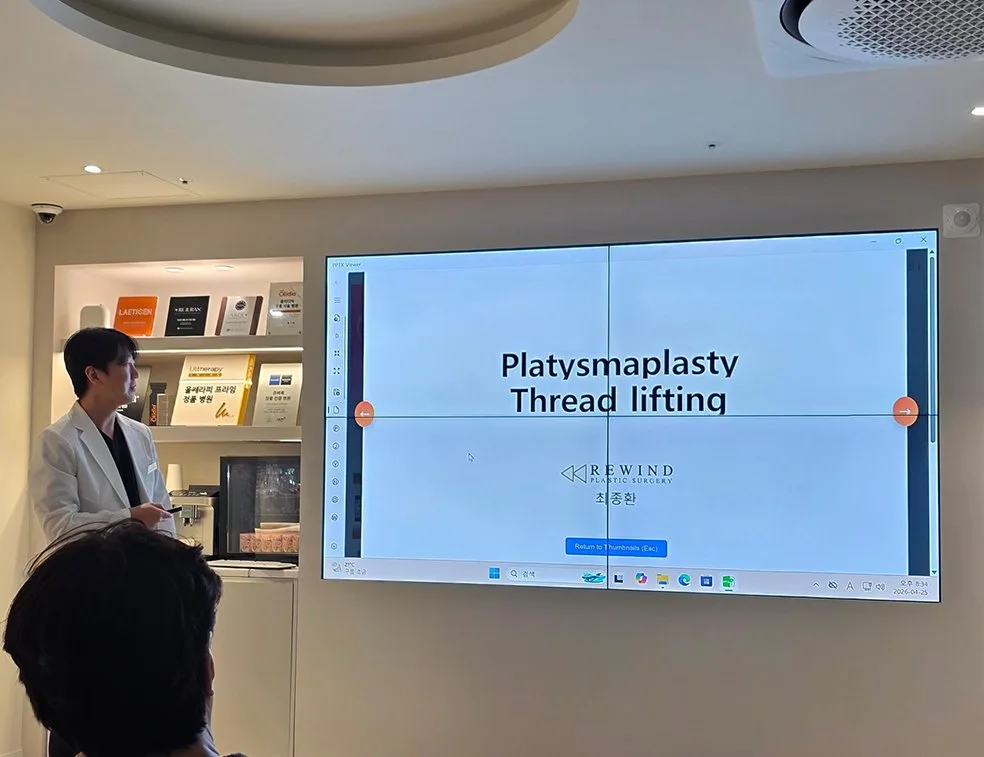
Dr. Jonghwan Choi presenting at an academic session
Fig. 06 — Academic presentation, thread-lifting session

Rewind's Doctor

Dr. Jonghwan Choi Medical Director

One surgeon, from the first
consultation to the last follow-up.

A board-certified plastic surgeon devoted to anti-aging lifting — with the precision and restraint built through years of craniofacial practice.

Board-certified plastic surgeon (Plastic Surgery)
10 peer-reviewed publications
Medical Director, Rewind Plastic Surgery
Korean Society of Plastic & Reconstructive Surgeons
Former chief director, Apgujeong Y&T Plastic Surgery
Korean Society for Aesthetic Plastic Surgery
J Craniofac Surg · JKMS · Arch Craniofac Surg
Korean Cleft Palate-Craniofacial Association
Voices

Google Reviews

What our patients say.

G 5.0 ★★★★★ 12 Google reviews · Rewind Plastic Surgery, Apgujeong — live-synced from Google Business Profile

"Sample review card — at launch this section pulls the clinic's real Google reviews automatically, shown verbatim with the reviewer's initial and posting date."

AReviewer namePOSTED ON GOOGLE

"Sample review card — reviews are never written or edited by the clinic; only what patients posted on Google appears here."

BReviewer namePOSTED ON GOOGLE

"Sample review card — a 'See all reviews on Google' link takes visitors to the clinic's Business Profile."

CReviewer namePOSTED ON GOOGLE
Ask

Questions

Double eyelid surgery — questions asked at consultation

What exactly is double eyelid surgery?
It creates a crease in the upper lid. Rewind performs three versions: a non-incisional method with no cut, a partial-incision method opening about five to seven millimetres, and a full-incision method along the whole line. All three offer the same four line designs.
Non-incisional, partial incision or full incision — who decides?
The examination does. Lid thickness, the fat above the eye, how much iris the lid covers and whether an earlier crease came undone are the findings Rewind lists for each method. A preference formed before the examination often survives it, but not always.
What are the seven micro-anchor points?
They are the fixation points of Rewind's buried technique. Adhesion between skin and muscle is induced along the designed line and secured at seven points, each tied with double fixation, which the clinic gives as its reason for a lower risk of loosening.
Can a buried crease come undone later?
Yes. Rewind states that its doubled fixation makes loosening less likely and that rubbing the eyes hard or taking a blow to them can still produce bruising, swelling and a crease that slips. People who rub their eyes habitually are told this before choosing the method.
How much is opened in a partial-incision crease, and what comes out?
About five to seven millimetres of skin. Through that opening the surplus fat and muscle tissue is removed, then the crease is fixed. Rewind offers it to lids carrying enough fat that a buried crease would struggle to hold.
Why would I need a full incision?
Rewind lists it for thick lids with substantial fat, for lids drooping heavily across the iris, and for eyes that feel weighed down because the opening muscle is weak. It also allows the widest range of shape change, and it is the version that leaves a line on the surface.
What do in-line, semi-outline, in-out-line and outline mean?
They describe where the crease ends in relation to the inner corner, from a line tucked inside it to one carried outside. Rewind offers all four with every method, and which one suits you is decided from the shape and height of your own eye.
What is eyelid muscle correction, and when is it added?
It addresses a lid margin sitting low over the iris, the situation behind an eye that opens narrowly and a forehead that does the lifting. Rewind carries it as an addition to the crease operation. Published studies on Asian eyelids describe planning the two together in one sitting.
Is the muscle correction charged on top of the crease?
Yes, it is a separate listed item added to the method you have, so a plan including it costs more than the crease alone. It is quoted at consultation once the examination has decided whether it belongs in your case.
When can I wash my face and wear eye makeup again?
Washing resumes the day after the sutures are removed. Eye makeup waits a further one to two weeks after that, according to Rewind's own instruction. Saunas, steam rooms and sweat-raising exercise are set aside for about a week.
How long does the swelling last, and when does the scar stop looking red?
Rewind records swelling and bruising over roughly the first 48 hours after a buried crease, and one to two weeks for them to settle after an incisional one. For the incision line itself the clinic records redness recovering to a degree by about two months, when light makeup covers it.
What causes a thick, sausage-like fold, and can it be avoided?
Rewind attributes it to a line set too high, or to over-correction relative to the thickness of the skin and the volume of fat. That is why the design height is argued out against your own lid at consultation, and why a crease that looks right in a photograph cannot simply be ordered.
Booking

Reservation

REWIND,booking

Tell us what you are considering — we reply within one business day, in your language.

Scientific evidence

Published research on double-eyelid blepharoplasty and eyelid muscle correction

The papers above describe buried, small-incision and combined crease-with-muscle techniques as a surgical class, together with their reported complications. They are studies of other surgeons' series, not of Rewind Plastic Surgery, and they do not forecast what your own eyelid will do. Techniques, anaesthesia and follow-up intervals reported in each paper belong to that study.