Surgery · Nose
Bridge, tip, and the proportions that decide both
Gangnam, Seoul | Board-certified plastic surgeon, Dr. Jonghwan Choi
KHIDI-registered for international patients · Apgujeong Rewind
Rhinoplasty
The short answer
Rhinoplasty at Rewind reshapes the bridge and the tip so the nose sits in proportion with the face around it. The clinic's surgical page names four starting points it works from: a nose that is low overall, a short or upturned nose, a long nose with a dropped tip, and a nose that runs off centre. A silicone implant is what the page says is placed to change the bridge line and the tip line, and the operation is carried out through an open or a closed approach depending on how much correction the design asks for.
Source: Rewind's Korean surgical page for basic rhinoplasty. Where that page states nothing — which anaesthesia, how long the operation runs, whether anything is grafted alongside the implant — this page states nothing either.
The proportions come before the technique. Rewind publishes three of them: the nasolabial angle formed by the columella and the philtrum, which the page notes differs between men and women; a nasal length of roughly one third of the face; and, seen from below, a nostril length that reads as about two thirds of the nose. Those three are the argument a design is built on, and they are the reason two patients asking for the same photograph leave with different plans.
Before & After
Rewind photographs its own patients under identical lighting and conditions, and shows the frames uncropped. No nose case has been released for this page yet, so the four frames below are held empty instead of being filled with a stock face.
Nothing in these frames is a photograph. When Rewind releases nose cases, each caption will name every procedure carried out on that patient, because a nose result is rarely the work of one listed item alone. Individual results may vary. Swelling, bruising, altered sensation and scarring can follow any surgical procedure, and a consultation with the doctor comes before any decision.
Four starting points
The Korean page groups the noses it operates on into four shapes. They are worth reading before a price list, because the shape you start from decides which listed items end up in the quote.
In sequence
Rewind publishes the operation as three steps and two possible approaches. The steps stay the same; the approach changes with how much of the internal structure has to be seen and handled.
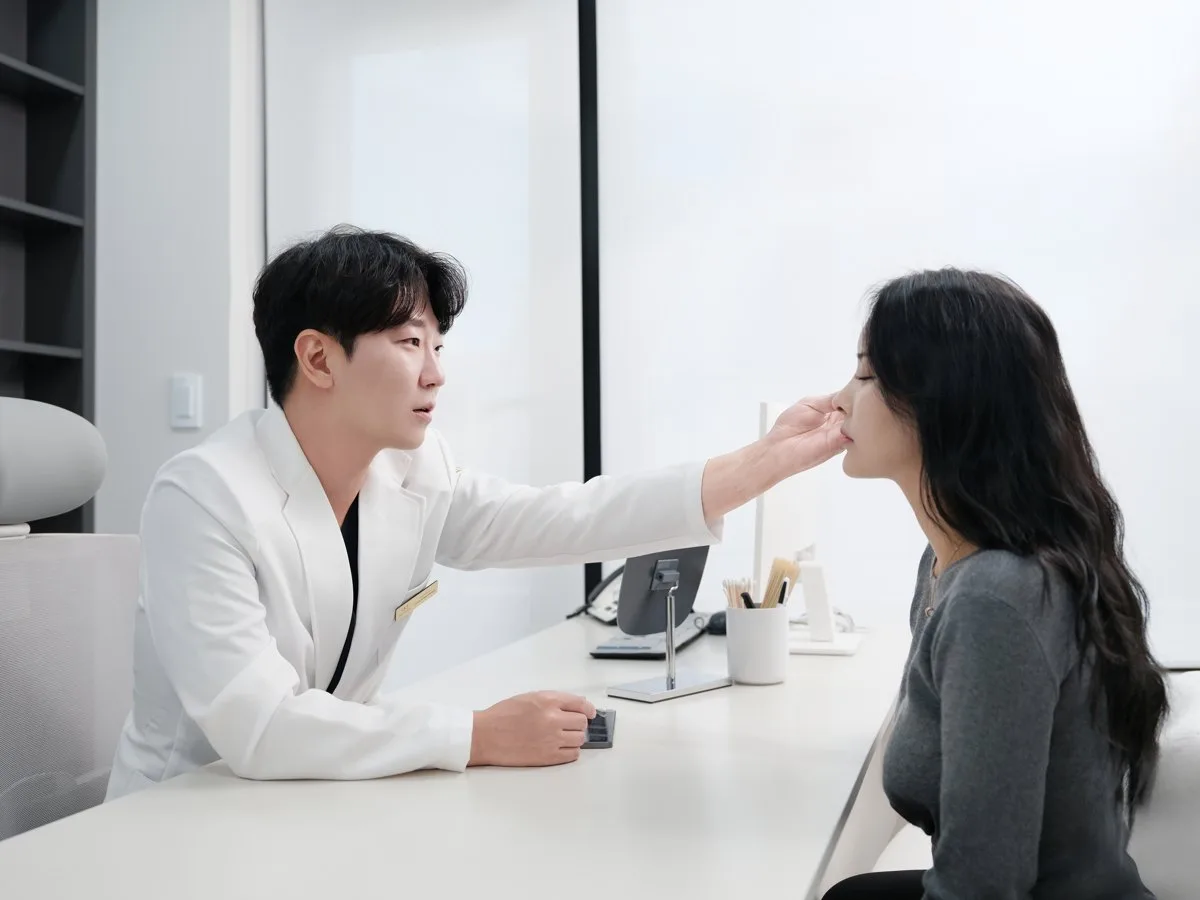
The clinic's first published step is to design the ideal ratio of the nose against the face in front of it. That drawing fixes the nasolabial angle being aimed for, the length the nose should read at, and where the tip should sit; everything after it is execution.
In the open approach the nostrils and the columella are incised together so the internal structure can be seen directly. Rewind's stated reason for choosing it is accuracy of assessment inside the nose, and it is the approach reserved for cases needing a lot of correction.
The closed approach incises only the skin inside the nostril, so the structure is never exposed and no scar sits on the outside of the nose. The page attaches it to cases where the amount of correction is limited.
The second published step is insertion of a silicone implant to improve both the bridge and the tip. Whether anything is added beyond it, and what that would be, is not written on the clinic's page, so it is a consultation question and no answer is invented here.
The third step describes a bridge and tip completed to the facial ratio set at the start. In practice that means the profile is checked against the design before the nose is closed, which is the point at which the proportions either hold or get corrected.

Why here
Most disappointing noses are technically well made and wrong for the face they sit on. Rewind is a one-surgeon practice, so the person who measures your proportions is the person holding the instrument, and the design cannot be lost in a handover.
Dr. Choi works from the three published ratios and from the face in front of him. If the nose you brought a picture of would break the balance of your own mid-face, that is said at the chair while the plan can still change.
Bridge and tip together, a tip done without an implant, lengthening or shortening, columella work, a graft for a bulbous tip: Rewind lists them individually. Nothing is bundled in by default, so a quote shows exactly which corrections the examination called for.
A nose keeps changing long after the swelling goes. Follow-up stays with the operating surgeon, international patients are supported in their own language from the first message onward, and Rewind holds KHIDI registration for foreign patients.
In the operating room

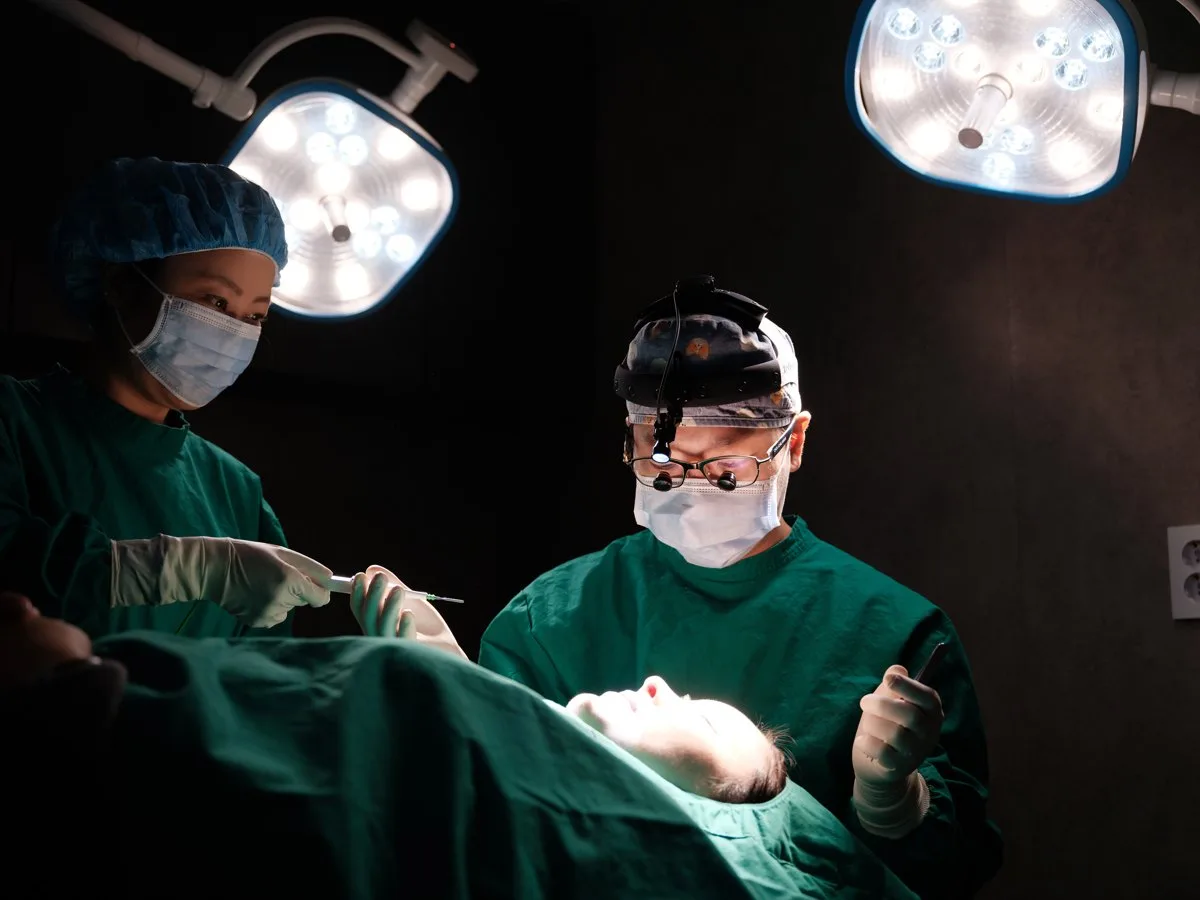
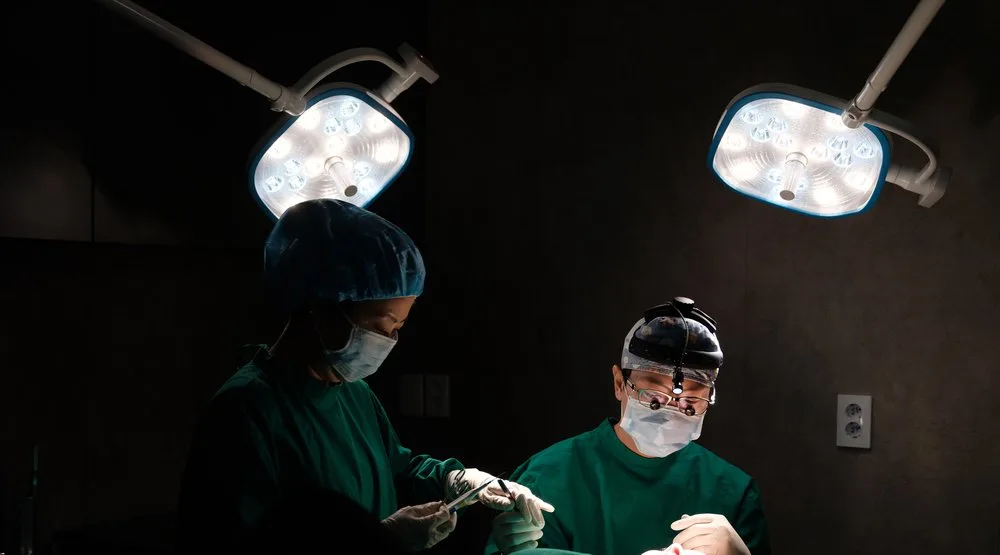
Fig. 04 — The operating room, fourth and fifth floors of the Richro Building

Fig. 05 — A recovery room, where patients rest before going home
Rewind occupies two floors of the Richro Building in Apgujeong and runs on a single-surgeon model. The consultation, the design, the operation and the follow-up sit with the medical director, and the clinic works by appointment only, with consultation hours Monday, Tuesday, Wednesday and Friday until 19:00 and Saturday until 16:00.
Board-certified plastic surgeon
Dr. Jonghwan Choi holds Korean board certification in plastic surgery and is the only surgeon operating in this clinic, which holds KHIDI registration for international patients under Reg. M-2025-01-08-09288.
Pricing
Rewind prices the nose by correction and adds them up, so a quote reads as a short list instead of a package name. The figures below are the clinic's list prices for first-time surgery.
List prices, VAT excluded; the anaesthetic fee is already contained in each figure. Which lines apply to you is decided after the examination and written out in full before a date is taken. A nose operated on before is quoted from the clinic's separate revision rates, which sit higher than the first-operation figures above.
Suitability
Recovery
Rewind's own post-operative notes for the nose are short, and they are about protecting a structure that is still settling. Four of them are specific enough to plan a trip around, so they are reproduced here as the clinic wrote them.
Any surgical procedure carries risk: bleeding, infection, swelling, asymmetry, altered sensation and scarring. A nasal implant is its own category of risk — it can shift, become visible through thin skin, or set off inflammation, and any of those can lead to a second operation. Outcomes cannot be promised and they vary between individuals. Tell the surgeon about every previous procedure on your nose and about any medication you take before a date is set.
One board-certified plastic surgeon carries every case at Rewind, from the first measurement to the last follow-up. A nose changes for a year after it is operated on, and the person who designed it should be the one watching it settle.
Rewind,
Rewind's Doctor
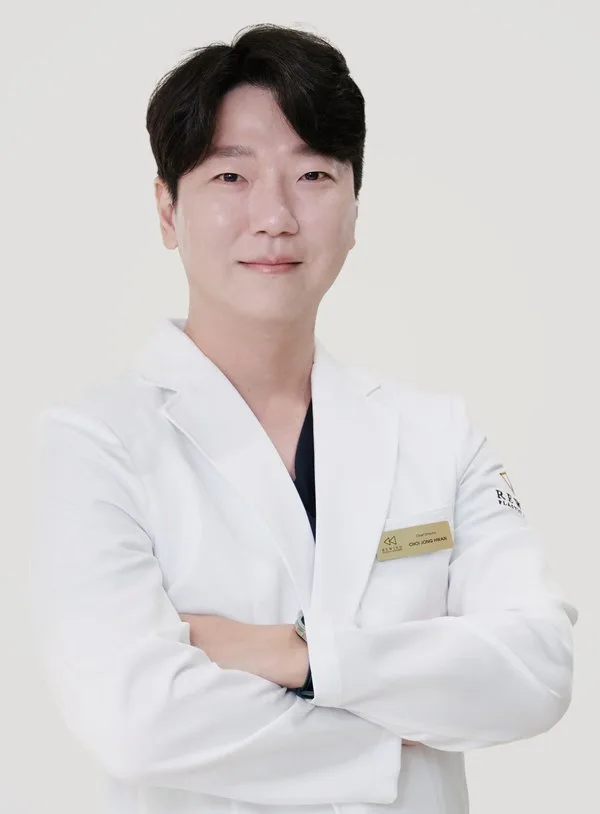
Dr. Jonghwan Choi Medical Director
The nose belongs to the face
before it belongs to the photograph.
A board-certified plastic surgeon whose published work runs through craniofacial and nasal reconstruction, with ten peer-reviewed papers indexed under his name.
Google Reviews
"Sample review card — at launch this section pulls the clinic's real Google reviews automatically, shown verbatim with the reviewer's initial and posting date."
"Sample review card — reviews are never written or edited by the clinic; only what patients posted on Google appears here."
"Sample review card — a 'See all reviews on Google' link takes visitors to the clinic's Business Profile."
Questions
Reservation
Tell us which part of the nose you want changed and we reply within one business day, in your language.
Scientific evidence
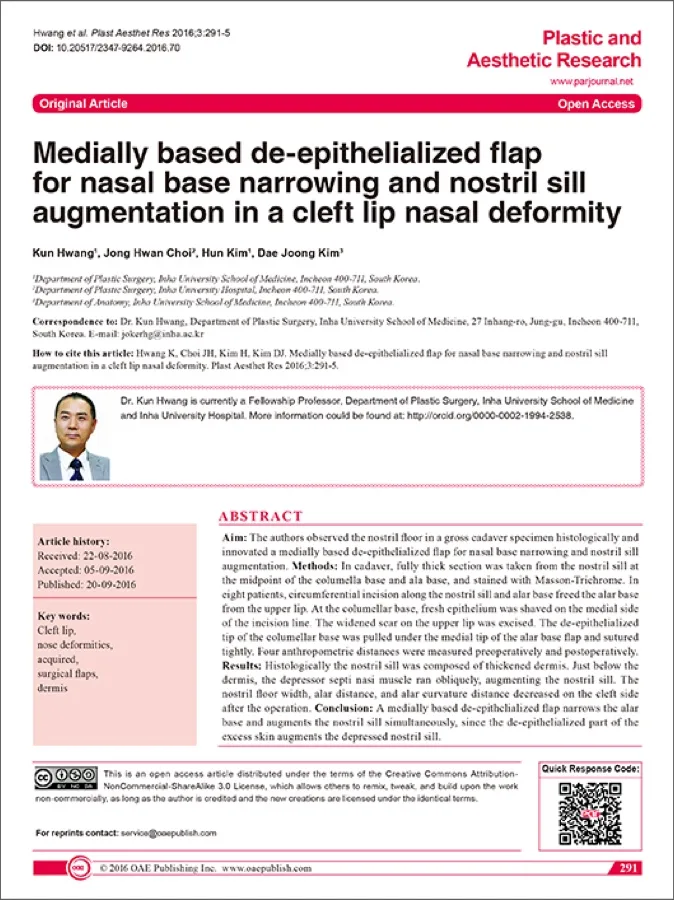
These papers describe primary rhinoplasty as a surgical class: how the tip is supported, how rib and septal cartilage compare as graft material in Asian noses, what happens in the capsule around a silicone implant, and how dorsal techniques compare in trial conditions. None of them studies Rewind Plastic Surgery, and none predicts an individual result. The techniques and settings reported are those of each study.