Surgery · Lip volume
Volume taken from inside the lip, by millimetres
Gangnam, Seoul | Board-certified plastic surgeon, Dr. Jonghwan Choi
KHIDI-registered for international patients · Apgujeong Rewind
Lip reduction
The short answer
A lip reduction takes volume out of the lip body. In English search results the term is constantly confused with a lip lift, and the two operations pull in opposite directions: a lip lift shortens the skin between the nose and the upper lip so more of the red lip shows, while a reduction removes tissue from inside the lip so less of it shows. Surgeons call the reduction a reduction cheiloplasty. Rewind lists it on its price sheet as lip reduction, under the in-house name cupid lip, and quotes it as a single surgical listing for a first operation.
Source: Rewind's own price sheet for the listing and its Korean lip-surgery page for the post-operative instructions quoted further down, which that page publishes for the clinic's corner-lift operation. Rewind does not publish a step-by-step technique, an anaesthesia type, an operating time or a figure for how much tissue is removed in a reduction. None of those is estimated here. Where this page describes how the operation is generally performed, it is describing the published surgical literature listed at the foot of the page, and your own plan is set by the surgeon at examination.
That distinction between the two lip operations is worth holding onto before any consultation, because a request phrased as fuller-looking lips and a request phrased as smaller-looking lips can both end up written down as lip surgery. What separates them at the examination is simple: one asks where the red of the lip ends, the other asks how far forward the lip projects when the face is relaxed and the mouth is closed.
Photographic record
Lip volume photographs badly. A three-quarter view flatters any lip, and lighting from above will slim an upper lip on its own. A pairing worth looking at is taken in profile with the lips closed and at ease, then repeated from the front with the same lens and the same distance, because projection is what a reduction changes and projection only reads from the side. Rewind has not released a lip reduction case for this page, so these four frames are reserved and stay empty.
Every frame above is a placeholder and no photograph has been substituted from another operation to fill it. When the clinic releases lip cases, each caption will name every procedure carried out in that same session, since the shape of a mouth in a photograph can be the work of more than one listing. Individual results may vary. Swelling that makes the lips feel stiff for a period, bruising, numbness of the lip, a line or step inside the lip, uneven fullness between the sides, difficulty with certain sounds while the swelling lasts and wound separation are all recognised after lip surgery. The surgeon's examination precedes every plan.
Four conversations
Four requests arrive under the same words. Only two of them are usually answered by taking tissue out. The examination therefore begins with the mouth closed and at rest, some way before the price list comes into it.
What the literature describes
Rewind publishes the listing and the price for this operation, and it does not publish its own step-by-step description of the technique. The sequence below is therefore drawn from the surgical literature cited at the foot of this page, and it is offered so you can ask the right questions at the consultation. Which of these applies to you is the surgeon's call once he has examined the lip.
The published descriptions all begin the same way: the lip is examined at rest, from the front and from the side, and the excess is judged against the rest of the lower face before a line is marked. Marking is done with the patient upright, since a lip lying down is not the lip anyone looks at.
In the standard description the tissue comes from the inner surface of the lip, along the boundary where the dry vermilion meets the wet mucosa. Reported design variants differ mainly in the shape of that ellipse, which is what decides whether the central fullness or the width of the lip changes most.
The literature describes taking mucosa together with a controlled amount of the submucosal tissue and minor salivary gland layer below it. The depth is what turns a superficial trim into an actual reduction in projection, and it is also what drives the swelling that follows.
Because the incision sits on the inner surface, the closure is hidden from the outside from the first day. Published series report that the line inside the lip can be felt for a period afterwards while it softens, and that patients notice it against the teeth long before anyone else can see anything.
Excised mucosa does not go back. Published discussion of this operation returns repeatedly to conservative marking for exactly that reason, and a second, smaller revision is the recognised route where the first result is judged short of the target. That principle is worth raising yourself at the consultation.

Why here
A lip is a small, mobile, well-supplied piece of anatomy that people use every waking hour to eat, speak and be understood. The decision about how many millimetres come out of it is taken once. Rewind runs as a single-surgeon clinic, so the person who measured the lip is the person who holds the blade and the person who sees you at every check afterwards.
Nothing about this operation is delegated to a coordinator. Dr. Choi examines the lip at rest and in speech, and where the finding does not support a reduction he says so at the desk and the listing comes off the plan before any deposit is discussed.
The technique, the anaesthesia and the amount removed are settled with the surgeon and not guessed at on a web page. This page names its sources: the clinic's price sheet, the clinic's Korean lip page, and the peer-reviewed papers listed at the end.
Lip surgery interferes with the two things nobody can postpone, eating and speaking. Review visits belong to the operating surgeon, correspondence with international patients runs in their own language from the first message, and the clinic holds KHIDI registration for foreign patients under Reg. M-2025-01-08-09288.
In the operating room

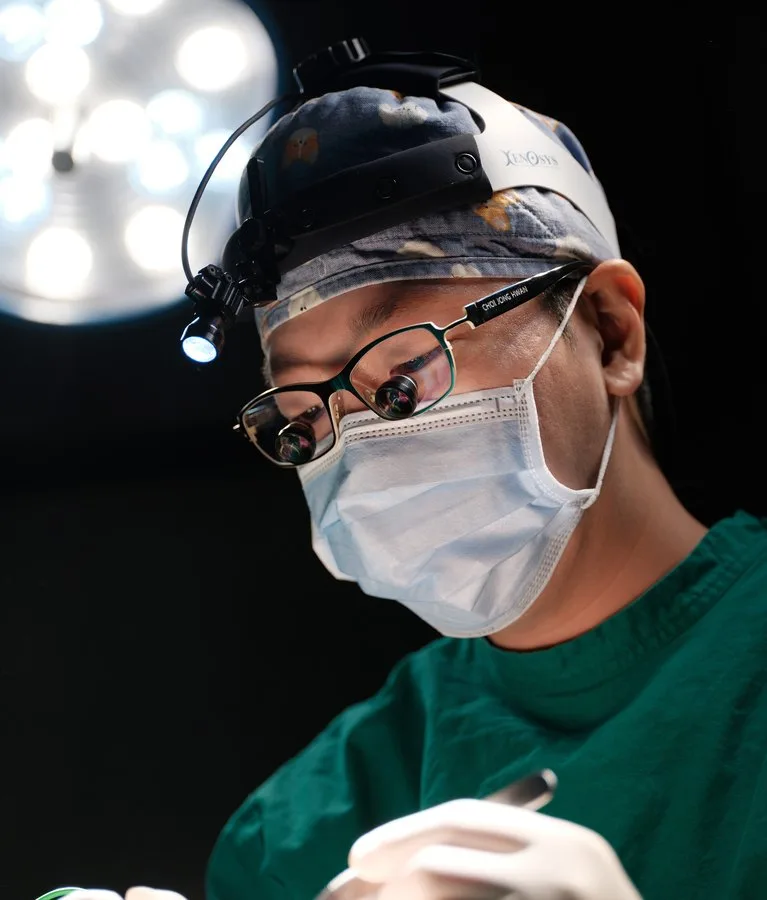
Fig. 04 — The operating theatre, where a lip is worked on from its inner surface

Fig. 05 — The rest room, where the first swelling is watched before anyone leaves
The clinic takes two floors in Apgujeong and operates on a single-surgeon model, with examination, marking, surgery and every follow-up visit held by the medical director. Appointments are scheduled individually, with consulting hours Monday, Tuesday, Wednesday and Friday from 10:00 to 19:00 and on Saturday from 10:00 to 16:00.
Board-certified plastic surgeon
Dr. Jonghwan Choi carries out the lip operations at this clinic himself. He is certified by the Korean board in plastic surgery, practises here without a second operating doctor, and treats international patients under the clinic's KHIDI registration, Reg. M-2025-01-08-09288.
Pricing
The clinic prices each lip operation as its own line, so a quote is the sum of what your examination actually supports. These are the published list prices for a first operation.
List prices are shown with VAT excluded. Two lip operations planned for one sitting appear as two lines and the full total is written out before a date is held. A lip that has been operated on before is quoted from the clinic's revision rates, which sit above the first-operation figures here. No figure on this page is a promotional rate, and no quotation is issued by message before the surgeon has examined the lip in person.
Suitability
Recovery
Two of the four points below come from the instructions Rewind publishes on its Korean lip-surgery page, where they are written for the clinic's corner-lift operation. Whether the same schedule applies to your reduction is confirmed by the surgeon, and it is flagged as borrowed here instead of being presented as a figure of your own.
Any surgical procedure carries risk. For lip reduction the recognised ones are bleeding, infection, prolonged swelling, numbness or altered sensation of the lip, a palpable line or step on the inner surface, uneven fullness between the two sides or between upper and lower lip, wound separation, difficulty with certain sounds while swelling lasts, and a result that is judged over-reduced or under-reduced, either of which may call for a further procedure. Removed mucosa cannot be replaced, so the amount is agreed in advance and conservatively. How far a lip changes differs between individuals and no specific outcome can be promised. Every earlier lip treatment, including injected material, belongs in the consultation record before a surgical date is agreed.
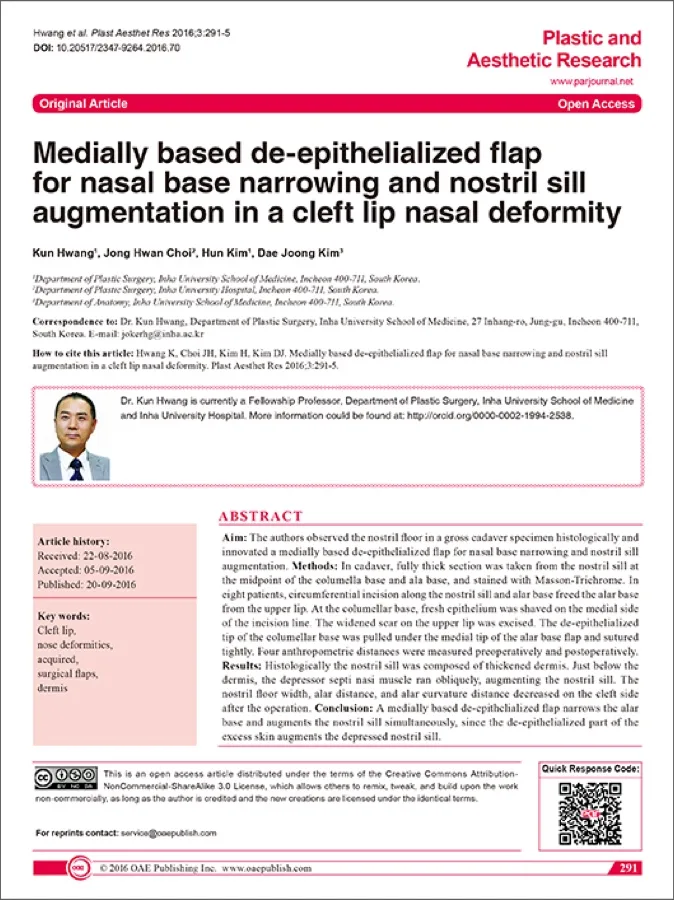
The lips sit at the centre of the lower face and every millimetre taken from them is visible in speech. One board-certified plastic surgeon examines, marks, operates and follows up here, and the published record under his name reaches into reconstructive work on the lip and the nasal base above it.
Rewind,
Rewind's Doctor
Dr. Jonghwan Choi Medical Director
A lip is judged closed,
then judged talking.
A board-certified plastic surgeon in plastic surgery, with ten peer-reviewed papers indexed under his name, including reconstructive work around the lip and nasal base.
Google Reviews
"Sample review card — at launch this section pulls the clinic's real Google reviews automatically, shown verbatim with the reviewer's initial and posting date."
"Sample review card — reviews are never written or edited by the clinic; only what patients posted on Google appears here."
"Sample review card — a 'See all reviews on Google' link takes visitors to the clinic's Business Profile."
Questions
Reservation
Send a profile photograph with your lips closed and relaxed, tell us what you want less of, and we reply within one business day, in your language.
Scientific evidence
The first two papers are the technical basis for the sequence described in the method section above: one sets out the standard reduction and its markings and recovery, the other reports a design variant and its outcomes. The third is a systematic review of a different lip operation and is included for how it treats measurement and patient-reported outcome around the lip. None of them studies Rewind Plastic Surgery, none predicts an individual outcome, and the techniques, amounts and settings described belong to each study.