Surgery · Comparison

Cheek Liposuction vs Buccal Fat Removal

Two layers, two routes, one examination

Gangnam, Seoul | Board-certified plastic surgeon, Dr. Jonghwan Choi
Procedure comparison by the operating surgeon · KHIDI-registered for international patients

Surface Layer Deep Pad Surface Layer Deep Pad Surface Layer Deep Pad Surface Layer Deep Pad 
Layers

Cheek liposuction vs buccal fat removal

What is the difference between cheek liposuction and buccal fat removal?

The short answer

They remove fat from two different layers by two different routes. Cheek liposuction passes a cannula through a small access point on the outside of the face and thins the fat lying between skin and muscle, one area at a time. Buccal fat removal is performed through an incision of about 1 cm inside the mouth and takes part of a separate pad of fat out of its own pocket deep in the cheek, closing with dissolving sutures. Rewind lists and prices them as separate operations, and the two can be combined in one session.

Both descriptions come from Rewind's Korean surgical pages. The clinic does not publish anaesthetic type or operating time for either operation, so neither is compared here.

The practical question is which layer is carrying your fullness. A face can hold its width in the surface layer, in the deep pad, or in both, and each operation leaves the other layer exactly as it found it.

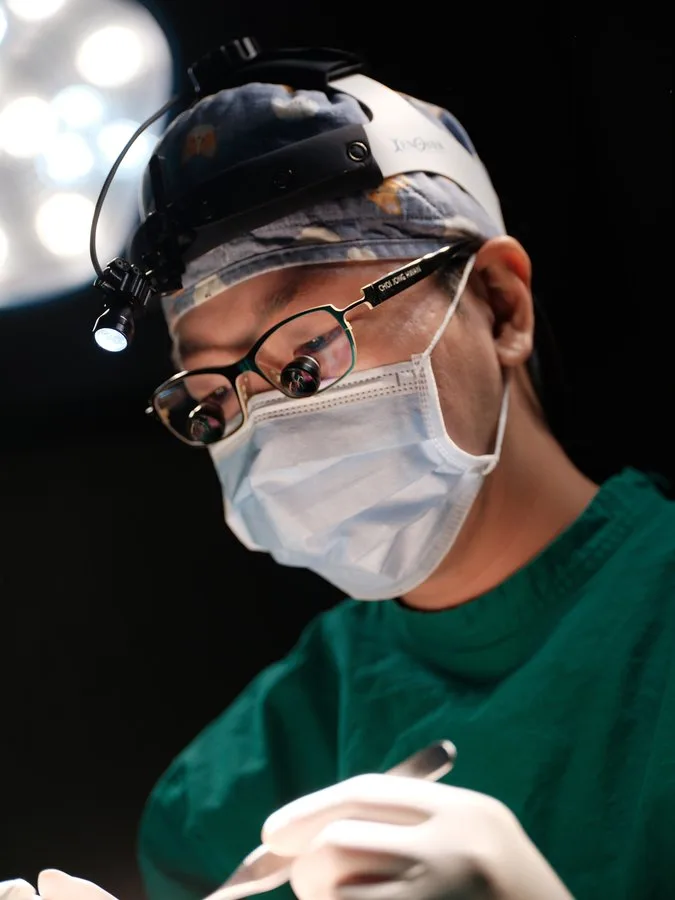
Dr. Jonghwan Choi operating with surgical loupes and a headlight
Fig. 01 · Both operations are carried out under magnification in the same theatre
Cases

Case photographs

Two Rewind cases where both cheek operations shared a session

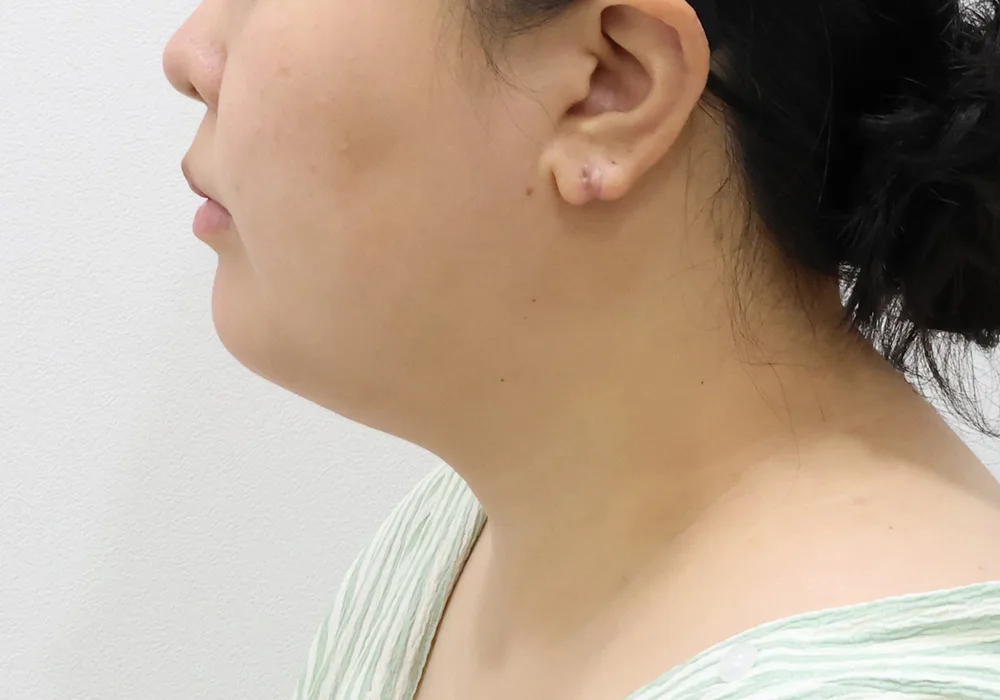
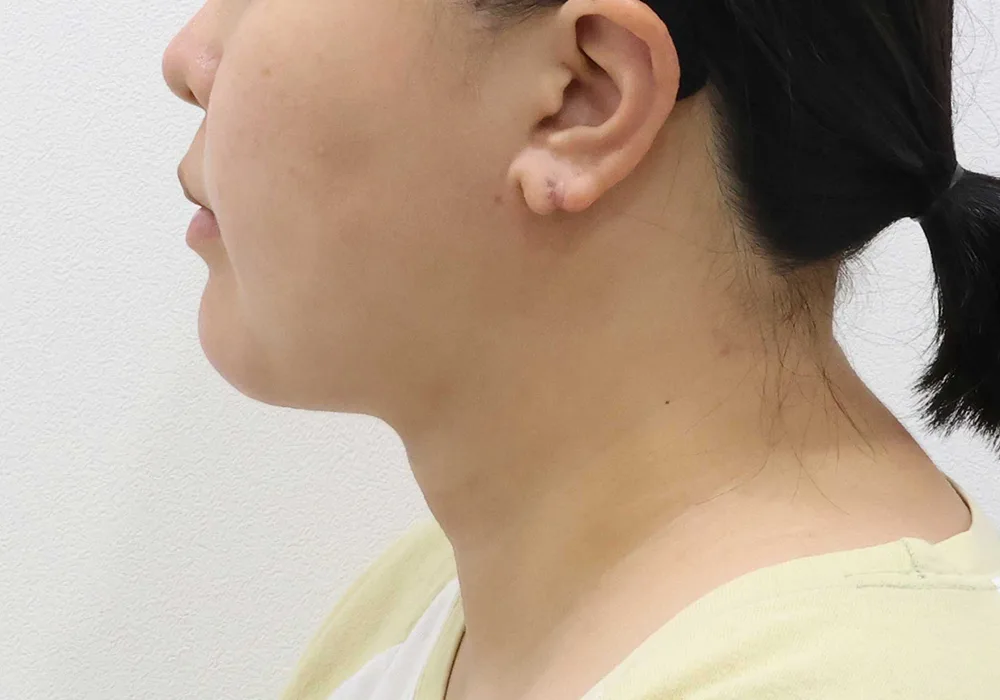
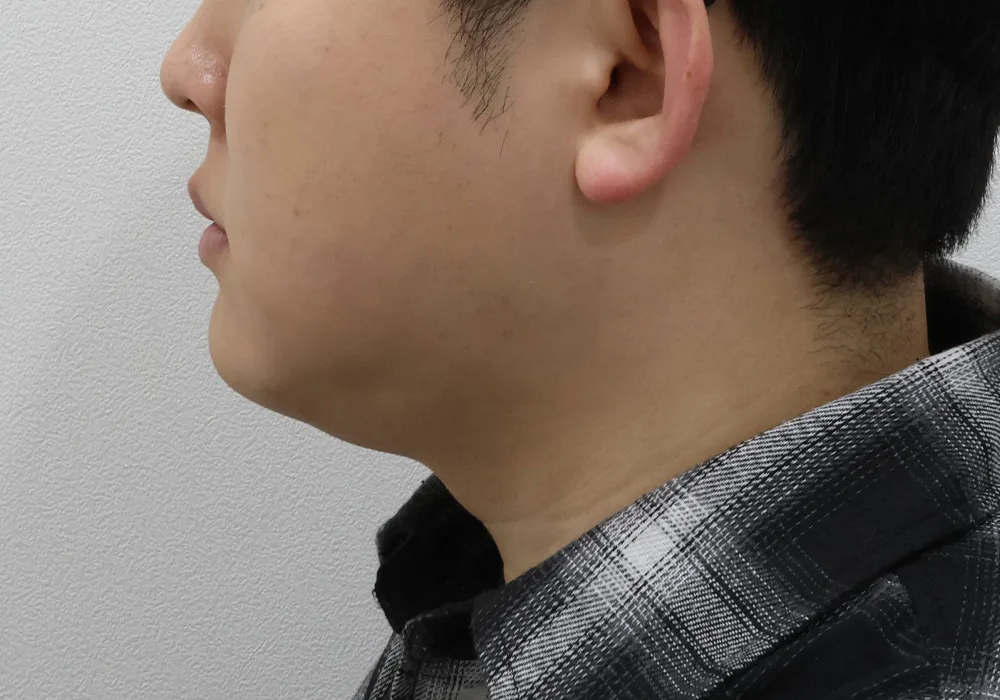
Neither pair below isolates one operation, and that is the reason they are shown here. In each case the surface layer was suctioned and the deep pad removed in the same sitting, alongside work under the jaw, because the examination found fullness in more than one layer. The captions list every procedure performed.

Rewind patients · surface and deep cheek fat treated together

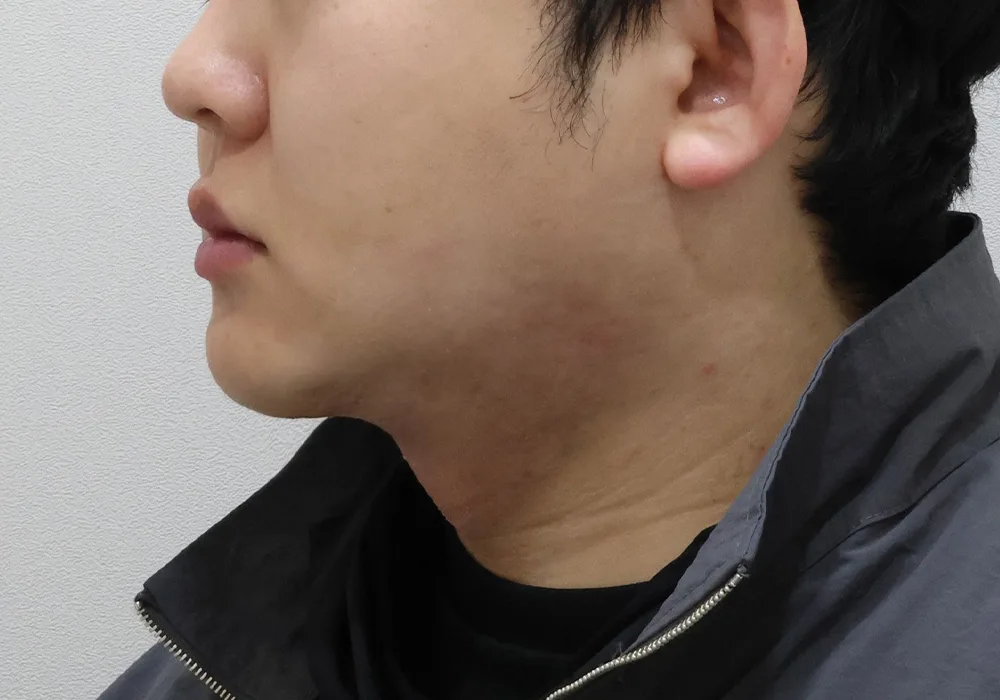
Before · face, cheek and double-chin liposuction with platysma tightening and buccal fat removal, side profile After · face, cheek and double-chin liposuction with platysma tightening and buccal fat removal, side profile BEFOREAFTER
both cheek layers
Face, cheek and double-chin liposuction alongside platysma tightening and buccal fat removal
Individual results may vary.
Before · cheek and double-chin liposuction with deep platysma tightening, buccal fat removal and subplatysmal fat removal, side profile After · cheek and double-chin liposuction with deep platysma tightening, buccal fat removal and subplatysmal fat removal, side profile BEFOREAFTER
both cheek layers and the neck
Cheek and chin liposuction with deep platysma tightening, buccal fat removal and subplatysmal fat removal
Individual results may vary.

Photographed by Rewind Plastic Surgery at the clinic at both visits, published unretouched. Since each session combined several procedures, the change between frames cannot be divided between the two cheek operations. Individual results may vary; bleeding, swelling, altered sensation, asymmetry, contour irregularity and scarring are possible after any operation.

Compare

Side by side

Cheek liposuction and buccal fat removal, compared point by point

Four differences settle most comparisons. None of them makes one operation superior; each describes what that operation can reach and what it leaves alone.

point 01
Layer
Cheek liposuction works in the subcutaneous fat between skin and muscle. Buccal fat removal works on a separate pad sitting in its own pocket beneath the cheekbone, deeper than a cannula passes.
point 02
Route
Cheek liposuction uses a small access point on the outside of the face, placed by the surgeon at the examination. Buccal fat removal uses an opening of about 1 cm on the inner lining of the cheek and leaves no external mark.
point 03
What changes
Surface suction softens width seen from the front and the transition from cheek to jaw. Taking part of the deep pad reduces a rounded fullness low in the mid-cheek, the bulge that looks as if food were being held there.
point 04
Pricing
Cheek liposuction is quoted per area, side and front separately. Buccal fat removal has one figure when booked alone and a lower one when it joins a combined session.
Choose

At the examination

Which cheek operation fits which kind of fullness?

The choice is made by reading the cheek in a set order. Each step points toward one operation, the other, both, or neither.

01Where

Where the fullness sits on the face

Width over the jaw angle and along the side of the face points to the surface layer. A rounded bulge low in the mid-cheek, below the cheekbone, points to the deep pad.

02Surface

How thick the surface layer is

Fat that gathers readily under the skin of the side or front cheek is the material cheek liposuction removes. If there is little of it, suction has little to work on, whatever the face looks like in a mirror.

03Deep

Whether the deep pad is the source

Rewind lists the deep pad for cheeks that look plump and full, lower cheeks that bulge and droop, and a jaw line that looks uneven because of them. Where that pattern is present, surface suction by itself would leave the bulge in place.

04Skin

How the skin will respond

Thinning a layer helps only where the skin can settle onto it. Where laxity leads, removing fat from either layer can leave more slack, and the conversation turns to support through the apple-cheek midface lift or a mini facelift.

05Age

What the midface will do next

Deep cheek volume declines with age in many faces. A pad removed from a face that is already thinning can leave the midface hollow later, and published work on this operation urges caution for that reason.

06Both

When both layers are treated together

If the examination finds fullness in both layers, the two operations can share one session and one recovery period. Each removal is then planned conservatively, so the combined reduction suits the face as a whole.

Dr. Jonghwan Choi examining the cheek and jaw line of a patient
Fig. 02 · Surface fat and the deep pad feel different under the hand
Rewind

Why one surgeon compares them

Why the choice between cheek liposuction and buccal fat removal belongs at one examination

A patient who arrives asking for one of these operations has often read about the other on the way. Both are performed at Rewind by the same surgeon and priced from the same list, so the comparison is made on the face in front of him.

01Layer first

The operation follows the layer

Dr. Choi reads whether the fullness is surface, deep or both before either name is written on a plan. A request for buccal fat removal on a face whose width is surface fat is redirected for that reason, and the same applies in reverse.

02Restraint

Less comes out of each layer when both are done

When both layers are treated in one sitting, each removal is sized with the other in mind. A combined plan is written to reduce fullness without taking the midface toward hollowness.

03Continuity

One surgeon through both recoveries

The external access points and the intraoral closure heal on different schedules and carry different instructions. The surgeon who made both follows both, in your own language for international patients, under Rewind's KHIDI registration.

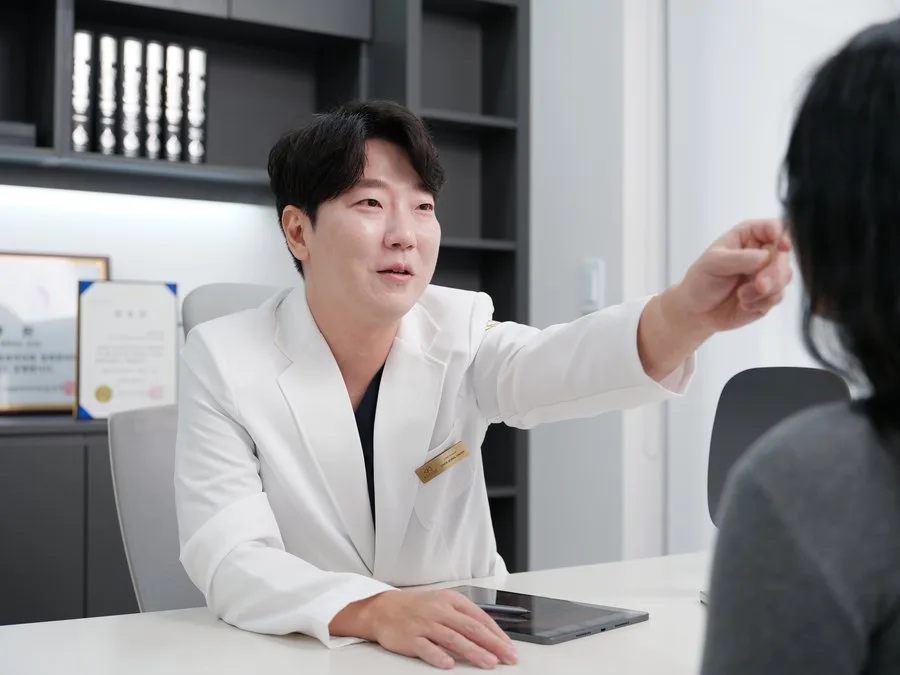
Dr. Jonghwan Choi in consultation with a patient at Rewind Plastic Surgery
Fig. 03 · Surface or deep is settled before an operation is named
Theatre

In the operating room

Where cheek liposuction and buccal fat removal are performed

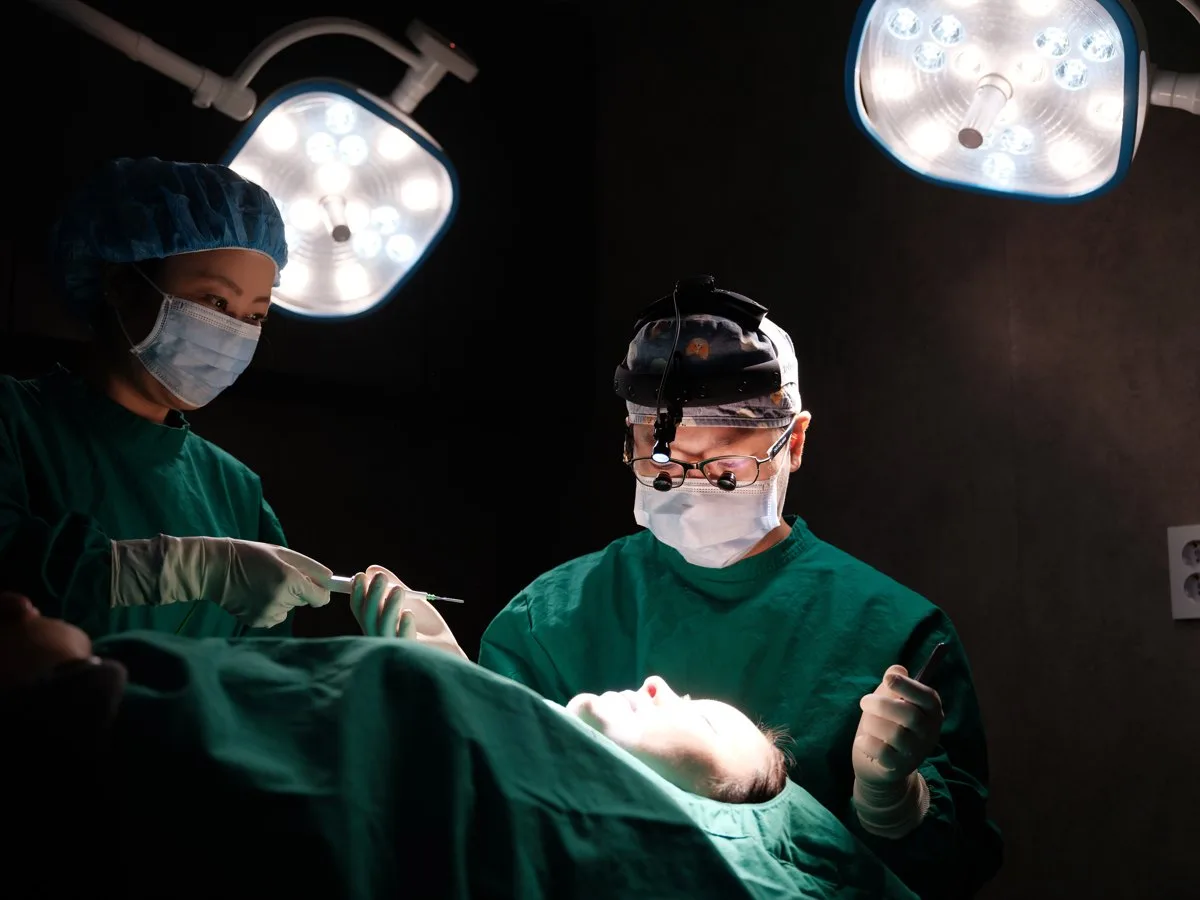
Dr. Jonghwan Choi operating under the surgical light at Rewind

Fig. 04 · One operating surgeon for both procedures

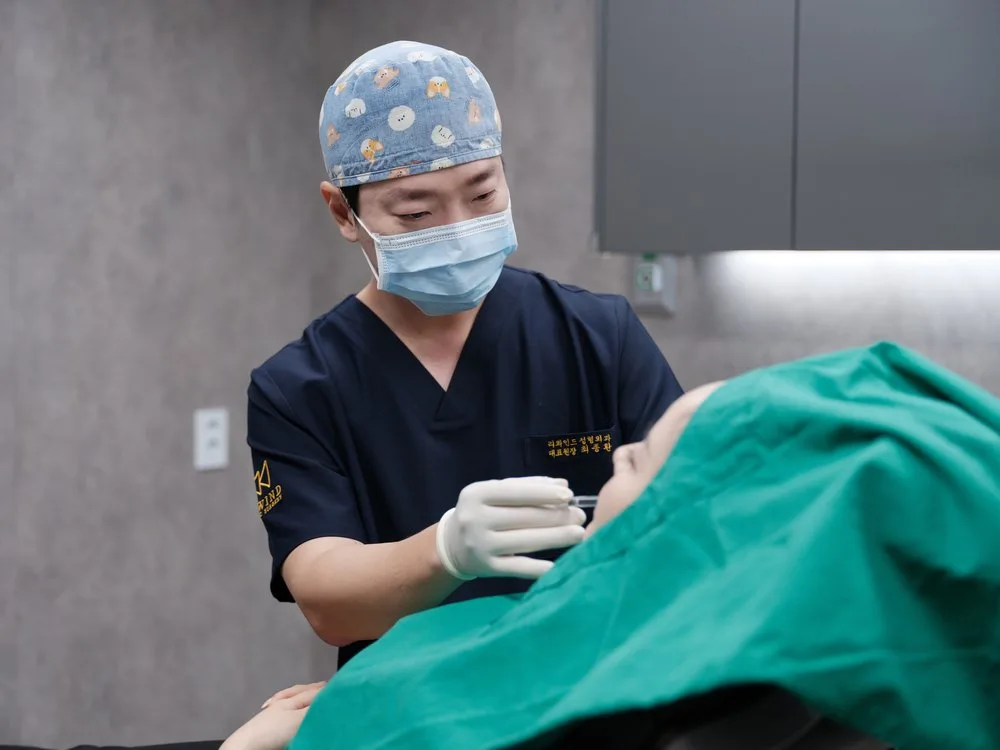
Dr. Jonghwan Choi preparing a draped patient in the procedure room

Fig. 05 · Preparation before either approach

Both operations take place in Rewind's own theatre on the fourth and fifth floors of the Richro Building in Apgujeong. The medical director marks the external access points for suction and plans the intraoral opening for the pad at the same consultation, then performs whichever the plan names himself.

Cheek liposuction: external access point, subcutaneous layer
Buccal fat removal: about 1 cm inside the cheek
Buccal closure with dissolving sutures
Cheek areas quoted side and front separately
Both can share one session
Operated by Dr. Jonghwan Choi
Dr. Jonghwan Choi, board-certified plastic surgeon

Board-certified plastic surgeon

Dr. Jonghwan Choi is certified in Korea in Plastic Surgery and performs both the suction and the intraoral excision at Rewind himself. Overseas patients are received under the clinic's KHIDI registration, M-2025-01-08-09288.

Cost

Pricing

How cheek liposuction and buccal fat removal are priced side by side

The two operations are priced in different units: suction per cheek area, the pad per operation. Reading them together shows what a surface-only, deep-only or combined plan would total.

Side-cheek liposuctionSurface layer, one area: the width over the jaw angle
₩940,000
Front-cheek liposuctionSurface layer, one area: the volume nearer the mouth
₩940,000
Buccal fat removal, booked aloneThe deep pad, as the only operation of the day
₩2,000,000
Buccal fat removal, within a combined sessionThe deep pad, added to cheek or chin suction
₩1,500,000

List prices with VAT excluded, each containing its anaesthetic fee. When the pad is removed in the same session as another operation, the lower combined-session figure applies; the cheek areas keep their single listed figure either way.

Fit

Suitability

Who is suited to each cheek operation, and who to neither

Findings that decide between the two

  • Width over the jaw angle and along the side of the face: cheek liposuction, side area
  • Fullness nearer the mouth that blunts the cheek-to-jaw step: cheek liposuction, front area
  • A rounded bulge low in the mid-cheek, as if holding food: buccal fat removal
  • A lower cheek that bulges and droops, making the jaw line look uneven: buccal fat removal
  • Fullness in both layers at a stable weight: both, in one session

Findings that point to neither

  • Loose skin as the leading finding, where a lift is the subject
  • A midface already thinning with age, where removal risks later hollowing
  • Width that comes from bone or from the chewing muscle, which neither operation changes
  • Weight that is still changing, since fat removed now may be outweighed by fat gained
  • Bleeding or healing conditions, relevant medication, pregnancy, breastfeeding, or infection in the mouth or skin
After

Recovery compared

How recovery differs after cheek liposuction and buccal fat removal

The two recoveries are shaped by where the wound is. Suction leaves small external access points and relies on compression; the pad leaves a closure inside the mouth that is protected by diet and by how far the cheek is stretched. When both are done together, both sets of instructions apply.

Cheek liposuction
Compression and cold
Rewind's facial liposuction sheet relies on compression and cold compresses for swelling, and asks for a month without strenuous exercise, sauna or alcohol.
Buccal fat removal
Brush, eat soft, keep the cheek still
Tooth brushing is allowed on the day, food stays soft until the next day, and wide opening, hard chewing and puffing the cheeks wait for a period.
Closure
External points, internal stitches
The pad's intraoral closure dissolves on its own. How the external access points for suction are closed and checked is explained at consultation.
Both together
The longer list applies
A combined session carries both sets of instructions, and where they overlap the longer restriction wins. Plan your time in Seoul around the first week after surgery.

Cheek liposuction can leave contour irregularity, asymmetry and small scars at the access points; buccal fat removal carries the risk of later midface hollowing and, like any cheek surgery, of injury to nearby structures. Bleeding, infection, prolonged swelling and altered sensation are possible after either. Tell the surgeon about all medication before a date is agreed.

Doctor

Professional

At Rewind, one board-certified plastic surgeon carries every case — from the first consultation to the final follow-up. Because a face is a story, and a story deserves a single author.

Dr. Jonghwan Choi, board-certified plastic surgeonRewind,
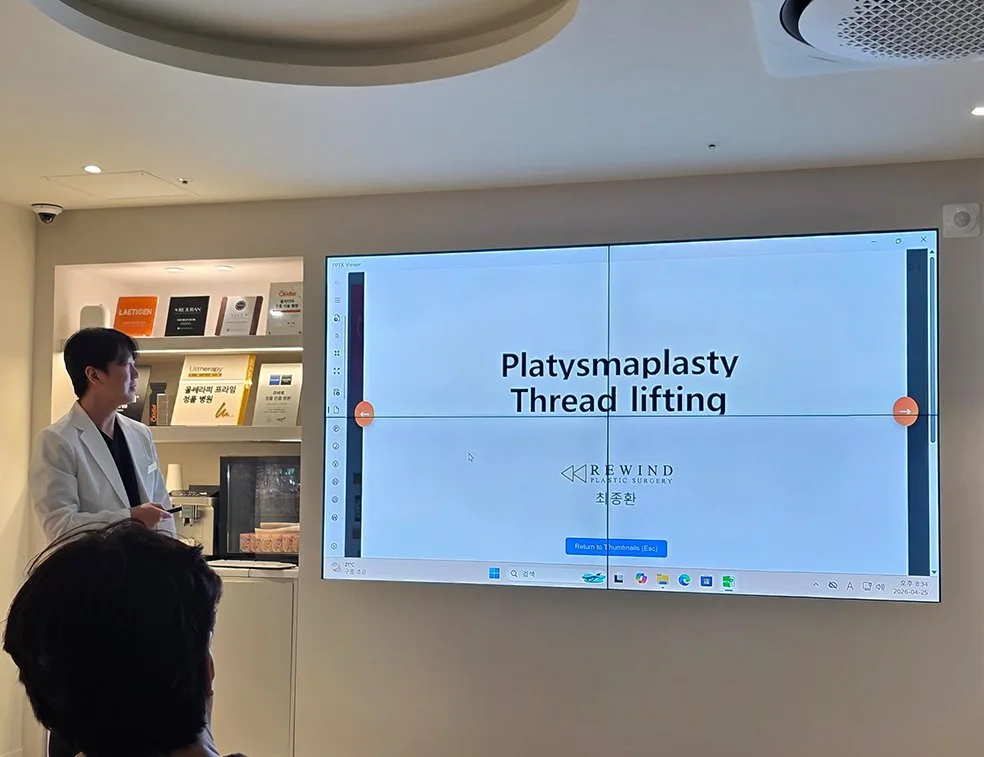
Dr. Jonghwan Choi presenting at an academic session
Fig. 06 — Academic session, presented by the medical director

Rewind's Doctor

Dr. Jonghwan Choi Medical Director

One surgeon, from the first
consultation to the last follow-up.

A board-certified plastic surgeon devoted to anti-aging lifting — with the precision and restraint built through years of craniofacial practice.

Board-certified plastic surgeon (Plastic Surgery)
10 peer-reviewed publications
Medical Director, Rewind Plastic Surgery
Korean Society of Plastic & Reconstructive Surgeons
Former chief director, Apgujeong Y&T Plastic Surgery
Korean Society for Aesthetic Plastic Surgery
J Craniofac Surg · JKMS · Arch Craniofac Surg
Korean Cleft Palate-Craniofacial Association
Ask

Questions

Cheek liposuction or buccal fat removal: questions from the examination

What is the difference between cheek liposuction and buccal fat removal?
They treat different layers through different routes. Cheek liposuction thins the fat under the skin through a small external access point and is quoted per area. Buccal fat removal takes part of a deep pad out of its pocket through an opening of about 1 cm inside the mouth, closed with dissolving sutures.
Which one do I need for my type of cheek fullness?
Width at the side of the face and fullness that gathers under the skin usually point to cheek liposuction. A rounded bulge low in the mid-cheek that cannot be gathered points to the deep pad. Many faces show some of both, and the examination decides the proportion between them.
Can both be done at the same time?
Yes. Rewind performs them in one session when the examination finds fullness in both layers, and the pad is then priced at its combined-session figure of ₩1,500,000. Each removal is sized with the other in mind, and both sets of recovery instructions apply afterwards.
Which of the two leaves a visible scar?
Buccal fat removal leaves no external mark, since the opening is inside the mouth. Cheek liposuction needs small access points on the face, placed by the surgeon to stay discreet and shown to you at the examination before anything is booked.
Which operation carries the greater risk of a hollow look later?
Removing the deep pad is the one most associated with midface hollowing as the face ages, and published work on the operation advises caution for that reason. Surface suction carries its own risks, chiefly contour irregularity and asymmetry. Both are therefore sized conservatively at Rewind.
Does age change which operation is advised?
It can. Deep cheek volume tends to diminish over the years, so removing the pad from a face that is already thinning is approached carefully. Surface suction depends on the skin settling onto a thinner layer, which grows less predictable as skin loosens. Both questions are answered at the examination.
How do the prices of the two compare?
Cheek liposuction is quoted per area, at ₩940,000 for the side cheek, with the front cheek listed separately. Buccal fat removal booked alone is ₩2,000,000. Both are list prices excluding VAT, with the anaesthetic fee contained in each figure.
Can the plan switch from one operation to the other at consultation?
Yes, and it does happen. A patient booked for the pad whose fullness turns out to be surface fat is advised toward cheek liposuction, and the reverse applies. The plan names the layer found at the examination, and the price follows the plan.
Voices

Google Reviews

What our patients say.

G 5.0 ★★★★★ 51 Google reviews · Rewind Plastic Surgery, Apgujeong — live-synced from Google Business Profile
★★★★★

Came to REWIND to get my facial treatment and i'm absolutely obsessed about it💞 the doctor is so kind and is an expert! Everyone must visit!

YunHee Hong2 weeks ago
★★★★★

There are just way too many cosmetic clinics in Korea and I'm so happy I found Rewind Clinic in Gangnam. Dr. Choi was so kind and patient while explaining the different face-lifting options, from threads to mini-lifts to deep-plane lifts…

J. S.5 months ago
★★★★★

I found Rewind clinic through a Korean chat forum and many local clients highly recommended it. The clinic is brand new, featuring large, clean rooms and many private waiting areas so it doesn't give off that "factory" clinic vibe. All the…

J. Siou5 months ago
★★★★★

Really nice environment. Doctor is easy to communicate and understands my visions. Waited two weeks to make a review and I confirm the results exceeded my expectations and I am super happy with it. Can't wait to come back!! :))

Kristie Chu5 months ago
★★★★★

I received a thread lift at Rewind Plastic Surgery. The clinic was clean and the atmosphere was comfortable. The consultation was thorough, and I felt confident because they kindly explained everything tailored to my facial condition. They…

한주연2 weeks ago · Translated by Google
Booking

Reservation

REWIND,booking

Not sure which layer your fullness sits in? Tell us, and we reply as soon as possible, in your language.

Visit

REWIND,visit

For international patients — interpreter-assisted, from your first message to your follow-up.

Location
Apgujeong, Gangnam
4F & 5F, Richro Building,
812 Nonhyeon-ro,
Gangnam-gu, Seoul
Hours
Mon·Tue·Wed·Fri 10:00–19:00
Sat 10:00–16:00
Closed Sundays & Thursdays
Lunch 12:00–13:00
Consultation
In your language
WhatsApp · Instagram
Interpreter-assisted
consultations available
Registration
KHIDI Registered
Registered institution for
international patients
Reg. M-2025-01-08-09288

Scientific evidence

Published work on facial suction and deep cheek pad excision

Two of the papers concern the deep pad directly: one urging restraint in how much is removed, one describing a measured excision technique. The other two address the surface layer, including a chapter on facial contouring by suction and a study of how skin retracts after liposuction in patients over forty.

Each paper reports its own authors' patients and techniques. None of them was written about Rewind Plastic Surgery, and none predicts how an individual cheek will respond to either operation.