Surgery · Under-Eye Concern
Shadow can be operated on; pigment and vessels sit outside its reach
Gangnam, Seoul | Board-certified plastic surgeon, Dr. Jonghwan Choi
The cause of the darkness is named before any operation is proposed · KHIDI-registered for international patients
Dark circles and surgery
The short answer
It can soften the part of the darkness that is shadow. When a bulge of orbital fat sits above a tear-trough groove, the bulge catches light and the groove falls into shade, and that shade reads as a dark circle. Under-eye fat repositioning moves the bulging fat down into the groove, and Rewind's own page states that flattening the fat beneath thin skin helps dark circles. Brown pigment lies within the skin, and a bluish tint comes from vessels showing through it. An operation beneath the skin leaves both of those as they were, and they are compared against non-surgical treatments that Rewind plans and prices on their own pages.
Facts here come from Rewind's pages for septal-reinforced fat repositioning and lower blepharoplasty, its post-operative sheet and its price list. Non-surgical treatments appear only as points of comparison.
Behind this search there is usually a practical hope: that after years of concealer, one operation will clear the area for good. Whether it can depends on what the darkness is made of, and plenty of under-eyes have more than one ingredient. The sections below set out which kind surgery changes and which is left for a different treatment.
Case photographs
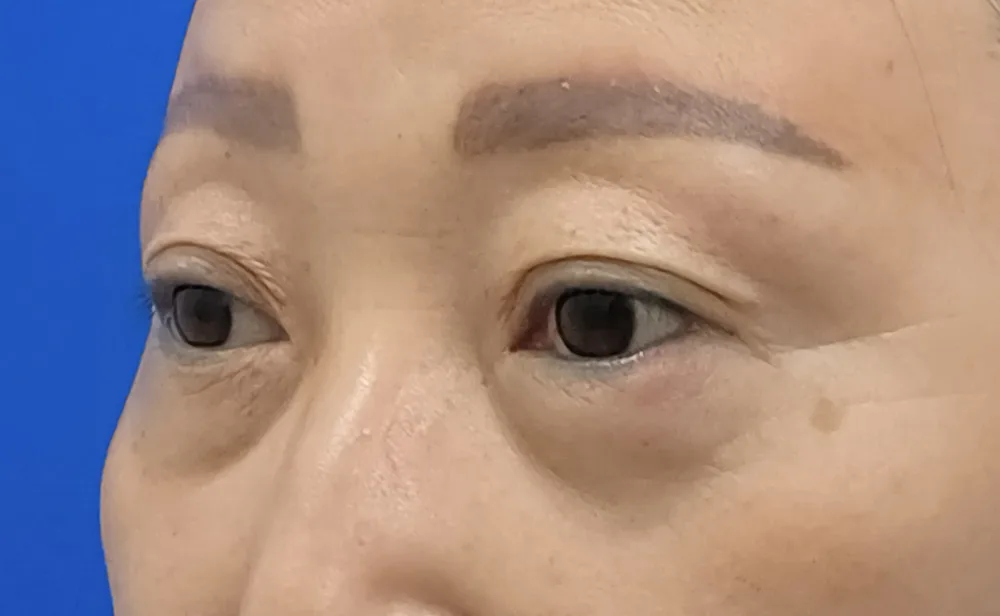
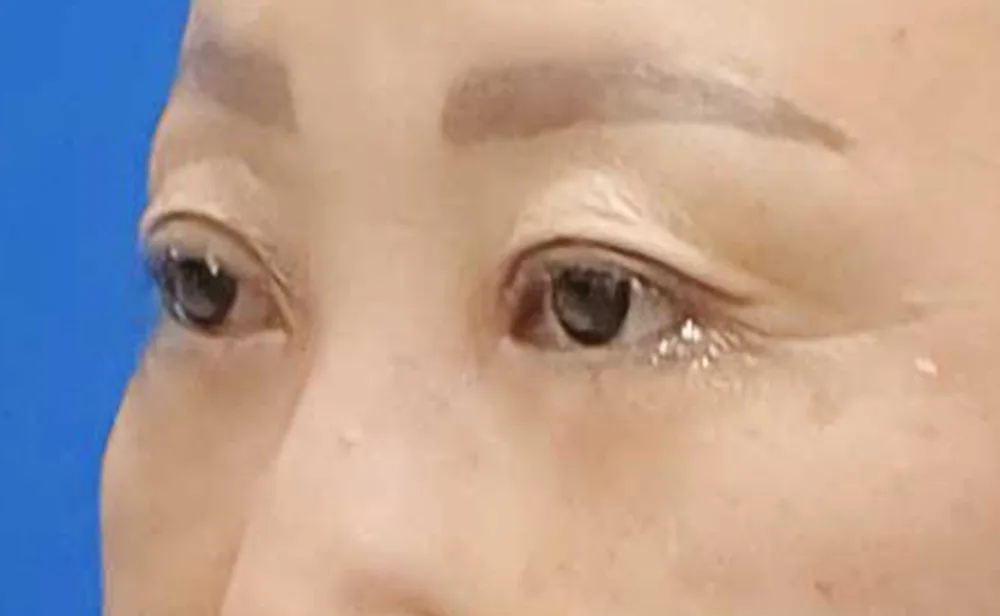
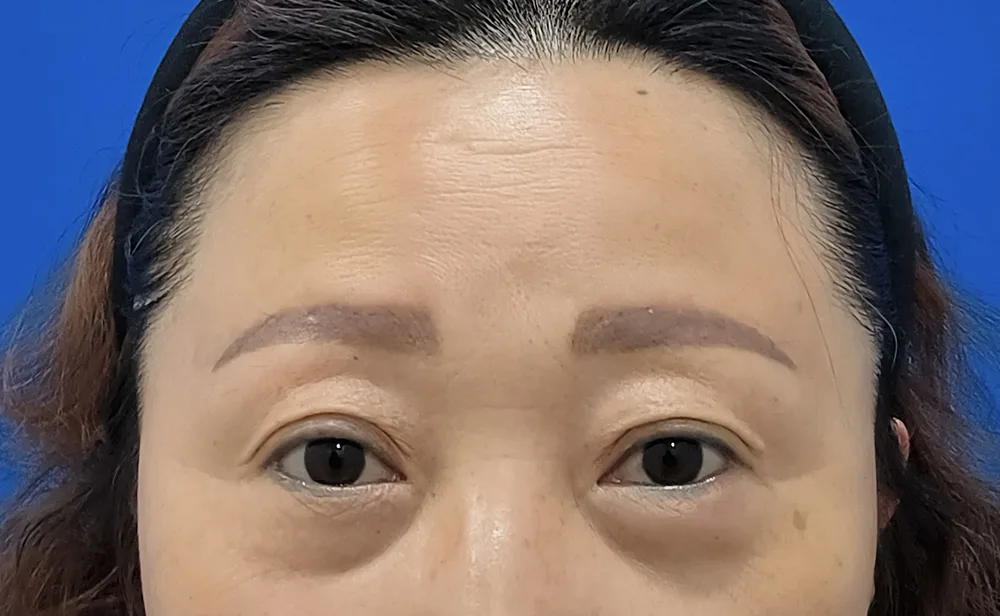
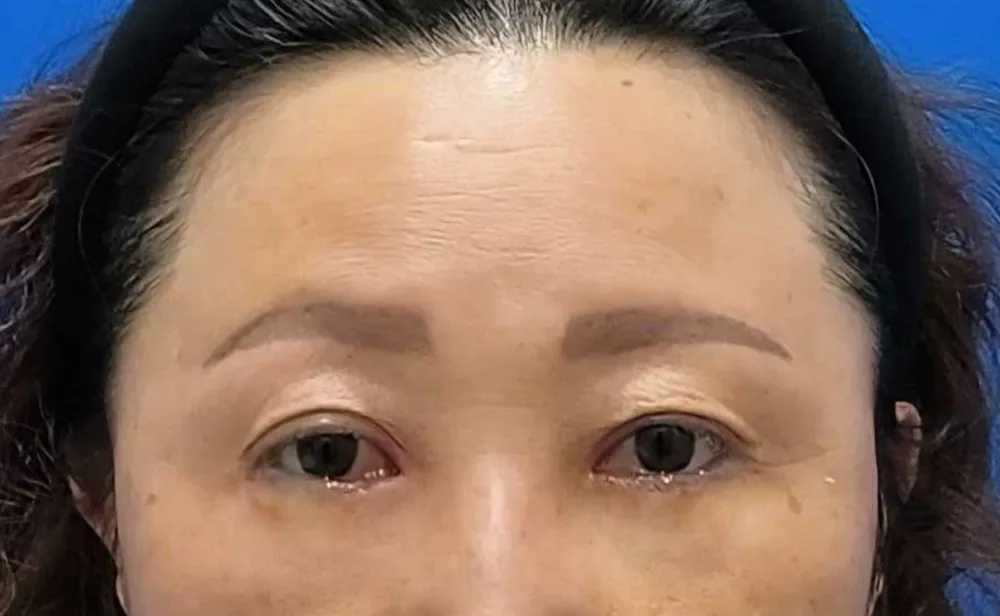
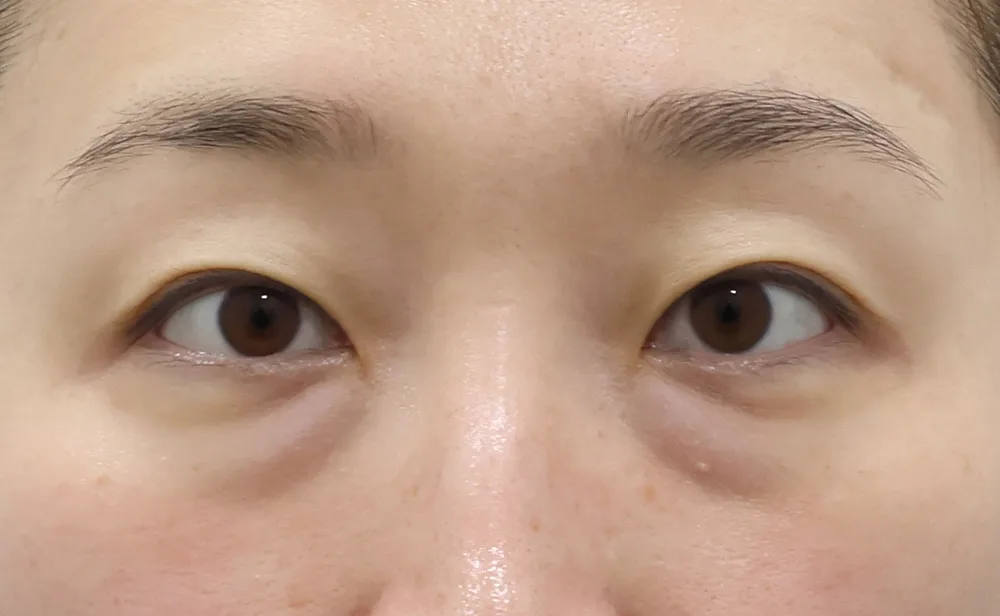
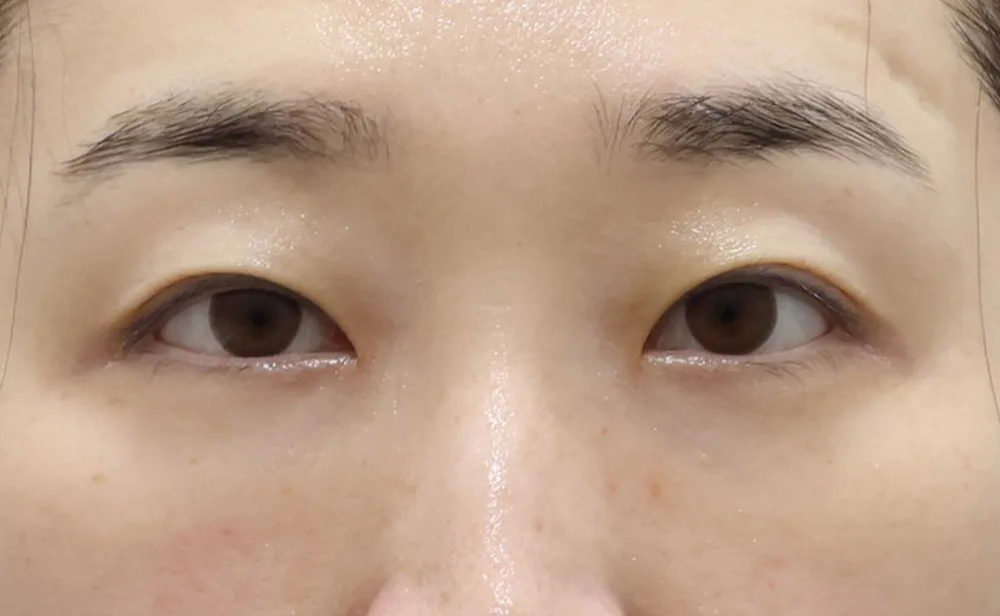
All three pairs are fat repositioning performed with nothing else, so any change around the lower lid belongs to that operation. When you look at them, follow the outline of the lid and the edge of the groove more than the tone of the skin. A photograph cannot fully separate a change in contour from a change in how light happened to fall, and contour is the part the operation works on.
BEFOREAFTER
BEFOREAFTER
BEFOREAFTERRewind's own patients, published unretouched, each operated on with fat repositioning alone. Individual results may vary, and pigment in the skin is not what these operations set out to change. Bruising, prolonged swelling, asymmetry, altered sensation and changes in lower-lid position can follow eyelid surgery.
Three kinds of darkness
The words "dark circles" name a colour you see, and three quite different things can produce it. Only the first is a matter of shape.
A hollow with no bulge above it is a special case of the first kind. There is nothing to move, so volume has to be added, and hyaluronic acid filler is the lighter comparison Rewind offers for it.
Telling them apart
You can make a first guess at home with a mirror and a lamp. The examination at Rewind runs the same checks more carefully, and adds the ones a mirror cannot.
Stand under a ceiling light, then face a window. Shade from a bulge and groove deepens under light from above and softens when light comes from the front. Pigment keeps roughly the same colour in both.
Brown points toward pigment. A blue or purple cast points toward vessels showing through thin skin. A grey shade that follows the line of the groove points toward contour.
A side view shows whether there is a bulge standing proud of the cheek and a step down into a groove. If the profile is smooth, shade is unlikely to be the main cause.
Earlier filler beneath the eye can leave a blue-grey cast of its own, and earlier surgery changes the tissue. Both are recorded before any plan, because each alters what the colour means.
Self-checks give a first impression. The proportion of shadow, pigment and vessels in one under-eye is settled at examination, and only the contour share is ever quoted as surgery.

Why here
An operation sold for the wrong kind of dark circle leaves a face that has been through surgery and still looks tired. The safeguard is a diagnosis that separates the kinds before anything is quoted.
Rewind's published steps are to analyse the problem, harvest the fat, release the tear-trough ligament adhesion, move the fat into the hollow and fix the septum to the bone. Every one of them changes shape beneath the skin, and none of them changes the pigment in it.
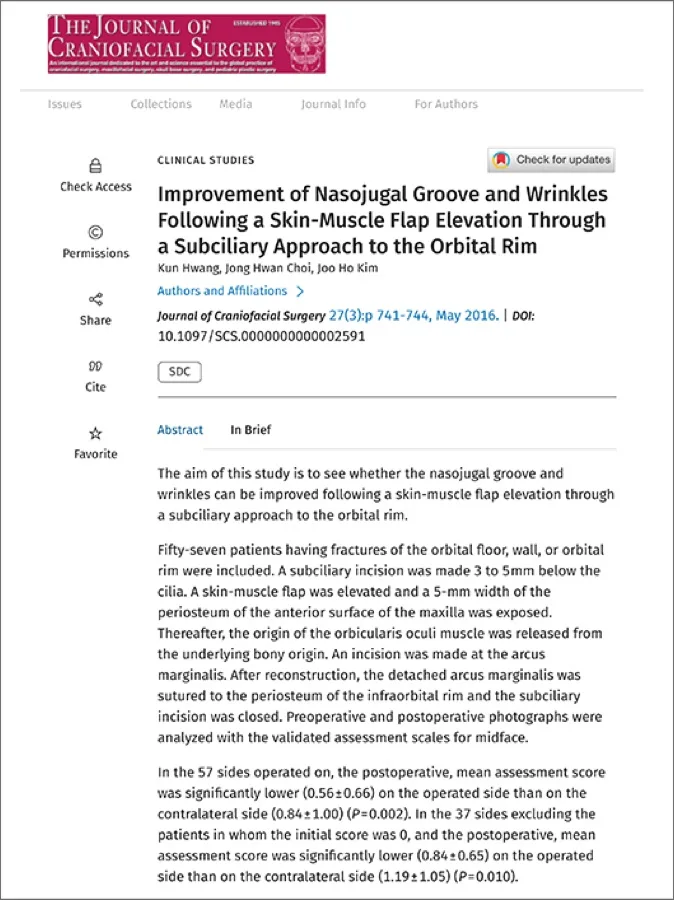
Dr. Jonghwan Choi co-authored a 2016 study on improving the nasojugal groove, which is the anatomical term for the tear trough, and the wrinkles over it after a skin-muscle flap was raised to the orbital rim. It is a reconstructive series, but its subject is the same groove that casts shadow-type darkness.
Rewind also lists pico toning, Rejuran Eye and hyaluronic acid filler. When the darkness turns out to be colour or thin skin, those options can be compared on their own pages, planned separately from any operation.
At the clinic

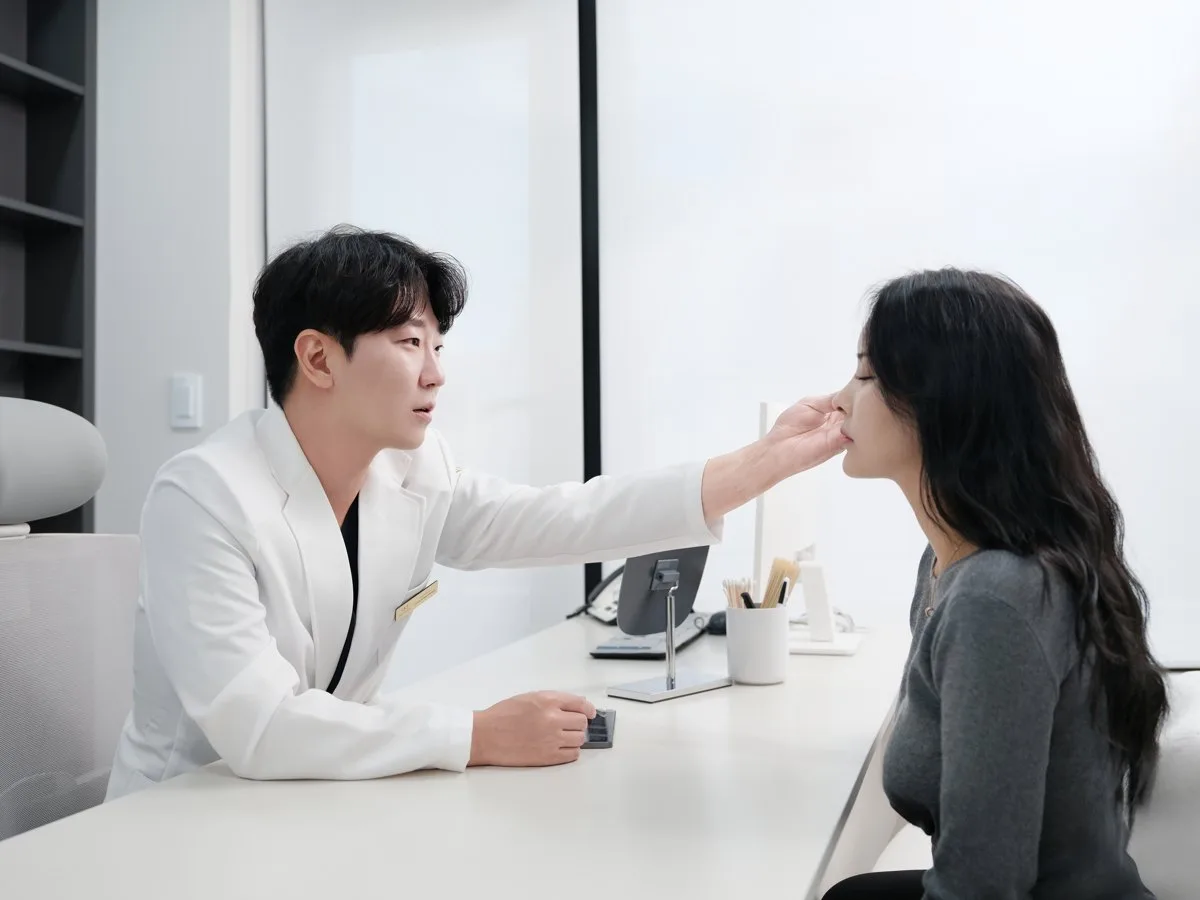
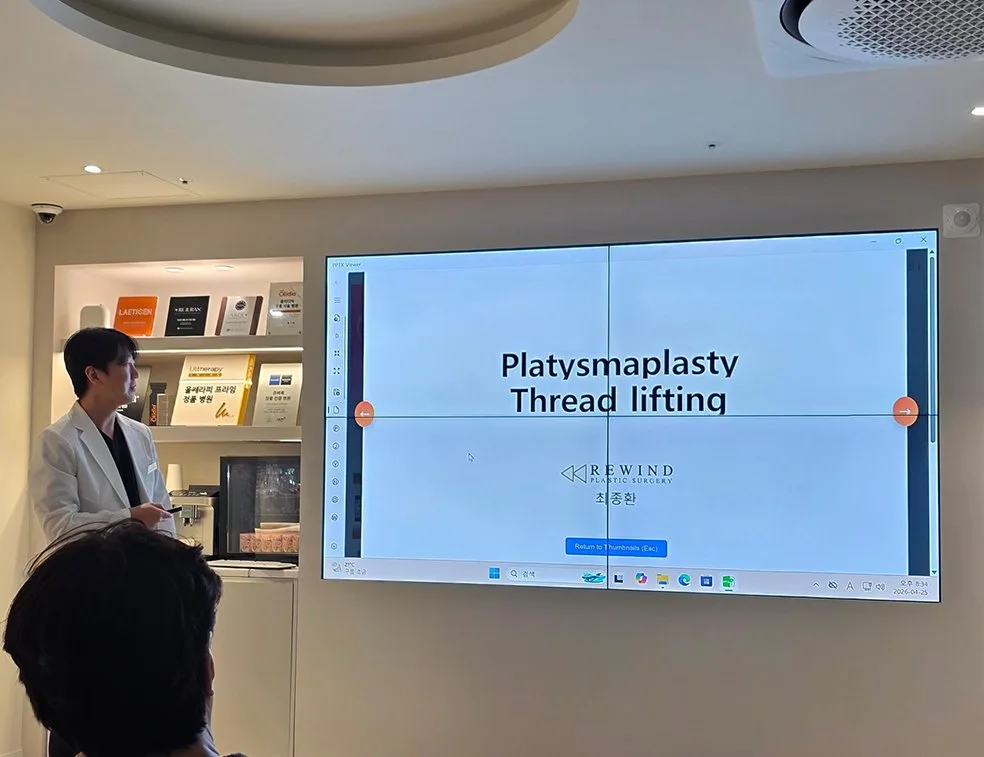
Fig. 04 — Consultation room, where the under-eye is examined bare

Fig. 05 — Waiting area in the Richro Building
Come without concealer under the eyes, since the colour of the skin is part of what is being judged. The medical director looks at the lower lids from the front and the side and under more than one kind of light, asks about earlier filler or surgery, and then tells you which share of the darkness an operation could change. Rewind sits on the fourth and fifth floors of the Richro Building in Apgujeong.
Board-certified plastic surgeon
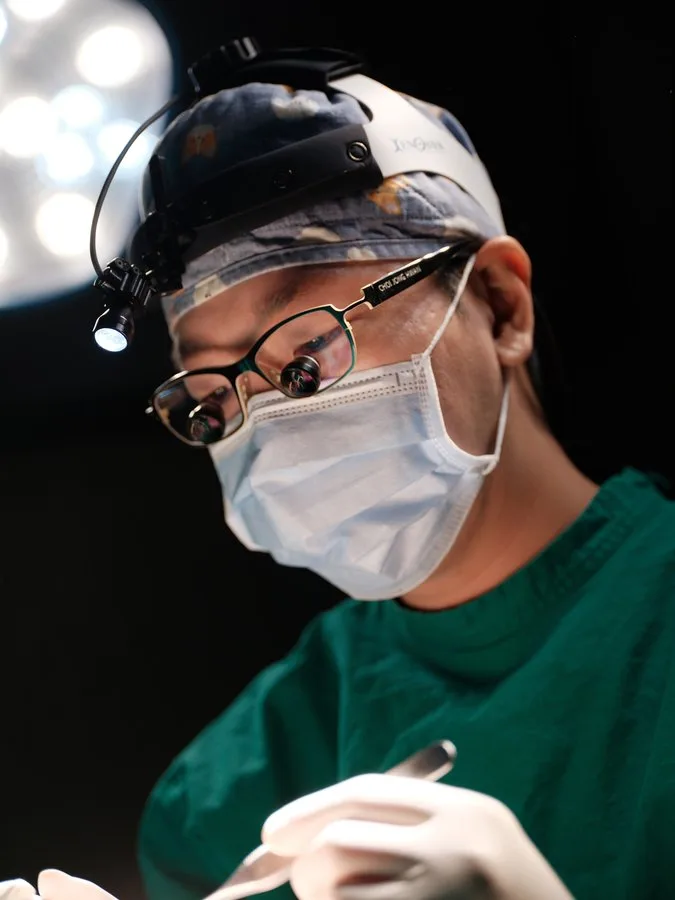
Every under-eye diagnosis at Rewind is made by Dr. Jonghwan Choi, co-author of ten peer-reviewed papers including one on the nasojugal groove. KHIDI registration for international patients: M-2025-01-08-09288.
Pricing
The first three lines are the operations that address shadow. The last three are listed only for comparison: the treatments Rewind offers for pigment, for thin under-eye skin and for a hollow with no bulge. Each of those is planned on its own page and never bundled into an operation.
Listed rates, VAT excluded; the anaesthetic fee is included in the operation figures. Which line, if any, applies to your under-eye is decided at examination.
Suitability
The first weeks
Bruising is dark by nature, so the under-eye usually looks worse for a while before it can be judged. Rewind's sheet for the area sets out the markers.
Risks of under-eye surgery include bleeding, infection, prolonged swelling, asymmetry, over- or under-correction of the groove, altered sensation and changes in lower-lid position such as retraction or ectropion. Pigment and vascular colour are unaffected by the operation. Results vary and cannot be promised.
At Rewind, one board-certified plastic surgeon carries every case — from the first consultation to the final follow-up. Because a face is a story, and a story deserves a single author.
Rewind,
Rewind's Doctor
Dr. Jonghwan Choi Medical Director
One surgeon, from the first
consultation to the last follow-up.
A board-certified plastic surgeon devoted to anti-aging lifting — with the precision and restraint built through years of craniofacial practice.
Google Reviews
"Sample review card — at launch this section pulls the clinic's real Google reviews automatically, shown verbatim with the reviewer's initial and posting date."
"Sample review card — reviews are never written or edited by the clinic; only what patients posted on Google appears here."
"Sample review card — a 'See all reviews on Google' link takes visitors to the clinic's Business Profile."
Questions
Reservation
Tell us what you are considering — we reply within one business day, in your language.
Scientific evidence
Three papers relevant to the shadow component of dark circles: a technique paper on releasing the tear trough ligament and redistributing fat through the conjunctiva, a study co-authored by Rewind's medical director on the nasojugal groove, and reported outcomes of transconjunctival fat repositioning.
All three concern contour, and none measures pigment or vascular colour. Each reports its own authors' patients; none was conducted at Rewind, and none predicts how a particular under-eye will look after surgery.