Surgery · Eyelid Recovery
Healing by method, and what it means for a trip to Seoul
Gangnam, Seoul | Board-certified plastic surgeon, Dr. Jonghwan Choi
KHIDI-registered for international patients · Apgujeong Rewind
Double eyelid surgery recovery time
The short answer
Recovery after double eyelid surgery at Rewind runs on the method used. After the buried (non-incisional) method, the clinic records swelling and bruising through roughly the first 48 hours, with wide variation between individuals. After a partial or full incision, its post-operative sheet allows one to two weeks for swelling and bruising to ease, and an incisional line is recorded as losing much of its redness by about two months. Face washing resumes the day after the sutures come out, and eye makeup waits a further one to two weeks. Rewind does not publish a fixed length of stay for visitors: the one date every trip must contain is the suture-removal visit, which the surgeon sets at your follow-up.
Recovery figures on this page come from Rewind's Korean pages for its three crease methods and from its printed post-operative sheets. The anaesthetic used, the length of the operation and a standard day for removing sutures are not published by the clinic, so this page gives no number for any of them.
The second question usually arrives in the same message: how many days should the trip be? The answer is built backwards from three fixed points. First the operation, then the suture-removal visit on a day the clinic is open, and finally enough distance from both that the swelling you fly home with is swelling you are comfortable being seen with. The first two are set with the surgeon. The third is yours to judge, and the method decides how long it takes to arrive.
Before and After
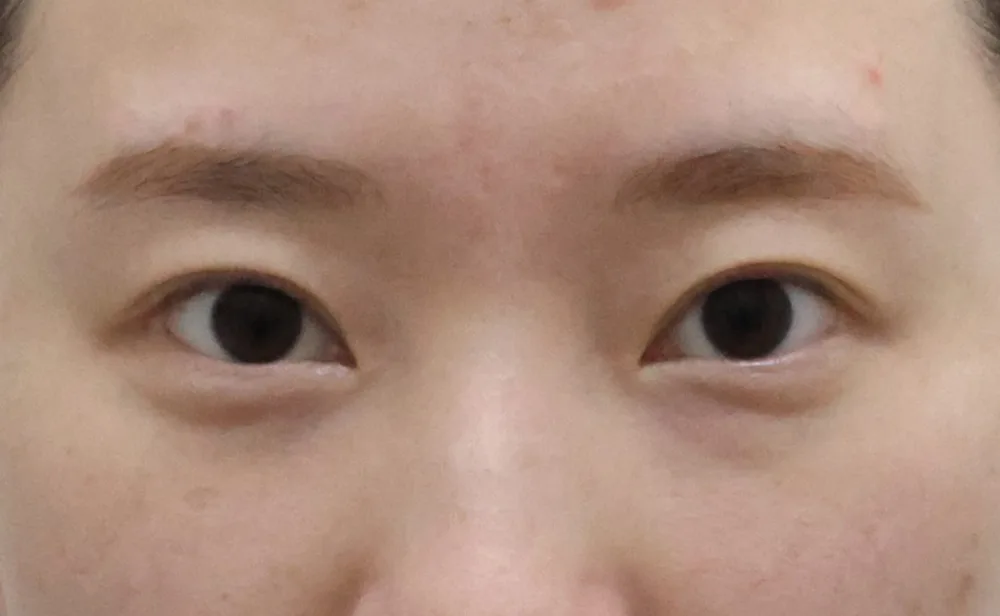
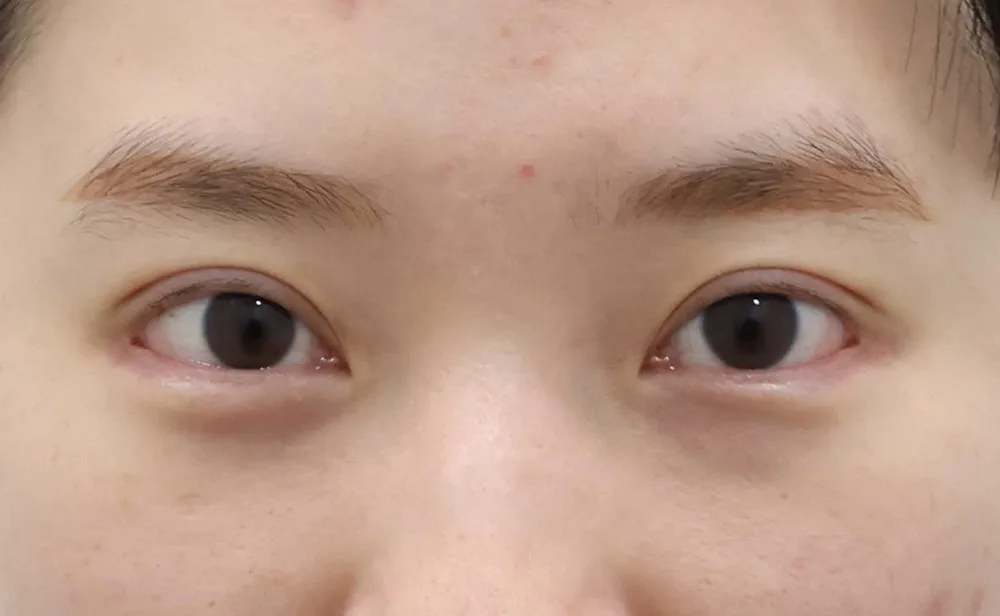
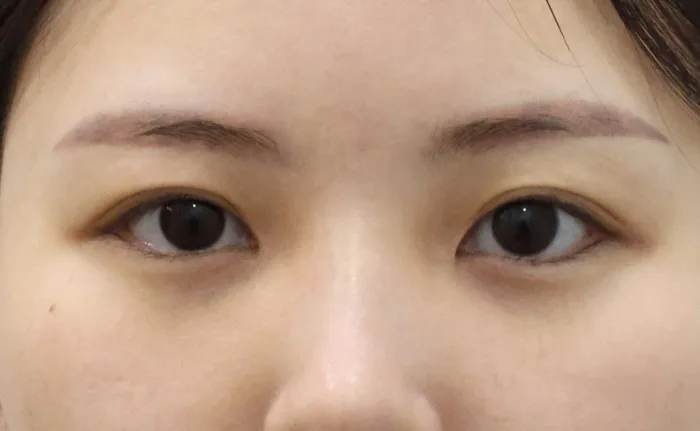
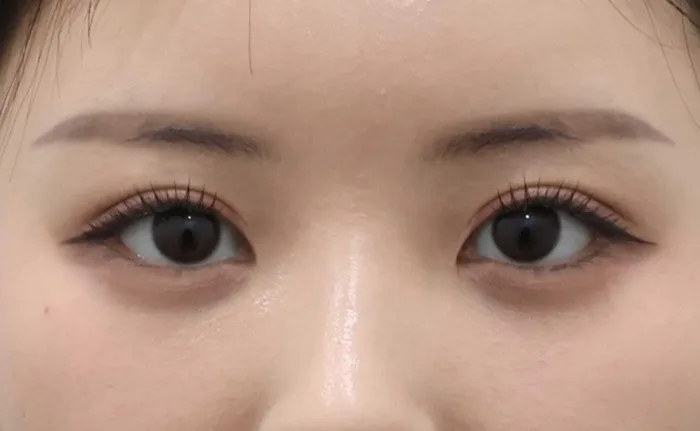
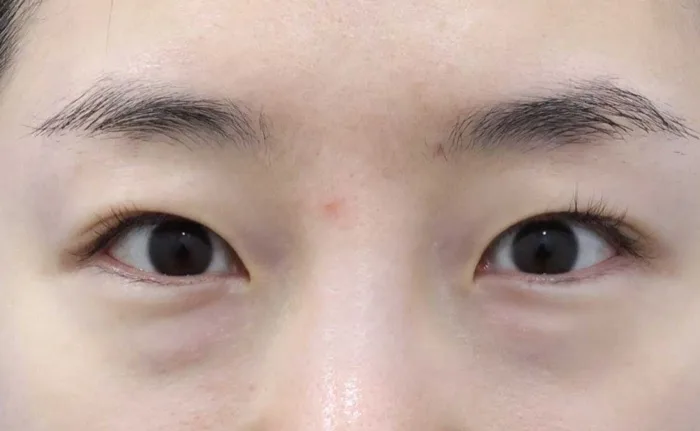
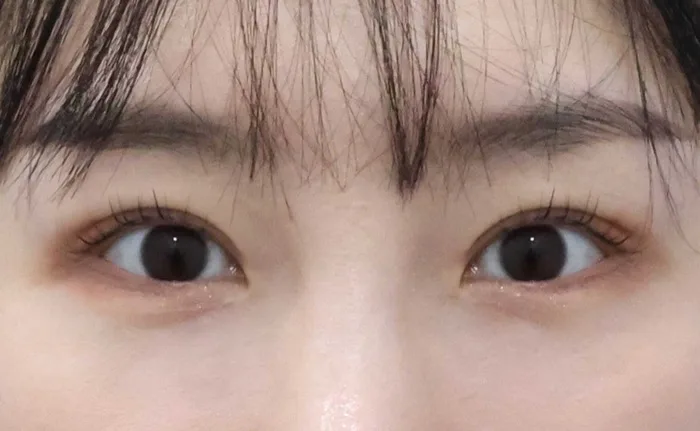
Each case below is a Rewind patient, with every operation in that session named. For recovery planning the list of operations matters more than the photograph. One crease heals on one timetable; a crease made together with inner-corner or under-eye surgery adds the timetable of each extra site to the same fortnight. The photographs show outcomes, and the days in between are described in the sections further down.
BEFOREAFTER
BEFOREAFTER
BEFOREAFTERRewind's own patients, photographed in the clinic under one lighting and framing standard and shown unretouched. Individual results may vary, and the pace at which these lids healed says nothing about the pace of yours. Lingering swelling, bruising, asymmetry between the two lids, a fold that settles higher or lower than planned, infection and a visible line after an incisional method are all recognised outcomes of eyelid surgery.
What recovers
Recovery is easier to plan once it is split into its parts. They overlap, yet each one finishes at its own time, and only some of them are visible to the people around you.
Where an inner-corner or under-eye operation shares the session, its healing runs alongside the crease. Inner-corner surgery is covered on the epicanthoplasty page, under-eye work on lower blepharoplasty and fat repositioning, and a lid that also needed its opening muscle corrected on ptosis correction.
Day by day
Six stages, in order. Each duration below is the clinic's own published figure where one exists; where the clinic publishes none, the stage is described without a number.
You go home with written aftercare for the method performed. The sheet for the buried method asks that the operated area be handled gently, without stimulation, and that a low-irritation cleanser be used with no scrubbing. Arrange to be accompanied back to your accommodation, because the lids keep swelling as the day goes on.
For a non-incisional crease, Rewind records swelling and bruising up to roughly the 48-hour mark, and the amount varies widely between people. After a partial or full incision the same two days only open a longer curve that continues into the second week.
Saunas, steam rooms and strenuous exercise are avoided for about a week after a buried crease. After a partial incision the restricted list is longer: alcohol, smoking, repeated eye-closing and eye-opening exercises, rubbing, contact lenses and makeup are all held back for a period that the surgeon confirms at follow-up.
Rewind does not publish a standard day for taking the sutures out; it is set at your follow-up according to how the lid is healing. The clinic sees patients on Monday, Tuesday, Wednesday and Friday from 10:00 to 19:00 and on Saturday from 10:00 to 16:00, and it is closed on Thursday and Sunday, so the visit has to land inside those hours. Face washing resumes the day after removal.
The incisional post-operative sheet gives one to two weeks for swelling and bruising to settle. Eye makeup waits one to two weeks beyond suture removal, which on a short trip may mean your first eye makeup happens after you are home.
Rewind records the redness of an incisional line as recovering to a degree by about two months, at which point light makeup covers it outdoors. Sunscreen until then protects the healing skin from pigmentation. A buried crease has no line to fade, though the fold keeps softening as the last of the swelling leaves.

Planned in advance
A visitor's recovery is bounded by a flight home. Setting the recovery plan at the consultation, alongside the method, means the dates are checked against how the lid is likely to heal before anything is booked, and the method is discussed knowing how many days are actually available.
When a lid could accept either a buried or an incisional crease, the shorter recovery of the buried method is a fair consideration. When the lid is thick or carries substantial fat, recovery length cannot choose the method, and you are told so at the chair.
Because Thursday and Sunday are closed days, the suture-removal visit is pencilled in when the plan is written. A trip that cannot include that visit is worth moving; skipping the visit to keep a flight is the wrong trade.
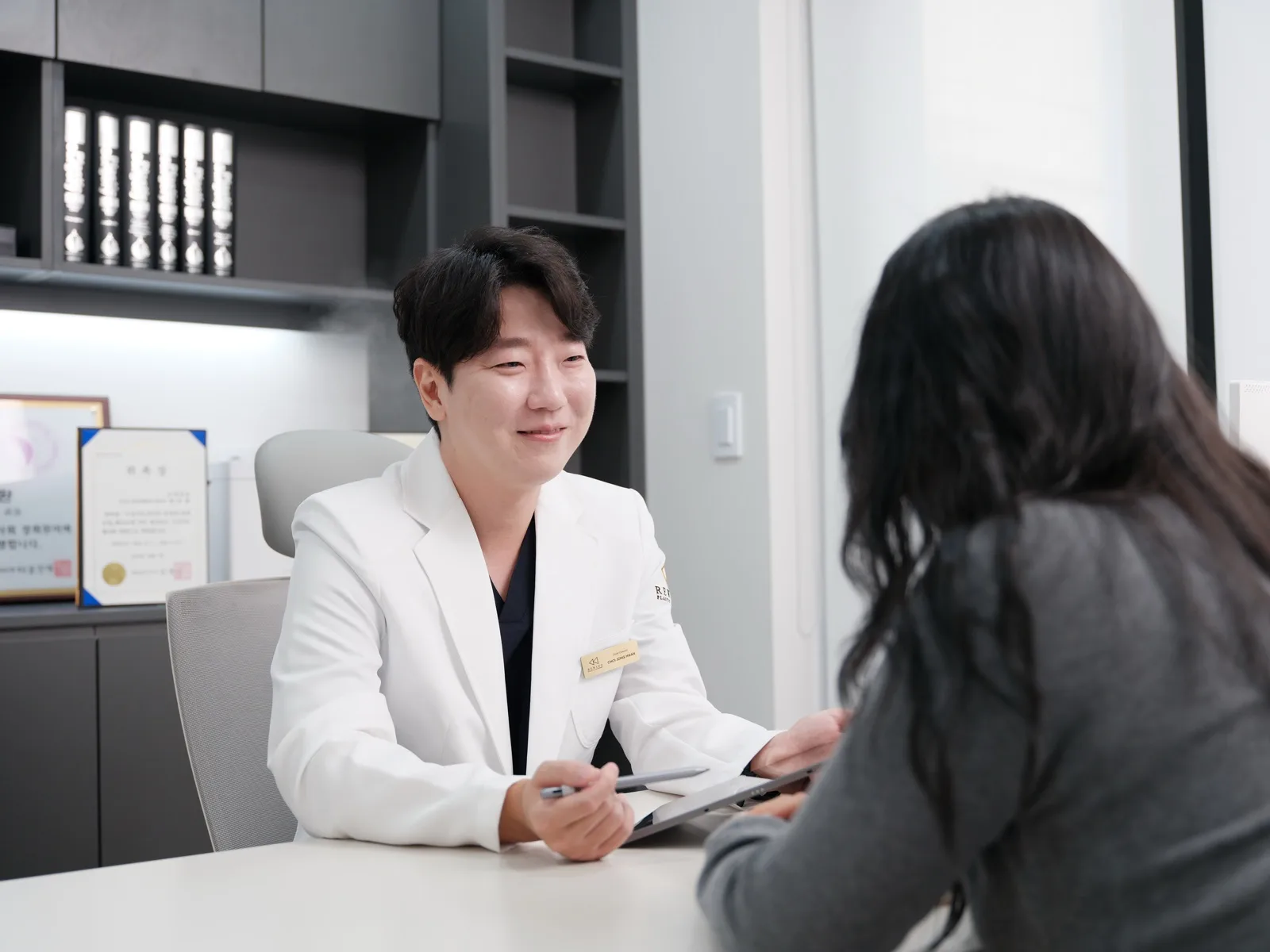
Rewind is a single-surgeon practice, so any change noticed during recovery, such as a fold loosening or altering shape, is examined by Dr. Jonghwan Choi himself. Patients from abroad are supported in their own language, at an institution registered with KHIDI for foreign patients.
Operating day

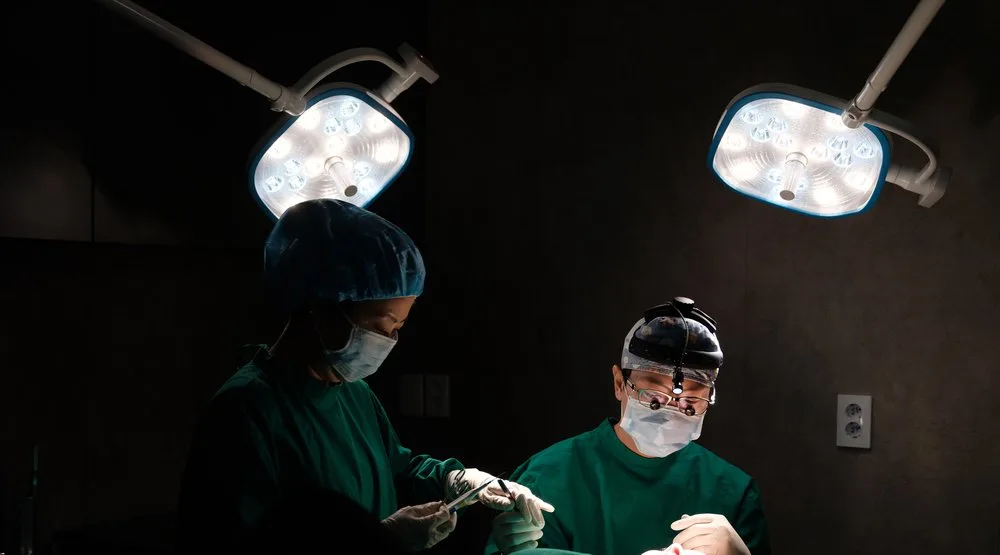
Fig. 04 · The operating room on the clinic's own floors

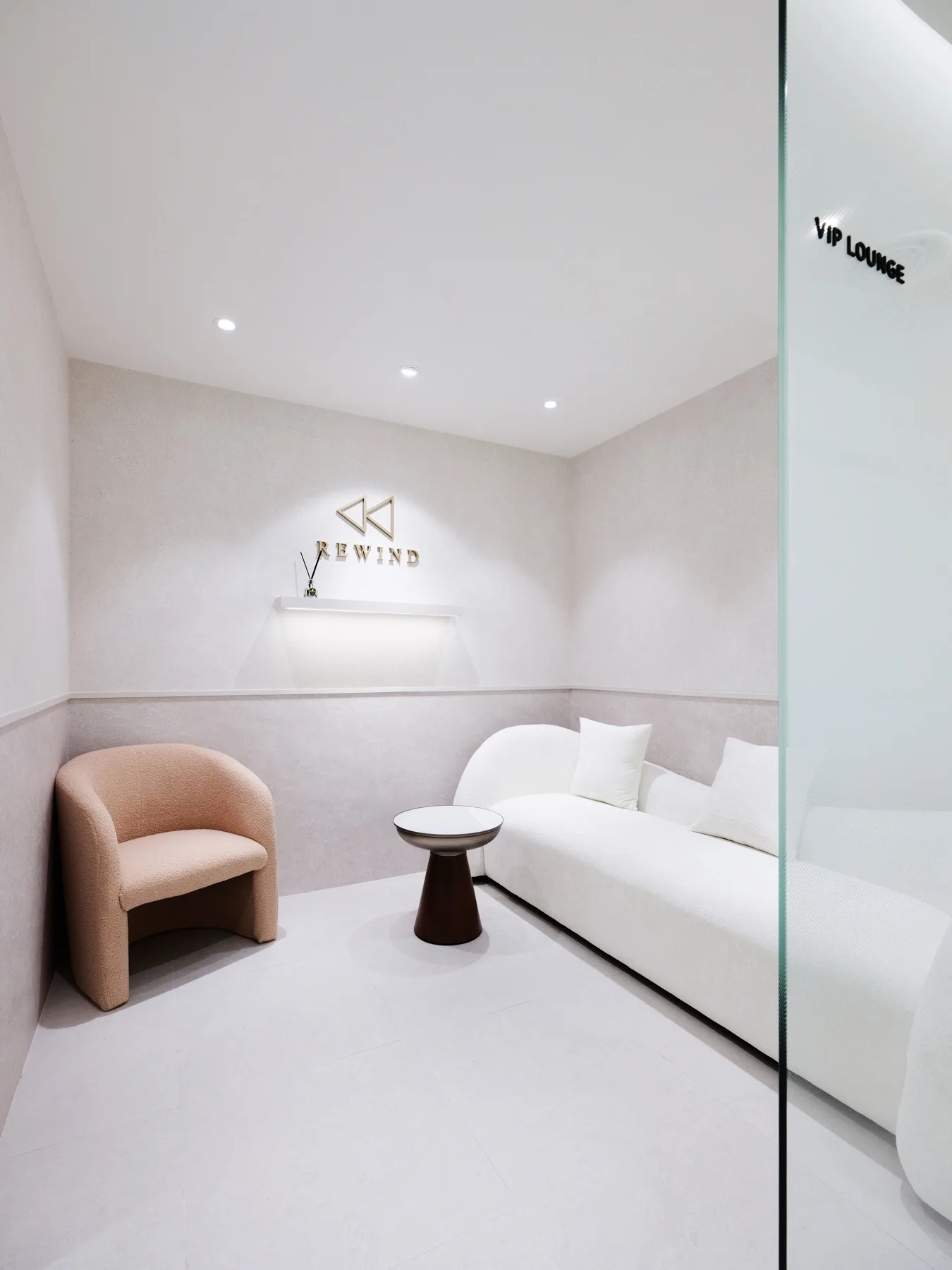
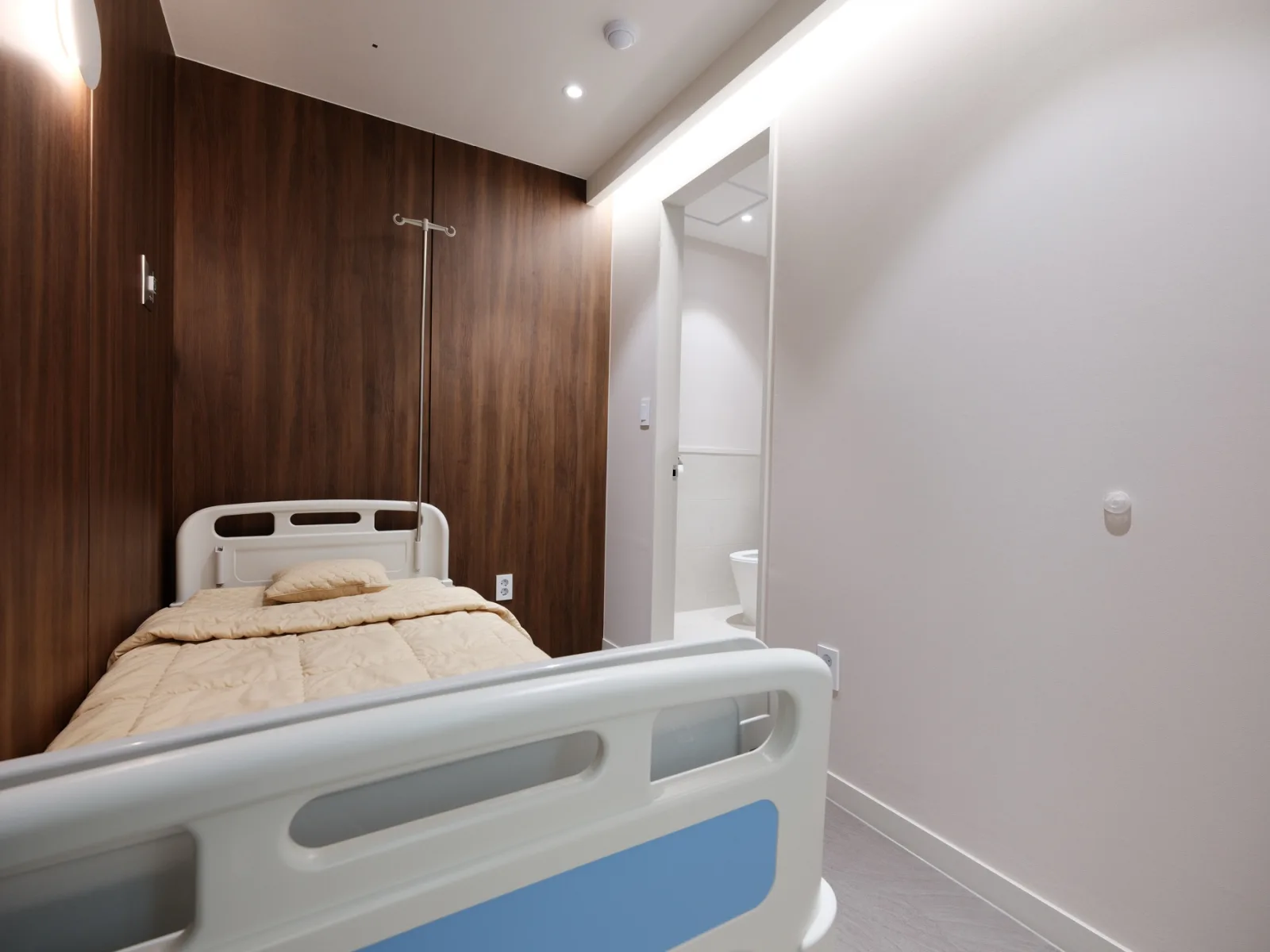
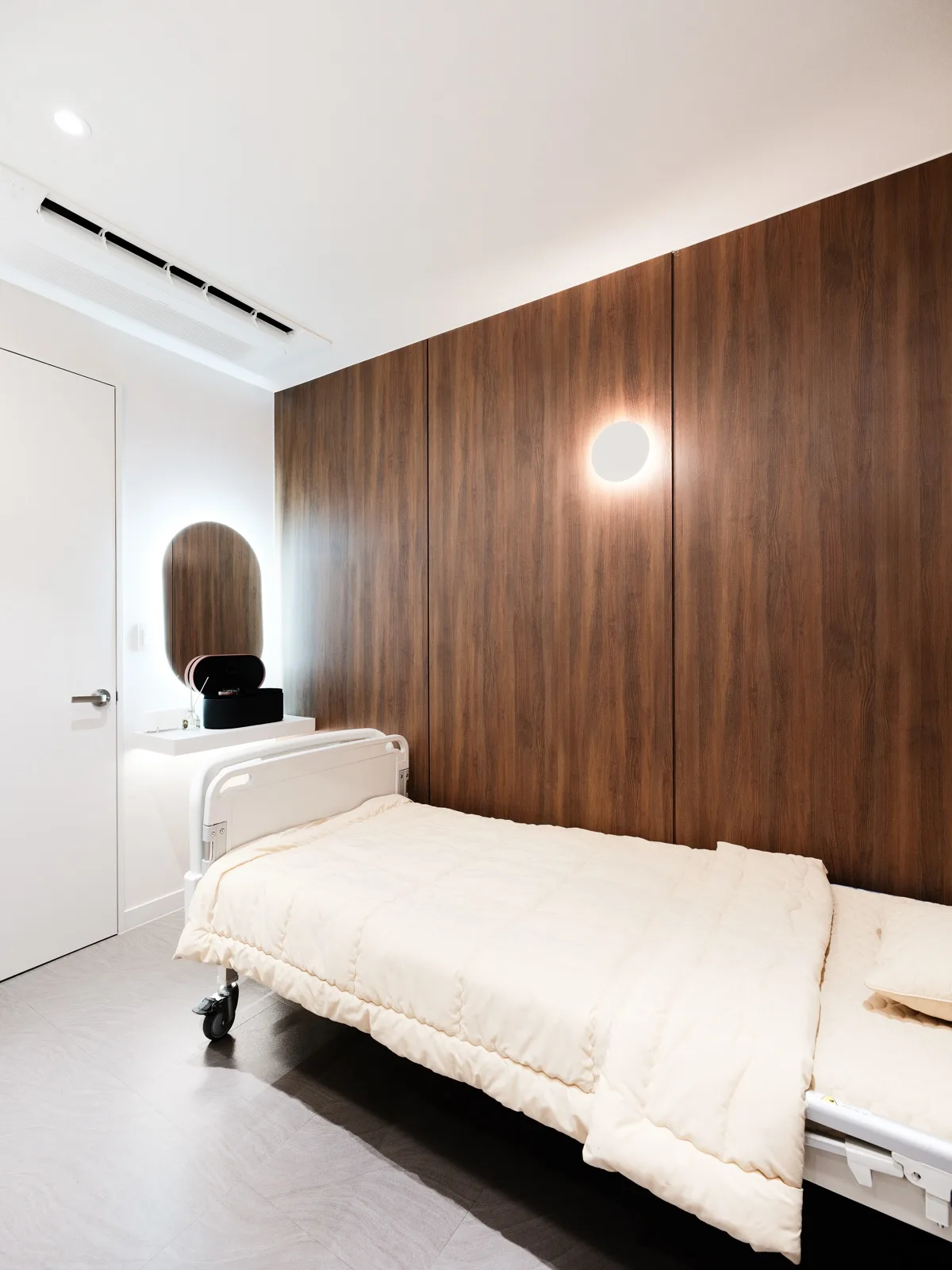
Fig. 05 · A private room for resting once the operation is over
Rewind occupies the fourth and fifth floors of the Richro Building in Apgujeong, and its operating room and resting rooms are on those floors. The recovery you begin in the building is overseen by the surgeon who operated, and the list below is what an eyelid patient leaves with.
Board-certified plastic surgeon
Dr. Jonghwan Choi holds Korean specialist certification in plastic surgery and belongs to the Korean Society of Plastic and Reconstructive Surgeons and the Korean Society for Aesthetic Plastic Surgery. Rewind receives patients from abroad under KHIDI registration M-2025-01-08-09288.
Rates and recovery
A method's rate and its recovery move together: the further the lid is opened, the higher the listed figure and the longer the swelling. These are Rewind's standard published rates, and your own quotation lists the method your examination selects plus any additional operation it justifies.
Each figure is a listed rate with VAT still to be added, and the anaesthetic fee for that operation is already counted inside it. Rewind's published list has no separate line for aftercare visits, so ask for suture removal and follow-up appointments to be written into your plan when the quotation is prepared.
Timing
Post-operative sheets
Rewind prints a separate aftercare sheet for each operation. Four of them concern someone having a crease made, depending on what else is done in the session. Where two apply at once, follow the stricter instruction.
Recovery is also where complications show themselves: bleeding and haematoma, infection, swelling that lasts longer than expected, asymmetry between the lids, a fold settling higher, lower or heavier than planned, a buried crease loosening after a knock, altered sensation and a visible incisional line. Tell the surgeon about every earlier eye operation and every medication before a date is agreed, and report a sudden change in one lid without waiting for the scheduled visit.
At Rewind, one board-certified plastic surgeon carries every case — from the first consultation to the final follow-up. Because a face is a story, and a story deserves a single author.
Rewind,
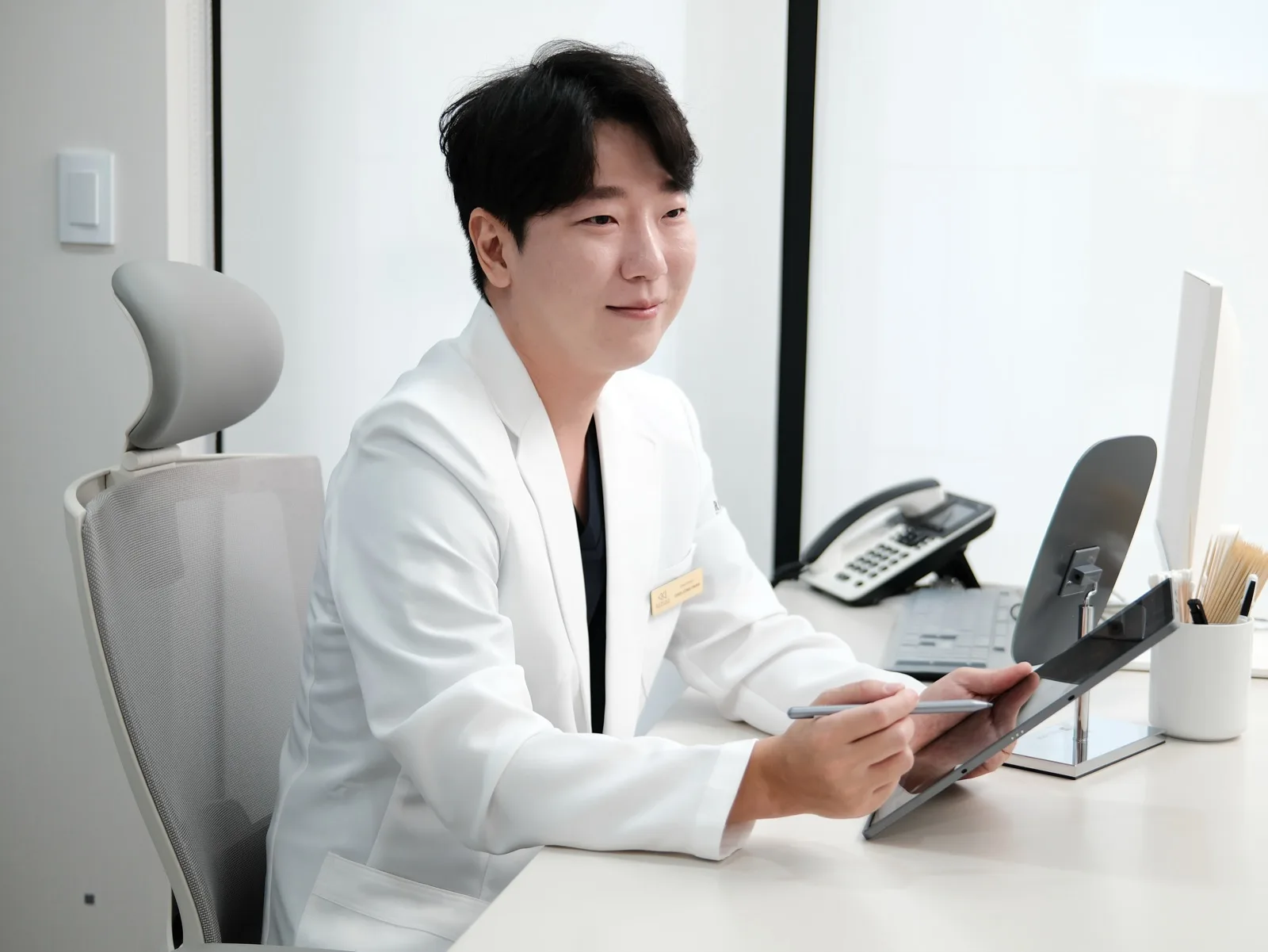
Rewind's Doctor
Dr. Jonghwan Choi Medical Director
One surgeon, from the first
consultation to the last follow-up.
A board-certified plastic surgeon devoted to anti-aging lifting — with the precision and restraint built through years of craniofacial practice.
Google Reviews
"Sample review card — at launch this section pulls the clinic's real Google reviews automatically, shown verbatim with the reviewer's initial and posting date."
"Sample review card — reviews are never written or edited by the clinic; only what patients posted on Google appears here."
"Sample review card — a 'See all reviews on Google' link takes visitors to the clinic's Business Profile."
Questions
Reservation
Tell us what you are considering — we reply within one business day, in your language.
Scientific evidence
These papers describe other surgeons' patients and forecast nothing about how a particular eyelid will heal. They are listed for the parts of recovery they touch: the complications that can surface while a lid heals and how they are managed, the small-incision techniques gathered in a 2022 systematic review, a five-year follow-up of a non-incisional technique, and the way outcomes after upper-lid surgery are assessed once healing is complete.