Surgery · Inner-Corner Scar

Epicanthoplasty Scars

Where the line sits, and how it matures

Apgujeong, Seoul | Board-certified plastic surgeon, Dr. Jonghwan Choi
Scar risk discussed before the design · KHIDI-registered for international patients

Scar Care Scar Care Scar Care Scar Care 
Define

Scar visibility

Does an epicanthoplasty leave a visible scar?

The short answer

It leaves a line, because the inner-corner release is an incision in skin. Rewind cuts the epicanthal fold inward along a design set by the medial canthus and closes it inward along the same path, so the line lies within the corner itself. Early on that line looks pinker and firmer than it will later, and the inner corner is a recognised site for scar thickening. How visible it ends up depends on the design, on your own healing and on the care the corner receives in the months after surgery.

Drawn from Rewind's Korean page on eye-opening procedures and from published surgical literature on inner-corner scarring. The clinic publishes no figure for how long the line takes to fade, so none appears here; ask the surgeon for guidance on your own skin at consultation.

The second thing patients ask is which technique hides the scar most. No single design suits every fold. Published approaches differ in how they lay out the incision, for example designs that avoid a vertical limb or that remove a small triangle of skin to lower the chance of a thickened line, and each is chosen against the shape of the fold in front of the surgeon. Rewind's own published method is the inward incision and inward closure described above, and which variation suits your eye is explained at the examination.

This page is about the line itself. The operation as a whole, the eyes it is refused for and its pricing are covered on the main epicanthoplasty page.

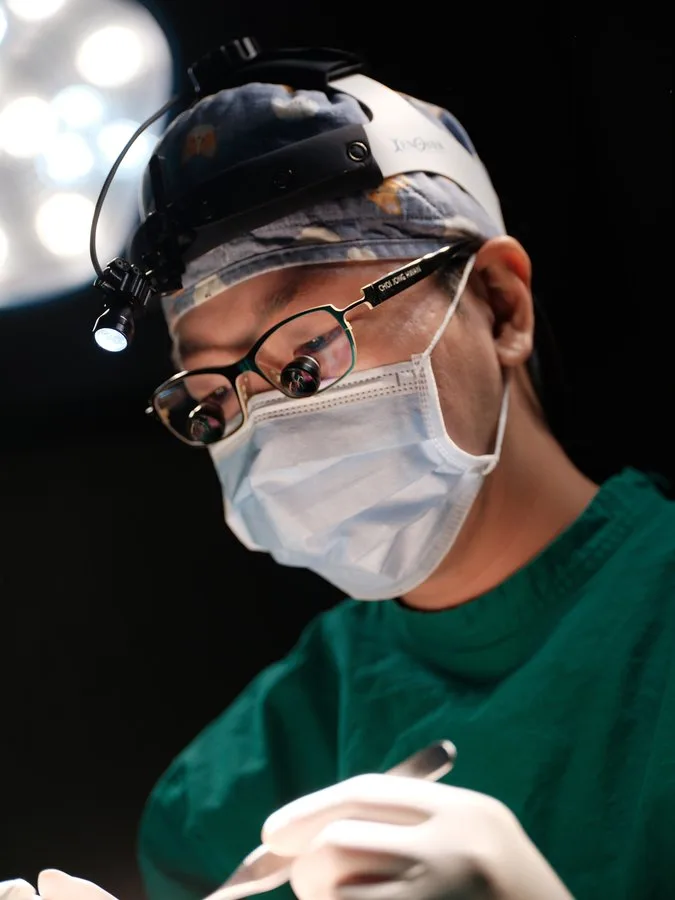
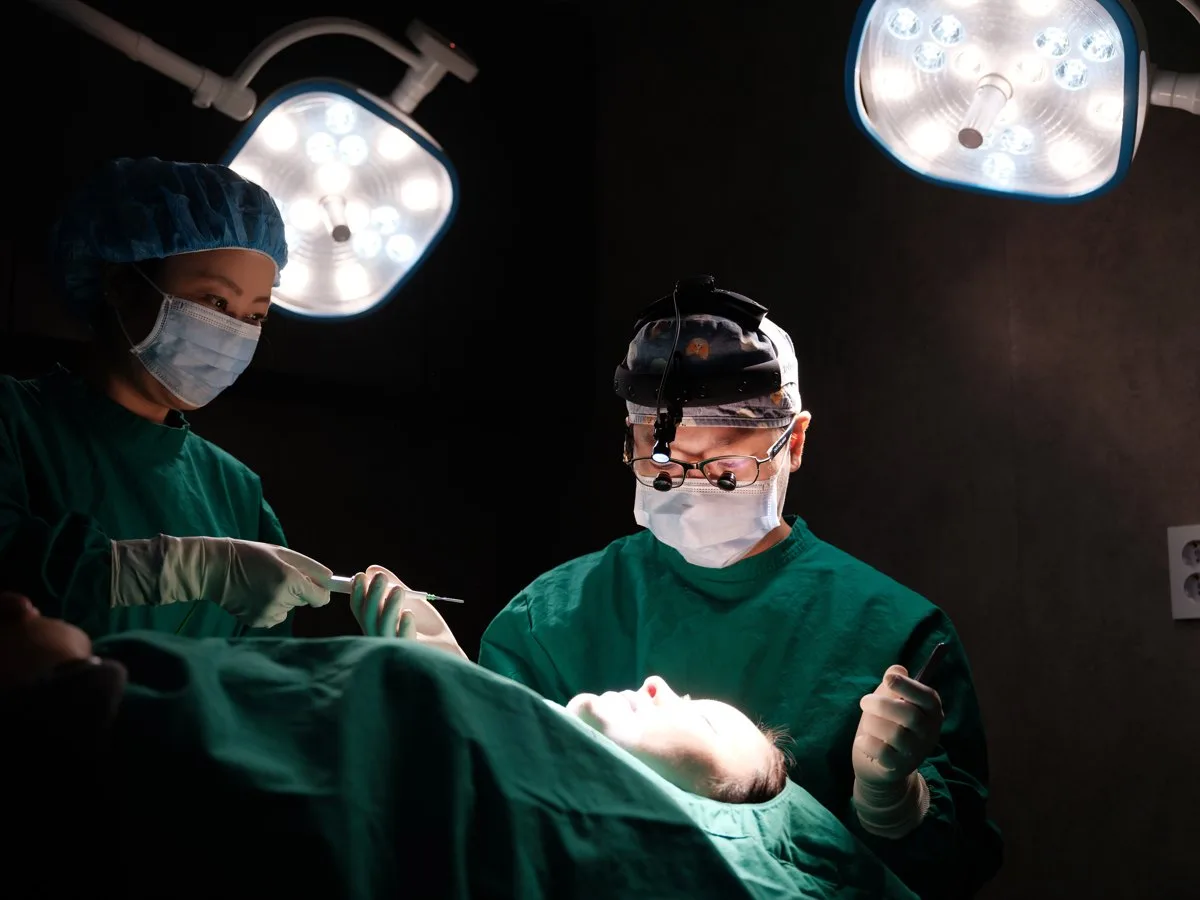
Dr. Jonghwan Choi wearing surgical loupes and a headlight in the Rewind operating room
Fig. 01 — Loupes and headlight for fine closure at the corner
Result

Case photographs

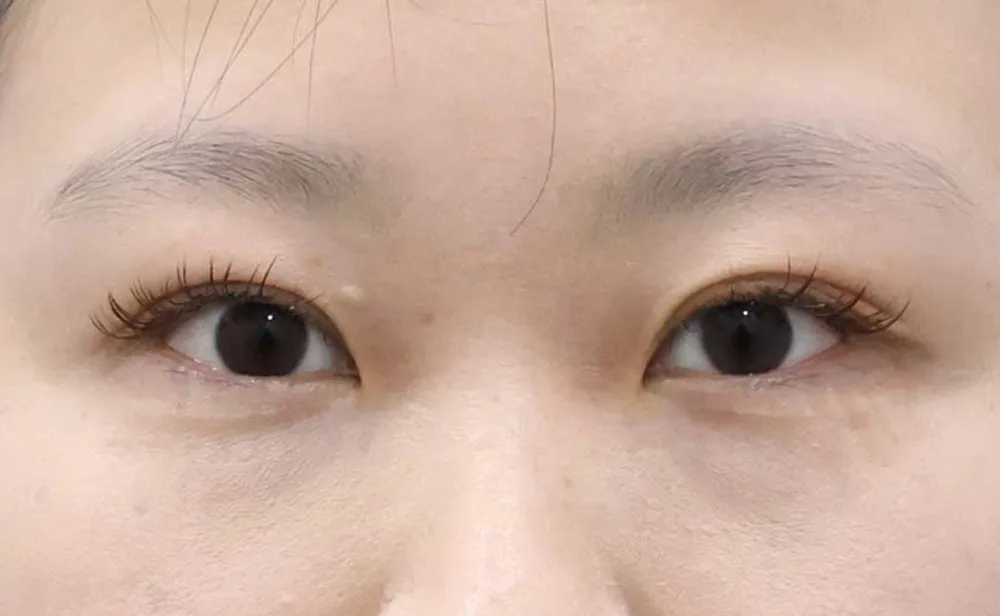
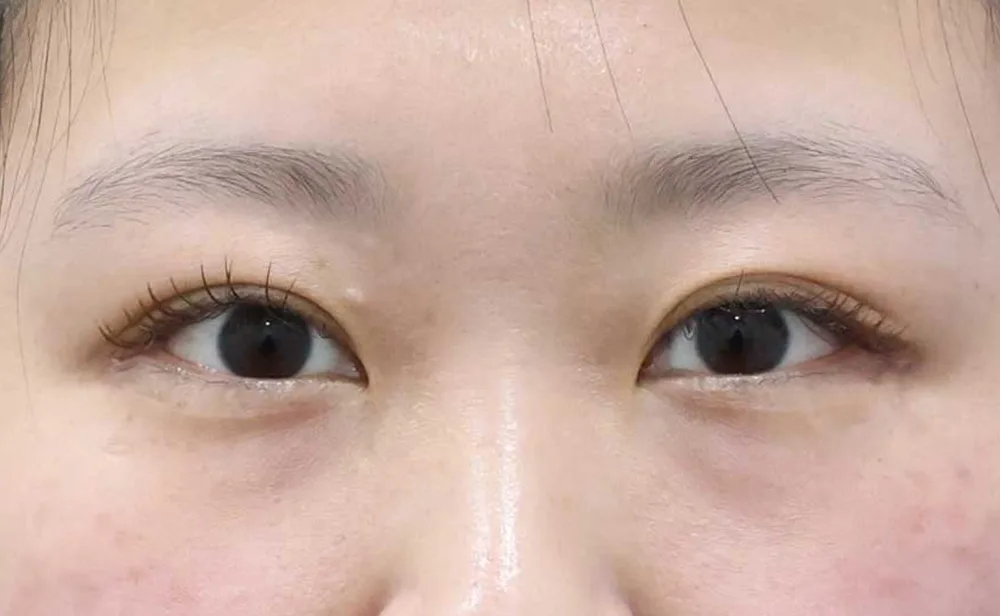
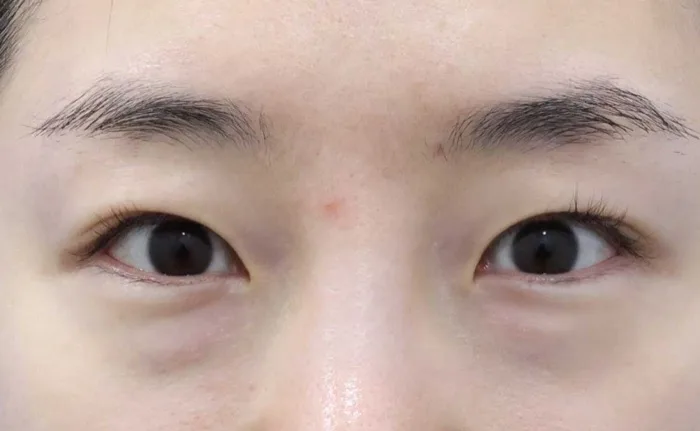
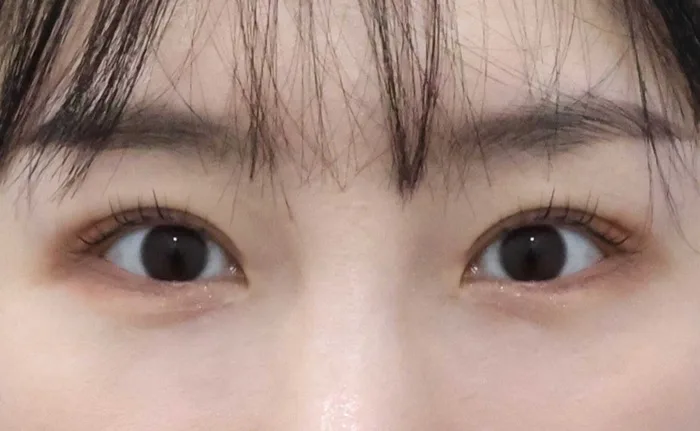
The inner corner in two Rewind cases, photographed close

These are close crops of the corner, the view that matters to anyone worried about a line. They were not taken as scar studies: the captions do not state how many months had passed when each after photograph was taken, so treat them as the corner at one moment, not the end of its healing. One case is the inner corner alone; the other combined a non-incisional crease, the inner corner and under-eye fat repositioning in one visit.

Rewind patients — medial canthus, close crop

Before an inner-corner release performed alone, close crop of the medial canthus After an inner-corner release performed alone, close crop of the medial canthus BEFOREAFTER
case 01
Medial epicanthoplasty, no other procedure in the visit
Individual results may vary.
Before a non-incisional crease with medial epicanthoplasty and under-eye fat repositioning After a non-incisional crease with medial epicanthoplasty and under-eye fat repositioning BEFOREAFTER
case 02
Non-incisional crease + medial epicanthoplasty + under-eye fat repositioning, one visit
Individual results may vary.

Rewind took these photographs of its own patients, and they are unretouched. Individual results may vary, and no photograph can promise how your own line will heal. A visible or thickened line at the corner, redness lasting for months, asymmetry between the two sides, bleeding, infection and swelling are all possible after this operation. An examination by the surgeon comes before any decision.

Line

What shapes the line

Four things that decide how an epicanthoplasty scar looks

The line is the product of where it is placed, how it is closed, how your skin heals and what happens to it afterwards. Only the first two are in the surgeon's hands on the day of surgery.

factor 01
Placement
The incision sits in the corner beside the nose, set against the medial canthus. The area is small, but people look at it directly in conversation, so a line here is noticed more readily than one tucked into a crease.
factor 02
Closure
Rewind closes the line inward along the incision. The direction and tension of that closure shape how flat the line lies once it matures, and published designs for this operation concentrate on exactly that point.
factor 03
Your healing
Some skin heals with lines that stay red or raised for a long time. If that has happened after an earlier cut, a piercing or another operation, say so at consultation, because it changes the discussion.
factor 04
Aftercare
The clinic asks that the operated corner is not touched or rubbed after surgery. Friction from make-up removal and early rubbing are the ordinary ways a healing line gets irritated.
Steps

From design to closure

How Rewind places and closes the inner-corner incision

Three surgical steps, published by the clinic, and a long period afterwards in which the line keeps changing. Each of them has a bearing on the scar you are left with.

01Read

The fold is assessed before any line is drawn

The structure of the eye and the muscle around it are checked first, then the design is marked against the position of the medial canthus. A release drawn no larger than the fold requires keeps the line as short as that eye allows.

02Incise

The incision follows the fold inward

The cut runs into the epicanthal fold along the design. Its length is set by how much of the corner is hidden, and it is the decision with the largest effect on how much line there is to heal.

03Close

Closure that follows the new corner

Closure follows the incision inward, so the finished line tracks the new contour of the corner. When the stitches come out is decided by the surgeon at follow-up; the clinic does not publish a fixed day.

04Mature

Six to twelve months of change

Rewind allows at least six months, and up to a year, for a natural and stable result. The line changes colour and texture through that period, which is the window for watching it closely and holding off on verdicts.

Dr. Jonghwan Choi and the surgical team in position in the Rewind operating room
Fig. 02 — The surgeon who closes the line also reviews it
Rewind

Why here

Why scar risk is weighed ahead of booking an epicanthoplasty at Rewind

At the inner corner, the scar question and the suitability question turn out to be the same question. Rewind's refusal criteria exist because some eyes gain little from a release and would still carry the line.

01Refusal

Eyes where the line would buy too little

The clinic advises against the release where the eyes already sit close together, or where the pink tissue at the corner is prominent and sharply exposed. In those eyes the change is small or unwanted, and the scar would be the main thing gained.

02History

Your own scars are part of the examination

Previous lines that thickened, reddened or spread are asked about and looked at. They do not always rule the operation out, but they shift the balance, and they are noted before a design is drawn.

03Follow-up

The same surgeon watches the line for the year

Dr. Choi designs the release, closes it and holds each review while it matures, so any concern about a thickening line reaches the person who made it. Patients from abroad are supported in their own language at every stage, and Rewind holds KHIDI registration for international care.

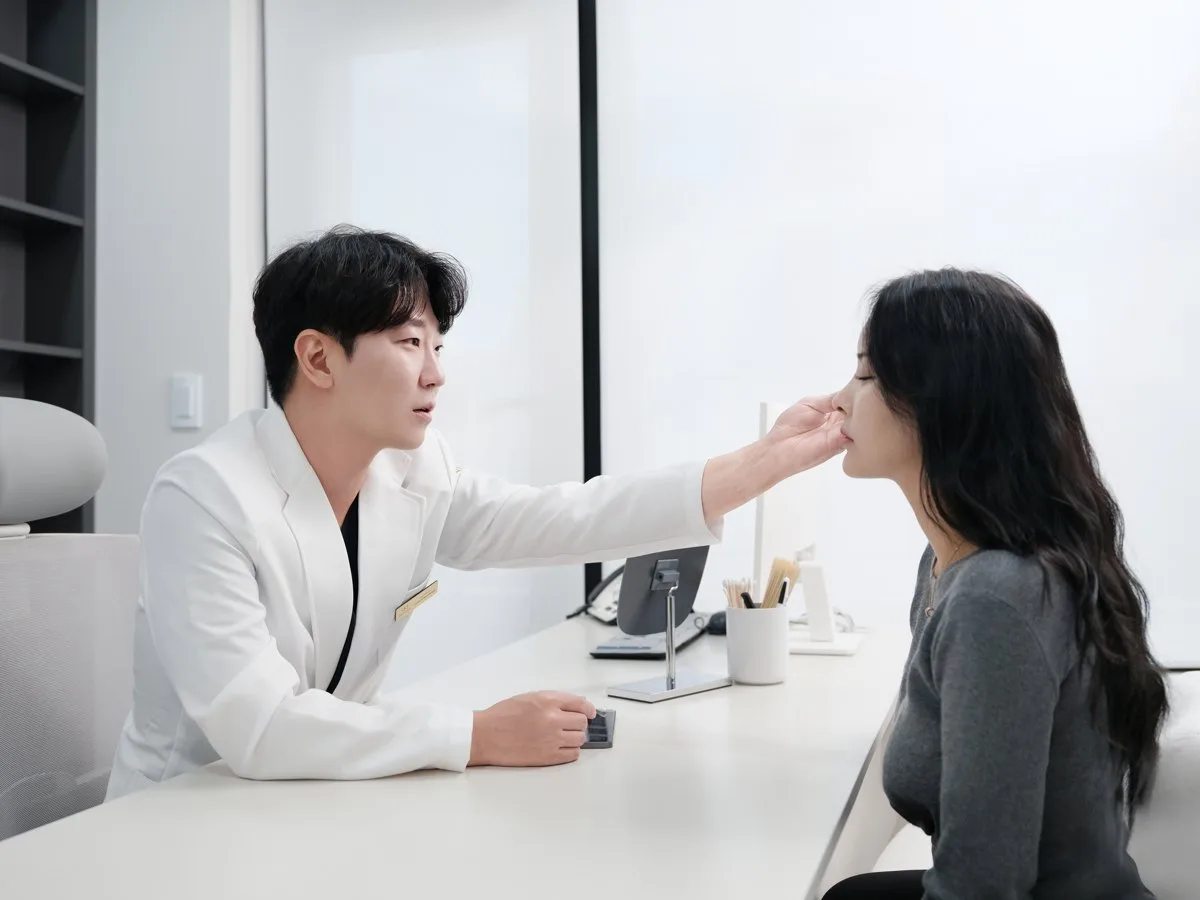
Consultation desk at Rewind Plastic Surgery where the inner corner and scar history are assessed
Fig. 03 — Scar history is taken before the design
Theatre

Theatre and recovery

Where the inner-corner line is closed and first rested

Prepared procedure room at Rewind Plastic Surgery, Apgujeong

Fig. 04 — The room is set before the corner is marked

Private recovery room with a bed at Rewind Plastic Surgery

Fig. 05 — A quiet room to rest after surgery

Rewind is located in the Richro Building, 4th and 5th floors, in Apgujeong, Gangnam, Seoul, and works by appointment on Monday, Tuesday, Wednesday and Friday from 10:00 to 19:00 and on Saturday from 10:00 to 16:00. The medical director performs the closure himself, and the reviews at which the line is checked are booked with him as well.

Incision placed in the epicanthal fold
Design set against the medial canthus
Closure sutured inward along the line
Suture removal day set at follow-up
Line reviewed across six to twelve months
Operated by Dr. Jonghwan Choi
Dr. Jonghwan Choi, board-certified plastic surgeon

Board-certified plastic surgeon

Dr. Jonghwan Choi holds Korean board certification in Plastic Surgery and closes every inner-corner incision at Rewind himself. The clinic is registered with KHIDI for international patients under Reg. M-2025-01-08-09288.

Cost

Pricing

What an epicanthoplasty costs in Seoul, and where scar care fits

The inner corner is quoted as its own line. Most of the care a scar needs afterwards is time, protection and review, and any question about extra treatment for a line that matures poorly is answered by the surgeon at consultation.

Medial epicanthoplastyThe inner-corner release whose line this page describes
₩1,200,000
Lateral, lower or upper canthoplastyA different corner, opened from the conjunctival side
₩1,200,000
Non-incisional double-eyelid creaseWhen the upper lid is part of the same plan
₩1,200,000

List prices, VAT excluded; each figure already includes anaesthetic fees. Nothing for scar management is added to a quote without being explained and agreed first, and how follow-up reviews are arranged is set out when the plan is written.

Fit

Suitability

Who accepts the trade-off of an inner-corner scar, and who should not

When the line is usually worth discussing

  • A fold hiding a large part of the inner corner, so the change gained is substantial
  • Brows set wide, with the eye reading short and closed from side to side
  • A crease already done, with the length of the eye still the unsatisfying part
  • Patience for a line that looks worse at first and takes six months to a year to settle
  • Readiness to keep hands off the corner and to attend every review

When Rewind advises against it, or asks to wait

  • Eyes already close together, where little is gained in return for the line
  • Pink corner tissue that is already prominent, which the release would expose further
  • A personal history of scars that thicken, redden or widen for months
  • An event, a photo shoot or long travel planned for the early months, when the line is at its most visible
  • Pregnancy, an eye infection, or a medicine or health condition that slows wound healing or increases bleeding
After

Scar care

Caring for an epicanthoplasty scar through the first year

Rewind's published instruction for its eye-opening procedures is brief: keep your hands away from the operated corner, and allow at least six months, up to a year, before the result is settled. The clinic's aftercare sheets for several other eyelid and facial incisions add sunscreen to limit pigmentation of a healing line; ask at your review whether the same applies to your corner.

Early period
No touching, no rubbing
The corner is left alone after surgery. Clean around it as you are shown, and keep make-up away until the surgeon clears it.
First months
Pink, firm, noticeable
A young line at the inner corner reads darker and firmer than its final form. This stage is expected; a line that is getting thicker or more raised should be shown at review.
Six months
Worth a first judgement
Six months is Rewind's minimum for a settled corner. Photographs taken earlier show a line still changing, so comparisons made then tend to cause needless worry.
Twelve months
Final line, and any revision talk
Stabilisation can take a full year. A conversation about revising the corner or its line belongs after this, following a re-examination.

Any surgical procedure carries risk. For this operation the named risks are bleeding, infection, swelling, asymmetry between the two corners, a scar that rises or stays prominent, and a corner opened wider than planned. Undoing a release is more difficult than the original operation. Mention every earlier eye operation, any scar of yours that healed poorly and any regular medication at consultation.

Doctor

Professional

At Rewind, one board-certified plastic surgeon carries every case — from the first consultation to the final follow-up. Because a face is a story, and a story deserves a single author.

Dr. Jonghwan Choi, board-certified plastic surgeonRewind,
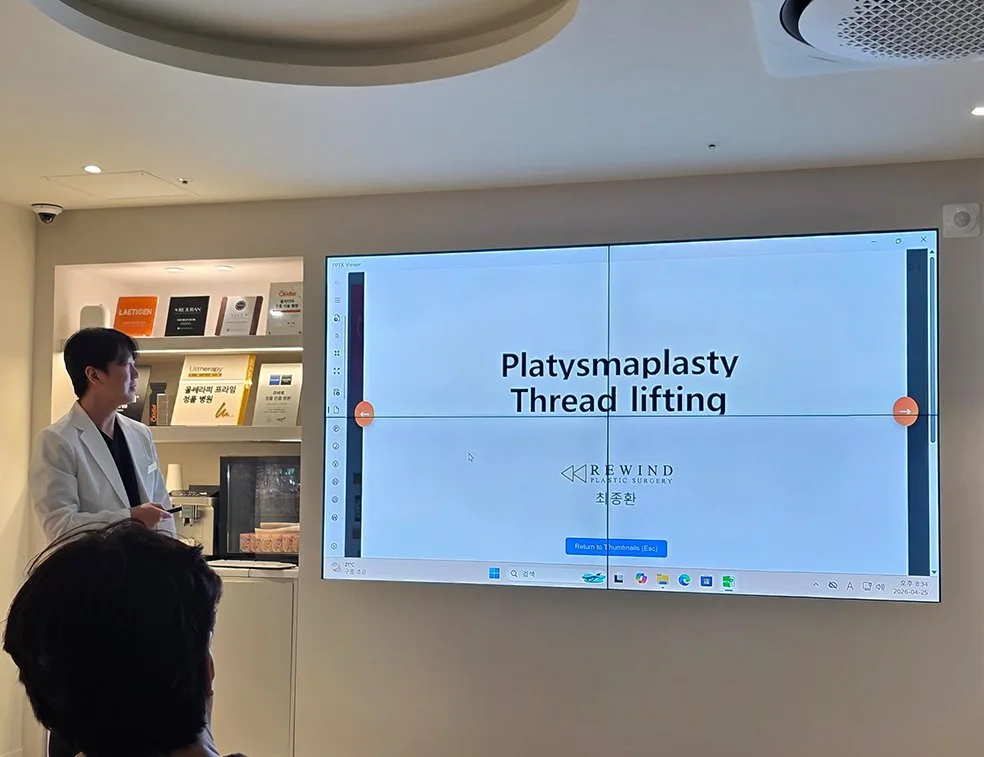
Dr. Jonghwan Choi presenting at an academic session
Fig. 06 — Academic presentation, thread-lifting session

Rewind's Doctor

Dr. Jonghwan Choi Medical Director

One surgeon, from the first
consultation to the last follow-up.

A board-certified plastic surgeon devoted to anti-aging lifting — with the precision and restraint built through years of craniofacial practice.

Board-certified plastic surgeon (Plastic Surgery)
10 peer-reviewed publications
Medical Director, Rewind Plastic Surgery
Korean Society of Plastic & Reconstructive Surgeons
Former chief director, Apgujeong Y&T Plastic Surgery
Korean Society for Aesthetic Plastic Surgery
J Craniofac Surg · JKMS · Arch Craniofac Surg
Korean Cleft Palate-Craniofacial Association
Ask

Questions

Epicanthoplasty scars: what patients ask about the line

Will people be able to see my epicanthoplasty scar?
In the first months, often yes at close range, because the line is pinker and firmer while it matures. How visible it is after the settling period of six months to a year depends on the design, individual healing and aftercare. Rewind closes the line inward along the corner, but no particular appearance can be promised to anyone.
Which epicanthoplasty technique leaves the least noticeable line?
There is no single answer for every fold. Published designs vary, including ones that avoid a vertical line and ones that trim a small triangle of skin to reduce thickening, and each suits certain folds. Rewind's own method is an inward incision closed inward along the corner; the surgeon explains at examination which variation fits your eye.
What is a hypertrophic scar, and why is it discussed for this operation?
It is a line that heals raised, firm and red while staying within the borders of the wound. The inner corner is a recognised site for it after this operation, and much of the published work on epicanthoplasty aims to reduce it. Tell the surgeon if your scars have thickened before, and show any rising line at review.
Does scar-prone skin rule out the operation?
Not automatically. A history of lines that thickened or stayed red is asked about at consultation and weighed against how much the release would gain for your particular fold. Where the gain would be small and the risk of a thickened line is high, Rewind may advise against the operation.
Should sunscreen go on the corner while it heals?
Rewind's aftercare sheets for several other incisional eye and face operations ask for sunscreen to help prevent pigmentation of a healing line. No separate sheet is published for the inner corner, so confirm at your review what applies to you. Until then, avoid rubbing any product into the corner itself.
At what point can I tell whether the line has healed well?
Rewind allows at least six months, and up to a year, for the corner to settle. Colour and texture keep shifting before six months, so an early photograph is a weak guide. A fair first assessment comes at six months, and the final one toward the end of the year, made with the surgeon.
Can a visible epicanthoplasty scar be revised?
Revision is discussed only after the settling year and a re-examination, because a line keeps changing for months. Adjusting an inner corner is harder than the first operation, and the options depend on whether the concern is the line itself or the shape of the corner. The surgeon quotes any revision after examining the healed corner.
Does adding a double eyelid crease mean more scarring?
Each operation makes its own line in its own place: the corner release beside the nose, and an incisional crease inside the fold of the lid, while a buried crease is done without a skin incision. Combining them in one visit leaves each line where it would be anyway, though two areas are then healing at once.
Voices

Google Reviews

What our patients say.

G 5.0 ★★★★★ 51 Google reviews · Rewind Plastic Surgery, Apgujeong — live-synced from Google Business Profile
★★★★★

Came to REWIND to get my facial treatment and i'm absolutely obsessed about it💞 the doctor is so kind and is an expert! Everyone must visit!

YunHee Hong2 weeks ago
★★★★★

There are just way too many cosmetic clinics in Korea and I'm so happy I found Rewind Clinic in Gangnam. Dr. Choi was so kind and patient while explaining the different face-lifting options, from threads to mini-lifts to deep-plane lifts…

J. S.5 months ago
★★★★★

I found Rewind clinic through a Korean chat forum and many local clients highly recommended it. The clinic is brand new, featuring large, clean rooms and many private waiting areas so it doesn't give off that "factory" clinic vibe. All the…

J. Siou5 months ago
★★★★★

Really nice environment. Doctor is easy to communicate and understands my visions. Waited two weeks to make a review and I confirm the results exceeded my expectations and I am super happy with it. Can't wait to come back!! :))

Kristie Chu5 months ago
★★★★★

I received a thread lift at Rewind Plastic Surgery. The clinic was clean and the atmosphere was comfortable. The consultation was thorough, and I felt confident because they kindly explained everything tailored to my facial condition. They…

한주연2 weeks ago · Translated by Google
Booking

Reservation

REWIND,booking

Tell us what you are considering — we reply as soon as possible, in your language.

Visit

REWIND,visit

For international patients — interpreter-assisted, from your first message to your follow-up.

Location
Apgujeong, Gangnam
4F & 5F, Richro Building,
812 Nonhyeon-ro,
Gangnam-gu, Seoul
Hours
Mon·Tue·Wed·Fri 10:00–19:00
Sat 10:00–16:00
Closed Sundays & Thursdays
Lunch 12:00–13:00
Consultation
In your language
WhatsApp · Instagram
Interpreter-assisted
consultations available
Registration
KHIDI Registered
Registered institution for
international patients
Reg. M-2025-01-08-09288

Scientific evidence

Studies on limiting the inner-corner line after epicanthoplasty

Three of the four papers set out inner-corner designs whose stated aim is a smaller, flatter or less noticeable line, which reflects how central the scar is to this operation. The fourth reviews complications in Asian crease surgery. Each reports its authors' own technique and patients; none concerns Rewind, and none can forecast how a particular corner will heal.