★★★★★
Came to REWIND to get my facial treatment and i'm absolutely obsessed about it💞 the doctor is so kind and is an expert! Everyone must visit!
 YunHee Hong2 weeks ago
Surgery · Combined Eye Plan
Width and crease, decided at one examination
Apgujeong, Seoul | Board-certified plastic surgeon, Dr. Jonghwan Choi
Two operations, one sitting, two separate lines · KHIDI-registered for international patients
Epicanthoplasty with double eyelid surgery
The short answer
It can be. Rewind plans the two in one sitting when the examination supports both, and the decision is made for each eye on what that examination finds. A shared session means one set of measurements weighs the corner and the crease against each other, the crease line is chosen with the planned corner in view, and a single recovery period covers both. A staged route suits an eye where only the crease is clearly needed, or where the corner question can wait until the crease has settled; Rewind also operates on inner corners for patients whose earlier crease left the eye looking short. Whichever route is chosen, each operation keeps its own line on the quotation.
Descriptions on this page come from Rewind's Korean pages for eye-opening procedures and for the non-incisional crease, and from the clinic's post-operative instructions for eyelid surgery. Anaesthesia, operating time and the day stitches are removed are not published for either operation, so none of them is stated here.
The two operations answer different complaints. A crease changes the upper lid: whether a fold forms, how high it sits and how much of the iris the lid leaves visible. The inner corner changes the horizontal length of the eye opening, by releasing the fold of skin that runs across it. An eye can need one, the other or both, and the useful work of a combined consultation is working out which.
Before & After
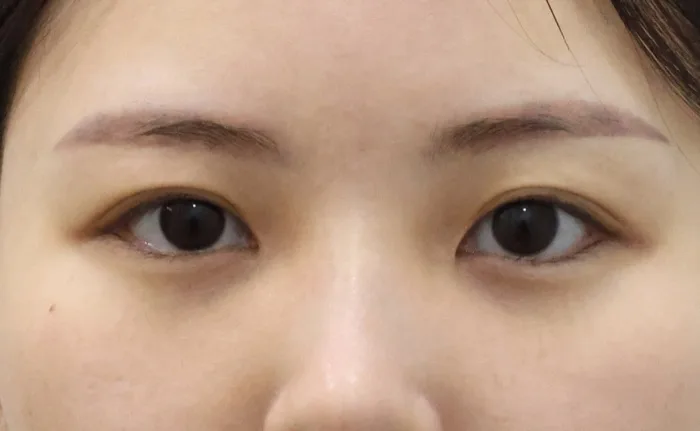
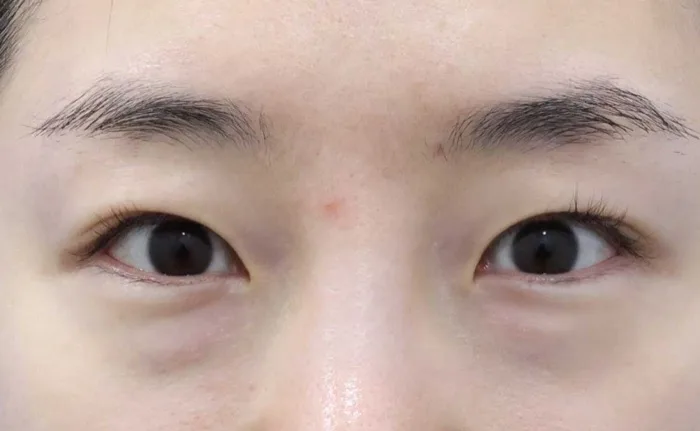
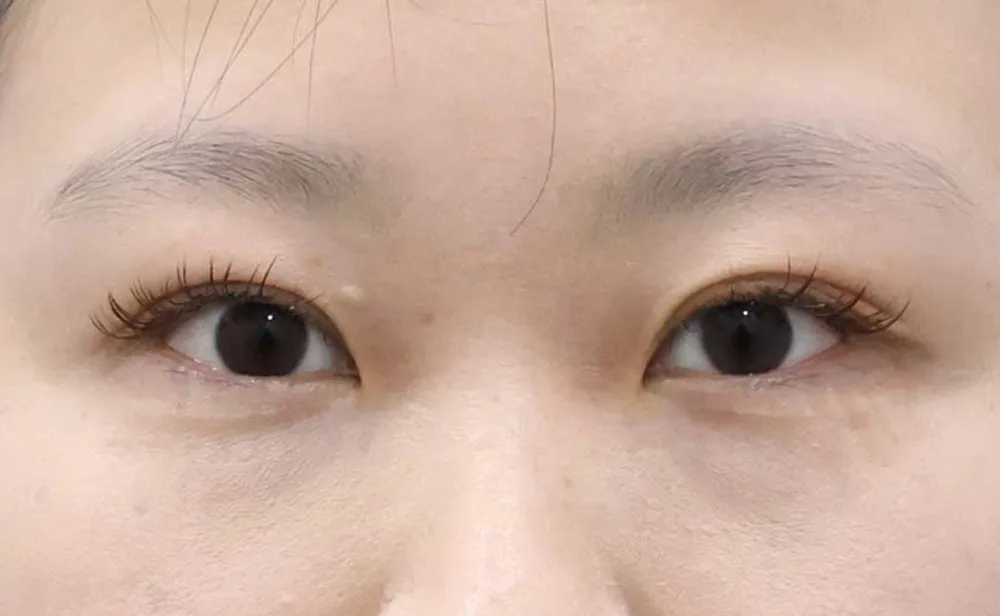
The first two patients had a non-incisional crease with the inner corner released in the same session, and the second also had fat under the eyes repositioned. The third had the corner alone and is placed here as a reference: in her pair the lid is unchanged, so what you see is the corner by itself. Comparing the third case with the first is the quickest way to separate what the crease contributed from what the corner did. Make-up also differs between visits in the first case, where the after image shows eyeliner, so read the corner and the fold line and ignore the lashes.
 BEFOREAFTER
 BEFOREAFTER
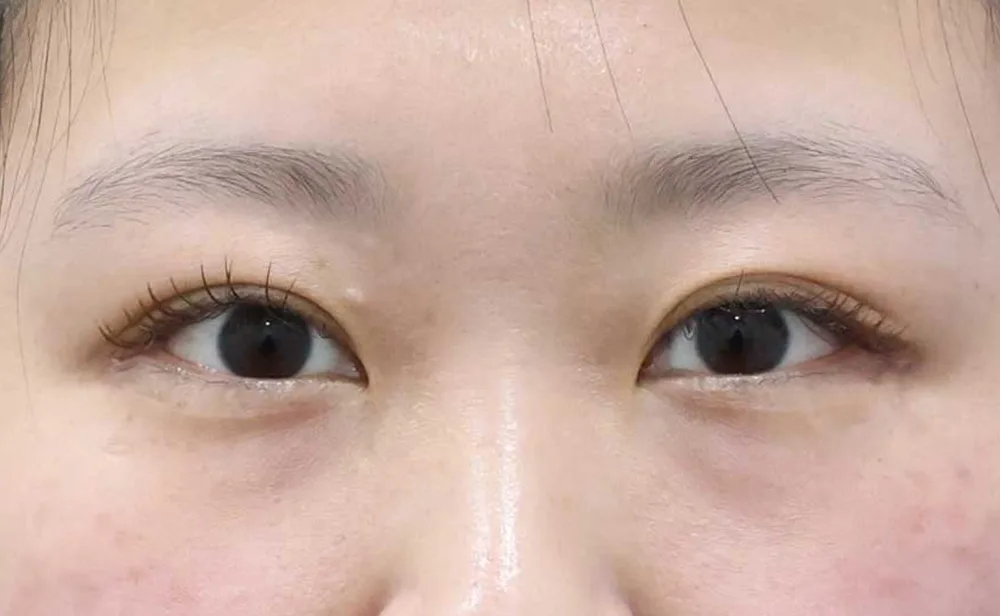 BEFOREAFTER
These are Rewind patients, photographed at the clinic. No case forecasts yours. After a combined session the risks of both operations apply: bleeding, infection, swelling, asymmetry, a crease that heals higher, lower or thicker than planned or loosens, a visible line at the inner corner and a corner opened further than intended.
Two directions
Most confusion about combining these operations comes from treating them as one "eye-opening" procedure. They work in different directions, on different tissue, and sometimes a third structure is responsible for what the patient dislikes.
The crease methods, and how one is chosen for a given lid, are explained on the double eyelid surgery page. Where the examination finds the lid margin itself sitting low, the relevant operation is ptosis correction, which is planned on its own merits even when a corner and a crease are also on the table.
One examination, two designs
A combined plan is two designs made at one sitting, each allowed to veto the other. The order below is the order of the consultation, not the order of the operation, which the clinic does not publish.
A lid that makes the eye look sleepy, covers part of the field of vision, leaves less than about 80% of the iris visible, or recruits the brow every time the eye opens points at the crease. A fold hiding the inner corner, with the brows set wide apart, points at the corner.
Lid thickness and the fat above the eye decide between the buried method and a partial or full incision. The corner is released the same way whichever crease it joins, so adding it does not push a patient toward a more invasive crease.
Rewind offers four crease line designs: in-line, semi-outline, in-out-line and outline. They differ in how the fold relates to the inner end of the eye, which is exactly where the corner release works, so the line is picked with the planned corner in view. The clinic publishes no fixed rule pairing a released corner with one particular design.
The extent of the release is marked for each eye, the fold is incised inward along the design and the line is closed inward. How far inward it travels is the central judgement, and it is made with the finished crease in mind.
Corners that already sit close together, or pink tissue already prominent at the inner corner, remove the corner from the plan while the crease goes ahead. A lid that needs no crease leaves a corner-only plan. Nothing is kept for the sake of a matching pair.
When both are clearly indicated, they can share one sitting. When the corner is borderline, it can wait until the crease has settled and the eye can be read again; the clinic operates on corners for patients whose crease is already in place.

Why one examination
Planning the two separately invites a crease designed for an eye that will later change shape, or a corner opened to fix something that was really a lid problem. One examination, one surgeon and one written plan avoid both mistakes.
Corner distance, fold coverage, lid thickness and iris exposure are taken once and used for both operations. The crease line and the corner release are then drawn to fit a single eye, instead of two separate ideas of it.
The corner instruction and the crease instructions run side by side from the same day, so a traveller plans around one set of follow-up visits. The longer settling period of the corner still applies, and it is explained before the date is set.
Dr. Jonghwan Choi, a board-certified plastic surgeon, carries the whole plan; no part of it is handed to a second operator. International patients are cared for in their own language at a KHIDI-registered clinic.
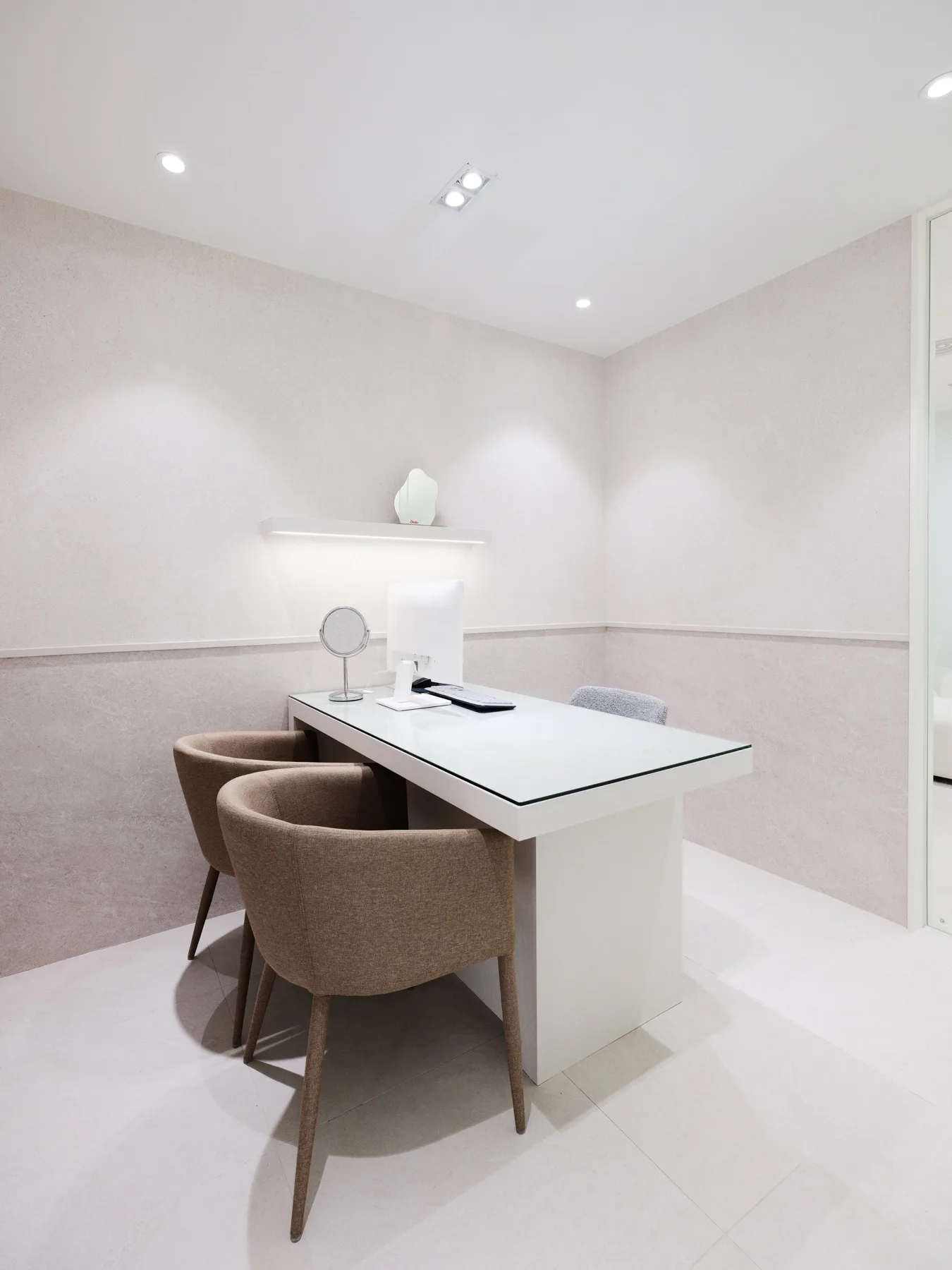
The combined session
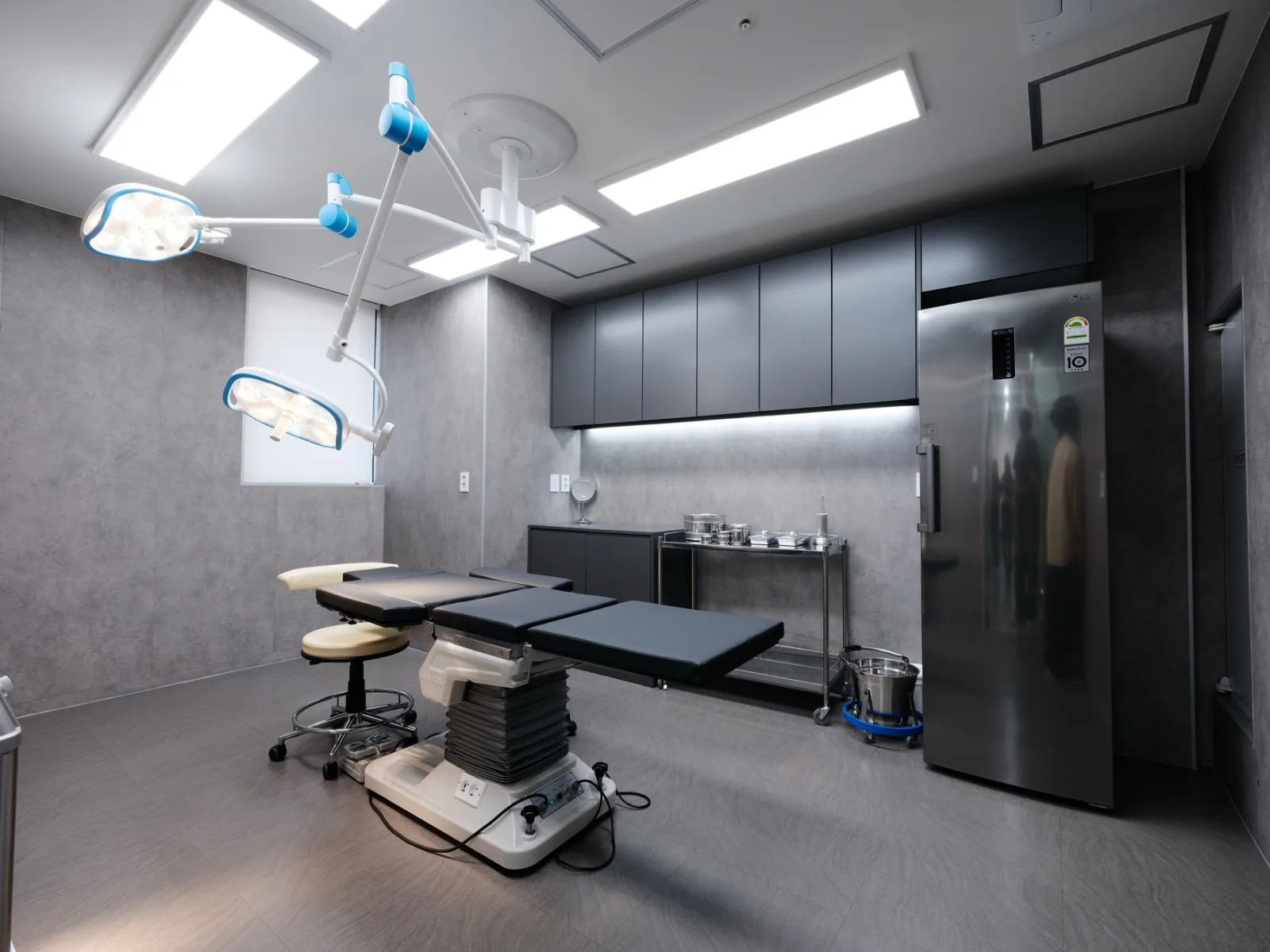
Fig. 04 — The clinic's own operating room
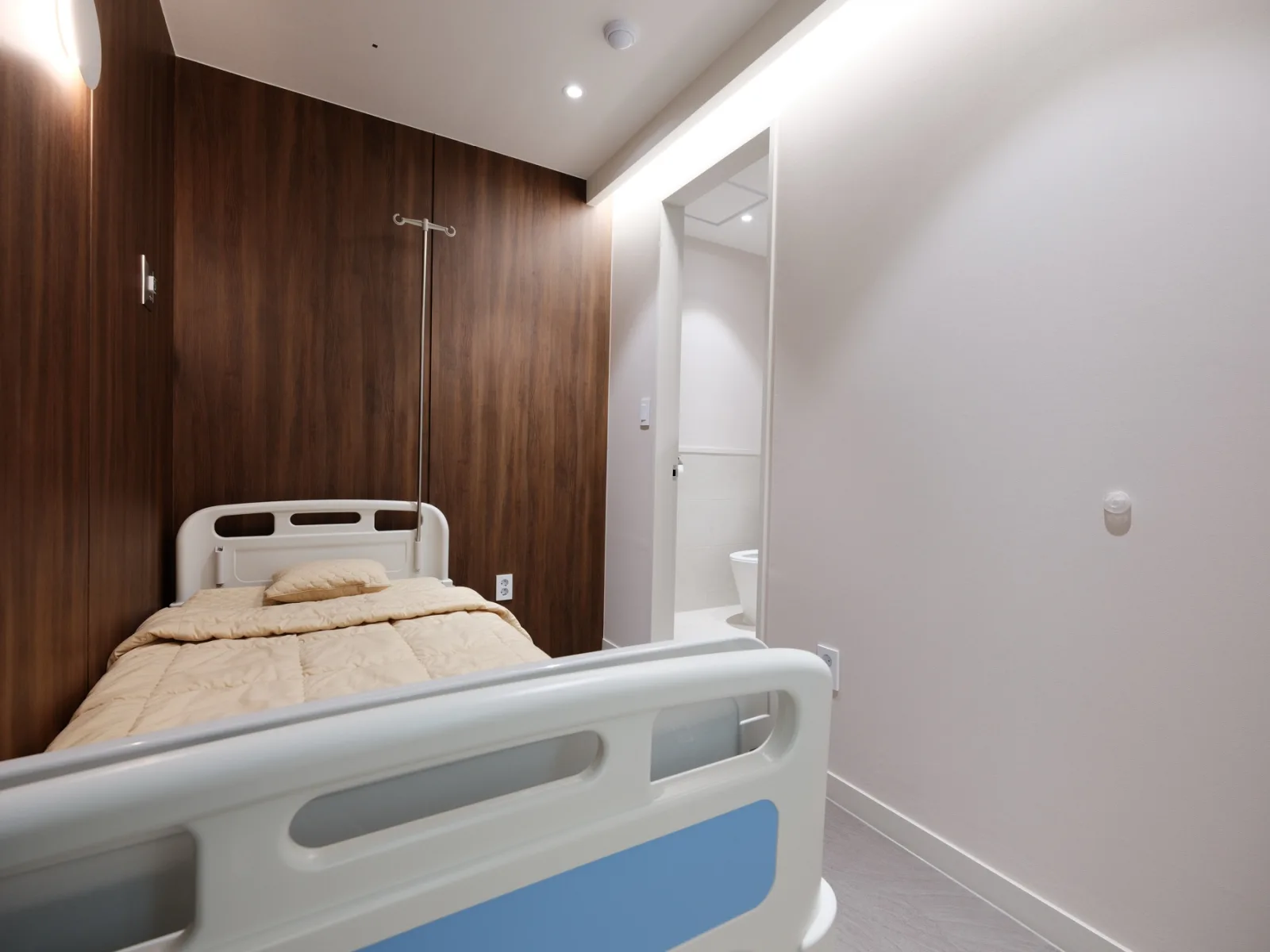
Fig. 05 — A private room for resting after surgery
Both operations take place in the clinic's own operating room on the fourth and fifth floors of the Richro Building in Apgujeong, Gangnam. The session is planned as a whole, but the two operations are still recorded and priced as two. Consultations for eye surgery are held on Monday, Tuesday, Wednesday and Friday until 19:00, and on Saturday until 16:00, by appointment only.

Board-certified plastic surgeon
Dr. Jonghwan Choi is certified in plastic surgery in Korea and operates both the crease and the corner in a combined session himself. Patients coming from abroad are received under Rewind's KHIDI registration, M-2025-01-08-09288.
Published rates
A combined plan is priced by adding the lines it contains. The corner is one line; the crease is another at whichever method the lid needs; under-eye work, when it joins, is a third. There is no combined package figure, so a plan can be read and trimmed line by line.
Standard listed figures with VAT excluded; the anaesthetic fee is included in each. The rate list gives a figure per operation and no discount for combining them, and every line of a combined plan is written out before a surgical date is offered.
Suitability
Two sets of instructions
After a combined session, the corner instruction and the crease instructions apply at the same time, and the stricter one wins wherever they overlap. The timeline below follows a non-incisional crease, the method used in both combined cases on this page; an incisional crease carries its own sheet.
Combining operations combines their risks: bleeding and haematoma, infection, prolonged swelling, asymmetry between the eyes, a crease that loosens after a knock or hard rubbing, a fold that heals higher or thicker than planned, a visible or thickened line at the inner corner, and a corner opened further than intended. Tell the surgeon about every earlier eye operation and medication before a date is agreed.
At Rewind, one board-certified plastic surgeon carries every case — from the first consultation to the final follow-up. Because a face is a story, and a story deserves a single author.
 Rewind,
Rewind's Doctor
Dr. Jonghwan Choi Medical Director
One surgeon, from the first
consultation to the last follow-up.
A board-certified plastic surgeon devoted to anti-aging lifting — with the precision and restraint built through years of craniofacial practice.
Questions
Google Reviews
Came to REWIND to get my facial treatment and i'm absolutely obsessed about it💞 the doctor is so kind and is an expert! Everyone must visit!
YunHee Hong2 weeks agoThere are just way too many cosmetic clinics in Korea and I'm so happy I found Rewind Clinic in Gangnam. Dr. Choi was so kind and patient while explaining the different face-lifting options, from threads to mini-lifts to deep-plane lifts…
 J. S.5 months ago
I found Rewind clinic through a Korean chat forum and many local clients highly recommended it. The clinic is brand new, featuring large, clean rooms and many private waiting areas so it doesn't give off that "factory" clinic vibe. All the…
 J. Siou5 months ago
Really nice environment. Doctor is easy to communicate and understands my visions. Waited two weeks to make a review and I confirm the results exceeded my expectations and I am super happy with it. Can't wait to come back!! :))
 Kristie Chu5 months ago
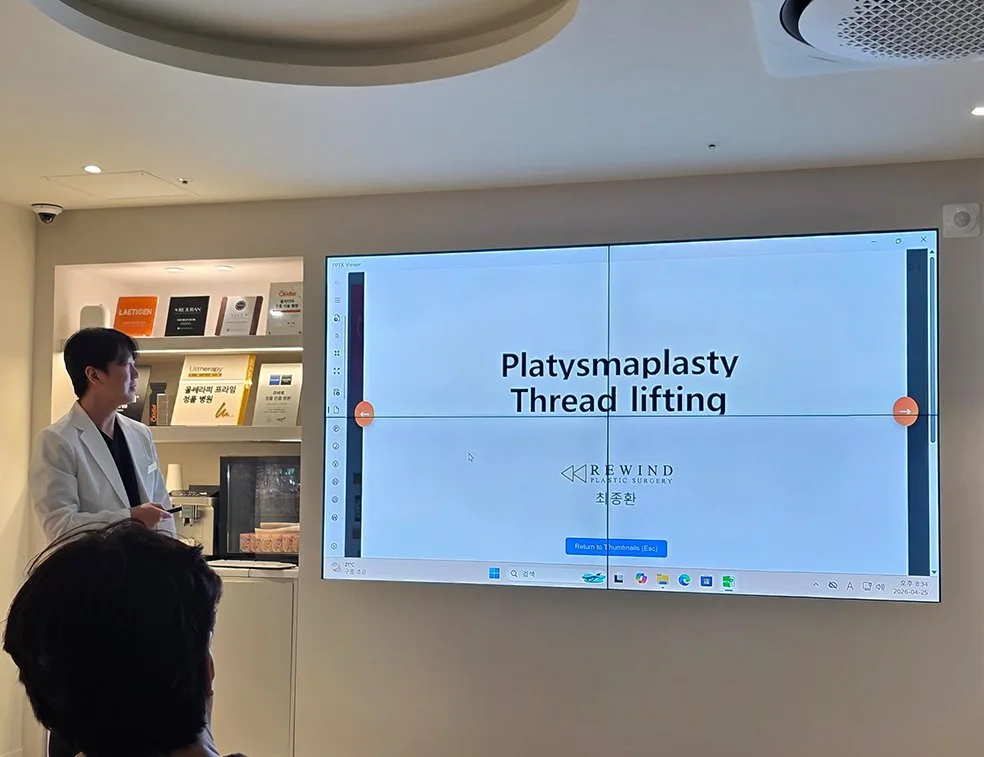
I received a thread lift at Rewind Plastic Surgery. The clinic was clean and the atmosphere was comfortable. The consultation was thorough, and I felt confident because they kindly explained everything tailored to my facial condition. They…
Reservation
Tell us what you are considering — we reply as soon as possible, in your language.
For international patients — interpreter-assisted, from your first message to your follow-up.
Scientific evidence
The first paper describes a medial epicanthoplasty design intended to avoid a vertical scar. The other three concern the crease side of a combined plan: a buried non-incisional technique, a five-year review of crease surgery combined with another eyelid correction in one sitting, and a systematic review of small-incision crease techniques. They report other surgeons' results and predict nothing about an individual eye.