Surgery · Case photographs
Three Rewind lower lids, and what the frames can and cannot tell you
Gangnam, Seoul | Board-certified plastic surgeon, Dr. Jonghwan Choi
Unretouched clinic pairs, every procedure named · KHIDI-registered for international patients
Eye bag surgery results
The short answer
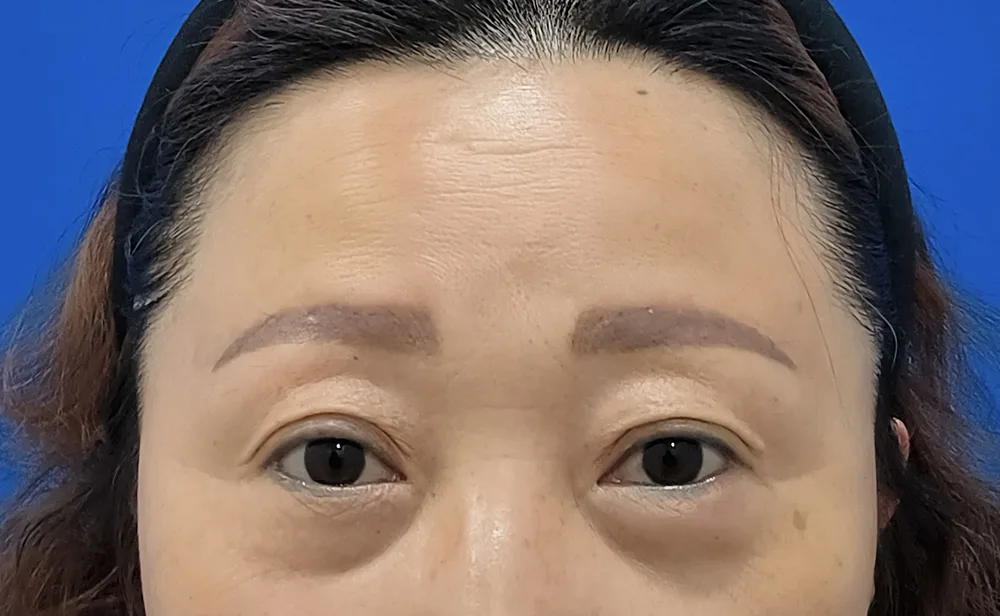
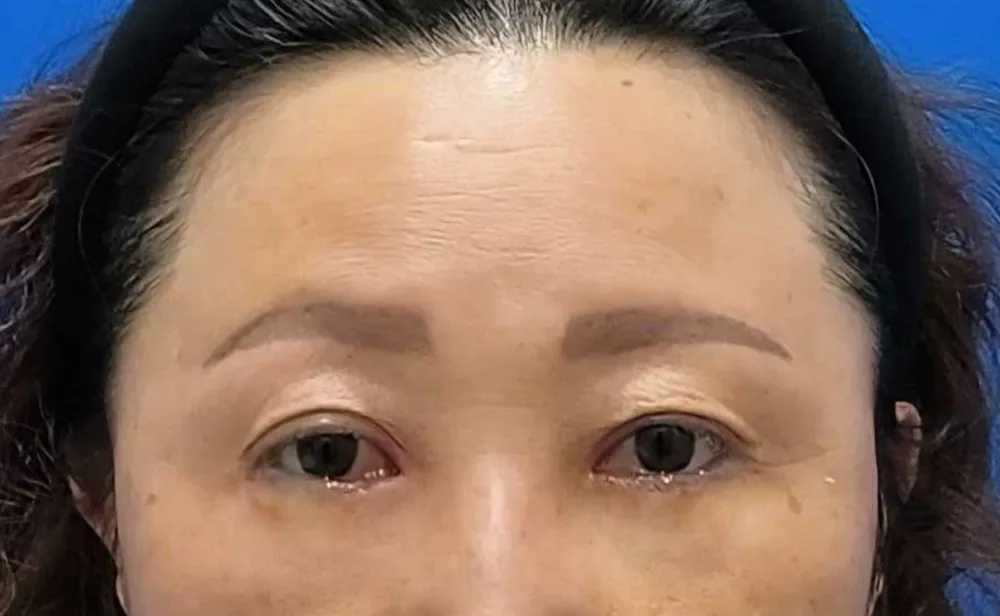
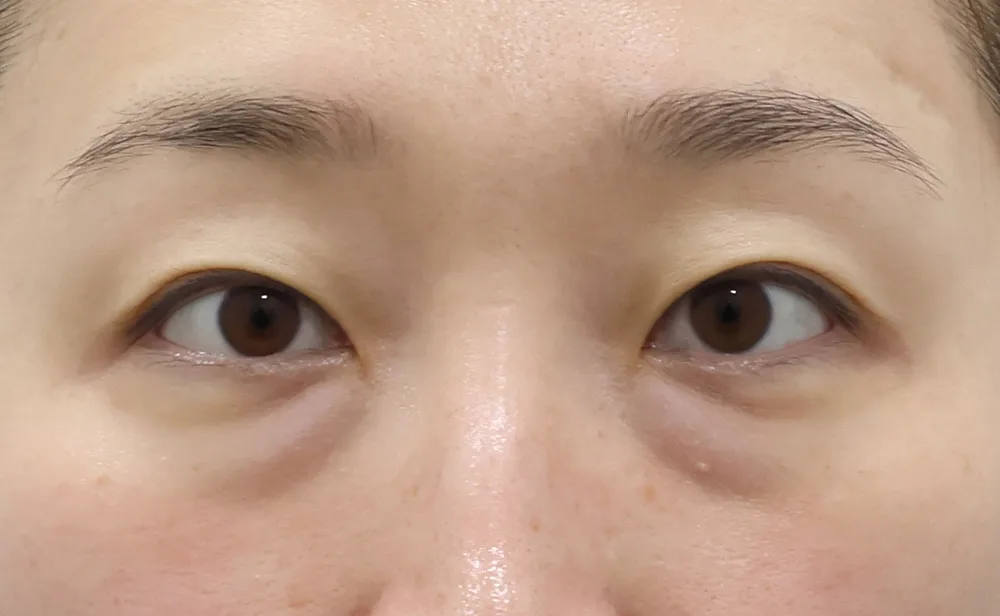
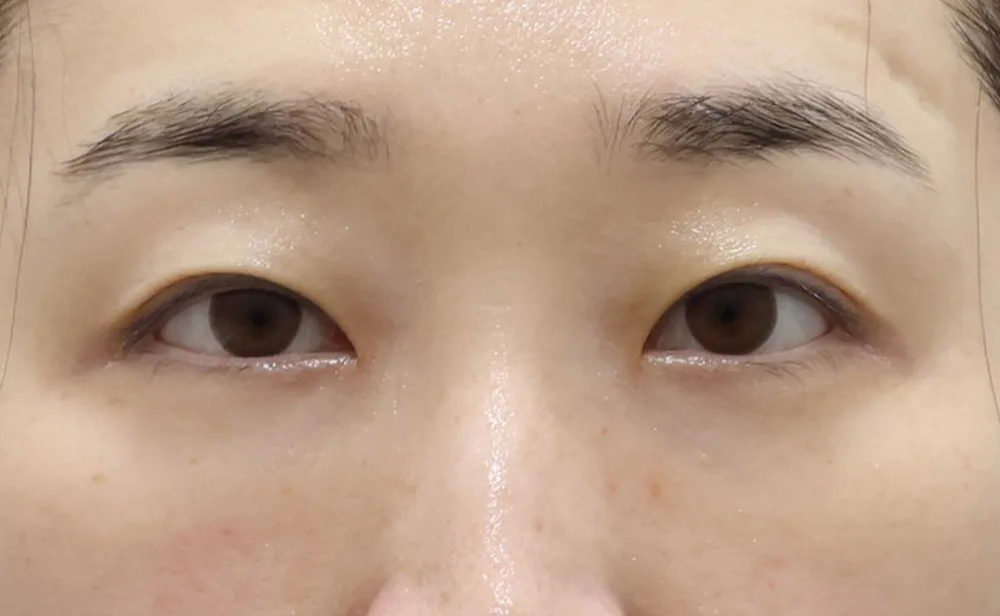
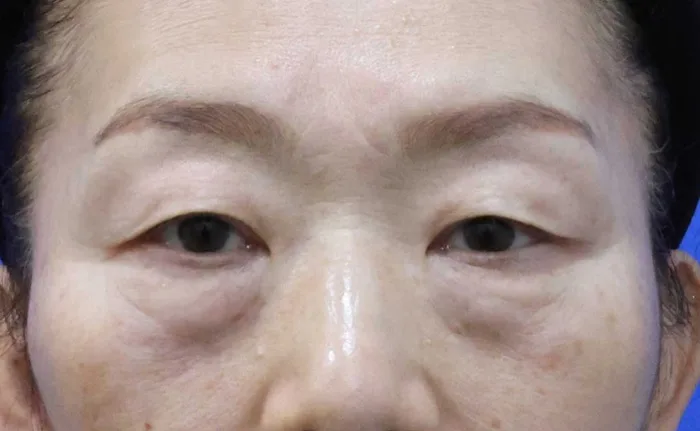
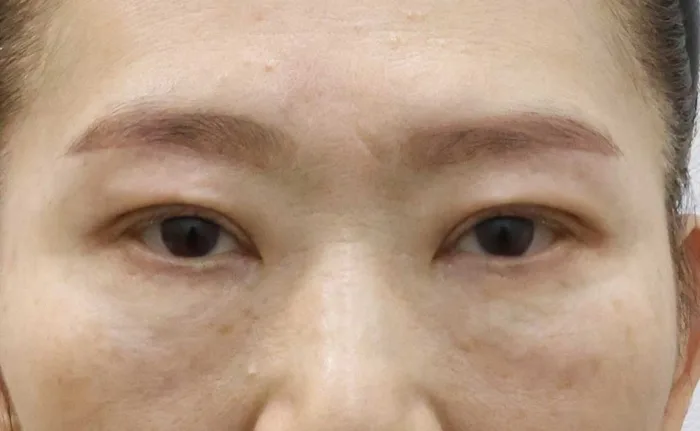
In Rewind's own pairs, the fat that bulged beneath the lower lid no longer pushes forward and the groove below it is shallower, so lid and cheek read as one surface. The shadow the bulge used to cast is reduced, because there is less of a ledge for overhead light to catch. What the frames do not show is a change in the colour of the skin itself: where darkness is pigment, it remains. The clinic's own explanation of dark circles is that they occur mostly where skin is thin, and that flattening the fat beneath it helps. Every pair on this page names all procedures performed in the session and is published unretouched.
All pairs are Rewind patients photographed at the clinic in Apgujeong. Captions list every procedure from the session concerned.
How much of the dark shadow disappears depends on how much of it the bulge was making. A lower lid whose darkness is mostly shadow can change a great deal in a photograph; a lid whose darkness is mostly pigment changes in contour and keeps its colour. Reading a pair with that in mind keeps expectations tied to the right finding.
Case photographs
The first two pairs are repositioning performed on its own, so the change in them belongs to the lower-lid operation. The third also had upper blepharoplasty in the same session; the upper lid changed too, and that operation is named so the difference around the whole eye is not credited to the lower lid alone. Framing differs from case to case.
BEFOREAFTER
BEFOREAFTER
BEFOREAFTERRewind's own patients, published unretouched, each before frame paired with an after frame of the same person. Individual results may vary, and no pair forecasts another face. Bleeding, bruising, prolonged swelling, asymmetry, altered sensation, scarring and changes in lower-lid position can follow eyelid surgery.
How to read a pair
A lower-lid pair repays a slow look in a fixed order. Four things, checked one at a time, separate what the operation changed from what the camera happened to catch.
Two more cautions apply to any under-eye photograph. The small roll directly beneath the lashes is a separate structure; Rewind states that repositioning does not remove it, though a smoother under-eye can make it less noticeable. And a still frame fixes one expression on one day, so a rested look in the second photograph is partly a matter of that day.
From step to frame
Each visible difference in a repositioning pair traces back to a published step of the operation. The ladder links them.
Rewind's first published step is an analysis of the lower lid before any fat is taken. The frames you compare were planned from that reading of bulge, groove and colour.
Freeing the ligament that pins the groove is what allows it to become shallower. In a pair, this is the part of the change seen below the old bulge.
The harvested fat is moved into the groove, so the tissue that made the ledge now fills the hollow. The ledge flattening and the groove filling are two views of this one step.
Drawing the septum down and securing it to the orbital bone strengthens the support behind the relocated fat. It is invisible in any photograph; its stated purpose is a stable position for the pad.
Early swelling and bruising decrease over one to two weeks in the clinic's record. A photograph from inside that window shows swelling as well as the operation. The interval at which each after frame here was taken is not stated in the captions, so ask at consultation.
The repositioning page publishes no duration. For lower blepharoplasty the clinic records more than five years with individual variation, while skin, cheek and colour go on ageing.

Why here
A case photograph is evidence only if you know what it is evidence of. The captions on this page exist to answer that before you look.
The third pair above included upper blepharoplasty. Naming it keeps the lower-lid change separate from the change above it, and stops a combined photograph from being read as a single-procedure result.
Each before frame is set beside an after frame of the same patient, confirmed by comparing features such as brow shape and marks on the skin before a pair is published. Frames that could not be matched are left out.
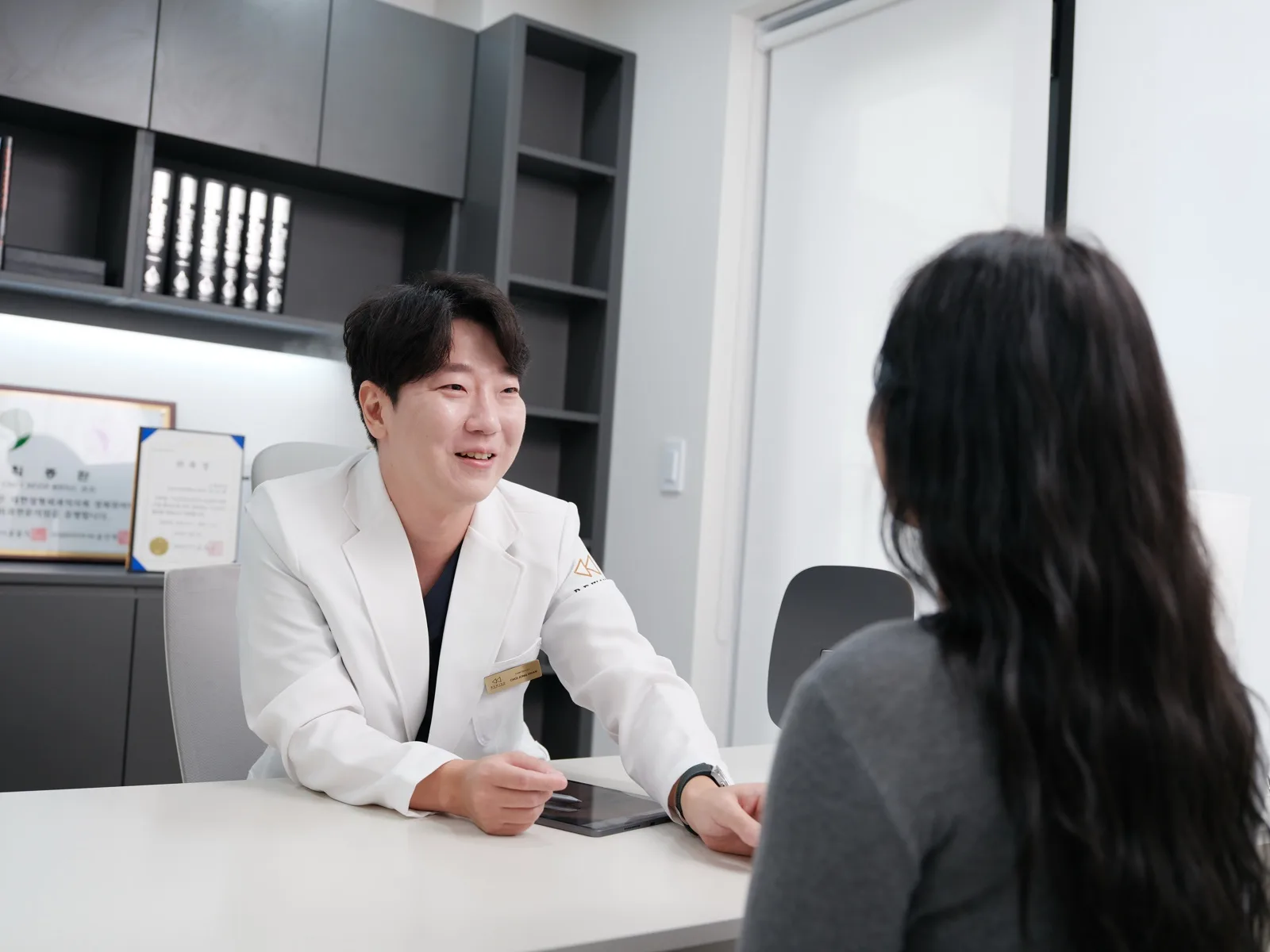
Rewind is a single-surgeon practice, so the cases are discussed with the medical director, Dr. Jonghwan Choi, a board-certified plastic surgeon. The clinic holds KHIDI registration M-2025-01-08-09288 for international patients.
At consultation

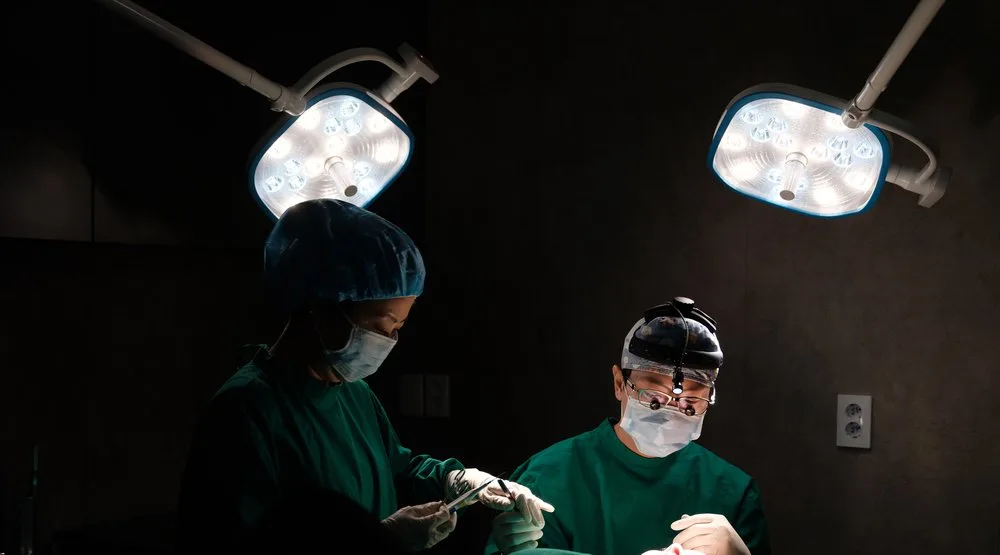
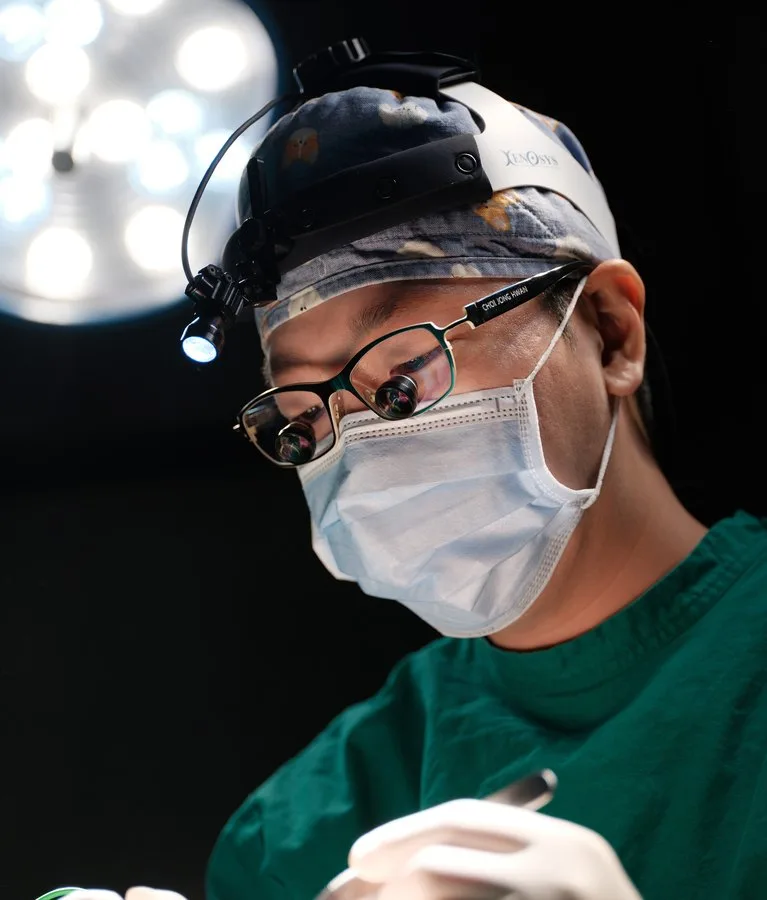
Fig. 04 — Lower-lid surgery in the Rewind theatre

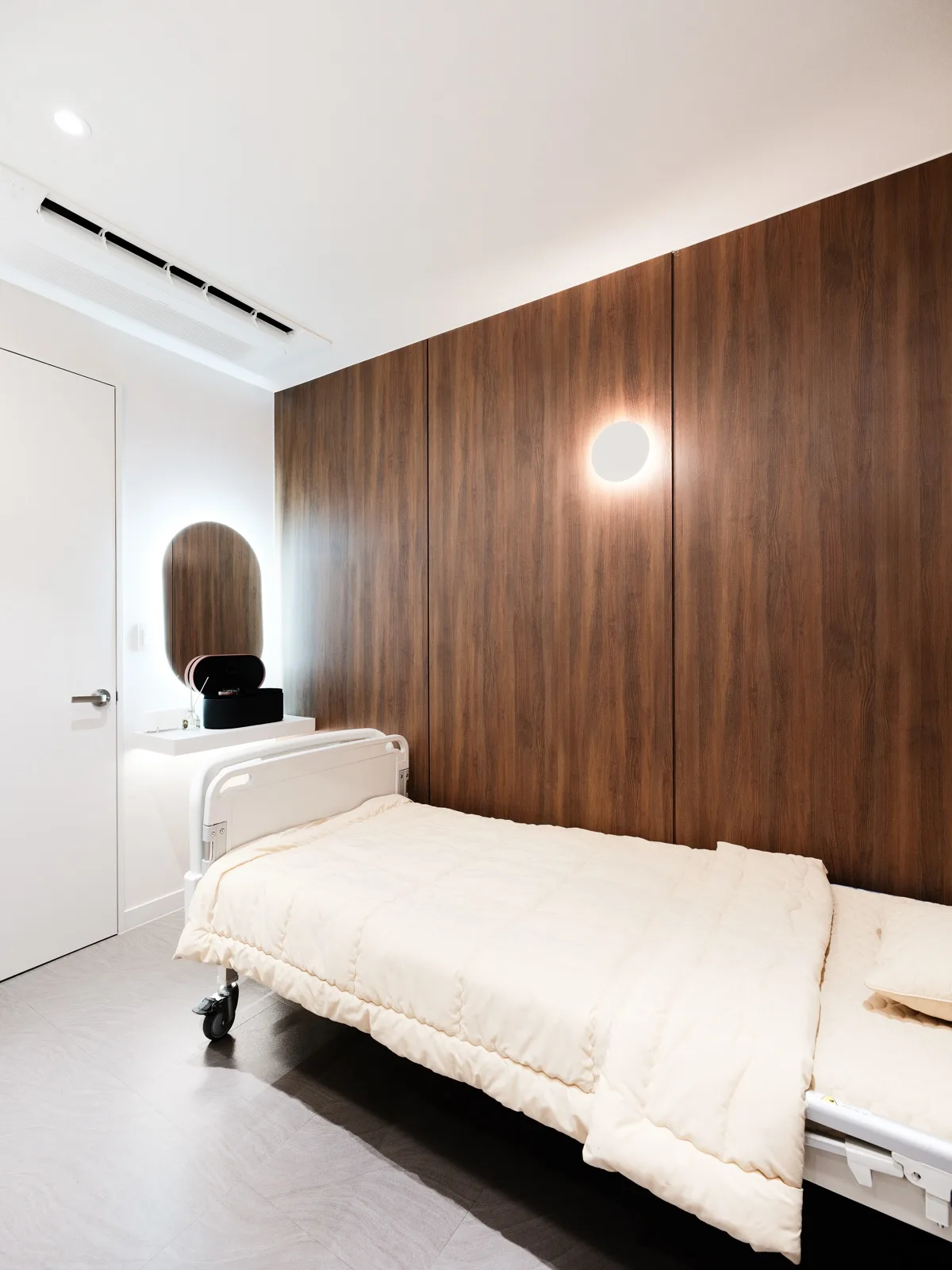
Fig. 05 — The recovery room after eyelid surgery
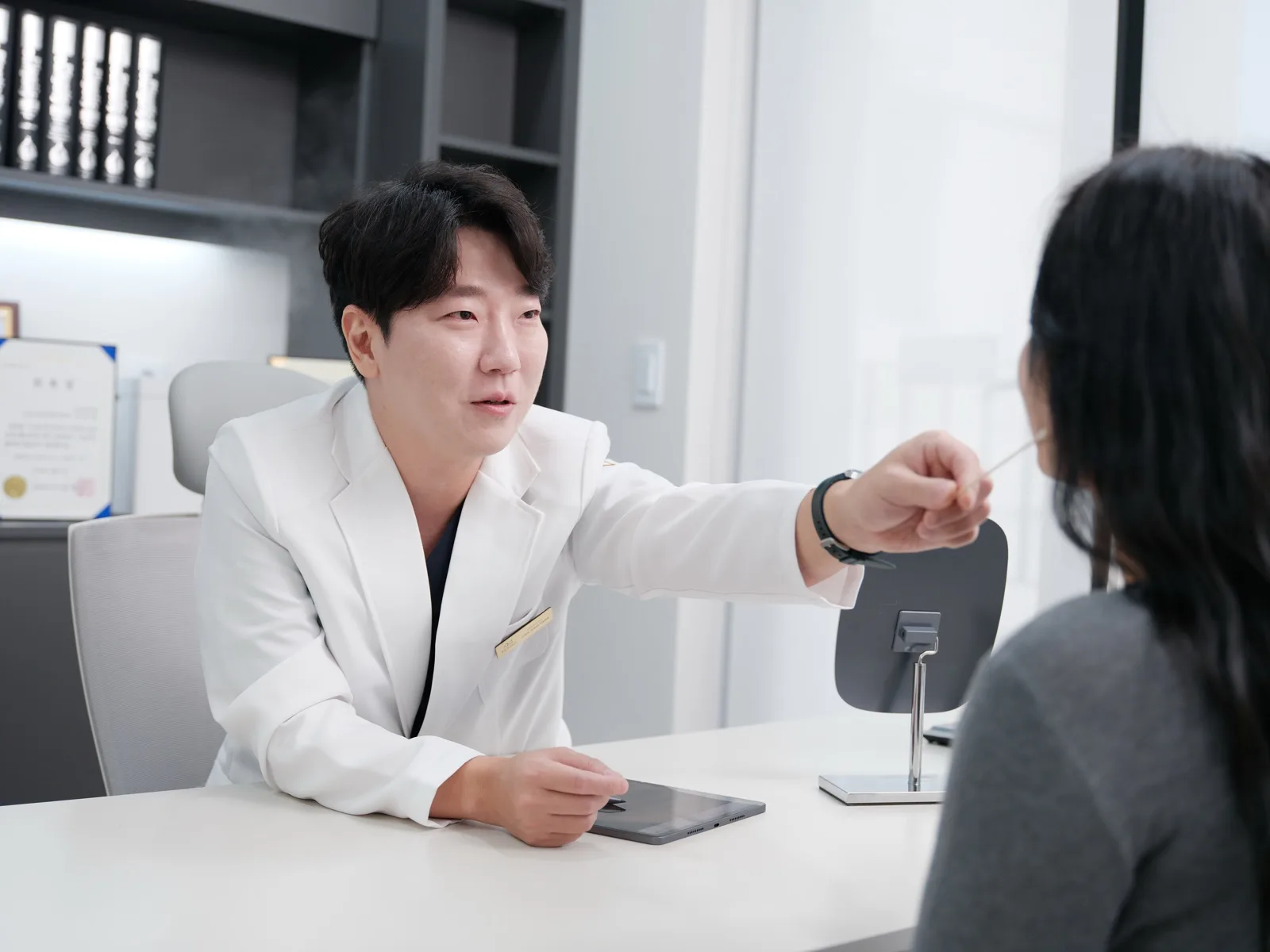
Consultations take place on the fourth and fifth floors of the Richro Building in Apgujeong, Gangnam, Seoul. Ask to see further lower-lid cases when you are examined; the most useful comparison is a case whose finding resembles yours, even if another pair is more striking.
Board-certified plastic surgeon
Dr. Jonghwan Choi is certified by the Korean board in plastic surgery and has co-authored ten peer-reviewed publications. Rewind's KHIDI registration for treating international patients is M-2025-01-08-09288.
Pricing
The procedures named in the captions correspond to separate lines on Rewind's list. Knowing which line a case belongs to is part of reading it.
A combined session such as the third case is quoted by naming each operation it contains. Which lower-lid line applies to you is decided at examination, whichever case you found most persuasive.
List rates, VAT excluded, anaesthetic fee included. The listing, or listings, are confirmed after examination.
Suitability
Recovery
The early days rarely resemble the second frame of a pair. Rewind's post-operative sheet for fat repositioning sets out what happens in between.
Risks to know before surgery include bleeding and haematoma, infection, swelling that persists, asymmetry between the sides, a groove left under- or over-corrected, altered sensation, dry eye and changes in lower-lid position. Results vary between individuals and cannot be promised.
At Rewind, one board-certified plastic surgeon carries every case — from the first consultation to the final follow-up. Because a face is a story, and a story deserves a single author.
Rewind,
Rewind's Doctor
Dr. Jonghwan Choi Medical Director
One surgeon, from the first
consultation to the last follow-up.
A board-certified plastic surgeon devoted to anti-aging lifting — with the precision and restraint built through years of craniofacial practice.
Google Reviews
"Sample review card — at launch this section pulls the clinic's real Google reviews automatically, shown verbatim with the reviewer's initial and posting date."
"Sample review card — reviews are never written or edited by the clinic; only what patients posted on Google appears here."
"Sample review card — a 'See all reviews on Google' link takes visitors to the clinic's Business Profile."
Questions
Reservation
Tell us what you are considering — we reply within one business day, in your language.
Scientific evidence
Three papers are listed because each qualifies what a lower-lid photograph implies: a technique paper on tear trough ligament release with fat redistribution, a series on the nasojugal groove co-authored by Rewind's medical director, and a review of preventing and correcting lower-lid malposition.
They report their own authors' patients and methods. None of them describes the patients photographed on this page, and none predicts how an individual lower lid will look at any interval after surgery.