★★★★★
Came to REWIND to get my facial treatment and i'm absolutely obsessed about it💞 the doctor is so kind and is an expert! Everyone must visit!
 YunHee Hong2 weeks ago
Surgery · Graft Retention
How much of a graft stays, and why the answer varies
Gangnam, Seoul | Board-certified plastic surgeon, Dr. Jonghwan Choi
Retention explained from published research · KHIDI-registered for international patients
Fat graft survival
The short answer
No single percentage holds for every face. Published studies of fat grafting report widely varying retention, because the share of fat that establishes a blood supply depends on how it was harvested and prepared, how it was placed, which region received it and the patient receiving it. Rewind Plastic Surgery has not published a survival rate for its own grafts, so this page gives no figure and explains the factors behind the variation.
Sources: the published papers listed at the foot of this page, and Rewind's post-operative instructions for fat grafting. A retention figure for grafts carried out at this clinic is not published.
Survival rate is the question most often searched about fat grafting, and the one most often answered with a confident number. A percentage lifted from a study is hard to apply without the region that was grafted, the method used to measure it and the time that had passed. Studies differ on all three: some measure volume with three-dimensional imaging, some rely on photographs, and follow-up ranges from months to years.
What a patient can use is a clear picture of what happens to grafted fat, which conditions tend to help it survive, and how a plan allows for the part that does not. The sections below take those in turn. The operation itself, region by region, is described on the facial fat grafting page.
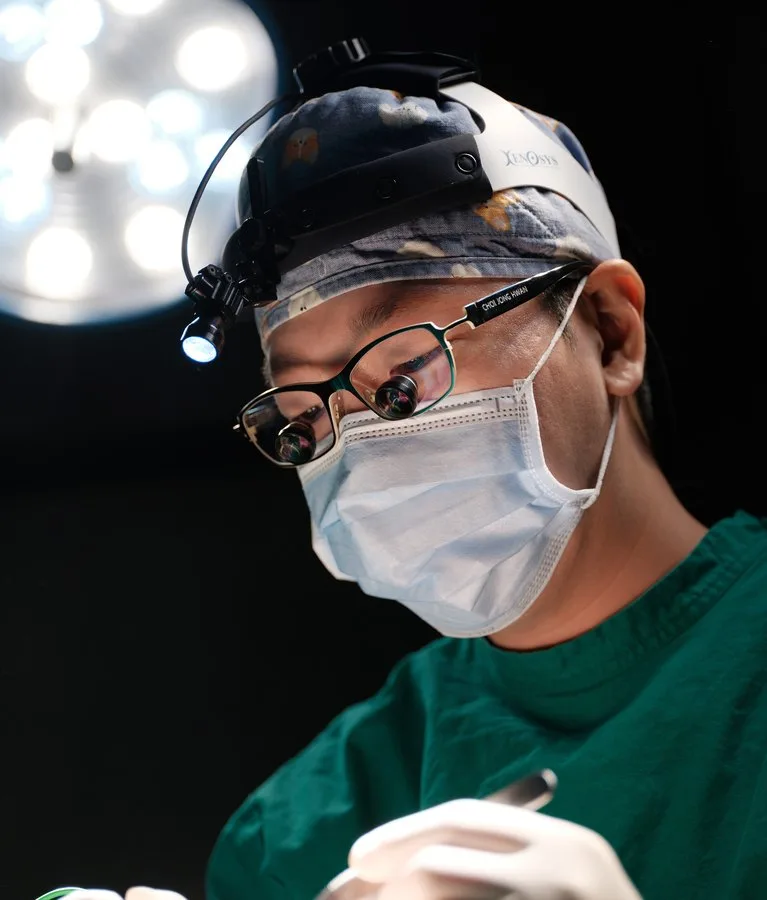
Patient photographs
A retention claim is only as good as the photographs behind it, and Rewind has not released fat grafting pairs for publication. None are shown here, and no case from another operation fills the space.
A useful retention photograph has two features that a quick result shot lacks. The second frame is taken long after the swelling has gone, because volume seen in the first weeks is partly fluid. And the time since surgery is printed beside it. When grafting cases are published, those are the details to look for; at a consultation, ask how long after surgery any photograph you are shown was taken.
Individual results may vary. Part of every graft is reabsorbed, and the amount differs between people and between regions. Asymmetry, lumps and oil cysts are possible. A consultation with the doctor is required before any decision.
Variables in the literature
The grafting literature keeps returning to the same group of variables. Some sit with the surgeon, some with the patient, and some with the region itself.
After placement
The sequence below describes grafted fat as a class of tissue, drawn from the surgical literature. Rewind publishes no timeline of its own beyond the recovery instructions on its post-operative sheet, and no timing here should be read as the clinic's protocol.
Once placed, each parcel depends on the tissue around it for oxygen and nutrients until new vessels grow in. The smaller and better spread the parcels, the more of each one lies close enough to be fed.
For the first weeks the treated regions look fuller than they will stay. Rewind's sheet expects bruising and swelling to ease within one to two weeks, and volume judged during that period overstates what has taken.
Parcels that fail to establish a blood supply are broken down and cleared by the body. This is the loss that survival rates try to measure, and published series disagree on how large it is.
The fat that survives becomes part of the surrounding tissue. The literature describes this settling over the months after surgery; the clinic publishes no date at which it regards a graft as stable, so the timing of review is agreed with the surgeon.
At review the surgeon compares the region with the plan. If more volume would help, a further session is discussed. Rewind's fee schedule carries a listing with a second session for plans where one is expected from the outset.
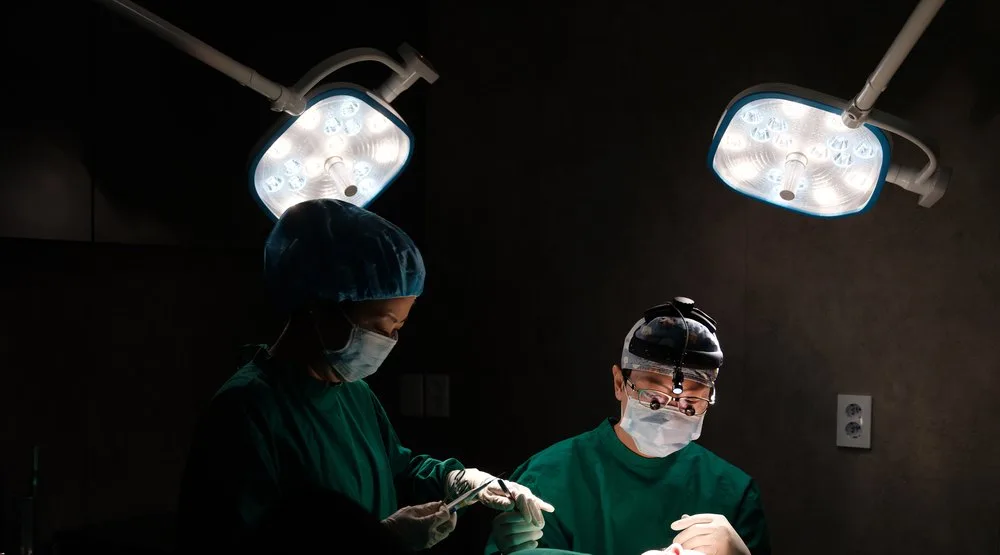
Why here
Retention cannot be fixed in advance, so the plan has to leave room for it. Three habits at the clinic follow from that.
Rewind has not published a survival percentage, and none is offered at consultation as a promise. What you hear instead is which of the factors on this page apply to your face and to the regions being grafted.
For plans where a second pass is likely, the schedule's listing with a second session sets out the cost before the first operation. Whether that pass is actually needed stays a clinical judgement at review.
Dr. Jonghwan Choi, the board-certified plastic surgeon who places the graft, also sees it at every review. Judging retention needs a memory of what was placed and where, and that memory sits with the person who placed it.
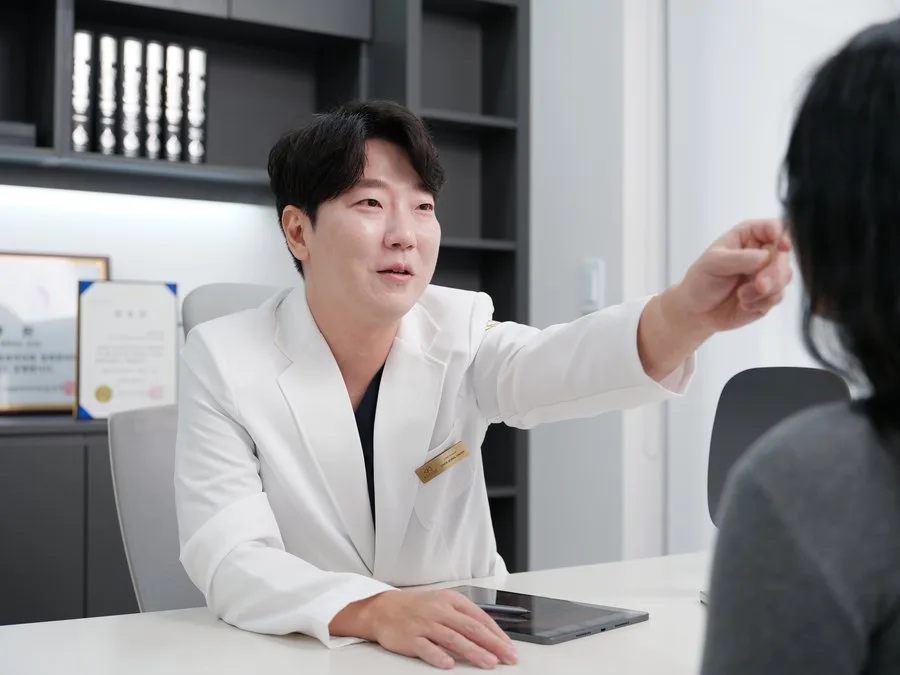
In the operating room
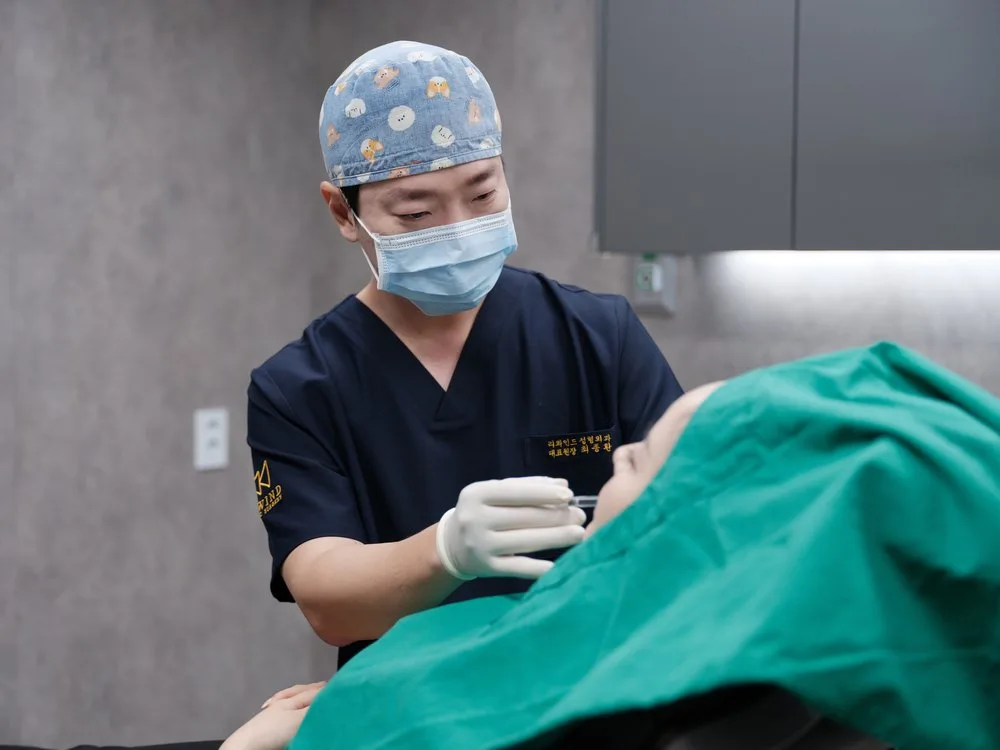
Fig. 04 · Preparation before a surgical case

Fig. 05 · A private room for rest after surgery
Harvest, preparation and placement happen in one session in the clinic's theatre on the fourth and fifth floors of the Richro Building, Apgujeong. Reviews take place in the same building with the same surgeon. For a retention question that matters: the person comparing the region with the plan is the person who drew the plan.

Board-certified plastic surgeon
A board-certified plastic surgeon, author of ten peer-reviewed papers and the only operating surgeon at a practice registered with KHIDI for international patients under M-2025-01-08-09288.
Pricing
Retention and price meet at one point on the schedule: the listing with a second session built in. The regional listings sit beside it so a patient can see what a further pass would involve.
List prices, VAT excluded, anaesthetic fee included. The second-session listing is priced slightly below two separate sessions and depends on the regions in the plan.
Suitability
Recovery
Rewind's instructions for fat grafting read differently once the retention question is in mind. Each of the four protects fat that has not yet found a blood supply.
Complications after facial fat grafting include fat necrosis, oil cysts, palpable lumps, asymmetry, over-correction or under-correction, infection, donor-site changes and rare vascular events. Some of these also reduce retained volume. No retention figure can be promised for an individual.
At Rewind, one board-certified plastic surgeon carries every case — from the first consultation to the final follow-up. Because a face is a story, and a story deserves a single author.
 Rewind,
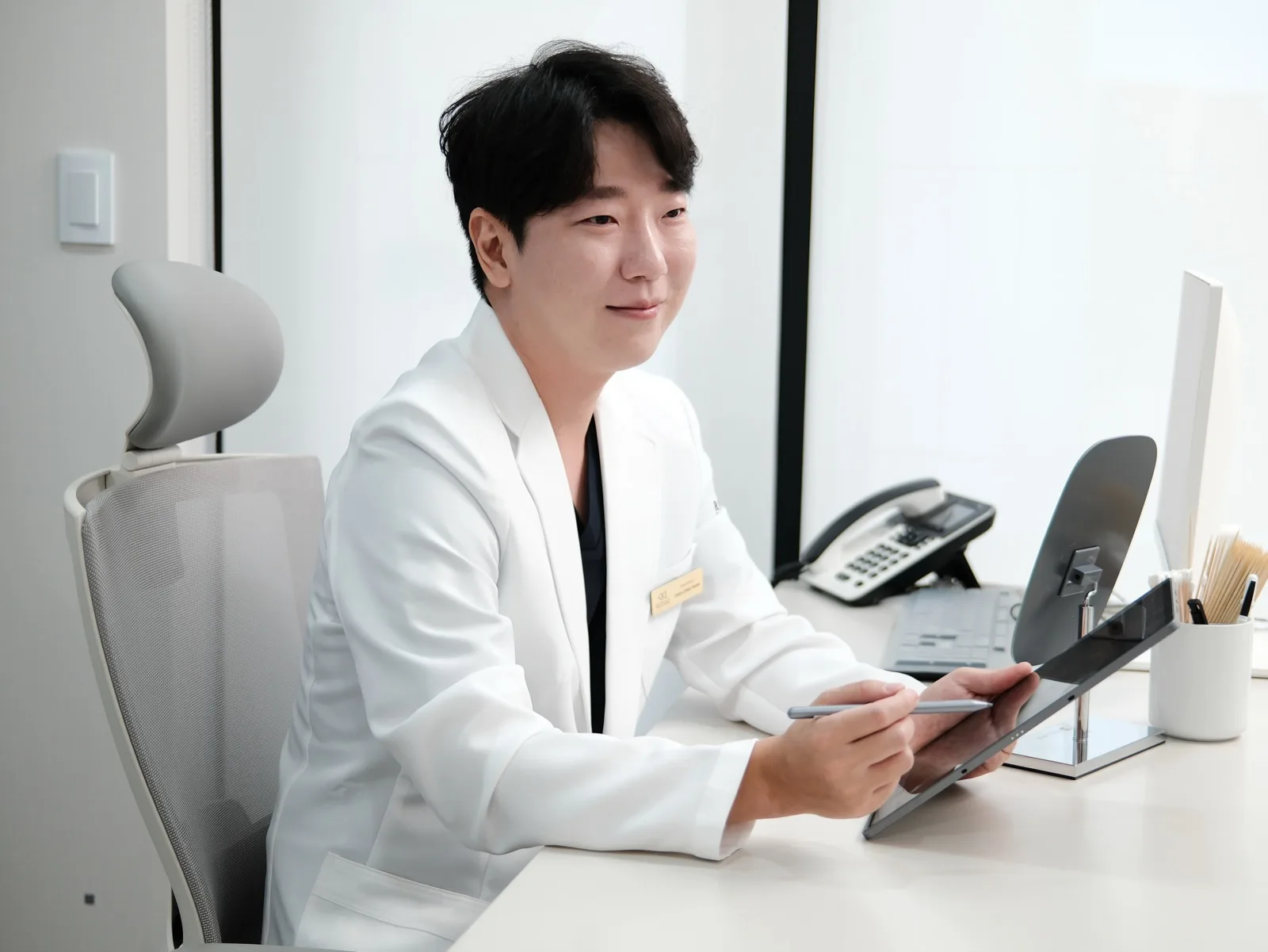
Rewind's Doctor
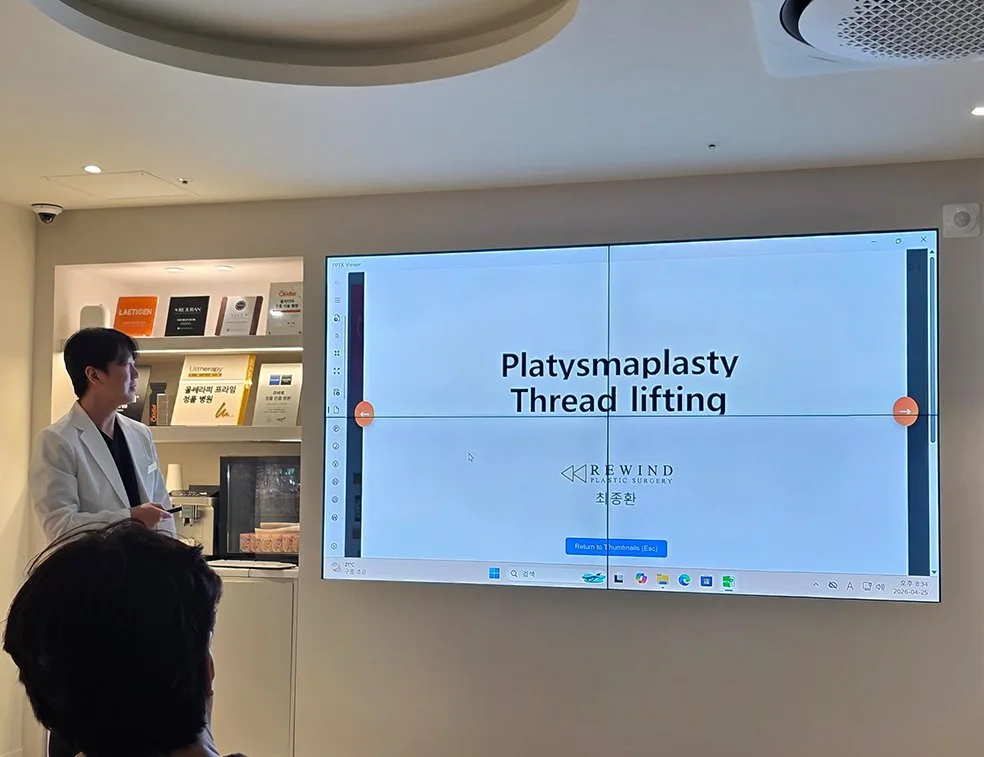
Dr. Jonghwan Choi Medical Director
One surgeon, from the first
consultation to the last follow-up.
A board-certified plastic surgeon devoted to anti-aging surgery, with the precision and restraint built through years of craniofacial practice.
Questions
Google Reviews
Came to REWIND to get my facial treatment and i'm absolutely obsessed about it💞 the doctor is so kind and is an expert! Everyone must visit!
YunHee Hong2 weeks agoThere are just way too many cosmetic clinics in Korea and I'm so happy I found Rewind Clinic in Gangnam. Dr. Choi was so kind and patient while explaining the different face-lifting options, from threads to mini-lifts to deep-plane lifts…
 J. S.5 months ago
I found Rewind clinic through a Korean chat forum and many local clients highly recommended it. The clinic is brand new, featuring large, clean rooms and many private waiting areas so it doesn't give off that "factory" clinic vibe. All the…
 J. Siou5 months ago
Really nice environment. Doctor is easy to communicate and understands my visions. Waited two weeks to make a review and I confirm the results exceeded my expectations and I am super happy with it. Can't wait to come back!! :))
 Kristie Chu5 months ago
I received a thread lift at Rewind Plastic Surgery. The clinic was clean and the atmosphere was comfortable. The consultation was thorough, and I felt confident because they kindly explained everything tailored to my facial condition. They…
Reservation
Tell us which regions you are considering, and whether you smoke. We reply as soon as possible, in your language.
For international patients — interpreter-assisted, from your first message to your follow-up.
Scientific evidence
Four references are listed: a long-term study measuring the volume retained after fat grafting, a review separating microfat from nanofat, a review of complications after facial fat grafting, and an objective measurement study after grafting to the temple and forehead. They describe grafting in general. None gives a retention figure for patients treated at Rewind.