
★★★★★
Came to REWIND to get my facial treatment and i'm absolutely obsessed about it💞 the doctor is so kind and is an expert! Everyone must visit!
 YunHee Hong2 weeks ago
Non-Surgical · Injectables · Expression Lines
The lines, the brow above them, and the per-area rate
Gangnam, Seoul | Board-certified plastic surgeon, Dr. Jonghwan Choi
KHIDI-registered for international patients · Apgujeong Rewind
The horizontal lines
The short answer
The horizontal lines across a forehead are folds pressed into skin by one broad sheet of muscle that runs from the hairline to the brows. Botulinum toxin placed in that sheet softens how hard it pulls, and the folds shallow out as the skin stops being creased on every expression. Rewind lists expression areas one by one, so a forehead is quoted as a single area, with value-added tax charged on top of the listed figure.
Source: the clinic's Korean page for this injection, which records an effect of three to six months and dosing matched to each patient's structure.
One fact governs everything else on this page: the sheet that draws those lines is also the only muscle that lifts your eyebrows. Softening it too far, or too low, trades a smooth forehead for a heavier brow. The rest of the toxin menu is set out on the botulinum toxin page.
Four areas, one balance
The clinic prices expression regions individually, and the upper face contains several. They are listed apart because they behave apart: one lifts, the others pull down, and a plan that treats only the lifter changes the balance between them.
Planning the upper face
Every consultation for this area begins with the same request: raise your brows, then frown, then relax. What the surgeon is measuring is how much of your open-eyed look is being supplied by the forehead muscle working overtime.
A line that vanishes when the forehead relaxes is a movement line, and relaxing the muscle is the right instrument. A groove still visible in a still face has been printed into the skin over years; softening the muscle slows its deepening and may shallow it slowly, and nothing about the injection erases it that week.
Published work sorts patients into distinct contraction patterns in the region between the brows and matches the injection points to each pattern. The same logic governs the forehead: the depressors that pull the brow down are read first, because quieting the elevator while they keep pulling is how a brow ends up sitting lower.
Doses are kept well up the forehead and away from its outer edge, so that the part of the muscle holding the tail of the brow keeps working. Early Korean series describing treatment of hyperkinetic facial lines set out this kind of placement discipline, and it is the reason a conservative first plan is normal here.
Crepey texture, sun damage and a deep etched groove answer to treatments that work in the skin itself. Where that is the dominant finding, the conversation moves to Rejuran or to volume, and the forehead area may not be injected at all.

Why here
A heavy brow and a lined forehead look similar in a photograph and call for opposite decisions. Getting that distinction wrong is the commonest way this treatment disappoints.
When upper-lid skin rests low, the forehead lifts all day to keep the eyes open, and the lines are the receipt for that effort. Relaxing the muscle in this situation removes the compensation and leaves the lid heavier. Dr. Choi separates the two at the examination and explains the surgical route when that is what the finding points to.
An under-treated forehead can be added to two weeks later. An over-treated one is a fact of life for months. The plan here starts low, and the review after it settles decides whether anything more is warranted.
The person who injected is the person who looks at the outcome and adjusts the next plan. Notes on placement height, units and how your brow responded travel with you, and international patients are supported in their own language throughout.

On the day

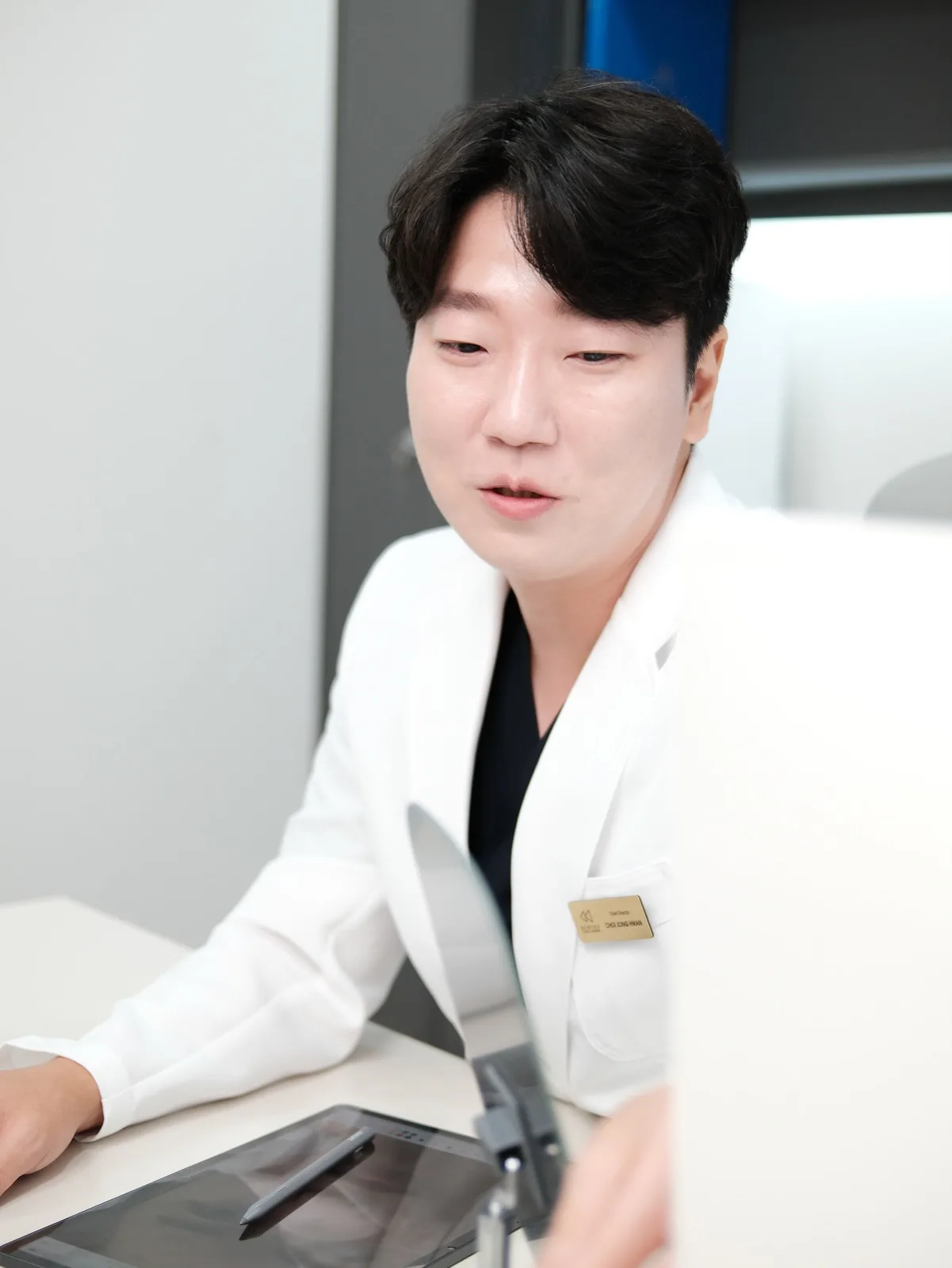
Fig. 04 · Where the upper face is examined in movement

Fig. 05 · The clinic floor in Apgujeong
Appointments run Monday, Tuesday, Wednesday and Friday from 10:00 to 19:00 and on Saturday from 10:00 to 16:00, with Sunday and Thursday closed. The medical director examines the upper face in movement, agrees which areas are being treated, marks the points and gives the injection himself. You leave able to continue with the day.
The clinic does not publish an anaesthesia protocol or a session length for this injection, so this page asserts neither. Mention any toxin or filler placed in the upper face elsewhere in recent months, and any history of a droopy lid after a previous treatment.
Published rates
Expression regions sit on the clinic's list as per-area items. A plan covering the forehead together with the frown region is therefore two lines, each at the published area rate.
Value-added tax is added to the listed figures, and any anaesthetic fee is already contained within them. A two-area upper-face plan is simply two lines at the published rate; there is no combined price for treating them on one visit.
This month at Rewind — offers published by the clinic, updated monthly.
Suitability
There is a category of patient who is told plainly that this is the wrong treatment: the one whose forehead lines are compensation for a heavy upper lid. Injecting that forehead makes the eyes feel heavier and the lines return as soon as movement does. Where hollowing rather than movement is the finding, the discussion turns to dermal filler and its own separate rate.
Settling in
Nothing happens immediately, and that is normal. The written aftercare from the clinic is short: leave the area alone, and stay away from heat and alcohol while the product binds where it was placed.
Documented risks in the upper face include bruising at the entry points, headache, a heavy feeling across the brow, temporary droop of a brow or eyelid, and asymmetry between the two sides. Pooled safety analysis of toxin used for facial lines reports such events as mostly mild and temporary. Report a droop early: it cannot be reversed on demand, and the plan for your next session depends on knowing it happened.
At Rewind, one board-certified plastic surgeon carries every case — from the first consultation to the final follow-up. Because a face is a story, and a story deserves a single author.
 Rewind,
Rewind's Doctor
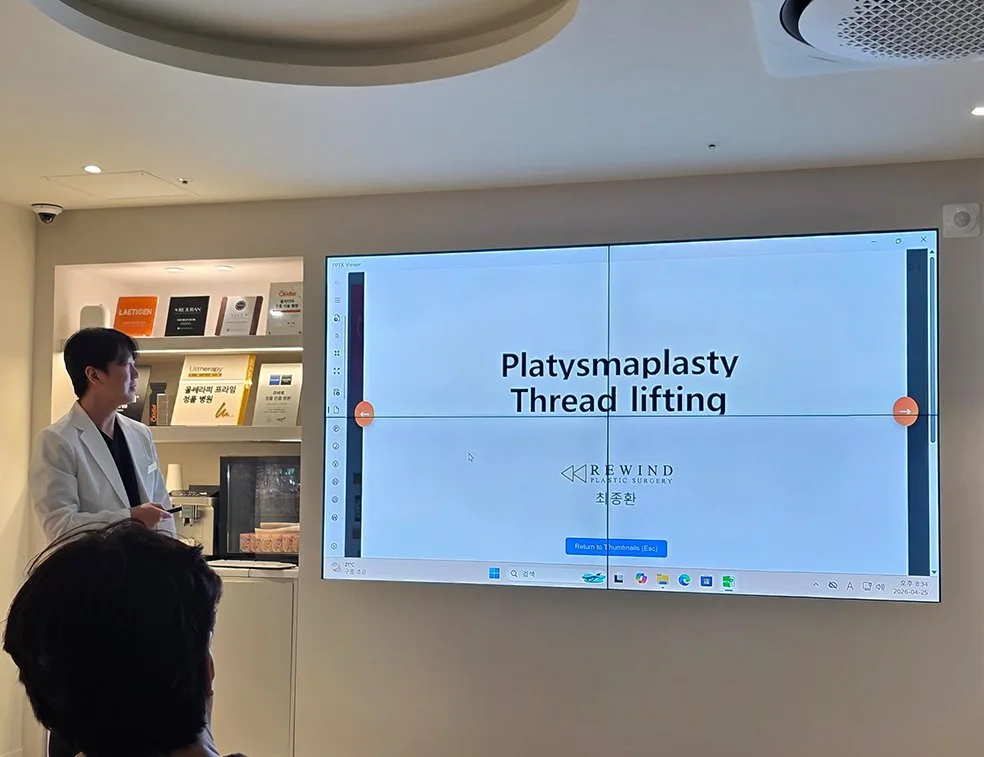
Dr. Jonghwan Choi Medical Director
One surgeon, from the first
consultation to the last follow-up.
A board-certified plastic surgeon devoted to anti-aging lifting, with the precision and restraint built through years of craniofacial practice.
Questions
Google Reviews
Came to REWIND to get my facial treatment and i'm absolutely obsessed about it💞 the doctor is so kind and is an expert! Everyone must visit!
YunHee Hong2 weeks agoThere are just way too many cosmetic clinics in Korea and I'm so happy I found Rewind Clinic in Gangnam. Dr. Choi was so kind and patient while explaining the different face-lifting options, from threads to mini-lifts to deep-plane lifts…
 J. S.5 months ago
I found Rewind clinic through a Korean chat forum and many local clients highly recommended it. The clinic is brand new, featuring large, clean rooms and many private waiting areas so it doesn't give off that "factory" clinic vibe. All the…
 J. Siou5 months ago
Really nice environment. Doctor is easy to communicate and understands my visions. Waited two weeks to make a review and I confirm the results exceeded my expectations and I am super happy with it. Can't wait to come back!! :))
 Kristie Chu5 months ago
I received a thread lift at Rewind Plastic Surgery. The clinic was clean and the atmosphere was comfortable. The consultation was thorough, and I felt confident because they kindly explained everything tailored to my facial condition. They…
Reservation
Describe what your forehead does when you raise your brows, and the reply will say which areas would be assessed.
For international patients — interpreter-assisted, from your first message to your follow-up.
Scientific evidence
These papers describe the treatment of expression lines with type A toxin, the contraction patterns that guide where points are placed in the frown region, an early Korean series on hyperkinetic facial lines, and pooled safety data from registration trials. They concern other investigators' patients and forecast nothing about an individual forehead.