★★★★★
Came to REWIND to get my facial treatment and i'm absolutely obsessed about it💞 the doctor is so kind and is an expert! Everyone must visit!
 YunHee Hong2 weeks ago
Surgery · Hairline Scar
A line placed where hair can grow back over it
Apgujeong, Seoul | Board-certified plastic surgeon, Dr. Jonghwan Choi
45-degree oblique hairline incision · Endotine fixation · KHIDI-registered for international patients
Forehead reduction scar
In short
It is a single line running along the front of the new hairline, and it does not disappear. Rewind's own answer to the scar question is that a scar remains, and that because the incision follows the hairline it is hard to pick out in most cases once healed. The clinic cuts that line on a 45-degree oblique angle and designs it around the direction in which hair grows at the border. The angle is there for one reason: so that hair can come up through and just in front of the healed line and break up its edge. How much of it you can see later depends on your hair, your skin and how the wound was treated while it closed.
No forehead reduction case photographs are published on this page at present, and none are borrowed from other operations to fill the space. Everything said here about the line comes from Rewind's Korean surgical page for forehead reduction and from the published research listed at the foot of the page.
People who search for before and after images of this operation are usually asking something narrower than whether the forehead got shorter. They want to know what the line looks like with the hair pulled back, how long it stays pink, and whether a photo taken with a fringe covering the hairline says anything at all. Those are the questions this page is written around. For the operation as a whole, see the main forehead reduction page.
One thing to separate early: a forehead lift also uses an incision in the hair-bearing region, but it moves the brow upwards and leaves a different line in a different place. The scar described here is the one left by lowering the hairline.
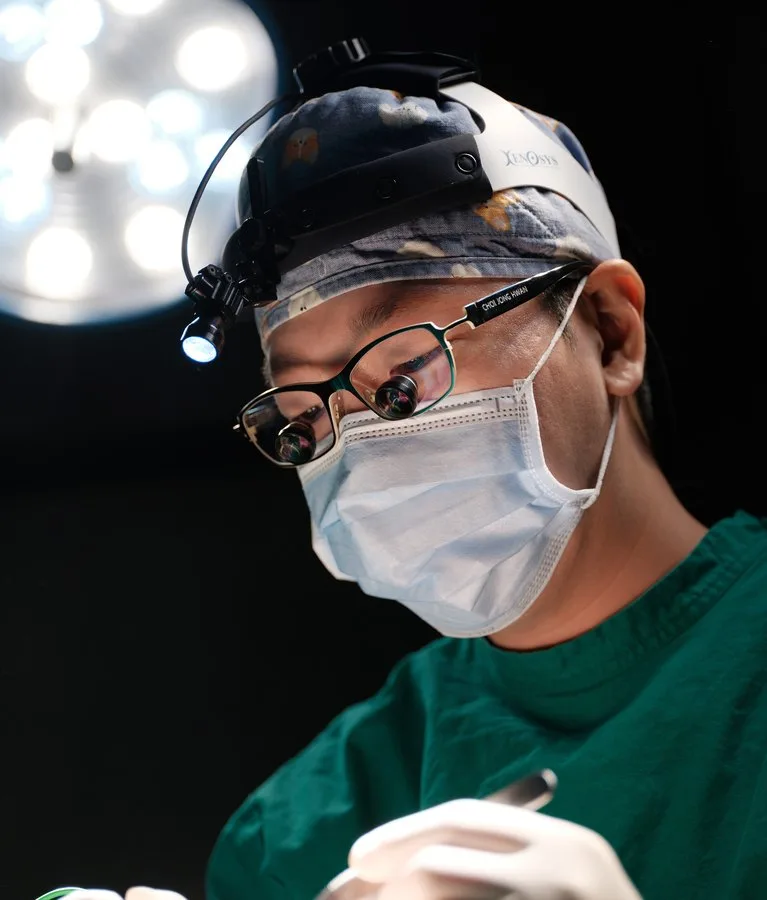
Placement
A hairline scar is judged at conversational distance, from the front and in daylight. Its visibility has less to do with its length than with where it sits relative to the hair and which way that hair falls over it.
What changes, and when
A photograph of a hairline scar is only meaningful alongside the date it was taken. The same line looks entirely different on the day the dressing comes off and a year later, and most of that change happens without anyone doing anything to it.
Rewind asks for a compression dressing for one to two days. Nothing about the scar can be judged at this point. Swelling across the forehead is normal, and it tends to drift down towards the eyes.
With the dressing off, the line is plainly visible when the hair is lifted: a narrow, pinkish seam with sutures in place until the surgeon removes them. Rewind does not publish a suture removal day for this operation, so it is set at your review. Photographs from this stage show the placement of the line and very little about its final look.
Because the edge was cut at an angle, hair roots along it can grow, and fine hairs start to appear through and in front of the scar. This is the point where photographs change most. A line that was continuous becomes interrupted, and with the hair down it is often lost in the border. Some shedding close to the incision can happen first; it is one of the named risks below.
Scars keep maturing for a long time after the wound has closed, fading from pink towards the colour of the surrounding skin and softening in texture. How far that goes is individual. A useful later photograph shows the hair pulled back and states when it was taken.
How many weeks each stage lasts, when sutures come out, and exactly when regrowth starts. Rewind's surgical page gives none of these figures, and they are not borrowed here from other operations. The surgeon talks you through the expected sequence at the consultation.
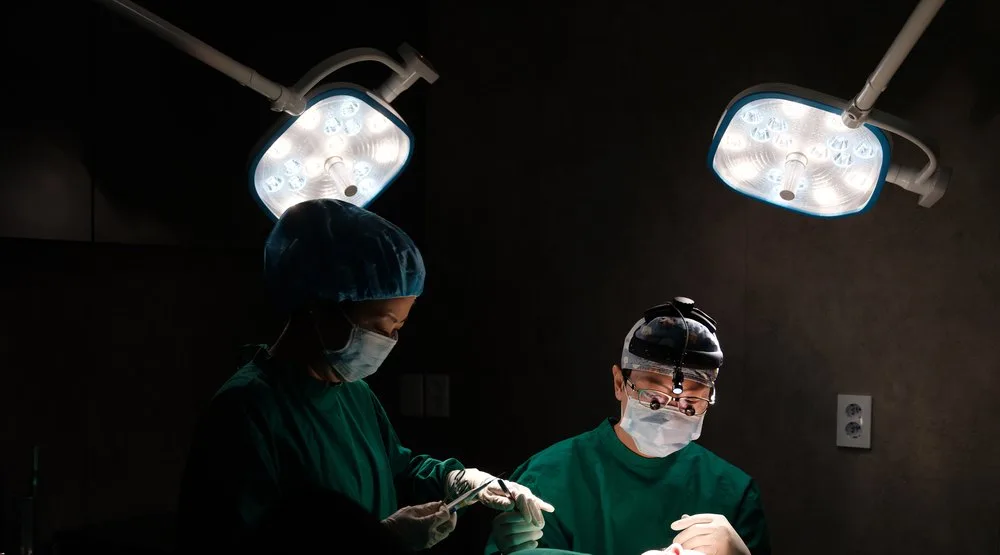
Why here
The scar is the one lasting cost of this operation. Every other part of the recovery ends. That makes decisions about the line worth settling before surgery, while they can still be changed.
Rewind describes marking the new forehead line against the proportions of the whole face and the way your hair grows at the front. Where the hair is fine or sparse along a stretch of the border, that stretch is where a scar is hardest to hide, and it is discussed before the line is drawn.
A scar that heals under steady pull tends to widen. The clinic fixes the advanced scalp with Endotine, which it states is absorbed by the body over roughly nine months, so the closure itself is not holding the scalp in place.
Dr. Jonghwan Choi, a board-certified plastic surgeon, makes the incision and sees the scar at each review. If the line is healing wider or redder than expected, the person judging it is the one who knows how it was closed.
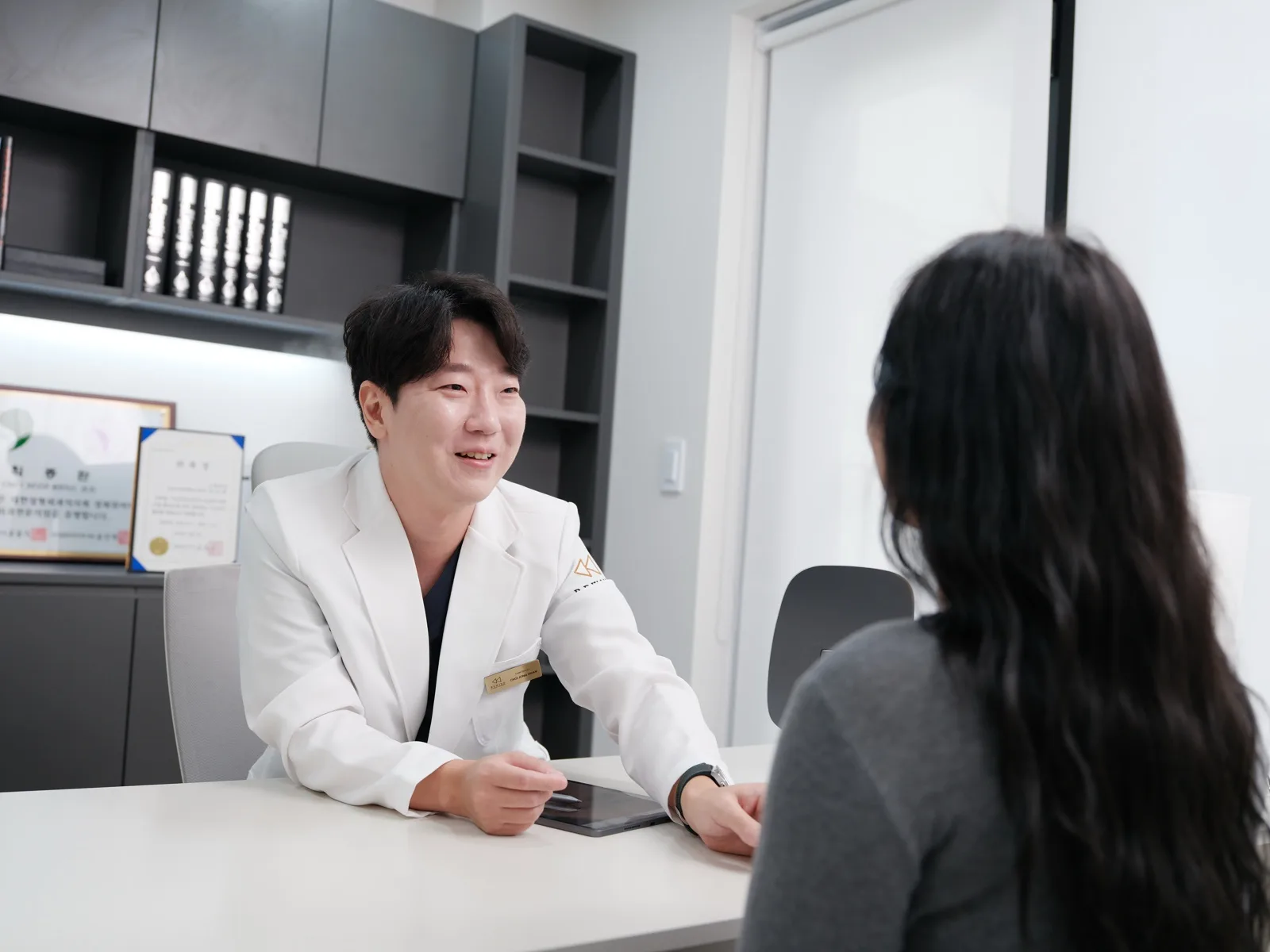
Scar checks
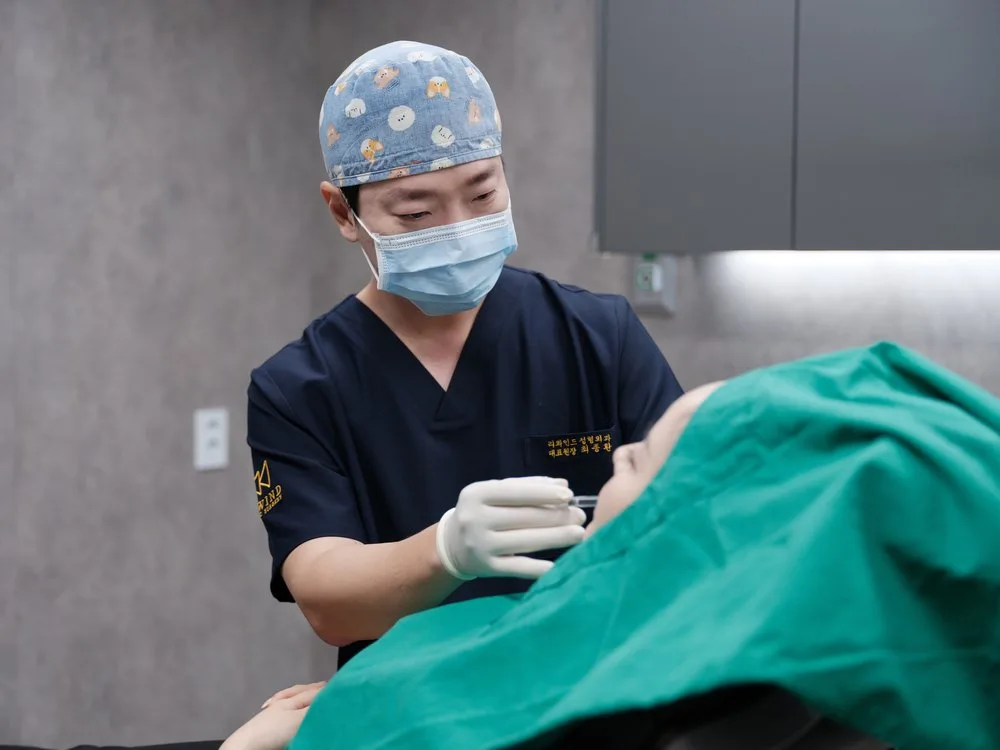
Fig. 04 · The line is checked at each review with the hair lifted off it

Fig. 05 · A private room to rest before the dressing goes home with you
Rewind occupies the fourth and fifth floors of the Richro Building in Apgujeong, Gangnam-gu, Seoul. After a forehead reduction you leave with a compression dressing on and return for the reviews the surgeon sets, including suture removal. If you are travelling from abroad, plan the trip around those appointments; the clinic sees patients by appointment on Monday, Tuesday, Wednesday and Friday from 10:00 to 19:00 and on Saturday from 10:00 to 16:00.
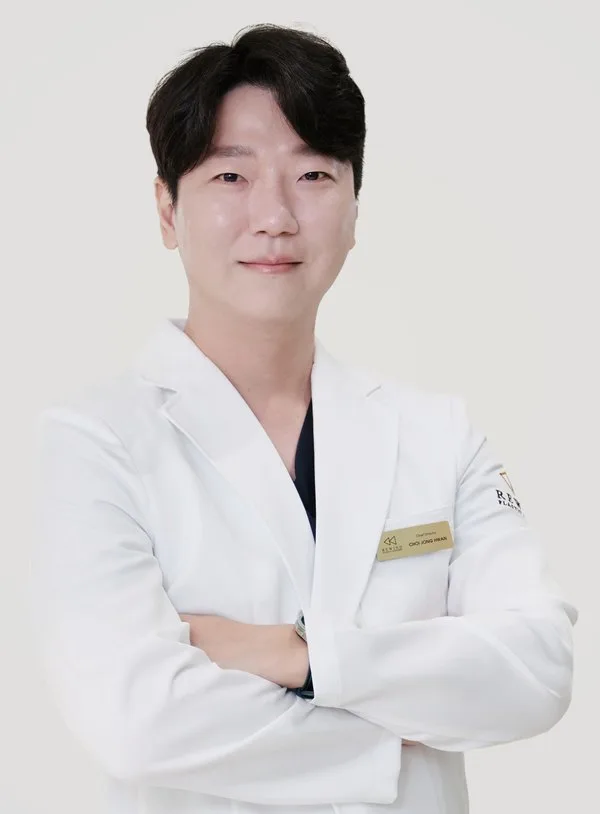
Board-certified plastic surgeon
The hairline line is marked, cut and later reviewed by Dr. Jonghwan Choi, who is certified in Korea as a specialist in Plastic Surgery. Rewind is registered with KHIDI to treat international patients under Reg. M-2025-01-08-09288.
Pricing
The scar is not billed separately. Placing and closing the line is part of the operation, and so is the fixation that keeps tension off it.
Both figures are list prices with anaesthetic fees included and VAT excluded, so VAT is added on top. The Endotine device is part of the forehead reduction line. Which listing applies to you is decided at the examination, and any later adjustment to a scar is discussed with the surgeon if it becomes relevant; it is not priced on this page.
Scar outlook
Looking after the line
Rewind's instructions after this operation are brief. Most of them protect the line during the period when it is deciding how wide and how red it will stay.
Risks that bear directly on the scar are a line that widens or stays red, raised or thickened scarring, temporary shedding of hair along the incision, patches of numbness or altered sensation behind the line, asymmetry of the new border, infection, bleeding under the scalp and, in some cases, a later revision. Smokers heal less reliably at the scalp edge. How any one scar settles differs from person to person, and its final look cannot be promised.
At Rewind, one board-certified plastic surgeon carries every case — from the first consultation to the final follow-up. Because a face is a story, and a story deserves a single author.
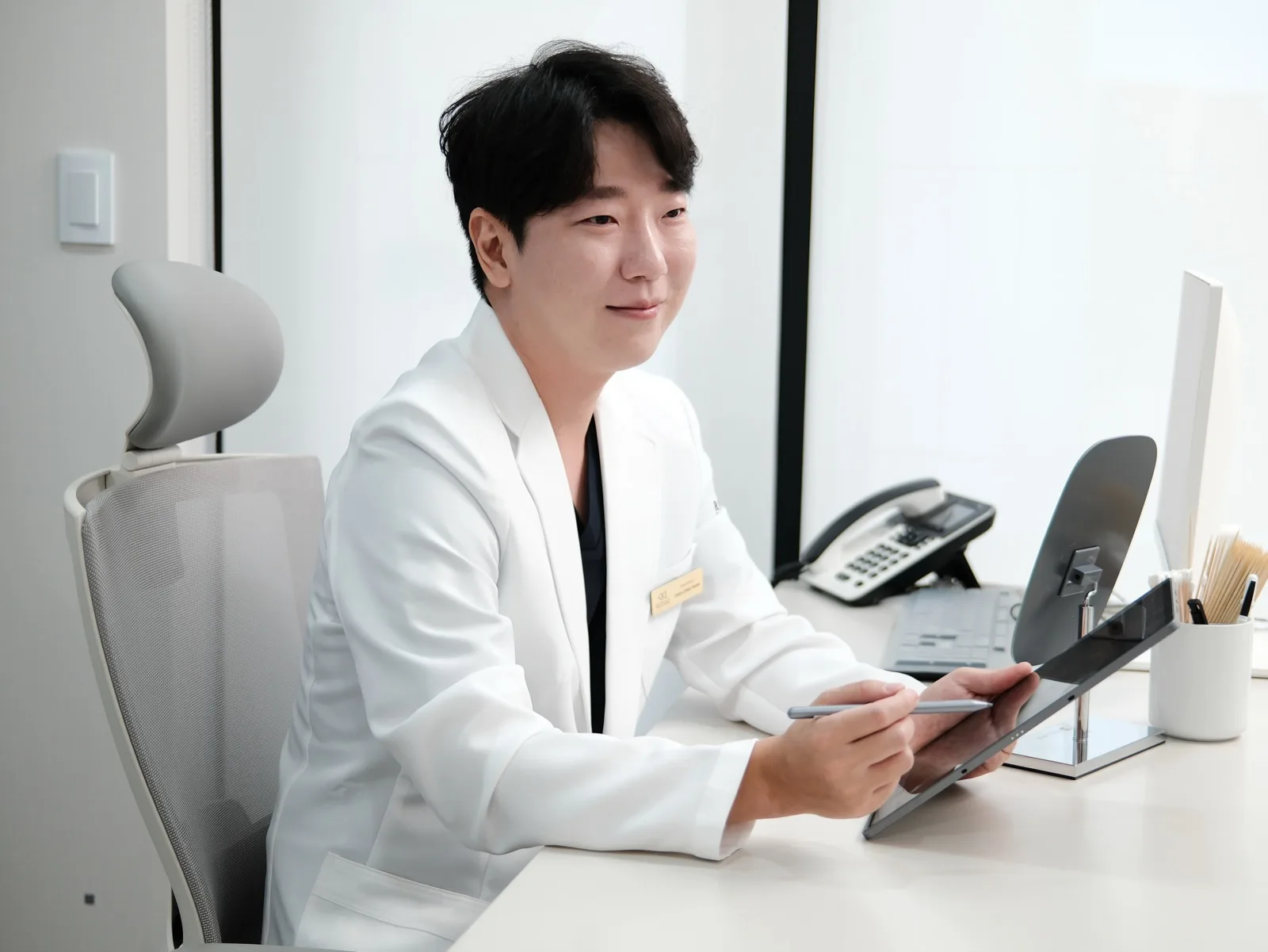 Rewind,
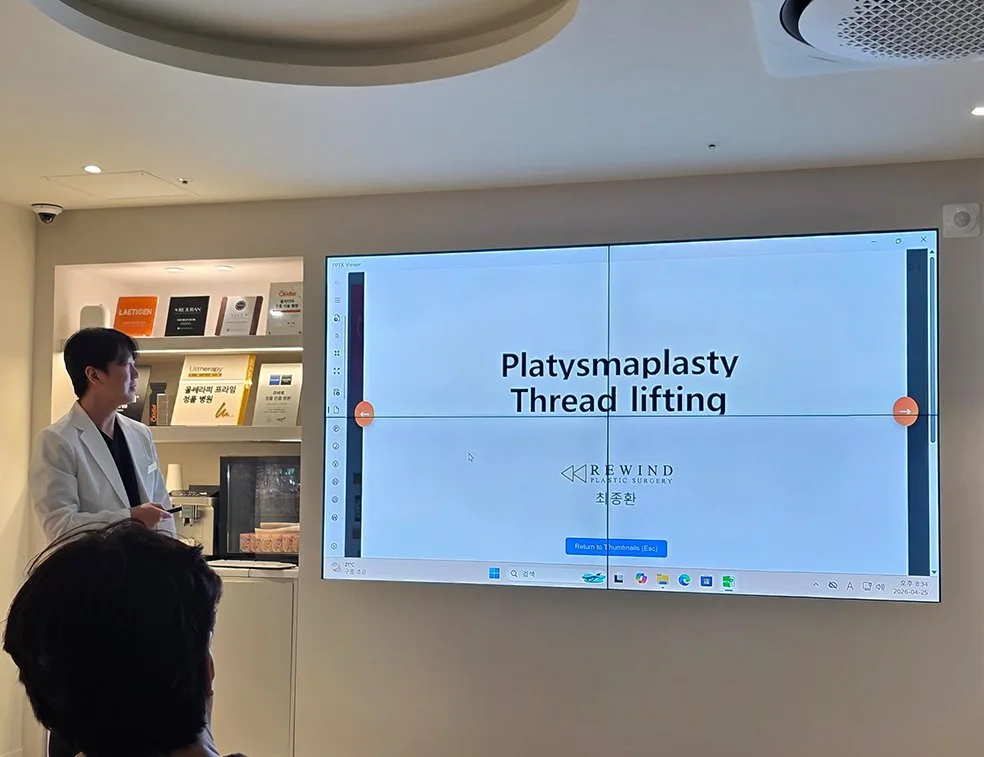
Rewind's Doctor
Dr. Jonghwan Choi Medical Director
One surgeon, from the first
consultation to the last follow-up.
A board-certified plastic surgeon devoted to anti-aging lifting — with the precision and restraint built through years of craniofacial practice.
Questions
Google Reviews
Came to REWIND to get my facial treatment and i'm absolutely obsessed about it💞 the doctor is so kind and is an expert! Everyone must visit!
YunHee Hong2 weeks agoThere are just way too many cosmetic clinics in Korea and I'm so happy I found Rewind Clinic in Gangnam. Dr. Choi was so kind and patient while explaining the different face-lifting options, from threads to mini-lifts to deep-plane lifts…
 J. S.5 months ago
I found Rewind clinic through a Korean chat forum and many local clients highly recommended it. The clinic is brand new, featuring large, clean rooms and many private waiting areas so it doesn't give off that "factory" clinic vibe. All the…
 J. Siou5 months ago
Really nice environment. Doctor is easy to communicate and understands my visions. Waited two weeks to make a review and I confirm the results exceeded my expectations and I am super happy with it. Can't wait to come back!! :))
 Kristie Chu5 months ago
I received a thread lift at Rewind Plastic Surgery. The clinic was clean and the atmosphere was comfortable. The consultation was thorough, and I felt confident because they kindly explained everything tailored to my facial condition. They…
Reservation
Tell us what you are considering — we reply as soon as possible, in your language.
For international patients — interpreter-assisted, from your first message to your follow-up.
Scientific evidence
The first entry is a large Asian series of forehead reduction through an incision placed just in front of the hair, in which scarring was graded both by the patients and by three independent surgeons three months after surgery. The second explains how facial surgery photographs should be standardised, which is the measure for any scar photograph you are shown. The third is a systematic review of professional interpreters and the quality of care for patients who do not share the clinic's language, relevant because scar instructions only help if they are understood. These papers describe their own patients and methods, not this clinic's protocol, and none of them predicts how your scar will look.