★★★★★
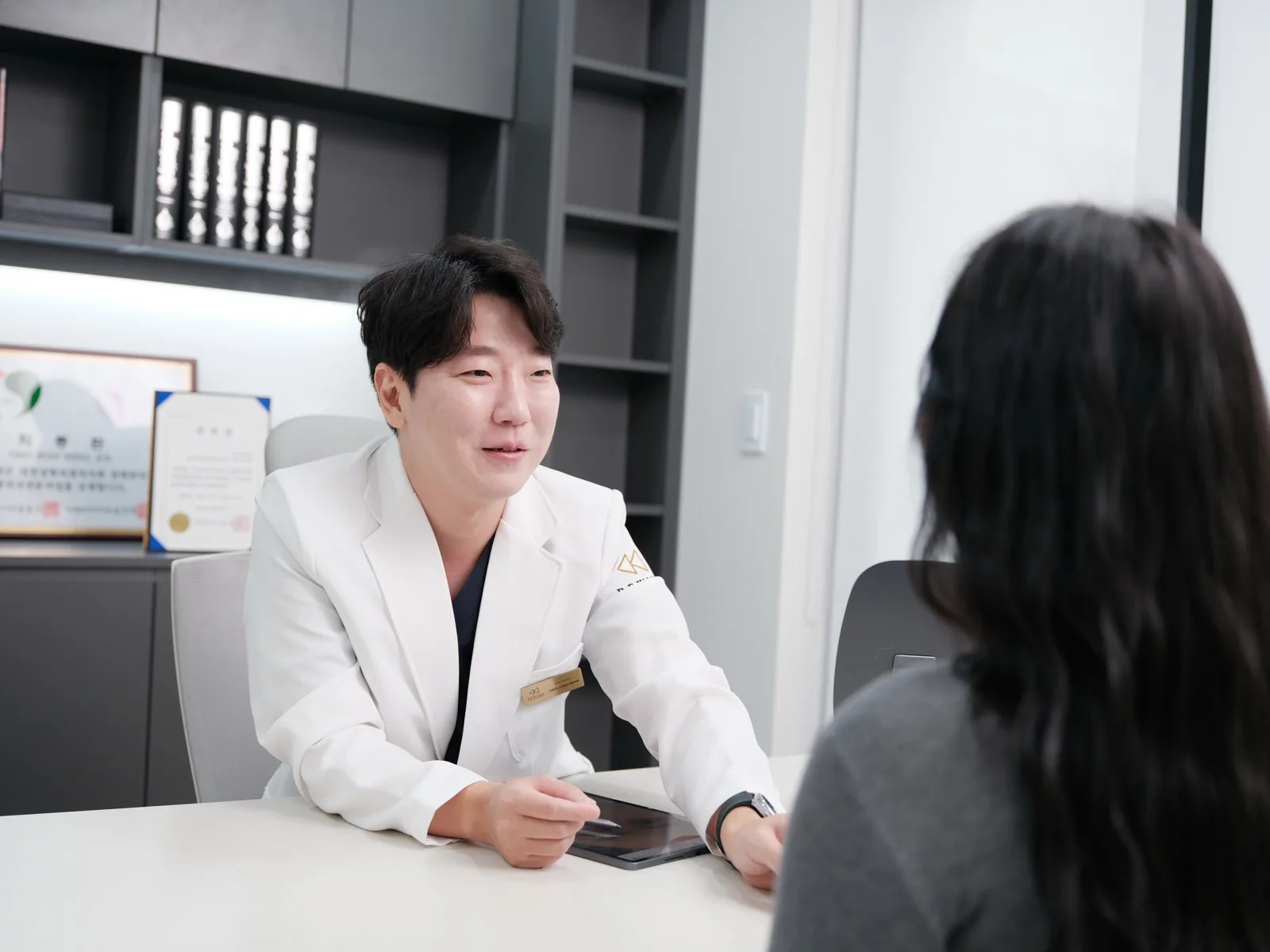
Came to REWIND to get my facial treatment and i'm absolutely obsessed about it💞 the doctor is so kind and is an expert! Everyone must visit!
 YunHee Hong2 weeks ago
Surgery · Upper-Face Decisions
Reading reviews against your own forehead
Gangnam, Seoul | Board-certified plastic surgeon, Dr. Jonghwan Choi
Criteria before verdicts · The scar judged at one year · KHIDI-registered for international patients
Hairline lowering surgery reviews
The short answer
It tends to be worth it when three things line up: a forehead that is long for your face, a hairline border that is dense and stable enough to be moved, and a scalp with enough give to travel forward. Then one operation shortens the forehead, and the change is there when the dressing comes off. It is poor value when the front hairline is thinning, when a low brow is the real complaint, or when the scalp is so tight that the gain would be small next to a scar at the front of the head. In return you accept that scar, one to two days in a compression dressing, a spell without strenuous exercise and the ordinary risks of surgery.
Operative facts here come from Rewind's Korean surgical page for forehead reduction. The review boards on the clinic's own site held no published entries when this page was written, so no patient statement appears below and none has been paraphrased.
Reviews answer a narrower question than the one you are asking. Each describes one person's forehead, one scalp and one moment in healing, often written in the first weeks when swelling is still settling or the line is still pink. Whether the same surgery would be worth it for you depends on your own hairline and scalp, and those are read in person.
The second question people bring is what patients say about the scar a year on. Rewind's position is plain: a scar remains, and because the incision follows the hairline it is hard to see in most cases. How a particular scar matures varies between people. A one-year review is worth reading when it shows the hairline with the hair pulled back, in even light, next to an early photograph taken the same way.
What a review cannot show
A glowing review and a disappointed one can describe the same operation performed well. The difference is usually in the person, and these are the four points where a stranger's forehead tells you least about your own.
A method for reviews
Most reviews are sincere and still easy to misread. Running each one through the same five checks turns a pile of opinions into something closer to evidence.
An account from the first weeks describes swelling, tightness and a fresh line. An account from a year later describes the scar and the proportion you would actually live with. Give the later one more weight when judging the result.
A fringe hides the line entirely. A review that says the scar is invisible means most when the photograph shows the hair swept off the forehead, which is how you will see it every morning.
Angle, distance, lighting and expression all change how long a forehead looks. The standardisation paper listed below explains why a before and after taken under different conditions can exaggerate or hide a change.
Forehead reduction, a forehead lift and hair grafting all get called hairline surgery online. A lift raises the brow and can lengthen the forehead, so its reviews say little about lowering a hairline.
A fair account mentions the dressing, the restrictions, the altered scalp sensation that can last months, and how the scar looked at its worst. A review with none of that is describing a feeling more than a recovery.
In place of testimonials
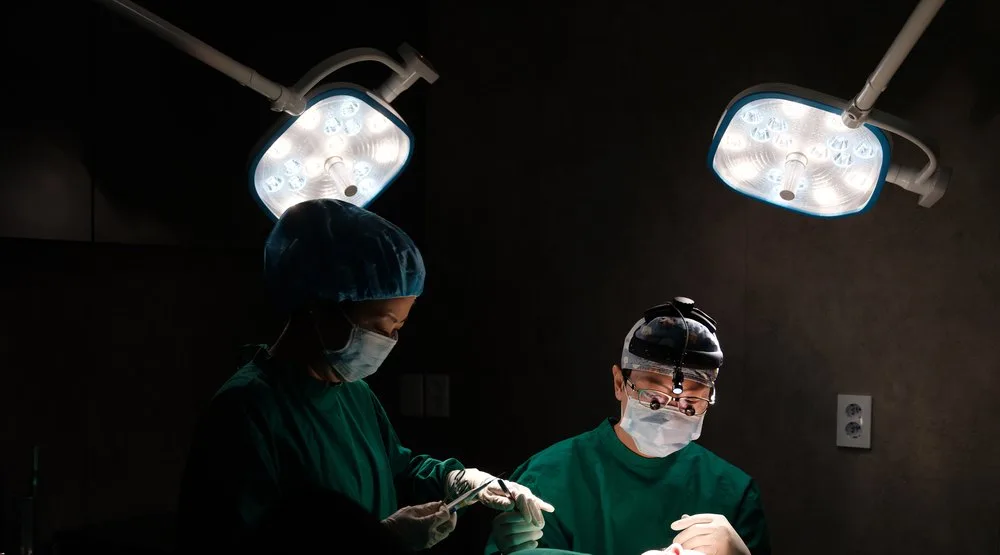
A page selling surgery with hand-picked praise would be quick to write. What helps more is knowing exactly what the clinic says about this operation, and having the one person who will perform it tell you whether it suits your forehead.
A 45-degree oblique incision along the hairline, Endotine fixation absorbed over roughly nine months, dissection under a Full HD endoscope, a scar that remains but is hard to see in most cases, and a result recorded as lasting five years or more.
When the hairline is thinning, the scalp will not move far, or the brow is the real problem, the examination says so. The combined lift and reduction exists for faces that need both directions at once.
Dr. Jonghwan Choi examines, operates and sees each follow-up himself, so the person judging how your line is healing is the person who placed it.
Where it is decided
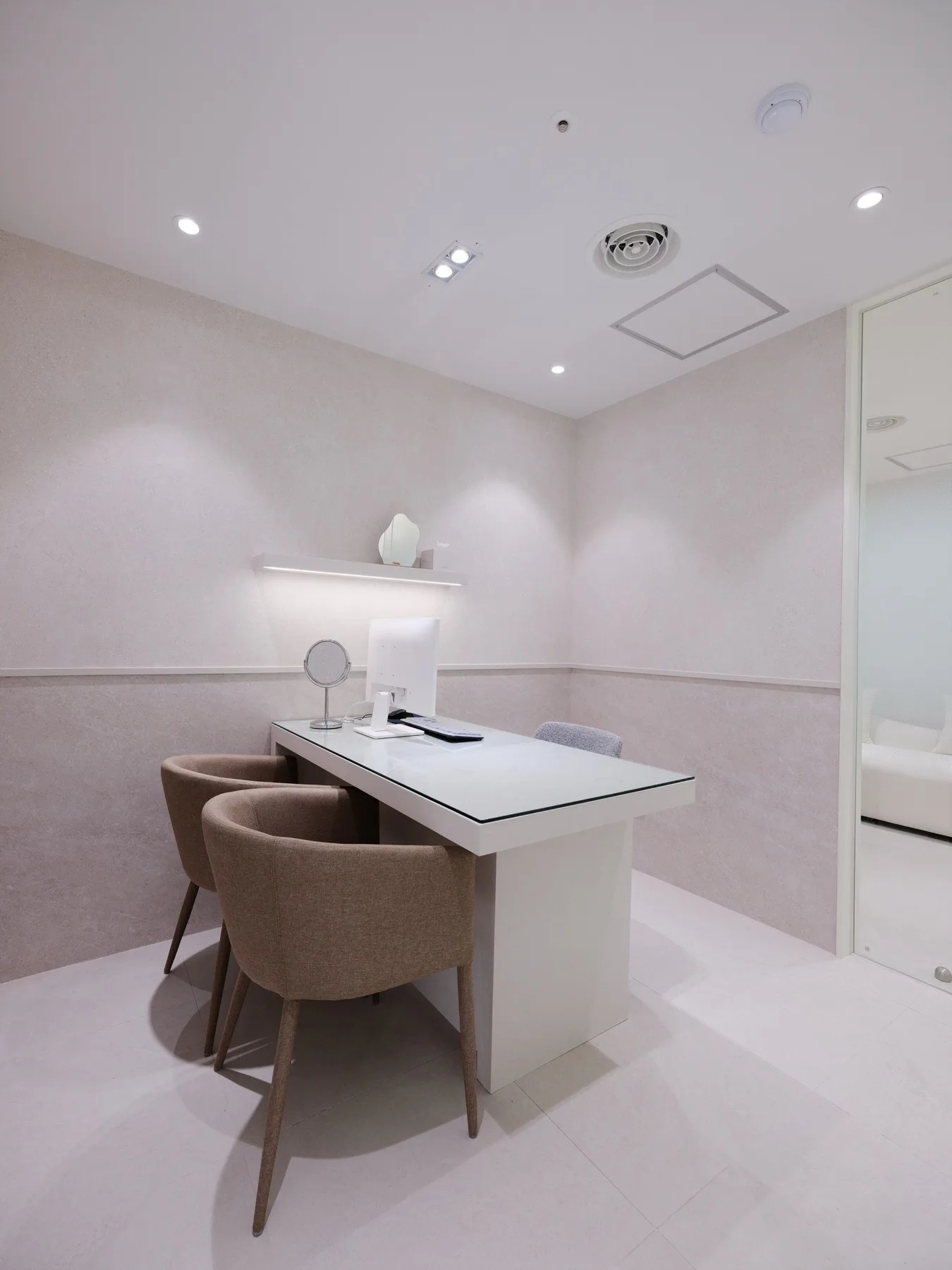
Fig. 04 · The clinic floor in Apgujeong

Fig. 05 · A recovery room on the clinic floor
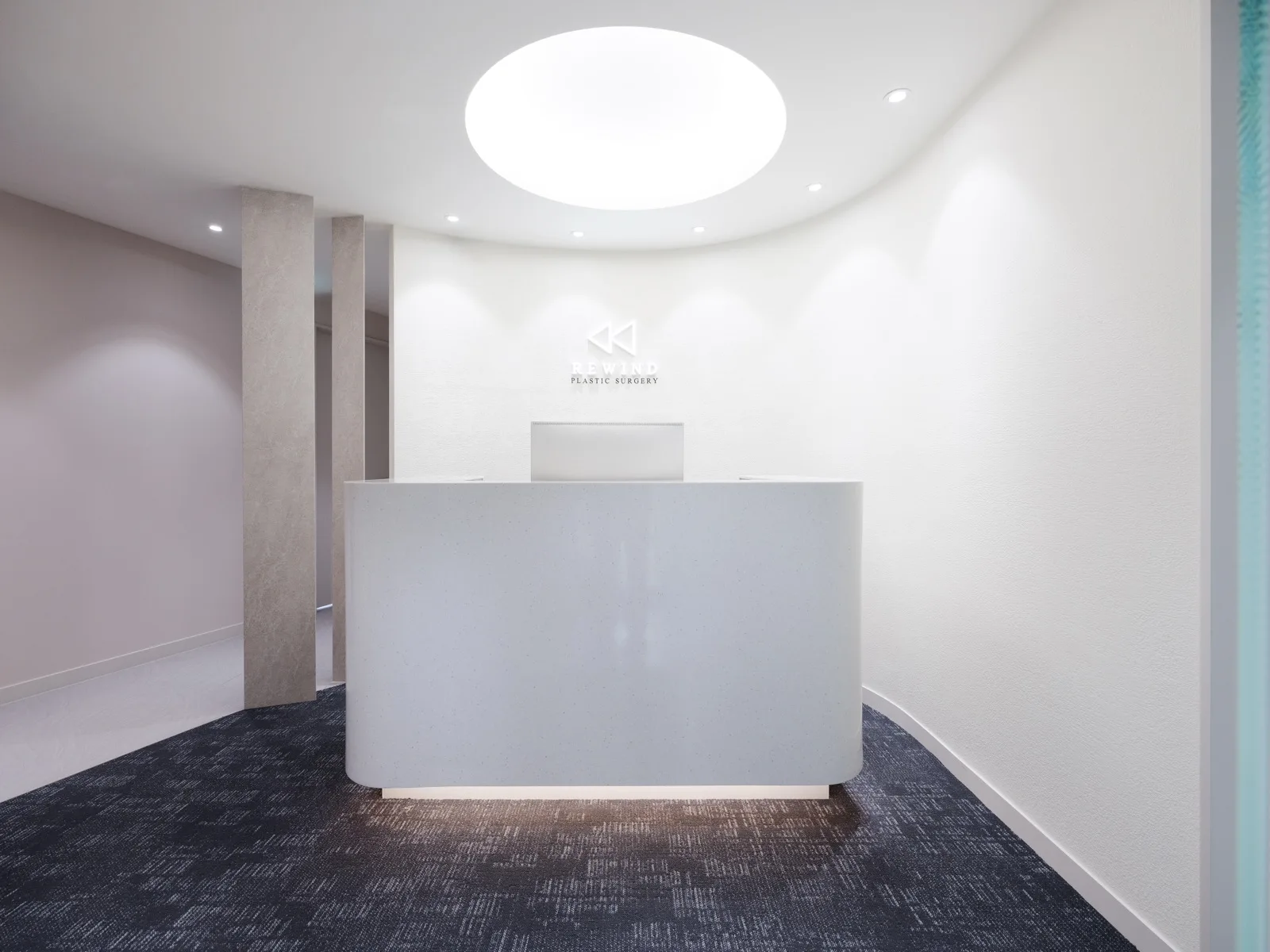
The clinic occupies the fourth and fifth floors of the Richro Building on Nonhyeon-ro in Apgujeong, Gangnam. Consultations are by appointment on Monday, Tuesday, Wednesday and Friday from 10:00 to 19:00 and on Saturday from 10:00 to 16:00. The first visit is where the worth-it question is settled: your forehead is measured against the rest of the face, the hairline border is examined for density, the scalp is tested for give and the brow position is checked. You leave with a clear answer and, where the operation fits, a written plan.
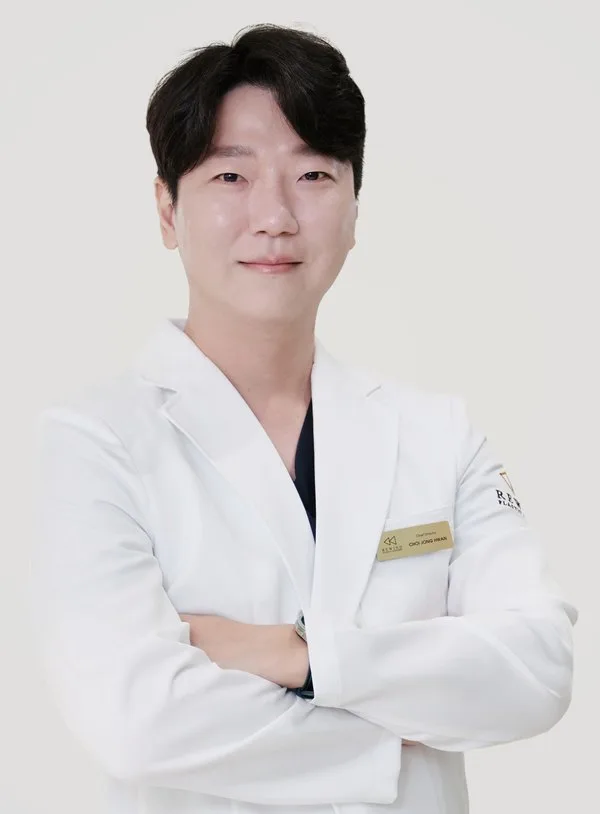
Board-certified plastic surgeon
Dr. Jonghwan Choi is a Korean-certified specialist in Plastic Surgery and the only operating surgeon at Rewind, from the first consultation through every scar review. KHIDI registration for international patients: Reg. M-2025-01-08-09288.
Pricing
Value is a ratio, and the price is its fixed half. Rewind lists the operation on its own and combined with a forehead lift, so the figure you weigh matches the surgery you would actually have.
List prices, shown before VAT, with the anaesthetic fee counted in. Which line applies is written into your plan after the examination and before any surgery date.
Suitability
The first year
Part of whether it is worth it is whether you can live comfortably through the recovery. Rewind's instructions are brief, and the rest of the year is mostly patience with a scar that is still maturing. The risks belong in the same sum: bleeding, infection, a scar that widens or stays visible, numbness or altered sensation behind the incision, shedding of hair near the line, unevenness between the two sides of the new border, and the chance that a revision is needed.
Nobody can promise an outcome, and results vary by individual. The five-year figure depends on individual tissue elasticity and the extent of surgery, and a hairline can still thin with age like any other.
At Rewind, one board-certified plastic surgeon carries every case — from the first consultation to the final follow-up. Because a face is a story, and a story deserves a single author.
 Rewind,
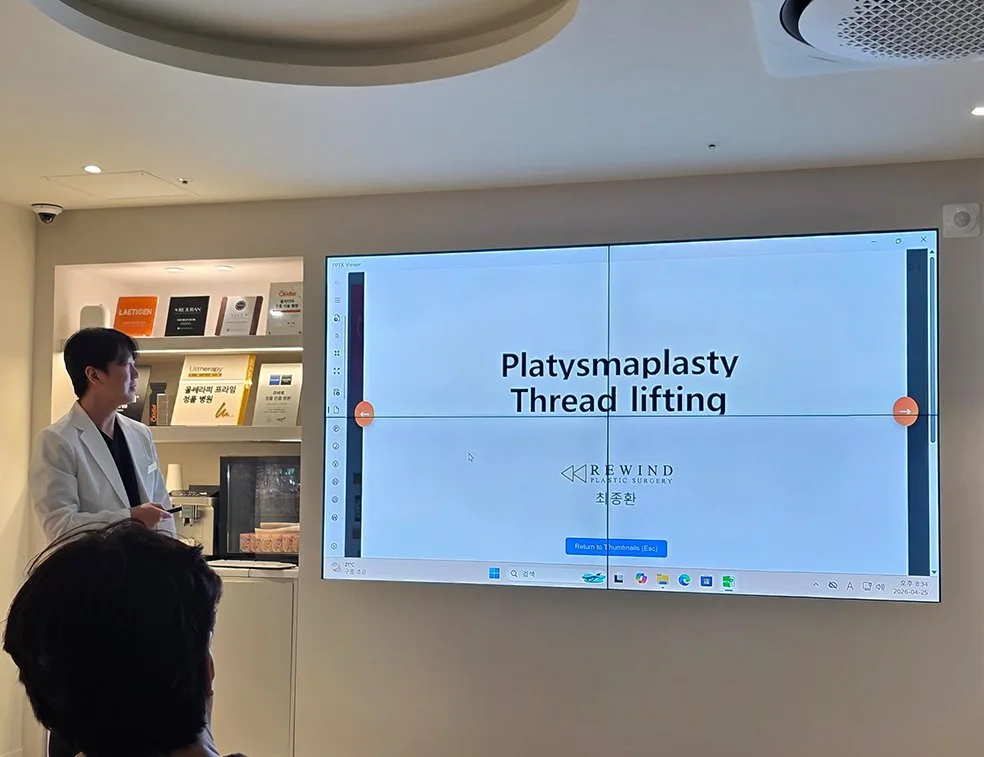
Rewind's Doctor
Dr. Jonghwan Choi Medical Director
One surgeon, from the first
consultation to the last follow-up.
A board-certified plastic surgeon devoted to anti-aging lifting — with the precision and restraint built through years of craniofacial practice.
Questions
Google Reviews
Came to REWIND to get my facial treatment and i'm absolutely obsessed about it💞 the doctor is so kind and is an expert! Everyone must visit!
YunHee Hong2 weeks agoThere are just way too many cosmetic clinics in Korea and I'm so happy I found Rewind Clinic in Gangnam. Dr. Choi was so kind and patient while explaining the different face-lifting options, from threads to mini-lifts to deep-plane lifts…
 J. S.5 months ago
I found Rewind clinic through a Korean chat forum and many local clients highly recommended it. The clinic is brand new, featuring large, clean rooms and many private waiting areas so it doesn't give off that "factory" clinic vibe. All the…
 J. Siou5 months ago
Really nice environment. Doctor is easy to communicate and understands my visions. Waited two weeks to make a review and I confirm the results exceeded my expectations and I am super happy with it. Can't wait to come back!! :))
 Kristie Chu5 months ago
I received a thread lift at Rewind Plastic Surgery. The clinic was clean and the atmosphere was comfortable. The consultation was thorough, and I felt confident because they kindly explained everything tailored to my facial condition. They…
Reservation
Tell us what you are considering — we reply as soon as possible, in your language.
For international patients — interpreter-assisted, from your first message to your follow-up.
Scientific evidence
The first paper is a large series of hairline lowering through an incision placed in front of the hair in Asian patients. The second sets out how facial surgery photographs should be standardised, which is the yardstick for judging any photograph attached to a review. The third is a facelift satisfaction survey that asked the same patients again years later; it concerns a different operation and is listed only as an example of how satisfaction is measured over time. None of these papers describes this clinic or predicts your own result.