★★★★★
Came to REWIND to get my facial treatment and i'm absolutely obsessed about it💞 the doctor is so kind and is an expert! Everyone must visit!
 YunHee Hong2 weeks ago
Surgery · Hairline Distance
The number is measured on your scalp, then agreed
Apgujeong, Seoul | Board-certified plastic surgeon, Dr. Jonghwan Choi
Proportion-led design · Endotine fixation · KHIDI-registered for international patients
How far the hairline moves
The direct answer
There is no fixed number, and Rewind does not publish one. How far your hairline can come down is decided by how much the scalp behind it will move forward and by what distance suits the proportions of your face, and both are assessed in person before a figure is agreed. For a sense of scale, the largest published series on this operation in Asian patients, 641 cases, removed an average of 16.64 mm of forehead skin at the centre and about 15.3 to 15.4 mm at the lines above each pupil. That is roughly 1.5 to 1.7 centimeters, an average across many people and never a promise for one.
The clinic's Korean surgical page for forehead reduction supplies the method described here and gives no centimeter figure, so none is invented for it. The averages above are quoted from the abstract of the study listed at the foot of the page. Your own number is confirmed at the consultation.
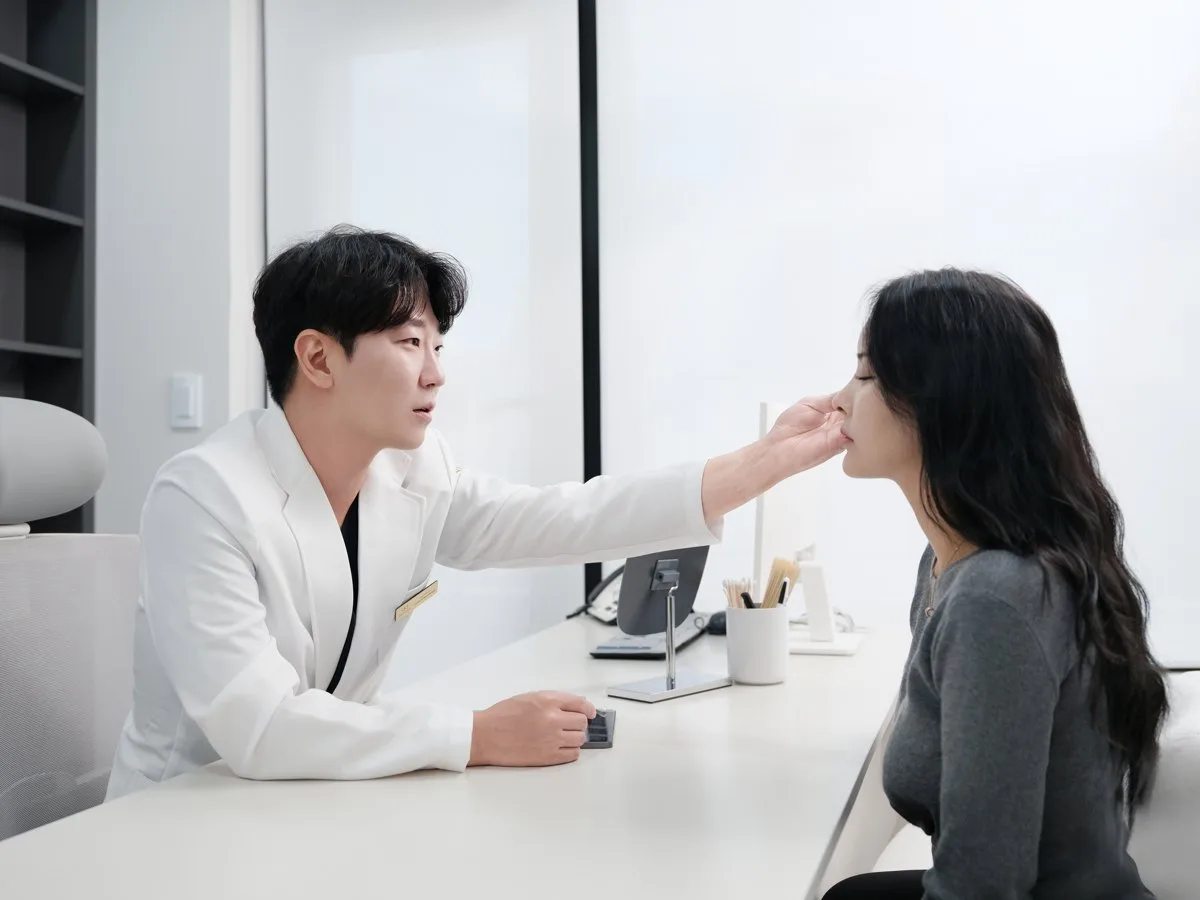
The question usually arrives as a single figure: two centimeters, two and a half, three. A figure on its own is the wrong unit. A forehead that looks long on a short face may need less than one that looks long on a long face, and the same distance can suit one person and look pulled on another. Rewind describes designing the new line against the balance of the whole face, with forehead length as one input, and that is the frame in which a number is chosen.
A forehead can also look long because the brow has dropped. Lowering the hairline does not raise a brow, and that finding belongs to the separate forehead lift. The operation as a whole, including technique and recovery, is on the main forehead reduction page.
What the figure depends on
A figure given without these four is a guess. Each is checked at the examination, and together they explain why two people asking for the same number can be told different things.
From measurement to theatre
Rewind publishes three operative steps for forehead reduction. Read with the centimeter question in mind, each one either fixes the distance or protects it.
The clinic's first step is identifying the forehead line that suits the face. This is where the distance is agreed with you, drawn on the skin, and checked against the scalp's give. The distance marked here is the one the operation aims for.
The incision runs along the existing hairline at an oblique angle, which keeps the scar at the new border. Nothing about the angle changes the distance; it changes how the line heals.
With the scalp undermined, the hair-bearing border is brought forward and the strip of forehead skin it now overlaps is excised. The width of that strip is, in practice, the shortening you see. The published averages quoted on this page are measurements of exactly this strip.
The advanced tissue is fixed with Endotine before closure. Rewind states the device is approved in Korea and by the US FDA as a forehead reduction material and is absorbed over about nine months. Its job is to stop the scalp drawing back while it heals.
A maximum or minimum distance, the anaesthetic used and how long the operation takes. Rewind's surgical page states none of them. The first is measured on you; the other two are confirmed by the surgeon at the consultation.
Why here
A number sent back in reply to a photograph is easy to give and hard to keep. The clinic's approach is to name the distance once the tissue has been examined and the proportions measured.
How freely your scalp moves over the skull cannot be judged from a picture. It is assessed at the examination, and a request that goes past what the tissue will give is declined, since forcing extra distance puts strain on the scar and on the hair along it.
The target is balance with the middle and lower face. Past that point, extra centimeters make the upper face look compressed. Deciding where that point lies is a design judgement made with you at the consultation.
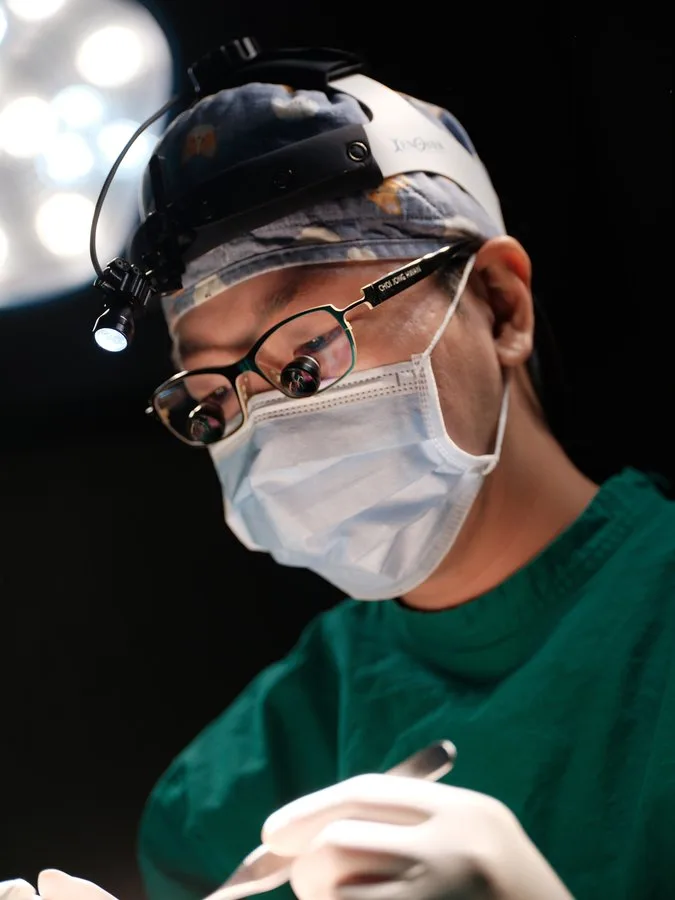
Dr. Jonghwan Choi, a board-certified plastic surgeon with ten peer-reviewed papers, marks the line and performs the operation himself. The figure you agree at consultation is not handed to anyone else to carry out.
Where the number is agreed
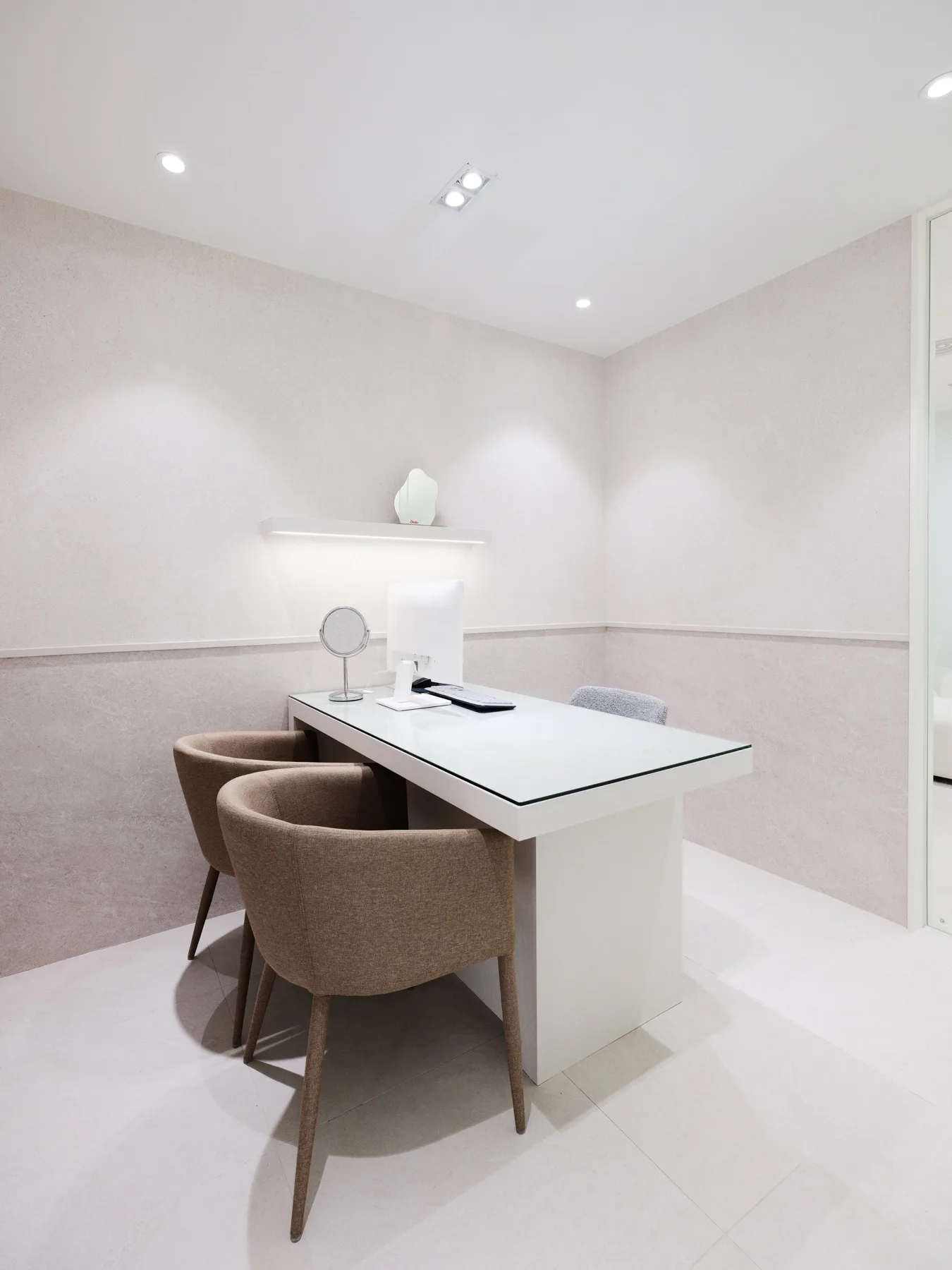
Fig. 04 · A consultation room with a mirror, for agreeing the line together

Fig. 05 · The lounge on the clinic floor
Consultations take place at the clinic on the fourth and fifth floors of the Richro Building in Apgujeong, Gangnam, Seoul, by appointment on Monday, Tuesday, Wednesday and Friday from 10:00 to 19:00 and on Saturday from 10:00 to 16:00. Photographs you send before travelling help the surgeon understand the question, but the distance itself is only confirmed once your forehead has been measured and your scalp examined. Ask for the agreed figure to be written into your plan so you can compare it with the result later.

Board-certified plastic surgeon
Each forehead reduction distance is measured and agreed by Dr. Jonghwan Choi, whose Korean specialist certification is in Plastic Surgery. Rewind treats international patients as a KHIDI-registered institution, Reg. M-2025-01-08-09288.
Pricing
Rewind's schedule lists forehead reduction as one operation, with the combined forehead lift as a separate line. The listing is not expressed per centimeter.
Prices are list prices that already include anaesthetic fees; VAT is charged on top and is not included in the figures shown. Which line applies is decided once your forehead, brow and scalp have been examined, and the quote is confirmed at that point.
Realistic distances
After surgery
The centimeters are set in theatre. What happens in the weeks after decides how much of that distance stays put, and the published follow-up data show that some change is normal.
Pushing for more distance than the tissue allows raises the risks that matter here: a scar that widens under tension, hair loss along the incision, numbness or altered sensation of the scalp behind the line, asymmetry between the two sides, bleeding, infection and a result that later needs revision. Wound problems are more common in people who smoke. Outcomes differ between individuals, and no specific number of centimeters can be promised.
At Rewind, one board-certified plastic surgeon carries every case — from the first consultation to the final follow-up. Because a face is a story, and a story deserves a single author.
 Rewind,
Rewind's Doctor
Dr. Jonghwan Choi Medical Director
One surgeon, from the first
consultation to the last follow-up.
A board-certified plastic surgeon devoted to anti-aging lifting — with the precision and restraint built through years of craniofacial practice.
Questions
Google Reviews
Came to REWIND to get my facial treatment and i'm absolutely obsessed about it💞 the doctor is so kind and is an expert! Everyone must visit!
YunHee Hong2 weeks agoThere are just way too many cosmetic clinics in Korea and I'm so happy I found Rewind Clinic in Gangnam. Dr. Choi was so kind and patient while explaining the different face-lifting options, from threads to mini-lifts to deep-plane lifts…
 J. S.5 months ago
I found Rewind clinic through a Korean chat forum and many local clients highly recommended it. The clinic is brand new, featuring large, clean rooms and many private waiting areas so it doesn't give off that "factory" clinic vibe. All the…
 J. Siou5 months ago
Really nice environment. Doctor is easy to communicate and understands my visions. Waited two weeks to make a review and I confirm the results exceeded my expectations and I am super happy with it. Can't wait to come back!! :))
 Kristie Chu5 months ago
I received a thread lift at Rewind Plastic Surgery. The clinic was clean and the atmosphere was comfortable. The consultation was thorough, and I felt confident because they kindly explained everything tailored to my facial condition. They…
Reservation
Tell us what you are considering — we reply as soon as possible, in your language.
For international patients — interpreter-assisted, from your first message to your follow-up.
Scientific evidence
The first paper is the source of the distances on this page: in 641 Asian patients operated on through an incision just in front of the hair, the authors report the average skin removed at three points and the change in forehead length two years later in 85 of them. The second sets out how facial surgery photographs should be standardised so that measurements taken before and after can be compared. The third reviews what happens to quality of care when patient and doctor share a language, which matters when a distance in millimeters is being agreed. The averages come from other surgeons' patients and describe neither Rewind's own results nor the figure your examination will give.