Surgery · Recovery
Three days, one week, two weeks, one month: what each marks
Gangnam, Seoul | Board-certified plastic surgeon, Dr. Jonghwan Choi
One written aftercare sheet for both lower-lid operations · KHIDI-registered for international patients
Lower-lid recovery
The short answer
Rewind's written instructions give four markers. The dressing beneath the eye stays on for three days. Stitches from lower blepharoplasty come out at roughly five to seven days. Early bruising and swelling decrease over one to two weeks, and the clinic notes that this varies from person to person; saunas, steam rooms and strenuous exercise wait for at least a week. Strong pulling on the operated area is avoided for about a month. The clinic issues the same under-eye sheet for fat repositioning and for lower blepharoplasty, so the timetable applies to both. It does not publish a day on which the result counts as final.
Figures on this page come only from Rewind's post-operative instruction sheet and its lower blepharoplasty page. Anything those sources leave out, such as a date for returning to work or for flying home, is settled at your consultation and not guessed here.
Downtime after lower-lid surgery is several clocks running at once. The dressing clock is the shortest and the most exact. The stitch clock only runs if there are stitches in the skin. The bruising clock is the one that differs most between people, and the clock that ends with a settled lower lid is one no published figure covers. Most of the work in planning a trip to Seoul is knowing which of these clocks your dates actually depend on.
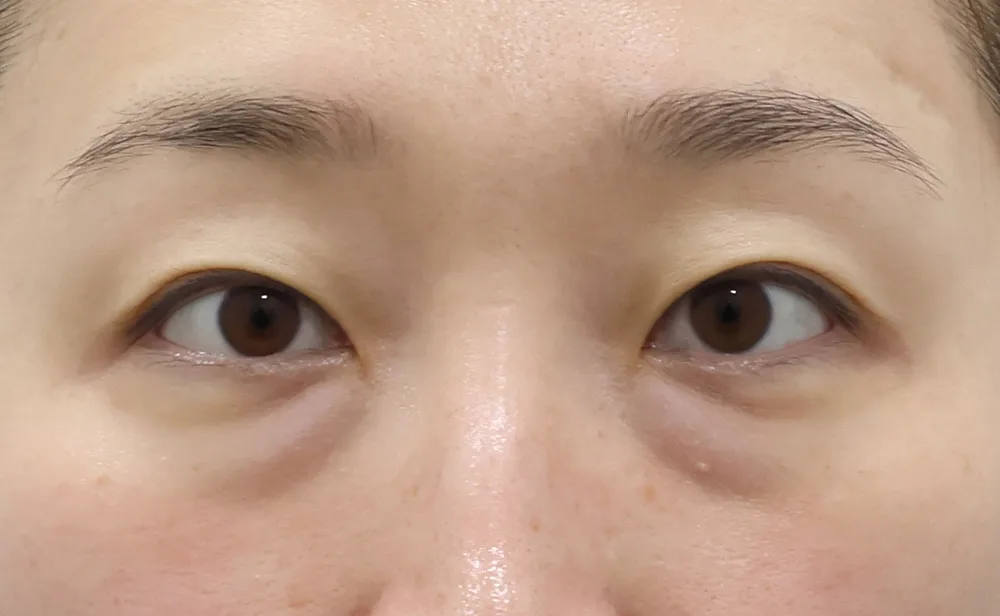
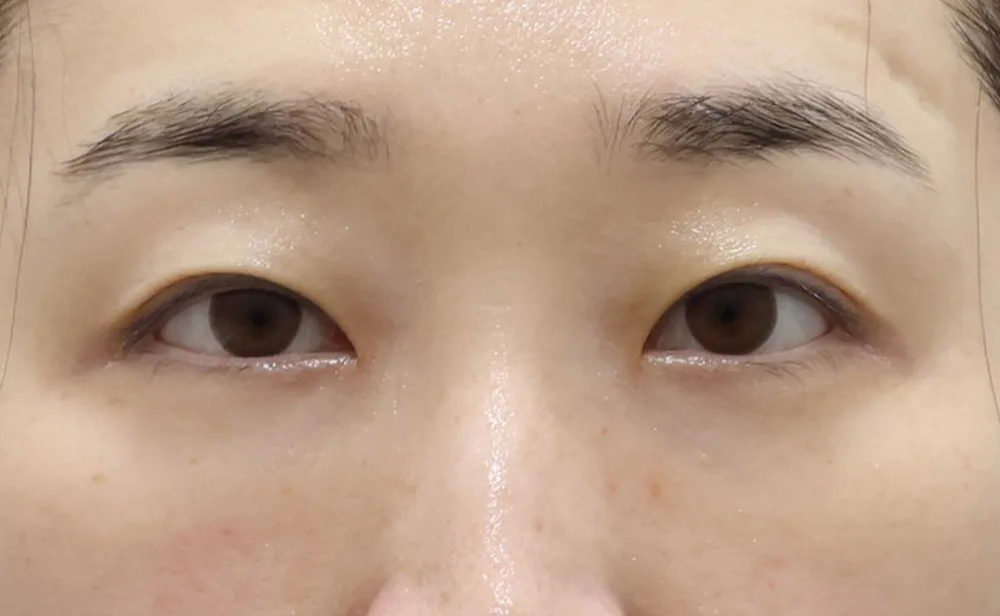
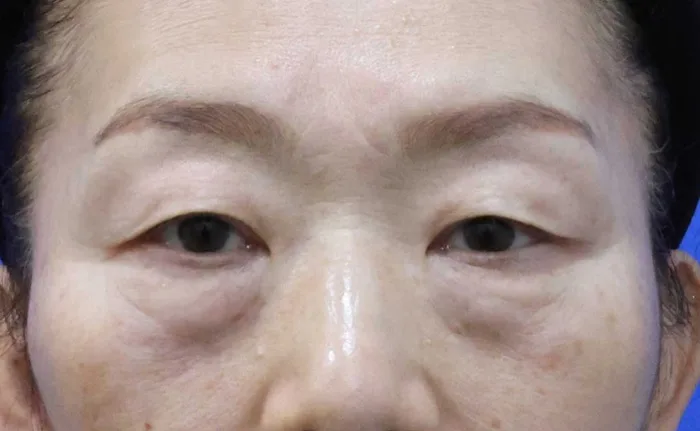
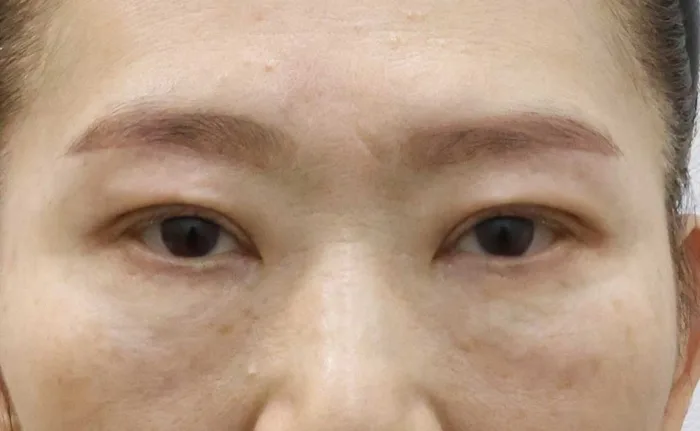
Case photographs
These pairs show lower lids once healing was over. The bruised and swollen weeks in between are not photographed here, and the interval between each operation and its after photograph is not part of the published record, so neither pair tells you how quickly that person recovered.
BEFOREAFTER
BEFOREAFTERPhotographs of Rewind's own patients, published unretouched, with every operation in the session named in its caption. Individual results may vary. A combined session adds the upper lid's healing to the lower lid's, and bruising, prolonged swelling, asymmetry, scarring and a change in lower-lid position are possible after either.
What heals when
Each of the four markers Rewind publishes belongs to something different. Treating them as one number is how people end up booking a flight around the wrong one.
Rewind's lower blepharoplasty page also records that the result can be expected to hold for five years or more, with individual variation. That is a durability figure, and it starts once healing is over. It says nothing about how many days of downtime to plan for.
The timetable
The rungs below follow the order in which the instructions start to matter. The clinic hours are included because a stitch-removal day has to fall on a day the clinic is open.
At the end of lower-lid surgery the under-eye dressing goes on. The rules that apply from then on are the ones Rewind publishes on its own site, so they can be read and planned for well ahead of the operation.
The dressing stays untouched for three days. Rewind's sheet also rules out rubbing the eye area or putting strong pressure on it, and sunscreen is required whenever you are outdoors.
The lower blepharoplasty page gives roughly five to seven days. Rewind sees patients on Monday, Tuesday, Wednesday and Friday from 10:00 to 19:00 and on Saturday from 10:00 to 16:00, and is closed on Thursday and Sunday, so the visit is booked on an open day inside that window.
The heat of a sauna or steam room and strenuous exercise are avoided for at least the first week. Your surgeon tells you at follow-up when each can come back.
This is the stretch in which the under-eye goes from obviously operated to presentable, and it is the part that varies most. Rewind states one to two weeks, differing by individual, and gives no shorter promise.
For about a month the operated area is not pulled or stretched hard. Alcohol, smoking and sauna are also postponed for a period, and the lid is reviewed before those limits are lifted.

Why here
The weeks after lower-lid surgery are when small problems are cheapest to catch. That argues for a short chain between the operation and the person looking at the healing lid.
Rewind publishes its aftercare operation by operation, and the under-eye sheet is the same for fat repositioning and lower blepharoplasty: the three-day dressing, no rubbing, sunscreen, and a week away from heat and exertion. You leave with rules written for this part of the face.
Surgical reviews of lower blepharoplasty single out a change in lower-lid position, retraction or ectropion, as the complication to prevent and to correct, and two of them are listed at the foot of this page. Early swelling makes a lid hard to read in a mirror; position is judged at review by the surgeon.
Rewind holds KHIDI registration as an institution for international patients, number M-2025-01-08-09288, and answers inquiries in the patient's own language, so questions during recovery do not wait on a translator.
On the day

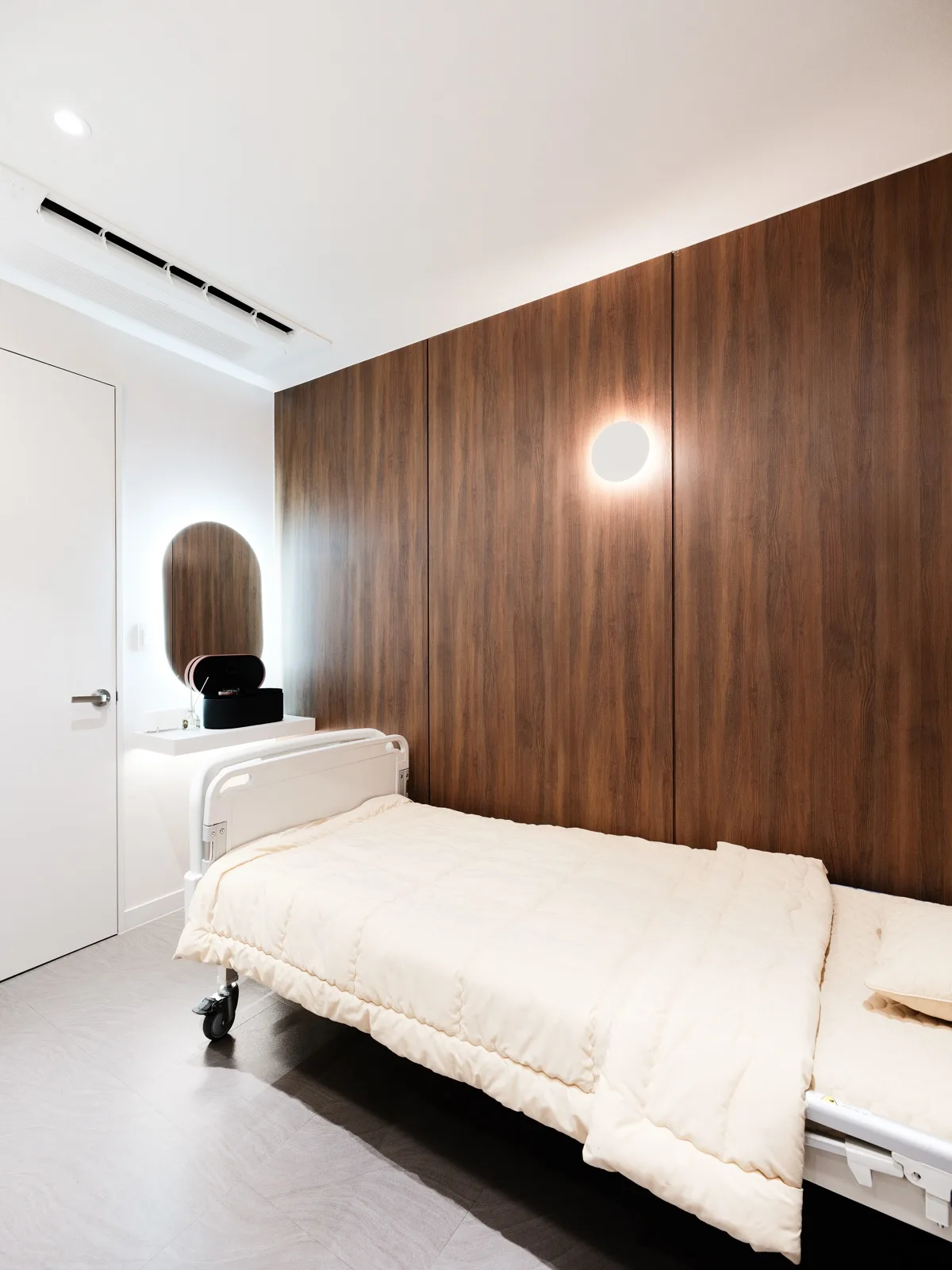
Fig. 04 — The procedure room, set before lower-lid surgery

Fig. 05 — The lounge where follow-up visits begin
The clinic occupies floors four and five of the Richro Building in Apgujeong, Gangnam, and the medical director operates on every lower lid himself. You go home with the dressing in place and return for the checks your operation calls for, including stitch removal where stitches were used.
Board-certified plastic surgeon
Dr. Jonghwan Choi operates on and reviews each lower lid at Rewind, and his name is on ten peer-reviewed papers. The clinic's KHIDI registration for international patients is M-2025-01-08-09288.
Pricing
Rewind's list prices the operation. Dressing checks, stitch removal and follow-up visits are not published as separate lines, so ask for them to be spelled out when you receive a quote. For travellers the larger cost of recovery is time in Seoul, which depends on the operation below that applies to you.
Figures exclude VAT, and the anaesthetic fee sits inside each one. Which line applies is decided at examination, and anything tied to your follow-up schedule is confirmed at the same time.
Planning
Aftercare
Most of the timetable happens by itself. What you control is a short list of habits, and Rewind's sheet names them one by one.
Call the clinic promptly if swelling, pain or bleeding increases where it should be easing, if your vision changes, or if a lower lid seems to be pulling down or away from the eye. Those are reasons to be seen, whatever day of the timetable you are on.
Risks after lower-lid surgery include bleeding and haematoma, infection, swelling that lasts beyond two weeks, asymmetry, altered sensation, dryness, a visible line where a skin approach was used, and lower-lid retraction or ectropion. Recovery speed and results vary between individuals and cannot be promised.
At Rewind, one board-certified plastic surgeon carries every case — from the first consultation to the final follow-up. Because a face is a story, and a story deserves a single author.
Rewind,
Rewind's Doctor
Dr. Jonghwan Choi Medical Director
One surgeon, from the first
consultation to the last follow-up.
A board-certified plastic surgeon devoted to anti-aging lifting — with the precision and restraint built through years of craniofacial practice.
Google Reviews
"Sample review card — at launch this section pulls the clinic's real Google reviews automatically, shown verbatim with the reviewer's initial and posting date."
"Sample review card — reviews are never written or edited by the clinic; only what patients posted on Google appears here."
"Sample review card — a 'See all reviews on Google' link takes visitors to the clinic's Business Profile."
Questions
Reservation
Tell us what you are considering — we reply within one business day, in your language.
Scientific evidence
Four papers relevant to what recovery is protecting: a systematic review of safety and complications in lower eyelid blepharoplasty, a review of preventing and correcting lower-lid malposition, reported outcomes and complications of transconjunctival fat repositioning, and a technique paper on tear-trough ligament release with fat redistribution.
Each describes its own authors' patients and follow-up. None was conducted at Rewind, and none sets the recovery timetable for a particular lid; that timetable comes from the clinic's own written instructions.