★★★★★
Came to REWIND to get my facial treatment and i'm absolutely obsessed about it💞 the doctor is so kind and is an expert! Everyone must visit!
 YunHee Hong2 weeks ago
Surgery · Inner and Outer Corners
Two corners of the eye, two separate operations
Apgujeong, Seoul | Board-certified plastic surgeon, Dr. Jonghwan Choi
Inner and outer corners listed apart · KHIDI-registered for international patients
Inner corner or outer corner
The comparison in one paragraph
They work at opposite ends of the eye. The medial operation, usually called epicanthoplasty, sits beside the nose: Rewind incises the epicanthal fold inward along a design drawn against the medial canthus and closes it inward, uncovering a corner the fold was hiding, so the eye reads longer from side to side. The lateral operation sits toward the temple: mucosa at the back of the eye is removed, the inner conjunctiva is incised and the tissue is fixed to the periosteum, which changes the tail and slant of the opening. Rewind pairs the outer trim with a lower-lid trim and prices both corners separately.
Taken from Rewind's Korean surgical page on eye-opening procedures, which gives each corner its own three steps. Anaesthesia, operating time and the day stitches come out are not published there, so none of them is given on this page.
The labels muddy things. English-language searches mix epicanthoplasty, medial epicanthoplasty and medial canthoplasty for the inner corner, while lateral canthoplasty almost always means the outer one. Here, medial means the corner beside the nose and lateral means the corner toward the temple, whatever name a search result happens to use.
Which corner is holding your eye short is a reading taken at the chair. Rewind looks at how much of the inner corner the fold covers, how far apart the two corners already sit and how the lower lid and outer tail are angled; the answer is often one corner, occasionally both, sometimes neither. The inner-corner operation on its own is covered on the main epicanthoplasty page.

Case photographs
Both pairs below are medial epicanthoplasty. Rewind has no registered outer-corner case cleared for this page, so none is shown, and a comparison built on borrowed outer-corner photographs would say nothing about this clinic's own work. Look at the tissue beside the nose in each frame: that is where the change sits, while the outer tail was left as it was.
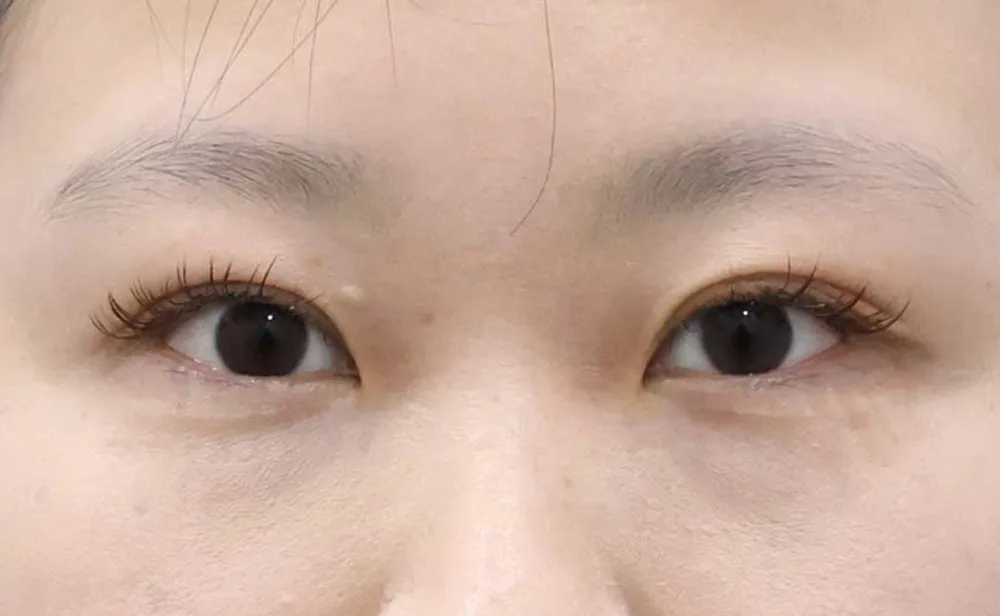
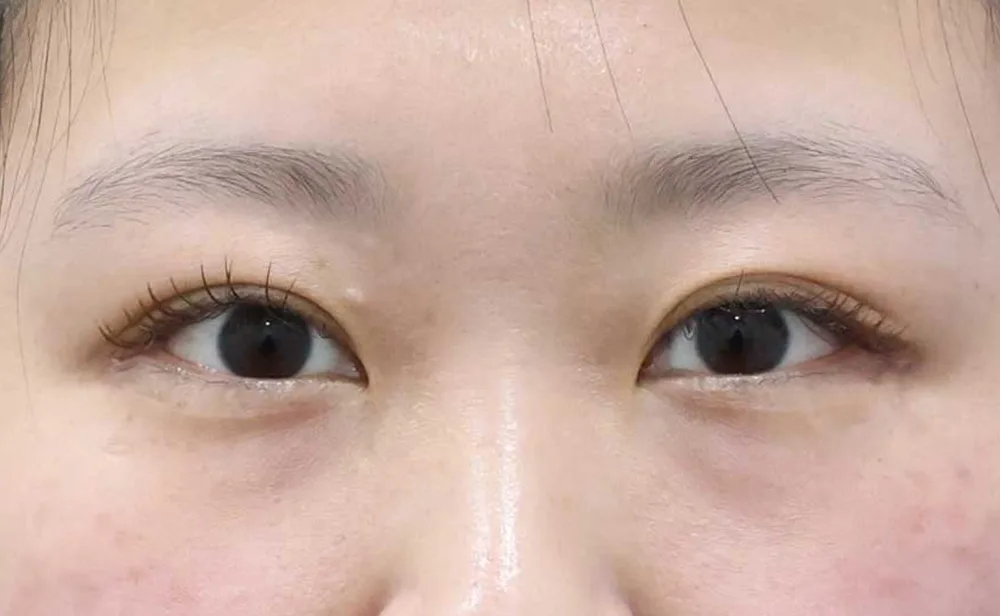 BEFOREAFTER
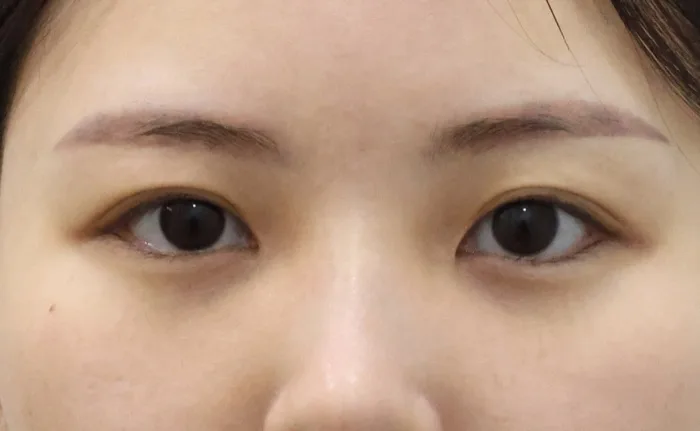
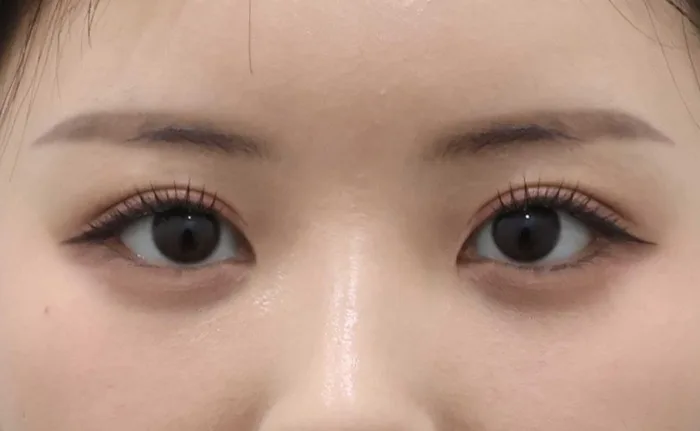 BEFOREAFTER
Rewind photographed these patients itself and the images are unretouched. They show the inner corner at the moment each after photograph was taken and do not predict how either of your corners would respond; individual results may vary. Bleeding, infection, swelling, a visible or thickened line at the inner corner, asymmetry between the eyes and a release that goes further than planned are all recognised risks, and the outer and lower trims carry their own, set out in the recovery section. A consultation with the surgeon comes first.
Side by side
Four questions separate the two procedures cleanly: what is cut, what the tissue is anchored to, what changes in the mirror and which eyes the clinic turns away. Rewind's own descriptions answer each of them differently at each corner.
Operative steps
Rewind publishes three steps per corner. Laid next to each other they follow the same order, design first and closure last, applied to tissue that behaves very differently at each end of the eye.
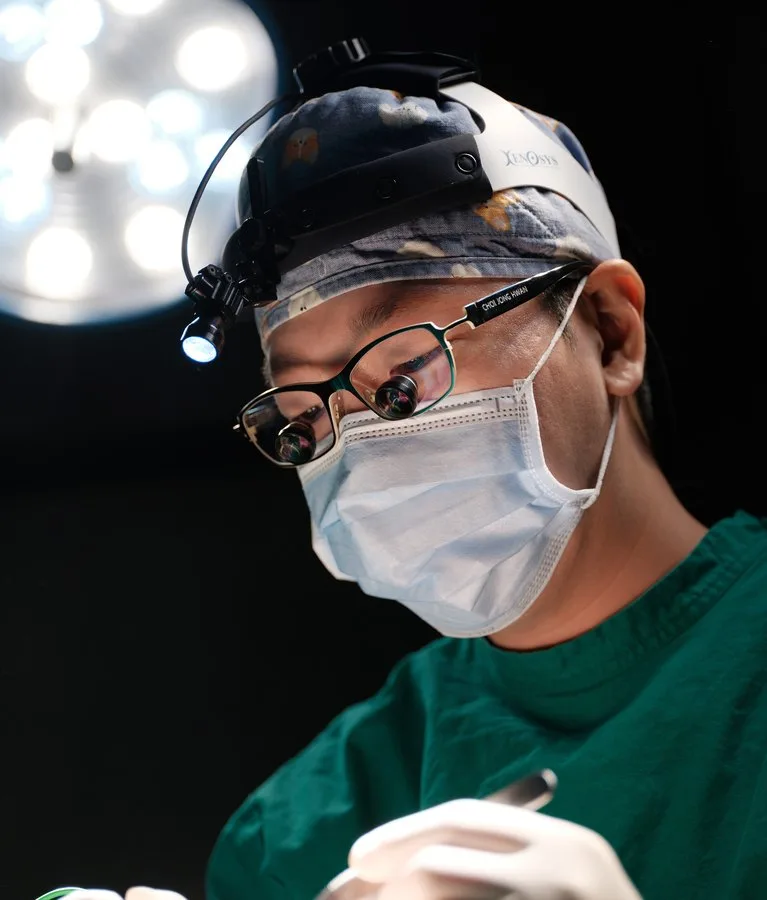
The inner release is designed after the structure of the eye and the surrounding muscle are checked, with the medial canthus as reference. The outer trim is drawn to the eye's own shape and proportions, and the lower trim is positioned using the pupil as its guide.
The incision runs into the epicanthal fold following the canthus, and the closure follows the same line back. How far inward it travels is the central decision: a short release leaves the corner partly hidden, an over-long one draws the two corners visibly nearer.
Behind the outer corner the mucosa is taken away and the inner conjunctiva is incised. The tissue is then fixed to the periosteum and closed with the line kept to the inner surface of the lid.
The lower trim, which Rewind pairs with the outer corner, opens the conjunctiva of the lower lid and fixes the tissue firmly to the fascia. The clinic describes the combined outer-and-lower work as drawing the lower lid into a new position with a suture, so a closed-looking eye appears more open.
Why here
A corner operation is small, and small operations are easy to add without asking what they are for. Rewind treats the medial and lateral procedures as answers to different complaints, so the first task at consultation is naming the complaint precisely.
An eye that reads short because a fold hides its inner corner points one way. An eye that reads narrow at the tail, or harsh in expression, points the other. Patients often arrive asking for both corners when their photographs show only one of those findings.
The medial release and the outer, lower or upper trim are separate listings with their own prices. Either can be removed from a plan without disturbing the rest, and neither is folded quietly into a crease operation.
Dr. Choi designs, operates and holds every review. The corners take six months to a year to settle, so the person comparing them at the end is the one who drew them at the start. International patients are supported in their own language, and Rewind is KHIDI-registered for patients from abroad.

In the operating room
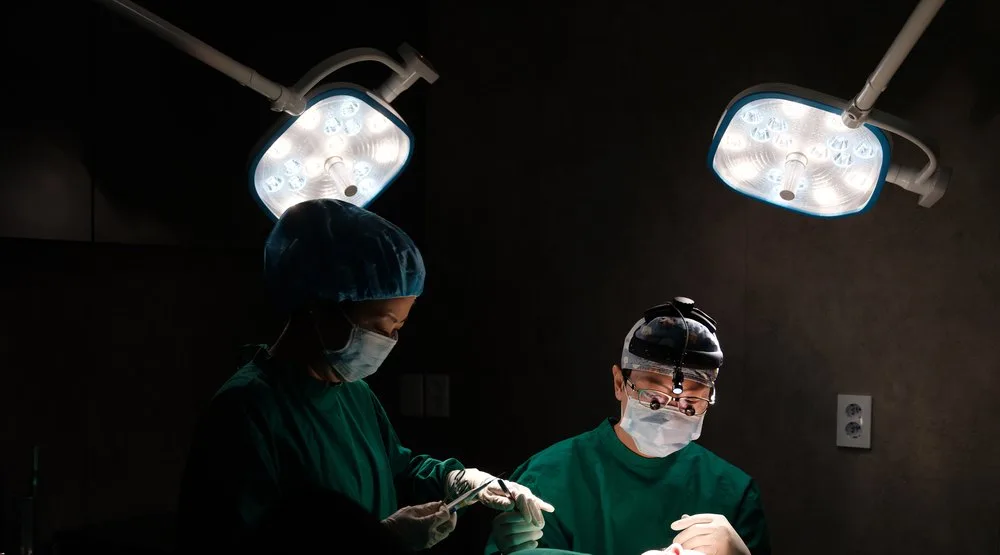
Fig. 04 — Rewind's operating room, Richro Building
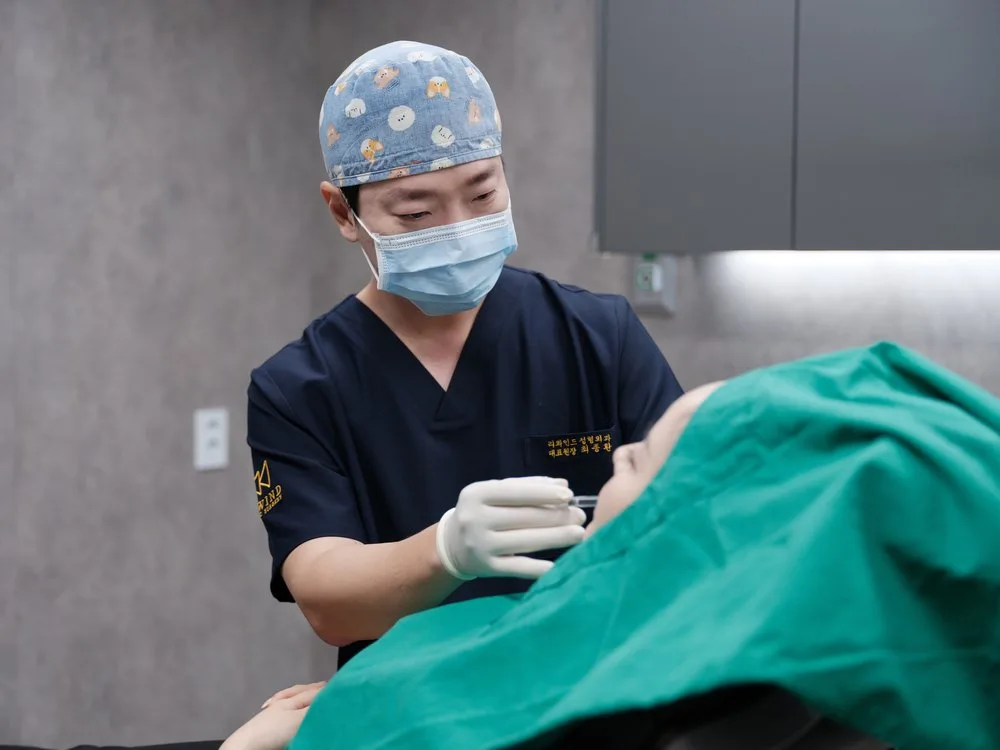
Fig. 05 — Draped and ready before either corner is marked
Rewind is on levels four and five of the Richro Building in Apgujeong, Gangnam, Seoul. Consultations run Monday, Tuesday, Wednesday and Friday from 10:00 to 19:00 and Saturday from 10:00 to 16:00, by appointment; the clinic is closed on Thursday and Sunday. Whichever corner is chosen, the medical director draws the design, performs the operation and sees you at each review.

Board-certified plastic surgeon
Dr. Jonghwan Choi is certified in Korea in Plastic Surgery and is the only surgeon operating at Rewind, on either corner. The clinic is a KHIDI-registered institution for international patients, Reg. M-2025-01-08-09288.
Pricing
Inner and outer corners carry separate list prices, and a crease, where one is planned, adds its own. A quote from Rewind is the sum of the lines the examination supported and nothing beyond them.
List prices, VAT excluded, with anaesthetic fees already inside each figure. If both corners are agreed, the quote shows two lines, one per corner. Which of them applies to you, and whether a crease belongs in the plan at all, is set out at consultation.
Suitability
Recovery
Rewind gives one instruction and one timescale for all of its corner operations: keep hands away from the operated area, and allow at least six months, up to a year, for a natural and stable result. What differs between the two corners is where the healing line sits and how much of it you can see along the way.
Any surgical procedure carries risk. At the inner corner the named risks include bleeding, infection, swelling, asymmetry between the eyes, a scar that thickens or remains easy to see, and an inner corner opened more than planned. For the lower trim, Rewind warns that a sunken eye can look puffier and that visible white beneath the iris can increase. How much of an outer-corner change holds as the tissue settles varies between individuals. Tell the surgeon about every earlier eye operation and any regular medication before a date is set.
At Rewind, one board-certified plastic surgeon carries every case — from the first consultation to the final follow-up. Because a face is a story, and a story deserves a single author.
 Rewind,
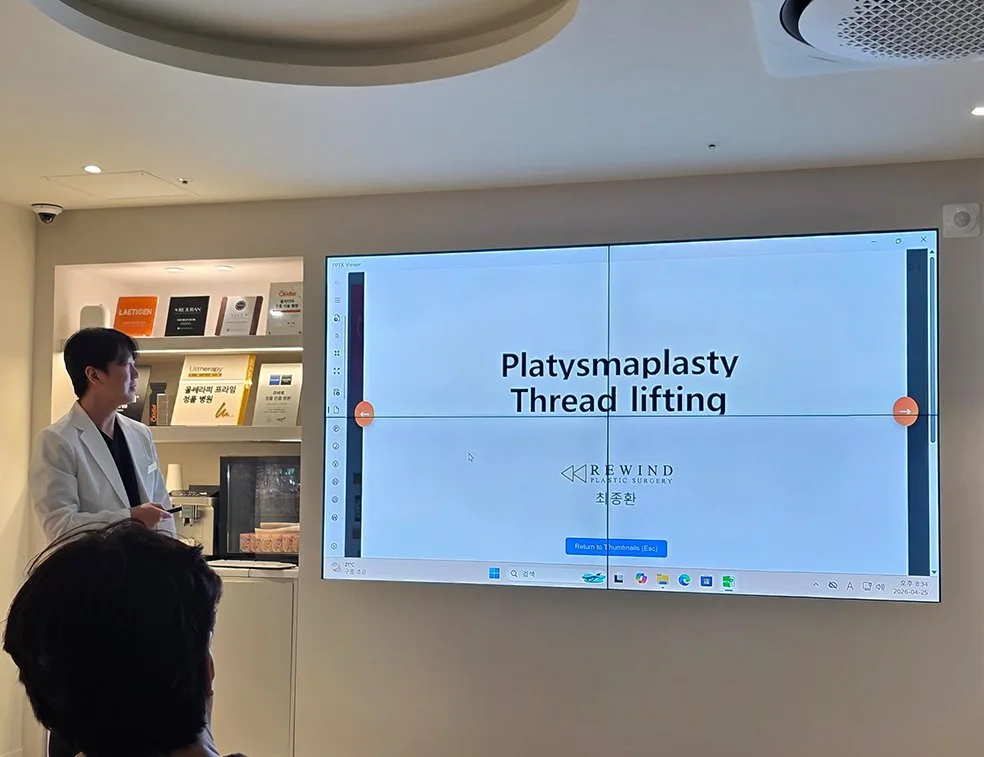
Rewind's Doctor
Dr. Jonghwan Choi Medical Director
One surgeon, from the first
consultation to the last follow-up.
A board-certified plastic surgeon devoted to anti-aging lifting — with the precision and restraint built through years of craniofacial practice.
Questions
Google Reviews
Came to REWIND to get my facial treatment and i'm absolutely obsessed about it💞 the doctor is so kind and is an expert! Everyone must visit!
YunHee Hong2 weeks agoThere are just way too many cosmetic clinics in Korea and I'm so happy I found Rewind Clinic in Gangnam. Dr. Choi was so kind and patient while explaining the different face-lifting options, from threads to mini-lifts to deep-plane lifts…
 J. S.5 months ago
I found Rewind clinic through a Korean chat forum and many local clients highly recommended it. The clinic is brand new, featuring large, clean rooms and many private waiting areas so it doesn't give off that "factory" clinic vibe. All the…
 J. Siou5 months ago
Really nice environment. Doctor is easy to communicate and understands my visions. Waited two weeks to make a review and I confirm the results exceeded my expectations and I am super happy with it. Can't wait to come back!! :))
 Kristie Chu5 months ago
I received a thread lift at Rewind Plastic Surgery. The clinic was clean and the atmosphere was comfortable. The consultation was thorough, and I felt confident because they kindly explained everything tailored to my facial condition. They…
Reservation
Tell us what you are considering — we reply as soon as possible, in your language.
For international patients — interpreter-assisted, from your first message to your follow-up.
Scientific evidence
One paper deals with an inner-corner design that avoids a vertical line, one with outer-corner surgery intended to lengthen the lateral angle, and one with complications in the crease surgery these corners are often planned beside. Each describes its authors' own technique and patients. None is a study of Rewind, and none predicts how your own corners would respond.