★★★★★
Came to REWIND to get my facial treatment and i'm absolutely obsessed about it💞 the doctor is so kind and is an expert! Everyone must visit!
 YunHee Hong2 weeks ago
Non-Surgical · Device Comparison
Radiofrequency in the dermis, ultrasound at the fascial layer
Gangnam, Seoul | Board-certified plastic surgeon, Dr. Jonghwan Choi
KHIDI-registered for international patients · Apgujeong Rewind
Thermage or Ultherapy
The short answer
They heat different layers. Thermage FLX is a monopolar radiofrequency device that warms a volume of dermis under a cooled surface, contracting collagen and prompting new collagen to form; Rewind records firmer skin, lifting, softer fine lines and better texture among its effects. Ultherapy Prime focuses ultrasound on the deep fascial layer after imaging the tissue on screen, and Rewind records wrinkle improvement, firmness and a cleaner facial line. Laxity sitting mainly in the skin leans toward Thermage; laxity in the deeper supporting layer, along the jaw and neck, leans toward Ultherapy. Some faces need both, and some need neither.
Sources: Rewind's Korean device documentation and published price list. Both devices are held at Rewind Plastic Surgery in Apgujeong, so this compares two options on the same menu.
Asking which device is stronger tends to lead nowhere, because the two are aimed at different depths. The question that settles most plans is where the looseness sits. Skin that has thinned and crinkled responds to heat in the dermis. A jaw line that has softened because the layer beneath the skin has slackened responds to energy placed deeper.
This page covers the comparison alone. Each device has a page of its own: Thermage FLX and Ultherapy Prime.
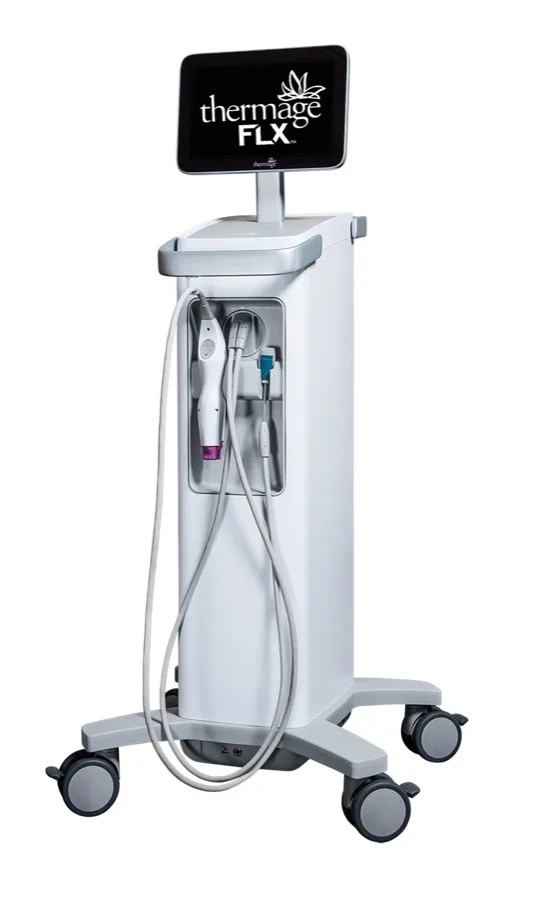
Side by side
Each card draws on Rewind's device record, its price list or its written aftercare. Where the record is silent, nothing is claimed.
Mechanism
Both devices work with heat, and both leave the surface closed. They part company over how the heat is made and where it gathers.
Current flows from the tip toward a return pad, and the tissue's resistance turns it into heat spread through the dermis. Cooling at the surface lets the dermis warm while the outer skin stays intact.
Ultrasound is focused the way a lens focuses light, bringing small points in the deep fascial layer to coagulation temperature while the tissue above lets the energy pass.
Ultherapy Prime shows the layers on screen before a line is delivered, so depth can be matched to the tissue in front of the transducer. Thermage FLX works without an imaging step; its heat follows the dermis beneath the tip.
A 2015 histometric study compared the thermal changes each energy leaves in skin, and a 2019 randomized split-face trial treated one side of each face with each device. Both describe two energies working in different ways, so the choice follows the face.
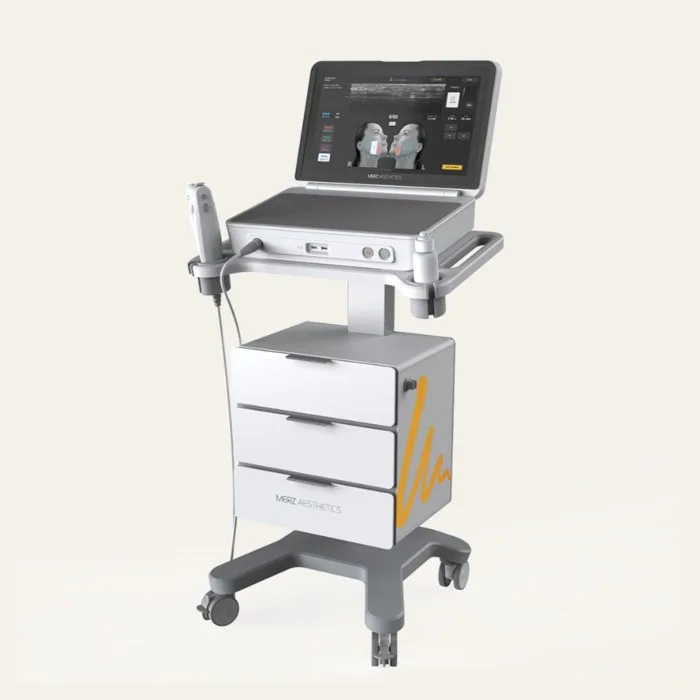
Choosing
Rewind holds both machines, so steering you toward one of them earns the clinic nothing. The deciding factor is the layer that has loosened.
Crepey texture, fine lines and a surface that has lost its snap point to the dermis, and so to Thermage FLX.
A softening jaw line or slackness under the chin, with skin that still looks fairly firm, points to a deeper layer, and so to Ultherapy Prime.
Neither machine returns descended tissue to where it was. Dr. Choi, a board-certified plastic surgeon, will set out the surgical route in that case, and the decision remains yours.
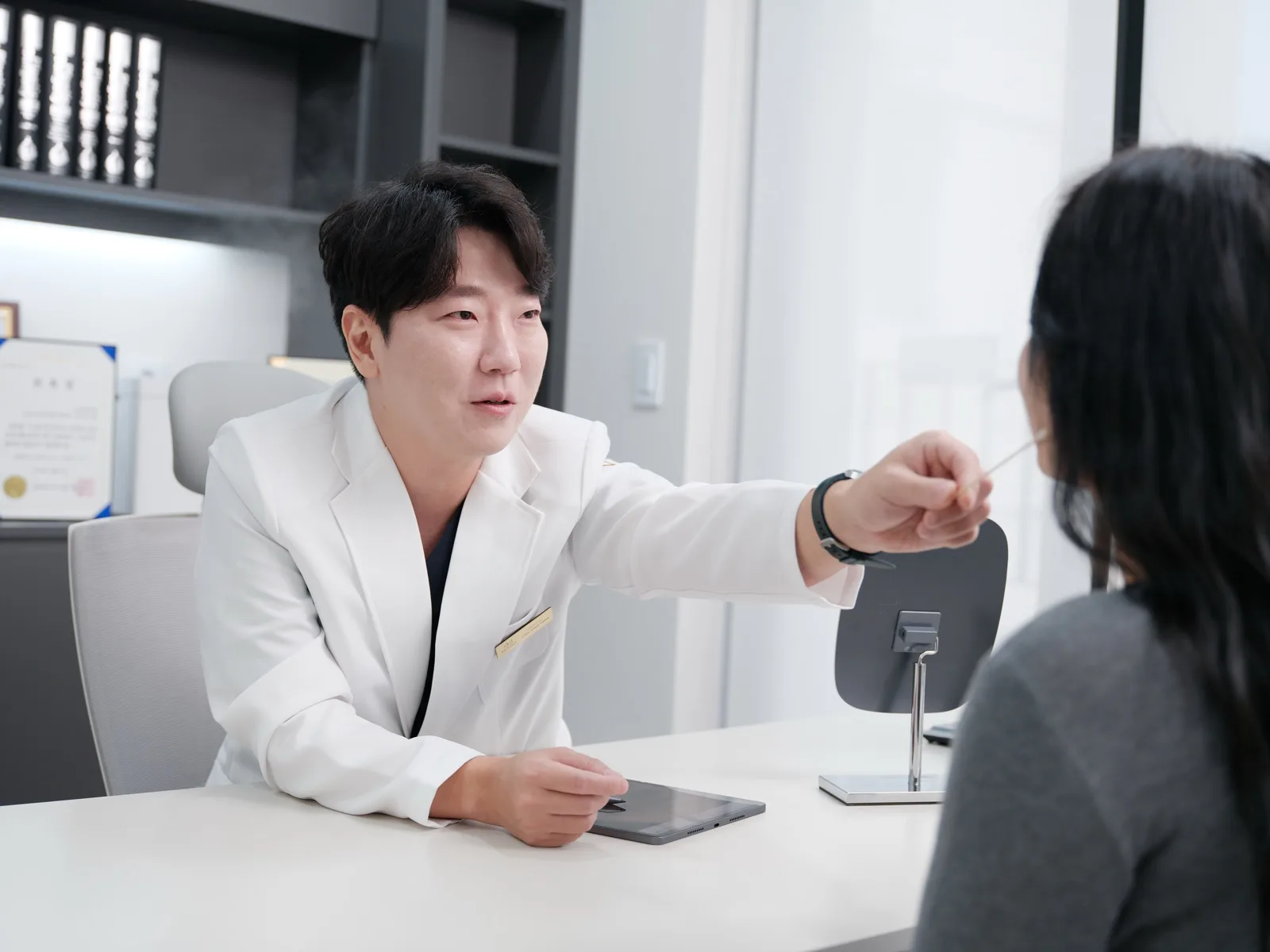
At the clinic
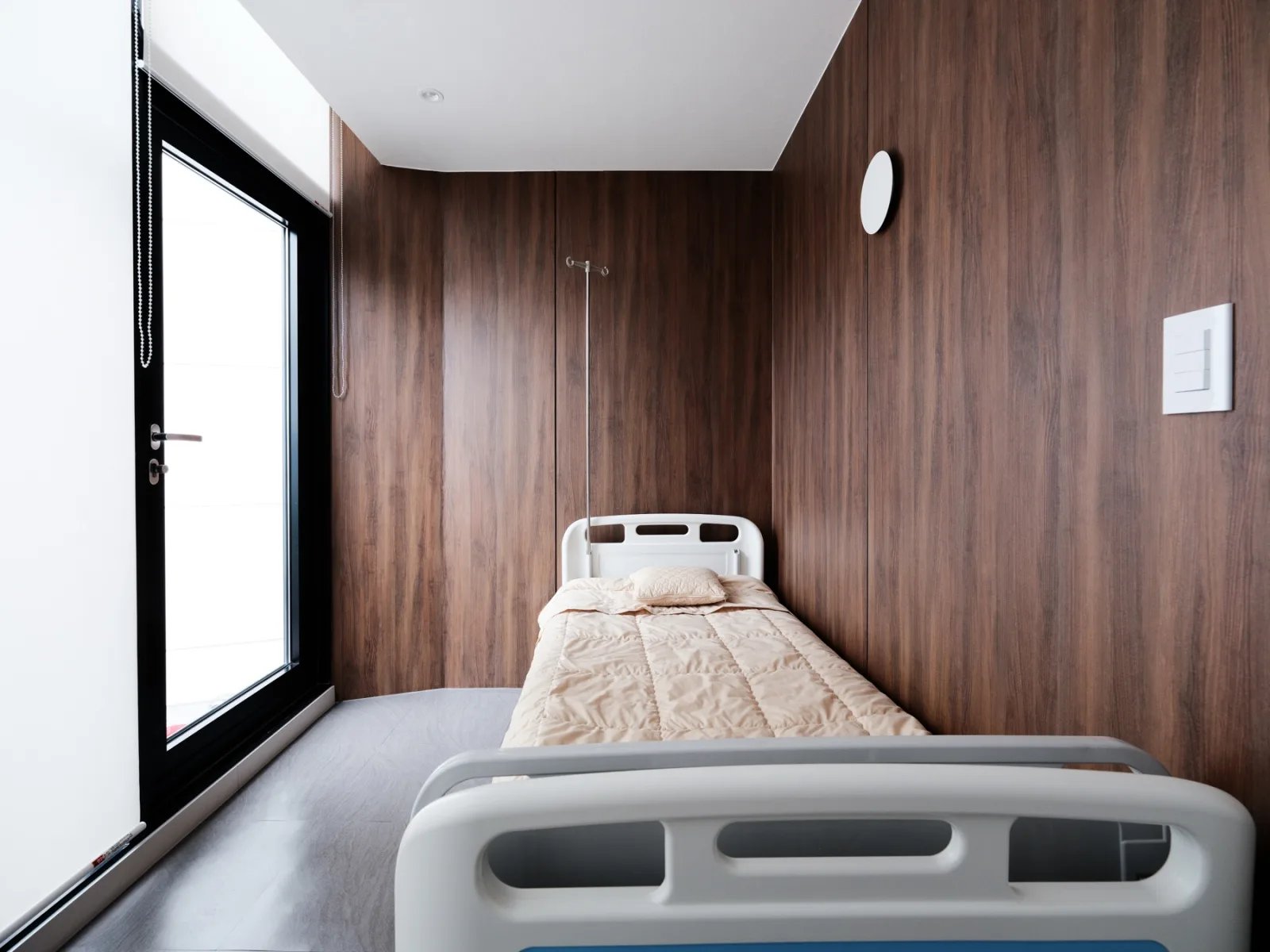
Fig. 04 · A private treatment room
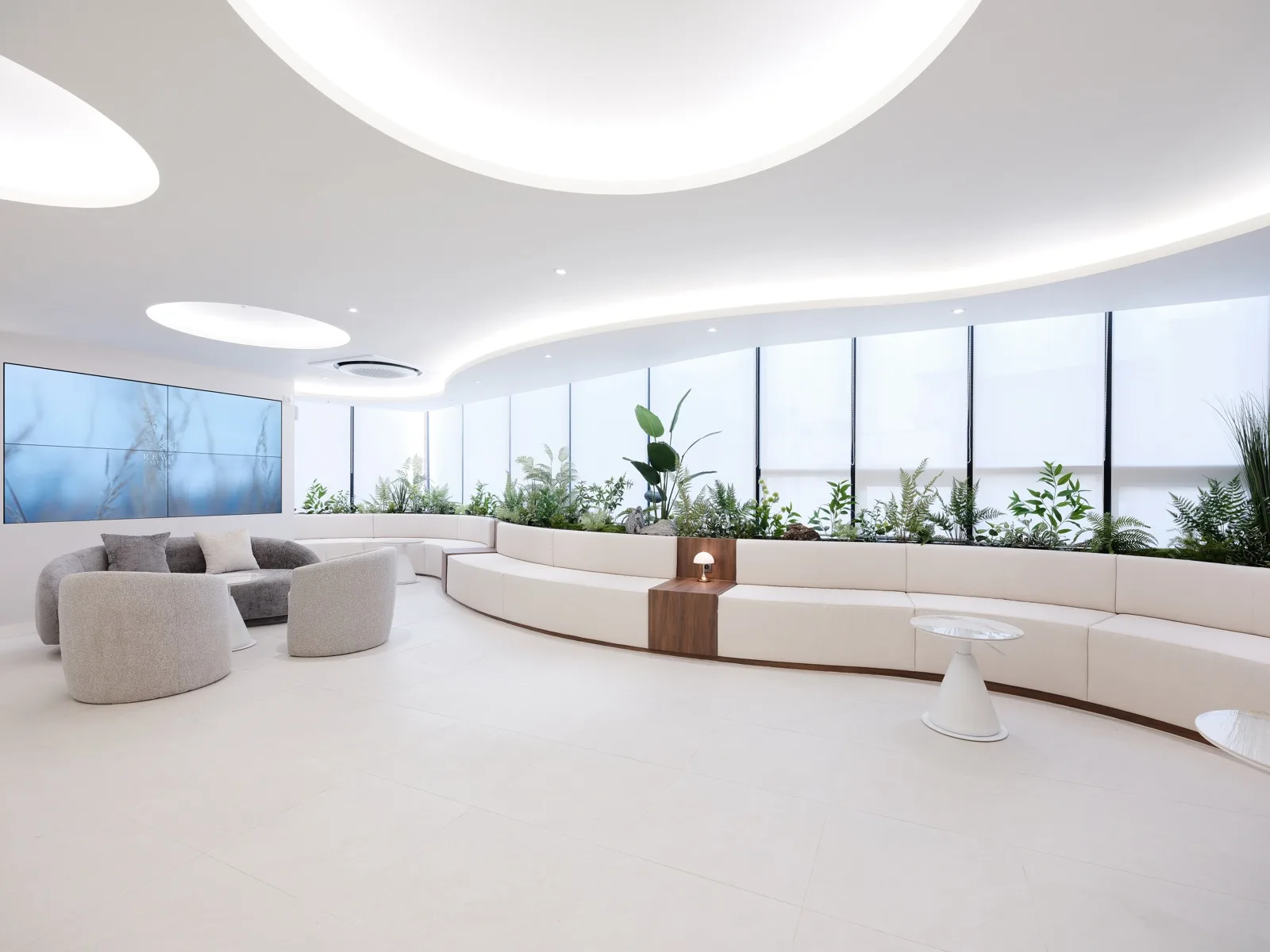
Fig. 05 · The lounge on the clinic floor
Both devices are used on Rewind's fourth and fifth floors of the Richro Building in Apgujeong, Gangnam, Seoul, by appointment on Monday, Tuesday, Wednesday and Friday from 10:00 to 19:00 and on Saturday from 10:00 to 16:00. The clinic is closed on Thursday and Sunday. One consultation covers both devices, and the plan names the one chosen, both, or neither.
Neither device has a published anaesthesia protocol or session length at Rewind, so ask about both when you book. On the day, the Thermage tip box shows its shot count and the Ultherapy screen keeps a running tally of lines, and either can be set against your plan.
Pricing
The two devices are sold on different units, shots for one and lines for the other, so compare the plan you would actually have.
The three figures leave out value-added tax but already cover any anaesthetic used. Rewind publishes no combined Thermage and Ultherapy line, so a plan using both is priced from the separate lines after the examination.
Fit
Whichever device is on the table, a pregnancy, nursing, an implanted pacemaker or an infection on the face is discussed first, before any plan is written.
After treatment
Rewind hands out a separate instruction sheet for each device. The Thermage sheet runs for a week; the Ultherapy sheet concentrates on the first days.
The reported risks differ with the energy. Monopolar radiofrequency has been associated with burns and blistering, prolonged redness, altered sensation and, uncommonly, fat loss under the skin. Focused ultrasound has been associated with redness, swelling, bruising, tenderness and numbness, and less often with nerve irritation, as a 2017 case series and review describes. Declare earlier filler, threads or energy treatments in the area.
Both devices at Rewind are planned by one board-certified plastic surgeon, so the comparison is made by the doctor who would carry out either plan.
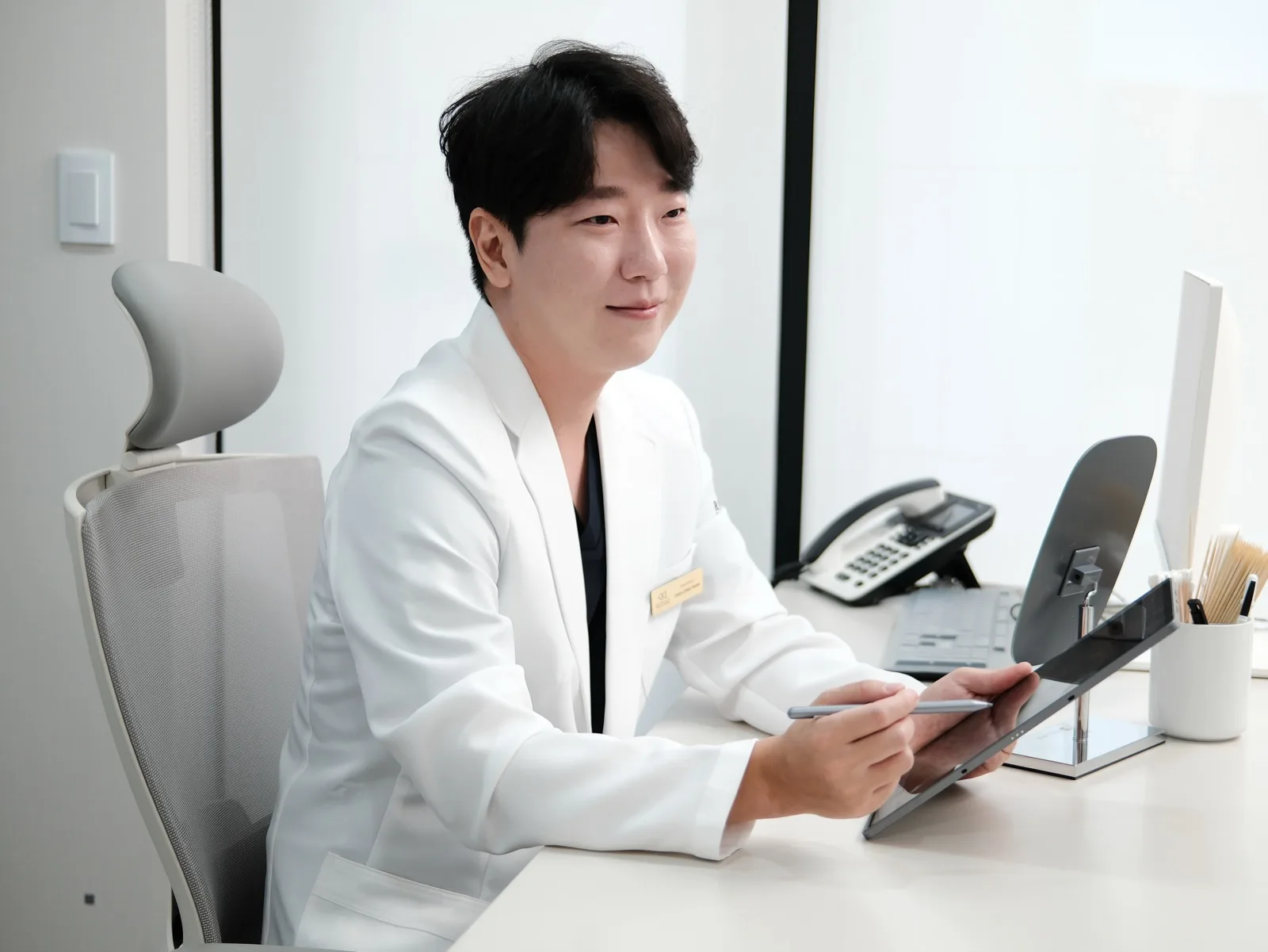 Rewind,
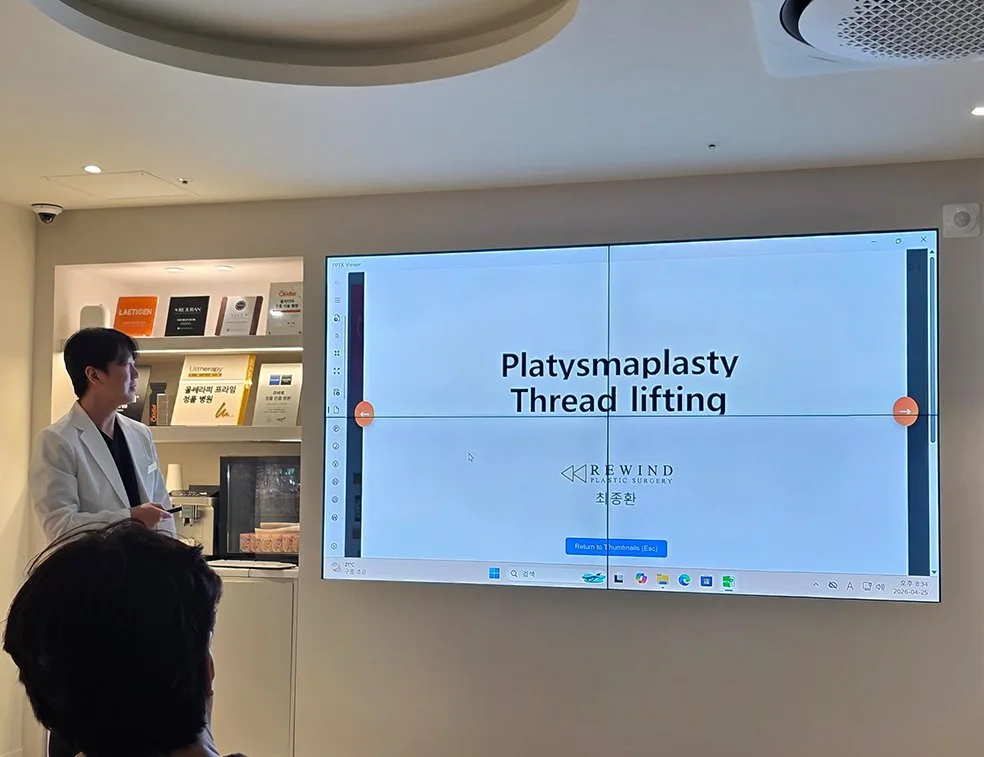
Rewind's Doctor
Dr. Jonghwan Choi Medical Director
One examination decides the layer,
and the layer decides the device.
A board-certified plastic surgeon devoted to anti-aging lifting, used to judging which layer of a face has given way.
Questions
Google Reviews
Came to REWIND to get my facial treatment and i'm absolutely obsessed about it💞 the doctor is so kind and is an expert! Everyone must visit!
YunHee Hong2 weeks agoThere are just way too many cosmetic clinics in Korea and I'm so happy I found Rewind Clinic in Gangnam. Dr. Choi was so kind and patient while explaining the different face-lifting options, from threads to mini-lifts to deep-plane lifts…
 J. S.5 months ago
I found Rewind clinic through a Korean chat forum and many local clients highly recommended it. The clinic is brand new, featuring large, clean rooms and many private waiting areas so it doesn't give off that "factory" clinic vibe. All the…
 J. Siou5 months ago
Really nice environment. Doctor is easy to communicate and understands my visions. Waited two weeks to make a review and I confirm the results exceeded my expectations and I am super happy with it. Can't wait to come back!! :))
 Kristie Chu5 months ago
I received a thread lift at Rewind Plastic Surgery. The clinic was clean and the atmosphere was comfortable. The consultation was thorough, and I felt confident because they kindly explained everything tailored to my facial condition. They…
Reservation
Tell us what you are considering — we reply as soon as possible, in your language.
For international patients — interpreter-assisted, from your first message to your follow-up.
Scientific evidence
These papers compare or describe the two energies in their own study groups and at their own settings. They were not carried out at Rewind, and none of them predicts how an individual face will respond to either device.