Non-Surgical · Hyaluronic Acid
Hyaluronic acid in body volumes, for the hip dip, the buttock and the shoulder line
Gangnam, Seoul | Board-certified plastic surgeon, Dr. Jonghwan Choi
KHIDI-registered for international patients · Apgujeong Rewind
Body filler
The short answer
Body filler is hyaluronic acid gel placed under the skin of the body to fill a hollow or build a contour. The quantities are the part that surprises people: Rewind's own material describes volumes running from 10cc up to 300cc, against the single-cc syringes used on a face. The clinic applies it to three regions, the buttock, the hollow at the side of the pelvis commonly called a hip dip, and the shoulder. Its material records that no anaesthetic is used and that nothing is sutured afterwards.
Two things the clinic does not state anywhere are how long a body result holds and how many sessions a region takes, so neither appears on this page. The product brand is also unnamed in the clinic's material, and inventing one would be worse than leaving the line blank. Those answers come from the examination.
The phrase circulating in English search results for this treatment is "non-surgical BBL", and it causes two separate confusions worth clearing in the first paragraph. It is not a fat transfer operation: nothing is harvested, nothing is grafted, and this page describes only gel injected through a needle or cannula. The same three letters also belong to a broadband light skin device, so search results for the acronym come back mixed. What is described here is hyaluronic acid, and nothing on this page should be read as an offer of surgery.
The second thing to be clear about is the ceiling. Gel fills a hollow. It does not lift descended tissue, it does not tighten a skin envelope that has loosened, and it does not substitute for a change in body composition. Someone whose complaint is that the skin over the hip has gone lax will get a poorer outcome from added volume than from leaving the area alone, and that is a conversation the examination is meant to have before a quote is written.
Regions treated
The clinic's material names three regions and the complaints it associates with each. They are listed below in the order people usually raise them. What any one of them takes in cc is decided standing up, with the area marked, and not from a list on a screen.
Nothing outside those regions is described in the clinic's material, and nothing outside them is described here. Requests for other parts of the body are a consultation question and may well be answered with a no. Large volumes of any injectable belong only where the anatomy underneath has been examined by the person holding the syringe.
Mechanism
The injection is the short part. What determines whether the result reads natural or lumpy is the arithmetic done before it and the plane the gel is put into.
Three things produce the same silhouette in a mirror: soft tissue that is genuinely missing, skin that has loosened over tissue that is still there, and the shape of the pelvis itself. Only the first responds to gel. The assessment is made standing, with the area marked, because lying down erases the very contour being discussed.
Body work is priced and planned by total volume, and the clinic's material spans a wide range for exactly that reason. You should leave the consultation knowing the number, knowing what it is expected to change, and knowing what happens if the first volume turns out to be conservative. A figure agreed afterwards is a figure agreed badly.
The gel is distributed in the layer beneath the skin, spread across the marked area in multiple passes. The clinic's material records that this is done without anaesthetic and that nothing needs suturing afterwards. Deeper placement, into or beneath muscle, is the setting in which the most serious complications of gluteal injection have historically been reported.
Hyaluronidase, an enzyme, degrades the gel again and appears on the clinic's list with a rate per area treated. That option does not exist for the semi-solid and non-absorbable products that have caused most of the reported harm in body augmentation. Choosing a material that can be reduced is a safety decision made before the first cc goes in.

Judgement
Large-volume injectables are the part of aesthetic medicine with the worst safety record worldwide, and almost all of that record belongs to unregulated materials placed by people who could not have named the layer they were in. The protections are unglamorous: the right material, the right plane, a volume someone is willing to argue for, and a way back.
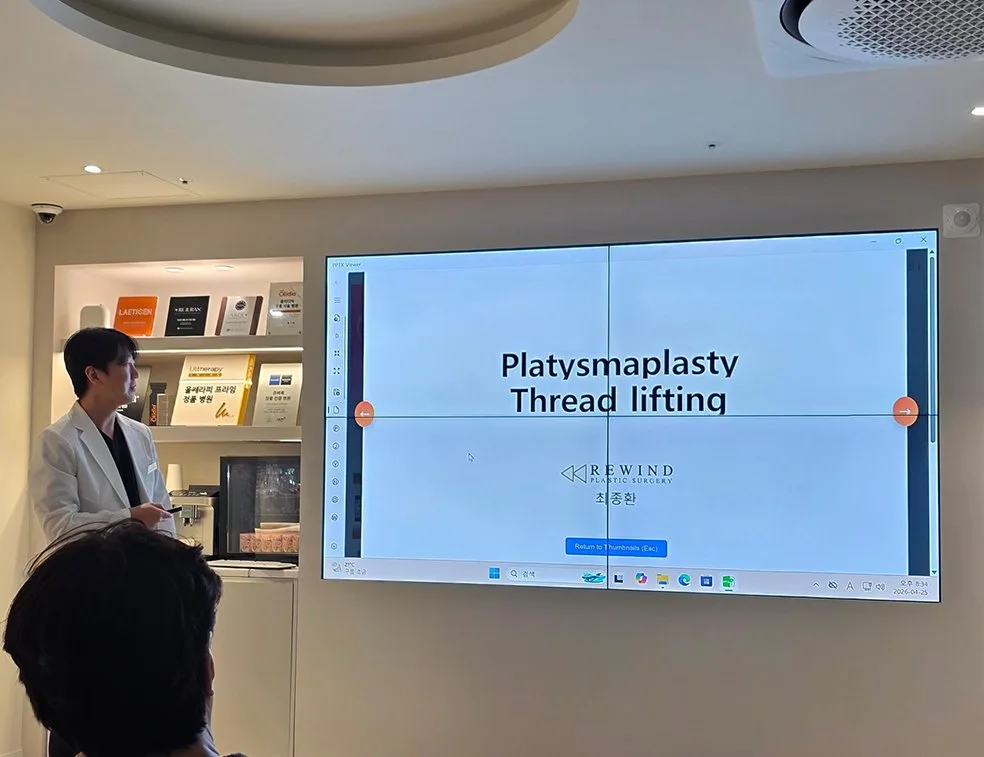
Dr. Choi is a board-certified plastic surgeon, and the clinic's diagnostic equipment includes an ultrasound unit used for imaging soft tissue. Knowing what sits beneath the marked skin is the difference between a considered plan and an optimistic one, and it is the first reason body work should not be a walk-in purchase.
Gel pushed past what a plane can hold reads as a palpable edge, a visible irregularity, or material that drifts downward under its own weight over the following months. Being told that a smaller number is the right number, with the reasoning attached, is worth more at a body consultation than being told yes.
Hyaluronic acid was chosen for this list for a reason that only matters when something goes wrong. If the contour is too much, if it settles unevenly, or if the patient simply changes their mind, an enzyme exists and its rate is published. That single fact is the argument for choosing it over materials marketed as longer lasting.
On the day

Fig. 04 Treatment floor, Richro Building

Fig. 05 Where you sit for a while before leaving
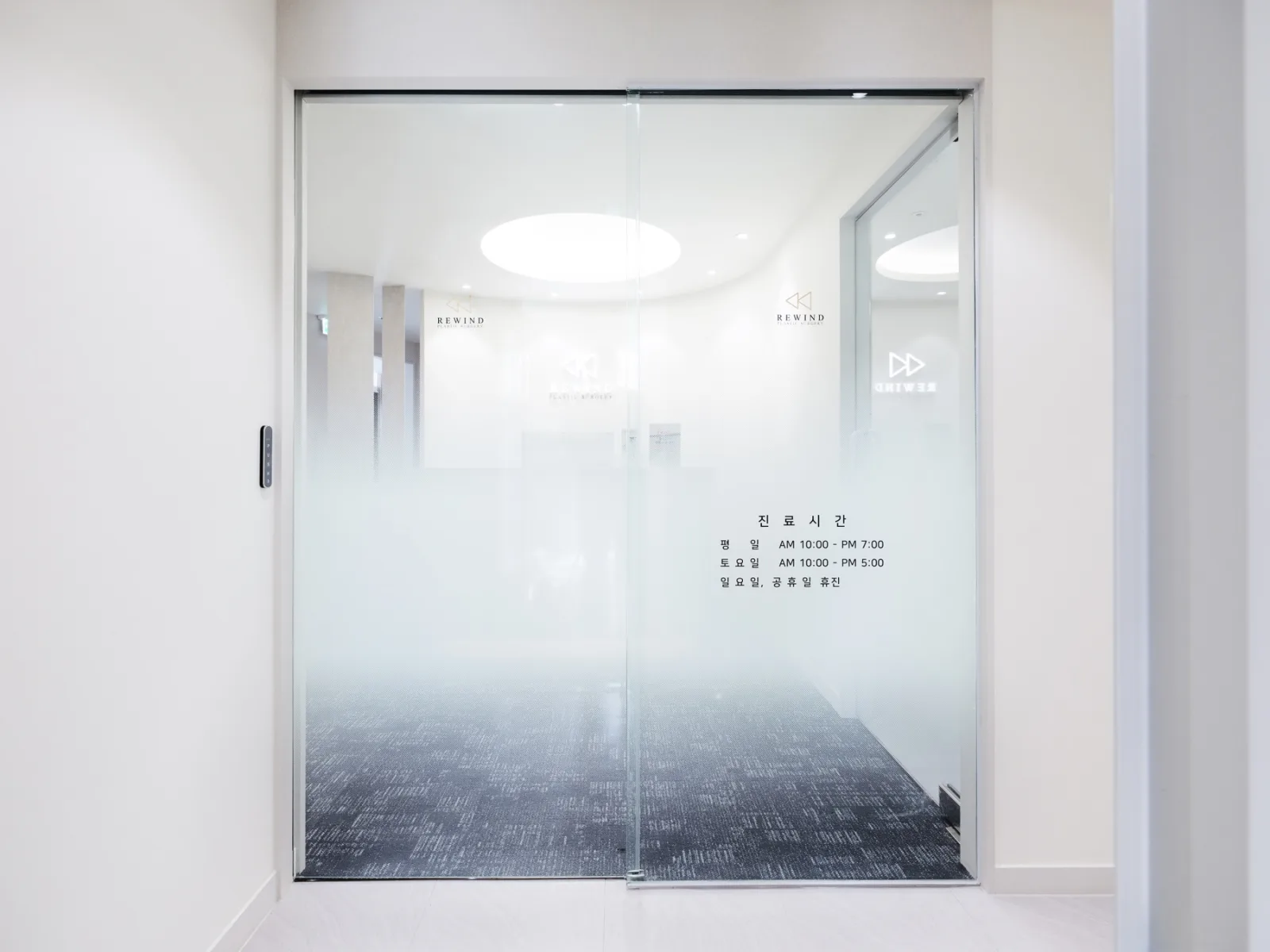
The consultation comes first and the marking is done while you stand, since the contour under discussion disappears the moment you lie down. Wear or bring something that lets the area be seen properly. Ask for the packaging to be opened where you can see it, and ask how many cc it holds: with body volumes the count is the treatment, and the staff here expect that question. The clinic occupies the fourth and fifth floors of the Richro Building in Gangnam, Seoul, runs by appointment only, Monday, Tuesday, Wednesday and Friday from 10:00 to 19:00 and on Saturday from 10:00 to 16:00.
What this page will not do is reproduce the clinic's promotional artwork. Its event images carry a printed note saying they are staged for illustration, a label that is fair of them and also means they are not case evidence, so they are left where they are. What survives onto this page is the region list, the material, the placement layer and the published work behind them. The rest belongs to the examination.
Case photography
The images on the clinic's own body filler artwork are labelled as staged for illustration. That label is the reason they are not reproduced here as cases. The frames below wait for a consented series of the clinic's own patients treated in this way.
Body photography carries an additional problem beyond the usual ones. Stance, pelvic tilt, the height of the camera and whether the weight is on one leg change a hip contour more than most injections do. When Rewind releases pairs for this treatment they will be its own patients, photographed in the same stance under matched light on both dates, uncropped, with signed consent, and labelled with how many weeks separate the two frames. No photograph predicts a particular outcome, and individual results may vary.
Pricing
Body regions are quoted as a total after the examination, in cc, because the volumes involved are an order of magnitude beyond a facial syringe and no per-syringe figure would describe them fairly. The rows below are the clinic's published hyaluronic acid rates and the rate for reducing it again. They are here so that the material and its undo sit on one page while you are deciding.
Body volume is not billed by multiplying the rows above, and anyone quoting you that way has misunderstood the sheet. Your figure is a total for the region, given in the room once the volume has been agreed, with VAT charged on top of it. Where a plan falls outside the published list the answer is a consultation quote and not a number on a web page.
Suitability
Recovery
Volume is present the moment the session ends, which makes this treatment feel finished long before it is. Swelling, firmness and bruising sit on top of the result for days, and the shape people end up living with is the one they see once all three have gone.
The risks of high-volume injection deserve plain language. Bruising, swelling, tenderness and a firm feel are usual in the first days. Palpable irregularity, visible asymmetry and material that drifts downward over months are the complaints specific to body volumes, and they scale with how much is placed. Infection in a large deposit is uncommon and is treated seriously. Vascular events are rare and serious. The worst outcomes recorded in body augmentation worldwide involve non-absorbable or industrial materials injected outside medical settings, which cannot be dissolved and often cannot be removed at all. Increasing pain, spreading redness, fever, a hard expanding area or skin colour change should be reported to the clinic or to emergency care at once.
At Rewind, one board-certified plastic surgeon carries every case — from the first consultation to the final follow-up. Because a face is a story, and a story deserves a single author.
Rewind,
Rewind's Doctor
Dr. Jonghwan Choi Medical Director
One surgeon, from the first
consultation to the last follow-up.
A board-certified plastic surgeon devoted to anti-aging lifting — with the precision and restraint built through years of craniofacial practice.
Google Reviews
"Sample review card — at launch this section pulls the clinic's real Google reviews automatically, shown verbatim with the reviewer's initial and posting date."
"Sample review card — reviews are never written or edited by the clinic; only what patients posted on Google appears here."
"Sample review card — a 'See all reviews on Google' link takes visitors to the clinic's Business Profile."
Questions
Reservation
Tell us what you are considering — we reply within one business day, in your language.
Scientific evidence
These six papers describe the material and the instruments rather than this clinic's body work: long-running safety data for stabilised hyaluronic acid used in soft-tissue augmentation, the physical properties that separate one gel from another, how the molecule behaves in skin, how filler complications have been classified and prevented, volume correction reported outside the face, and measured differences between needle and cannula at a vessel wall. None of it was carried out at Rewind Plastic Surgery or on patients treated here, none of it was funded by this clinic, and nothing in it forecasts what your own region will do.