Surgery · Risk and Correction

Buccal Fat Removal Regret

Why a cheek disappoints, and what can still be done

Gangnam, Seoul | Board-certified plastic surgeon, Dr. Jonghwan Choi
Risks named plainly · KHIDI-registered for international patients

Buccal Fat Regret Hollow Cheeks Buccal Fat Regret Hollow Cheeks Buccal Fat Regret Hollow Cheeks Buccal Fat Regret Hollow Cheeks 
Regret

Buccal fat removal regret

Why do some people regret buccal fat removal?

The short answer

Regret after buccal fat removal usually traces back to one of four things: more of the pad was taken than the face could spare, the pad was never the main reason the face looked full, the two sides healed differently, or the fullness was tissue that had descended with age and needed support. The first is the one people fear most, because the deep cheek pad does not re-form and a midface that thins later has less in reserve. At Rewind the operation is a selective excision through an opening of about 1 cm inside the cheek, closed with dissolving sutures, and only the portion judged surplus is removed. Most of the prevention happens earlier, at an examination that is allowed to end with no operation at all.

Surgical details come from Rewind's Korean page for deep-cheek fat removal. Statements about hollowing and ageing draw on the published literature listed at the foot of this page. The clinic publishes no figures on how often patients are dissatisfied, so none is given here.

Regret is also the word people reach for when a cheek is still swollen, uneven or unfamiliar in the first weeks. That early reaction deserves a hearing, yet it is a poor basis for a decision in either direction, and much of this page is about telling a passing reaction from a lasting problem.

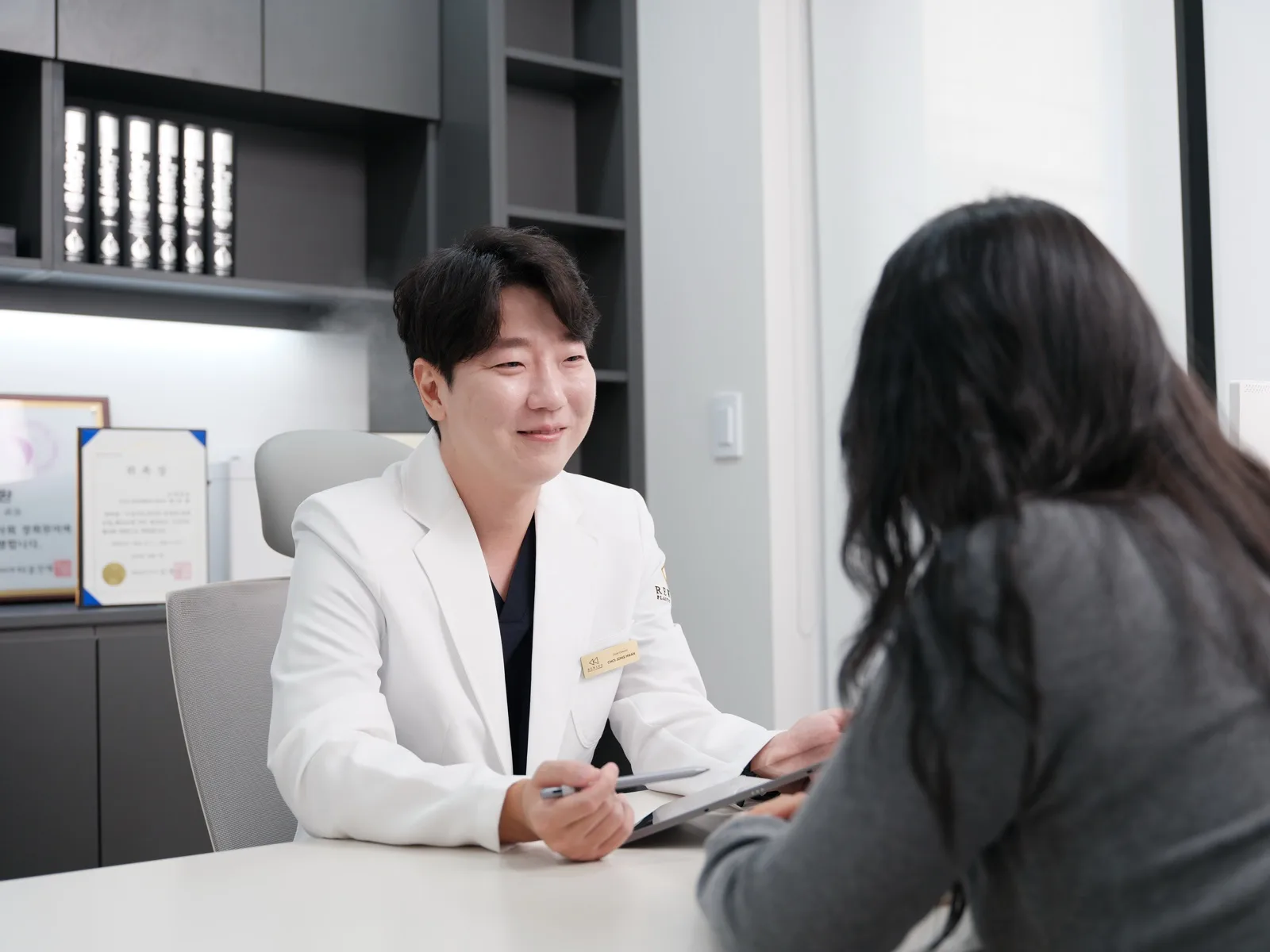
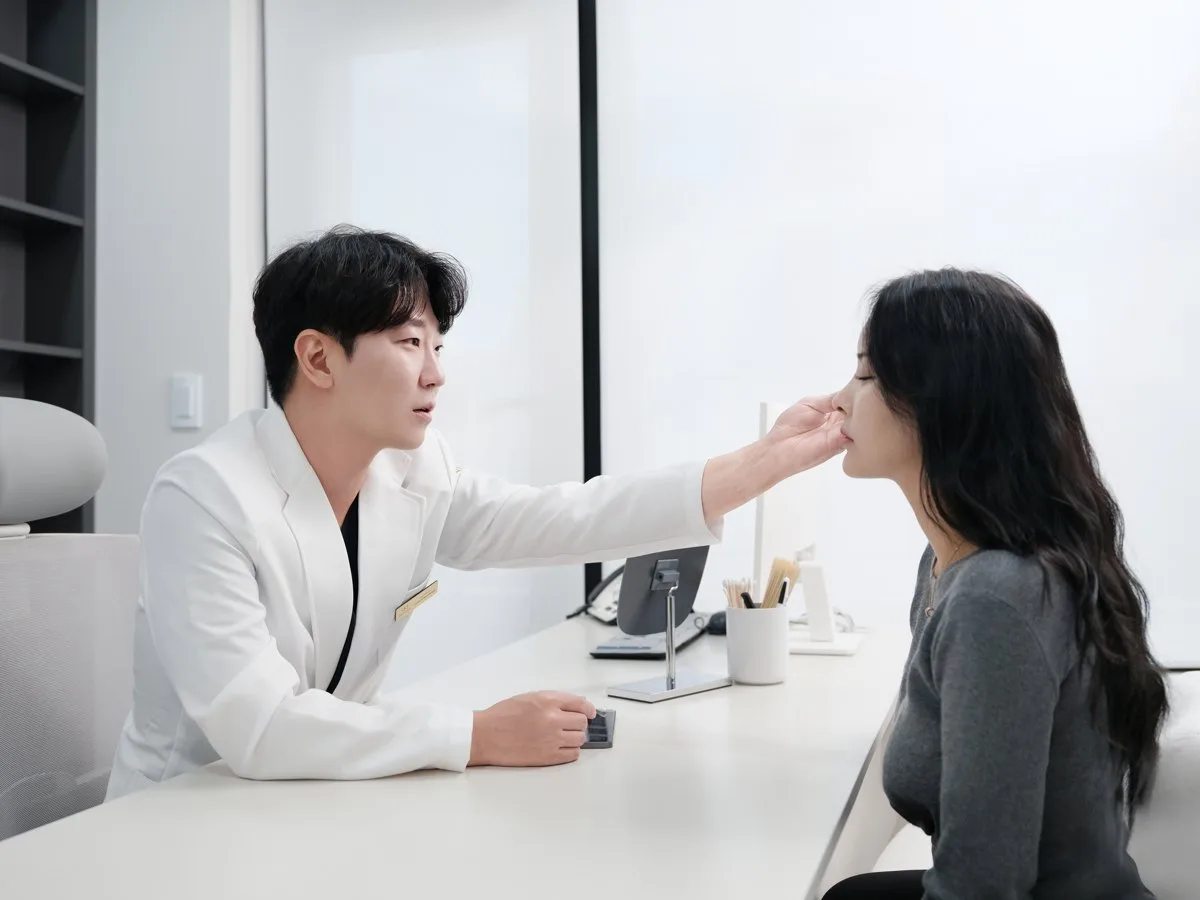
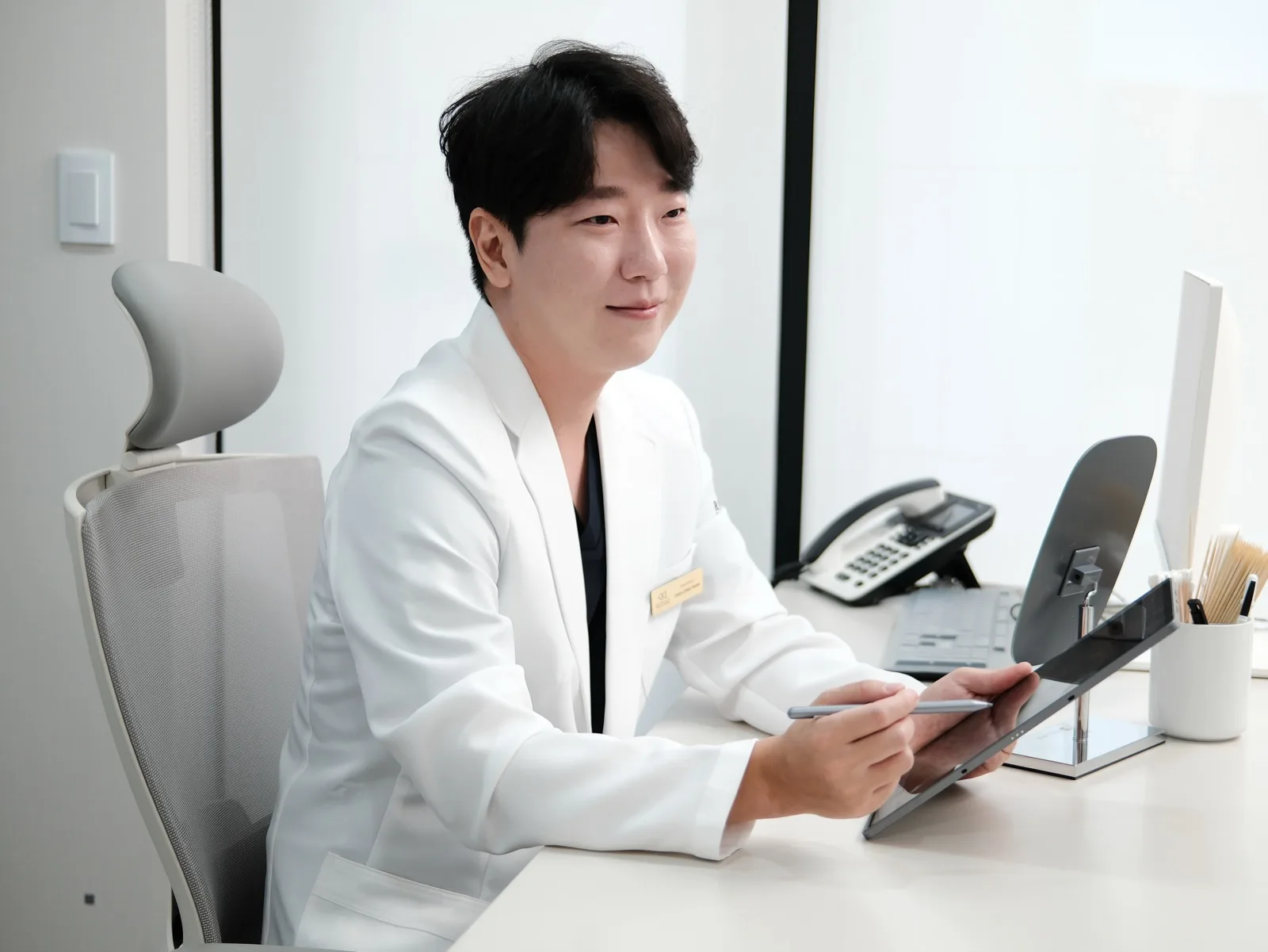
Dr. Jonghwan Choi discussing cheek volume with a patient at consultation
Fig. 01 · The conversation that prevents most regret happens across this desk
Cases

Case photographs

What a restrained buccal fat excision looks like in Rewind's own cases

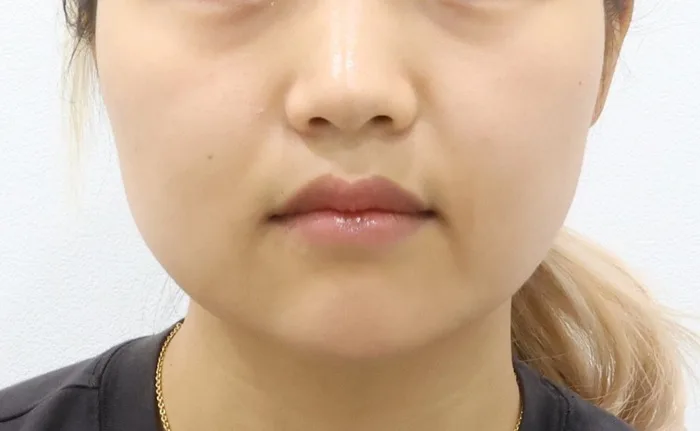
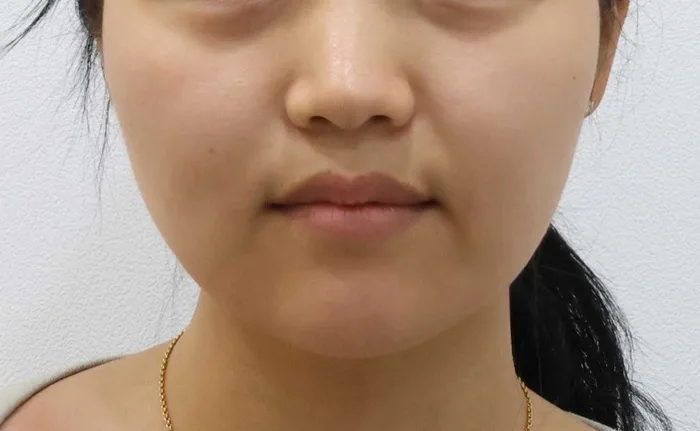
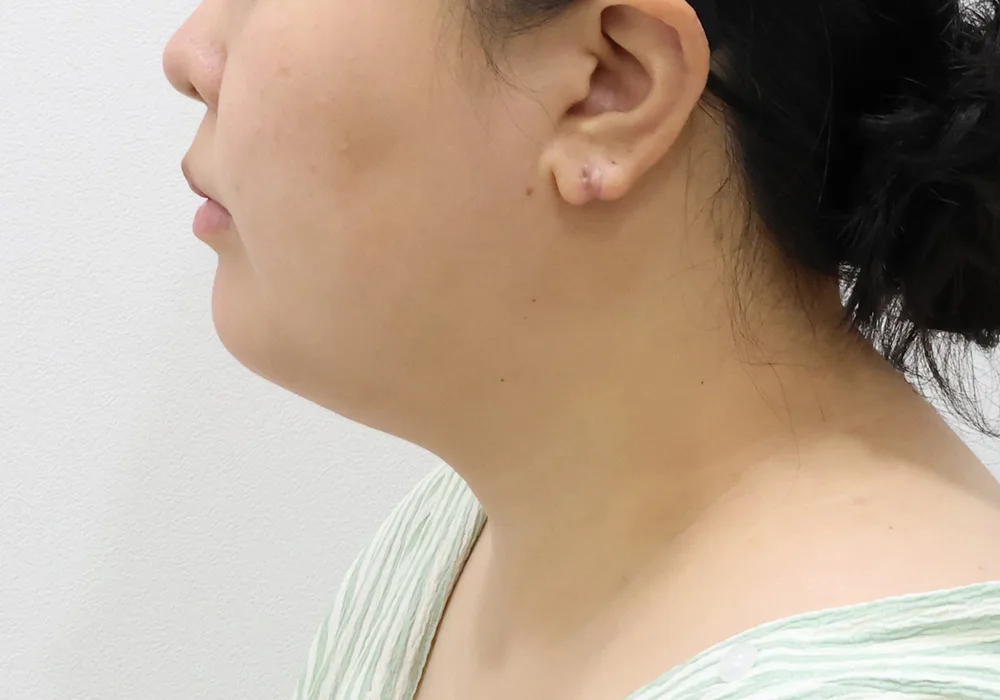
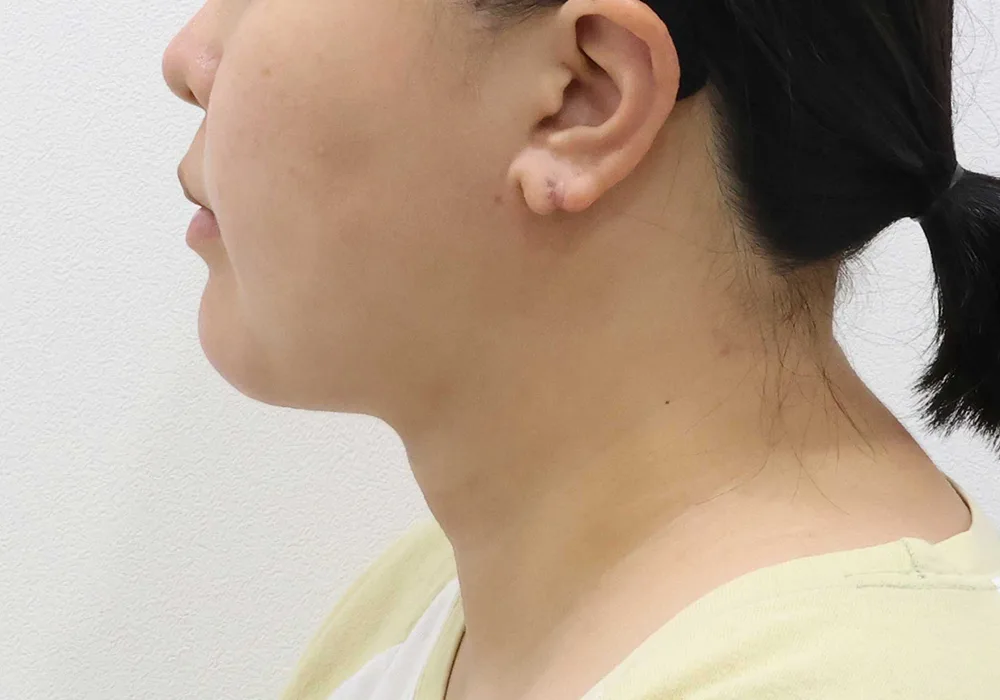
These two pairs were chosen for a page about regret for one reason: neither face was emptied. In the first, the pad was removed on its own. In the second, it came out during a larger contour session, and the caption names every procedure performed that day. A pair records two dates and cannot show how the same cheek will look after years of ordinary thinning.

Rewind patients · measured excisions

Before, buccal fat removal performed as a single procedure, lower face After, buccal fat removal performed as a single procedure, lower face BEFOREAFTER
single procedure
Buccal fat removal as the only operation of the session
Individual results may vary.
Before, face, cheek and double-chin liposuction with platysma tightening and buccal fat removal, profile After, face, cheek and double-chin liposuction with platysma tightening and buccal fat removal, profile BEFOREAFTER
combined session
Face, cheek and double-chin liposuction + platysma tightening + buccal fat removal
Individual results may vary.

Both patients were photographed at the clinic before and after surgery. Another person's photographs do not predict your own result. Bleeding, infection, prolonged swelling, altered sensation, asymmetry between the sides and scarring at the closure can follow any surgical procedure.

Patterns

Four kinds of regret

The four regrets after buccal fat removal, and what sits behind each

People describe disappointment after this operation in a handful of recurring ways. Each description points to a different cause, and the cause decides whether anything should be done, and what.

pattern 01
“My cheeks look hollow”
Either the excision was larger than the midface could spare, or ordinary age-related thinning has arrived in a face with less deep volume in reserve. Surgical commentary treats over-resection of this pad as a recognised source of a gaunt midface.
pattern 02
“Nothing really changed”
The pad was a small part of the fullness. Fat in the layer under the skin, a strong chewing muscle and the width of the jaw all read as a round face too, and none of them is reached from inside the mouth.
pattern 03
“The two sides differ”
Swelling commonly settles unevenly, so early asymmetry is expected. Where a difference remains after healing, the cause may be an unequal excision or a difference between the sides that was present before surgery.
pattern 04
“It made me look older”
In a face where soft tissue had already begun to descend, removing deep fat can make that descent easier to see. The underlying finding was support, which belongs to the lifting operations.
Assess

After the operation

How a disappointing buccal fat result is assessed, step by step

When a cheek feels wrong after surgery, the useful response is a sequence of questions. Rewind works through them in order, and several of them end with the advice to leave the face alone for now.

01Wait

Let the swelling finish first

An intraoral excision swells, and the swelling rarely leaves both sides at the same pace. Judgements made in the early weeks are made on a face that is still changing, so the first step is patience and a scheduled review.

02Compare

Measure against the photographs taken before surgery

Memory is an unreliable reference for one's own face. Rewind photographs patients on both visits, and the pre-operative frames are the fairest yardstick for what the operation actually changed.

03Separate

Separate the excision from everything else

A cheek can look thinner because of the operation, because of weight loss since, or because the midface has started to thin with age. Each has a different answer, and an examination by hand is how the three are told apart.

04Decide

Establish whether volume or support is missing

Where volume is genuinely short, adding it back is the direction. Where tissue has descended, a lift is the subject, and putting volume into a descended cheek can simply make it heavier.

05Restore

Volume comes back through a separate operation

The pad itself cannot be returned to its pocket. Volume is restored with the patient's own fat, grafted to the area that reads hollow, as an operation with its own examination, plan and fee at Rewind.

06Review

The same surgeon follows the outcome

Whether the concern is settled by reassurance, by grafting or by a lift, the doctor who examines the cheek at follow-up is the doctor who planned the treatment. Nothing is handed over between clinicians along the way.

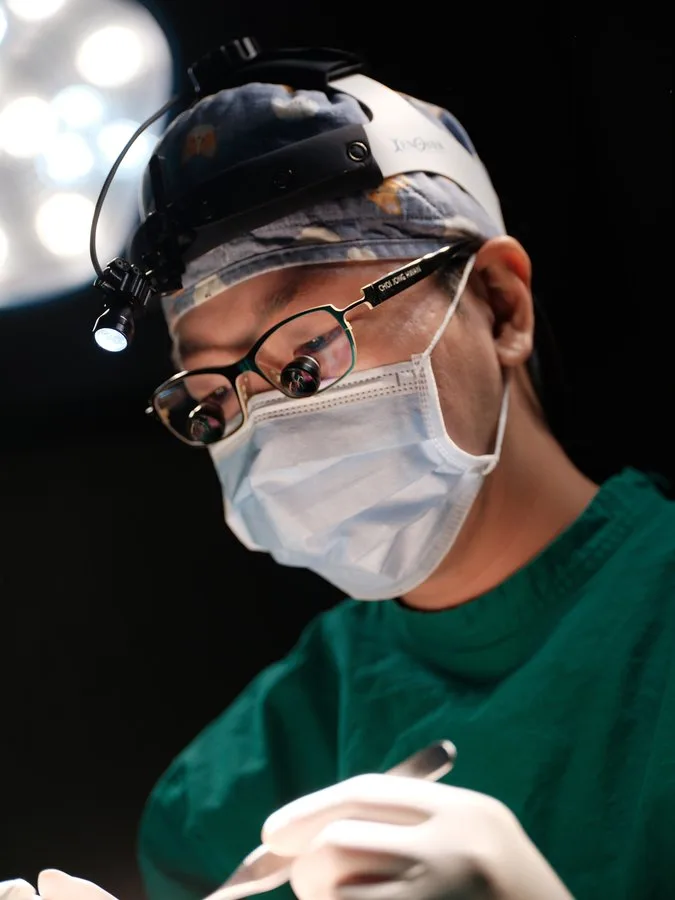
Dr. Jonghwan Choi operating under surgical loupes and a headlight
Fig. 02 · Any corrective operation is performed by the surgeon who planned it
Prevent

Prevention

Why buccal fat regret is mostly prevented before surgery

Declining an excision is far easier than replacing one. The consultation at Rewind is structured around that imbalance, and three habits carry most of the weight.

01Reference

A reference photograph opens the conversation about the cheek

Many requests arrive with a picture of a sculpted face. Dr. Choi reads what produced the shadow in that picture, whether bone structure, lighting or a naturally lean midface, and explains which part of it your own cheek could share.

02Refusal

The examination is allowed to decline the excision

A midface that is already lean, fullness that turns out to be muscle, or cheeks likely to thin on their own within a decade are all reasons to say no. Saying so at the desk costs a booking and spares a correction.

03Ownership

One surgeon owns the decision from start to finish

Rewind is a single-surgeon practice, so the person who sizes the excision is the person who sees the cheek at every follow-up. Patients travelling from abroad are supported in their own language, under the clinic's KHIDI registration for foreign patients.

Dr. Jonghwan Choi examining a patient's face by hand at the consultation desk
Fig. 03 · Examination by hand, before any volume is discussed
Theatre

In the operating room

Where a buccal fat excision, or its correction, is carried out

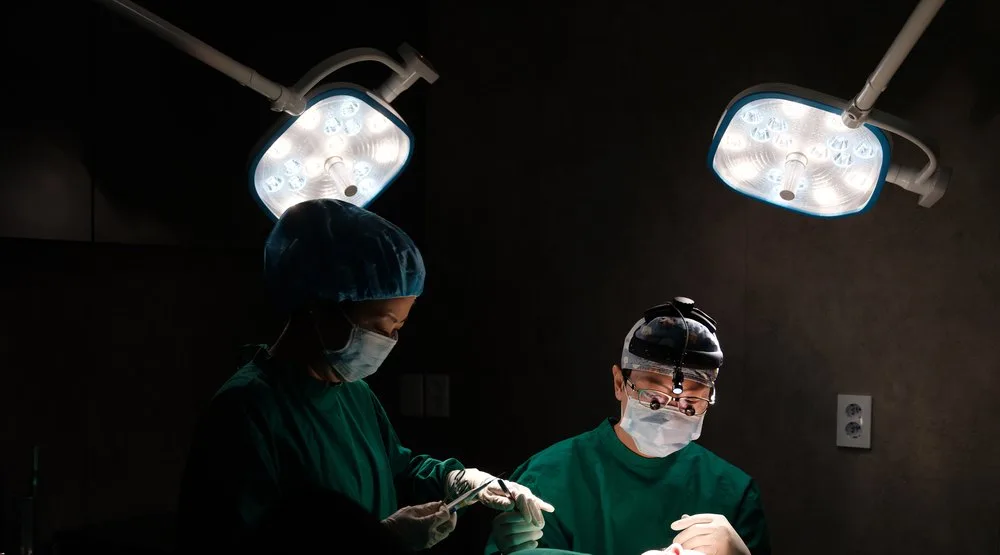
Operating room at Rewind Plastic Surgery in Apgujeong

Fig. 04 · The clinic's own theatre, Richro Building

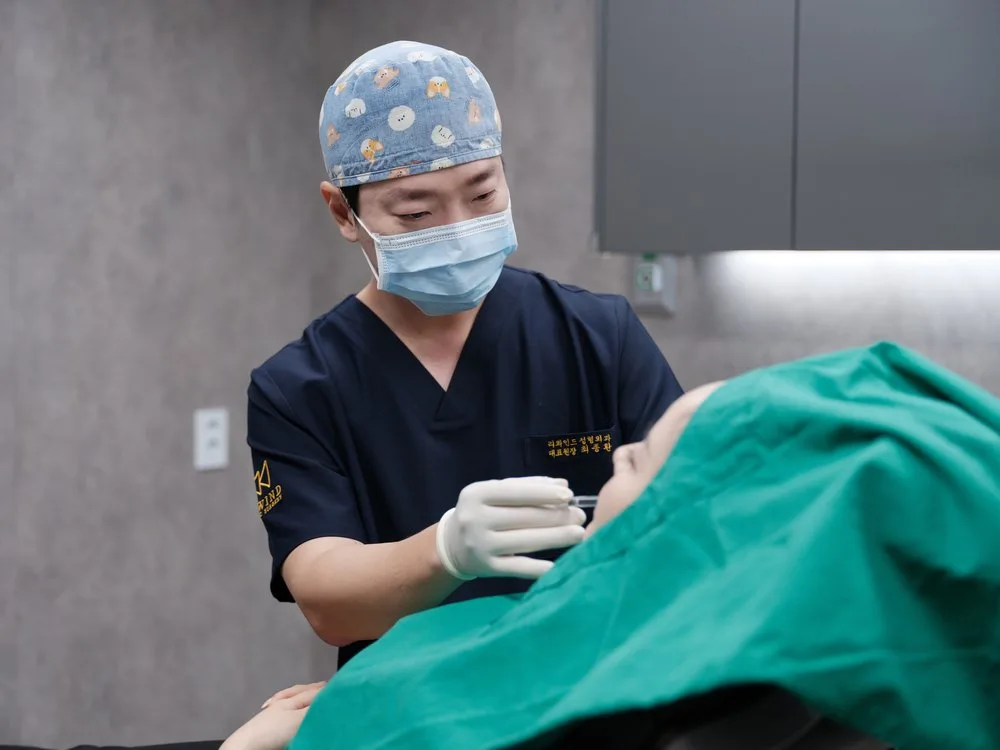
Dr. Jonghwan Choi preparing a draped patient before surgery

Fig. 05 · Preparation, before the cheek is opened

Both the excision and any later grafting take place on the fourth and fifth floors of the Richro Building in Apgujeong, Seoul, inside the practice where the consultation happened. One surgeon plans and performs each operation. Because the pad is reached through the inner lining of the cheek, there is no mark on the outer surface of the face, and so no external scar to revise if the result disappoints: a concern after this operation is always about volume or contour.

Incision about 1 cm, inside the mouth
Surplus portion of the pad only
Dissolving sutures, no removal visit
Pre-operative photographs kept for comparison
Fat grafting listed as a separate operation
Operated by Dr. Jonghwan Choi
Dr. Jonghwan Choi, board-certified plastic surgeon

Board-certified plastic surgeon

Dr. Jonghwan Choi holds Korean specialist certification in Plastic Surgery and operates on every case himself, including any correction. For patients travelling from abroad, Rewind is registered with KHIDI under Reg. M-2025-01-08-09288.

Cost

Pricing

What buccal fat removal costs, and what correcting a hollow cheek costs

The first two lines are the excision itself. The last two are here because restoring volume is priced as an operation of its own, and seeing both halves of that arithmetic before booking is a sensible way to weigh how much to take.

Buccal fat removal, single procedureThe deep cheek pad on both sides, as the only operation of the day
₩2,000,000
Buccal fat removal inside a combined sessionWhen the pad is removed during contour surgery that is already scheduled
₩1,500,000
Facial fat grafting, one areaYour own fat returned to a single region that reads hollow; forehead and temple are listed separately
₩650,000
Facial fat grafting, full faceWhere volume is short across several regions of the face
₩1,970,000

List prices with VAT excluded; each already contains the anaesthetic fee for that operation. Whether grafting is appropriate at all, and for which regions, is decided at an examination, and a figure is written only after it.

Fit

Suitability

Who is unlikely to regret buccal fat removal, and who should wait

Faces where the excision tends to sit well

  • Deep, low cheek fullness that has held through weight loss and regular exercise
  • A midface with good bony support and no early flattening beneath the cheekbones
  • Skin with enough elasticity to settle over a smaller pocket
  • A clear, modest goal described in terms of your own face
  • A stable weight, with no large loss planned in the coming year

Reasons the date is postponed or the operation declined

  • A lean or already hollowing midface, where removing deep fat would show
  • Roundness driven mainly by the jaw muscle or by the width of the jaw
  • Fullness above the jaw line that is descent, where a lift is the real subject
  • A decision made under time pressure, or mainly from edited images
  • Bleeding or clotting disorders, medication affecting healing, active oral infection, pregnancy or breastfeeding
Timing

Judging the result

When a buccal fat removal result can fairly be judged

Rewind's post-operative instructions cover brushing, soft food and the movements to avoid. They cannot tell you when to form an opinion about the outcome, and the stages below are a guide to that.

The first days
Swelling makes every cheek look wrong
The face is puffy and often lopsided. It is the worst moment to decide anything about volume, and the easiest one in which to panic.
The early weeks
The sides settle at different speeds
One cheek commonly lags behind the other. Mention it at your review; it is usually swelling and is watched before anything else is considered.
Once settled
Compare with the earlier photographs
When the tissue has quietened, the cheek is compared with the pre-operative photographs. This is the first fair point for judging the result.
Years later
Ageing keeps its own schedule
The midface thins with time whatever was done. A conservative excision leaves room for that, and a hollow that appears late is examined the same way as one that appears early.

Any surgical procedure carries risk, including bleeding, infection, prolonged swelling, altered sensation, asymmetry between the sides and scarring at the closure. Injury to branches of the facial nerve or to the salivary duct that runs close to the pad is described in the literature for this operation, and is one reason the dissection is kept selective. Contact the clinic promptly about increasing pain, fever, or swelling that worsens after it had begun to settle.

Doctor

Professional

At Rewind, one board-certified plastic surgeon carries every case — from the first consultation to the final follow-up. Because a face is a story, and a story deserves a single author.

Dr. Jonghwan Choi, board-certified plastic surgeonRewind,
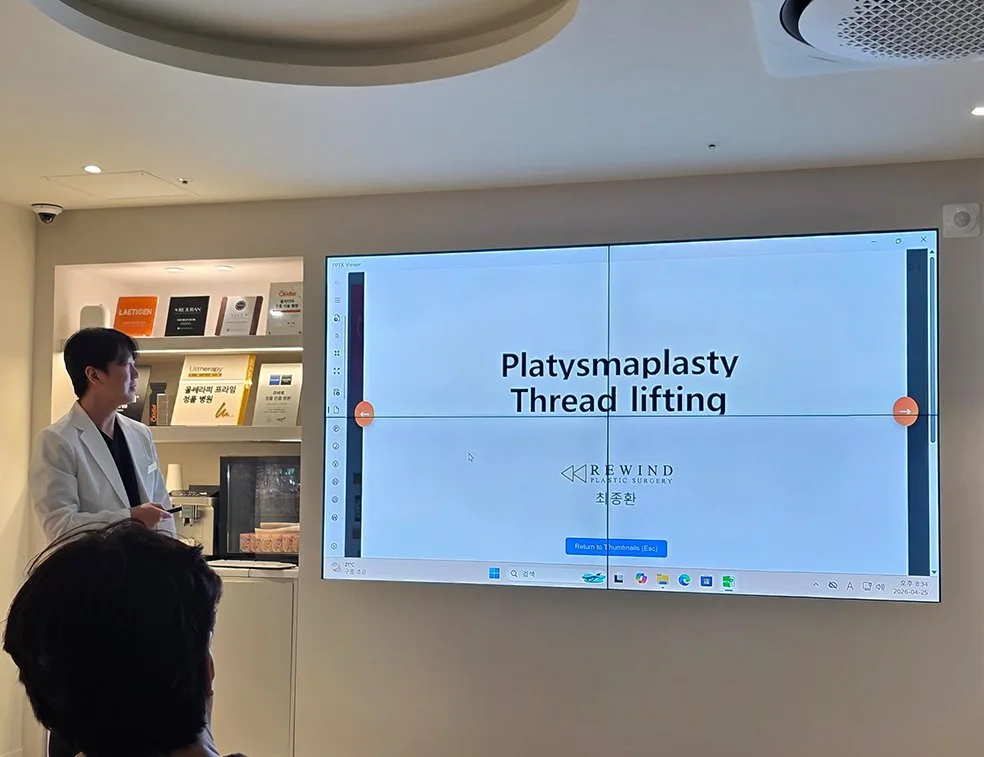
Dr. Jonghwan Choi presenting at an academic session
Fig. 06 — Academic session, presented by the medical director

Rewind's Doctor

Dr. Jonghwan Choi Medical Director

One surgeon, from the first
consultation to the last follow-up.

A board-certified plastic surgeon devoted to anti-aging lifting — with the precision and restraint built through years of craniofacial practice.

Board-certified plastic surgeon (Plastic Surgery)
10 peer-reviewed publications
Medical Director, Rewind Plastic Surgery
Korean Society of Plastic & Reconstructive Surgeons
Former chief director, Apgujeong Y&T Plastic Surgery
Korean Society for Aesthetic Plastic Surgery
J Craniofac Surg · JKMS · Arch Craniofac Surg
Korean Cleft Palate-Craniofacial Association
Ask

Questions

Buccal fat removal regret — questions asked after, and before, surgery

Why do some people regret buccal fat removal?
Most regret follows one of four patterns: more of the pad was taken than the face could spare, the pad was never the main source of fullness, the two sides healed differently, or sagging tissue was mistaken for fat. The last three often show early, while hollowing from over-resection can take years to appear.
Does buccal fat removal make a face age faster?
It does not change the pace of ageing itself. What it changes is how much deep volume the midface carries into the decades when it thins naturally. A face with less in reserve can look gaunt sooner, so the amount removed is weighed against how that particular face is likely to age.
Can buccal fat removal be reversed or corrected?
The pad cannot be returned to its pocket, and no operation recreates it. What can be corrected is the appearance: volume is added where the cheek now reads hollow, usually by grafting your own fat as a separate operation. Where the real finding is sagging, a lift is discussed.
How does a surgeon decide how much is a conservative amount?
By reading the whole midface: cheekbone support, skin quality, age, weight history and how much of the fullness truly comes from the pad. Rewind publishes no fixed gram or percentage target. Only the portion judged surplus is removed, and less is taken where early thinning is already visible.
How soon can I tell whether I am happy with the result?
Not in the first weeks. Swelling after an intraoral excision distorts the cheek and often leaves the two sides at different speeds. The fair comparison is made once swelling has gone, against the photographs taken before surgery, at a review with the operating surgeon.
Is there a risk of nerve or salivary duct injury?
Yes, as with any surgery near those structures. Branches of the facial nerve and the duct of the parotid salivary gland run close to the buccal fat pad, and injury to either is described in the surgical literature. Keeping the dissection selective and confined to the pad is part of managing that risk.
Who is most likely to be disappointed by buccal fat removal?
People whose round face comes mainly from the jaw muscle, the width of the jaw or fat under the skin, and people whose midface is already lean. Faces where the fullness is sagging tissue form a third group. In each case the pad is the wrong target, and the examination should say so first.
Does fat grafting put back exactly what was removed?
No graft recreates the original pad. Fat is placed where the cheek reads hollow, and how much of it settles varies between individuals, so Rewind's fee list includes a grafting option that covers a second session. A single area is listed at ₩650,000, with VAT charged separately.
Voices

Google Reviews

What our patients say.

G 5.0 ★★★★★ 51 Google reviews · Rewind Plastic Surgery, Apgujeong — live-synced from Google Business Profile
★★★★★

Came to REWIND to get my facial treatment and i'm absolutely obsessed about it💞 the doctor is so kind and is an expert! Everyone must visit!

YunHee Hong2 weeks ago
★★★★★

There are just way too many cosmetic clinics in Korea and I'm so happy I found Rewind Clinic in Gangnam. Dr. Choi was so kind and patient while explaining the different face-lifting options, from threads to mini-lifts to deep-plane lifts…

J. S.5 months ago
★★★★★

I found Rewind clinic through a Korean chat forum and many local clients highly recommended it. The clinic is brand new, featuring large, clean rooms and many private waiting areas so it doesn't give off that "factory" clinic vibe. All the…

J. Siou5 months ago
★★★★★

Really nice environment. Doctor is easy to communicate and understands my visions. Waited two weeks to make a review and I confirm the results exceeded my expectations and I am super happy with it. Can't wait to come back!! :))

Kristie Chu5 months ago
★★★★★

I received a thread lift at Rewind Plastic Surgery. The clinic was clean and the atmosphere was comfortable. The consultation was thorough, and I felt confident because they kindly explained everything tailored to my facial condition. They…

한주연2 weeks ago · Translated by Google
Booking

Reservation

REWIND,booking

Tell us what you are considering — we reply as soon as possible, in your language.

Visit

REWIND,visit

For international patients — interpreter-assisted, from your first message to your follow-up.

Location
Apgujeong, Gangnam
4F & 5F, Richro Building,
812 Nonhyeon-ro,
Gangnam-gu, Seoul
Hours
Mon·Tue·Wed·Fri 10:00–19:00
Sat 10:00–16:00
Closed Sundays & Thursdays
Lunch 12:00–13:00
Consultation
In your language
WhatsApp · Instagram
Interpreter-assisted
consultations available
Registration
KHIDI Registered
Registered institution for
international patients
Reg. M-2025-01-08-09288

Scientific evidence

Published work on over-resection, measured excision and ageing tissue

The three papers below address the two halves of regret after this operation: the recognised risk of taking too much from the buccal pad, the case for a measured excision, and how tissue in older faces responds once fat has been removed.

Each paper reports its own authors, patients and techniques. None is a study of Rewind Plastic Surgery, and none can forecast how an individual cheek will look after surgery or after a correction.