Surgery · Lip reduction incision
A line kept on the inside of the lip
Gangnam, Seoul | Board-certified plastic surgeon, Dr. Jonghwan Choi
KHIDI-registered for international patients · Apgujeong Rewind
Lip reduction scar
The short answer
In the published technique for lip reduction, the incision runs along the inner surface of the lip, near the line where the dry red lip meets the moist lining of the mouth. With the mouth closed and the lip at rest, that line faces the teeth and is not seen from outside. It can be felt with the tongue while it heals, and it can be seen if the lip is turned outward. Rewind does not publish its own step-by-step technique for the reduction, so the placement for your lip is confirmed by the surgeon at examination. No surgeon can promise a line that is never noticed, and how a scar matures differs between individuals.
Where this comes from: the incision position is described in the published papers on reduction cheiloplasty listed at the foot of this page. Rewind's Korean lip page states that its lip incisions follow the lip line so they are hard to notice, and its post-operative instructions for lip surgery recommend sunscreen against scarring and pigmentation. Both were written for the clinic's corner operation. The clinic publishes no date at which a scar counts as settled, and none is given here.
A lip reduction differs from a lip lift here more than anywhere else. A lip lift places its line on the skin under the nose, where it will always be on view to some degree. A reduction keeps the line on the inside, and the question it raises is less about being seen than about being felt: against the teeth, by the tongue, in the first weeks of eating.
What shapes the line
The scar left by a reduction is the product of four things. The surgeon controls the first two on the day. The third belongs to you for a period of weeks, and the fourth was settled long before you booked.
From closure to softened line
The line inside the lip passes through five stages. Only the middle ones carry figures from the clinic's own material; the rest are followed at review.
Marking is done with the face relaxed and the lips closed, because that is the lip other people see. The shape of the excision decides both how the lip changes and where the line will sit, so the two are planned together.
In the published technique the closure lies entirely within the mouth. There is no line on the skin of the face from this operation, which is the main difference from a lip lift and the reason a reduction scar is discussed in terms of feel.
Rewind's lip page gives about six to seven days for stitch removal in its lip surgery. Stitches inside the mouth are sometimes the dissolving kind, and the surgeon confirms which your closure uses. Early on, the line is raised and obvious to the tongue.
Wide mouth opening is avoided for one to two months after stitch removal, according to the clinic's lip page. This is the period in which a closure is most easily stretched, and the restriction protects the line as well as the shape.
A scar inside the lip goes on softening after the restrictions end, and the pace differs between people. Rewind publishes no month at which it is called finished. The surgeon who placed it checks it at review, against his own drawing.

Why the line is planned first
The inner surface of the lip is the one place a reduction can be made without leaving a line on the face. Using it well is a matter of design, restraint and follow-up, and each of those sits with the surgeon.
Keeping the incision on the inside of the lip means that, with the mouth closed, the only sign of the operation is the new shape. The surgeon designs the excision so the line follows that inner boundary on both sides.
Taking less tissue lowers the tension across the line, and a second small step remains possible if the first falls short. Rewind's surgeon marks with that in mind, since removed tissue cannot be put back.
In a single-surgeon clinic, the checks after a lip reduction are made by the surgeon who drew and sutured the line. Patients from abroad send photographs and correspond in their own language, under the clinic's KHIDI registration M-2025-01-08-09288.
Where the incision is made

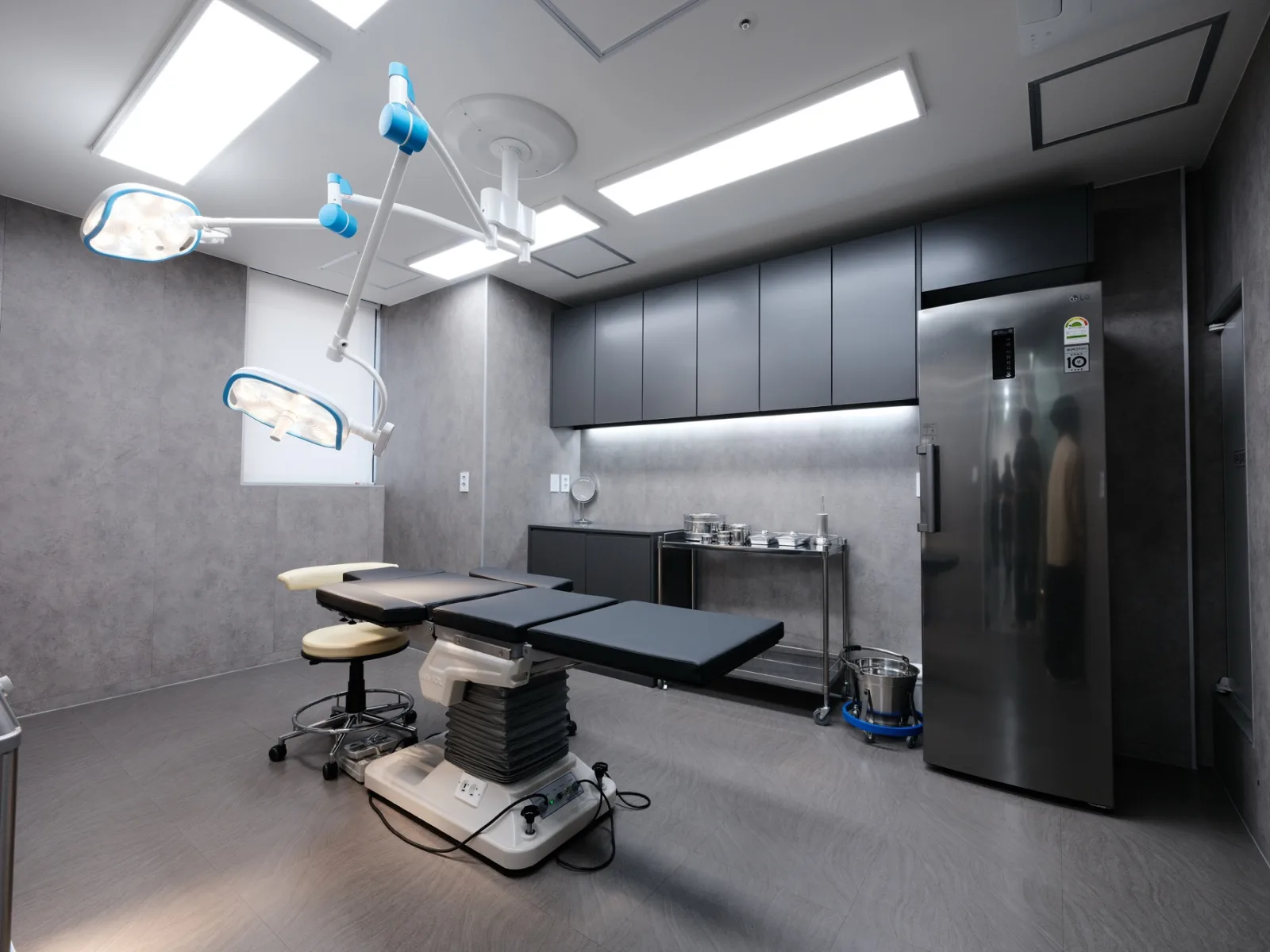
Fig. 04 · The clinic's operating room, where the line inside the lip is placed

Fig. 05 · A private room for the first hours after the closure
Rewind operates in its own theatre on the fourth and fifth floors of the Richro Building in Apgujeong, and one surgeon takes the lip from design to the last check of the scar. Reviews are booked within the clinic's hours: Monday, Tuesday, Wednesday and Friday from 10:00 to 19:00, Saturday from 10:00 to 16:00, closed Thursday and Sunday. What is published about the line is listed below.
Board-certified plastic surgeon
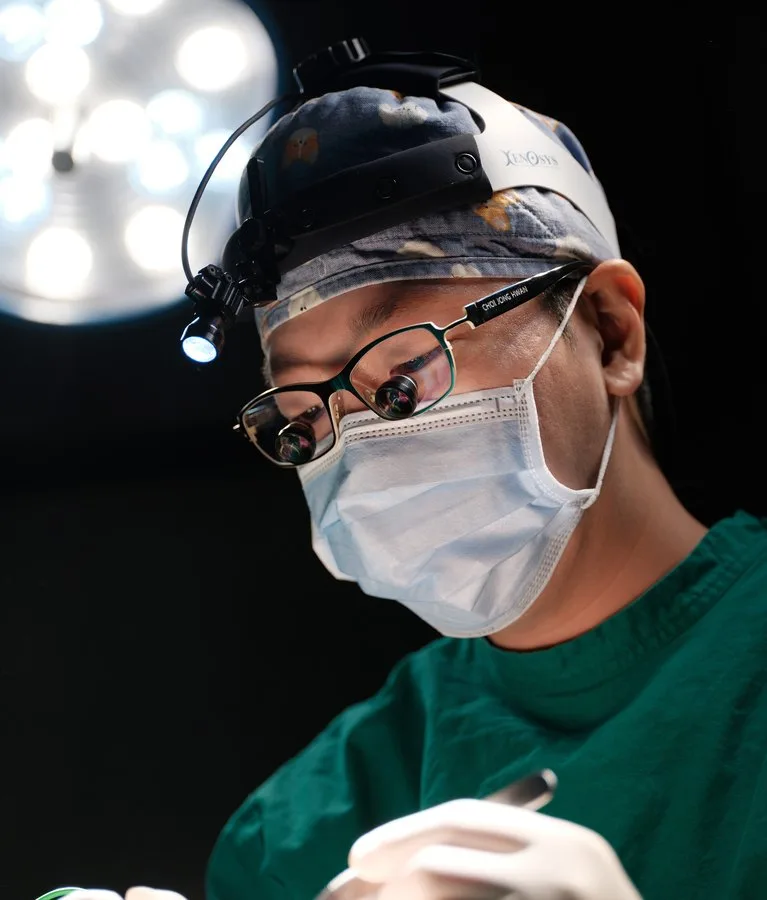
Dr. Jonghwan Choi places and closes every lip reduction incision at the clinic himself. He is a board-certified plastic surgeon, a member of the Korean Cleft Palate-Craniofacial Association, and treats patients from abroad under KHIDI registration M-2025-01-08-09288.
Listed prices
A line inside the lip comes with one listed operation. A second line, at the corners, appears only if a corner lift is added to the plan, and it is priced separately.
These are listed prices for a first operation, VAT excluded, with the anaesthesia fee counted inside each surgical line. A lip that already carries a scar from an earlier reduction is examined before any figure is given, since the old line changes what can be done.
Who should think longer
Caring for the line
Most care for this scar consists of leaving it alone. Rewind's post-operative instructions for lip surgery, written for its corner operation, are the basis for the points below; the surgeon confirms which apply to your reduction.
Scar-related risks after a lip reduction include a line that stays palpable or raised, tightness on wide opening, a small step or notch along the inner lip, uneven fullness between the two sides and altered sensation near the line. Bleeding, infection, prolonged swelling and wound separation are also recognised, and some of these may call for a further procedure. How a scar matures differs between individuals, and no particular appearance or feel can be promised.
A scar inside the lip is decided by millimetres of design and weeks of care. At Rewind both belong to one board-certified plastic surgeon, who draws the line, closes it and checks it until the case is done.
Rewind,
Rewind's Doctor
Dr. Jonghwan Choi Medical Director
Where a line goes
is the first decision.
Medical director and board-certified plastic surgeon, whose ten peer-reviewed papers include reconstructive work around the lip and nasal base.
Google Reviews
"There are just way too many cosmetic clinics in Korea and I'm so happy I found Rewind Clinic in Gangnam. Dr. Choi was so kind and patient while explaining the different face-lifting options, from threads to mini-lifts to deep-plane lifts. I've had procedures in Taiwan and the US and now m…"
"Really nice environment. Doctor is easy to communicate and understands my visions. Waited two weeks to make a review and I confirm the results exceeded my expectations and I am super happy with it. Can't wait to come back!! :))"
"I found Rewind clinic through a Korean chat forum and many local clients highly recommended it. The clinic is brand new, featuring large, clean rooms and many private waiting areas so it doesn't give off that "factory" clinic vibe. All the staff, including the receptionists, nurses, a…"
"You know how you get self-conscious about your facial contours before going on vacation? I was wondering what I could do to see quick results, and a friend recommended Apgujeong Rewind Plastic Surgery. All the staff were friendly, and the facilities were incredibly pleasant—it felt like a hotel! Val…"
"I went for a consultation for lip fillers and am leaving this review because I am so satisfied with the results. I told them about the lip line I had always wanted, and they carefully examined my face shape and features to naturally recreate a shape that suited me well. The director definitely has …"
Questions
Reservation
Tell us about any raised scars or slow-healing wounds in your history and send a relaxed profile photograph of your lips. We reply within one business day, in your language.
Scientific evidence
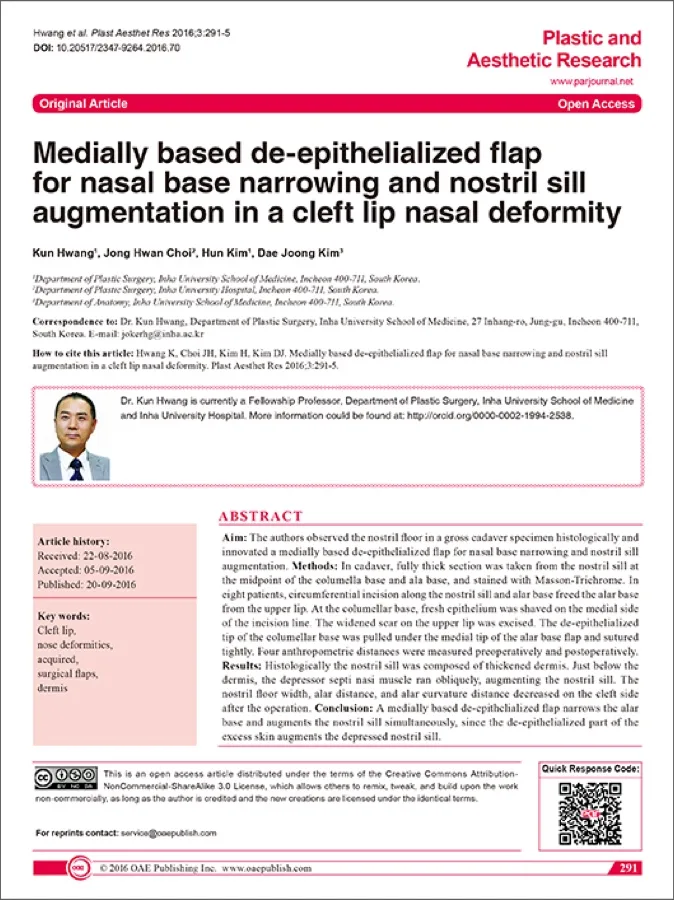
The first two papers describe reduction cheiloplasty and a variation of its excision design, including where the incision sits inside the lip. The third describes a lip-lift technique with its incision under the nose, included here to show the contrast between the two kinds of line. The observations in these papers come from their own authors' patients and not from Rewind. They explain where a lip reduction line is placed; they cannot predict how an individual scar will mature.