Non-Surgical · Healing Stages

Mole Removal Healing Timeline

The stages a laser-treated point passes through, and why its dates are set for your skin at review

Gangnam, Seoul | Board-certified plastic surgeon, Dr. Jonghwan Choi
KHIDI-registered for international patients · Apgujeong Rewind

Mole Removal Healing Mole Removal Healing Mole Removal Healing Mole Removal Healing Mole Removal Healing Mole Removal Healing 
Stages

Mole removal healing

Mole removal healing timeline: the stages in order, without invented dates

The short answer

A mole removed by laser heals in a predictable order: a raw point on the day, a covered and crusted point while the surface closes, a smooth pink patch once the crust lifts, and then a gradual fade toward your own skin colour. The order is much the same for everyone. The length of each stage varies, because it depends on how deep the mole went, where it sat, your skin tone and how much sun the point sees.

Rewind does not publish a day-by-day or week-by-week schedule for mole removal, and this page does not supply one. The expected time frame for your own points is given at consultation and checked at review.

Searching for a week-by-week timeline is understandable. People want to know whether a pink mark at a given moment is normal, and whether a trip or an event will land at an awkward stage. What actually helps is a sequence you can recognise, together with the warning signs that a point has stopped following it. That is what this page lays out.

It also helps to separate two finish lines that are easily confused. The first comes when the surface has closed and the crust has gone, after which the point is no longer an open wound. The second, much later, comes when the colour has settled and the mark looks the way it is going to stay. Most worry after mole removal happens in the gap between the two, and sun exposure in that gap is what most often turns a fading point brown.
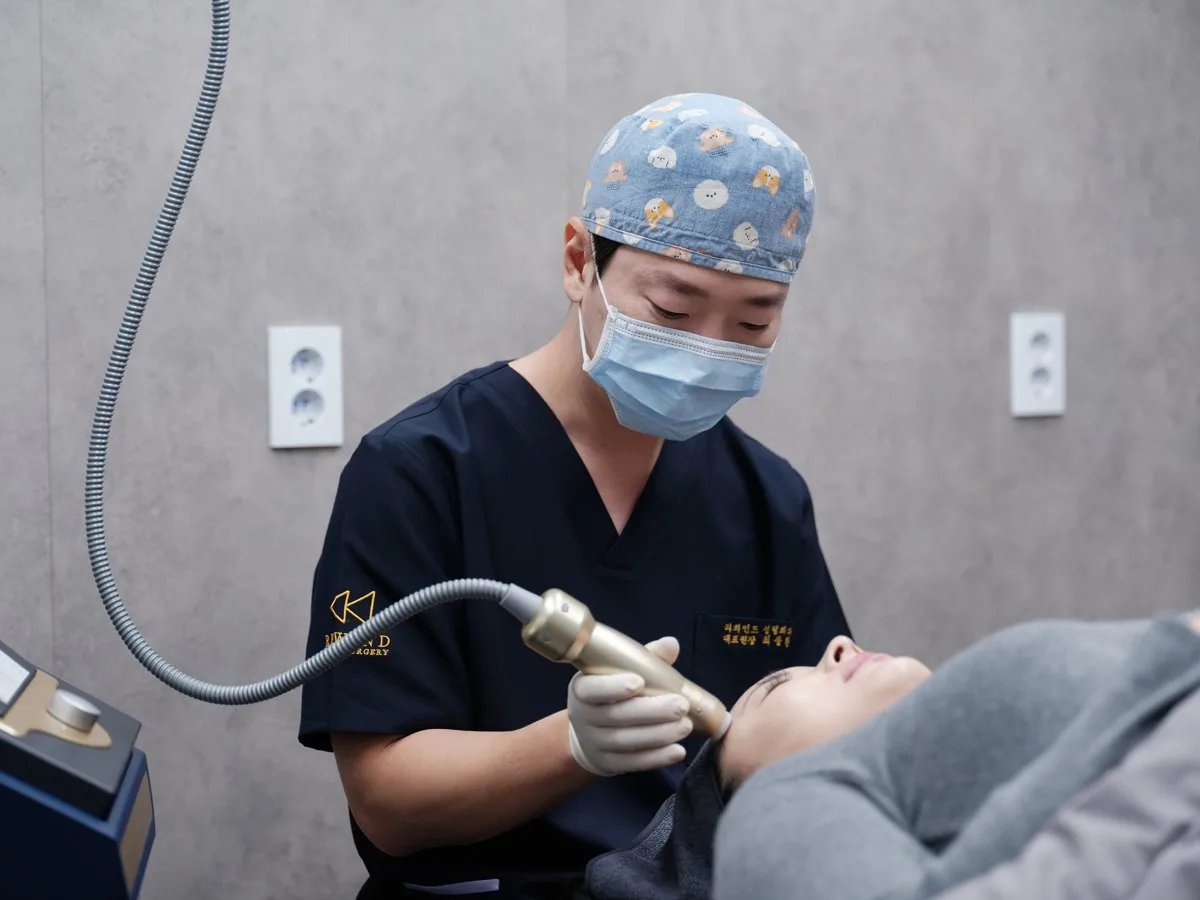

Laser treatment in progress at Rewind Plastic Surgery, Apgujeong
Fig. 01 — A laser session on the clinic floor, where stage one begins
Order

The stages

Four stages every mole removal point passes through

The labels below describe what you will see. None comes with a date, and a point on the nose and a point on the back will move through them at different speeds.

group 01
Stage one: the fresh point
A small, slightly sunken spot where tissue was removed, with some redness around it. It is covered before you leave the clinic.
group 02
Stage two: the covered crust
The surface dries into a crust under the tape. It can look darker than the mole did. It is protecting the base and should be left in place.
group 03
Stage three: pink new skin
The crust separates by itself and reveals smooth pink skin, often a touch lower than its surroundings. This is the stage most often mistaken for a failed treatment.
group 04
Stage four: fading
The pink gradually moves toward your own skin colour. Sun exposure, depth and skin tone decide how far and how quickly.

Several points treated at the same visit seldom move in step. A shallow point on the cheek can be past stage two while a deeper one on the nose is still crusted, so compare each point with its own earlier appearance and not with its neighbour.

Signs

Reading each stage

What is normal at each mole removal healing stage, and what is a warning

For every stage the useful questions are the same: what should I expect to see, what should I be doing, and what should make me call.

01Fresh

On the day: redness, a small crater and a covered point

Redness right after laser treatment is one of the things Rewind's instructions tell you to expect. The point itself is a shallow opening, covered at the clinic. Bleeding that soaks through the tape, or pain that keeps building, is worth a call.

02Crust

The crust stage: darker than you expect, and meant to stay put

Under the tape a crust forms and may look brown or almost black. Leave it. Picking or peeling it early is one of the main routes to a dent. Warmth, swelling, spreading redness or a discharge are signs of infection and should be seen by a doctor.

03Pink

Once the crust lifts: pink, smooth and slightly lower than the skin around it

New skin is thin and pink and can sit a little below the surface at first. It tends to look worse under a bathroom lamp than in daylight. Sunscreen matters most here, since ultraviolet light on pink skin is what tends to leave a brown point behind.

04Fade

The long fade: gradual, uneven between points, and judged at review

The colour drifts toward your own over time. Some points go pale before they match; some go darker first. A point that stays raised, dark or dented once the others have settled is the one to show the doctor, who can compare it with what was done.

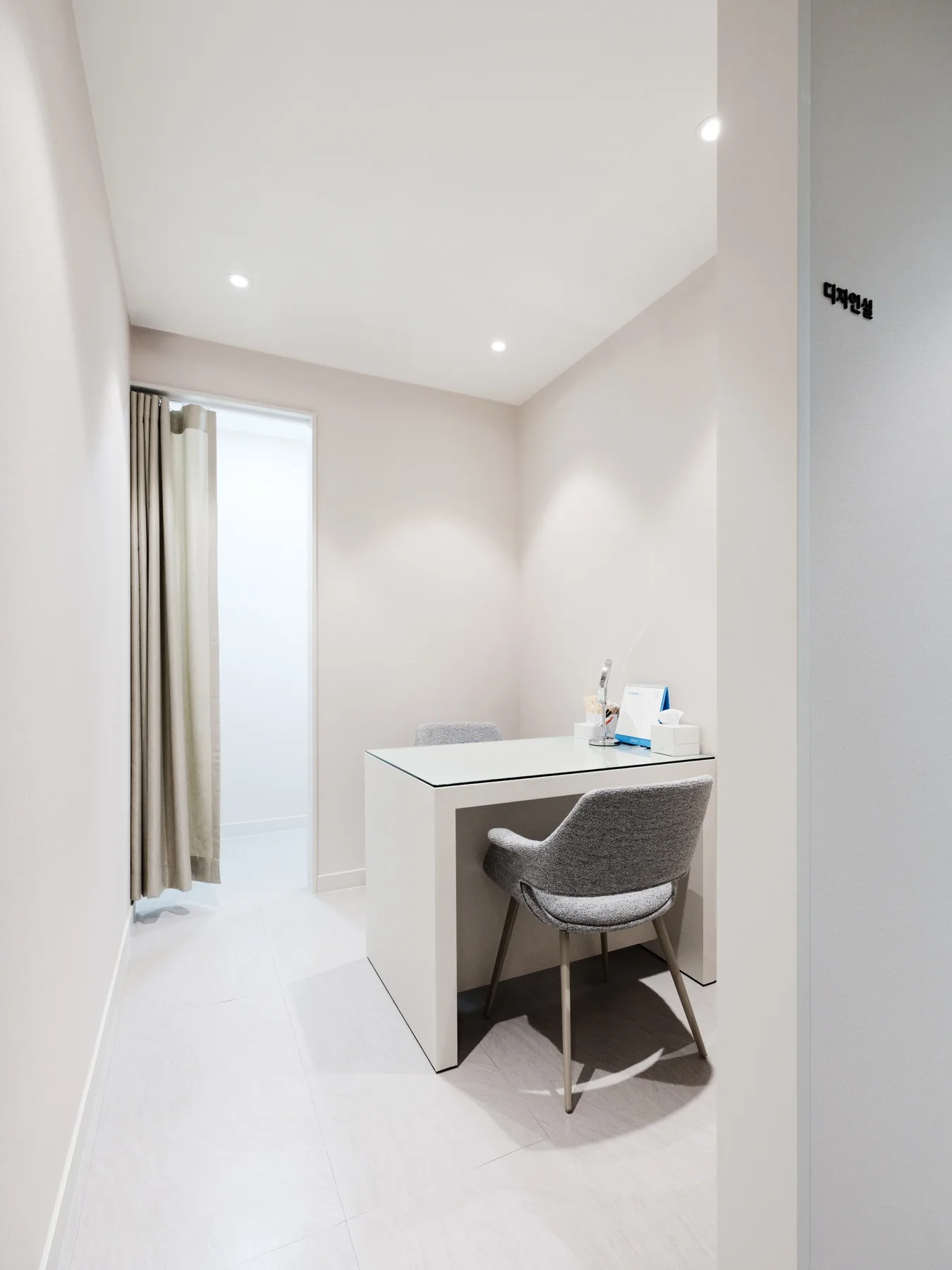
Private consultation room at Rewind Plastic Surgery, Apgujeong
Fig. 02 — A consultation room, where the stages are explained ahead of treatment
Rewind

Set per patient

Why Rewind sets each mole removal healing timeline per patient

A generic calendar would be easy to print. Three reasons it is left to the consultation at Rewind.

01Depth

Depth changes the clock, and depth is only known on the day

A shallow point closes and fades on a different schedule from one where the laser had to go deeper to clear pigment. That depth is judged lesion by lesion during treatment, so a timeline written in advance would be a guess.

02Site

Face and body heal at different speeds

Facial skin generally closes faster than skin on the back, chest or shoulders, which is also more prone to raised scars. A patient with moles in both areas is effectively running two timelines at once.

03Review

A plastic surgeon reads each point at review, in person or from your record

Dr. Jonghwan Choi, a board-certified plastic surgeon, looks at treated points at follow-up and compares them with the record of what was done. Patients who return home soon after can take that record to their own doctor.

Dr. Jonghwan Choi explaining the healing stages to a patient at Rewind Plastic Surgery
Fig. 03 — Talking through what each treated point is expected to do
Room

On the day

Planning mole removal around your healing timeline and travel dates

Curtained treatment room at Rewind Plastic Surgery

Fig. 04 — A curtained treatment room on the clinic floor

Patient lounge at Rewind Plastic Surgery, Apgujeong

Fig. 05 — The lounge on the clinic floor

Treatment day is stage one of the timeline, so it pays to choose the date with the rest of your calendar in view. Tell the clinic when you arrive in Seoul, when you leave and whether anything in between involves strong sun, hard exercise or cameras. The doctor can then advise whether to treat every mole at once or to deal with the most bothersome ones first. The clinic is on the fourth and fifth floors of the Richro Building in Gangnam and sees patients by appointment on Monday, Tuesday, Wednesday and Friday from 10:00 to 19:00 and on Saturday from 10:00 to 16:00.

Healing stages explained at consultation
Depth judged lesion by lesion on the day
Each treated point covered before you leave
Written laser aftercare from Rewind's published instructions
Treated sites recorded for later comparison
Dr. Jonghwan Choi, plastic surgeon · Richro Building, Gangnam

Keep a simple photo diary of each treated area, taken by a window in daytime. Healing is slow enough that change from one day to the next is hard to judge in a mirror, and a series of pictures is the easiest way to tell a point that is fading from one that is darkening. It is also the most useful thing to bring to follow-up, whether that happens in Seoul or with a doctor at home.

Rates

Pricing

Mole removal price in Seoul, and fitting a second pass into the timeline

The healing timeline does not change what you pay. It can change when you pay again, if a deep point needs retreatment after the first round has settled.

A single moleSmall, medium and large share one line
₩15,000
Whole faceThe facial moles agreed at examination, as one line
₩200,000
A second pass after healingTiming and terms agreed at your first visit
Quoted at consultation

VAT is added to both listed rates at payment, and anaesthesia is included according to the rate sheet. When a second pass is needed, it is planned for a point that has finished healing, and the doctor decides when that is.

Fit

Suitability

Whose mole removal healing tends to run smoothly, and whose needs more time

Usually a straightforward timeline

  • Small, long-standing facial moles that have not changed
  • Skin that heals flat after cuts and scratches
  • Patients who can stay out of strong sun while points are pink
  • Anyone able to leave the tape and the crust alone
  • People with no deadline, event or long-haul flight crowding the healing stages

Slower, less predictable, or better postponed

  • Deep-rooted moles, which need deeper treatment and take longer to settle
  • Moles on the back, chest or shoulders
  • A history of keloid or thick raised scars
  • Deeper or tanned skin tones, where colour change after healing shows more
  • A beach trip, a ski trip or outdoor work during the pink stage
  • Any lesion that has changed, bled or itched, which is assessed medically and not lasered
After

Aftercare

Mole removal aftercare that keeps the healing timeline on track

Rewind's instructions after any laser treatment are brief: some redness straight afterwards is possible, sauna, jjimjilbang and sweaty exercise are avoided, massage and strong friction stay off the treated skin, and sunscreen is worn outdoors. Each of them protects a particular stage.

Fresh point
Keep it covered and clean
The tape applied at the clinic protects the open point. Follow the written instruction for wearing and changing it.
Crust
No sweat, no steam, no picking
Heat and sweat loosen the tape and soak the crust. Leaving the crust alone is the most useful single thing you can do at this stage.
Pink skin
Sunscreen every time you go out
New pink skin darkens easily. Daily sun protection now shapes much of the final colour.
Fading
No friction, and patience
Massage and scrubbing can irritate a point that is still settling. Compare photographs, and bring any point changing the wrong way to follow-up.

The outcomes worth knowing by name are infection during the open and crust stages, a small depression where tissue was removed, a point that stays darker or paler than the skin around it, a raised scar on skin that tends to form them, and a mole that returns and needs a second pass. Healing that stalls, a point that grows, or a mark that starts bleeding again should be seen by a doctor.

Doctor

Professional

At Rewind, one board-certified plastic surgeon carries every case — from the first consultation to the final follow-up. Because a face is a story, and a story deserves a single author.

Dr. Jonghwan Choi, board-certified plastic surgeonRewind,
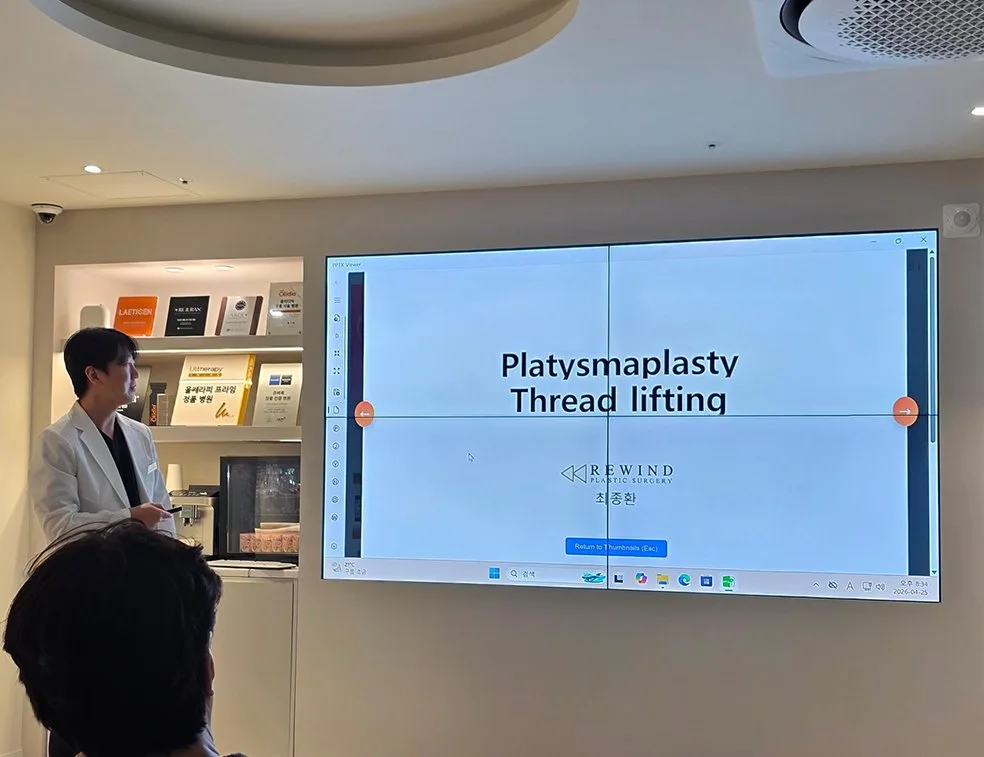
Dr. Jonghwan Choi presenting at an academic session
Fig. 06 — Academic presentation, thread-lifting session

Rewind's Doctor

Dr. Jonghwan Choi Medical Director

One surgeon, from the first
consultation to the last follow-up.

A board-certified plastic surgeon devoted to anti-aging lifting — with the precision and restraint built through years of craniofacial practice.

Board-certified plastic surgeon (Plastic Surgery)
10 peer-reviewed publications
Medical Director, Rewind Plastic Surgery
Korean Society of Plastic & Reconstructive Surgeons
Former chief director, Apgujeong Y&T Plastic Surgery
Korean Society for Aesthetic Plastic Surgery
J Craniofac Surg · JKMS · Arch Craniofac Surg
Korean Cleft Palate-Craniofacial Association
Voices

Google Reviews

What our patients say.

G 5.0 ★★★★★ 12 Google reviews · Rewind Plastic Surgery, Apgujeong — live-synced from Google Business Profile

"Sample review card — at launch this section pulls the clinic's real Google reviews automatically, shown verbatim with the reviewer's initial and posting date."

AReviewer namePOSTED ON GOOGLE

"Sample review card — reviews are never written or edited by the clinic; only what patients posted on Google appears here."

BReviewer namePOSTED ON GOOGLE

"Sample review card — a 'See all reviews on Google' link takes visitors to the clinic's Business Profile."

CReviewer namePOSTED ON GOOGLE
Ask

Questions

Mole removal healing: stage-by-stage questions

What does mole removal look like one week after?
There is no single picture, because Rewind does not publish a day count and points heal at different speeds. Around then a point may still be crusted under tape, or the crust may have lifted to show pink skin. Either can be normal. Heat, swelling, discharge or growing pain are not.
When does the pink mark fade after mole removal?
Gradually, at a pace set by depth, site, skin tone and sun exposure. Rewind does not publish a time frame, so none is quoted here. Daily sunscreen while the point is pink is the step most within your control, and the doctor reviews the colour at follow-up.
How long until the site is fully healed?
That depends on which finish line you mean. The surface closes first, once the crust has lifted on its own; the colour settles much later. Rewind publishes neither as a fixed figure, and the expected time frame for your own points is given at consultation.
Is it normal for the crust to look darker than the mole?
Yes. A dried crust is often brown or nearly black and can look worse than the original mole. It is a protective layer over the healing base. Leave it under the tape until it separates by itself, and resist lifting the edges to look underneath.
Why does my treated spot look dented once the crust came off?
New skin often sits slightly lower than its surroundings at first, especially where the laser went deeper. Points can level out as they settle, though some keep a small depression. Show a dent that persists at follow-up, where the doctor can judge it against the depth that was treated.
Do facial and body moles heal on the same timeline?
Usually not. Points on the back, chest and shoulders tend to close and fade more slowly than points on the face, and that skin forms raised scars more readily. With moles from both areas treated in one sitting, expect the facial points to move through the stages first.
Can I fly home while the points are still healing?
Discuss your flight date at consultation, and the doctor can advise how many points suit it. The stages continue on the plane and at home, so pack the ointment, the tape and sunscreen, and take the record of treated sites for any local doctor who follows up.
When is a second pass possible if a mole comes back?
Only once the first treatment has healed and the point has settled enough for the doctor to see what remains. The timing and terms of a retreatment are agreed at your first visit, and that line on Rewind's rate sheet is quoted at consultation.
Booking

Reservation

REWIND,booking

Tell us your travel dates and roughly how many moles you are considering, and we reply within one business day in your language.

Scientific evidence

Published research on how laser and surgical wounds heal

The two split-scar trials followed surgical scars and skin-cancer excision scars that were treated early with a fractional laser, and they appear here for what they show about monitoring and managing a healing scar; mole points were outside their scope. The review of carbon dioxide laser treatment of benign skin growths gives background on the technique itself. None of the three reports a healing schedule for patients of Rewind Plastic Surgery.