Non-Surgical · CO2 Laser

Mole Removal

Assessed lesion by lesion, priced per mole or as one rate for the whole face

Gangnam, Seoul | Board-certified plastic surgeon, Dr. Jonghwan Choi
KHIDI-registered for international patients · Apgujeong Rewind

Mole Removal Mole Removal Mole Removal Mole Removal Mole Removal Mole Removal 
Lesion

Mole removal

Mole removal by CO2 laser: what is vaporised, and what is examined first

The short answer

A carbon dioxide laser emits light that the water in skin absorbs almost completely. Directed at a mole, it vaporises tissue in thin layers, so the lesion is taken down in controlled passes under magnification until the doctor judges the depth is right. Rewind prices the work two ways on its own rate sheet: a flat rate for one mole across small, medium and large, and a separate single rate to clear the whole face.

The clinic publishes no anaesthetic protocol, no session length and no fixed number of days in a dressing for this treatment, and none of the three is guessed at here. They are explained at the appointment, where the lesions are in front of the doctor and the count is known.

The order of operations is what separates a careful clinic from a fast one. The laser is the last step. Before it, every lesion on the list gets looked at, because a brown spot on a cheek can be a common mole, a sun-driven blemish, a small growth that is not a mole at all, or in rare cases something that needs a pathologist and not a cosmetic appointment. Vaporising a lesion destroys the tissue, and destroyed tissue cannot be examined afterwards. That is the whole reason the assessment cannot be skipped to save a few minutes.

The published evidence for this technique is evidence about benign lesions. Comparative work has measured CO2 laser against cryotherapy, electrodesiccation and the erbium laser for removing benign growths, and separate papers have reviewed carbon dioxide laser treatment of benign skin neoplasms as a group. Nothing in that literature is a licence to laser a lesion that has not been assessed.

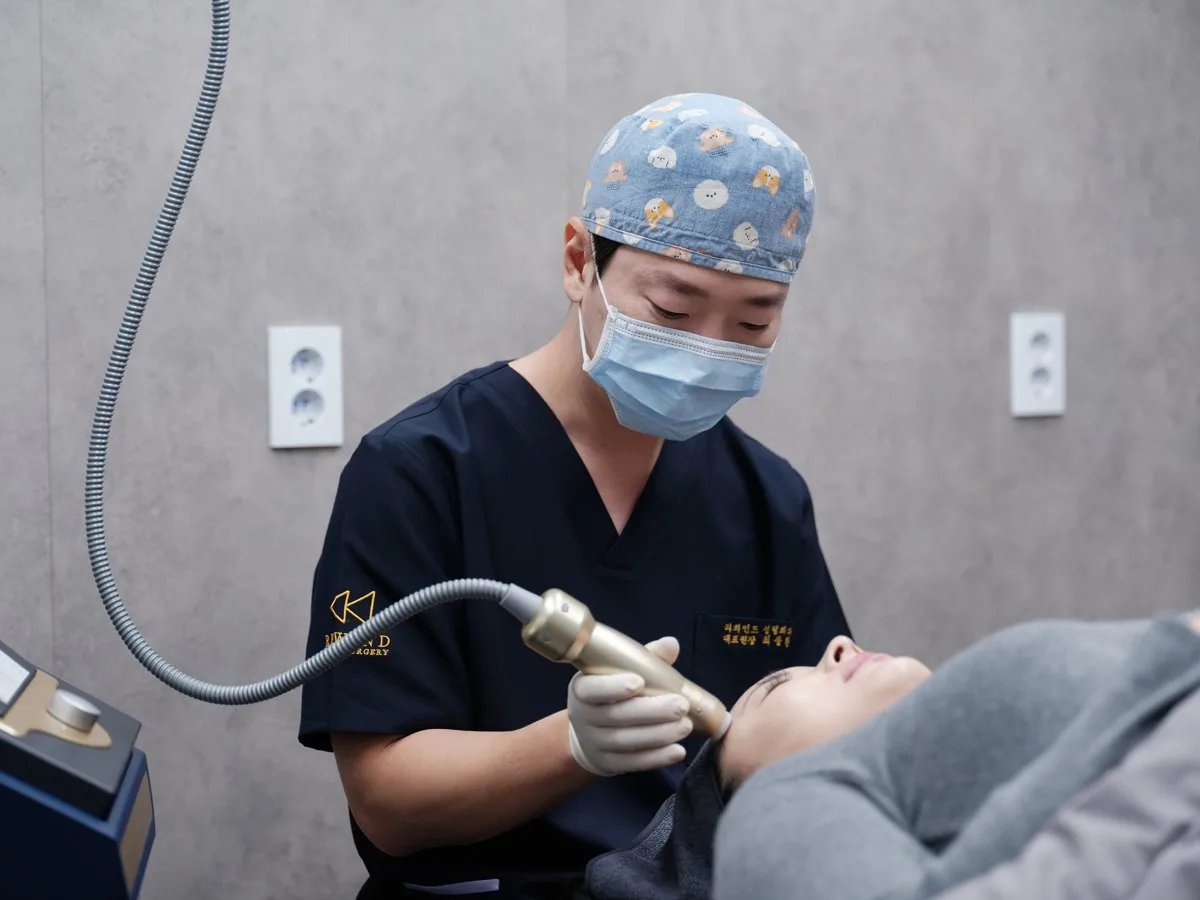
Laser handpiece in use during a treatment at Rewind Plastic Surgery
Fig. 01 — A laser handpiece worked across a marked field on the treatment floor
Marks

What gets treated

Raised moles, flat moles, and the marks that are not moles at all

Most patients arrive with a mixed list. A couple of raised moles they catch with a razor or a comb, a scatter of small flat brown marks they have stopped liking in photographs, and one or two things they have never been able to name. Sorting that list is the first job of the consultation, because the four groups below do not all belong to the same treatment.

group 01
Raised moles on the face
The domed ones that catch on razors, collars and brushes. They sit proud of the skin, so the laser has a clear target and the change is visible immediately.
group 02
Flat pigmented moles
Level with the skin and coloured through its depth. These are the ones where depth judgement matters most, since pigment left behind is pigment that can darken again.
group 03
A whole-face clearance
Many small lesions handled in one sitting. The clinic carries a single flat rate for this, which is what makes a long list affordable to deal with at once.
group 04
Marks that need a different answer
Sun-driven blemishes, freckling and diffuse pigment are a pigment problem and usually belong to a toning laser. Vaporising flat pigment is the wrong tool and leaves an unnecessary mark.

Body sites are treated as well as facial ones, and the trade-off shifts when you move below the jaw. Skin on the trunk, the shoulders and the back heals more slowly than skin on a cheek and is more inclined to leave a raised or spread scar, so the conversation about whether a particular body mole is worth removing at all is a real one. A mole that snags on a bra strap has a practical argument behind it. A mole nobody can see does not.

Depth

Mechanism

How a CO2 laser takes a mole down, layer by layer

Four decisions run the treatment, and only the second one involves the laser being switched on at all.

01Assessment

Every lesion is examined before any of them is treated

Size, border, colour, symmetry, texture and any history of change are what the doctor is reading. A lesion with an irregular edge, a mix of colours, recent growth, bleeding or persistent itch is not a cosmetic case and it is not lasered here. It is referred for proper assessment, because ablation destroys the very tissue a diagnosis would depend on.

02Ablation

Water absorbs the beam, and tissue is removed in thin passes

The 10,600 nanometre wavelength of a carbon dioxide laser is absorbed by water, which is most of what skin is made of. Energy is therefore spent at the surface and each pass removes a thin layer with limited heat spread beneath it. The doctor works down under magnification, checking the base between passes.

03The trade-off

Deep enough to stay gone, shallow enough to heal flat

This is the central judgement of the whole treatment and it has no free option. Going deeper reduces the chance a mole comes back and raises the chance of a visible dent or a lasting pale mark. Staying shallow protects the skin surface and accepts that a deep-rooted mole may need a second pass later. Which way a given lesion is played depends on the mole, the site and what you have said matters to you.

04Healing

A crust, then a pink patch, then months of quiet fading

Each treated point is a small open wound that crusts over and separates on its own. Underneath sits pink skin that is nowhere near its final appearance. The mark fades gradually over months, and sun exposure during that window is the single factor most able to turn a fading mark into a persistent dark one.

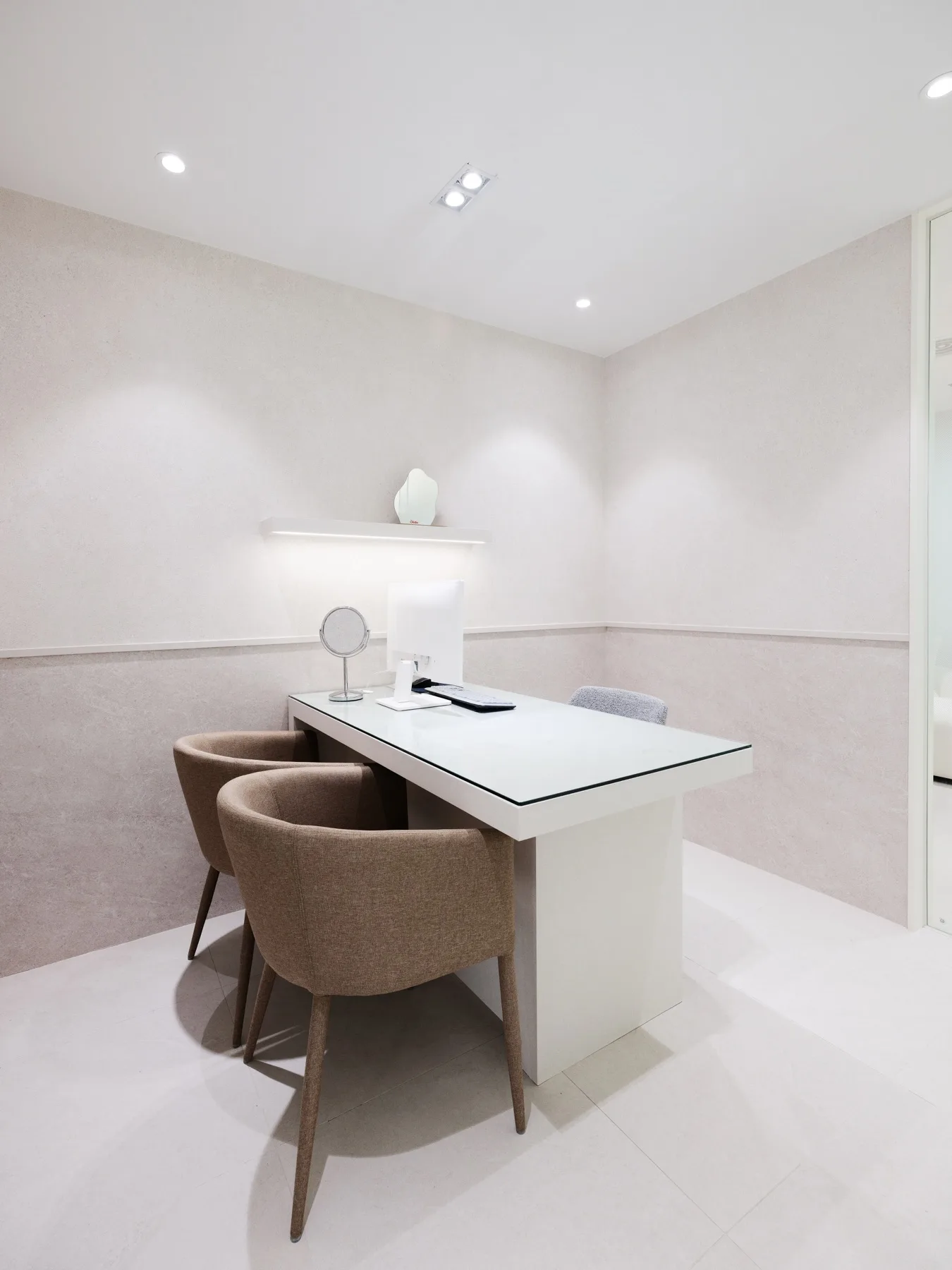
Consultation room at Rewind Plastic Surgery, Apgujeong
Fig. 02 — The consultation room, where the list is sorted before anything is treated
Rewind

Judgement

Why mole removal is a surgical judgement before it is a laser setting

This is the cheapest thing on a clinic's menu and the one with the least room for carelessness. Three positions shape how it is handled here.

01Sorting

The list you arrive with is not the list that gets treated

Some lesions are removed, some are redirected to a treatment that suits them better, and occasionally one is set aside for proper assessment. Being told that three of your eight marks should be left alone is a better outcome than being charged for eight.

02Depth

One surgeon sets the depth, and he sees the result at review

Depth on a facial lesion is a decision about the scar you will carry. It is made by a plastic surgeon who repairs facial tissue for a living, who does the treatment himself, and who is the person you sit in front of at the follow-up when the mark is still pink.

03Limits

What cannot be promised is said before the money is taken

Some moles return and need a second pass. Some sites leave a pale or slightly sunken point that is visible in raking light. Skin that scars thickly is warned about in advance. Ask what the clinic's terms are for a retouch before your first appointment, not after a lesion has come back.

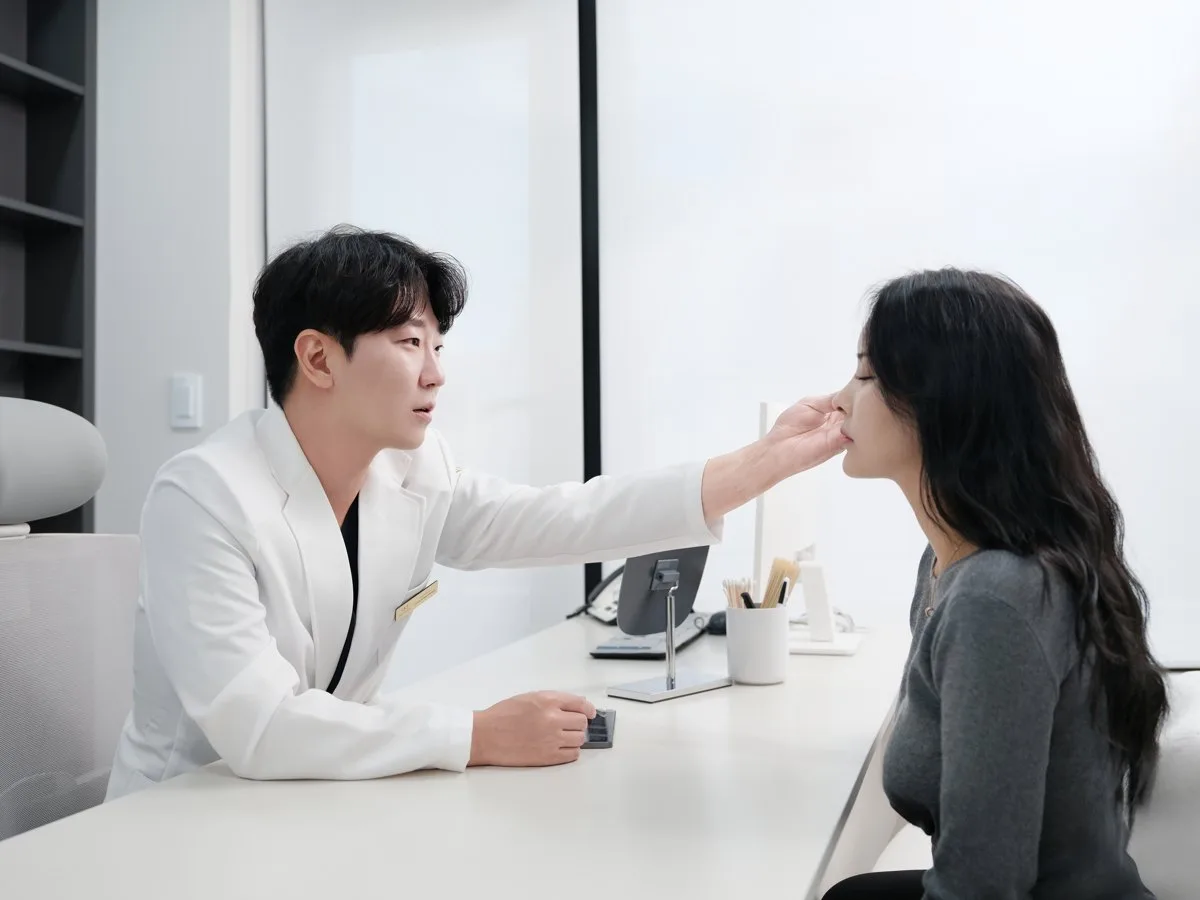
Facial assessment during a consultation at Rewind Plastic Surgery
Fig. 03 — Each lesion is looked at individually before a count is agreed
Room

On the day

A mole removal visit at Rewind, from counting to dressing

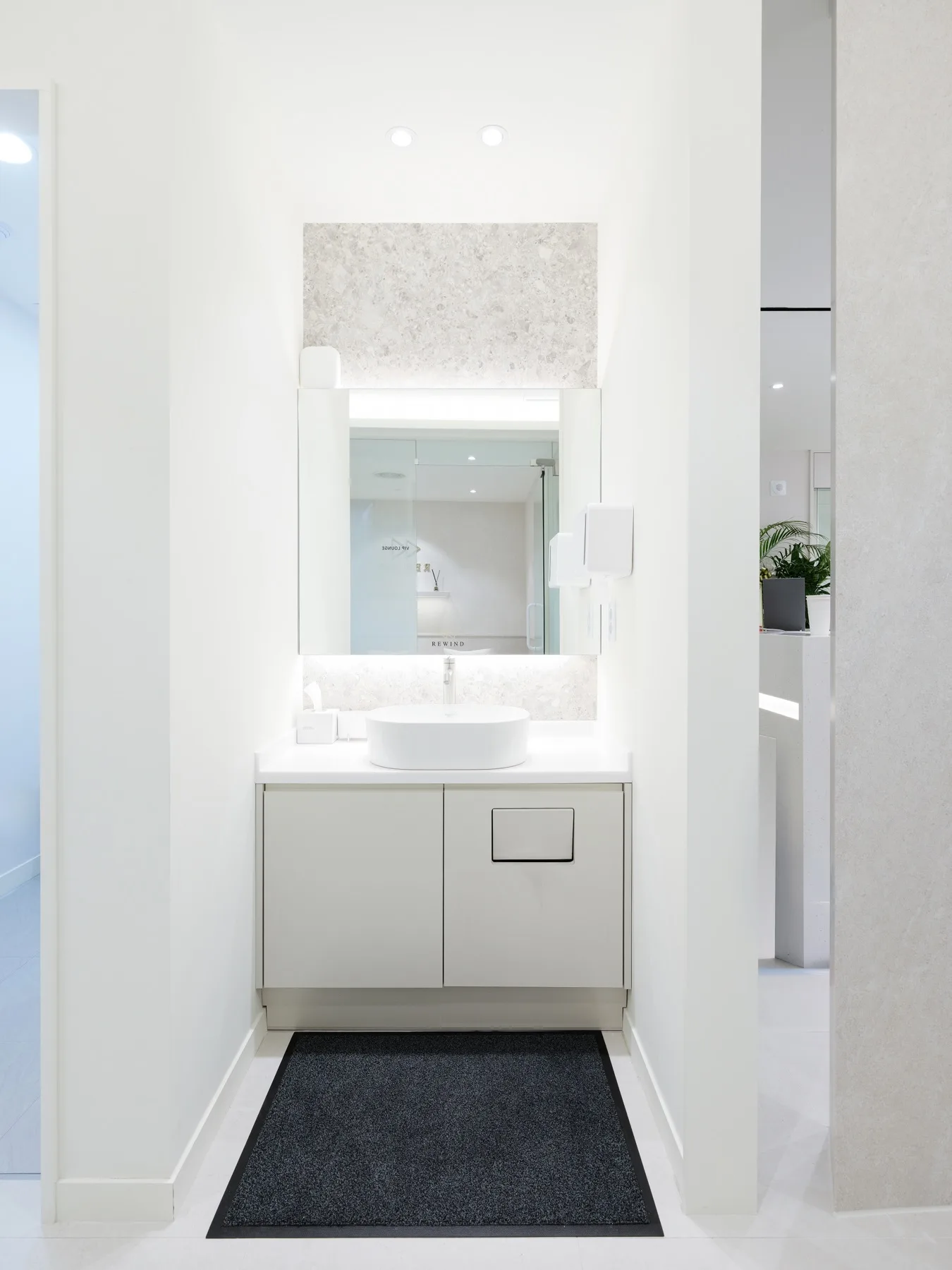
Washroom at Rewind Plastic Surgery, Gangnam, Seoul

Fig. 04 — Where make-up comes off before the lesions are counted

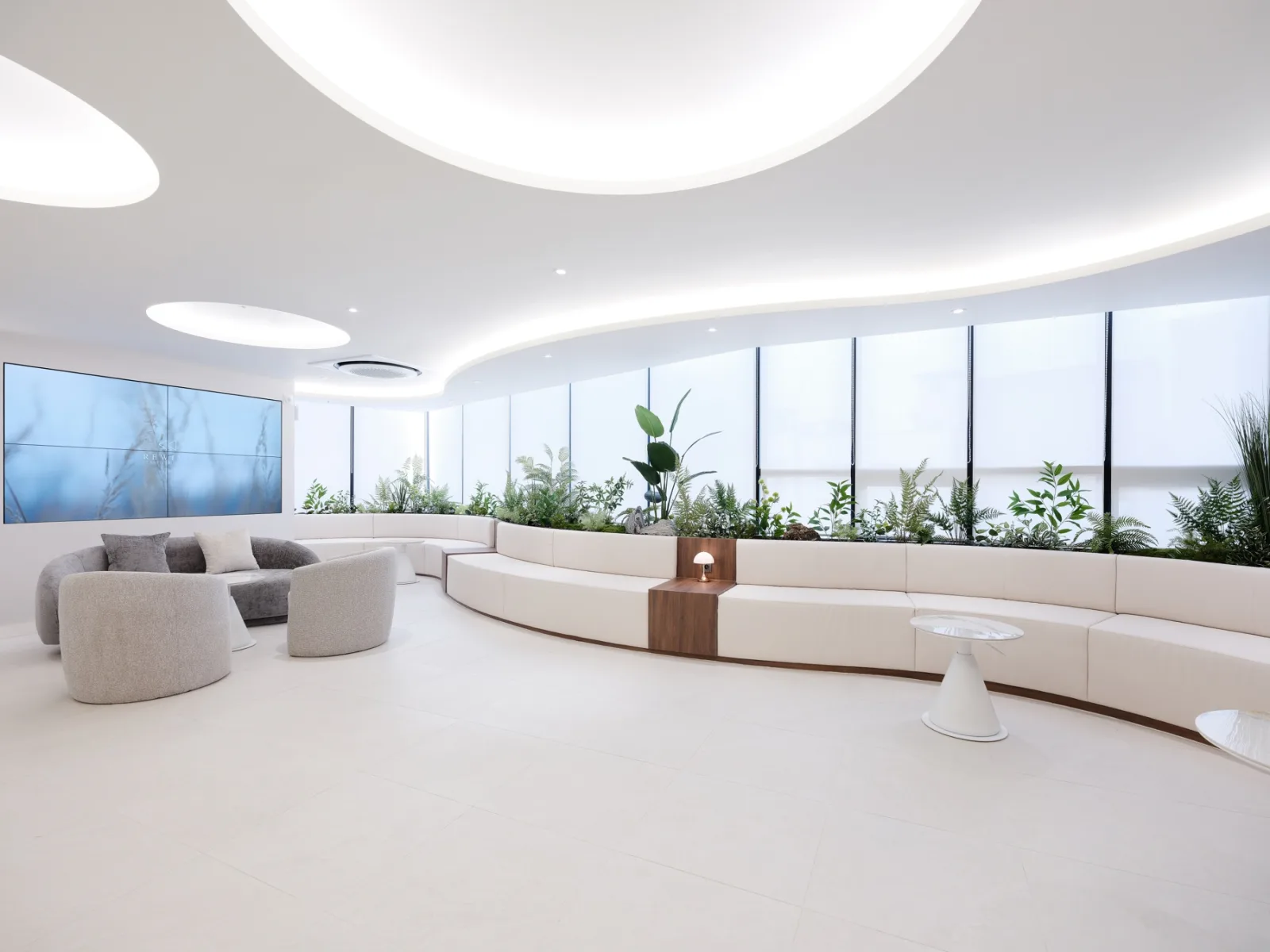
Waiting lounge at Rewind Plastic Surgery, Apgujeong

Fig. 05 — The lounge, where numbing is left to work before a session

Make-up comes off first, because a lesion under foundation cannot be judged and a count taken through concealer is not a count. The doctor then goes through the face in good light, marks what will be treated, names anything he would rather not treat and says why. Only then is the number fixed, and with it the choice between paying per mole and taking the whole-face rate. The rooms are on the fourth and fifth floors of the Richro Building in Gangnam, Seoul, and appointments are taken Monday, Tuesday, Wednesday and Friday between 10:00 and 19:00, and on Saturday between 10:00 and 16:00.

Carbon dioxide laser, worked under magnification
Every lesion assessed before the count is agreed
One flat rate per mole across small, medium and large
A separate single rate for a whole-face clearance
Treated by Dr. Jonghwan Choi, plastic surgeon
Richro Building, 4F and 5F, Gangnam, Seoul · by appointment

Ask for the treated points to be recorded, by site and by count, before you leave. It sounds fussy for a treatment that costs so little, but a written record is what lets a second visit be argued from evidence: which lesion came back, which one healed flat, which site is still pink at eight weeks. Patients travelling from abroad have the most to gain from it, since their follow-up often happens at home with a different doctor reading the chart.

Record

Case photography

Mole removal photographs: the treatment where framing decides everything

Few treatments are as easy to flatter with a camera as this one. Move the light, drop the resolution, shoot the second frame from slightly further away, and a pink healing point disappears without anything having healed. Rewind has no mole removal cases photographed and consented to its own standard yet, so these frames stay as they are.

Mole removal — case pairs

BEFORE PHOTO
AFTER PHOTO
BEFOREAFTER
case — CO2 laser
Mole removal
Individual results may vary.
BEFORE PHOTO
AFTER PHOTO
BEFOREAFTER
case — CO2 laser
Mole removal
Individual results may vary.
BEFORE PHOTO
AFTER PHOTO
BEFOREAFTER
case — CO2 laser
Mole removal
Individual results may vary.
BEFORE PHOTO
AFTER PHOTO
BEFOREAFTER
case — CO2 laser
Mole removal
Individual results may vary.

The pairs published here later will carry the interval on the card, because a photograph taken at two weeks and one taken at six months describe different treatments. Matched distance, matched lighting, no crop tighter on one frame than the other, written consent on file. Skin type, site and depth all change how a treated point settles, so nobody else's pair forecasts yours, and a consultation with the doctor is required before any treatment is decided.

Rates

Pricing

What mole removal costs at Rewind, per lesion and per face

The sheet is unusually simple. One rate covers a single mole whether it is small, medium or large, so nobody is measured and upgraded at the counter. A second rate covers the whole face in one go. Which of the two you want is arithmetic, and reception does it in front of you once the count from the consultation is known.

One mole — small, medium or largeA single flat rate across all three size bands on the sheet
₩15,000
Whole faceOne rate for a full facial clearance in a single appointment
₩200,000
A second pass on a deep-rooted lesionTerms differ by lesion and by what was agreed at the first visit
Quoted at consultation

VAT is charged separately on top of both figures, so the amount settled at reception is higher than the amount printed here. Above a certain count the whole-face rate costs less than paying per lesion, and the crossover is worked out with your own number and is not quoted here as a rule. Body sites, and any lesion referred for proper assessment, are handled separately.

Fit

Suitability

When mole removal makes sense, and when the answer is no

Usually straightforward

  • Raised, long-standing, unchanged moles that snag on a razor, a collar or a hairbrush
  • A scatter of small facial lesions where one appointment and one flat rate settle a long-running annoyance
  • Patients who accept that each treated point is pink for weeks and faint for months afterwards
  • Anyone willing to be strict about sun protection through the whole healing window
  • Someone who wants the lesions looked at properly, and is happy to be told which ones to leave

Reasons the doctor declines or waits

  • Any lesion that has changed in size, shape or colour, or that bleeds, itches or has an irregular border — assessed properly, not vaporised
  • A history of thick, raised or spreading scars, particularly on the chest, shoulders or back
  • Skin that is freshly tanned, inflamed or broken across the intended site
  • Travel plans that make weeks of visible healing points unacceptable
  • An expectation of skin that shows no trace at all, which no laser can deliver
  • Flat diffuse pigment mistaken for moles, which belongs to pico laser toning instead
After

Aftercare

After mole removal: the crust, the tape and the months of fading

Rewind's standing instructions after laser work are short. Redness directly afterwards is expected. Sauna, steam room and sweaty exercise wait. Massage and hard rubbing stay off the treated skin. Sun protection goes on whenever you are outdoors. On top of that sits the dressing, and the dressing is where most of the difference in the final mark is made.

First days
A crust forms, and stays
Each point scabs over. Picking one off early is the most common route to a deeper mark. Ointment and the dressing given at the clinic do the work; your hands do not.
The dressing
The tape Korean clinics call regeneration tape
A thin skin-toned dressing worn over each treated point to keep it covered and moist. How long you wear yours is part of the instruction given with it; Rewind publishes no fixed number of days.
Weeks 1–4
Crusts separate, pink appears
The crust comes away by itself and reveals pink skin that looks worse in some lights than the mole did. This is the stage patients misread as a failed treatment.
Months after
Slow fading, decided by sunlight
Pink turns pale over months. Ultraviolet light on a healing point is what darkens it, so daily sunscreen through the whole window is the intervention that actually changes your result.

The real risks deserve naming. Pigment change in either direction is the common one: a treated point can darken for months before it settles, or stay a shade lighter than the skin around it. A depressed point or a raised scar can follow a deeper treatment, and skin that scars thickly is at higher risk wherever it is treated. Infection is uncommon and is usually the consequence of a crust picked off early. A mole can recur and need a second pass. The serious risk is not cosmetic at all: a lesion that warranted proper assessment being destroyed instead, and that is the reason the examination comes first and why a doctor who declines to treat something is doing his job. Evidence on early laser treatment of healing scars exists and is one of the reasons scar care is discussed at review and not left to chance.

Doctor

Professional

At Rewind, one board-certified plastic surgeon carries every case — from the first consultation to the final follow-up. Because a face is a story, and a story deserves a single author.

Dr. Jonghwan Choi, board-certified plastic surgeonRewind,
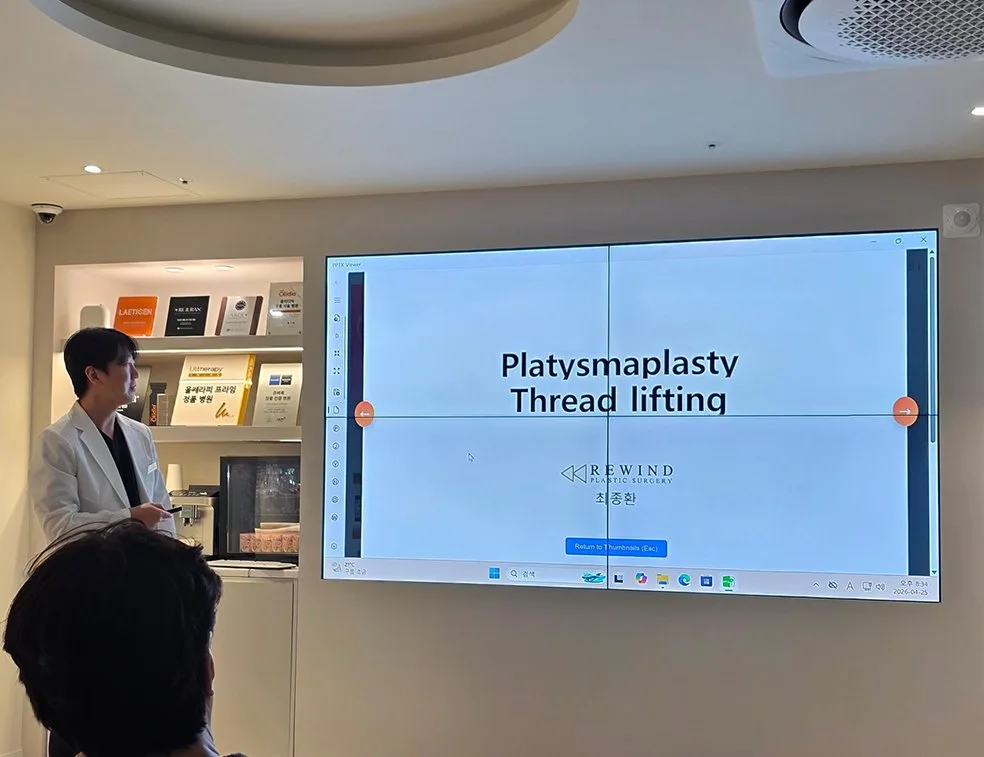
Dr. Jonghwan Choi presenting at an academic session
Fig. 06 — Academic presentation, thread-lifting session

Rewind's Doctor

Dr. Jonghwan Choi Medical Director

One surgeon, from the first
consultation to the last follow-up.

A board-certified plastic surgeon devoted to anti-aging lifting — with the precision and restraint built through years of craniofacial practice.

Board-certified plastic surgeon (Plastic Surgery)
10 peer-reviewed publications
Medical Director, Rewind Plastic Surgery
Korean Society of Plastic & Reconstructive Surgeons
Former chief director, Apgujeong Y&T Plastic Surgery
Korean Society for Aesthetic Plastic Surgery
J Craniofac Surg · JKMS · Arch Craniofac Surg
Korean Cleft Palate-Craniofacial Association
Voices

Google Reviews

What our patients say.

G 5.0 ★★★★★ 12 Google reviews · Rewind Plastic Surgery, Apgujeong — live-synced from Google Business Profile

"Sample review card — at launch this section pulls the clinic's real Google reviews automatically, shown verbatim with the reviewer's initial and posting date."

AReviewer namePOSTED ON GOOGLE

"Sample review card — reviews are never written or edited by the clinic; only what patients posted on Google appears here."

BReviewer namePOSTED ON GOOGLE

"Sample review card — a 'See all reviews on Google' link takes visitors to the clinic's Business Profile."

CReviewer namePOSTED ON GOOGLE
Ask

Questions

Mole removal: the questions visitors to Seoul send ahead

How does CO2 laser mole removal actually work?
Carbon dioxide laser light is absorbed by the water in skin, so each pass vaporises a thin layer of tissue with limited heat spreading below it. The doctor works down under magnification, checking the base between passes and stopping at the depth he judges correct for that lesion.
Is numbing used, and does it hurt?
There is a sharp hot sensation at each point, brief and repeated once per lesion. Rewind does not publish an anaesthetic protocol for this treatment, so none is stated here; what is used for your session is explained before it begins and it is a reasonable question to ask when you book.
Will it leave a scar?
Every treated point leaves a mark that is pink for weeks and faint for months. Most settle to something hard to find. A visible dent, a pale point or a raised scar are the outcomes that depth, site and your own healing tendency decide, and a history of thick scars is discussed before treatment.
How long do I wear the regeneration tape?
Rewind publishes no fixed number of days, so no figure is quoted here. The thin skin-toned dressing is applied at the clinic to keep each point covered and moist, and the instruction for changing and removing it is given with the dressing itself.
Can a mole grow back?
Yes. Pigment cells reaching deeper than the treated layer can regenerate, and deep-rooted lesions are the usual ones to reappear. A second pass is normal in that situation. Ask what the clinic's terms are for a retouch before your first appointment.
How much does mole removal cost?
One flat rate covers a single mole across small, medium and large, and a separate rate covers the whole face in one appointment. Both figures are in the pricing section above, with VAT charged separately on top.
When is the whole-face rate the better buy?
Once your count is high enough that paying per lesion adds up past the flat rate. Reception works that out with your actual number after the consultation, so the count is agreed before anything is treated.
Can moles be removed on the same day I first visit?
The clinic states that a consultation can be followed by treatment at the same visit for straightforward cases, by appointment. Whether yours is straightforward is what the examination answers. Lesions that warrant proper assessment are never treated the same day just because a trip is short.
What happens if the doctor says a mole should not be lasered?
He explains what he is seeing and refers you for proper assessment. Vaporising a lesion destroys the tissue a pathologist would need to examine, so a cosmetic laser is the wrong first step for anything with an irregular border, mixed colour, recent growth, bleeding or persistent itch.
Can I wear make-up afterwards?
Plan on the treated points being covered for a while. What may be applied over a dressing, and from when, is part of the aftercare instruction given at the clinic, and it differs depending on how many points were treated and where they sit.
Sauna, exercise and sun afterwards?
Rewind's instructions after laser work are to avoid sauna, jjimjilbang and sweaty exercise, to keep massage and hard friction off the treated skin, and to use sun protection outdoors. Sunlight matters most here, since ultraviolet exposure on a healing point is what turns a fading mark into a lasting dark one.
What about flat brown spots and freckling?
Often not. Diffuse sun-driven pigment and freckling respond to a pigment-directed laser and are better kept away from ablation, which removes tissue and leaves a healing point behind. Read pico laser toning alongside this page, and let the examination decide which marks belong where.
Booking

Reservation

REWIND,booking

Tell us roughly how many lesions you are thinking about — we reply within one business day, in your language.

Scientific evidence

Carbon dioxide laser treatment of benign lesions in the peer-reviewed record

The first two papers concern removal of benign skin lesions, one comparing the carbon dioxide laser against cryotherapy, electrodesiccation and the erbium laser, the other reviewing carbon dioxide laser treatment of benign growths as a group. The second pair are split-scar studies of early fractional laser treatment on healing wounds, and they are cited here only for the scar-care discussion, since their patients were healing surgical and excision wounds. None of the four involved Rewind Plastic Surgery or patients treated at this clinic, and none predicts how an individual point will settle.