Surgery · Neck Muscle
Why the muscle, and not only the skin, shapes a neck
Apgujeong, Seoul | Board-certified plastic surgeon, Dr. Jonghwan Choi
Platysmaplasty · Skin and muscle read separately · KHIDI-registered for international patients
Platysmaplasty
Platysmaplasty in one paragraph
Platysmaplasty is surgery on the platysma, the thin muscle sheet that runs from the upper chest over the front of the neck to the jaw. With age its inner edges can separate and slacken, which shows as vertical bands and a blurred border between jaw and throat. Tightening the muscle restores tension underneath; redraping skin on its own would leave the slack sheet in place. It can also be done without a full neck lift: at Rewind the muscle is tied back within the combined chin liposuction operation and after deep neck fat removal, both through a short line under the chin with no skin excised.
Rewind's muscle step is documented in its Korean surgical pages for chin liposuction with muscle tightening and for grape-cluster fat removal. For the neck lift listing itself, the way the muscle is handled is confirmed by the operating surgeon at the examination.
Patients often describe a neck lift as a skin operation. Skin is what you see, but the shape underneath comes from the muscle. When the platysma has slackened, pulling skin tighter over it treats the covering and leaves the frame loose, and the bands tend to show through again once the swelling settles.
This page covers the muscle side of the operation: what the platysma does, the ways surgeons tighten it according to the published literature, what Rewind documents about its own muscle step, and how to tell whether your neck needs muscle work with a skin lift or without one.
The muscle, part by part
The platysma is broad and thin, and the problems it causes depend on which part has given way. These four features are what the examination looks for with the neck relaxed and then tensed.
The chin-based route to the same muscle has its own page: double chin liposuction with platysma tightening.
Published methods and Rewind
Surgeons describe several ways of restoring tension to the platysma, and which one a neck needs depends on where the slack sits. The first four rungs summarise the literature; the last two describe what Rewind publishes and what it leaves to the examination.
The two inner borders of the muscle are brought together under the chin and stitched, much like lacing a corset from the front. A published review of 101 secondary neck lifts pointed to midline platysma work as the step that decided whether a revised neck held its shape.
The outer edge of the muscle is drawn back toward the ear and fixed, a method suited to access from beside the ear, as in a facelift. Many published approaches combine midline and lateral tightening in the same neck.
When fat over a slack muscle is suctioned, the bands it was padding can become more visible. A 1993 paper described this band deformity after submental liposuction, and it remains the classic argument for treating the muscle at the same sitting.
A branch of the facial nerve that moves the lower lip runs close to the jaw line. Anatomical work on facial nerve danger zones maps where dissection carries more risk, which is part of why neck muscle surgery needs a surgeon who knows those zones well.
In the surgical text for its combined chin operation and its grape-cluster fat removal, Rewind describes tying the stretched platysma so it holds tension again, through a line of about 2 cm under the chin. The combined chin operation also uses short lines of about 0.5 cm behind each ear.
For the neck lift listing, Rewind does not publish the method of muscle tightening, the incision plan, the anaesthetic or the operating time. The surgeon sets each of them for your neck at the consultation.

A decision of its own
Muscle tightening adds work, a longer list of restrictions and, on some listings, a higher figure. It belongs in a plan only when the neck shows a reason for it.
The neck is examined relaxed and tensed. Cords that stand out on tensing and a jaw line that softens into the throat point to the muscle; fullness that can be pinched points to fat.
At Rewind the platysma can be tightened inside the combined chin liposuction operation, after deep neck fat is removed, or within a neck lift where skin also needs redraping. The written plan names the route and the reason.
Rewind is a single-surgeon clinic, so the doctor who tightened the muscle is the doctor who checks it at every review, and the reading of your neck never changes hands.
On the day

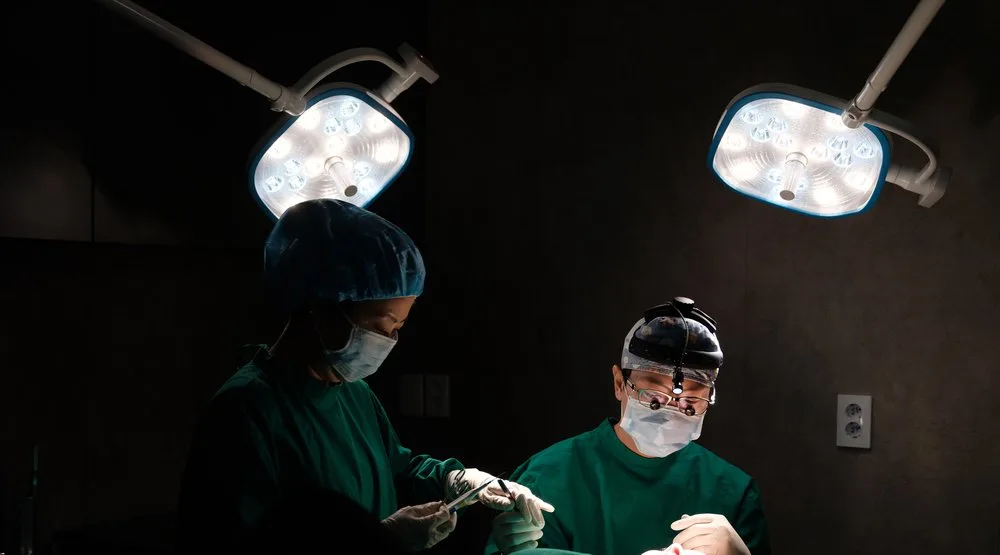
Fig. 04 — The operating room at Rewind, Apgujeong

Fig. 05 — A private recovery room at Rewind
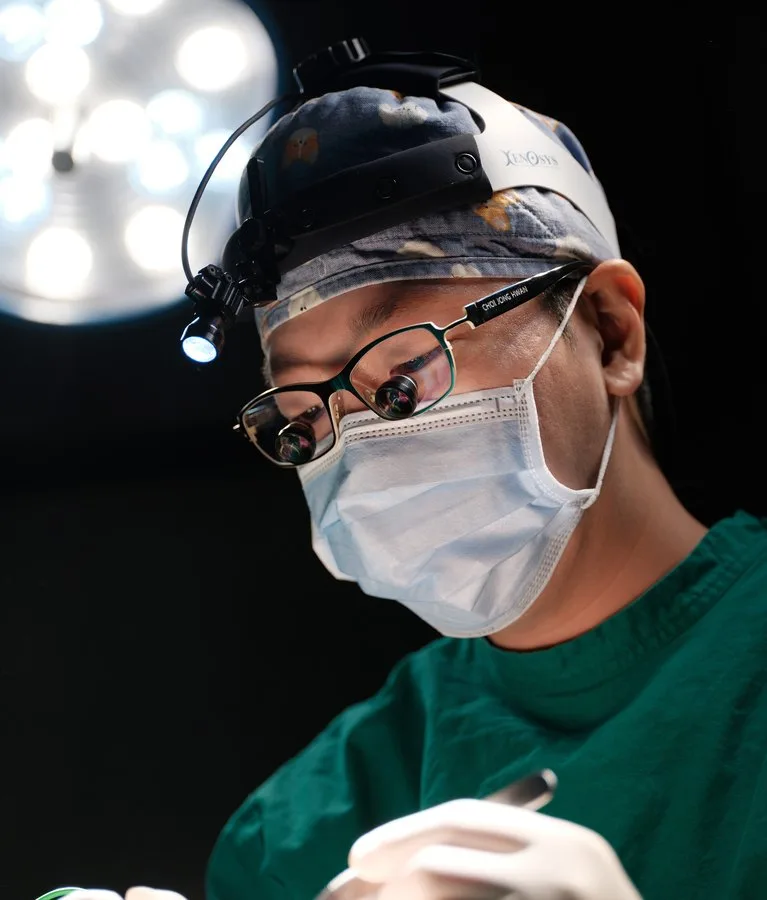
Rewind's consultation rooms and operating theatre sit on the fourth and fifth floors of the Richro Building, Apgujeong, Gangnam. Dr. Jonghwan Choi examines the neck, performs the operation and runs every review. Appointments are available on Monday, Tuesday, Wednesday and Friday between 10:00 and 19:00 and on Saturday between 10:00 and 16:00; there are no walk-in visits.
Board-certified plastic surgeon
Korean specialist certification in plastic surgery and ten papers in peer-reviewed journals. Dr. Choi performs every platysma operation at Rewind himself. KHIDI registration number for international patients: M-2025-01-08-09288.
Where the muscle appears on the schedule
Platysma work appears on Rewind's schedule in more than one place, because it belongs to more than one operation. The lines below show where it sits.
All four are list prices with the anaesthetic fee inside and VAT added on top. Which line your plan uses depends on whether skin has to be redraped as well as the muscle tightened, and that is written into the quote at the consultation.
Who needs it
Recovery
A tightened muscle needs time to settle before it is stretched hard. Rewind's written instructions for its neck-muscle operations spell this out; for a neck lift, the surgeon issues the schedule for your case, and it may run longer where skin was also redraped.
Platysma surgery carries risks of its own: bleeding or a haematoma under the skin, infection, prolonged swelling, asymmetry between the two sides, bands that persist or return, a tight or uneven feel under the chin, numbness of the neck skin, and injury to the facial nerve branch near the jaw line, which can weaken the lower lip. Results vary by individual, and an outcome cannot be promised.
At Rewind, one board-certified plastic surgeon carries every case — from the first consultation to the final follow-up. Because a face is a story, and a story deserves a single author.
Rewind,
Rewind's Doctor
Dr. Jonghwan Choi Medical Director
One surgeon, from the first
consultation to the last follow-up.
A board-certified plastic surgeon devoted to anti-aging lifting — with the precision and restraint built through years of craniofacial practice.
Google Reviews
"Sample review card — at launch this section pulls the clinic's real Google reviews automatically, shown verbatim with the reviewer's initial and posting date."
"Sample review card — reviews are never written or edited by the clinic; only what patients posted on Google appears here."
"Sample review card — a 'See all reviews on Google' link takes visitors to the clinic's Business Profile."
Questions
Reservation
Tell us what you are considering — we reply within one business day, in your language.
Scientific evidence
Read in the order the muscle is understood: why midline work decided the outcome in a large series of revised necks, what happens to bands when fat is taken and the muscle is left, where the facial nerve is most exposed during dissection, and the original anatomical description that links the layer over the cheek to the platysma. The methods in these papers belong to their authors and do not describe this clinic's technique or predict your result.