Surgery · Lower Lid
Adding fat to a hollow lower lid, or moving what is already there
Gangnam, Seoul | Board-certified plastic surgeon, Dr. Jonghwan Choi
Graft or repositioning, decided at one examination · KHIDI-registered for international patients
Under-eye fat grafting
The short answer
It can add volume to a lower lid that has hollowed, using fat taken from elsewhere on your body and placed in small amounts beneath thin skin. Whether it is the right operation depends on what sits above the hollow. If a bulge of lower-lid fat is casting the shadow, moving that fat down into the groove is usually the operation considered first, and a graft may add little. At Rewind one examination decides between the two, and the same plastic surgeon performs either.
Sources: Rewind's fat grafting fee schedule, its post-operative sheets for fat grafting and for under-eye fat repositioning, and its page on septum-reinforced fat repositioning. The grafting schedule has no line named for the lower lid.
The lower lid is the least forgiving place on the face for added volume. Its skin is among the thinnest on the body, so a lump, an uneven edge or a parcel that did not take can show through where the same irregularity on a cheek would pass unnoticed. That is the main reason under-eye grafting is planned with more caution than grafting elsewhere.
This page covers one surgical decision: a graft set against under-eye fat repositioning. If you are weighing a graft against hyaluronic acid, the under-eye filler vs fat grafting page covers that choice, and the operation across all regions is described on the facial fat grafting page.
Patient photographs
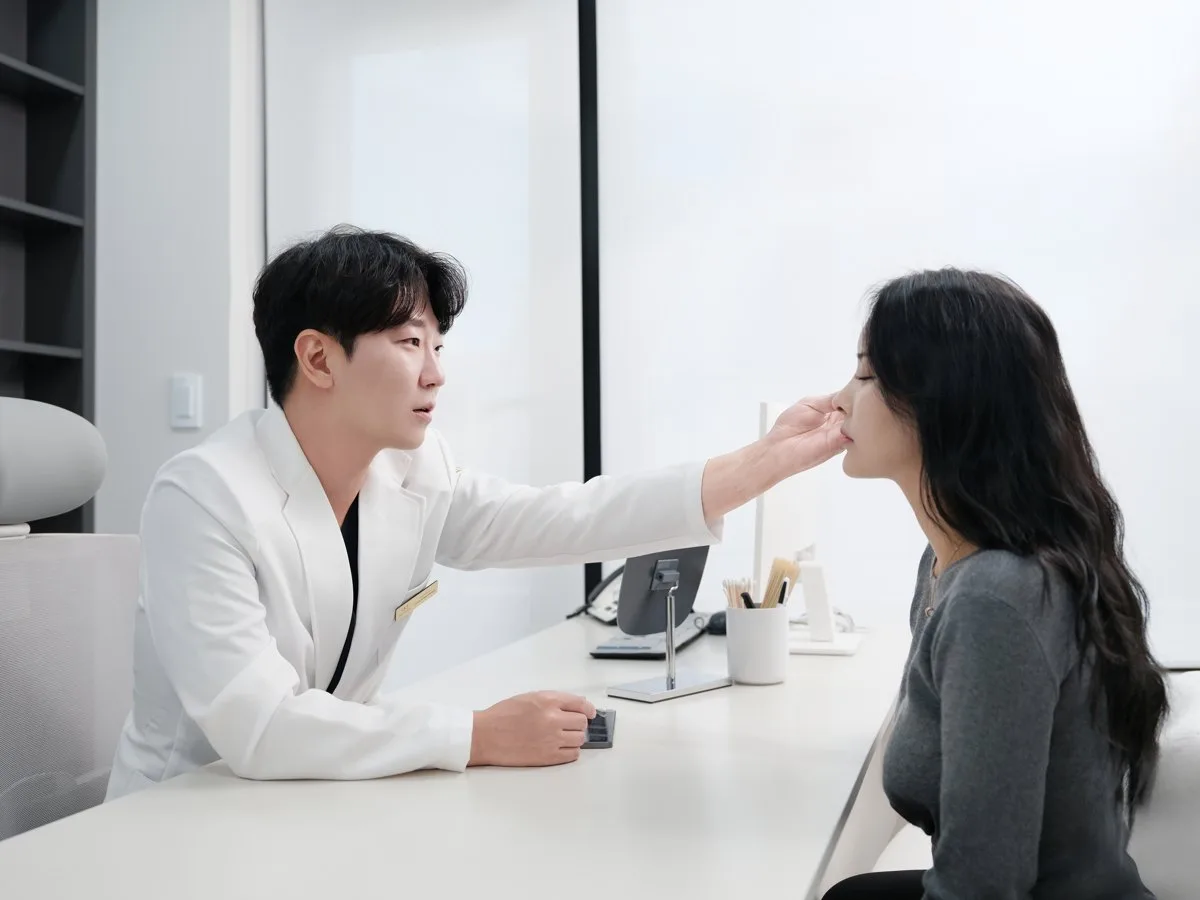
People searching for under-eye fat grafting usually want photographs first. Rewind has not released under-eye grafting pairs for publication, so none are shown, and no picture from filler or from repositioning surgery stands in for them. A lower-lid photograph from a different operation would show a different mechanism at work.
A reliable under-eye pair shows the eyes open and looking straight ahead, under the same overhead light in both frames, because overhead light is what makes a hollow visible. It states how many months separate the frames, since early swelling fills the lid for a while. And it names anything else done in the same session. Ask for those three details with any pair you are shown.
Individual results may vary. Lumps, visible irregularity under thin skin, asymmetry, prolonged swelling and uneven take are possible after under-eye grafting. A consultation with the doctor is required before any decision.
Reading the lower lid
What looks like one dark shadow under the eye can come from different structures. The examination separates them, because each points to a different operation, or to none.
Two routes to one groove
The two operations reach the same groove from opposite directions. One brings fat in from elsewhere; the other moves fat that already sits in the lower lid. The graft steps below follow the surgical literature, and the repositioning steps follow Rewind's own published description.
Fat is drawn from another part of the body through a cannula. Rewind does not publish which donor site it uses; it is chosen at the examination. For the lower lid, the fat is prepared for placement in very small amounts.
The literature describes microfat for adding volume and nanofat, which adds no bulk, for skin quality. Under the eye, small parcels spread through more than one layer lower the chance of a lump showing through the skin.
In Rewind's published steps, the lid is analysed, the ligament attachment that tethers the tear trough is released, and the bulging lower-lid fat is moved down into the hollow it has been shadowing.
The weakened orbital septum is tightened and fixed to the bone of the eye socket, giving the moved fat firmer support. Rewind calls this septum-reinforced fat repositioning.
Where there is no bulge to move, repositioning has nothing to work with. Where a bulge sits over the hollow, repositioning is the first operation considered. Whether a small graft is ever added to it is a judgement made at the examination, and Rewind publishes no fixed pairing.

Why here
A surgeon who only offers grafting will tend to graft. Rewind performs both lower-lid operations, so the recommendation can follow the anatomy of the lid.
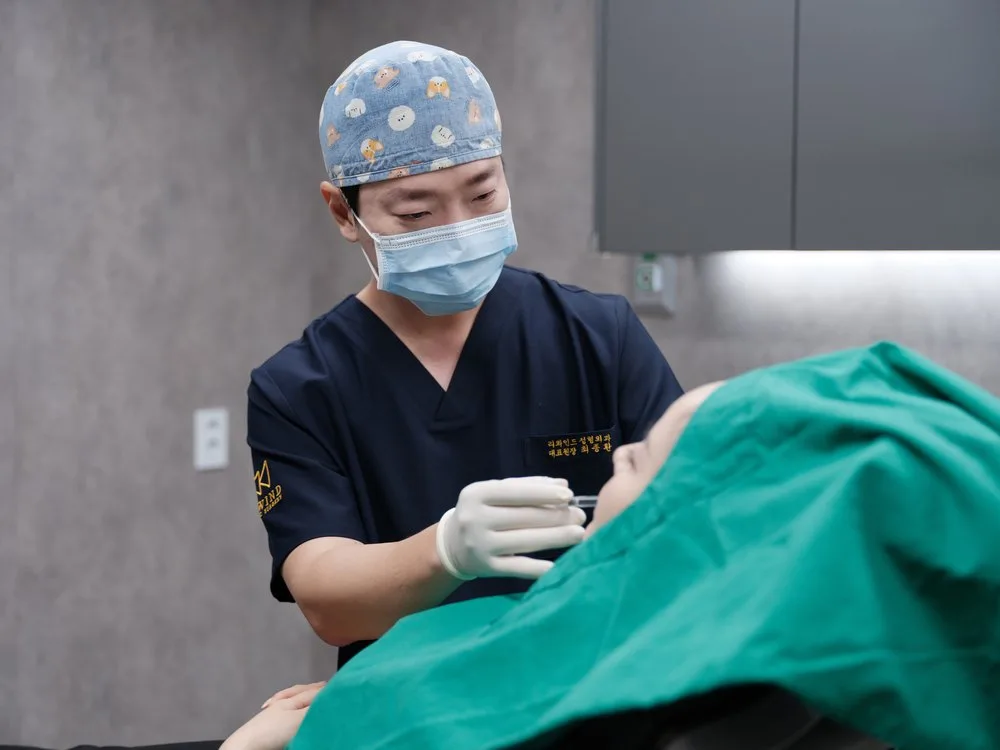
Both operations are carried out by Dr. Jonghwan Choi, a board-certified plastic surgeon. A lid with a bulge is steered toward repositioning; a hollow lid with nothing to move is the one considered for a graft.
Irregularity shows most on the lower lid. A graft here is planned in small amounts, and the chance of a second, smaller session is raised before the first one takes place.
The surgeon who operated checks the lid at each review. Early swelling under the eye can hide or exaggerate unevenness, so judging the result needs someone who knows exactly what was placed.
From examination to theatre

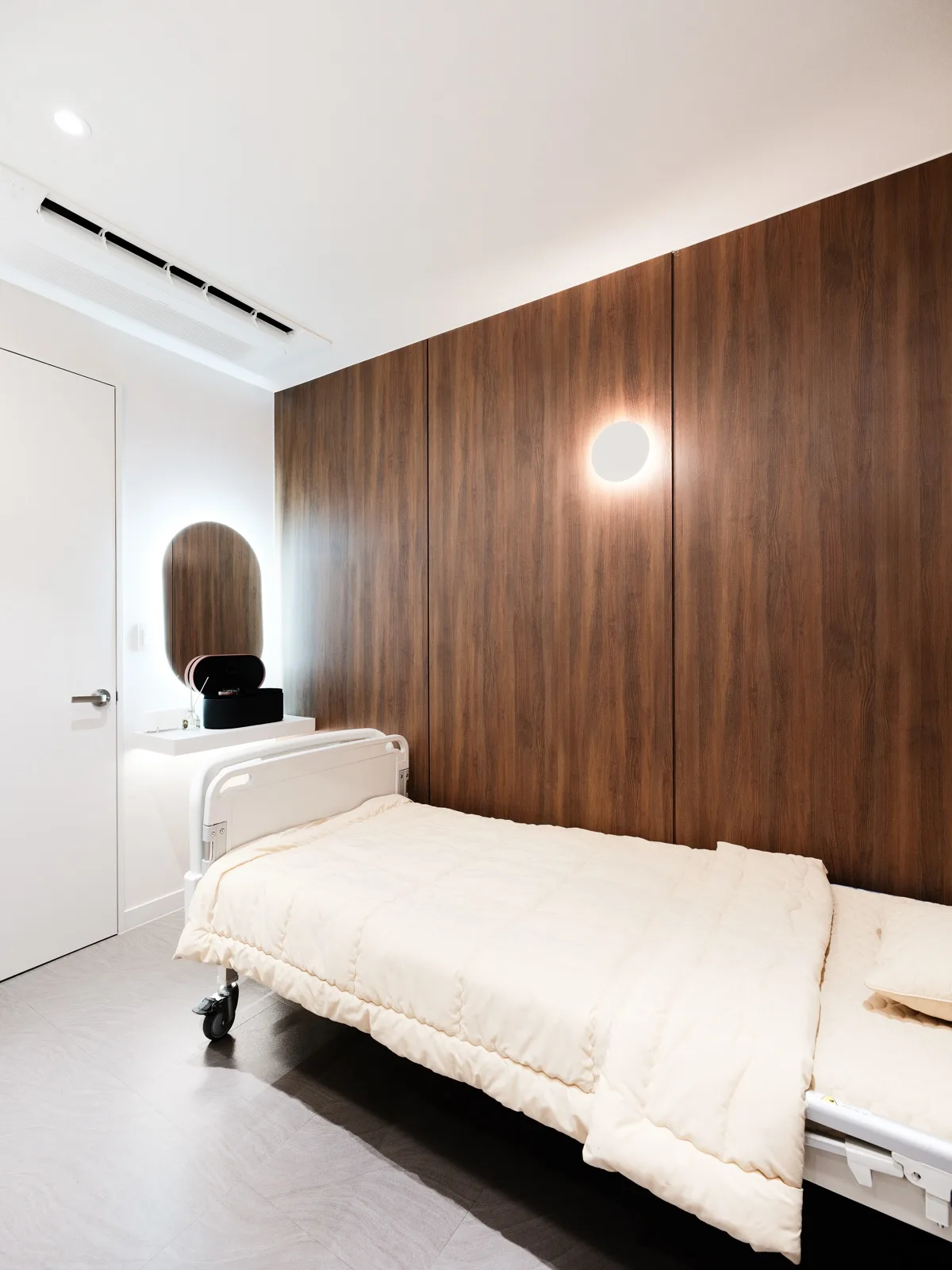
Fig. 04 · A room prepared before surgery

Fig. 05 · Rest before going home
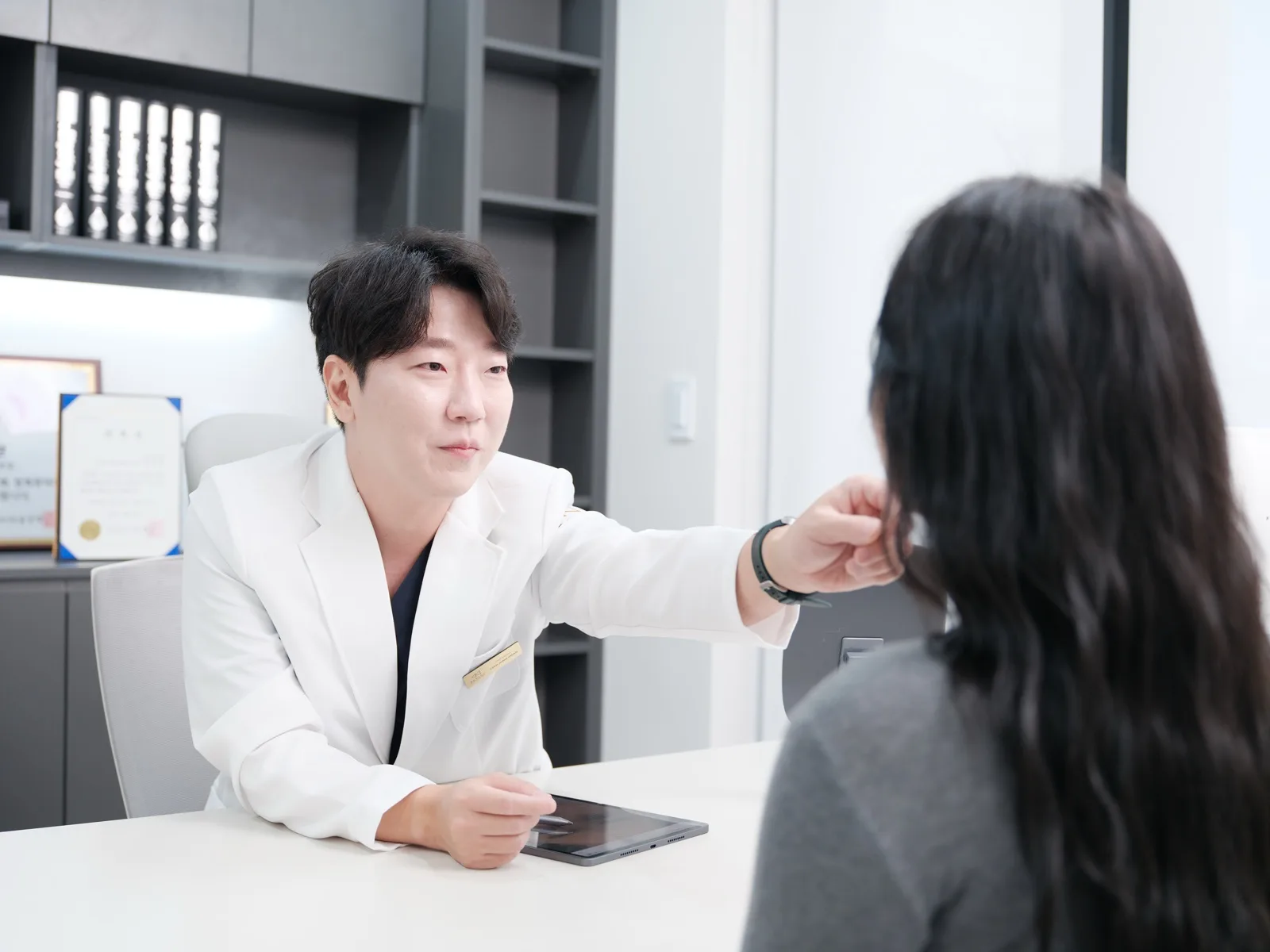
The lower lid is examined with you sitting up and looking straight ahead, under overhead light, together with the cheek below it and the upper lid above. Any earlier filler under the eye is noted, since it changes the plan. If a graft is chosen, the operation takes place in the clinic's theatre in the Richro Building, Apgujeong, and the same surgeon sees you at each review.
Board-certified plastic surgeon
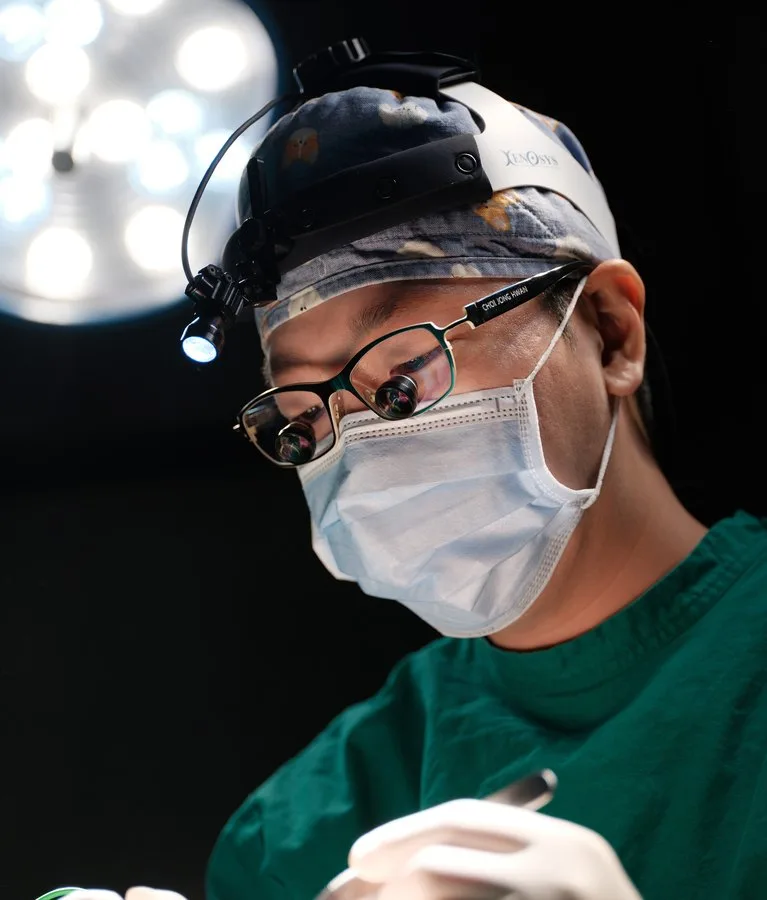
The only surgeon operating at Rewind: a board-certified plastic surgeon and author of ten peer-reviewed papers. The clinic is registered with KHIDI for international patients under M-2025-01-08-09288.
Pricing
Rewind's schedule has no grafting line named for the lower lid. Which listing an under-eye graft falls under is confirmed at the examination; the single-area line, which leaves out only the forehead and temple, is shown here for reference beside the repositioning operations.
List prices, VAT excluded, with the anaesthetic fee included. A lower-lid operation carried out together with another procedure is quoted as a combination of listings.
Suitability
Recovery
Rewind publishes separate post-operative sheets for fat grafting and for under-eye fat repositioning. Both expect bruising and swelling to ease within one to two weeks; the restrictions that follow differ in length.
Under-eye grafting carries the risks of any facial graft, including lumps, oil cysts, asymmetry, over-correction or under-correction, prolonged swelling, donor-site changes and rare vascular events, and irregularities show more easily through thin lid skin. Report any change in vision at once. No particular outcome can be promised.
At Rewind, one board-certified plastic surgeon carries every case — from the first consultation to the final follow-up. Because a face is a story, and a story deserves a single author.
Rewind,
Rewind's Doctor
Dr. Jonghwan Choi Medical Director
One surgeon, from the first
consultation to the last follow-up.
A board-certified plastic surgeon devoted to anti-aging surgery, with the precision and restraint built through years of craniofacial practice.
Google Reviews
"Sample review card — at launch this section pulls the clinic's real Google reviews automatically, shown verbatim with the reviewer's initial and posting date."
"Sample review card — reviews are never written or edited by the clinic; only what patients posted on Google appears here."
"Sample review card — a 'See all reviews on Google' link takes visitors to the clinic's Business Profile."
Questions
Reservation
Tell us whether the hollow sits under one eye or both, and whether you have had filler there. We reply within one business day, in your language.
Scientific evidence
Four references are listed: a review separating microfat from nanofat, a review of complications after facial fat grafting, a report on outcomes and complications after transconjunctival lower-lid surgery with fat repositioning, and a technique paper on releasing the tear trough ligament and redistributing fat. None was carried out at Rewind, and none predicts an individual result.