Surgery · Comparison

Under-Eye Fat Repositioning vs Tear Trough Filler

When the under-eye needs fat moved, and when a gel is enough

Gangnam, Seoul | Board-certified plastic surgeon, Dr. Jonghwan Choi
Both options examined by one plastic surgeon · KHIDI-registered for international patients

Fat Repositioning or Filler Surgery or Gel Fat Repositioning or Filler Surgery or Gel Fat Repositioning or Filler Surgery or Gel Fat Repositioning or Filler Surgery or Gel 
Choose

Surgery or filler for the under-eye

Should I get tear trough filler or under-eye fat repositioning surgery?

The short answer

It depends on what is making the shadow. Tear trough filler places hyaluronic acid gel in a groove: it adds volume and leaves any fat that is pushing forward exactly where it is. Fat repositioning takes that protruding fat and moves it down into the groove after releasing the ligament that tethers it, so the bulge and the hollow are corrected together. At Rewind the surgeon starts from one finding. Where there is a true fat bag, the operation addresses its cause, while gel only adds volume to an area whose problem is surplus fat above the groove. Where the under-eye is hollow with little or no protrusion, filler is a reasonable and reversible first step, and surgery is not needed.

Surgical facts are taken from Rewind's pages for septal-reinforced fat repositioning and lower blepharoplasty, and filler facts from the clinic's hyaluronic acid filler page. Neither publishes anaesthesia type or procedure time.

This page is written from the surgical side of the decision. It sets out what the operation does that a syringe cannot, the lower lids for which surgery is unnecessary, and the questions the surgeon works through before recommending either. Placement and aftercare of the gel itself are covered on Rewind's tear trough filler page.

Dr. Jonghwan Choi in consultation with a patient at Rewind Plastic Surgery
Fig. 01 — The choice between gel and surgery is made at examination
Cases

Case photographs

Under-eye fat repositioning cases that show the surgical side

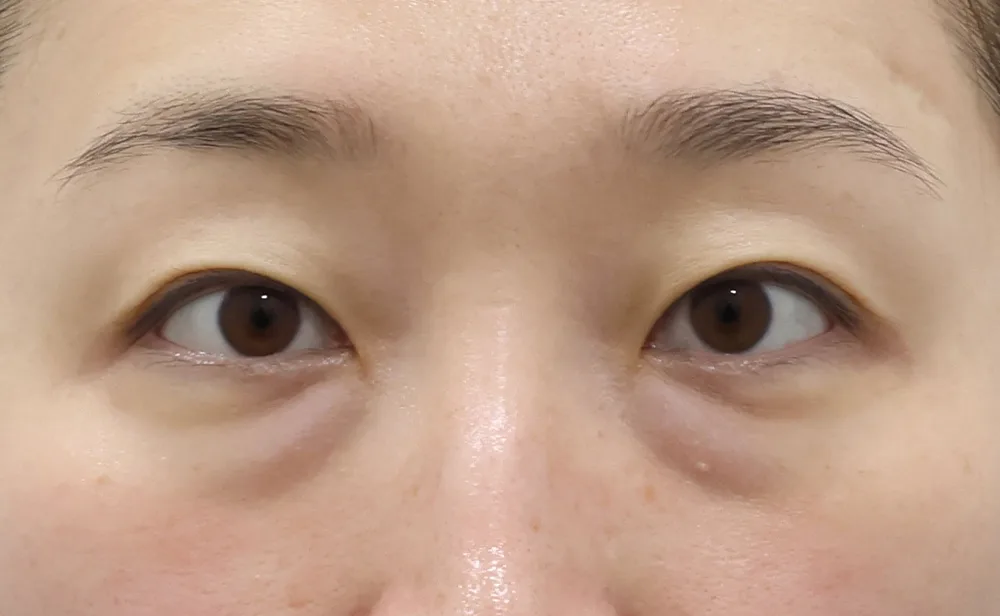
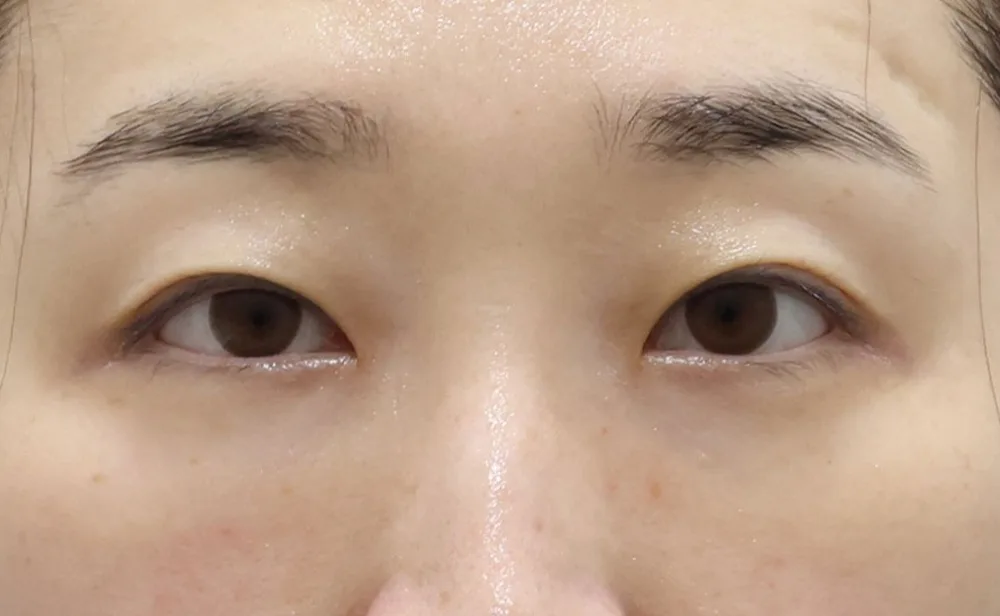
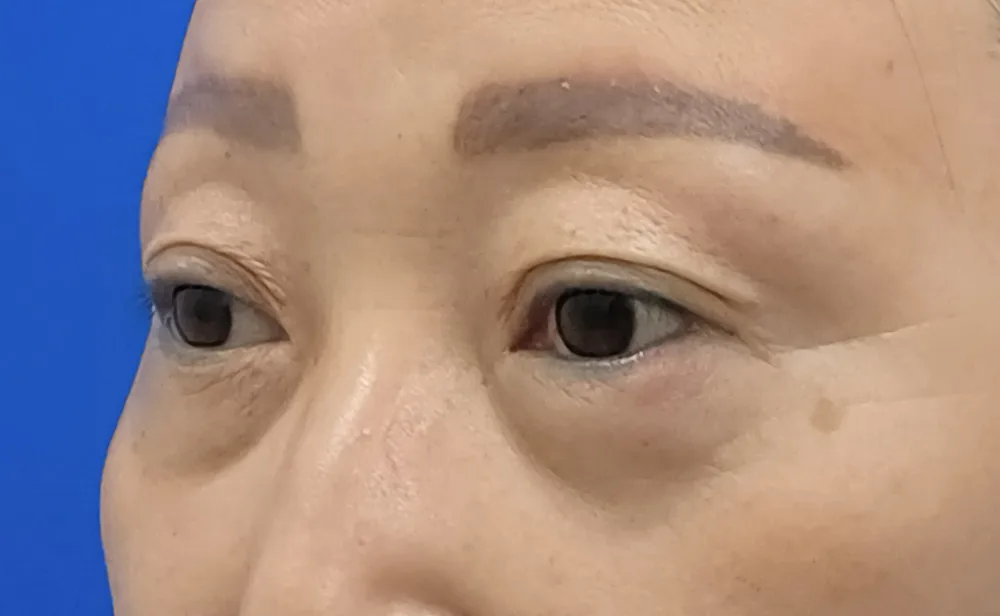
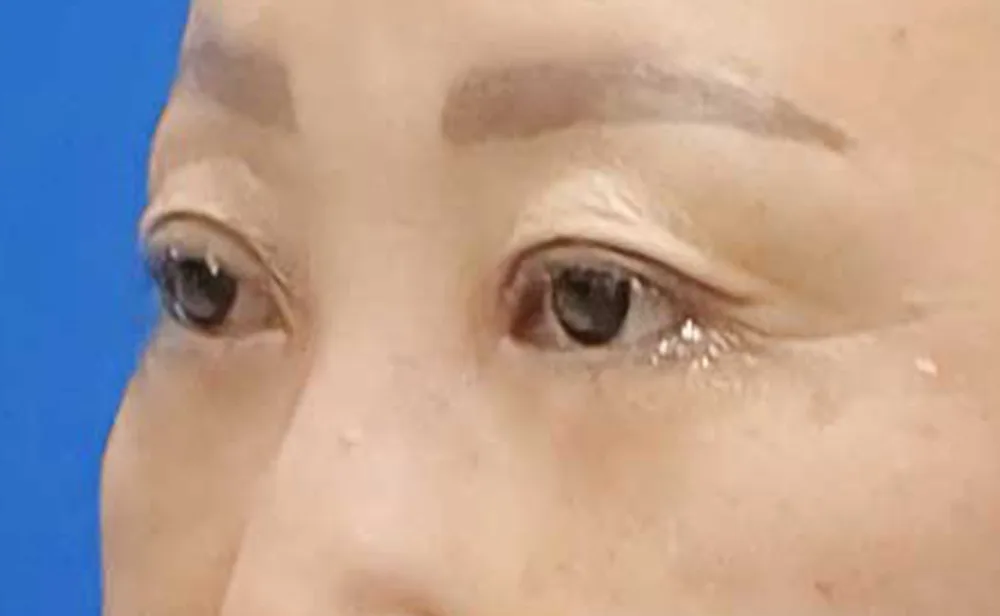
Both patients below had repositioning alone. They are shown because each lower lid combined a bulge with a groove, the pattern over which the filler-or-surgery question is most often argued. Neither is a filler case, and no filler result appears on this page.

Rewind patients, repositioning only

Before: under-eye fat repositioning for a deep tear-trough groove After: under-eye fat repositioning for a deep tear-trough groove BEFOREAFTER
repositioning only
Under-eye fat repositioning for a deep tear-trough groove, no other procedure
Individual results may vary.
Before: under-eye fat repositioning for protruding fat, oblique view After: under-eye fat repositioning for protruding fat, oblique view BEFOREAFTER
repositioning only
Under-eye fat repositioning for protruding under-eye fat, no other procedure
Individual results may vary.

Clinic photographs of Rewind's own patients, published unretouched, with every procedure from the session named. Individual results may vary. Lower-lid surgery can lead to bleeding, bruising, prolonged swelling, asymmetry, altered sensation and a change in lid position.

Read

Reading the lower lid

Bulge, groove, laxity or colour: what points to filler and what to fat repositioning

The under-eye is read before any option is named. Four findings decide the direction, and most lower lids show more than one of them.

pattern 01
A bulge with little groove
Protruding orbital fat over a shallow tear trough. There is nothing for gel to fill; the finding is surplus fat, and the surgical items at Rewind begin with its removal or repositioning.
pattern 02
A groove with little bulge
A hollow running down from the inner corner, with no fat pushing forward. This is where hyaluronic acid filler is discussed first, since there is no protrusion to relocate.
pattern 03
A bulge over a groove
The combination repositioning was designed for. The fat that forms the bulge can be moved into the hollow beneath it once the ligament is released, and septal reinforcement can be added to support it.
pattern 04
Loose skin or pigment
Neither is a volume problem. Rewind's lower blepharoplasty page lists marked skin laxity among its indications, and colour sitting in the skin itself is lightened by neither gel nor surgery.

A filler-first plan makes most sense in the second pattern, a surgery-first plan in the first and third. The fourth usually opens a different conversation, and it is common for one under-eye to show two patterns at once.

Decide

The surgeon's questions

How the surgeon decides between tear trough filler and fat repositioning

Six questions sit behind the recommendation. They are the same whichever option you arrive hoping for.

01Bulge

Is fat pushing forward under the lid?

Viewed in overhead light, a bulge catches light on top and throws a shadow below. If one is present, the problem includes too much volume in the wrong place, which argues for moving fat before adding any.

02Tether

Is the groove held down by its ligament?

Rewind's repositioning begins by releasing the ligament adhesion at the tear trough. That release is a surgical step with no injectable equivalent, and it is part of why the operation can treat the groove and the bulge in one sitting.

03Skin

Has the lid skin loosened?

Marked laxity around the eye appears among the indications on Rewind's lower blepharoplasty page. Neither filler nor fat repositioning removes skin, so this finding moves the conversation toward the lid operation.

04Colour

How much of the darkness is pigment?

The clinic's explanation is that dark circles arise mostly where the skin is thin, and that flattening the fat beneath helps. Colour within the skin stays whichever route is chosen, and should be expected to.

05Reversal

How much does reversibility matter to you?

Hyaluronic acid filler can be dissolved with hyaluronidase, which Rewind lists as its own item. Relocated fat is your own tissue fixed in a new position and cannot be dissolved, so surgery is advised only where the finding calls for it.

06Duration

How long should the change last?

Rewind's filler page gives six to twelve months as a usual duration, depending on the product and the person. The repositioning page publishes no duration of its own; for lower blepharoplasty the clinic records more than five years, varying between individuals.

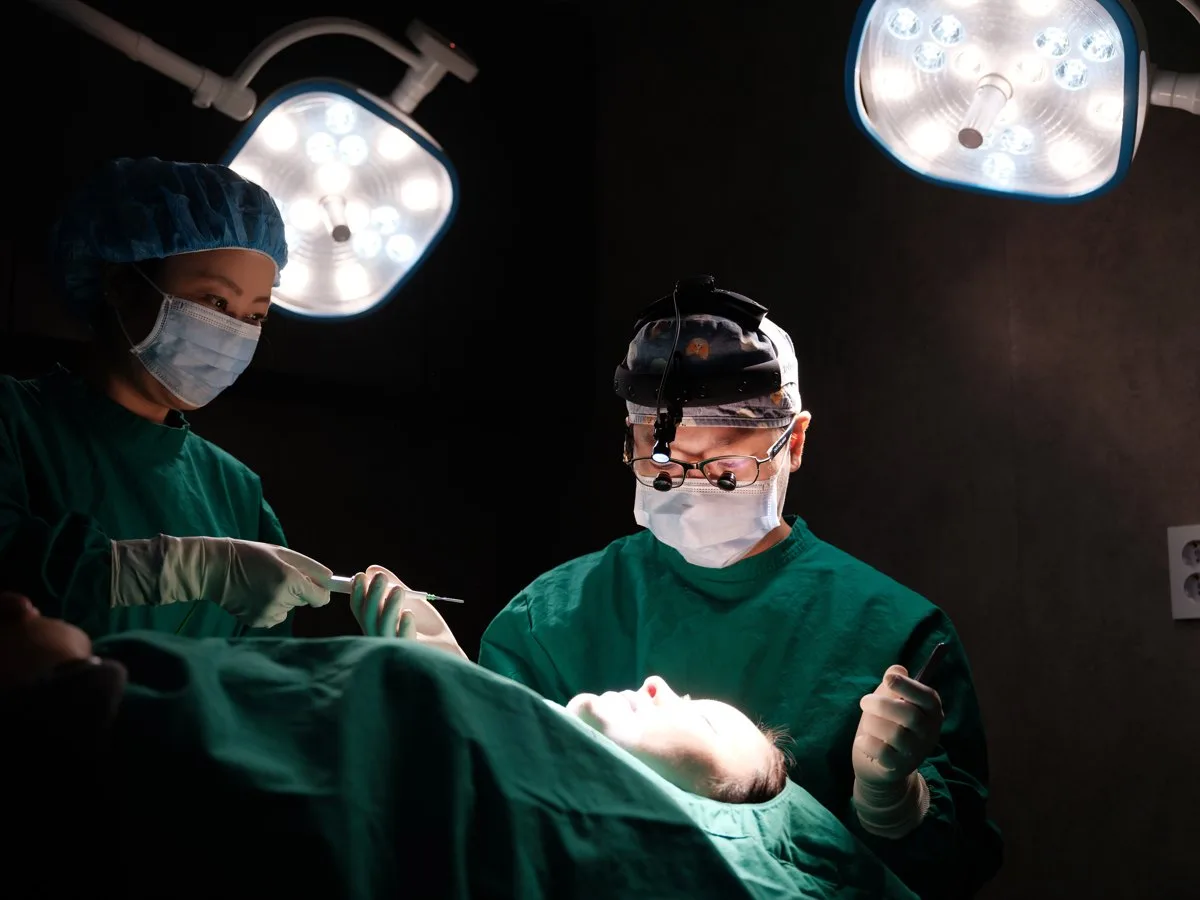
Lower-lid surgery in progress at Rewind Plastic Surgery
Fig. 02 — Ligament release and fat transfer happen only in theatre
Rewind

Why here

Why a plastic surgeon weighs tear trough filler against fat repositioning

A recommendation is only as open as the list of options behind it. At Rewind both the gel and every lower-lid operation are on that list.

01Both options

Filler and fat repositioning are offered side by side

Rewind provides hyaluronic acid filler and all four lower-lid operations, so the advice is not limited by what the clinic can deliver. For a groove without a bulge the gel is advised; for a bulge, surgery is.

02Lid safety

The lower lid is judged from the operating side

A surgeon who operates on the lower lid knows how it bruises, how its position is protected and how tissue altered by earlier treatment behaves, and brings that to the question of whether an injection is the sensible first step.

03One doctor

One doctor for the syringe and the scalpel

Dr. Jonghwan Choi, a board-certified plastic surgeon, examines, advises and performs either option himself, and he is the doctor at the reviews afterwards. Rewind holds KHIDI registration M-2025-01-08-09288 for international patients.

Dr. Jonghwan Choi examining a patient at the consultation desk
Fig. 03 — Examination comes before either option is offered
Visit

At the clinic

How an under-eye filler or surgery consultation runs at Rewind

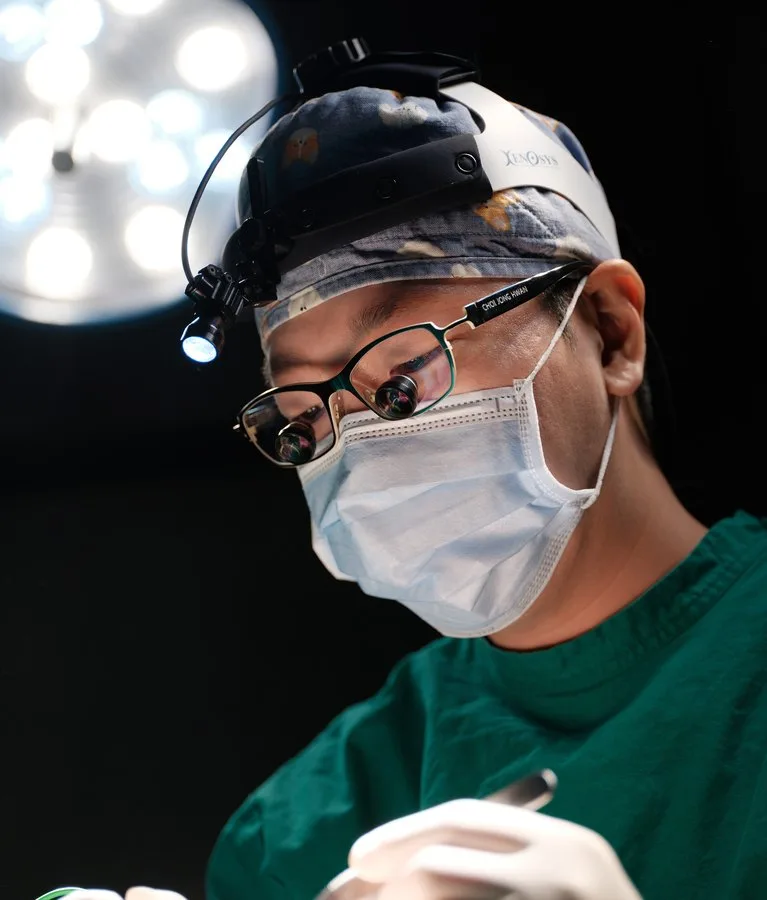
Rewind's medical director operating under the surgical light

Fig. 04 — The operating theatre where repositioning is carried out

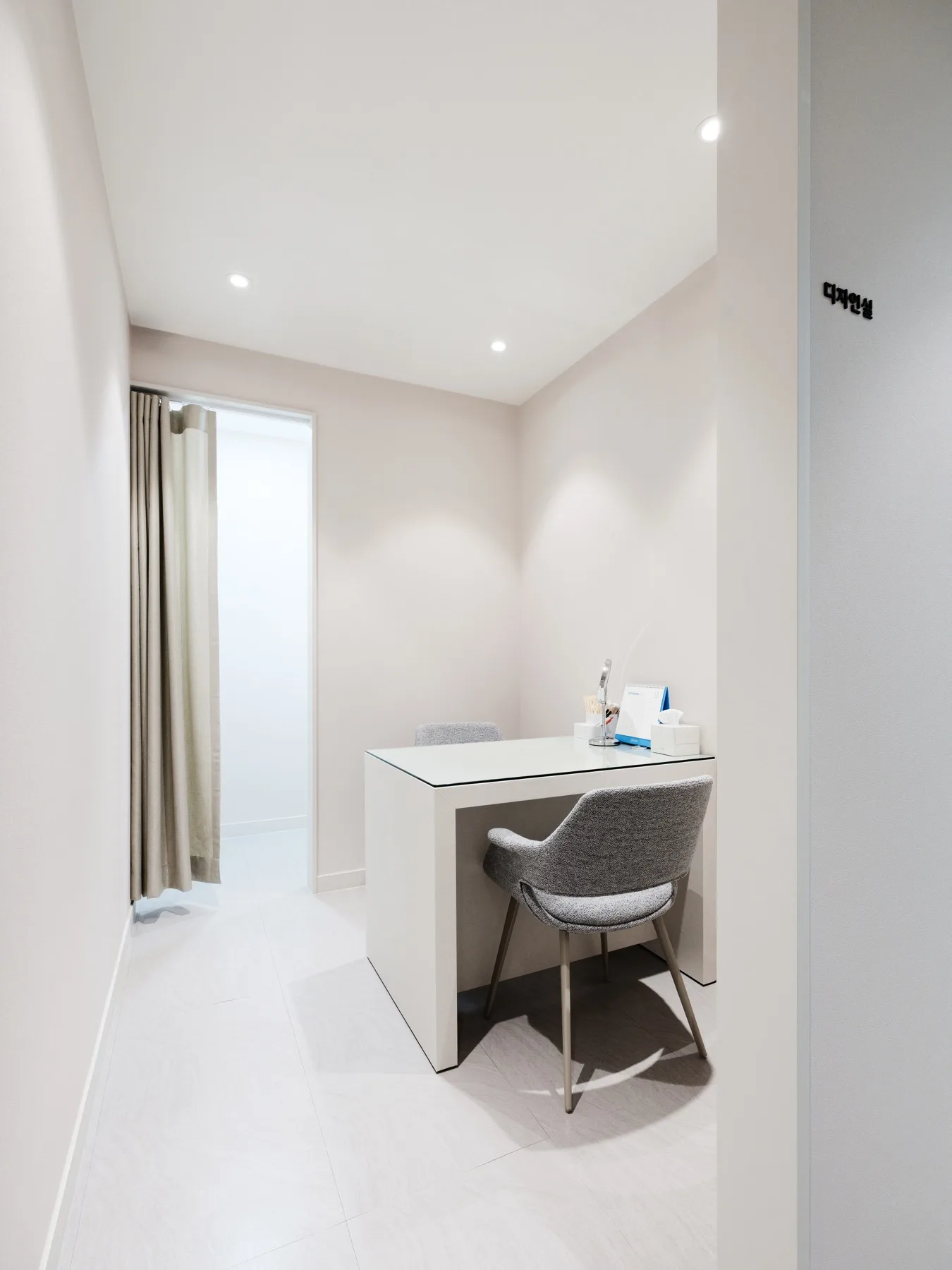
Injection room at Rewind Plastic Surgery, Apgujeong

Fig. 05 — The injection room used for hyaluronic acid filler

The consultation takes place on the fourth or fifth floor of the Richro Building in Apgujeong, Gangnam, Seoul. The lower lids are examined, the dominant pattern is named, and you leave with a recommendation for one route, both in sequence, or neither. If you choose filler, the injection is booked with the same doctor; if you choose surgery, the operating date is agreed before you leave.

Bulge, groove, laxity and colour assessed
Filler: hyaluronic acid gel
Filler: daily life resumes straight away
Filler: dissolvable with hyaluronidase
Surgery: ligament released, fat relocated
Surgery: septum fixed in the reinforced line
Surgery: dressing under the eye for three days
Both carried out by Dr. Jonghwan Choi
Dr. Jonghwan Choi, board-certified plastic surgeon

Board-certified plastic surgeon

Korean board certification in plastic surgery and ten co-authored peer-reviewed papers. Rewind Plastic Surgery is registered with KHIDI to treat international patients, registration M-2025-01-08-09288.

Cost

Pricing

Tear trough filler and fat repositioning cost compared at Rewind

Filler is priced per syringe of gel and surgery per operation, so a fair comparison depends on how often filler would be repeated. These are the lines that come up in this decision.

Hyaluronic acid filler, domestic (1cc)Per syringe; the volume is set at examination
₩200,000
Restylane (1cc)Per syringe of an imported hyaluronic acid gel
₩500,000
Filler dissolving, per areaHyaluronidase, for gel that needs to be removed
₩80,000
Under-eye fat repositioningLigament release and relocation of the bulging fat
₩1,600,000
Septal-reinforced fat repositioningRepositioning with the septum fixed to the orbital bone
₩2,000,000
Lower blepharoplastyFor a lid whose skin and muscle are part of the finding
₩3,900,000

Over several years the arithmetic changes. With six to twelve months as a usual filler duration, a filler plan is a recurring cost and the operation is paid once. That does not make surgery the better value for a groove without a bulge, where a small amount of gel may be all that is needed. It does mean that repeated filler over a true fat bag keeps paying for volume while the bulge stays.

List rates, VAT excluded; surgical rates include the anaesthetic fee. Filler volume and the surgical listing are both set after examination.

Fit

Suitability

Who is better served by fat repositioning, and who by tear trough filler

Fat repositioning is usually discussed when

  • Orbital fat bulges forward under the lower lid
  • A bulge sits directly over a tear-trough groove
  • Filler has been repeated and the shadow beneath the bulge remains
  • Lid skin has loosened, when the lower blepharoplasty line is considered
  • One operation is preferred over recurring injections
  • A one-to-two-week swelling window can be planned around

Filler first, or waiting, is usually discussed when

  • The groove is hollow and there is little or no bulge
  • A reversible first step matters more than duration
  • Time away for surgical swelling is not available
  • The darkness is mostly pigment, which neither option lightens
  • An eye condition is under treatment or a bleeding tendency is present
  • Pregnancy, breastfeeding or active inflammation around the eye, which postpone elective treatment
After

Recovery

Recovery from fat repositioning compared with tear trough filler

For a traveller, the recovery gap is the part of this decision that matters most. Filler is a visit; repositioning is an operation with a dressing.

Filler, same day
Back to daily life
Rewind's filler page states that daily life resumes straight after the injection, with mild swelling or bruising possible for a few days. Hard exercise, alcohol and sauna are avoided for one day.
Surgery, days 1–3
A dressing under each eye
After fat repositioning a dressing sits beneath each eye for three days and is not lifted early to look.
Surgery, first week
No sauna or strenuous exercise
Saunas, steam rooms and strenuous exercise are avoided for at least a week; the eyes are not rubbed and sunscreen is used every day.
Surgery, 1–2 weeks
Swelling and bruising decrease
Early swelling and bruising recede over one to two weeks, at a pace that differs from person to person.

Both routes carry risk. Filler around the eye can cause bruising, swelling, lumps and, rarely, vascular complications. Fat repositioning can cause bleeding, infection, prolonged swelling, asymmetry, a groove left under- or over-corrected and changes in lower-lid position. Results vary between individuals and cannot be promised.

Doctor

Professional

At Rewind, one board-certified plastic surgeon carries every case — from the first consultation to the final follow-up. Because a face is a story, and a story deserves a single author.

Dr. Jonghwan Choi, board-certified plastic surgeonRewind,
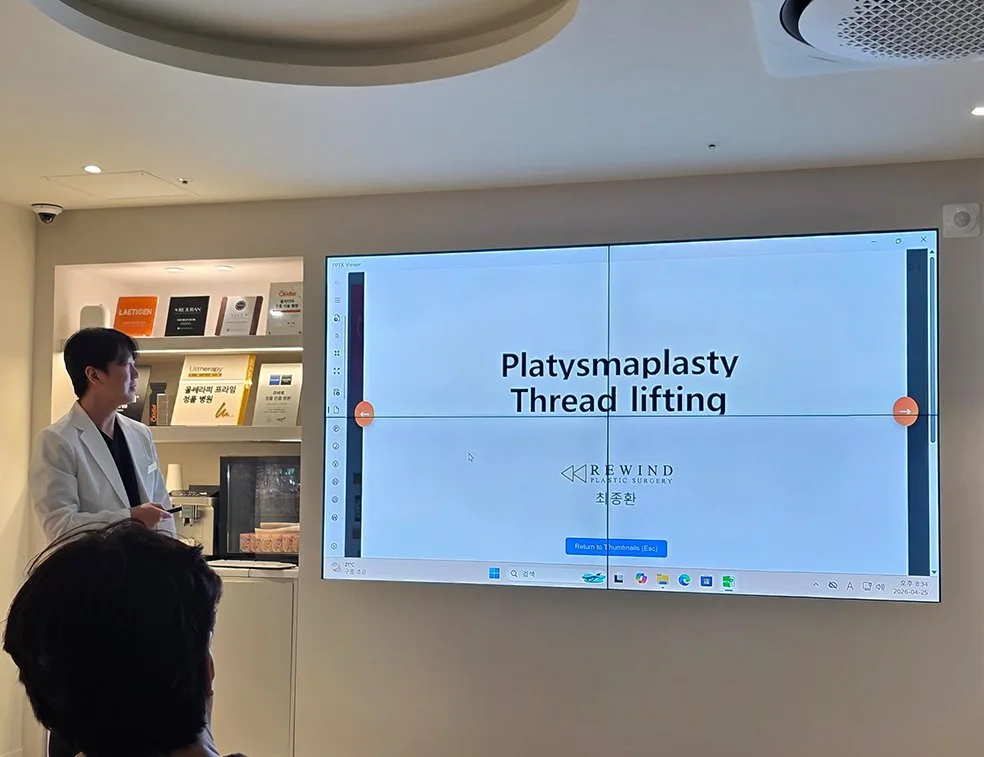
Dr. Jonghwan Choi presenting at an academic session
Fig. 06 — Academic presentation, thread-lifting session

Rewind's Doctor

Dr. Jonghwan Choi Medical Director

One surgeon, from the first
consultation to the last follow-up.

A board-certified plastic surgeon devoted to anti-aging lifting — with the precision and restraint built through years of craniofacial practice.

Board-certified plastic surgeon (Plastic Surgery)
10 peer-reviewed publications
Medical Director, Rewind Plastic Surgery
Korean Society of Plastic & Reconstructive Surgeons
Former chief director, Apgujeong Y&T Plastic Surgery
Korean Society for Aesthetic Plastic Surgery
J Craniofac Surg · JKMS · Arch Craniofac Surg
Korean Cleft Palate-Craniofacial Association
Ask

Questions

Fat repositioning or tear trough filler: the questions that settle it

Should I get tear trough filler or under-eye surgery?
Filler suits a groove without much bulge; surgery suits protruding fat, especially fat sitting above a groove. Fat repositioning moves the bulging fat into the hollow after releasing the tear-trough ligament, which gel cannot do. The deciding finding is whether fat is pushing forward.
Can filler help if my eye bags are fat?
Filler adds volume, and a fat bag is already surplus volume. Gel can soften the groove beneath a small bulge while leaving the protruding fat in place. Where the bulge is the main finding, Rewind's surgical items, from fat removal to repositioning, address it directly.
How long does repositioned fat last compared with tear trough filler?
Rewind's filler page gives six to twelve months as usual, depending on the product and the person. The repositioning page publishes no duration; for lower blepharoplasty the clinic records more than five years with individual variation. Skin and cheek keep ageing after either.
Can I have filler first and surgery later?
Yes. Filler can be a sensible first step for a hollow, and surgery can follow if a bulge becomes the main finding. Tell the surgeon about any gel still present; hyaluronic acid can be dissolved with hyaluronidase, a separately listed item, if it needs clearing first.
What does fat repositioning do that filler cannot?
Three things. It releases the ligament adhesion tethering the tear trough, it relocates the protruding fat into the groove, and in the septal-reinforced version it fixes the orbital septum to the bone to support that fat. None of the three has an injectable equivalent.
Which option keeps me away from work longer?
Surgery. After filler, Rewind's page says daily life resumes immediately, with mild swelling or bruising for a few days. After fat repositioning there is a dressing for three days, a week without sauna or strenuous exercise, and swelling and bruising that recede over one to two weeks.
Is filler cheaper than fat repositioning?
Per visit, yes: filler is priced per syringe and repositioning per operation, as the pricing table shows. Because filler usually lasts six to twelve months, the comparison over several years depends on how many syringes and repeat visits your under-eye would need.
Who decides which option I get at Rewind?
Dr. Jonghwan Choi, a board-certified plastic surgeon who performs both. He examines the bulge, the groove, the lid skin and the colour, explains which pattern dominates and recommends filler, surgery, both in sequence or neither. The decision is yours once the reasons are clear.
Voices

Google Reviews

What our patients say.

G 5.0 ★★★★★ 51 Google reviews · Rewind Plastic Surgery, Apgujeong — live-synced from Google Business Profile
★★★★★

Came to REWIND to get my facial treatment and i'm absolutely obsessed about it💞 the doctor is so kind and is an expert! Everyone must visit!

YunHee Hong2 weeks ago
★★★★★

There are just way too many cosmetic clinics in Korea and I'm so happy I found Rewind Clinic in Gangnam. Dr. Choi was so kind and patient while explaining the different face-lifting options, from threads to mini-lifts to deep-plane lifts…

J. S.5 months ago
★★★★★

I found Rewind clinic through a Korean chat forum and many local clients highly recommended it. The clinic is brand new, featuring large, clean rooms and many private waiting areas so it doesn't give off that "factory" clinic vibe. All the…

J. Siou5 months ago
★★★★★

Really nice environment. Doctor is easy to communicate and understands my visions. Waited two weeks to make a review and I confirm the results exceeded my expectations and I am super happy with it. Can't wait to come back!! :))

Kristie Chu5 months ago
★★★★★

I received a thread lift at Rewind Plastic Surgery. The clinic was clean and the atmosphere was comfortable. The consultation was thorough, and I felt confident because they kindly explained everything tailored to my facial condition. They…

한주연2 weeks ago · Translated by Google
Booking

Reservation

REWIND,booking

Tell us what you are considering — we reply as soon as possible, in your language.

Visit

REWIND,visit

For international patients — interpreter-assisted, from your first message to your follow-up.

Location
Apgujeong, Gangnam
4F & 5F, Richro Building,
812 Nonhyeon-ro,
Gangnam-gu, Seoul
Hours
Mon·Tue·Wed·Fri 10:00–19:00
Sat 10:00–16:00
Closed Sundays & Thursdays
Lunch 12:00–13:00
Consultation
In your language
WhatsApp · Instagram
Interpreter-assisted
consultations available
Registration
KHIDI Registered
Registered institution for
international patients
Reg. M-2025-01-08-09288

Scientific evidence

Research on tear trough ligament release and transconjunctival fat repositioning

The papers below concern the surgical half of this comparison: an extended transconjunctival technique with release of the tear trough ligament, reported outcomes of transconjunctival repositioning, and a systematic review of complications in lower-lid surgery.

They describe the patients and methods of their own authors. None compares an individual's filler result with surgery, and none forecasts the outcome of a particular lower lid at Rewind.