Non-Surgical · Packages
What an all-you-can-remove offer usually means, and the two real lines on Rewind's sheet
Gangnam, Seoul | Board-certified plastic surgeon, Dr. Jonghwan Choi
KHIDI-registered for international patients · Apgujeong Rewind
Mole removal packages
The short answer
Rewind Plastic Surgery does not sell a product called an unlimited mole removal package. Its rate sheet has two lines for this treatment: a flat rate per mole of any size, and a single rate for whole-face mole removal at the practice in Apgujeong, Seoul. The whole-face line is the closest real equivalent, and the doctor sets which lesions it covers at examination.
No count cap, no retouch clause and no body coverage is published for the whole-face line, so none is claimed on this page. Each point is confirmed at the consultation.
'Unlimited' and 'all-you-can-remove' are phrases that grew up around Korean mole removal, and patients arrive expecting one price that clears every mark from the face in a single visit. The appeal is easy to see: nobody counts, and nobody debates whether a spot is really a mole. The weakness is that the word describes the billing. It says nothing about which lesions are suitable, how many can sensibly heal at once, or what happens to the ones that return.
At Rewind the whole-face rate takes the counting out of the bill. It leaves the examination exactly where it was. Every lesion is still looked at, some are redirected to a pigment laser, and anything changed, bleeding, itching or irregular is set aside for medical assessment, since a lasered lesion can no longer be examined by anyone.
What a package covers
Package pages rarely spell out their edges. These four matter most, with what Rewind's sheet says about each.
The sheet's per-mole line stays available beside the whole-face line, so a short list can simply be charged per mole.
How many in one sitting
No count limit is published, and a single fixed number would be a poor way to decide. Four factors set a sensible ceiling for one sitting.
The starting point is the examined list, whatever number you counted in the mirror. A long list often shrinks once pigment marks and anything needing assessment are separated out.
A raised, deep lesion is worked down in passes with the base checked between them. Several of those on one face make a different appointment from a scatter of small flat spots, even at the same count.
Each one crusts, needs its dressing and needs sun protection. A face with many fresh points is more to manage, particularly while travelling, and some patients prefer to split a long list across two visits.
If you fly home soon after treatment, the doctor may suggest starting with the lesions that matter most to you. What suits your dates is discussed openly at the consultation.

Plain naming
Naming matters on a medical rate sheet. Three reasons the wording stays plain here.
Lesions still get excluded, some still return and the skin still has to heal every point. 'Whole face' describes what the line actually is.
Dr. Jonghwan Choi, a board-certified plastic surgeon, examines and treats. A flat price should never press anyone into lasering a mark that deserves a closer medical look.
A package said to cover everything makes it harder to tell later which lesion was treated. Ask for a site-by-site record of what was done at your visit.
On the day

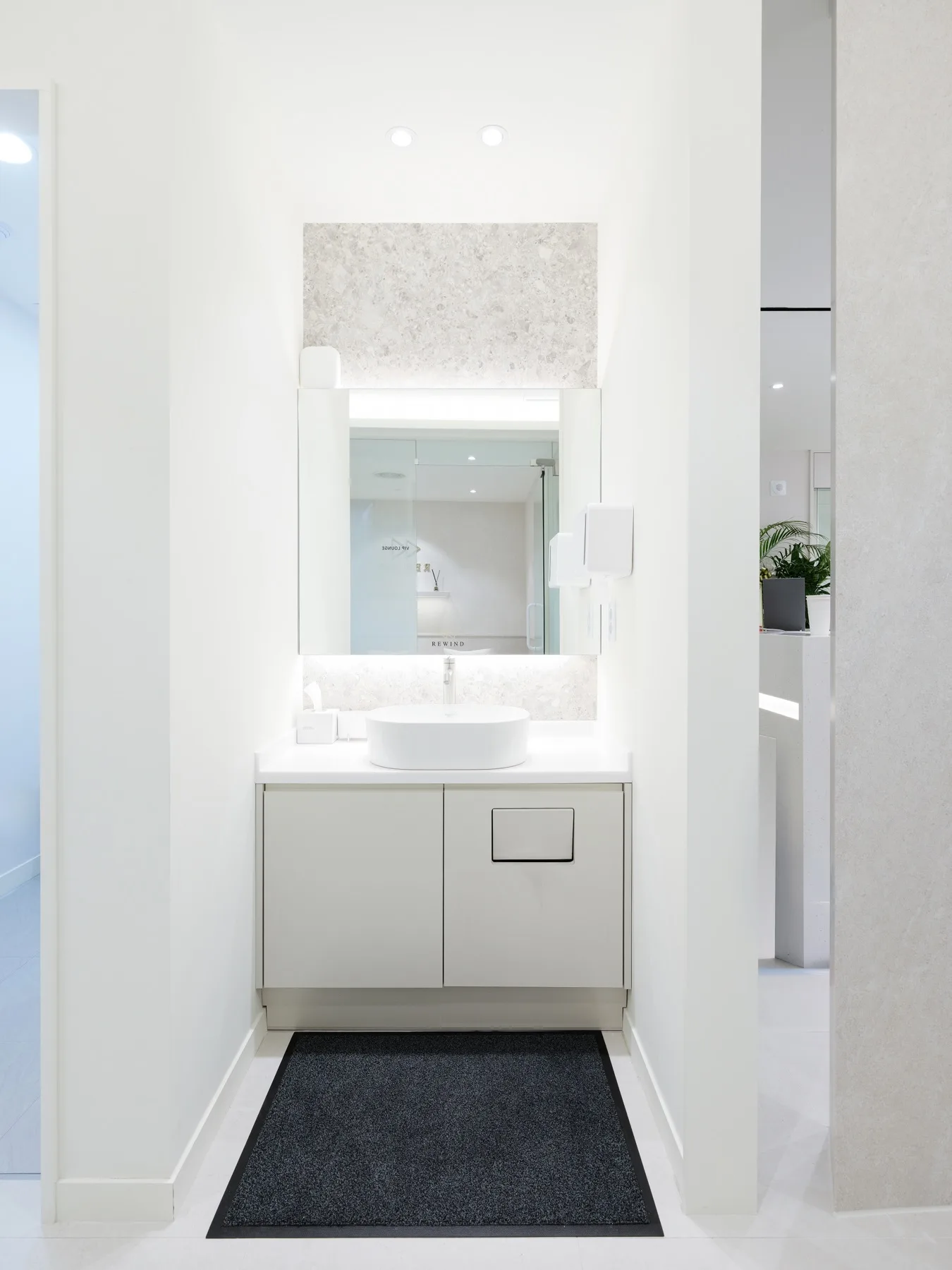
Fig. 04 — The washroom, where make-up comes off so the whole face can be examined

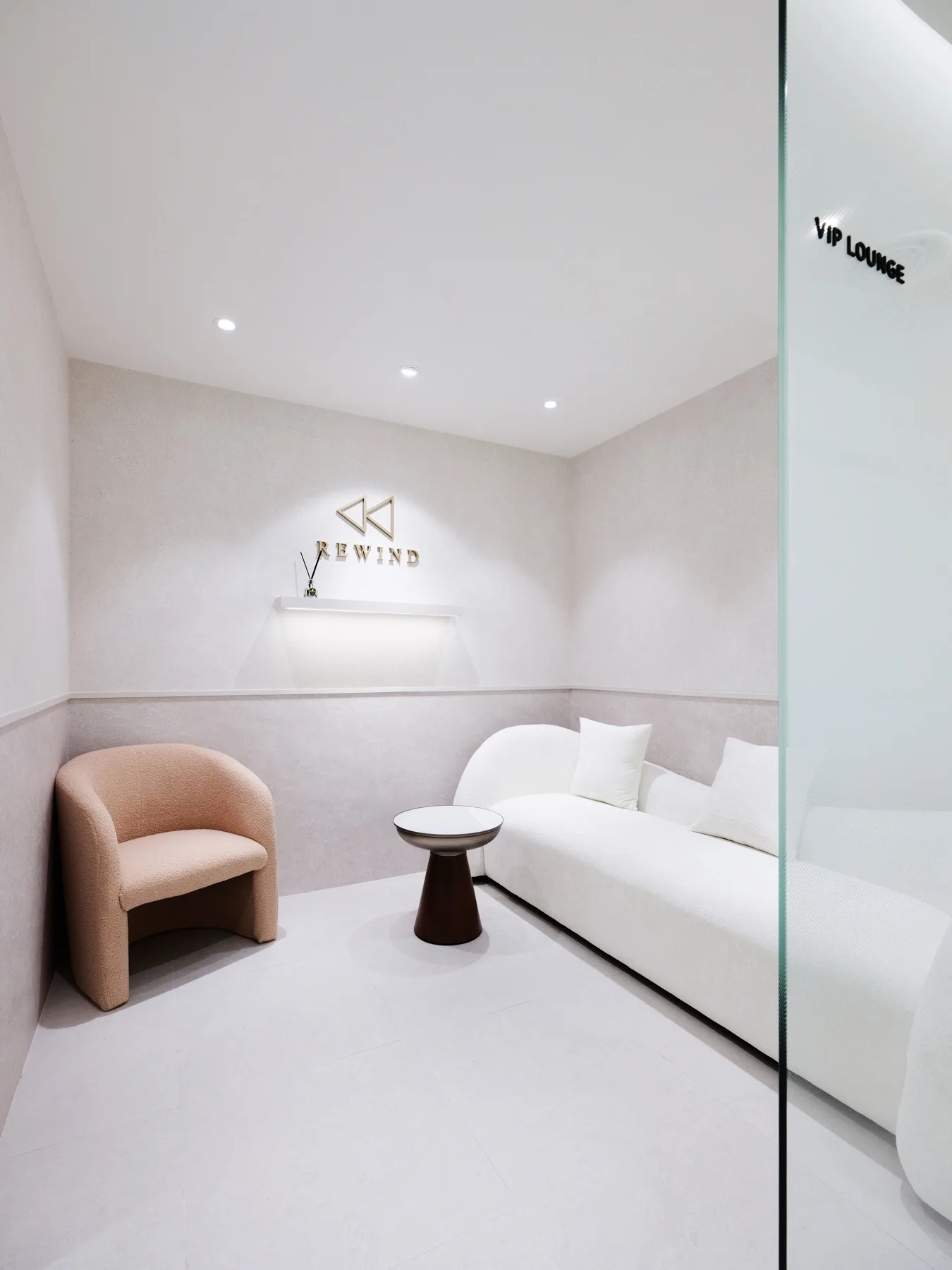
Fig. 05 — A seating area in the lounge
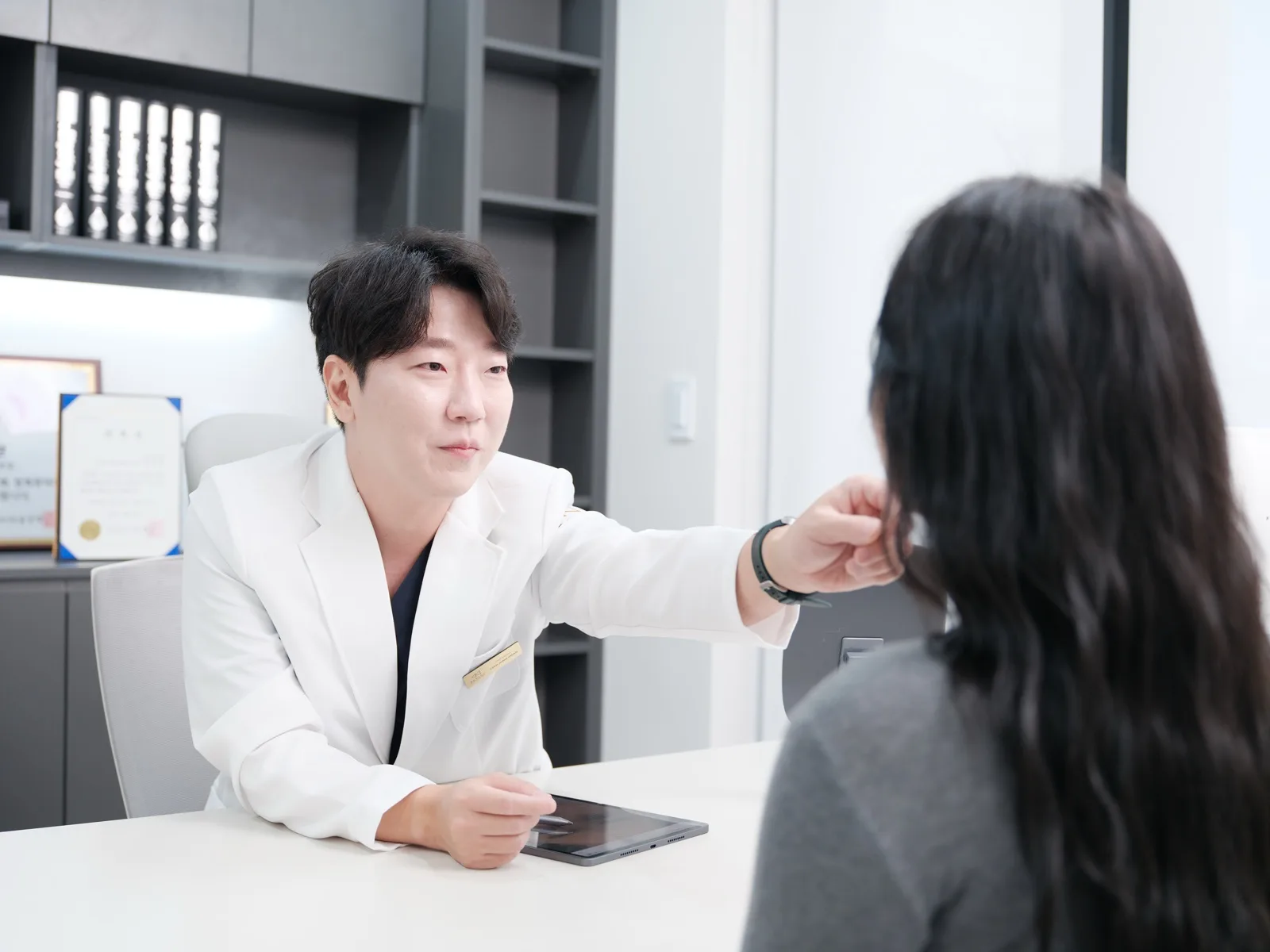
A whole-face appointment starts the same way as any other. Make-up and sunscreen come off, the doctor examines the face in good light, marks the lesions he will treat and names any he will not. You then see the per-mole total for that count next to the whole-face figure, and you choose. Treatment follows, each point is dressed, and you leave with instructions for the dressing and for sun protection.
Bring the questions you would put to any package, and have the answers written down: which lesions count, whether body sites are included, what happens to a lesion held back, whether tax is on top, and what the terms are if a mole returns. A clear answer to each is worth more than the word on the offer. For the treatment itself, from examination to healing, see the mole removal overview.
Pricing
The two real lines on the sheet, side by side. Your agreed count decides which is lower.
VAT is not in either figure and is added when you pay. Rewind's sheet states that listed prices include the anaesthetic cost. Lesions below the jaw are priced once they have been seen.
Suitability
Aftercare
More points mean more to look after, with the same rules for each. Rewind's standing laser instructions apply to every site: expect redness right after, avoid sauna, jjimjilbang and exercise that makes you sweat, keep massage and rubbing off the face, and wear sunscreen outdoors.
Each point carries the usual risks: a spell of darker pigment or a slightly paler spot, a small dip after deeper work, a raised mark in skin that scars thickly, infection if a crust is torn off early, and recurrence of deep-rooted moles. Treating many points multiplies the number of sites, which is one reason a long list is sometimes split.
At Rewind, one board-certified plastic surgeon carries every case — from the first consultation to the final follow-up. Because a face is a story, and a story deserves a single author.
Rewind,
Rewind's Doctor
Dr. Jonghwan Choi Medical Director
One surgeon, from the first
consultation to the last follow-up.
A board-certified plastic surgeon devoted to anti-aging lifting — with the precision and restraint built through years of craniofacial practice.
Google Reviews
"Sample review card — at launch this section pulls the clinic's real Google reviews automatically, shown verbatim with the reviewer's initial and posting date."
"Sample review card — reviews are never written or edited by the clinic; only what patients posted on Google appears here."
"Sample review card — a 'See all reviews on Google' link takes visitors to the clinic's Business Profile."
Questions
Reservation
Tell us roughly how many facial moles you have in mind, and we reply within one business day on how the whole-face and per-mole lines would compare.
Scientific evidence
None of these papers studies packages or pricing. The first two describe carbon dioxide laser removal of benign skin growths, including a comparison with cryotherapy, electrodesiccation and the erbium laser. The third, a randomised split-scar trial of early ablative laser on excision scars, is listed only because it bears on scar care after any skin wound. No patients from Rewind Plastic Surgery took part in them.