Surgery · Neck Anatomy
The fat that sits beneath the neck muscle
Gangnam, Seoul | Board-certified plastic surgeon, Dr. Jonghwan Choi
KHIDI-registered for international patients · Apgujeong Rewind
What is subplatysmal fat
The short answer
Subplatysmal fat is the fat that lies beneath the platysma, the thin, broad muscle that runs over the front of the neck from the jaw line downward. It sits deeper than the ordinary fat just under the skin, in the region under the chin. Rewind calls it grape-cluster fat because it clings to the underside of the muscle in granules. Because it lies under the muscle, a suction cannula working in the layer above cannot reach it, and it has to be removed directly, piece by piece, through a short incision beneath the chin.
The description of this fat and of its removal comes from Rewind's Korean surgical pages for grape-cluster fat removal and for double-chin muscle tightening.
The distinction matters because the two fat layers under the chin behave differently. Surface fat can be reduced by suction, while deep fat stays where it is after suction, and that explains why some necks remain full after an otherwise successful liposuction. Knowing which layer holds your fullness tells you which operation, if any, makes sense.
Before & After
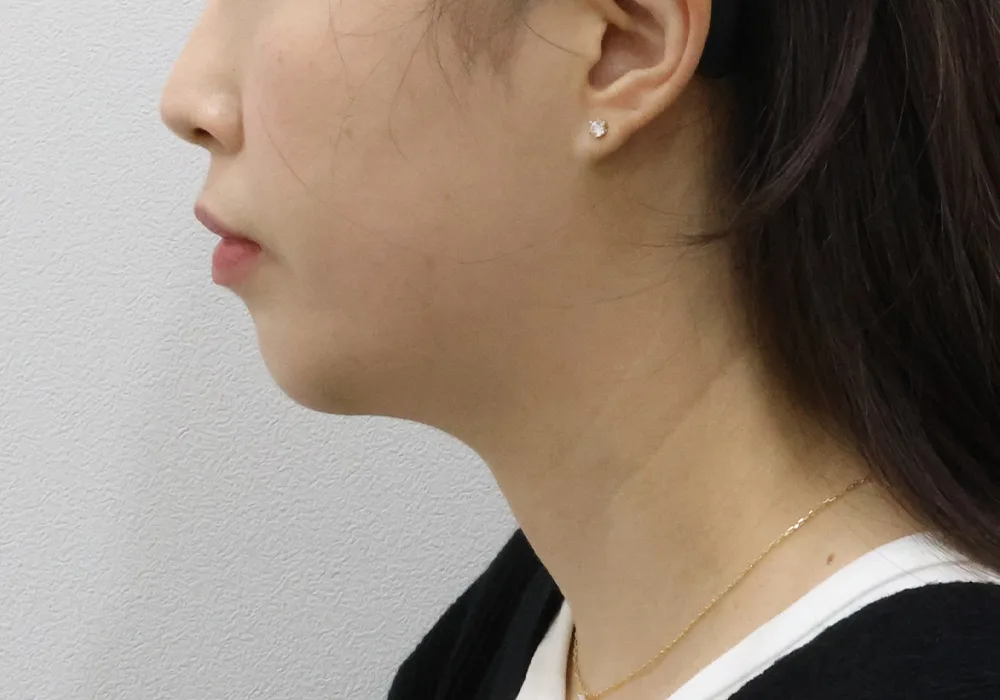
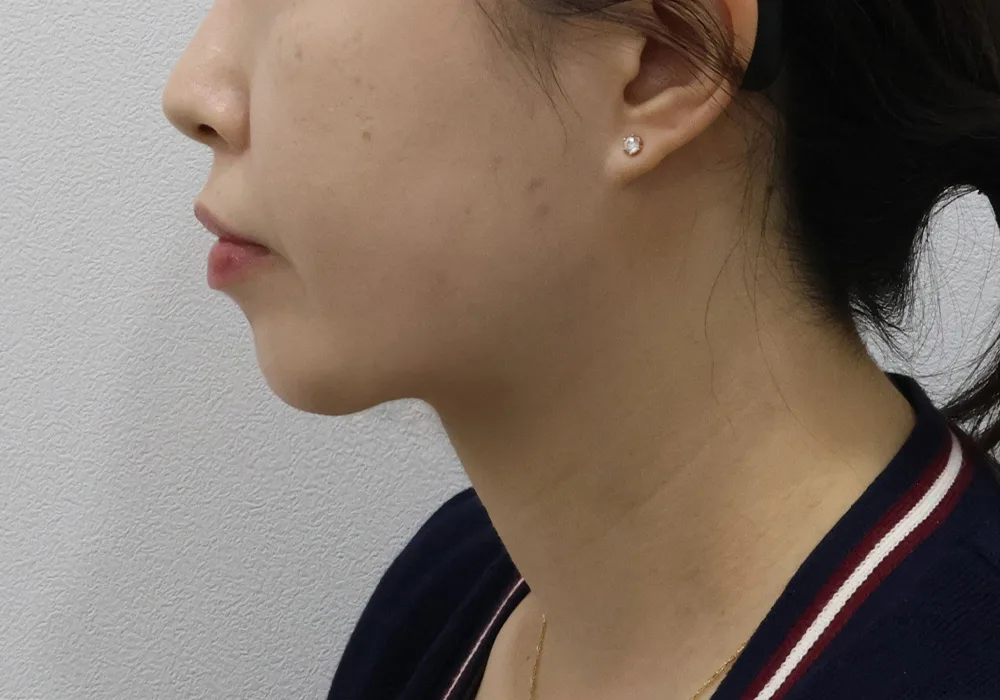
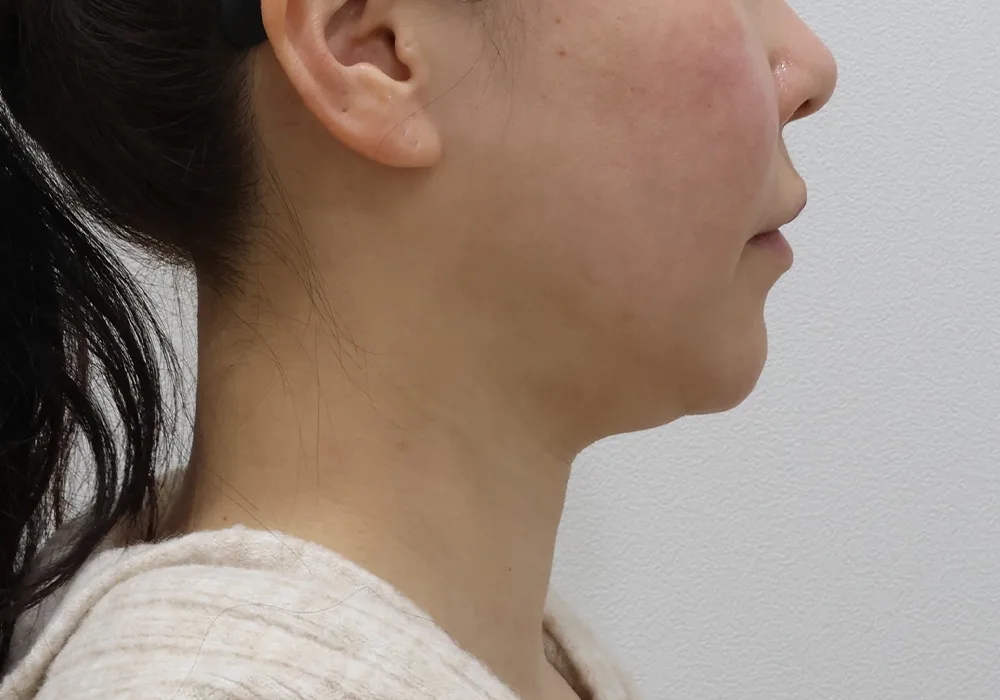
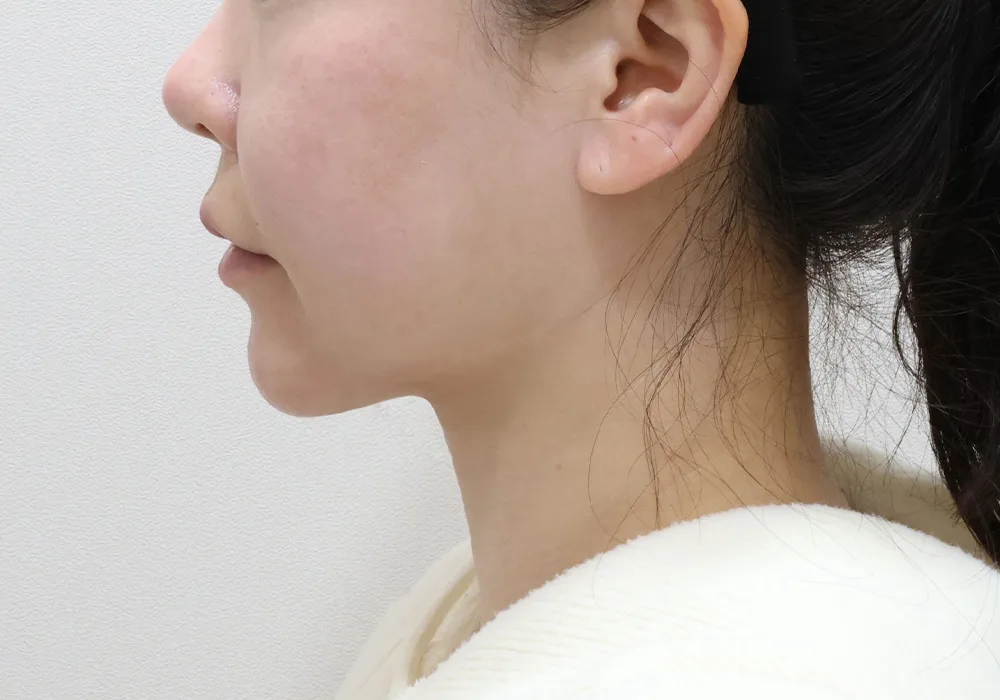
These cases show what emptying the deep compartment contributed to as part of a larger plan. Neither was deep fat removal alone: both included suction above the muscle and platysma work, and one also included forehead surgery. They illustrate the anatomy discussed on this page more than they measure any single step.
BEFOREAFTER
BEFOREAFTERPhotographed at Rewind in matching conditions and published with the patient's consent. Individual results may vary. Operating beneath the platysma carries risks of bleeding, infection, lasting swelling or bruising, asymmetry, altered sensation under the chin, injury to nerves near the jaw line and scarring.
Skin to deep compartment
Between the skin under your chin and the deeper structures of the neck lie several distinct layers. Rewind's surgical pages name each of the ones below, and each responds to a different surgical step.
The operation that removes the deep deposit is set out on the deep neck lift page, and the suction of the layer above it on double-chin liposuction. A comparable deep pad in the cheek is covered under buccal fat removal.
Superficial or deep
No single test settles the question, so the assessment combines several observations. Rewind states that depth is judged by hand before a plan is made, and the list below describes what that judgement draws on.
A neck that stayed full after competent suction points towards fat the cannula could not reach. Rewind lists this as the first reason someone is considered for deep fat removal.
Fat above the muscle moves with the skin and can be gathered. Fullness that remains once that layer is accounted for is more likely to sit deeper, under the platysma.
Asking the patient to tense the neck brings the platysma into view. Fullness that seems held behind the tensed muscle suggests a deeper deposit, and visible cords show where the muscle has slackened.
A firmer, rounded fullness below the jaw line may be the submandibular gland. Rewind treats it as a separate finding with its own listing, because removing fat leaves it unchanged.
Researchers have used ultrasound to measure subplatysmal fat thickness before neck surgery and to predict how much will be excised. Rewind does not publish measurements of its own, and the examination is the basis of its plans.
A structurally short chin can crowd the tissue beneath it. Rewind lists this among the reasons a neck looks full, and it limits what fat removal can achieve, because the bone is left as it is.

The anatomical limit
The limit is anatomical. A liposuction cannula passes through the fat layer above the platysma, and the muscle sheet lies between it and the deposit underneath. Rewind states directly that this fat cannot be removed by liposuction.
Suction works in the plane above the muscle. The deep granules sit on the other side of it, so the cannula passes over them however thorough the suction is.
Rewind describes the fat as stuck to the muscle like grapes on a stem. It has to be separated and lifted out under direct vision, and the clinic works from the muscle layer inward to do so.
Once the deep fat is out, the stretched platysma is bound so that it carries tension. Published work has long linked untreated muscle after submental suction with band deformity, which is part of why the muscle is not left as it was.
The surgical route

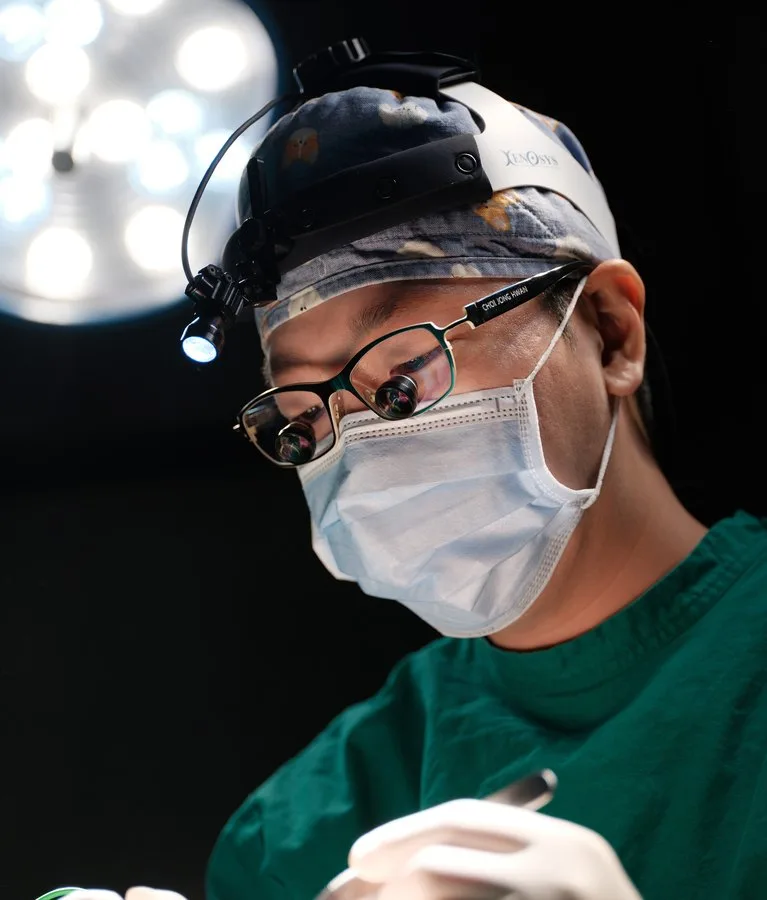
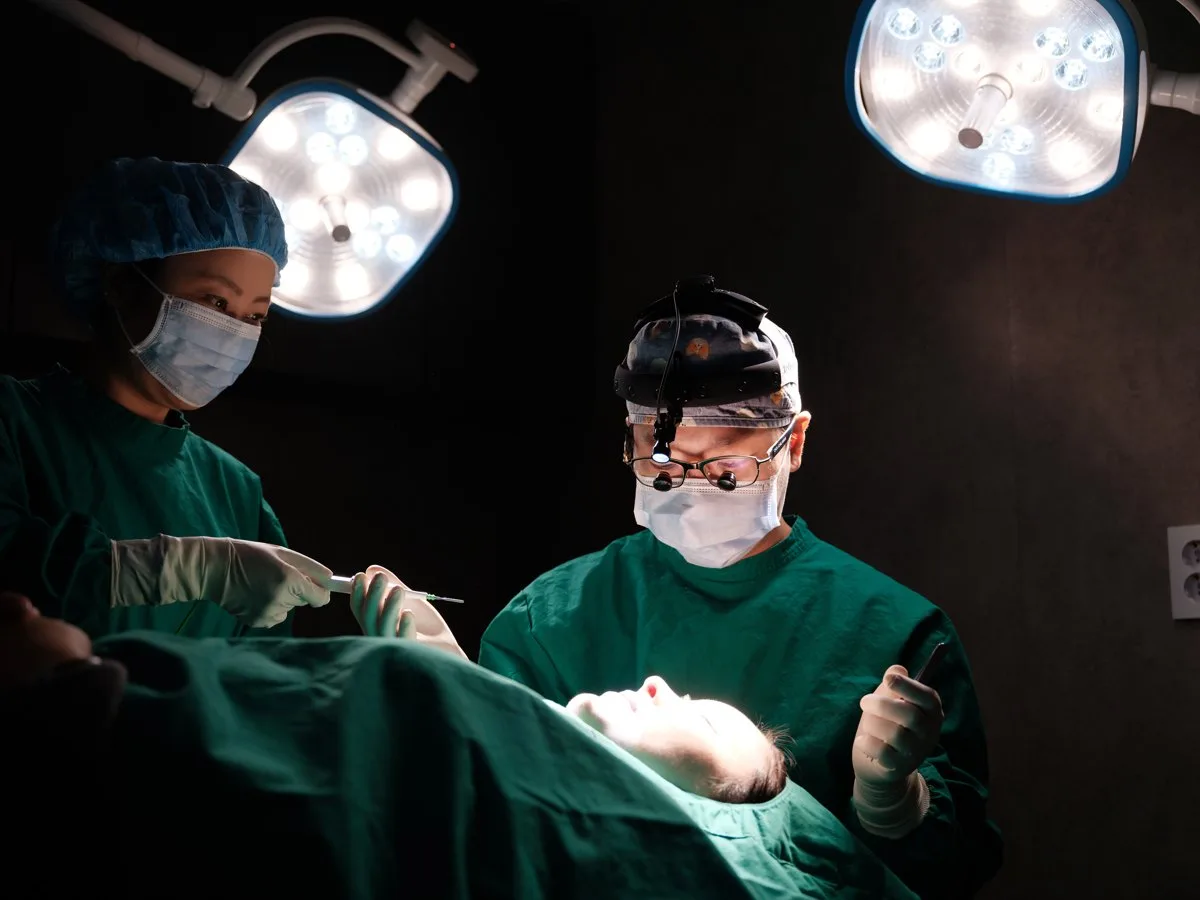
Fig. 04 — The operating surgeon and team in Rewind's theatre

Fig. 05 — Where the compression dressing is checked ahead of discharge
Rewind is based on the fourth and fifth floors of the Richro Building in Apgujeong, Gangnam, and performs this operation in its own theatre. Surgical consultations are available on Monday, Tuesday, Wednesday and Friday from 10:00 to 19:00, and on Saturday from 10:00 to 16:00. The route to the deep compartment is short and follows a fixed order.
Board-certified plastic surgeon
Korean specialist certification in plastic surgery, ten peer-reviewed papers in journals including the Journal of Craniofacial Surgery, and membership of the Korean Society of Plastic and Reconstructive Surgeons. International patients: KHIDI registration M-2025-01-08-09288.
How it is listed
Because the deep fat is reached through the same line as the suction, the clinic lists its removal as an addition to a suction plan. Other lines join only where the examination finds the muscle or the gland involved.
All listed figures include the anaesthetic fee, with VAT charged on top. The type of anaesthesia and the time in theatre are not published for this operation and are confirmed in person.
Signs
After removal
Removing the deep fat opens a space under the muscle, and the first month is about letting the tightened muscle and the tissue around it settle. Rewind's sheets for facial liposuction and for the muscle work apply together.
Possible complications of deep neck surgery include bleeding, infection, extended swelling or bruising, an uneven contour, numbness or altered feeling under the chin, injury to nearby nerves along the jaw line, and a scar that heals differently from expectation. No outcome can be promised, and results vary by individual.
At Rewind, one board-certified plastic surgeon carries every case — from the first consultation to the final follow-up. Because a face is a story, and a story deserves a single author.
Rewind,
Rewind's Doctor
Dr. Jonghwan Choi Medical Director
One surgeon, from the first
consultation to the last follow-up.
A board-certified plastic surgeon devoted to anti-aging lifting — with the precision and restraint built through years of craniofacial practice.
Google Reviews
"Sample review card — at launch this section pulls the clinic's real Google reviews automatically, shown verbatim with the reviewer's initial and posting date."
"Sample review card — reviews are never written or edited by the clinic; only what patients posted on Google appears here."
"Sample review card — a 'See all reviews on Google' link takes visitors to the clinic's Business Profile."
Questions
Reservation
Tell us what you are considering — we reply within one business day, in your language.
Scientific evidence
These studies describe other surgeons' patients. Kim measures the deep compartment by ultrasound before surgery, Bravo reports a two-plane reduction of the neck, Kamer explains the band deformity that can follow suction, and Aldihani reports a large submental liposuction series under local anaesthesia. Rewind does not publish its anaesthesia, which is confirmed at examination.