Surgery · Eye-Opening Results

Droopy Eyelid Surgery Before and After

What a corrected lid should change, and how to check it

Gangnam, Seoul | Board-certified plastic surgeon, Dr. Jonghwan Choi
Ptosis correction results, read by iris exposure · KHIDI-registered for international patients

Droopy Eyelid Surgery Results Droopy Eyelid Surgery Results Droopy Eyelid Surgery Results Droopy Eyelid Surgery Results 
Results

Reading the result

What does a droopy eyelid look like after ptosis correction?

The short answer

In a pair of photographs for ptosis correction, the change to look for is the lid edge. First, it rests low across the iris and the brow is often lifted to help the eye open. Afterwards, more of the iris shows with the forehead at rest, and the eye reads as more awake. The fold usually looks different too, because Rewind only performs the correction alongside a double eyelid crease. How far the opening changes differs from person to person and cannot be promised in advance.

Rewind has not yet released photographs of its own ptosis correction cases for the international site, so this page shows reserved frames and explains how such pairs should be read. It does not borrow double eyelid photographs to stand in for a correction those patients never had.

How much does the opening change? Rewind publishes no average figure, and this page will not invent one. The clinic's eyelid pages use iris exposure as the reference, naming eyes that show under about 80 per cent of it when open, so a result is judged by how much more of the iris shows afterwards, on each side, with the brow relaxed. The aim for each eye is agreed at the examination from where it starts.

Two further changes can show up in a well-read pair: the forehead may rest more, because the brow no longer has to help, and the two eyes may sit closer to the same height. Neither is certain. A brow that has lifted for years can keep part of the habit, and a perfect match between two lids cannot be promised after any eyelid operation.
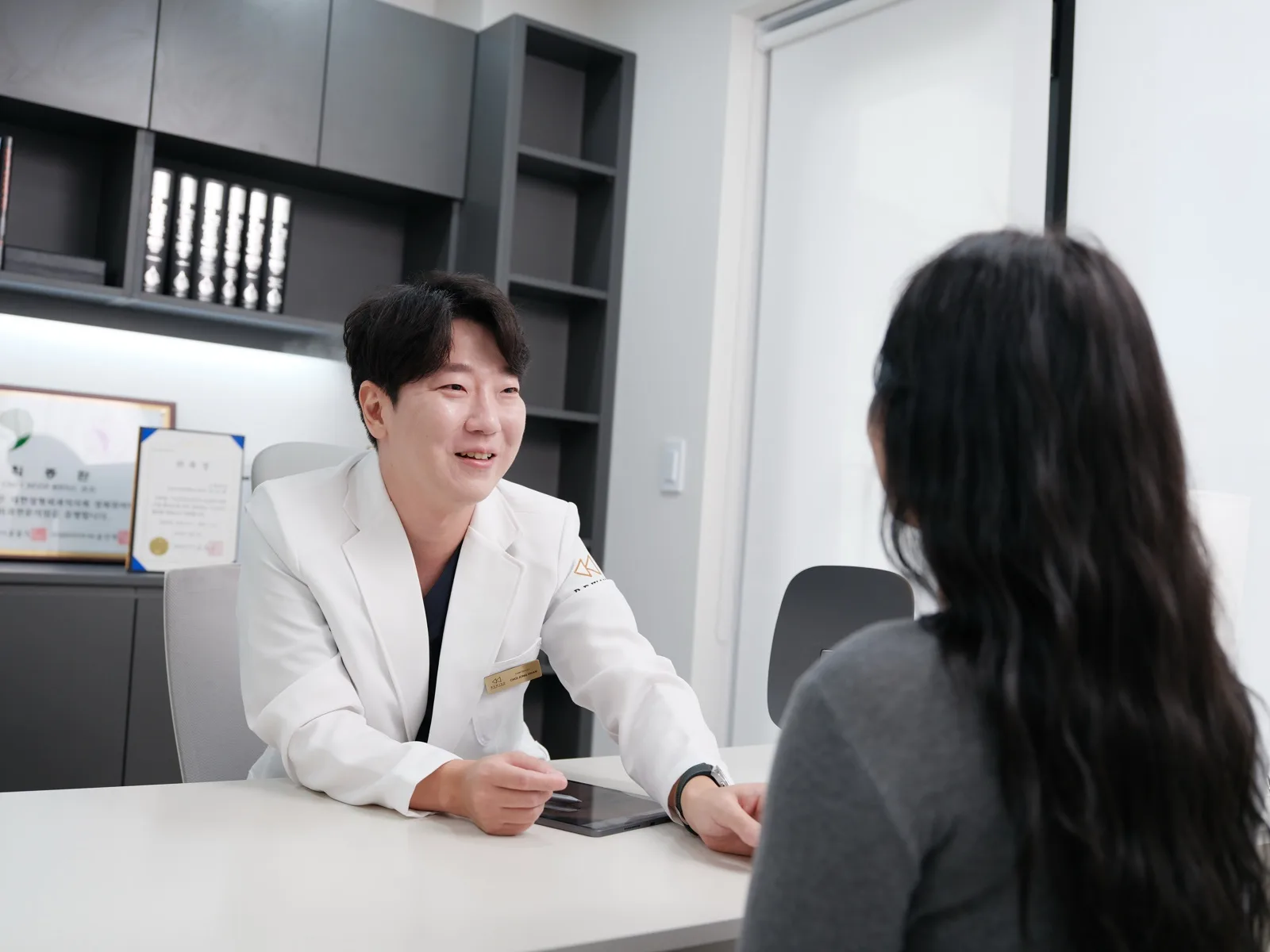
Dr. Jonghwan Choi explaining eyelid findings to a patient at Rewind Plastic Surgery
Fig. 01 — The starting point of each eye is recorded at the desk
Cases

Before & After

Rewind's ptosis correction case frames, held until the clinic's own pairs are released

Each frame below is held for a Rewind patient whose plan included eye-opening correction. Until those pairs are cleared for publication, the frames stay empty. Photographs of crease-only operations would show a fold changing on a lid that already lifted normally, which is the wrong evidence for this question, so none is used here.

Ptosis correction — case frames reserved

BEFORE PHOTO
AFTER PHOTO
BEFOREAFTER
case frame
Buried crease with eye-opening correction, front view, eyes open
Frame held for a Rewind case. Individual results may vary.
BEFORE PHOTO
AFTER PHOTO
BEFOREAFTER
case frame
Incisional crease with eye-opening correction, forehead relaxed
Photograph pending the clinic's release. Individual results may vary.
BEFORE PHOTO
AFTER PHOTO
BEFOREAFTER
case frame
One lid corrected, both eyes shown for comparison
Reserved for the clinic's own pair. Individual results may vary.

When Rewind publishes these pairs, read them in this order. Compare the lid edge against the iris in each eye, with the brow at rest in both frames; raised brows in one frame and relaxed ones in the other can exaggerate or hide a change. Look at the fold second, since it was altered too. Then remember what a photograph cannot hold: eyelid surgery can bring bleeding, infection, prolonged swelling, over- or under-correction, uneven heights between the eyes, dryness of the eye surface and scarring. One person's pair records their anatomy and cannot predict yours.

Changes

What changes

Four changes to look for in a droopy eyelid surgery result

A pair for ptosis correction is easy to misread, because a new fold draws the eye first. These are the four changes that belong to the correction, each with its limits.

change 01
More iris uncovered
The central measure. With the eye open and the brow still, more of the iris shows. Rewind's reference point is a finding of under about 80 per cent exposure; the amount of change varies between people and between the two eyes.
change 02
A quieter forehead
When the lid lifts more on its own, the brow may no longer need to rise each time the eyes open. People who have used the forehead for years sometimes keep part of the habit, so this change is less predictable than the first.
change 03
Closer lid heights
Where one eye started lower, correcting it can bring the two closer. An exact match cannot be promised, and a small difference at the end is reviewed at follow-up before anything further is discussed.
change 04
A fold that sits differently
The crease was made or adjusted in the same operation, so its height and shape change as well. That part of the result belongs to the crease method and design that were chosen.

Crease-only results look different, and Rewind collects them on its natural double eyelid surgery before-and-after page, where eye-opening correction was not part of the plans shown.

Setup

How a result is set up

How a ptosis correction result is planned at Rewind, from first reading to final review

Much of a result is decided long ahead of the photograph. These are the points at which it is set, and the findings behind them are covered on the ptosis correction page.

01Baseline

The starting height of each lid is recorded

Iris exposure is read in a straight-ahead gaze with the brow relaxed, one eye at a time. That record is what any later comparison is made against, and it is taken in person for that reason.

02Aim

A realistic change is agreed for each eye

Where the eyes start at different heights, the plan says so and the aim for each one is explained. A request for a wide-open, staring look is talked through, since an overcorrected lid carries problems of its own.

03Carrier

The crease method is chosen to suit the lid

Buried, partial-incision or full-incision: the choice follows lid thickness and fat. It shapes the fold that appears in the second photograph as much as the correction shapes the opening.

04Review

The lid is reviewed as swelling leaves

Swelling makes early photographs unreliable. The operating surgeon compares the heights at follow-up, and any difference between the eyes is assessed before anything further is proposed.

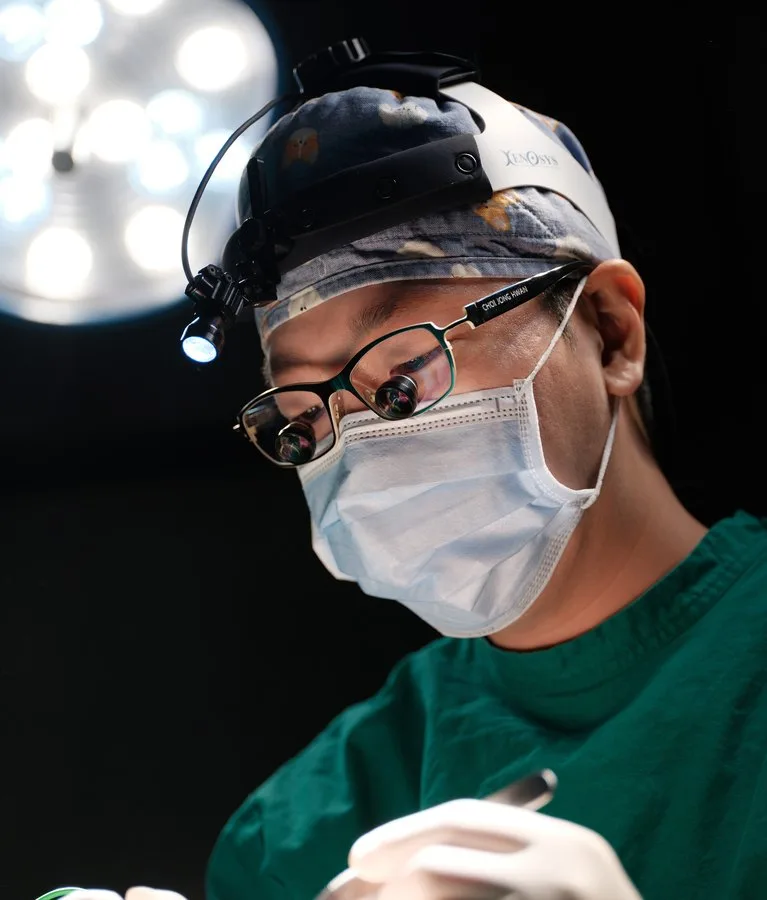
Dr. Jonghwan Choi operating under loupe magnification at Rewind Plastic Surgery
Fig. 02 — The opening is adjusted under magnification
Rewind

Why the frames are empty

Why Rewind shows no borrowed photographs for droopy eyelid surgery

A results page with no photographs is an unusual choice. It follows from what a pair is supposed to prove.

01Wrong evidence

A crease-only pair cannot show a correction

Rewind holds checked pairs for crease operations. Placing them here would show folds changing on lids that already lifted normally, and would suggest a correction that never happened.

02Checked first

Pairs appear only after both frames are verified

Rewind publishes a pair only after the two frames have been checked against each other as one patient and every other procedure in that session has been listed. Ptosis correction cases will go through the same check.

03Same surgeon

The surgeon who sets the aim reviews the result

The medical director examines, operates and holds the follow-up visits, so the person comparing your later photographs with the baseline is the one who recorded it. Travelling patients have interpreting support at each visit, and the clinic holds KHIDI registration.

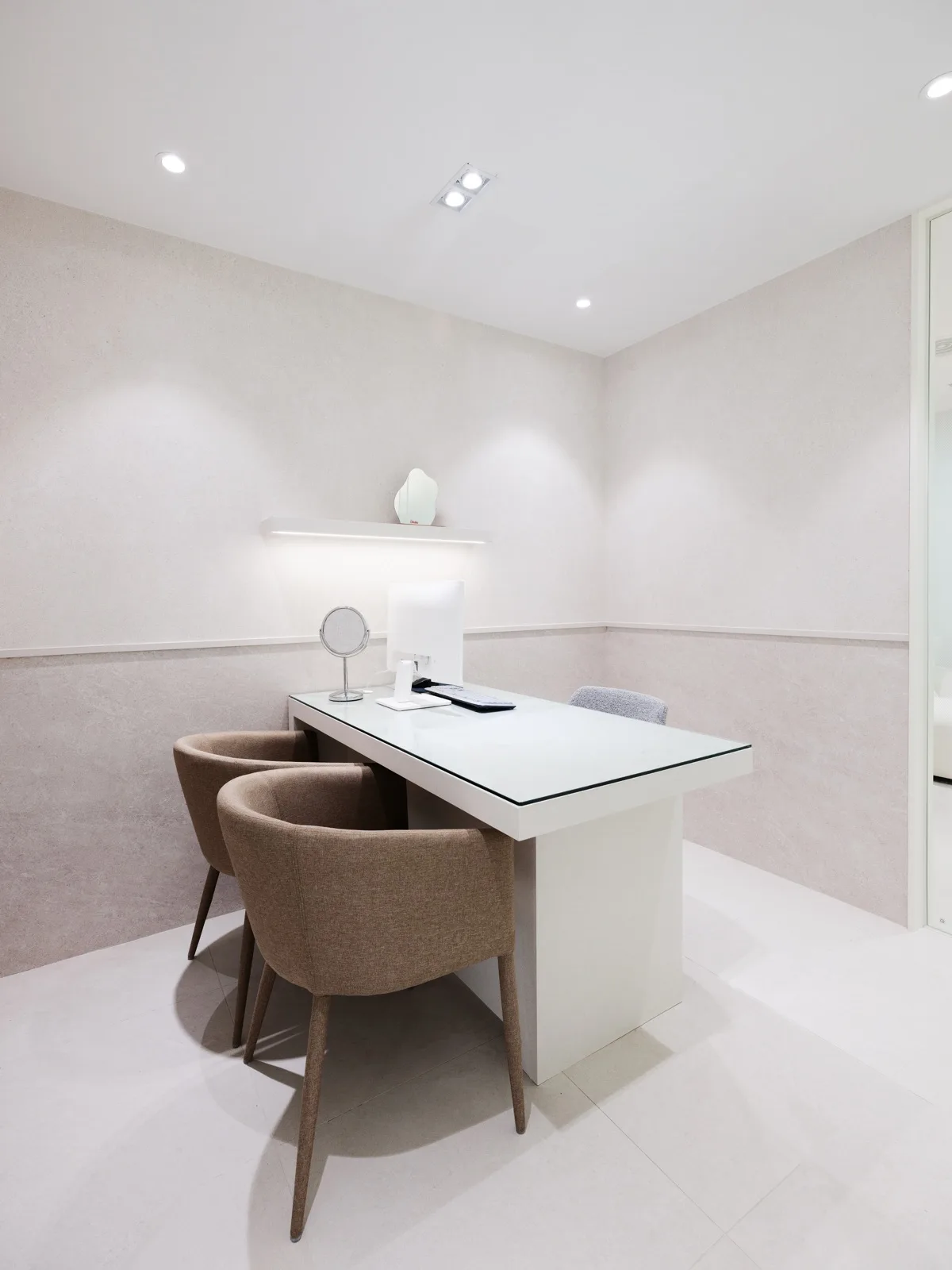
Consultation room at Rewind Plastic Surgery, Apgujeong
Fig. 03 — Follow-up comparisons are made in the consultation room
Theatre

Where results are made

Where Rewind operates on droopy eyelids and reviews the results

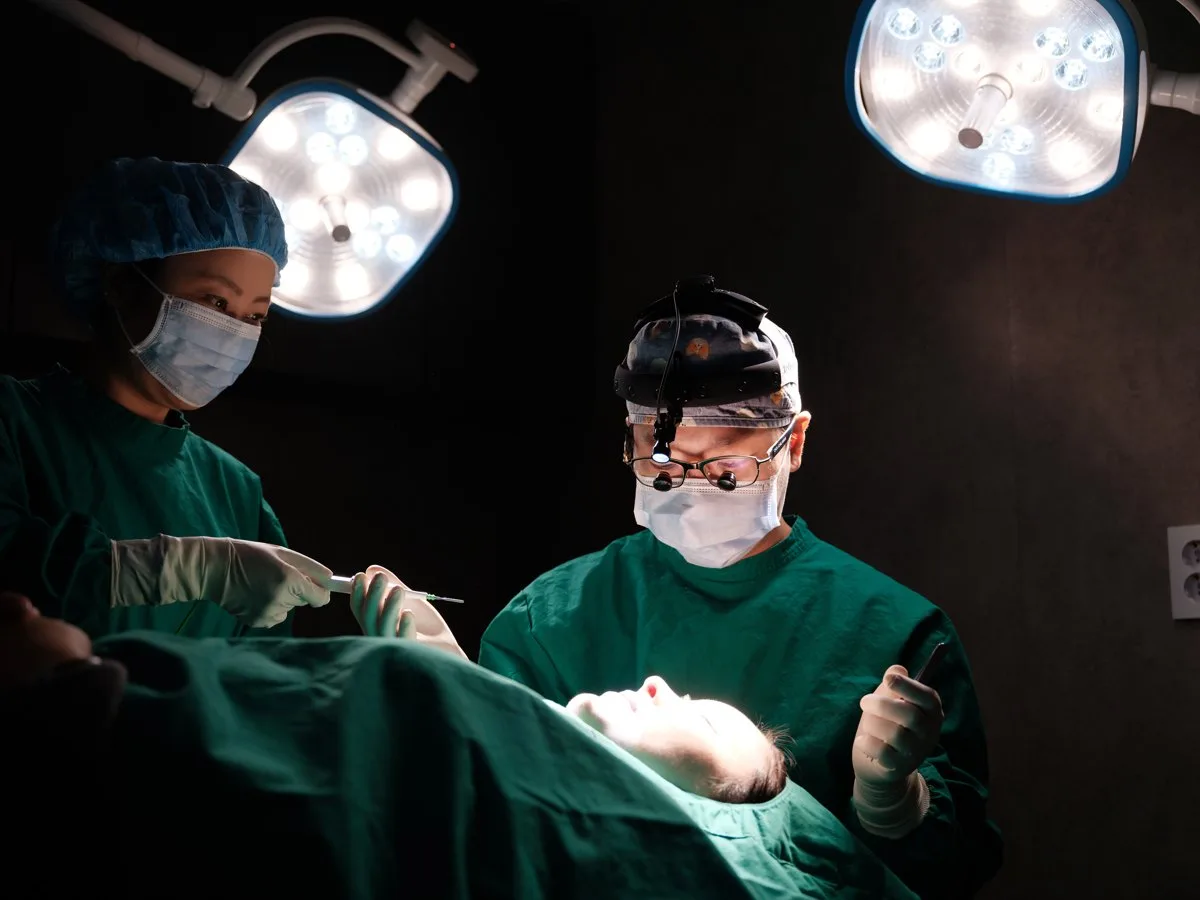
Surgical team at work in the operating room at Rewind Plastic Surgery

Fig. 04 — The operating room during eyelid work

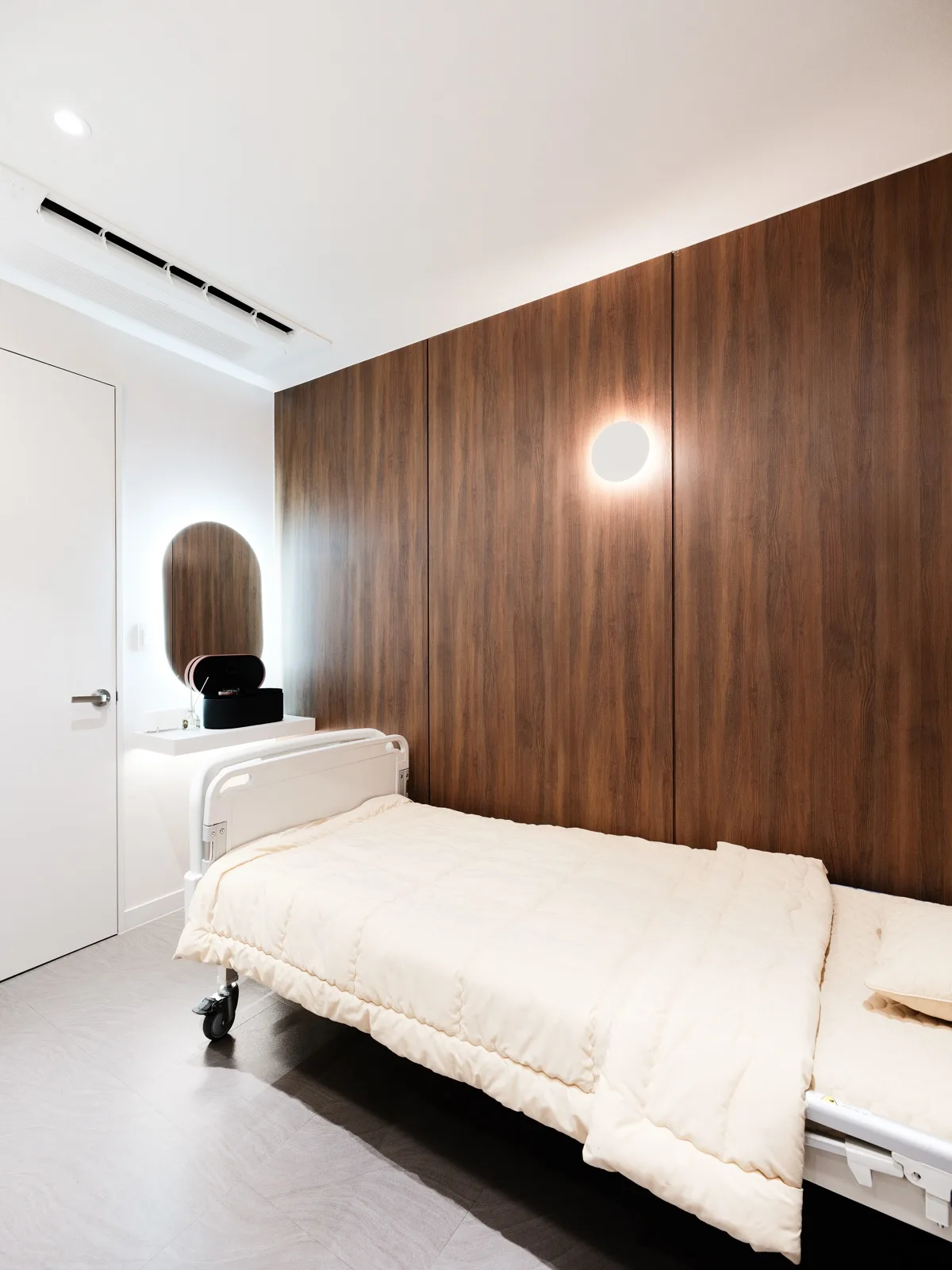
Recovery room at Rewind Plastic Surgery

Fig. 05 — Recovery, the first stop after the operation

Every operation and every review behind these results happens within the clinic's premises in the Richro Building, Apgujeong, Seoul. Follow-up appointments keep the same weekly pattern as consultations: weekdays other than Thursday until 19:00, and Saturdays until 16:00. The list below sets out what the clinic states about how results are handled.

Baseline iris exposure recorded for each eye
Correction carried with a buried or incisional crease
Lid heights compared at follow-up, not on day one
Case photographs published only after verification
Anaesthetic and theatre time: not published
Operated and reviewed by Dr. Jonghwan Choi
Dr. Jonghwan Choi, board-certified plastic surgeon

Board-certified plastic surgeon

Plastic surgery certification in Korea, with the society memberships listed in his profile further down. Rewind's KHIDI number for international patients is M-2025-01-08-09288.

Cost

What the result costs

The rates behind a droopy eyelid surgery result at Rewind

A ptosis correction result is paid for in two lines: the add-on for the correction and the rate for the crease that carries it.

Ptosis correction, add-onThe line that pays for the change in opening
₩1,200,000
Buried double eyelidCarrier crease without an incision
₩1,200,000
Partial-incision double eyelidCarrier crease through a small opening
₩1,800,000
Full-incision double eyelidCarrier crease along the full fold line
₩2,900,000

These are listed rates: VAT is extra and the anaesthetic fee is already inside each. A fee does not buy a particular opening: the amount of change depends on where each lid starts, and no rate on this list is tied to a result.

Fit

Realistic expectations

Who can expect a visible change from ptosis correction, and whose result is limited

A visible change is more likely when

  • The lid margin clearly covers part of the iris with the brow relaxed
  • The brow is doing obvious work to open the eyes
  • The heaviness comes mainly from a weak lift, with little loose skin
  • Both eyes are measured and the plan addresses each on its own
  • Expectations are framed around iris exposure and an awake look
  • General health allows eyelid surgery and ordinary healing

The change may be smaller, or the plan different, when

  • Loose skin is the main cause, which calls for upper blepharoplasty
  • A dropped brow is resting on the lid
  • The lids were operated on before and scar tissue limits what can be done
  • A difference between the eyes appeared recently and needs its cause examined first
  • Blood-thinning medication, or a condition that slows healing, is present
  • The hope is for identical lids, which cannot be promised
After

Photographs over time

When a droopy eyelid surgery result can be judged, week by week

A photograph taken while the lid is swollen means little. Rewind publishes aftercare by crease method, and the same timeline decides when a ptosis correction result is worth looking at.

First two days
Too early to judge
The buried-crease sheet allows about two days for the visible swelling to pass, and a corrected lid has had more done to it. Lid height in this window says little about the final result.
The first week
Heights still shifting
Heat, steam and heavy exercise stay off the schedule for this week, and the eye is left unrubbed. The two lids may look uneven while swelling leaves them at different speeds.
One to two weeks
Bruising settles
The incisional upper-lid sheet gives one to two weeks for bruising to settle, varying between people. On the buried-crease sheet, eye makeup waits one to two weeks after suture removal.
About two months
A fairer comparison
Rewind notes that an incisional line's redness has settled by about two months, enough for light makeup outdoors. When the final assessment of lid height is made is set by the surgeon at follow-up.

If one lid finishes higher or lower than the other, or the opening differs from the plan, the finding is examined by the operating surgeon at follow-up before any further step is discussed. Severe pain, a fever or any sudden change in sight calls for an early return, whatever the date of the next visit.

Doctor

Professional

At Rewind, one board-certified plastic surgeon carries every case — from the first consultation to the final follow-up. Because a face is a story, and a story deserves a single author.

Dr. Jonghwan Choi, board-certified plastic surgeonRewind,
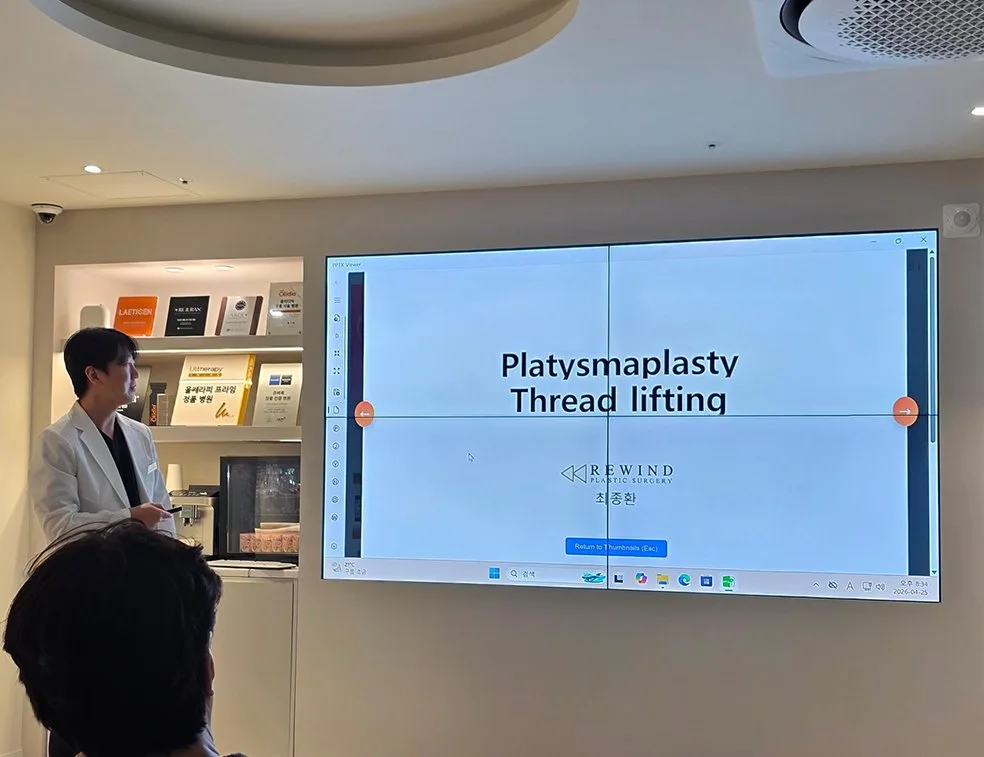
Dr. Jonghwan Choi presenting at an academic session
Fig. 06 — Academic presentation, thread-lifting session

Rewind's Doctor

Dr. Jonghwan Choi Medical Director

One surgeon, from the first
consultation to the last follow-up.

A board-certified plastic surgeon devoted to anti-aging lifting — with the precision and restraint built through years of craniofacial practice.

Board-certified plastic surgeon (Plastic Surgery)
10 peer-reviewed publications
Medical Director, Rewind Plastic Surgery
Korean Society of Plastic & Reconstructive Surgeons
Former chief director, Apgujeong Y&T Plastic Surgery
Korean Society for Aesthetic Plastic Surgery
J Craniofac Surg · JKMS · Arch Craniofac Surg
Korean Cleft Palate-Craniofacial Association
Voices

Google Reviews

What our patients say.

G 5.0 ★★★★★ 12 Google reviews · Rewind Plastic Surgery, Apgujeong — live-synced from Google Business Profile

"Sample review card — at launch this section pulls the clinic's real Google reviews automatically, shown verbatim with the reviewer's initial and posting date."

AReviewer namePOSTED ON GOOGLE

"Sample review card — reviews are never written or edited by the clinic; only what patients posted on Google appears here."

BReviewer namePOSTED ON GOOGLE

"Sample review card — a 'See all reviews on Google' link takes visitors to the clinic's Business Profile."

CReviewer namePOSTED ON GOOGLE
Ask

Questions

Droopy eyelid results: questions about what changes

What does ptosis correction look like before and after?
First, the lid edge rests low over the iris and the brow often lifts to help. Afterwards, more of the iris shows with the forehead at rest, and the eye looks more awake. The fold changes too, because at Rewind the correction is carried out with a double eyelid crease.
How much does the eye opening change after ptosis correction?
Rewind publishes no average figure. The change is judged by how much more of the iris shows on each side with the brow relaxed, against the baseline recorded at the examination. It depends on where each lid starts and cannot be promised.
Why are there no photographs of ptosis cases on this page?
Rewind has not yet released its own ptosis correction pairs for the international site. Crease-only photographs would show folds changing on lids that already lifted normally, so they are not used as a stand-in. The frames stay empty until verified cases are available.
Will my forehead lines improve after the correction?
They may. When the lid lifts more on its own the brow can stop rising each time the eyes open, and the forehead rests more. Long habits can persist, though, and forehead lines have other causes, so this change is not predictable.
How soon can I compare my own photographs?
Not in the first days, when swelling distorts lid height. Swelling after a buried crease is recorded for about 48 hours, and bruising after an incisional lid eases within one to two weeks. The surgeon tells you at follow-up when a fair comparison can be made.
Can a result look too open?
Yes. Overcorrection is a recognised risk of lid-lift surgery, alongside undercorrection and a height difference between the eyes, and it can bring a staring look or surface dryness. Any such finding is examined by the operating surgeon at follow-up before further steps.
Do Rewind's double eyelid photographs tell me anything about ptosis results?
They show what a crease does on a lid that already lifts normally, which helps when choosing a fold design. They do not show a correction and should not be read as one. The natural double eyelid results page collects those cases.
Will both eyes end up exactly the same?
Rarely. Most people start with two lids at slightly different heights, and each eye is planned on its own reading. The aim is to bring them closer, but a perfect match cannot be promised, and a remaining difference is reviewed at follow-up.
Booking

Reservation

REWIND,booking

Tell us what you are considering — we reply within one business day, in your language.

Scientific evidence

Published research on eyelid outcomes and combined ptosis correction

These papers help in reading a result: a systematic review of how aesthetic outcomes after upper-lid surgery are measured, a review of complications after Asian double eyelid surgery and their prevention, five years of results from a single-stage, non-incisional crease-and-correction technique, and a series on crease planning in patients with congenital lid droop. They report published patient groups, none of them Rewind's, and cannot predict how any one eye will look.