Surgery · Mini Facelift Longevity
A five-year record, and what comes after it
Apgujeong, Gangnam, Seoul | Board-certified plastic surgeon, Dr. Jonghwan Choi
Recorded durability for the mini scope · KHIDI-registered for international patients
Mini facelift longevity
The recorded answer
Rewind records its mini facelift as holding for more than five years, and states in the same sentence that this varies from one person to the next. The figure describes the lifted SMAS layer of the middle and lower face staying where it was fixed. It does not describe a face that stops ageing. On the second question patients raise, whether a mini facelift can later give way to a full facelift, the clinic publishes no fixed rule: the full operation opens the whole route of which the mini opens only a stretch, and whether it suits a face years on is decided by examining that face at the time.
Sources: Rewind's Korean-language page for its New Age mini lift covering the middle and lower face, and its published pages for the full lift, the partial lift and LL lifting, from which the neighbouring figures on this page are taken.
Five years is the number people remember, and it is easy to hear it as an expiry date. It works better as a description of scope. A mini facelift repositions one region of the face through one stretch of incision, and the five-year record belongs to that limited repair. The cheeks, jaw line and folds it lifted carry on ageing from their new starting point, while the areas it never touched carry on ageing from their old one.
This page follows the mini lift through the years after surgery: what the recorded figure covers, what tends to place a result nearer the long or the short end of individual variation, and what the options look like when descent returns. The operation itself, with its route and published steps, is described on the mini facelift page.
Reading the figure
The clinic's figure is short, and each part of it carries weight. Taken piece by piece, it says more than a single number suggests.
LL lifting, the clinic's small-incision operation that fixes threads straight into the SMAS, is recorded on a different scale again: 12 to 24 months, a range the clinic ties to skin elasticity and daily habits. It is a separate operation with a separate figure, named here only so the two are not confused. Long-term follow-up of full facelift patients, surveyed more than a decade after surgery, shows how satisfaction can shift as the years pass; the mini lift keeps its own, shorter record.
Inside the five years
The mini operation's published steps explain both halves of its record: why the correction can outlast the swelling by years, and why its reach falls short of the full lift's.
After the skin flap is raised, the SMAS beneath it is opened, drawn upward and fixed. Only then is the loose skin trimmed. The tension sits in a fibrous layer that can bear it, and that is what allows a result to be counted in years. SMAS-based lifting has been described in Asian faces as well, for example in a 2017 series on an extended SMAS technique.
The mini lift opens only the part of the hairline-to-ear or ear-to-behind-ear line that the examination calls for, and its published steps include no release of the retaining ligaments beneath the SMAS, a step the full lift adds. Less tissue is freed, so less is moved, and the recorded span is shorter. Shorter-incision lifts form a family of their own in the literature; a 2005 paper on minimal-access cranial suspension lifting is one example.
Coverage is the middle and lower face. The brow, the eye area and the neck beneath the jaw line age on their own schedule, and over the years a lifted cheek can begin to look out of step with a neck that was left alone.
Branches of the facial nerve run beneath the SMAS, and a 2020 anatomical review mapped the zones where they lie most exposed. A second lift of any size works in that same territory, one reason a later operation is planned from a new examination of the face as it is at that point.

How the figure is given
A durability figure means something only when the operation it belongs to fits the face. At Rewind that match is made first, and the figure follows from it.
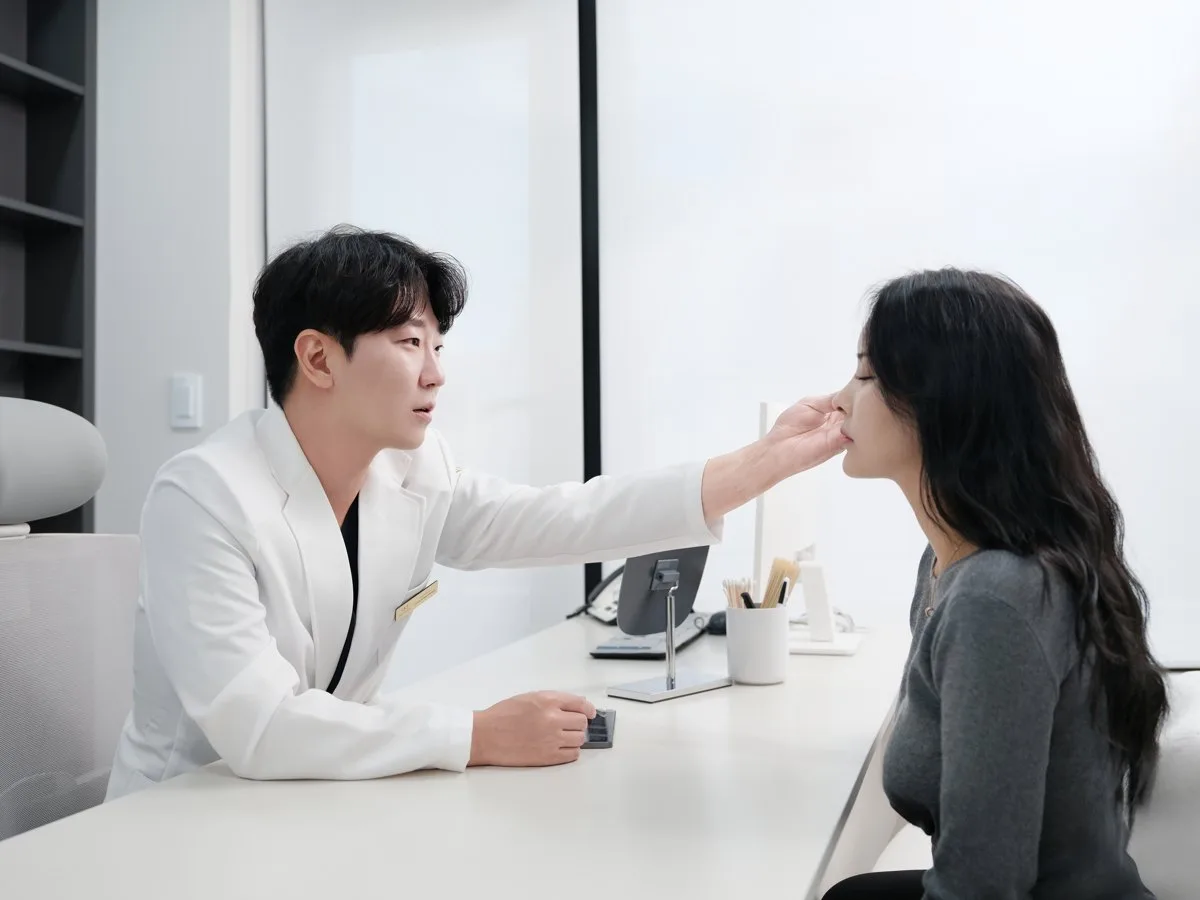
If sagging has started in one area, such as the nasolabial fold, the cheek or the jaw line, the mini scope and its five-year record apply. If the fold, cheek, jaw line and neck have dropped together, or skin elasticity has fallen a long way, the examination points to the full lift and its own figure.
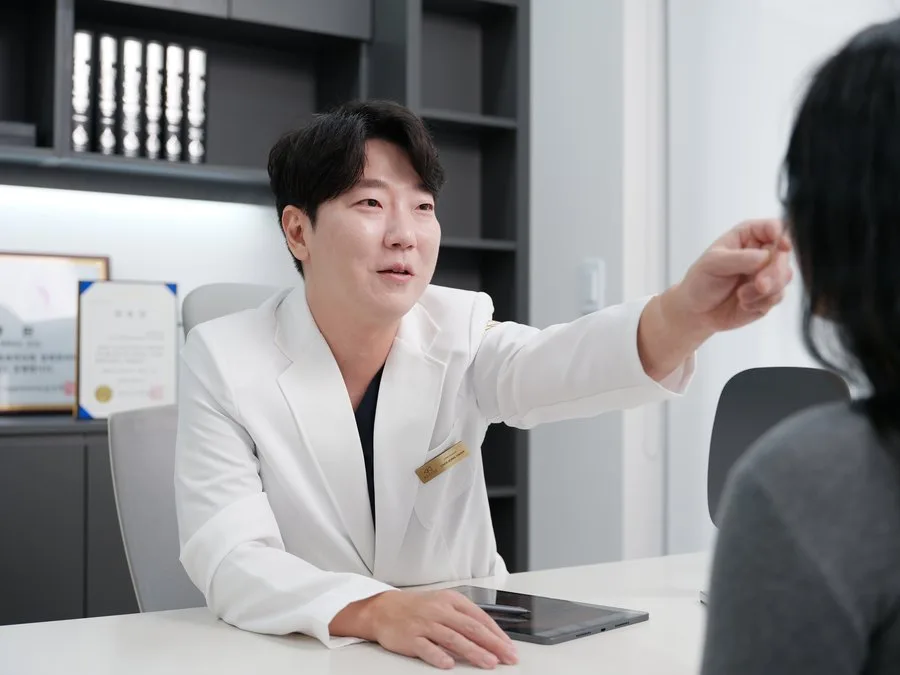
Dr. Choi sets out which regions the operation leaves untouched and which signs of ageing no lift addresses, so that a change noticed in year three is read for what it is: often an untreated neck ageing beside a cheek that is still holding.
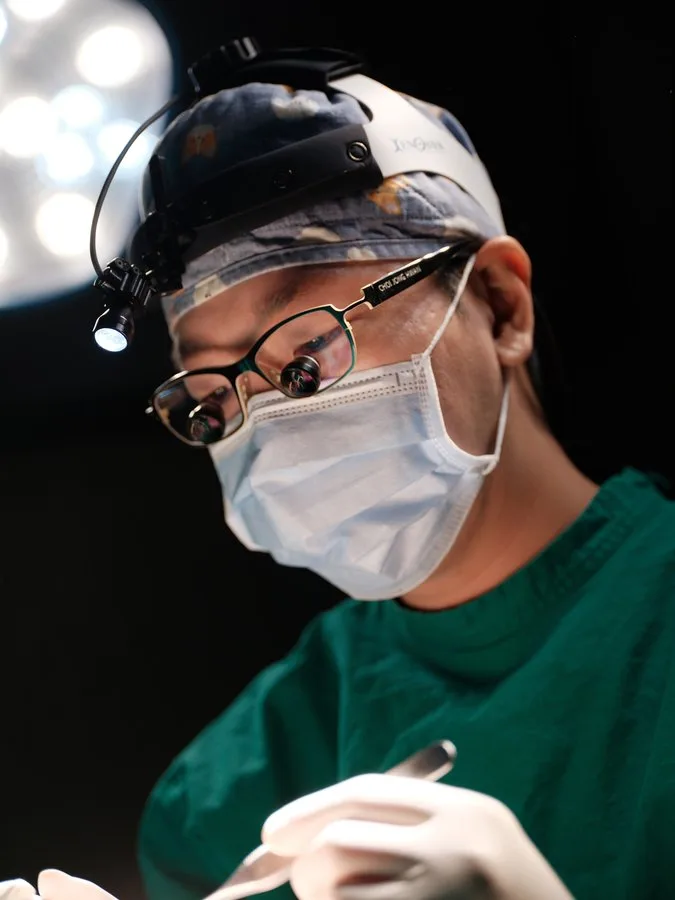
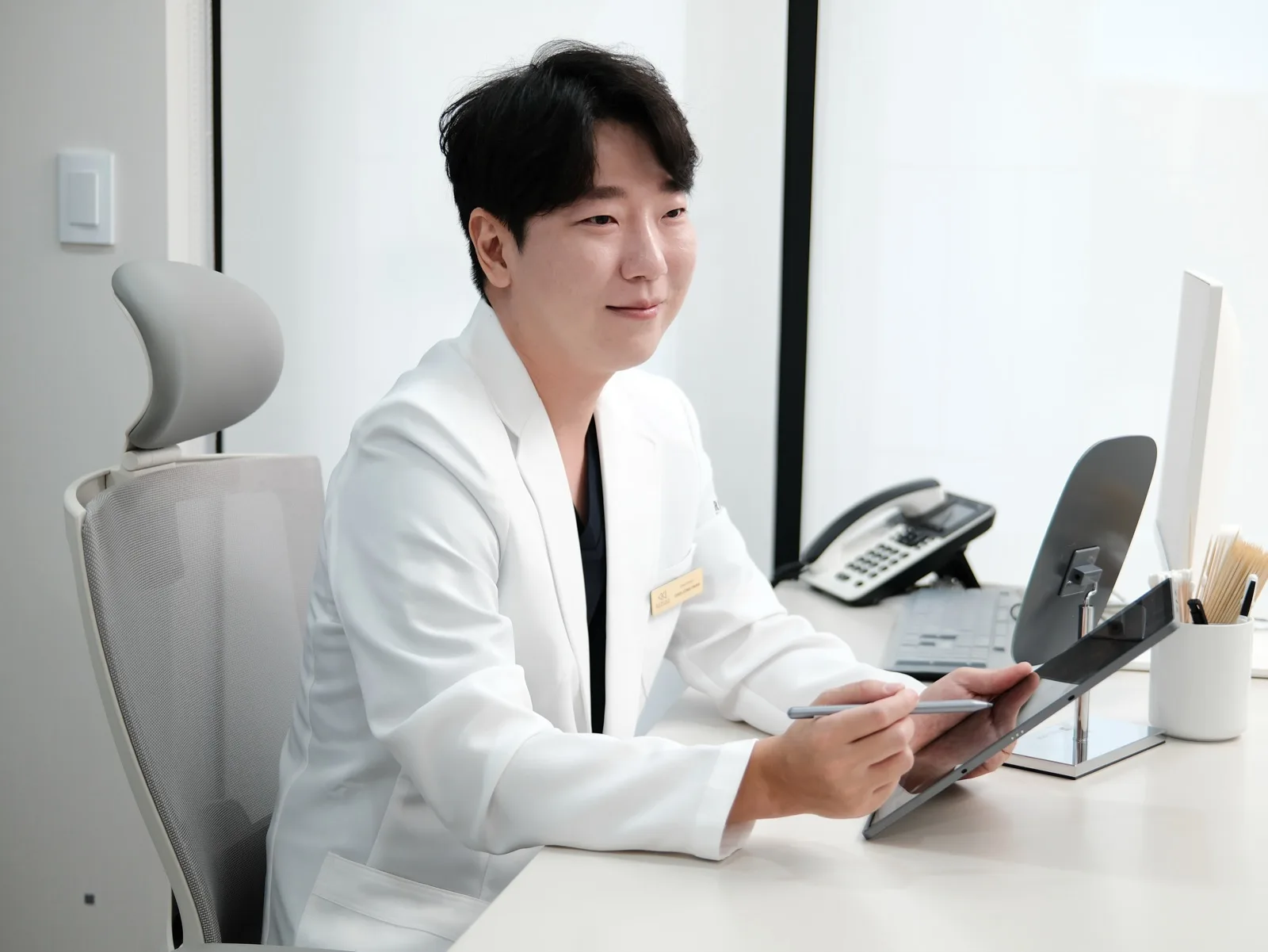
Rewind has one operating surgeon. The medical director who fixed the fascia is the one who assesses it again, and he knows which stretch of the route was opened the first time.
Where it happens

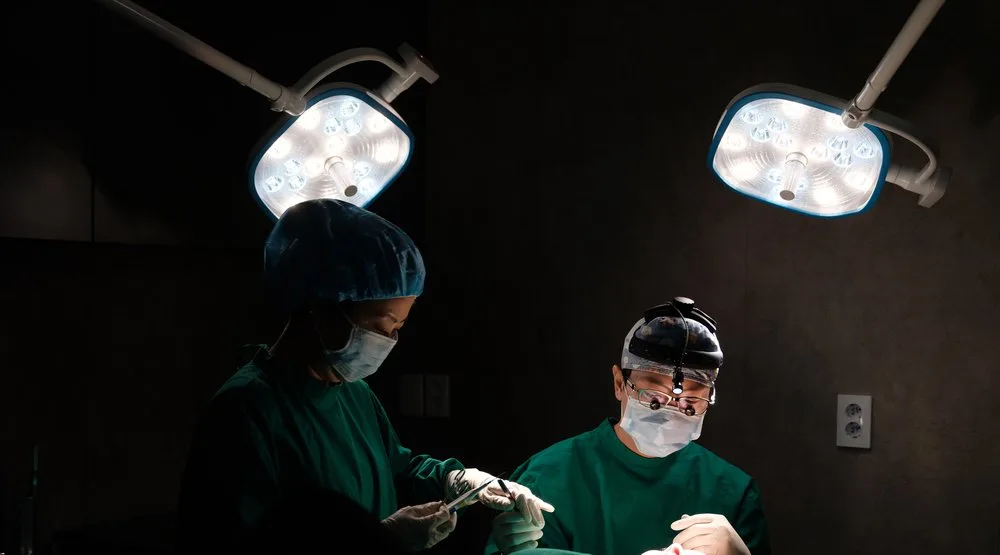
Fig. 04 · Lifting theatre on the Richro Building floors

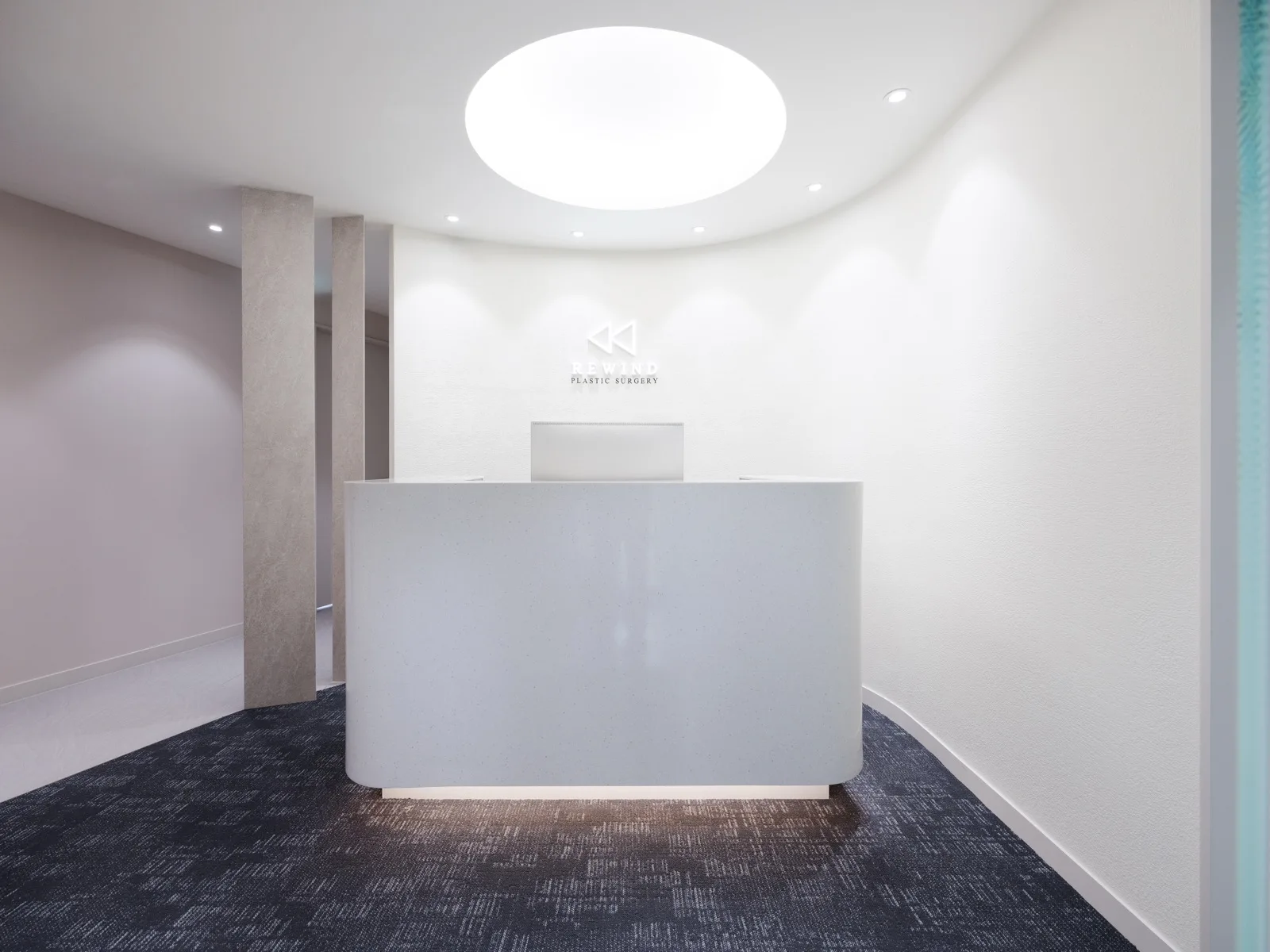
Fig. 05 · Where a patient returning for reassessment checks in
The clinic occupies floors four and five of the Richro Building in Apgujeong (Gangnam-gu, Seoul), and everything connected with a mini facelift happens under that roof: the examination that sizes the descent, the operation, the dressing week and any reassessment years later. Appointments run Monday, Tuesday, Wednesday and Friday, 10:00 to 19:00, and Saturday, 10:00 to 16:00, all by reservation; Thursday and Sunday are closed. For a patient flying in from abroad, the same address and the same surgeon are where a result is looked at again.
Board-certified plastic surgeon
A Korean-certified specialist in plastic surgery and the clinic's only operating surgeon, Dr. Jonghwan Choi gives the durability figure for the lift he would perform himself. KHIDI registration for international patients: Reg. M-2025-01-08-09288.
Listed fees
A longevity question is partly a budgeting question: what the first operation costs, and what a later step would be listed at if the face ever needs one. Each line below is a separate operation with its own examination.
List prices exclude VAT, and the anaesthetic fee already sits inside each figure. The partial lift and LL lifting carry no published list price and are quoted after examination.
Setting the mini fee of ₩3,000,000 beside the full facelift at ₩9,000,000 tells you about scope, since the full lift opens more, releases more and is recorded for longer. It cannot tell you which one your face needs. That comes from the examination, and a later full lift, if one is ever advised, is quoted from a new examination at that time.
Nearer the long end
Protecting the years
The mini lift's record is made in theatre and protected in the weeks that follow, while the fixed fascia settles. Rewind's instructions for that stretch of time are short and specific.
A mini facelift is surgery and carries surgical risks: bleeding or haematoma, infection, swelling that lasts longer than expected, asymmetry between the two sides, numbness or altered sensation, injury to a facial nerve branch, and a scar that heals wider or more visibly than planned. How long any result holds cannot be promised; the five-year figure is the one the clinic records, and individual results vary.
After a mini facelift at Rewind, the reviews that decide when stitches come out and when you can travel are held by the surgeon who operated. Recovery is judged by the same hands that closed the line.
Rewind,
Rewind's Doctor
Dr. Jonghwan Choi Medical Director
The surgeon who closes the line
is the one who checks it.
Dr. Jonghwan Choi, board-certified plastic surgeon and medical director, with ten peer-reviewed papers to his name.
Google Reviews
"Sample review card — at launch this section pulls the clinic's real Google reviews automatically, shown verbatim with the reviewer's initial and posting date."
"Sample review card — reviews are never written or edited by the clinic; only what patients posted on Google appears here."
"Sample review card — a 'See all reviews on Google' link takes visitors to the clinic's Business Profile."
Questions
Reservation
Tell us when you had a lift, or when you are thinking of having one, and we reply within one business day, in your language.
Scientific evidence
The long-term satisfaction survey concerns full facelifts and is cited for how results change over more than a decade; the limited-access paper belongs to the shorter-scar family the mini lift sits in; the Asian series describes SMAS surgery adapted to Asian faces; the anatomical review maps where facial nerve branches run beneath the fascia, which matters for a first lift and for any later one. None of them describes the operation performed at this clinic or forecasts an individual outcome.