Non-Surgical · Treatment Course
Why the count is set at examination, and what shapes it
Apgujeong, Gangnam, Seoul | Board-certified plastic surgeon, Dr. Jonghwan Choi
Courses planned and reviewed by one plastic surgeon · KHIDI-registered
The course question
The short answer
Rewind does not publish a fixed number. Rejuran is usually planned as a course, and Dr. Jonghwan Choi sets the count and the spacing at consultation from the condition of the skin, the area being treated and the change you are hoping for. The plan is looked at again after the first session, so the total can shrink or grow.
The one repeated schedule in Rewind's reference list comes from a small study, and it is described below as research, never as a prescription.
Search results for this question are full of confident numbers. Some repeat a manufacturer's suggestion, some a provider's habit and some a study protocol, and they are rarely labelled as which. A session count only means something when it is attached to a particular skin, a particular line and a plan for checking the result.
This page therefore sets out what the count depends on, what the published research in Rewind's list actually did, and how the spacing between visits is decided in practice.
What sets the number
No two plans at Rewind start from the same place. These four factors account for most of the difference between a short course and a longer one.
Spacing
The interval between visits is set by the doctor for your plan. The only interval stated in Rewind's reference list comes from one small study, and it is worth reading for exactly what it was.
In a 2015 case series, five Korean women received four injection sessions of long-chain polynucleotide at two-week intervals, with about 0.05 mL placed at each of 40 points on one cheek. The authors reported improvements that differed by age group and no serious adverse events.
Five patients, one cheek and one preparation make a case series, far too small to set a rule for anyone else. Rewind does not copy its schedule; it is recorded here because it is the only interval in the reference list.
The doctor fixes the interval when the plan is written, taking account of the two to three aftercare days, any device treatment in the same area and how long you will be in Seoul.
After the first session the skin is examined again, and the remaining count is reconsidered with you: kept, shortened, or discussed again before anything is added.

Who sets the count
A fixed number printed in advance would be easy to sell and hard to justify. At Rewind the doctor who writes the course is the one who reviews it, which removes any reason to pad it.
If the skin problem is small, the plan is small. If the complaint is sagging, the count is zero, because no number of booster sessions lifts tissue.
Dr. Choi sees you at planning and at review, so the decision to add or stop sessions is made by someone who saw the starting point.
For international patients the course is fitted to actual travel dates, and where a full course cannot fit into one stay, that is said at the outset.
Each visit

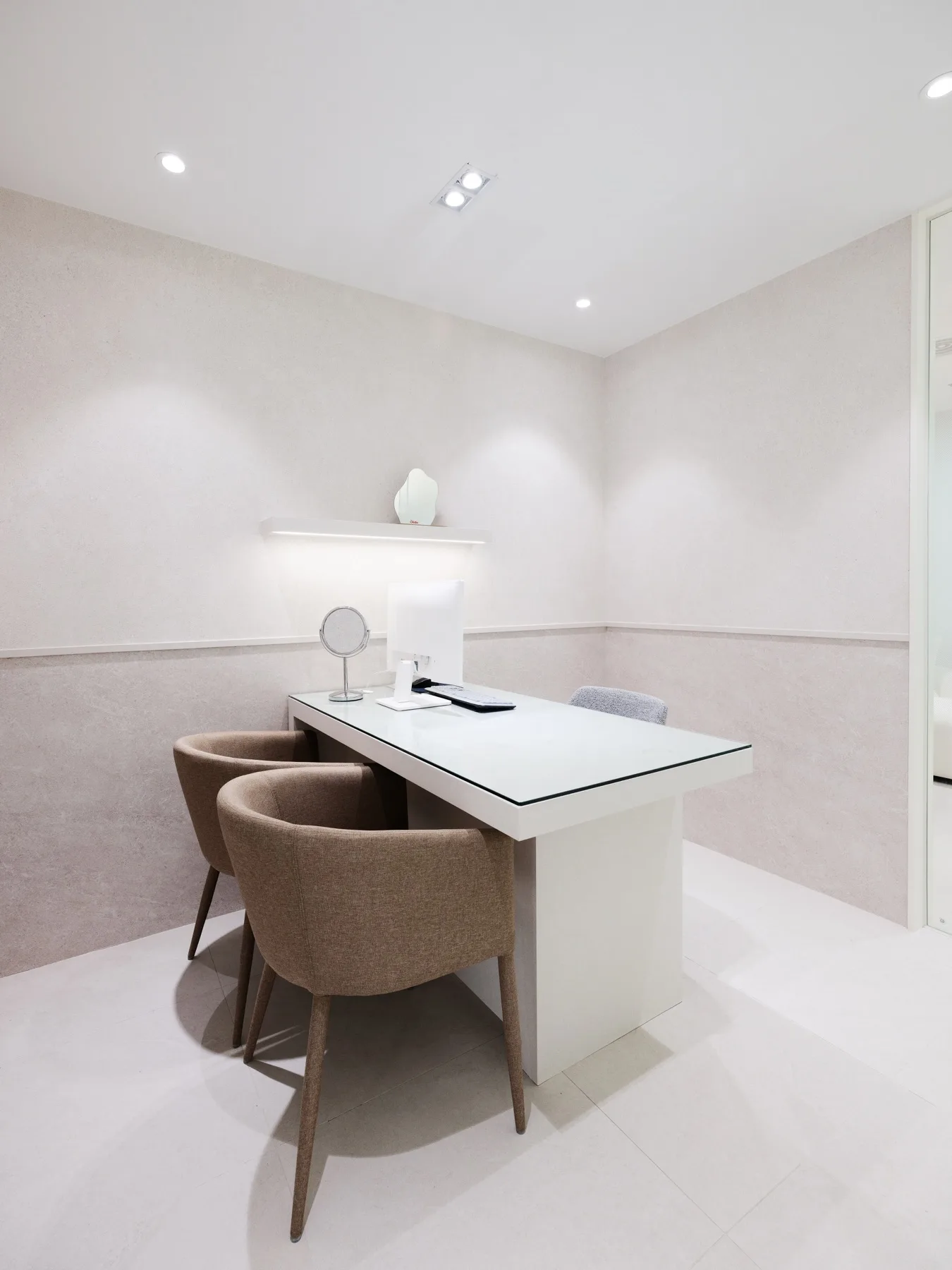
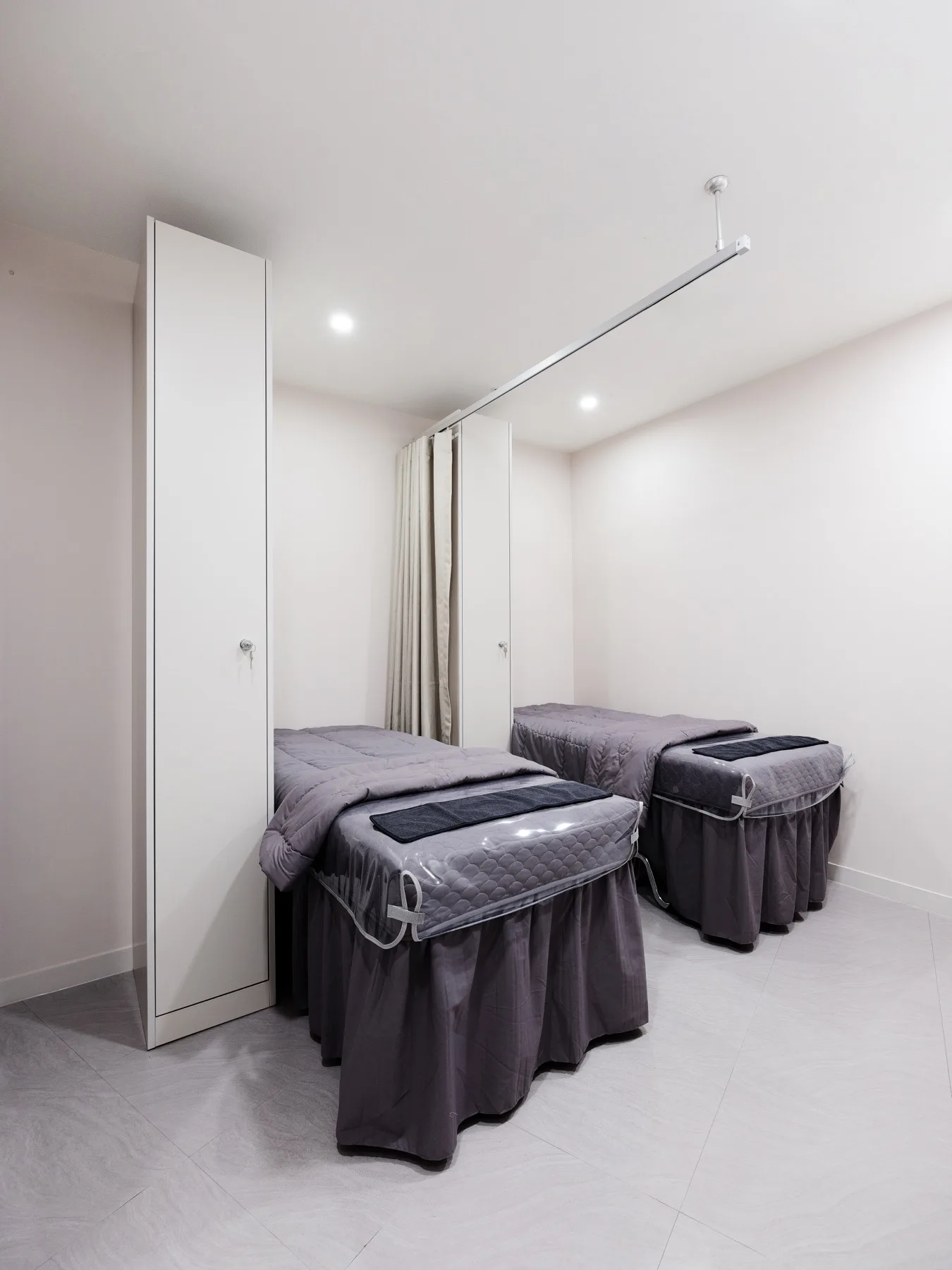
Fig. 04 · Treatment room where each session in a course takes place

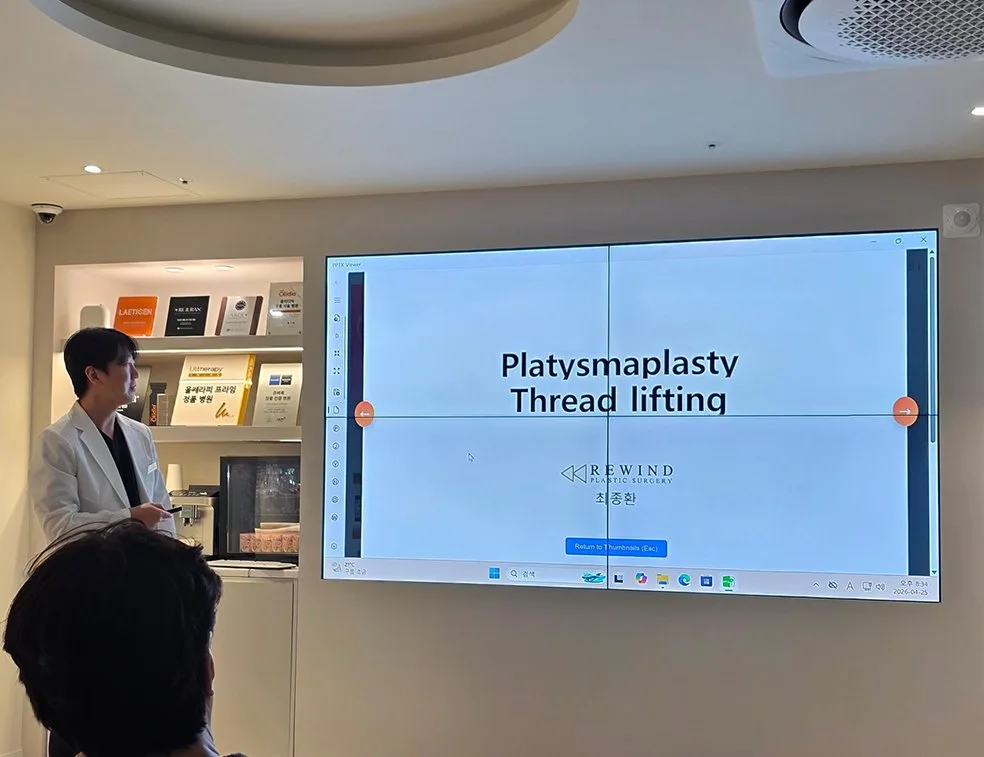
Fig. 05 · Lounge on the clinic floor
Every visit in a course follows the same outline: a look at how the skin has responded since last time, the agreed zone and volume, the injections and the aftercare reminder. Rewind is on the fourth and fifth floors of the Richro Building in Apgujeong and sees patients by appointment on Monday, Tuesday, Wednesday and Friday from 10:00 to 19:00 and on Saturday from 10:00 to 16:00. Thursday and Sunday are closed days, which is worth knowing when visits are spaced.
Keep the aftercare window in mind when you book the next visit. Two to three days without massage, sauna or alcohol follow each session, so back-to-back appointments are not how a course is built.
Course pricing
A course is priced as the per-session rate multiplied by the visits in your plan, with VAT added. The rates below are the building blocks.
All listed rates exclude VAT and include anaesthesia. Because the count is set at consultation, a course total is given once the plan is written.
Shorter or longer
Between visits
What happens between visits affects how the next one is planned. Rewind's Rejuran aftercare is the same after every session in a course, which makes it easy to build into a routine.
Each session carries the same risks: bruising, swelling, redness, stinging and small raised points, and an ingredient allergy can cause red inflammation. Infection and vascular occlusion are rare with any injection and are serious; increasing pain, blanching or dusky skin means calling the clinic the same day.
At Rewind, one board-certified plastic surgeon carries every case — from the first consultation to the final follow-up. Because a face is a story, and a story deserves a single author.
Rewind,
Rewind's Doctor
Dr. Jonghwan Choi Medical Director
One surgeon, from the first
consultation to the last follow-up.
A board-certified plastic surgeon devoted to anti-aging lifting — with the precision and restraint built through years of craniofacial practice.
Google Reviews
"Sample review card — at launch this section pulls the clinic's real Google reviews automatically, shown verbatim with the reviewer's initial and posting date."
"Sample review card — reviews are never written or edited by the clinic; only what patients posted on Google appears here."
"Sample review card — a 'See all reviews on Google' link takes visitors to the clinic's Business Profile."
Questions
Reservation
Tell us what you are considering — we reply within one business day, in your language.
Scientific evidence
The first paper is the five-patient case series whose four-session, two-week schedule is described on this page; the second is a split-face trial comparing two delivery methods; the third reviews PDRN research. None was carried out at Rewind, and none sets the number of sessions for an individual.