★★★★★
Came to REWIND to get my facial treatment and i'm absolutely obsessed about it💞 the doctor is so kind and is an expert! Everyone must visit!
 YunHee Hong2 weeks ago
Surgery · Technique
Two ways into the lower lid, and what decides between them
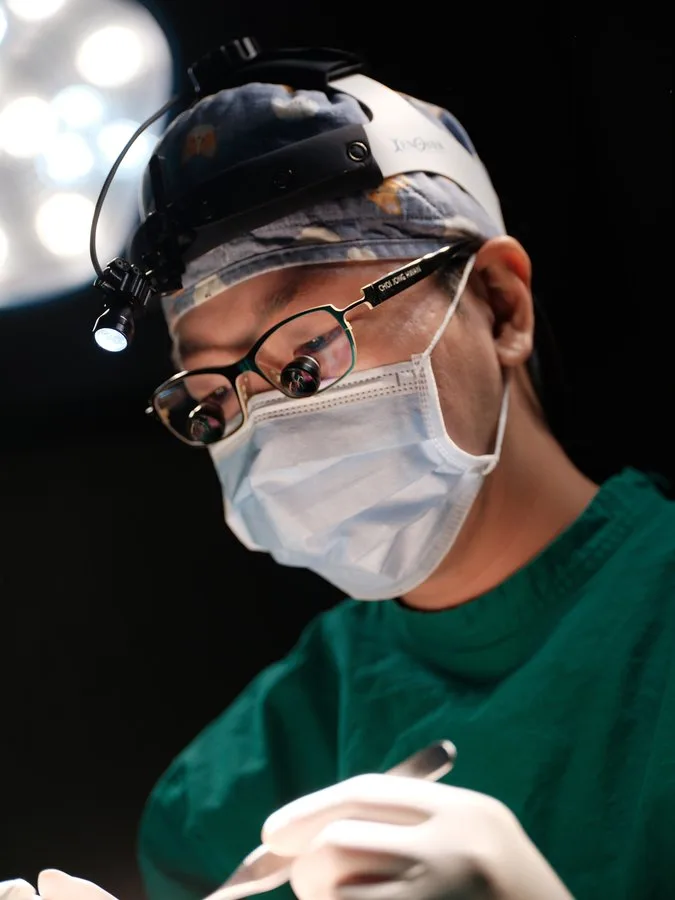
Gangnam, Seoul | Board-certified plastic surgeon, Dr. Jonghwan Choi
Route chosen per lid by the operating surgeon · KHIDI-registered for international patients
Lower blepharoplasty approaches
The short answer
Both are routes into the lower eyelid. A transconjunctival approach enters through the conjunctiva, the moist lining on the inside of the lid, so the skin is not cut. A subciliary approach enters through the skin just below the lower lashes, which opens the front of the lid and can leave a fine line along the lash row. Rewind's lower blepharoplasty page names both routes and states the consequence directly: through the conjunctiva no scar is visible, through the skin a scar can form beneath the lashes. Which is used is decided by the condition of the under-eye tissue, the elasticity of the skin and how far the lid has descended.
Facts on this page come from Rewind's pages for lower blepharoplasty, septal-reinforced fat repositioning and the apple-cheek midface lift. The fat repositioning page does not publish an incision route, and none is assigned to it here.
Searches for this comparison often ask why Korean eye bag surgery defaults to the inside approach. One clinic cannot speak for a country's operating rooms, and this page does not try. What it can do is set out how the two routes differ, what Rewind itself publishes about using them, and which features of a lower lid move the choice one way or the other.
Case photographs
The captions below name the operation performed. They do not name the incision route, because the route for each session is not part of the published record, and a photograph taken after healing is not a reliable way to tell the two approaches apart.
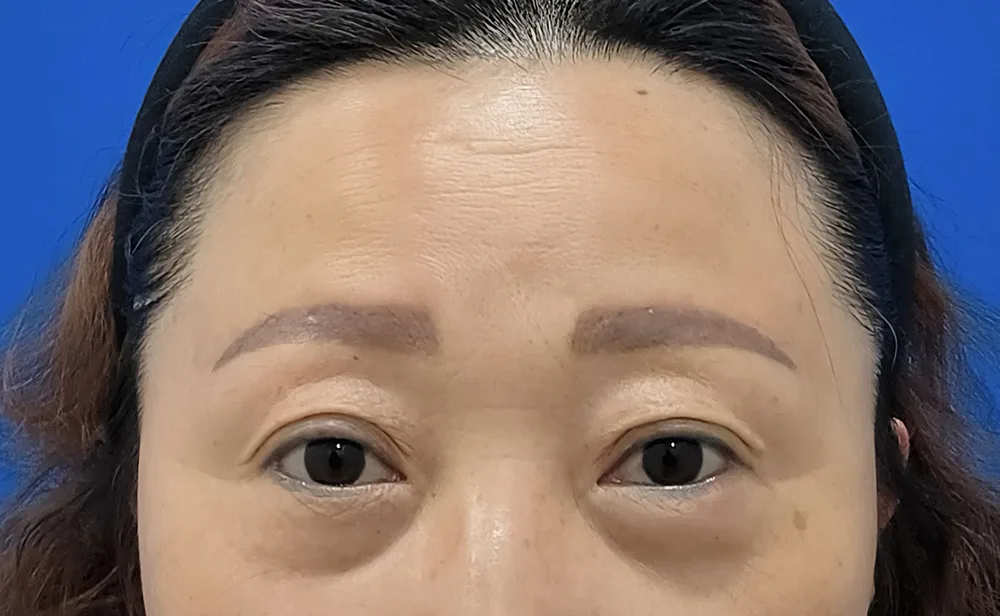
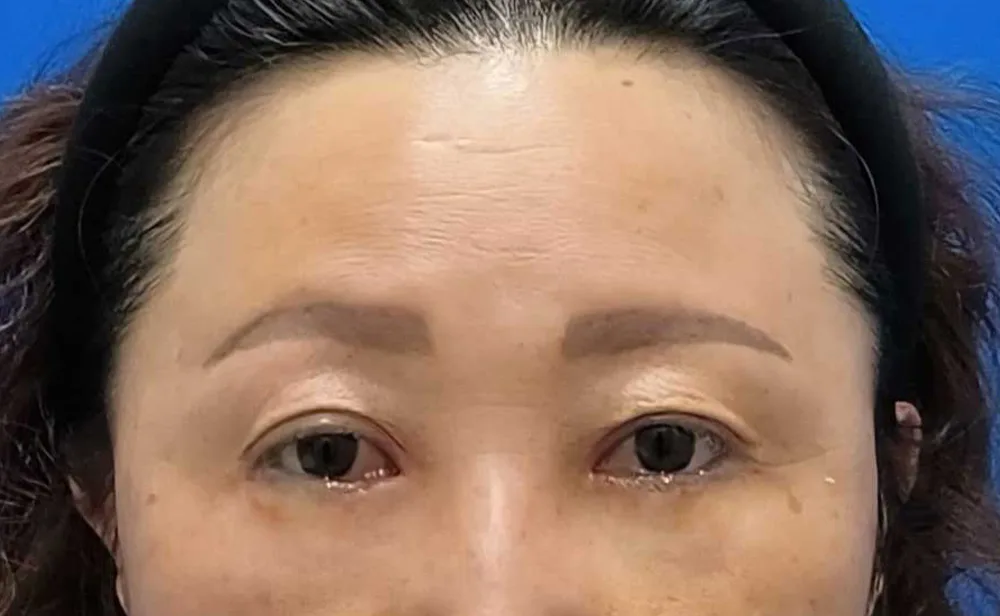 BEFOREAFTER
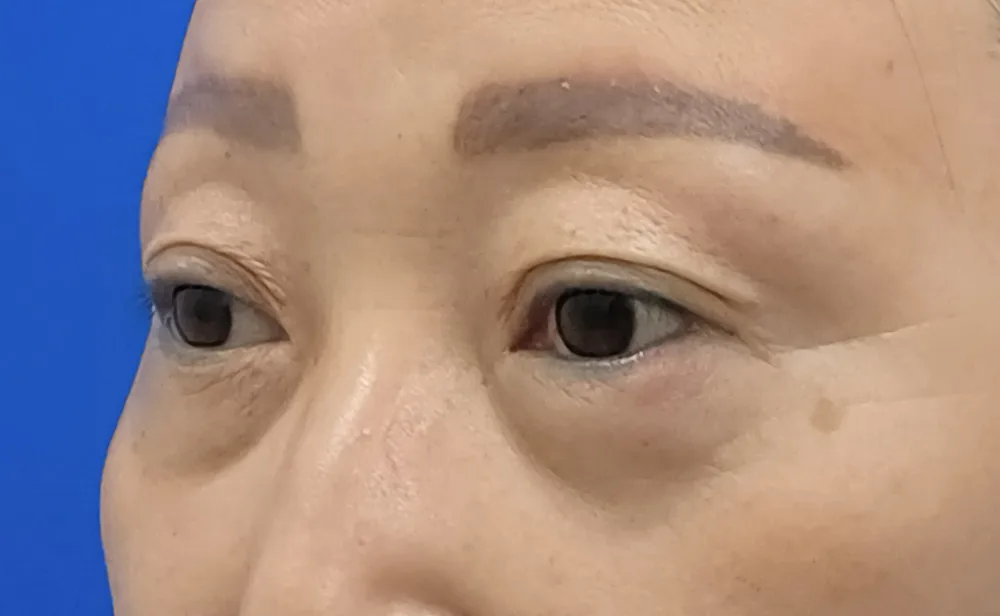
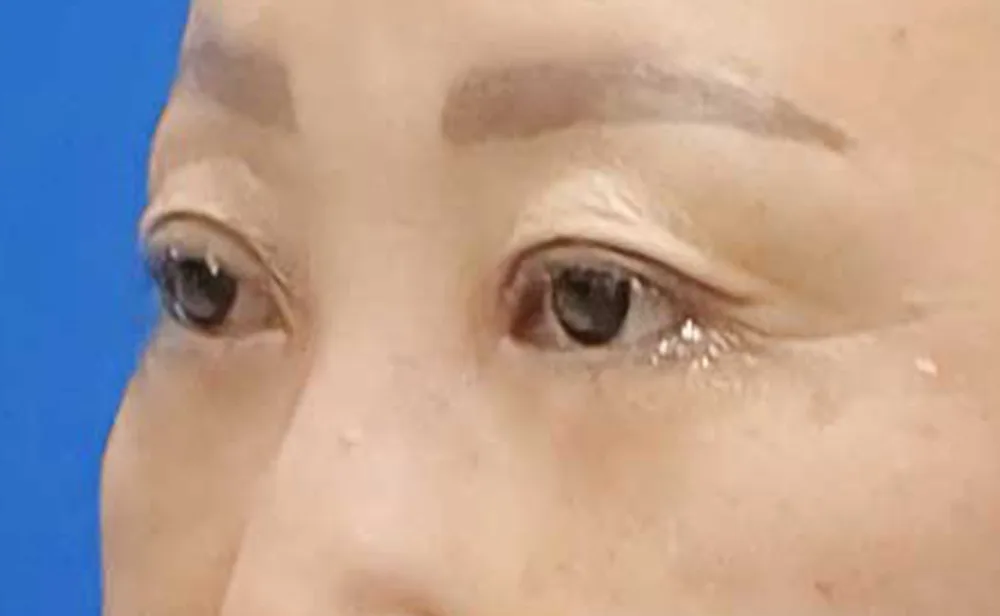 BEFOREAFTER
Rewind's own patients, photographed at the clinic and published unretouched; each caption lists the full session. Individual results may vary. Lower-lid surgery by either route can cause bleeding, bruising, prolonged swelling, asymmetry and a change in lid position, and a skin route can leave a visible line.
What each route reaches
An approach is a door. What matters is what can be done once through it, and what the door itself leaves behind.
Rewind also uses the inside route above the lid. Its apple-cheek midface lift is described as reaching the midface through the conjunctiva or the skin of the lower lid, with the incision made inside the conjunctiva to keep scarring to a minimum. That is a different operation with its own page, but it shows the same principle applied higher in the face.
The decision
Rewind names three factors on its lower blepharoplasty page. Two more, the history of the lid and your own priorities, complete the conversation.
How much fat protrudes, whether there is a groove to fill and how the septum behaves set out what has to happen behind the lid. That plan comes first; the route follows from it.
Skin that has kept its elasticity gives little reason to be opened. Skin that has lost it may need attention an inside route cannot give, because the conjunctiva lies behind the skin.
A lower lid that has sagged is judged together with the cheek below it. Where the midface has dropped as well, the discussion can extend to the apple-cheek midface lift, a separate operation.
Earlier operations leave altered tissue and can change lid position. Rewind's midface page lists patients whose lower lid turned outward after lower blepharoplasty among its candidates, a reminder that lid position is what both routes are planned to protect.
A route with no skin incision leaves nothing to see but reaches only what lies behind the lid. An outside route reaches more and leaves a fine line. Where a lid would allow either, the trade is explained and your preference is part of the decision.
Why here
Rewind's lower-lid page describes both routes, so the question at consultation is which door your lid needs, and the answer can be either.
Rewind's own page presents the conjunctival and the skin approach side by side and ties the choice to three features of the lid. The recommendation is not narrowed to whichever route a practice happens to prefer.
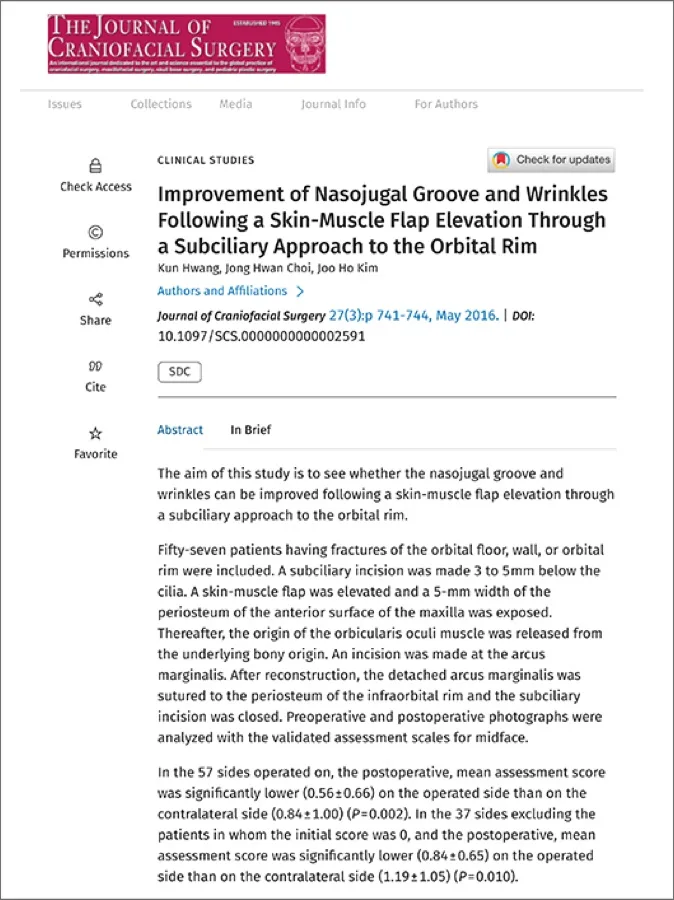
Dr. Jonghwan Choi co-authored a 2016 paper on improvement of the nasojugal groove, the anatomical name for the tear trough, and its wrinkles after elevating a skin-muscle flap through a subciliary approach to the orbital rim. The series is reconstructive and not a study of cosmetic blepharoplasty, but it documents direct work through the outside route.
Whether the line sits inside the lid or under the lashes, the same board-certified plastic surgeon examines it at each review. Rewind is a KHIDI-registered institution for international patients, M-2025-01-08-09288.
On the day
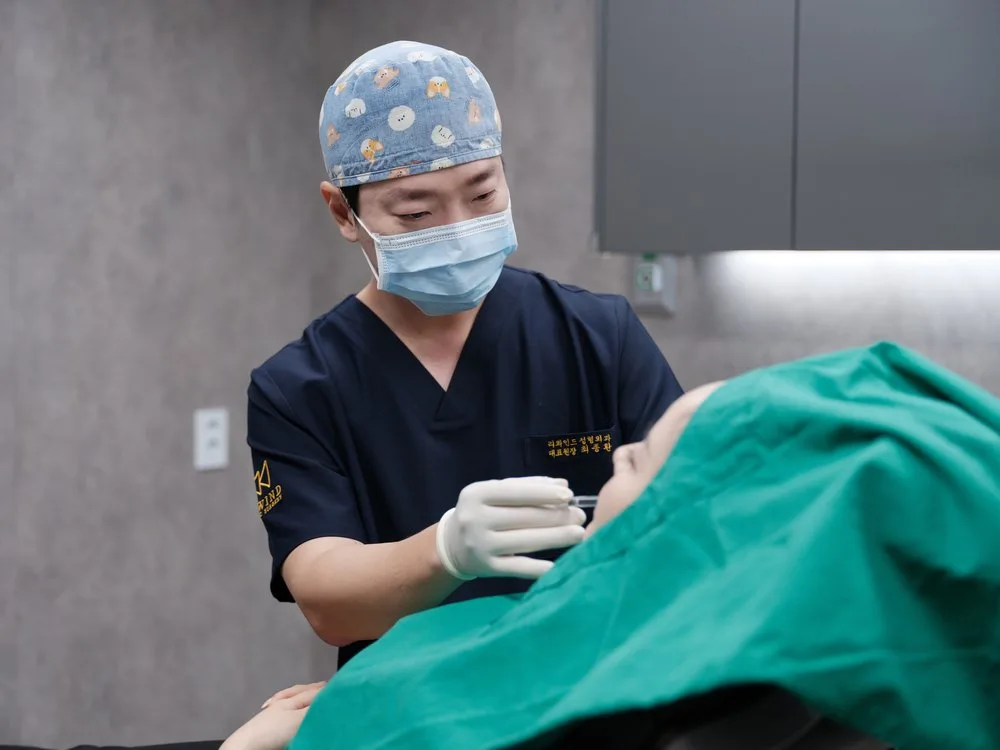
Fig. 04 — Preparation before lower-lid surgery

Fig. 05 — The patient lounge on the clinic floor
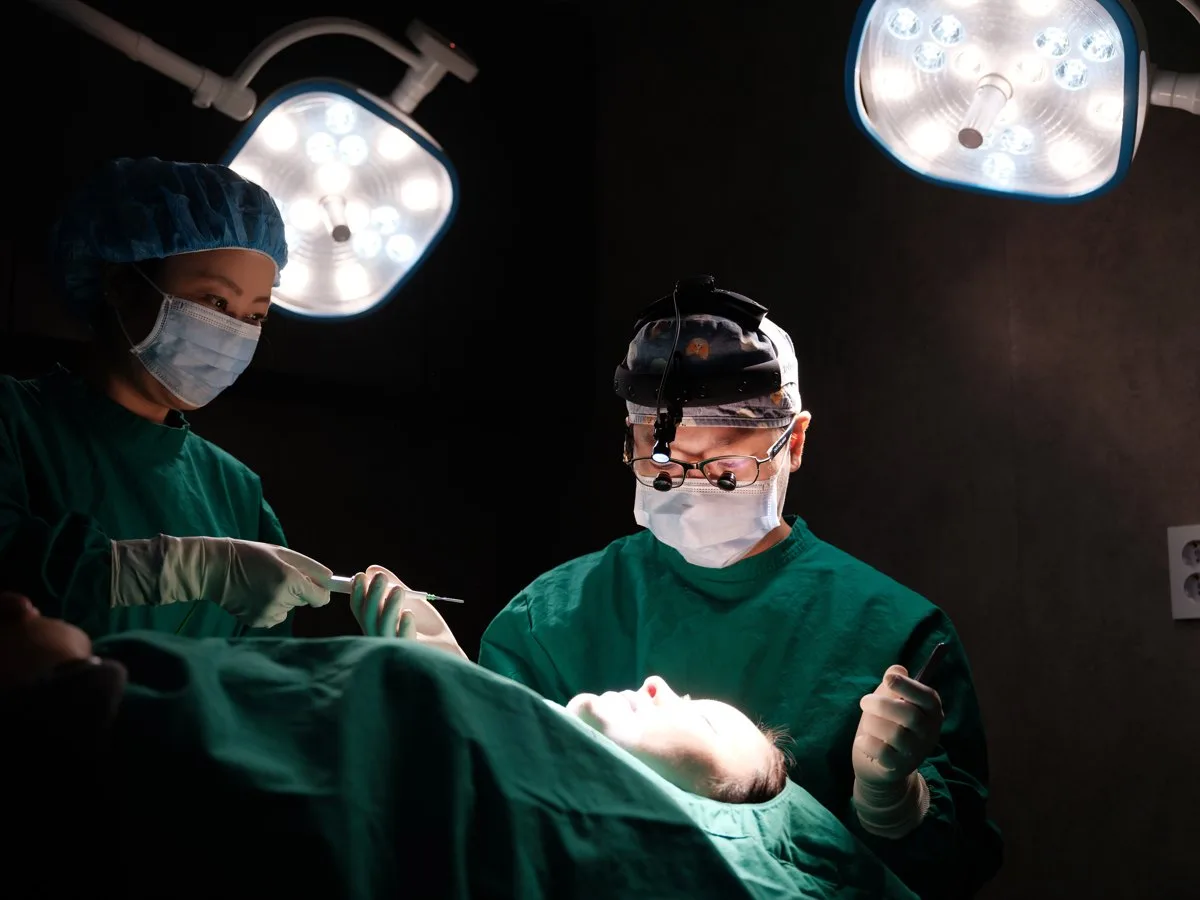
Rewind operates on the fourth and fifth floors of the Richro Building in Apgujeong, Gangnam, Seoul. The route is confirmed with you before surgery, the medical director performs the operation, and the lower lids are dressed before you go home; the under-eye dressing stays on for three days.

Board-certified plastic surgeon
A board-certified plastic surgeon in Korea, Dr. Jonghwan Choi has co-authored ten peer-reviewed papers. KHIDI registration for international patients: M-2025-01-08-09288.
Pricing
Rewind lists lower-lid surgery by what is done to the lid. The route is not a separate line, so the operations below are the ones a choice of approach belongs to.
The one place a route appears by name on Rewind's price list is the midface, where the apple-cheek lift on its own is listed as a transconjunctival operation. For the lower lid itself the list prices the operation and does not separate the approach.
List rates, VAT excluded, anaesthetic fee included. The operation and the route are both confirmed after examination.
Suitability
Recovery
Rewind's post-operative sheet for lower blepharoplasty does not change with the route: the same dressing, the same week without heat, the same month without pulling. What differs is whether there is a line on the skin to protect.
Named risks for either route include bleeding, infection, prolonged swelling, asymmetry, altered sensation, dry eye and changes in lower-lid position such as retraction or ectropion, which the surgical literature treats as the complication to plan against. A skin route can also leave a visible scar. Results vary between individuals and cannot be promised.
At Rewind, one board-certified plastic surgeon carries every case — from the first consultation to the final follow-up. Because a face is a story, and a story deserves a single author.
 Rewind,
Rewind's Doctor
Dr. Jonghwan Choi Medical Director
One surgeon, from the first
consultation to the last follow-up.
A board-certified plastic surgeon devoted to anti-aging lifting — with the precision and restraint built through years of craniofacial practice.
Questions
Google Reviews
Came to REWIND to get my facial treatment and i'm absolutely obsessed about it💞 the doctor is so kind and is an expert! Everyone must visit!
YunHee Hong2 weeks agoThere are just way too many cosmetic clinics in Korea and I'm so happy I found Rewind Clinic in Gangnam. Dr. Choi was so kind and patient while explaining the different face-lifting options, from threads to mini-lifts to deep-plane lifts…
 J. S.5 months ago
I found Rewind clinic through a Korean chat forum and many local clients highly recommended it. The clinic is brand new, featuring large, clean rooms and many private waiting areas so it doesn't give off that "factory" clinic vibe. All the…
 J. Siou5 months ago
Really nice environment. Doctor is easy to communicate and understands my visions. Waited two weeks to make a review and I confirm the results exceeded my expectations and I am super happy with it. Can't wait to come back!! :))
 Kristie Chu5 months ago
I received a thread lift at Rewind Plastic Surgery. The clinic was clean and the atmosphere was comfortable. The consultation was thorough, and I felt confident because they kindly explained everything tailored to my facial condition. They…
Reservation
Tell us what you are considering — we reply as soon as possible, in your language.
For international patients — interpreter-assisted, from your first message to your follow-up.
Scientific evidence
These four papers bear on the choice of route: a subciliary series to the orbital rim co-authored by Rewind's medical director, reported outcomes of transconjunctival repositioning, a review of preventing and correcting lower-lid malposition, and a systematic review of lower blepharoplasty complications.
Each reports its own authors' patients and methods. The first is a reconstructive series; none is a study of lower-lid surgery as performed at Rewind, and none predicts how a particular incision will heal.