Non-Surgical · Results

Pico Laser Before and After

What a photograph shows after one visit, after a course, and a year on

Gangnam, Seoul | Board-certified plastic surgeon, Dr. Jonghwan Choi
KHIDI-registered for international patients · Apgujeong Rewind

Pico Results Pico Results Pico Results Pico Results Pico Results Pico Results 
Result

Pico laser results

Pico laser before and after: what one session and a full course can show

The short answer

After a single pico laser session the most visible change is usually temporary redness, and on some faces a few spots look darker for a while before they lighten. The difference people hope to see in a comparison photo, a lighter and more even field, builds across a course of visits on the Pico K and is judged weeks after the last one. How long it lasts depends on the pigment: freckles and sun spots can stay lighter under strict sun protection, while melasma frequently returns.

Rewind does not yet publish pico laser case photographs. The clinic shows only its own patients, with their consent, and until pico cases are released nothing on this page stands in for them, including pictures from any other procedure.

Pigment is the hardest result in aesthetic medicine to photograph fairly. A melasma patch can shrink or deepen with a small change in exposure, a warmer colour setting, a thin layer of foundation or the beauty mode built into a phone camera. A pair of pico pictures that looks convincing on social media can therefore owe more to the camera than to the laser, and a genuine improvement can vanish in a badly lit after frame.

So this page does three things in place of a gallery. It explains how to read a pico comparison, it sets out when change becomes visible with the clinic's own aftercare instructions as the guide for the first days, and it reports what the long-term research on low-energy laser toning found when patients were photographed at the end of treatment and again a year later.
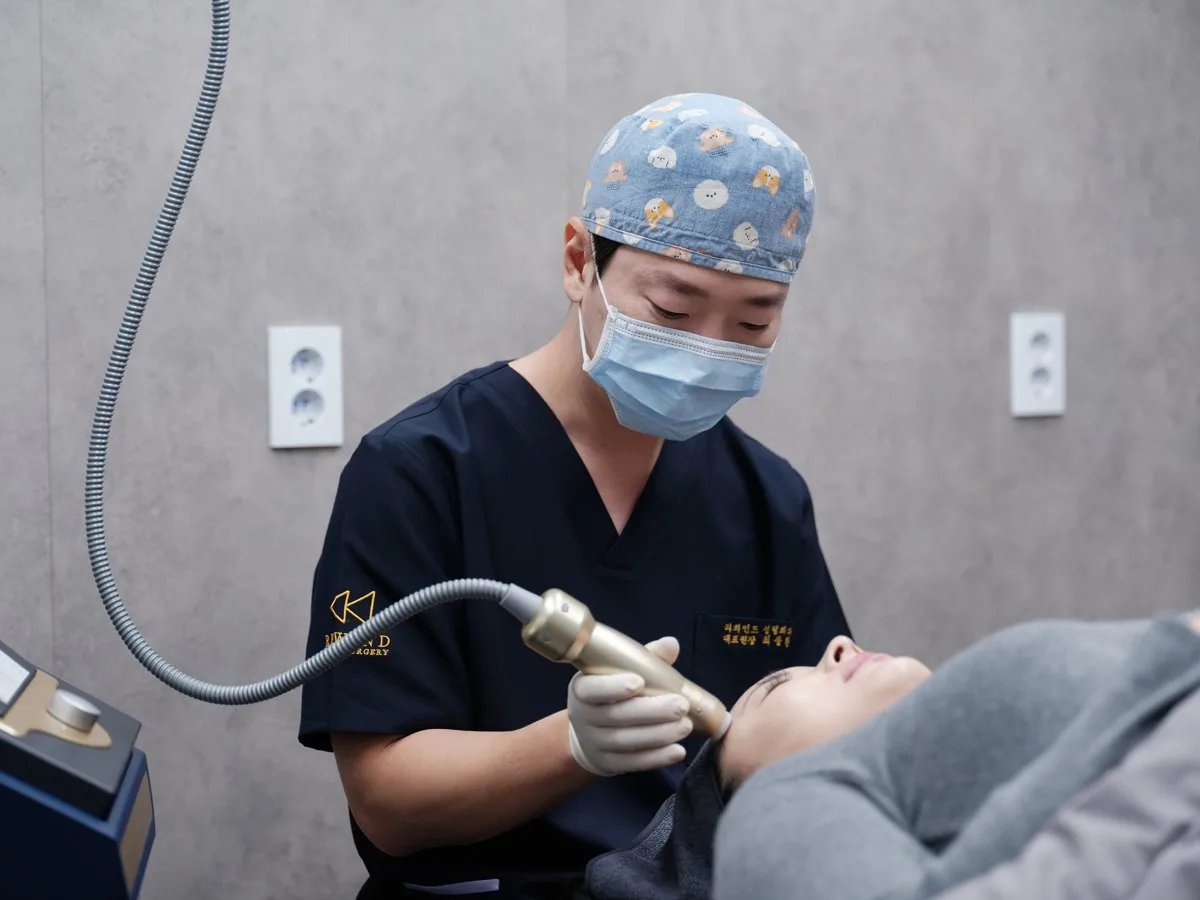
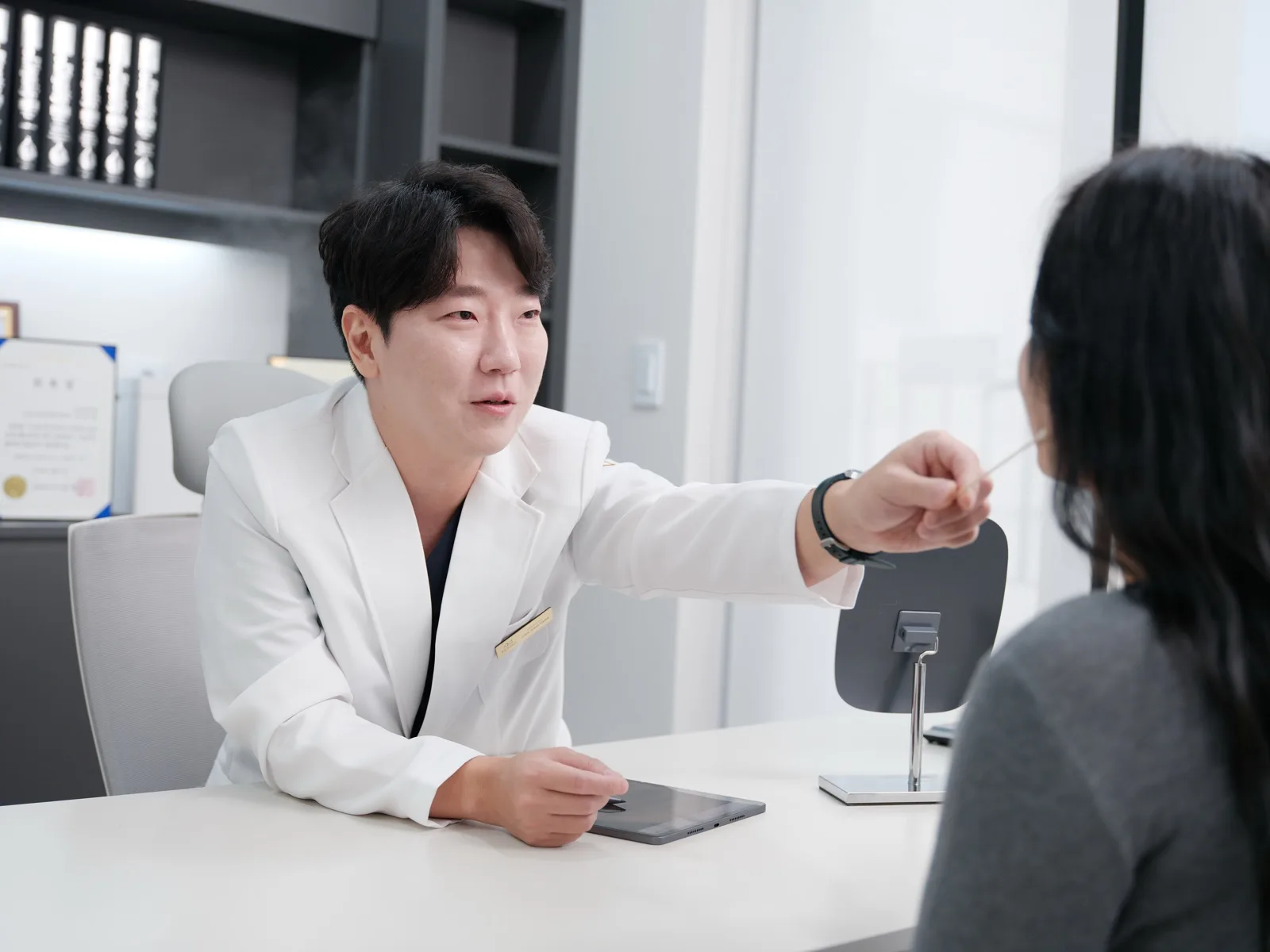
Dr. Jonghwan Choi examining a patient's facial skin at Rewind Plastic Surgery, Apgujeong
Fig. 01 · Pigment is read on the skin first, and on a photograph second
Frames

What a pair of photos can capture

Four pico laser changes, ranked by how faithfully a camera records them

Rewind's description of the Pico K lists melasma, freckles, blemishes and age spots, tattoo removal, acne scarring and pore appearance among its uses. Only some of those translate cleanly into a photograph, and the order below runs from the easiest to capture to the hardest.

frame 01
Freckles and sun spots
Discrete brown marks with defined edges. When they lighten the change is easy to see in a picture, so these pairs dominate what patients find online.
frame 02
Brown marks left by acne
Flat shadows where spots have healed. They fade visibly, but a breakout during the course can drop a fresh mark into the after frame.
frame 03
Melasma across the cheeks
Soft-edged patches with no clear border. Exposure and colour balance alone can alter how large they look, so melasma pairs need the most scepticism.
frame 04
Texture and pores
The target of the fractional mode. Surface change shows under angled light and tends to disappear in flat, front-lit selfies.

Ink removal photographs deserve a category of their own. They are often the most striking pico images in circulation, and they reveal very little about pigment on a face, because tattoo work uses different settings, a different schedule and a separate line on the price sheet. Rewind covers it on the tattoo removal page, and it is kept out of every comparison discussed here.

Read

Reading a comparison

How to read a pico laser comparison photo in four checks

These checks apply to any pair you are shown, including your own. The last one catches a result that looks good and is not.

01Timing

When the after picture was taken

A photo from the evening of a session records redness. One taken at the end of a course records the peak. One taken a year later records what held. A long-term melasma study assessed patients with photography at both of those later points, and the two sets of pictures told different stories. A comparison that does not state its interval cannot be interpreted.

02Mode

Which pico treatment is in the frame

Toning for pigment, the fractional mode for texture and ink removal share a device class and little else. A tattoo fading or a rough cheek smoothing tells you nothing about what a toning course will do for melasma, so check which treatment produced the pair before drawing any conclusion from it.

03Camera

Whether the camera changed between frames

Look at things the laser cannot touch: the hairline, the whites of the eyes, a mole, the wall behind. If those shift in tone between the two pictures, the exposure or colour setting shifted too, and some of the apparent lightening belongs to the camera. Makeup and filters do the same job even faster.

04Reaction

Pale spots in an after photo can be a complication

Scattered white dots inside a melasma patch can read as clearing. A case report on repeated low-fluence toning describes exactly this appearance, white macules in the middle of the lesion, as mottled hypopigmentation, and a later report noted that it rarely recovers on its own. A patch that looks darker after treatment may equally be post-inflammatory darkening, which the doctor needs to see before the next visit.

Laser handpiece passed over a patient's face during a device session at Rewind Plastic Surgery
Fig. 02 · The pass happens on the day; the comparison belongs to the weeks that follow
Cases

Case photographs

Why Rewind shows no pico laser case photographs yet

A pico gallery would be easy to fill with borrowed pictures. The three rules below explain the empty space on this page, and what will appear in it.

01Source

Only Rewind's own pico patients, shown with consent

Manufacturer galleries, stock images and results from unrelated procedures are never substituted for a pico case. When pico pairs are released they will be the clinic's own patients who agreed to be shown, and until then the space stays empty.

02Labelling

Unretouched, with the interval written beside it

Pigment is the one outcome an editing app can manufacture in seconds. Any pico pair published here will be unretouched, will say how long after the final session the second picture was taken, and will carry the reminder that individual results vary.

03Review

Your own comparison is the one that decides the plan

Dr. Jonghwan Choi, a board-certified plastic surgeon, compares how your pigment looks at each visit with how it looked when the course began. That face-to-face review decides whether the next session goes ahead as planned, is spaced further out, or is stopped.

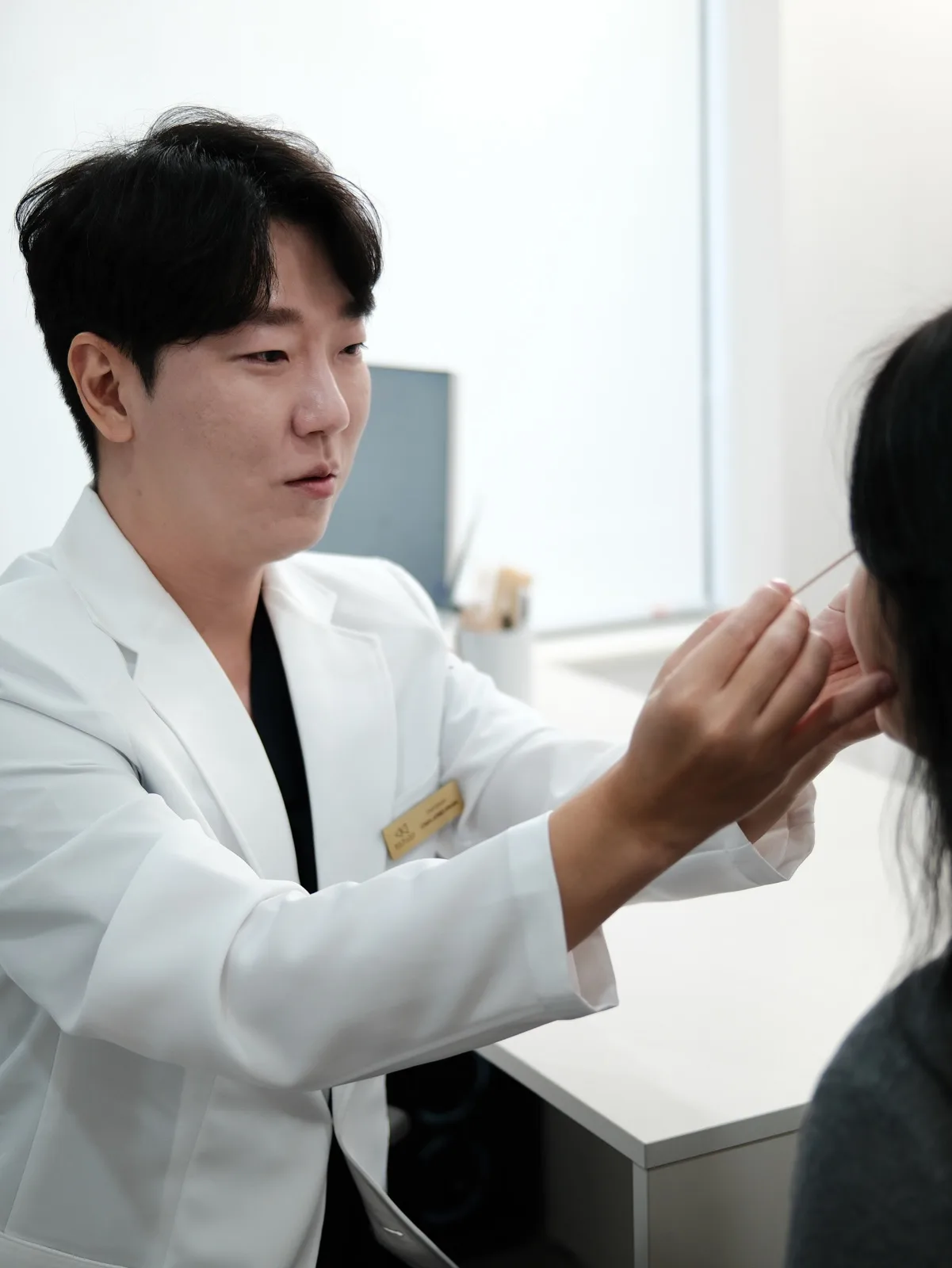
Dr. Jonghwan Choi assessing a patient's cheek during a consultation at Rewind Plastic Surgery
Fig. 03 · Progress is judged against the skin in front of the doctor
Record

Keeping your own record

Recording your own pico laser results during a course in Gangnam, Seoul

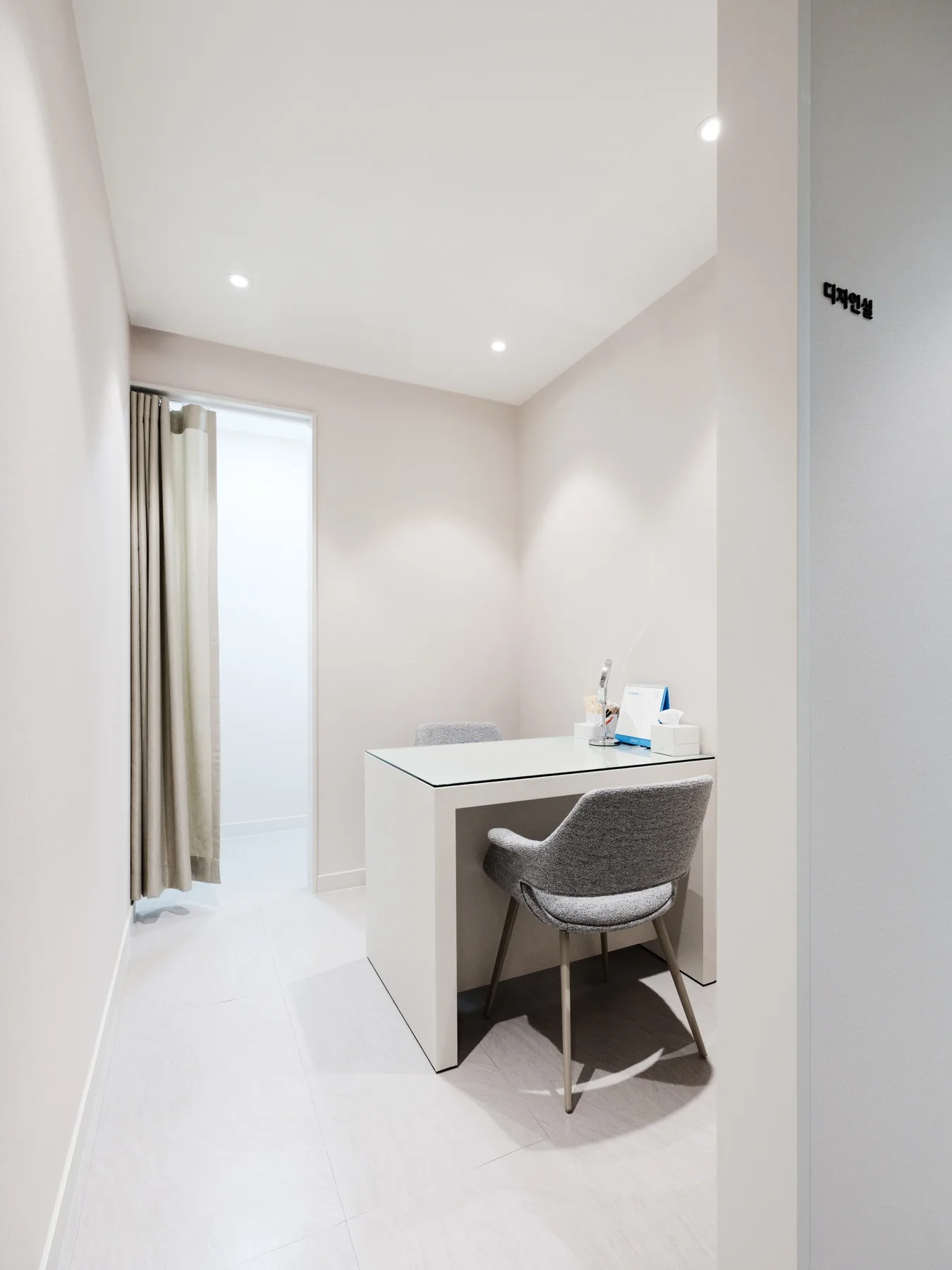
Consultation room at Rewind Plastic Surgery, Apgujeong

Fig. 04 · A quiet room for the review between visits

Treatment room with a bed at Rewind Plastic Surgery

Fig. 05 · Treatment floor, Richro Building

For a traveller, the most useful thing to take home from a pico course is a set of pictures you trust. Take the first on the morning of your initial visit, on bare skin, facing a window in daylight, with the beauty mode switched off, and note where you stood and how you held the phone. Repeat it at the moments worth recording: once any redness from a session has settled, at the end of the course, and again months later. Visits take place on the fourth and fifth floors of the Richro Building in Gangnam, Seoul, by appointment, Monday, Tuesday, Wednesday and Friday from 10:00 to 19:00 and Saturday from 10:00 to 16:00.

Picosecond laser, Pico K
300-picosecond pulse, 2.9 W
Toning or fractional mode, chosen at examination
Bare skin at every comparison
Your photos reviewed with Dr. Jonghwan Choi
Next visit set from that review

Whether the clinic takes its own clinical photographs during your course, and how, is agreed at the consultation; Rewind does not publish a photography protocol for pico treatment, so none is described here. Anaesthetic arrangements and appointment length are not published either and are confirmed at consultation.

Rates

Pricing

What the pico laser sessions behind a result cost at Rewind

Any pico comparison you see is the product of several paid visits. Both rates below are charged per session, so the cost behind a pair of photographs is the per-visit figure multiplied by the visits it took, with VAT on top.

Pico toning, one sessionLow-energy passes for pigment and uneven tone
₩150,000
Pico fraxel, one sessionFractional mode for texture, pores and post-acne surface change
₩300,000

Both rates exclude VAT and already include numbing preparation. The number of sessions your pigment needs is set at the examination and revised as the course goes on, so no course total is quoted in advance; ink removal is priced by area and quoted separately after it has been seen.

Expect

Expectations

Whose pico laser results tend to photograph well, and whose do not

Change tends to show clearly when

  • The marks are freckles or sun spots on skin that is otherwise healthy and unbroken
  • Brown marks after acne are flat and breakouts have already settled
  • Sun protection is used every day through the course and long after it
  • The course can be finished, with a later check here or with a clinician at home
  • The judgement is made on photos taken well after the final session

The photographs are likely to disappoint, or the doctor declines, when

  • Melasma is expected to vanish for good, which long-term follow-up does not support
  • There is a fresh tan or sunburn, or a beach holiday straight after the visit
  • Earlier toning left patchy pale spots, a signal to stop and reassess
  • A raised or changing lesion needs a diagnosis before any laser is aimed at it
  • The result is judged on the evening of the first session
Weeks

Timeline

When pico laser changes become visible, from the first evening to a year on

The first three cards follow Rewind's own laser aftercare instructions. The last draws on published follow-up of low-energy laser toning, because the clinic makes no claim about how long a pico result lasts.

Right after
Redness, sometimes darker spots
The clinic's laser sheet says redness can appear straight after treatment. A few spots may look darker for a while. Neither is the result.
The first days
Protect the field
No sauna, steam room or exercise that raises a sweat, no massage or strong rubbing, and sunscreen every time you go outdoors.
Across the course
Lightening accumulates
Fragmented pigment is cleared by your own tissue in the weeks after each visit, so progress is compared at later appointments.
A year on
What held
In one long-term melasma study, recurrence was recorded in more than half the patients a year after the last session. Sun protection decides how much of a result remains.

The risks belong in any fair comparison. Redness, mild swelling and tenderness over the treated field are expected. Post-inflammatory darkening can follow in skin prone to it, and a split-tattoo trial comparing picosecond and nanosecond lasers recorded hyperpigmentation more often on the picosecond side (21.33% against 12%), even though that side cleared better. Mottled hypopigmentation after repeated low-fluence toning is described in the case literature. Blistering, crusting, any new pale patch and any area that darkens where it was expected to fade should be shown to the clinic before the next scheduled visit. Raised or changing moles are assessed separately on the mole removal route.

Doctor

Professional

At Rewind, one board-certified plastic surgeon carries every case — from the first consultation to the final follow-up. Because a face is a story, and a story deserves a single author.

Dr. Jonghwan Choi, board-certified plastic surgeonRewind,
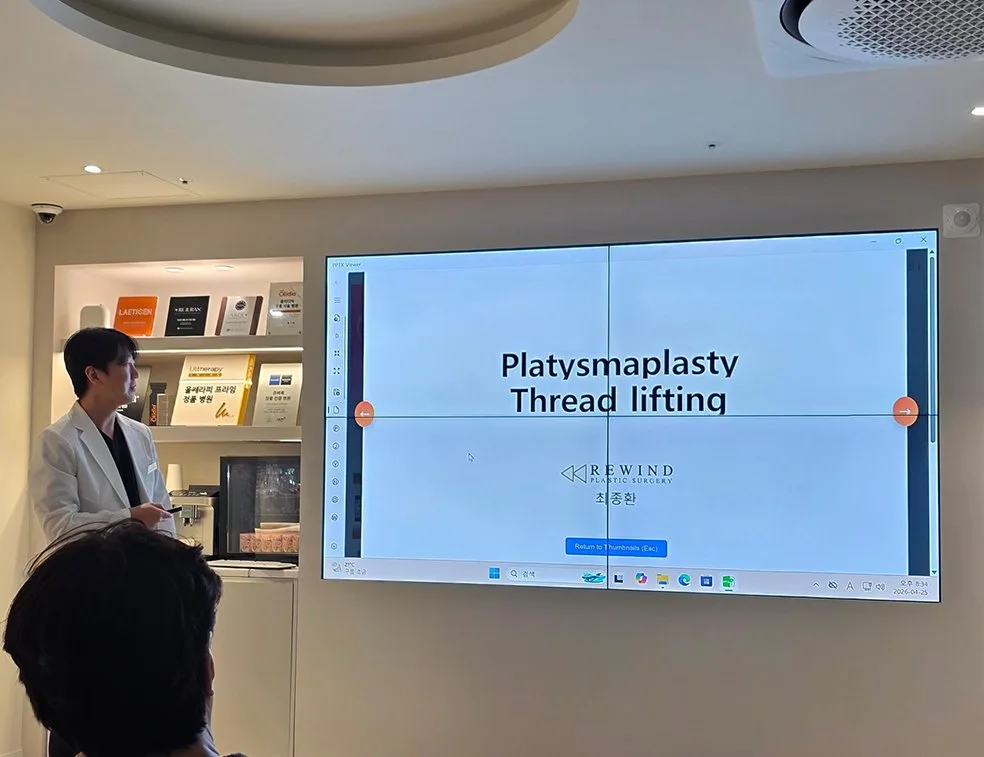
Dr. Jonghwan Choi presenting at an academic session
Fig. 06 — Academic presentation

Rewind's Doctor

Dr. Jonghwan Choi Medical Director

One surgeon, from the first
consultation to the last follow-up.

A board-certified plastic surgeon devoted to anti-aging lifting — with the precision and restraint built through years of craniofacial practice.

Board-certified plastic surgeon (Plastic Surgery)
10 peer-reviewed publications
Medical Director, Rewind Plastic Surgery
Korean Society of Plastic & Reconstructive Surgeons
Former chief director, Apgujeong Y&T Plastic Surgery
Korean Society for Aesthetic Plastic Surgery
J Craniofac Surg · JKMS · Arch Craniofac Surg
Korean Cleft Palate-Craniofacial Association
Voices

Google Reviews

What our patients say.

G 5.0 ★★★★★ 12 Google reviews · Rewind Plastic Surgery, Apgujeong — live-synced from Google Business Profile

"Sample review card — at launch this section pulls the clinic's real Google reviews automatically, shown verbatim with the reviewer's initial and posting date."

AReviewer namePOSTED ON GOOGLE

"Sample review card — reviews are never written or edited by the clinic; only what patients posted on Google appears here."

BReviewer namePOSTED ON GOOGLE

"Sample review card — a 'See all reviews on Google' link takes visitors to the clinic's Business Profile."

CReviewer namePOSTED ON GOOGLE
Ask

Questions

Pico laser results: questions from patients comparing photos

What do pico laser results look like after one session?
Usually modest. Redness straight after treatment is expected, and some spots can look darker for a while before they lighten. The even, lighter field people hope to photograph builds across a course of visits and is judged weeks after the last one, so a single-session picture rarely shows the change you are after.
When do before-and-after changes become visible?
Gradually. Fragmented pigment is carried away by your own tissue in the weeks after each visit, so progress is compared at later appointments. Discrete freckles and sun spots tend to show change earlier than melasma. Rewind publishes no fixed number of visits; the doctor sets the plan after identifying the pigment.
Do pico laser results last?
It varies by pigment. Melasma photographed a year after low-fluence toning had returned in more than half the patients of one long-term study, while freckles and sun spots can stay lighter for as long as sun exposure is controlled. A photo taken months after the course is the only fair test of durability.
Why does this page show no pico case photographs?
Pico cases from Rewind's own patients have not been released yet, and the gap is not filled with stock images, manufacturer galleries or results from unrelated procedures. Pairs added later will be unretouched, shown with each patient's consent, and dated relative to the final session.
Can a pico result look better in a photo than in real life?
Yes. Brighter exposure, a warmer colour setting, makeup or a filter can lighten pigment convincingly. Check landmarks the laser cannot change, such as the hairline, a mole or the background: if they shift in tone between frames, the camera shifted too. The comparison that counts is the review of your skin in person.
Are white spots in an after photo a good result?
Not necessarily. Scattered pale spots inside a melasma patch are the typical look of mottled hypopigmentation, a documented complication of repeated low-fluence toning that one report described as rarely recovering on its own. Any new pale patch should be shown to the doctor before another session is booked.
How is the cost behind a pico comparison photo worked out?
Multiply the per-visit rate by the visits the pigment took. Rewind lists separate toning and fractional rates in the pricing section above; VAT is added and numbing preparation sits inside each rate. Your own visit count is estimated at examination, then revised as the course shows how your pigment responds.
How should I photograph my skin before starting pico treatment?
On the morning of your first visit, on bare skin, facing a window in daylight, with any beauty mode switched off. Note where you stood and how you held the phone, and repeat it once redness settles after a session, at the end of the course and months later. Bring the set to your review.
Booking

Reservation

REWIND,booking

Tell us which marks you would like to change, and attach a bare-skin daylight photo if you have one; the reply explains what a realistic pico result looks like for that pigment.

Scientific evidence

What follow-up photographs and case reports show about laser toning results

The first two papers followed melasma patients after low-fluence Q-switched toning, one assessing results with photography at the end of treatment and again a year later, the other reassessing twelve weeks after the final session and noting recurrence on both sides of the face. The next two describe mottled hypopigmentation, the pale-spot complication that a photograph can mistake for clearing. The last compares picosecond and nanosecond lasers in tattoo removal and records pigment darkening among its side effects. Most of this work used the Q-switched systems in which toning was first defined. None of it was carried out at Rewind Plastic Surgery, and none can tell you what your own pigment will do.