Non-Surgical · Course Planning
Counting visits, spacing them, fitting them to a trip
Gangnam, Seoul | Board-certified plastic surgeon, Dr. Jonghwan Choi
KHIDI-registered for international patients · Apgujeong Rewind
Session count
The short answer
There is no single number. Rewind sets the session count for pico toning after examining your pigment and revises it as the skin responds. For orientation, published low-fluence toning protocols for melasma used five sessions a week apart in one trial and six to ten sessions two weeks apart in another, while discrete freckles may need fewer. Your own count is confirmed at consultation.
The protocol figures on this page come from studies of low-fluence Q-switched lasers for melasma, cited below. They describe research schedules and do not represent a Rewind package or a promised result.
The count depends on three things: which pigment is being treated, how the skin reacts after the first visits, and how much time you can give the course. Melasma sits at the long end because it responds slowly and relapses. Isolated freckles and sun spots usually sit at the shorter end, and marks left after acne vary with how settled the skin is.
What a session count cannot do is buy speed. Adding visits or shortening the gap between them raises the risk of the pale mottling described in the toning literature, so the plan moves at the pace the skin tolerates and is rewritten whenever the skin says so.
What moves the number
Two people with similar-looking pigment can end up with very different plans. These are the four variables the doctor weighs.
Ink removal on the same class of laser follows its own session count and spacing and is planned on the tattoo removal page.
Spacing
Spacing matters as much as the count. The published protocols give a sense of range; the actual interval at Rewind is set per patient.
A split-face melasma trial gave five low-fluence sessions to the whole face at one-week intervals and assessed patients 12 weeks after the last one. By the end of treatment, lightness had improved by 37 percent on the side that received the laser alone.
A study of 34 melasma patients used six to ten sessions, a median of eight, spaced two weeks apart. Severity scores roughly halved by the end of treatment, and 20 patients rated their melasma at least half improved.
Both studies measured outcomes after a gap, and the longer one returned a year later to find recurrence in 20 of 34 patients. A session count is therefore only half a plan; the other half is what happens after the last visit.
Biopsies after a series of low-fluence treatments showed reduced pigment production with melanocytes still present, and the authors warned that repeated low thermal energy may cause long-lasting pale spots. Spacing gives the skin time to settle between visits.

Planning
The plan starts as an estimate and is corrected at every appointment.
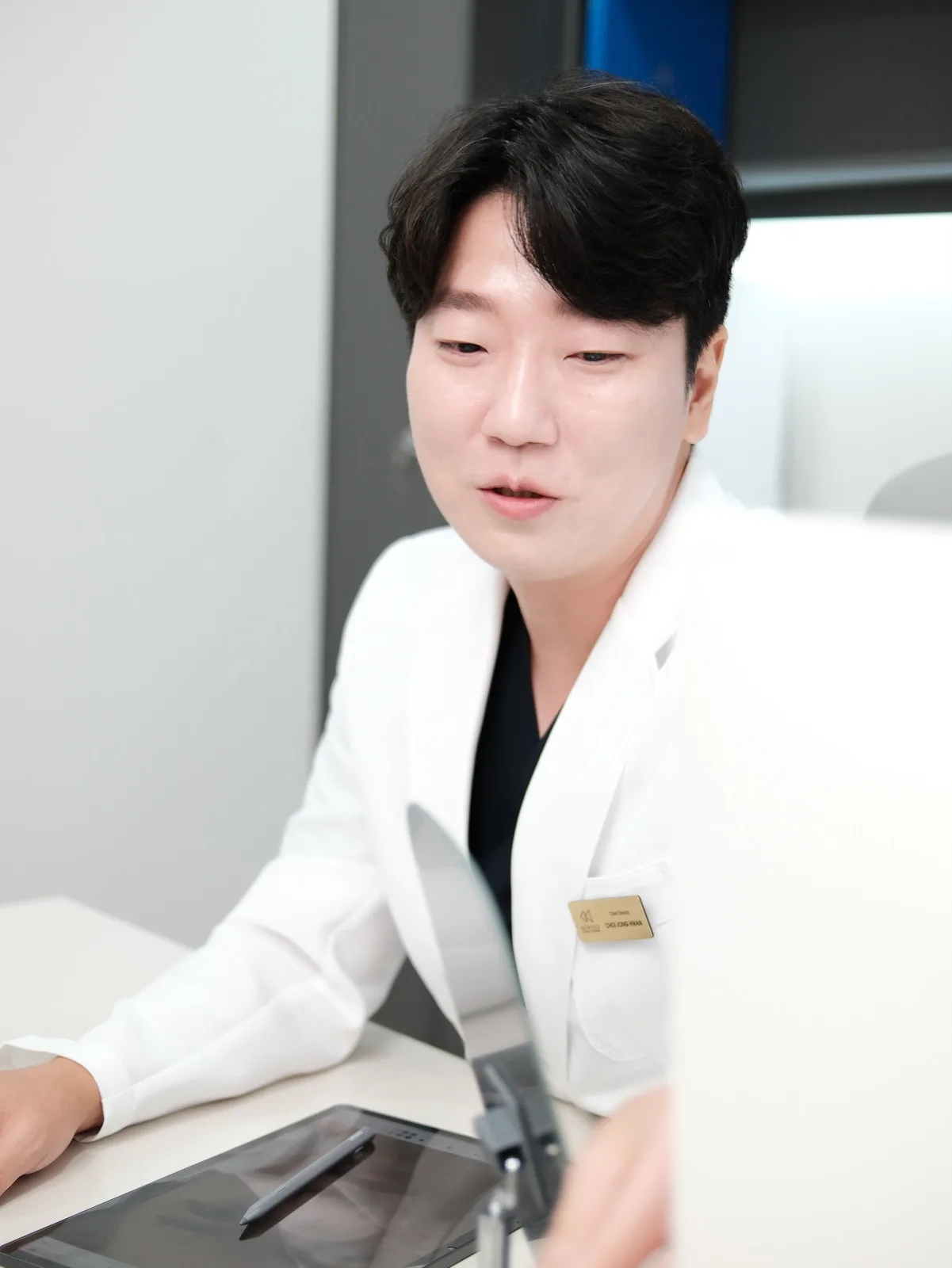
Dr. Jonghwan Choi, a board-certified plastic surgeon, gives an estimated range once the pigment has been identified, based on its type and extent and on the time you have in Seoul.
Each session is compared with the one before. If progress is steady, the plan continues; if the skin is reacting, the interval lengthens or the course stops.
When a full course will not fit into one stay, the doctor plans the visits you can attend here and describes what continuing with a clinician at home would involve.
Each visit

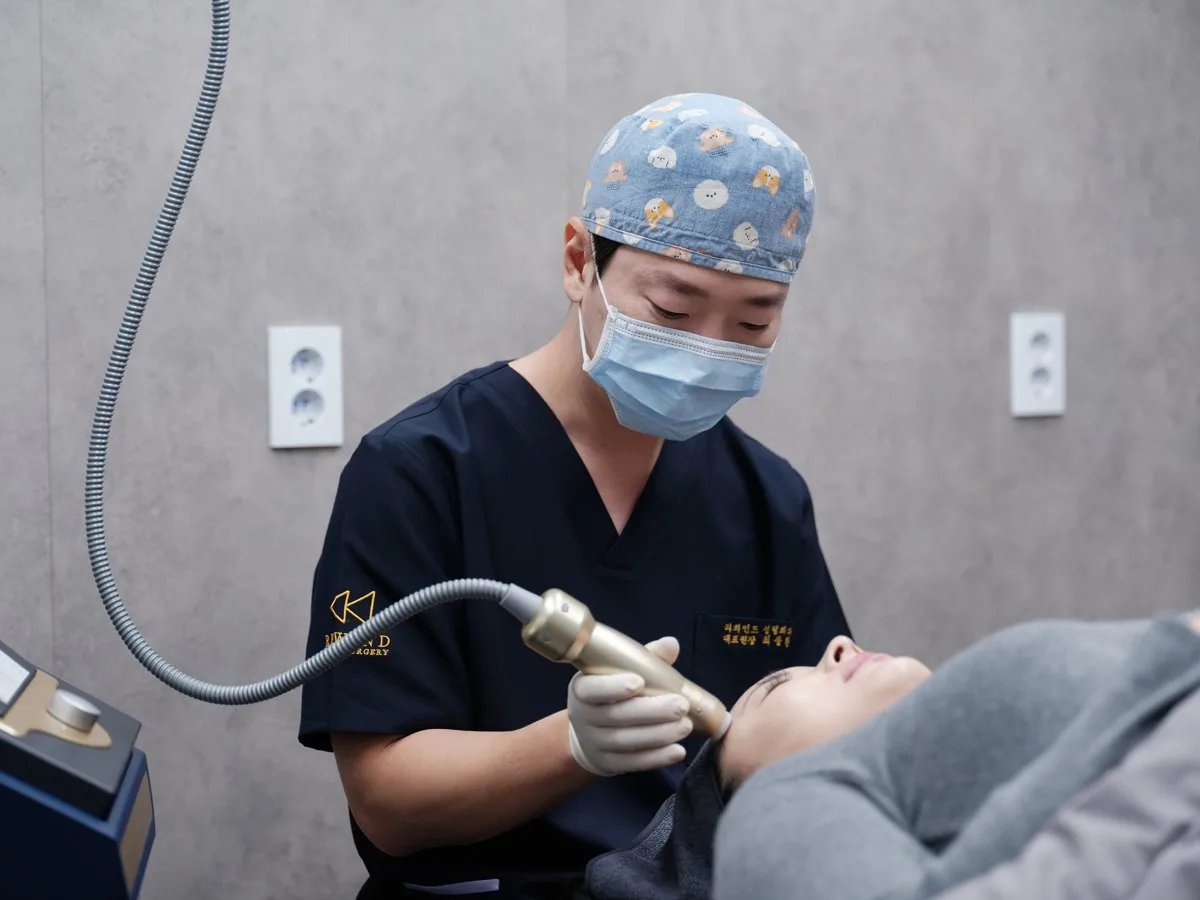
Fig. 04 — Progress is reviewed before each pass

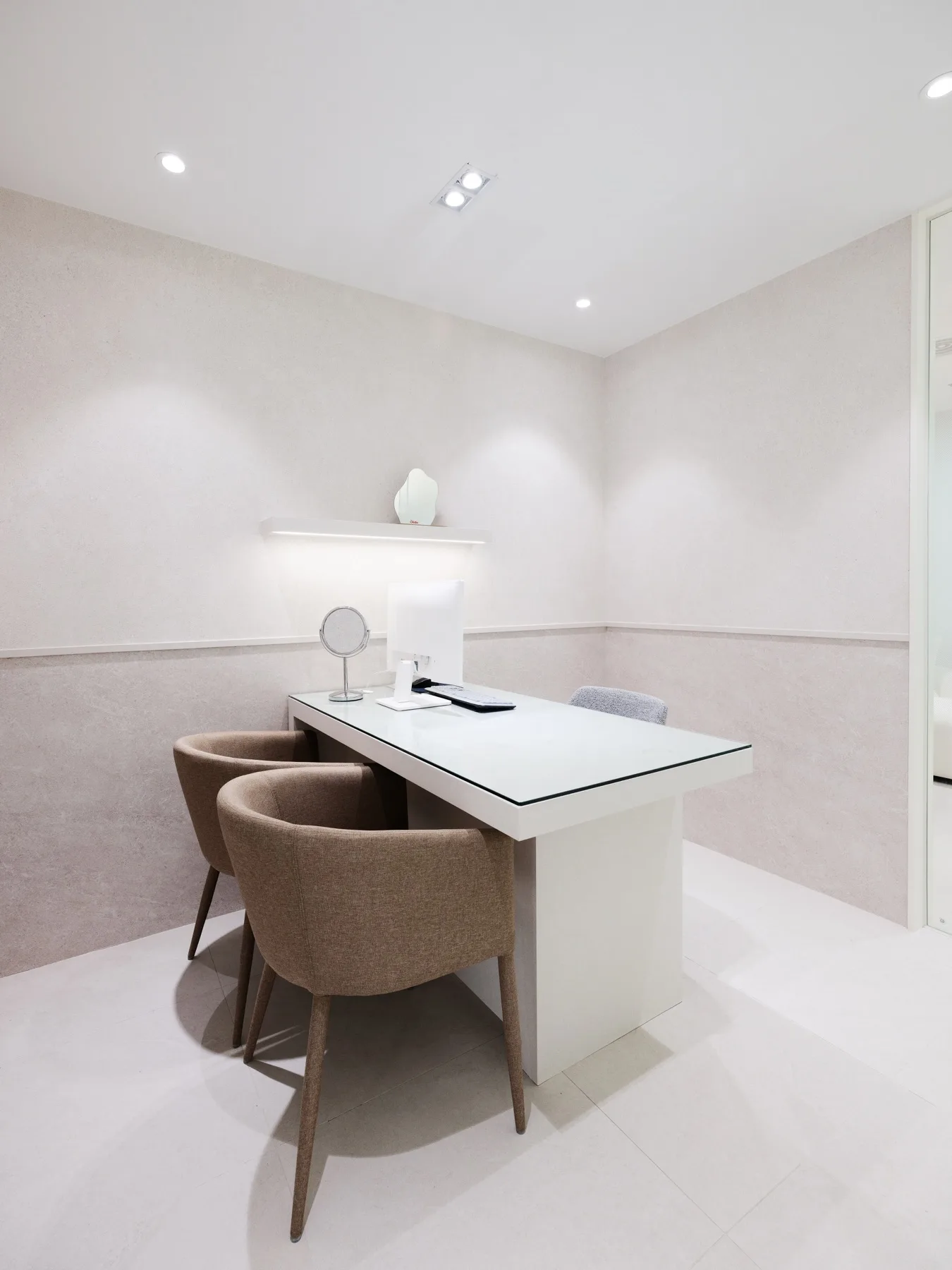
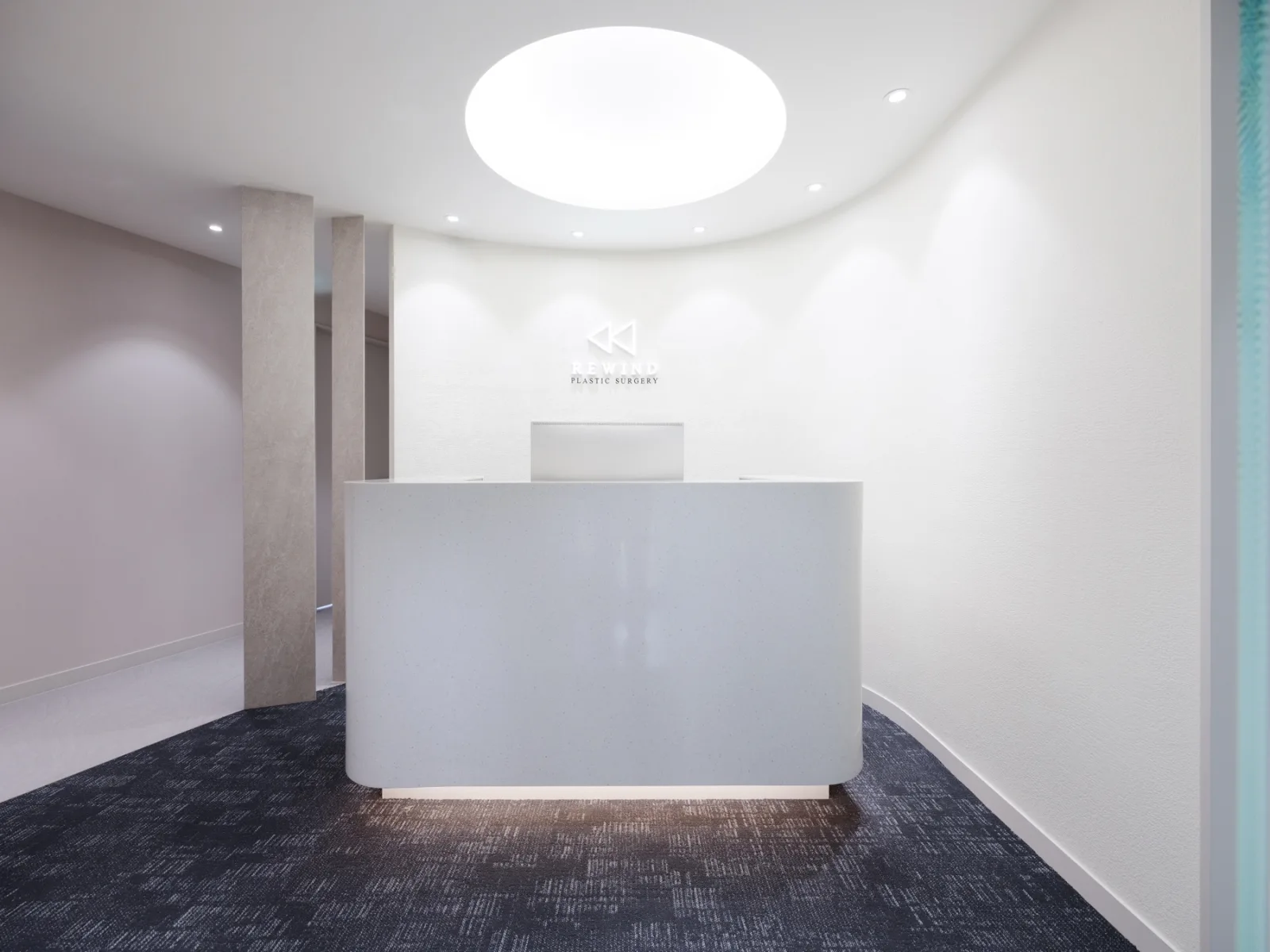
Fig. 05 — Reception on the treatment floor
Every session follows the same pattern, which keeps visits comparable. The skin is cleansed and checked against the last visit, eye protection is fitted, and the Pico K is passed across the field at the settings the doctor has chosen for that day. Redness afterwards is common and settles on its own, and ordinary activities can generally resume the same day.
Sessions can be booked on Monday, Tuesday, Wednesday, Friday or Saturday; the clinic is closed on Thursday and Sunday. Weekday hours run from 10:00 to 19:00 and Saturday hours from 10:00 to 16:00, which helps when several visits have to fit into a short stay.
Pricing
Each session in a toning course is charged at the single-session rate below. The fractional line applies only if a texture treatment joins the plan.
To budget, multiply the session rate by the number of visits you expect to attend in Seoul and add VAT. If part of the course is completed at home, only the Seoul visits appear on Rewind's bill.
Numbing preparation is included in each list rate, and VAT is charged on top at payment.
Scheduling
Between sessions
The time between sessions is when fragmented pigment clears and the skin settles. Rewind's laser aftercare instructions apply after every visit in the course.
Report redness that lasts beyond the day, darkening, pale spots or blistering before your next booked session, since the doctor may change the interval or stop the course. A 2015 report examining melanin and melanocytes in mottled pale spots after toning is listed in the references for anyone who wants the detail.
At Rewind, one board-certified plastic surgeon carries every case — from the first consultation to the final follow-up. Because a face is a story, and a story deserves a single author.
Rewind,
Rewind's Doctor
Dr. Jonghwan Choi Medical Director
One surgeon, from the first
consultation to the last follow-up.
A board-certified plastic surgeon devoted to anti-aging lifting — with the precision and restraint built through years of craniofacial practice.
Google Reviews
"Sample review card — at launch this section pulls the clinic's real Google reviews automatically, shown verbatim with the reviewer's initial and posting date."
"Sample review card — reviews are never written or edited by the clinic; only what patients posted on Google appears here."
"Sample review card — a 'See all reviews on Google' link takes visitors to the clinic's Business Profile."
Questions
Reservation
Tell us what you are considering — we reply within one business day, in your language.
Scientific evidence
The session numbers and intervals quoted on this page come from the first two studies, both of melasma treated with low-fluence Q-switched lasers, the method picosecond toning builds on. The other two examine what repeated sessions can do to pigment cells and why spacing matters. None was carried out at Rewind Plastic Surgery, and none sets the number of sessions your own skin will need.