Non-Surgical · Texture
The fractional mode of a picosecond laser, and where it fits in a scar plan
Gangnam, Seoul | Board-certified plastic surgeon, Dr. Jonghwan Choi
KHIDI-registered for international patients · Apgujeong Rewind
Pico fraxel
The short answer
Pico fraxel is the fractional mode of a picosecond laser. The energy is split into a grid of small treated points with untouched skin between them, and it is aimed at surface texture: shallow acne scars, roughness and enlarged pores. Pico toning uses the same laser as a broad, low-energy beam passed across a whole field to break up pigment. At Rewind both run on the Pico K, which the clinic describes as delivering a 300-picosecond pulse at 2.9 W, and the clinic names acne scarring and pore appearance among its uses.
The name is Korean clinic shorthand that borrows the word for fractional resurfacing. At Rewind the treatment is performed on the clinic's own Pico K picosecond system. Handpiece, density and number of passes are chosen at the examination and are not published.
Acne leaves two different problems behind, and the difference decides which mode is used. One is colour: red or brown marks that sit flat in the skin where a spot has healed. The other is contour: depressions of varying width and depth, from soft rolling scars to narrow icepick scars with steep walls. Pico fraxel is a contour and texture tool that works close to the surface. Flat brown marks usually belong to the toning mode, since there is no dent to resurface.
The evidence deserves a plain description too. Published work describes the fractional 1064-nm picosecond laser as having been used in scars and benign pigmented lesions, but the references on this page do not include a controlled acne-scar trial of it. The acne-scar comparisons cited below concern fractional CO2 and microneedle radiofrequency, and expectations for pico fraxel are set with that gap in mind.

What acne leaves behind
Most faces that come in with acne scarring carry more than one of the patterns below. They are listed from the one the fractional mode suits most to the one it suits least.
Red marks from recent breakouts are a separate matter again. Rewind lists redness among the uses of Sylfirm X, its RF microneedling device, and active acne is calmed before any scar work begins. Flat brown marks treated with the colour mode are covered on the pico laser toning page.
Mechanism
Four points describe what the fractional mode does, and the fourth marks where its reach ends.
The beam is divided so that only a fraction of the surface receives energy in each pass. The untouched skin between the treated points supports healing, the principle shared by every fractional device, and it is what allows texture work without stripping the whole surface.
Delivered in picoseconds, the energy acts mainly through rapid mechanical and photoacoustic effects, with less heat spreading into the tissue around each point. Rewind's figure for the Pico K is a 300-picosecond pulse at 2.9 W.
Any improvement in a scar comes from the skin remodelling after each session, so the change is gradual and is compared at later visits. The number of sessions is not published by the clinic and is set once the scars have been typed.
The fractional mode works near the surface. Scars anchored deeper, or icepick scars with steep walls, usually need energy delivered further down. Sylfirm X places radiofrequency through microneedles adjustable from 0.3 mm to 4.0 mm, and a split-face trial cited below compared ablative fractional CO2 with microneedle RF for exactly this kind of scarring.

Planning
An acne-scarred face rarely needs one tool. These three positions decide which ones are used, and in what order.
One cheek can carry rolling scars, brown marks and a few icepick scars side by side. Dr. Jonghwan Choi separates contour problems from colour problems before any mode is chosen, because each answers to different settings and a plan built on one label wastes sessions on the other.
Working on texture over live breakouts adds inflammation to skin that is already reacting. Where acne is still active, the scar plan waits. A meta-analysis of fractional radiofrequency describes the frequent coexistence of active acne and scarring as a practical challenge in timing treatment.
Pico fraxel is suggested for surface texture and shallow scarring. Where scars sit deeper, the board-certified plastic surgeon says so at the first visit and discusses Sylfirm X RF microneedling, or a combination across visits, before any course is booked.
On the day

Fig. 04 · Where the scar map is drawn before a session

Fig. 05 · A private room to rest while redness settles
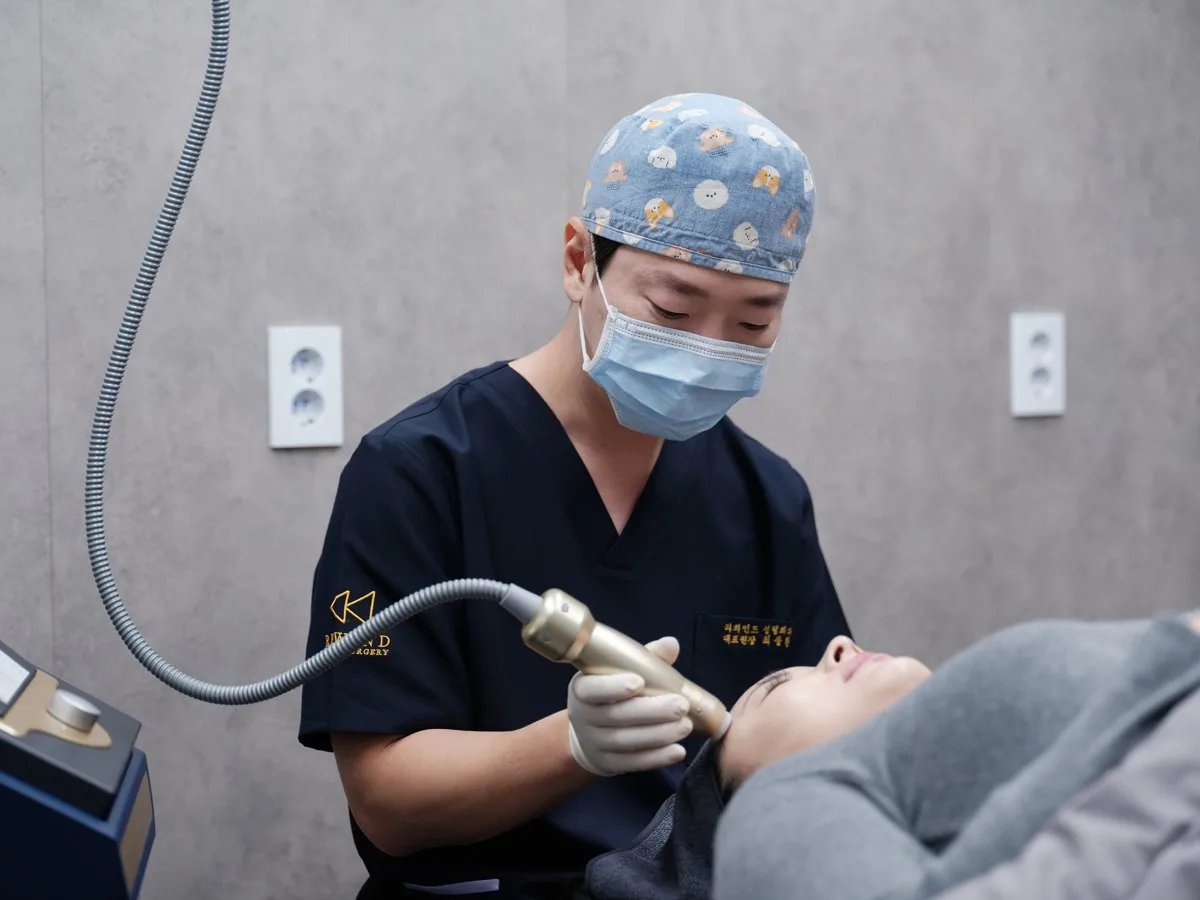
Makeup is removed and the skin cleansed, then the scarred areas are reviewed against the map drawn at consultation. Numbing preparation is part of the session rate, eye protection is worn by everyone in the room, and the fractional pass is aimed at the areas that carry texture, so a scarred cheek and a smooth forehead are not treated alike. Visits run on the fourth and fifth floors of the Richro Building in Gangnam, Seoul, by appointment: Monday, Tuesday, Wednesday and Friday from 10:00 to 19:00, Saturday from 10:00 to 16:00.
The anaesthetic method, the length of the appointment and the density and number of passes are not published by the clinic and are not estimated here. They are decided in the room, once the scars have been examined under good light.
Pricing
Pico fraxel is charged per session. The two lines under it are listed because an acne plan often weighs the fractional mode against, or alongside, toning for brown marks and Sylfirm X for scars that sit deeper.
VAT is charged on top of each rate, and numbing preparation is already inside it. How many sessions a scar plan needs, and whether two modes are used on the same day, is set at the examination, so no course total is quoted before your skin has been seen.
Suitability
Downtime
Rewind's laser aftercare sheet applies to the fractional mode just as it does to toning. How long redness and surface roughness last after a fractional pass depends on the settings used, and the doctor explains that before treatment.
Redness, mild swelling and tenderness are expected. Post-inflammatory darkening is the complication most relevant to acne-prone skin and deeper skin tones; in a split-tattoo trial the picosecond-treated halves showed hyperpigmentation more often than the nanosecond-treated halves. Blistering, crusting that does not settle, signs of infection and any new pale or dark patch should be reported to the clinic before the next session. For its device treatments in general, Rewind states that bruising or swelling may occur and settles within a few days, and that most allow a return to daily life straight away; how that applies to your fractional settings is confirmed at consultation.
At Rewind, one board-certified plastic surgeon carries every case — from the first consultation to the final follow-up. Because a face is a story, and a story deserves a single author.
Rewind,
Rewind's Doctor
Dr. Jonghwan Choi Medical Director
One surgeon, from the first
consultation to the last follow-up.
A board-certified plastic surgeon devoted to anti-aging lifting — with the precision and restraint built through years of craniofacial practice.
Google Reviews
"Sample review card — at launch this section pulls the clinic's real Google reviews automatically, shown verbatim with the reviewer's initial and posting date."
"Sample review card — reviews are never written or edited by the clinic; only what patients posted on Google appears here."
"Sample review card — a 'See all reviews on Google' link takes visitors to the clinic's Business Profile."
Questions
Reservation
Describe your scars and any active breakouts, and attach a daylight photo taken side-on if you can; the reply explains whether pico fraxel, toning or RF microneedling fits them.
Scientific evidence
The first paper studies the fractional 1064-nm picosecond mode in tattoo removal and, in its background, describes that mode as having been used in scars and benign pigmented lesions. The second and third address acne scarring directly: a randomised split-face comparison of ablative fractional CO2 with microneedle radiofrequency, and a meta-analysis of fractional radiofrequency for acne and its scars. The fourth compares picosecond and nanosecond lasers and records pigment darkening among its side effects. None of these is a controlled trial of pico fraxel for acne scars, none was carried out at Rewind Plastic Surgery, and none predicts how your own scars will respond.