
★★★★★
Came to REWIND to get my facial treatment and i'm absolutely obsessed about it💞 the doctor is so kind and is an expert! Everyone must visit!
 YunHee Hong2 weeks ago
Non-Surgical · Course Planning
Counting visits, spacing them, and knowing when to stop
Gangnam, Seoul | Board-certified plastic surgeon, Dr. Jonghwan Choi
KHIDI-registered for international patients · Apgujeong Rewind
Session count
The short answer
Most tattoos need several laser sessions spaced weeks to months apart, and the exact count cannot be fixed before the ink has been examined. In a 2024 series treated with a Q-switched laser, patients had three to eight treatments, 5.09 on average, given every two to three months. In a randomised picosecond trial, sessions were three months apart across five visits. At Rewind in Gangnam, Seoul, your own count and interval are confirmed at consultation.
The session figures on this page come from published studies cited at the foot of the page. They describe people treated in research and are neither a Rewind package nor a forecast for you.
The laser work happens in the room. The clearing happens in the weeks between visits, as the immune system carries fragmented ink away, and that is the reason a course runs for months even when each visit is short. Adding visits does not speed the clearing up.
A count given before the tattoo has been seen cannot be much more than a guess. The Kirby-Desai scale exists to make that guess structured: it scores where the tattoo sits, the skin type, how much ink there is, whether it is layered, any scarring or tissue change, and its colours, then adds the scores into a predicted number of treatments. The 2024 series is a caution in both directions. Its patients needed fewer treatments than the scale predicted, averaging 5.09 against 9.9, and their tattoos went on fading between the six-month and the four-to-five-year follow-ups.
What moves the number
These are the inputs of the scoring scale, grouped the way they come up when a tattoo is examined. Each one pushes the count up or down.
A scale produces a planning figure. A real course can run shorter or longer, and the count is revised as the tattoo responds.
Session interval
The intervals below come from published protocols. Rewind sets your own spacing after examining the tattoo and adjusts it at each visit.
A 2022 study treated 19 black tattoos with a picosecond laser in three sessions four weeks apart and assessed them four weeks after the last. After those three sessions, more than 50 percent clearance was reached in 69.2 percent of the tattoo halves treated with a standard picosecond pass.
In the 2024 retrospective series, 11 patients were treated with a Q-switched Nd:YAG laser every two to three months, receiving three to eight treatments. The authors reported fewer treatments than the scoring scale had predicted and no severe adverse events.
The randomised 755-nm trial treated each tattoo at three-month intervals for five sessions, with follow-up six months after the last. One in ten picosecond-treated sites cleared completely.
Fragmented ink keeps clearing after each session, and the 2024 series found removal still progressing years later. Treating again before the skin has recovered adds energy to skin still healing and raises the risk of blistering, pigment change and scarring without saving time.
Planning
Most international patients cannot attend every few weeks for a year. The plan is built with that in mind from the first visit.
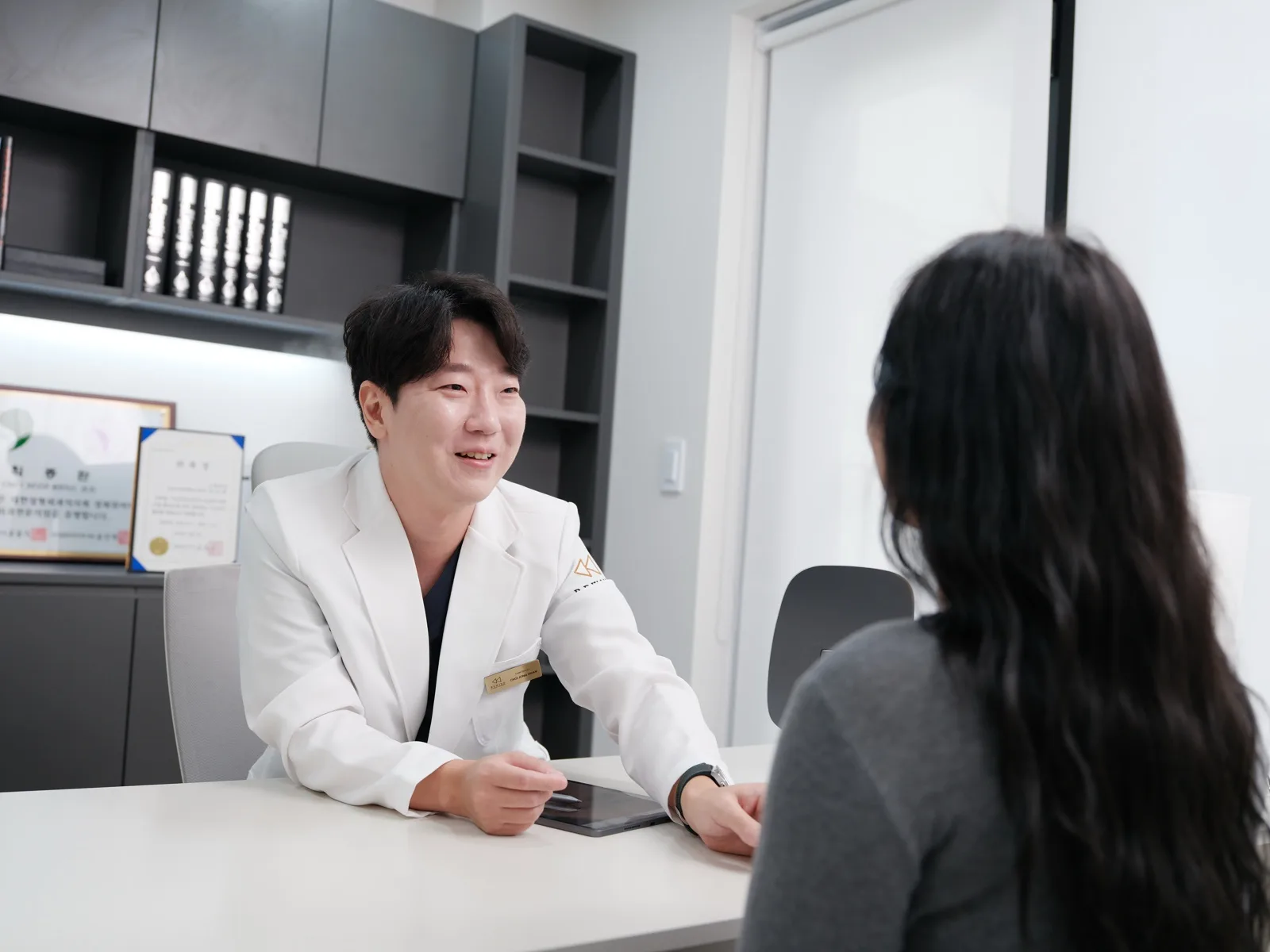
The doctor scores the tattoo in front of you and gives a range, with the factors that push it up named plainly. The range is revised at every visit against the photographs.
Because published intervals ran from weeks to months, a course usually spans more than one trip for patients who live abroad. Sessions can be planned around your travel dates, and photographs from each visit are kept so the next can be compared with it.
Clearing to bare skin and fading for a cover-up are different goals with different session counts. The goal is agreed at the start, and if the ink stops responding the doctor says so before another session is booked.
Each visit
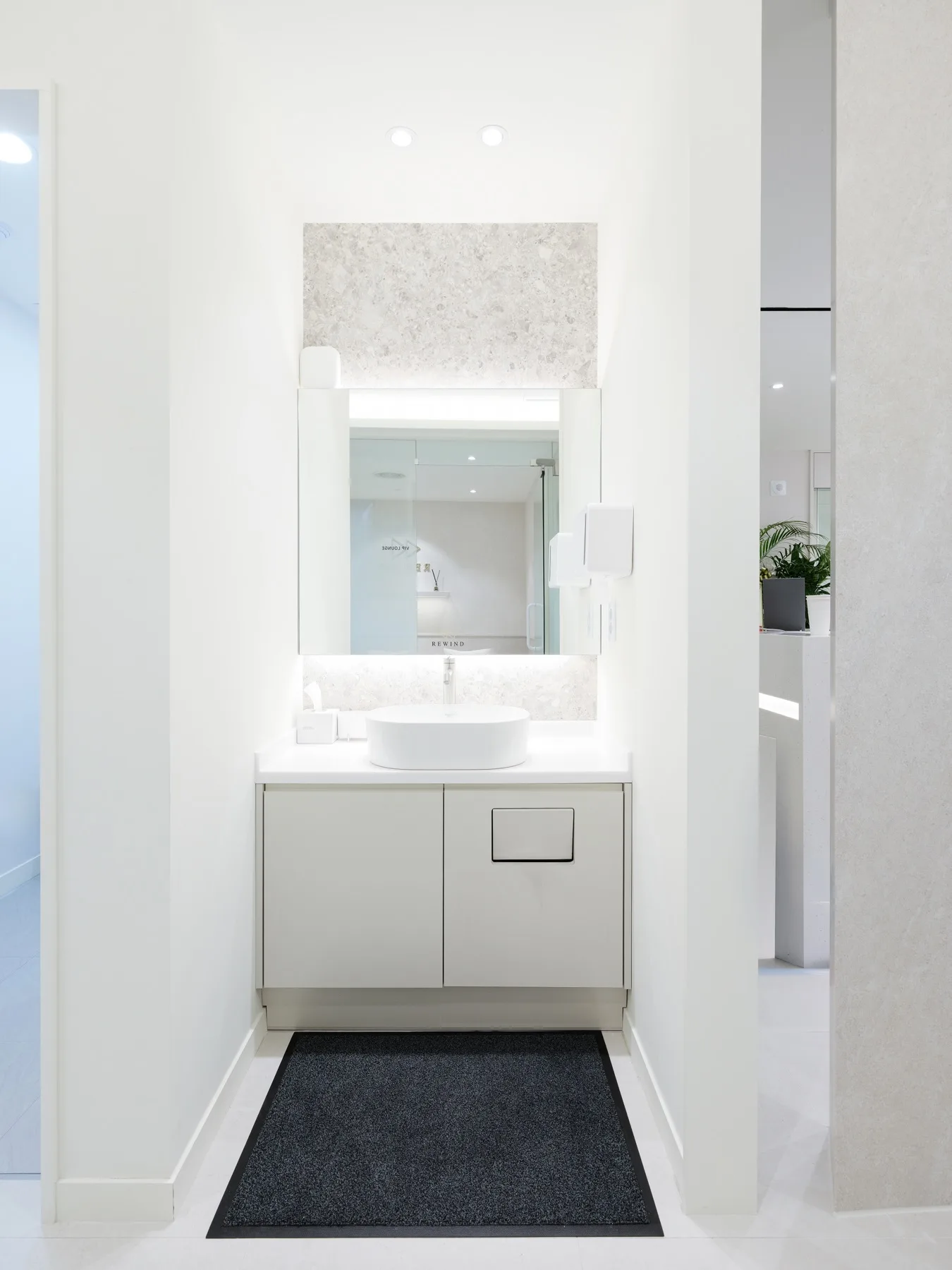
Fig. 04 — The skin is cleansed before each session
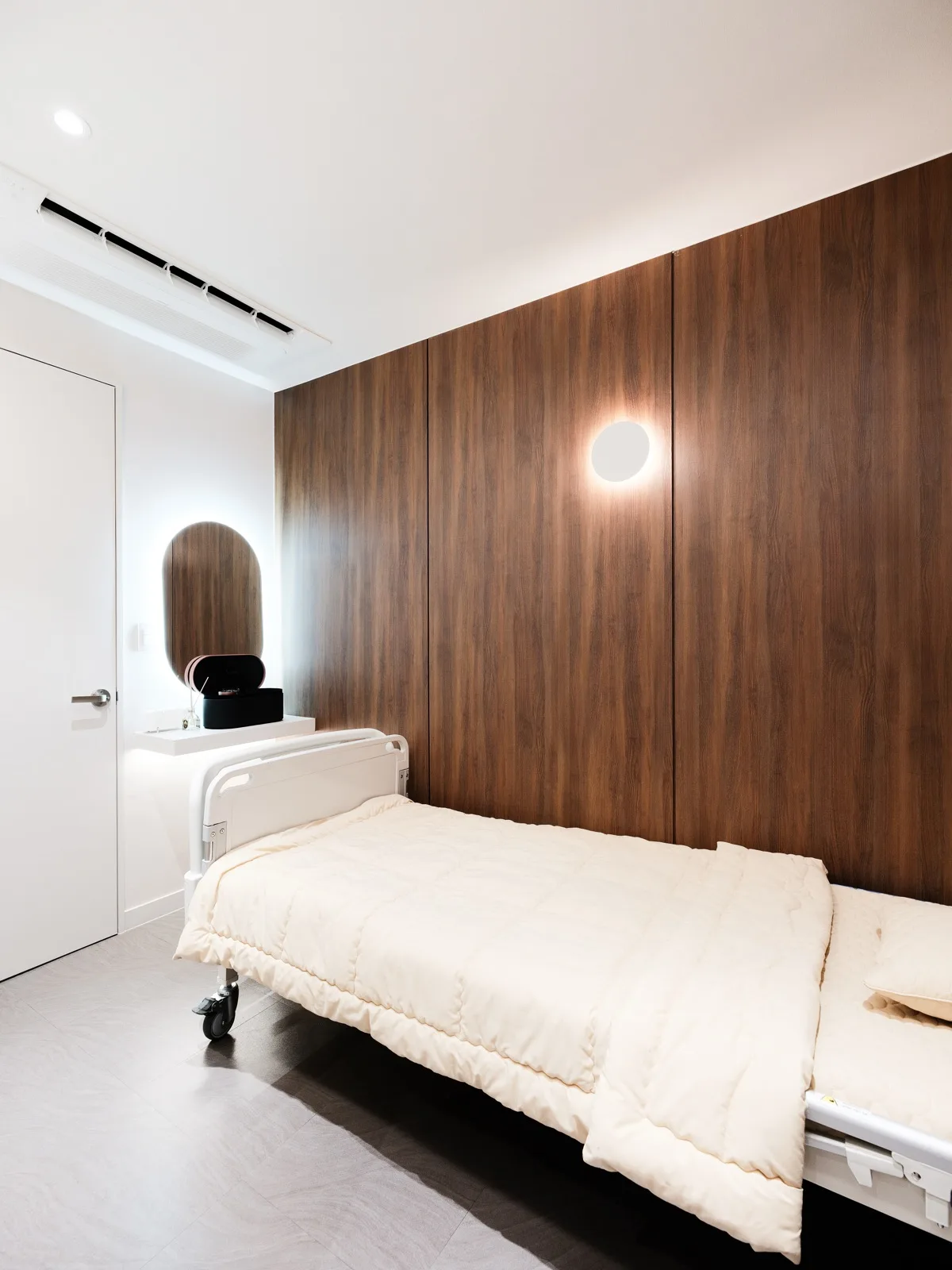
Fig. 05 — A quiet room on the clinic floor, Richro Building
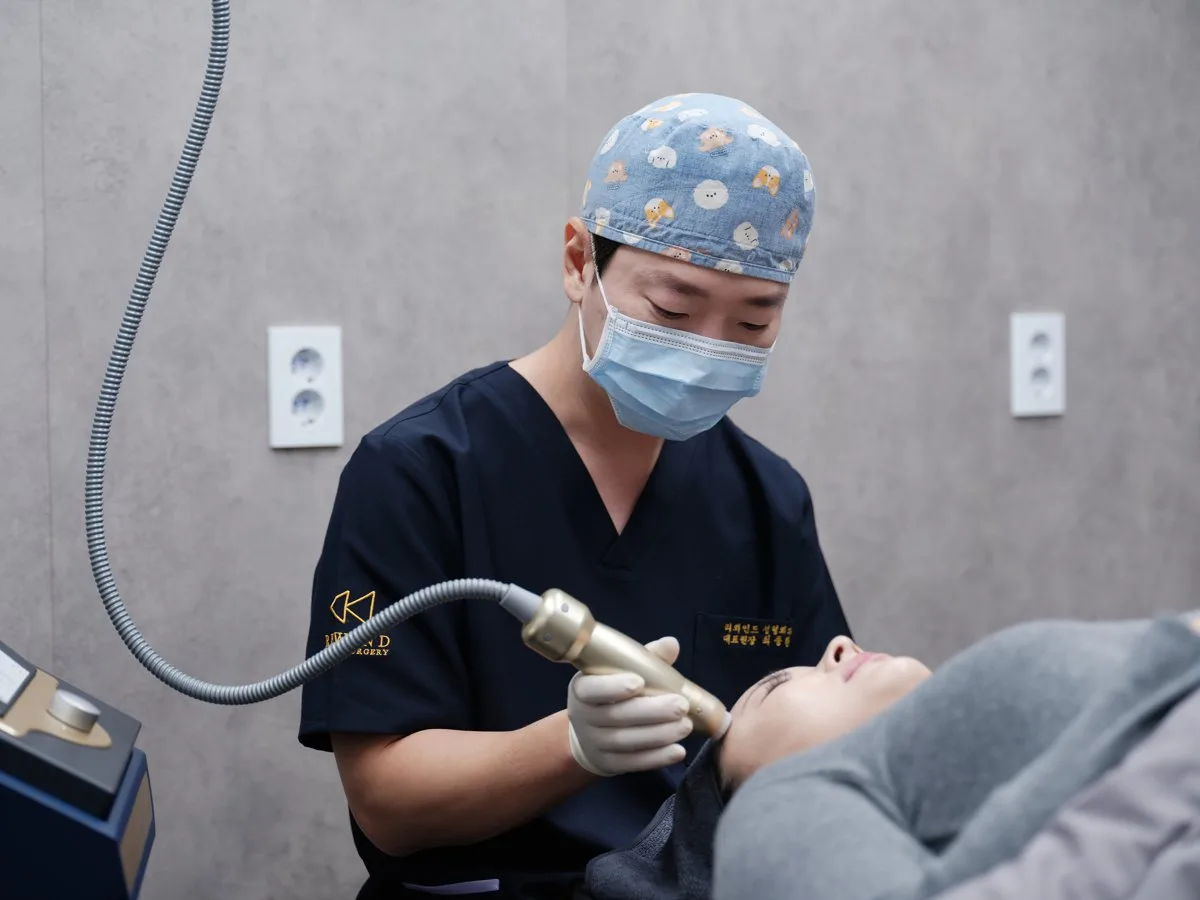
Each session follows the same pattern so that visits can be compared. The tattoo is photographed and checked against the last session, the skin is cleansed, eye protection is fitted, and the Pico K is applied across the ink using that day's settings. Frosting and redness follow and settle. Weekday sessions, on Monday, Tuesday, Wednesday and Friday, run 10:00 to 19:00; Saturday sessions run 10:00 to 16:00.
Rewind publishes no fixed session count or interval for tattoo removal, and none is invented on this page. Your range and spacing are confirmed at consultation and updated as the tattoo responds.
Pricing
Each session is charged at the rate for the tattoo's size band. To budget a course, multiply the band rate by the number of sessions in your estimated range and add VAT.
If the course ends early because the tattoo fades faster than estimated, the remaining sessions are not charged. If it spans several trips, only the sessions carried out in Seoul appear on Rewind's bill.
The price sheet folds anaesthesia cost into each rate; tax comes on top when you pay.
This month at Rewind — offers published by the clinic, updated monthly.
Suitability
Recovery
A session that heals cleanly keeps the next one on time. The clinic's laser aftercare is short, and most delays in a course come from sun or irritation between sessions.
Blistering, crusting, swelling and pinpoint bleeding are common after a session. Paler or darker patches of treated skin, and scarring that changes texture or rises above the surface, are the outcomes that may not settle, and they become more likely when sessions are pushed closer together. Some tattoos stop responding before they clear completely, and that possibility belongs in any session estimate.
At Rewind, one board-certified plastic surgeon carries every case — from the first consultation to the final follow-up. Because a face is a story, and a story deserves a single author.
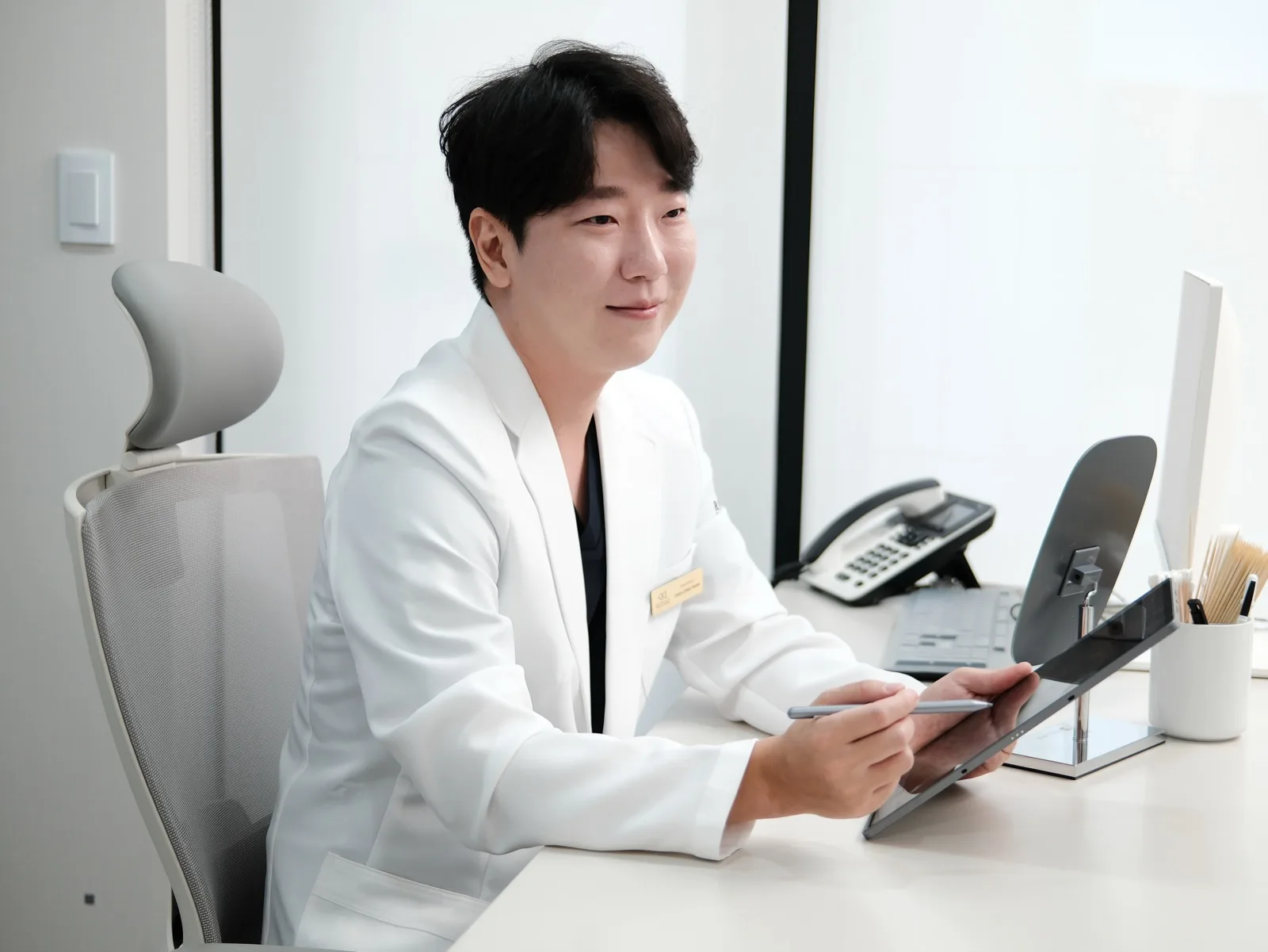 Rewind,
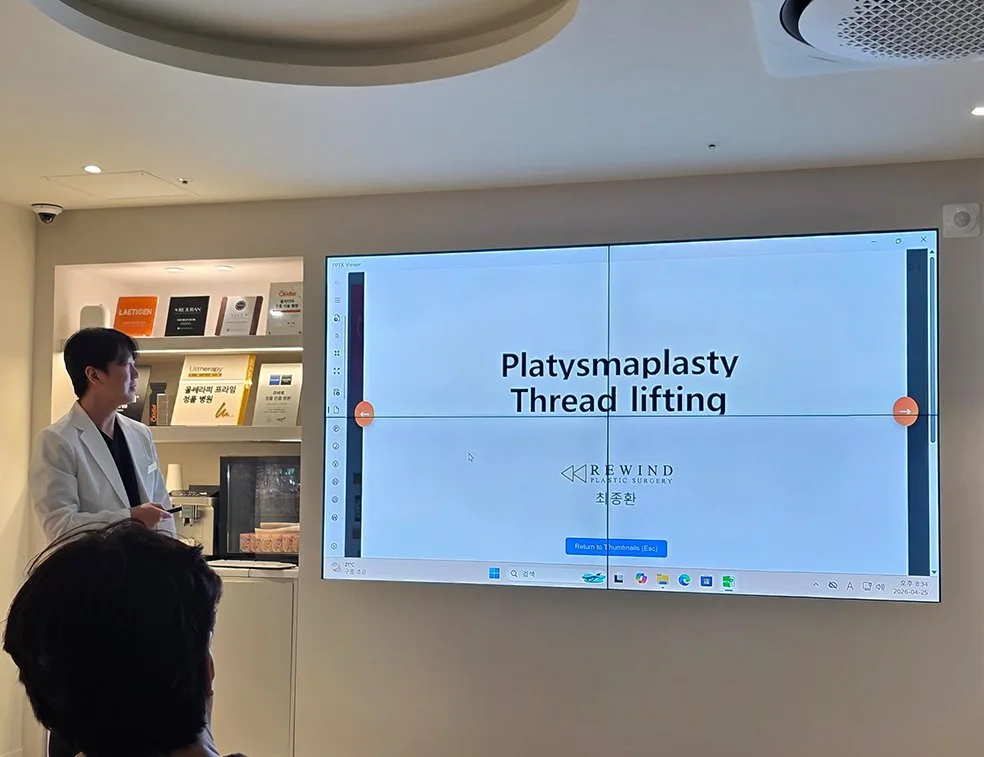
Rewind's Doctor
Dr. Jonghwan Choi Medical Director
One surgeon, from the first
consultation to the last follow-up.
A board-certified plastic surgeon devoted to anti-aging lifting — with the precision and restraint built through years of craniofacial practice.
Questions
Google Reviews
Came to REWIND to get my facial treatment and i'm absolutely obsessed about it💞 the doctor is so kind and is an expert! Everyone must visit!
YunHee Hong2 weeks agoThere are just way too many cosmetic clinics in Korea and I'm so happy I found Rewind Clinic in Gangnam. Dr. Choi was so kind and patient while explaining the different face-lifting options, from threads to mini-lifts to deep-plane lifts…
 J. S.5 months ago
I found Rewind clinic through a Korean chat forum and many local clients highly recommended it. The clinic is brand new, featuring large, clean rooms and many private waiting areas so it doesn't give off that "factory" clinic vibe. All the…
 J. Siou5 months ago
Really nice environment. Doctor is easy to communicate and understands my visions. Waited two weeks to make a review and I confirm the results exceeded my expectations and I am super happy with it. Can't wait to come back!! :))
 Kristie Chu5 months ago
I received a thread lift at Rewind Plastic Surgery. The clinic was clean and the atmosphere was comfortable. The consultation was thorough, and I felt confident because they kindly explained everything tailored to my facial condition. They…
Reservation
Tell us what you are considering — we reply as soon as possible, in your language.
For international patients — interpreter-assisted, from your first message to your follow-up.
Scientific evidence
The session counts and intervals quoted here come from the first three papers: a retrospective Q-switched series checked against a scoring scale, a randomised picosecond trial and a short fractional picosecond study. The 2012 review covers the principles behind all three. None of this work took place at Rewind Plastic Surgery, and none of it sets the number of sessions your tattoo will need.